AI Chatbot for HubSpot CMS Websites
Add an AI assistant to your HubSpot-powered site. It trains on your marketing pages and knowledge base, answers visitor questions about your products and pricing 24/7, and captures leads while your team sleeps. Set it up in minutes by pasting one snippet into Site Header HTML — try it now by opening the chat in the corner.
Try it on your own website for free
Enter your URL and see how an AI assistant would work on your site
See It In Action
Whether you run a B2B SaaS marketing site, a demand-gen landing page, a knowledge base, or a partner portal on HubSpot CMS — see how AI chat fits into your existing setup
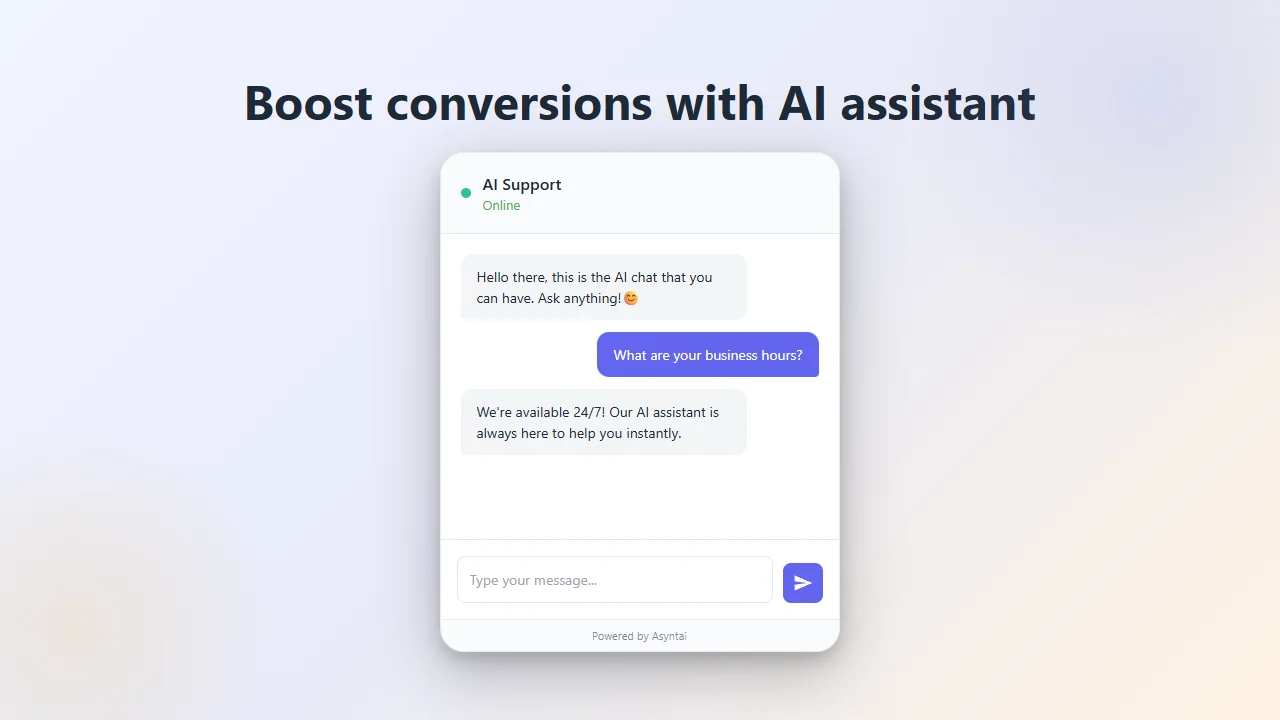
Convert Visitors Who Would Otherwise Bounce
A prospect on your HubSpot demand-gen landing page wonders whether your platform handles a specific integration. A reader on your knowledge base is trying to figure out how to invite a teammate. Instead of filling in a form and waiting for your SDR to follow up tomorrow, they ask the chatbot and get an instant answer drawn from your published HubSpot pages. That answer keeps them on the page and moving toward a demo request.
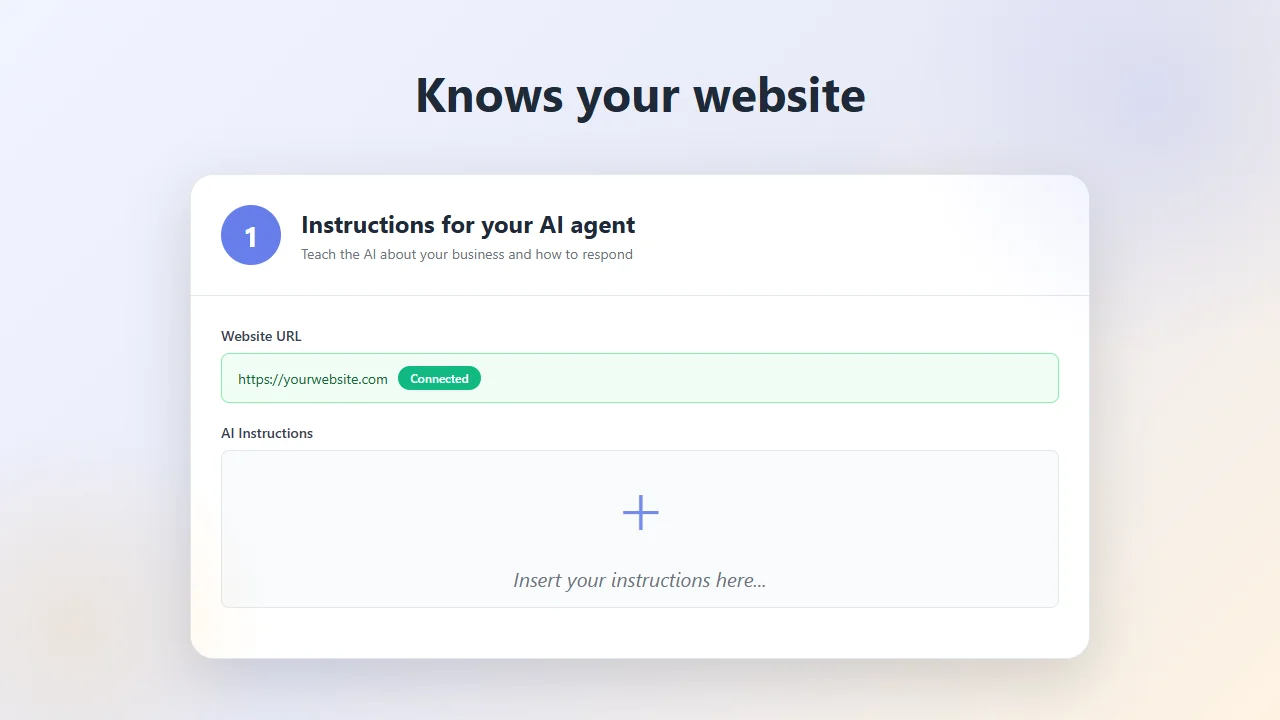
Knows Every Marketing Page, Pillar Page, and Knowledge Base Article
The AI reads the pages you have published in HubSpot CMS — website pages, landing pages, pillar pages, blog posts, and Service Hub knowledge base articles. Upload PDFs like sales decks, pricing sheets, product one-pagers, or onboarding guides for knowledge that never makes it onto a public page. Every new post your marketing team ships adds to what the chatbot can answer.
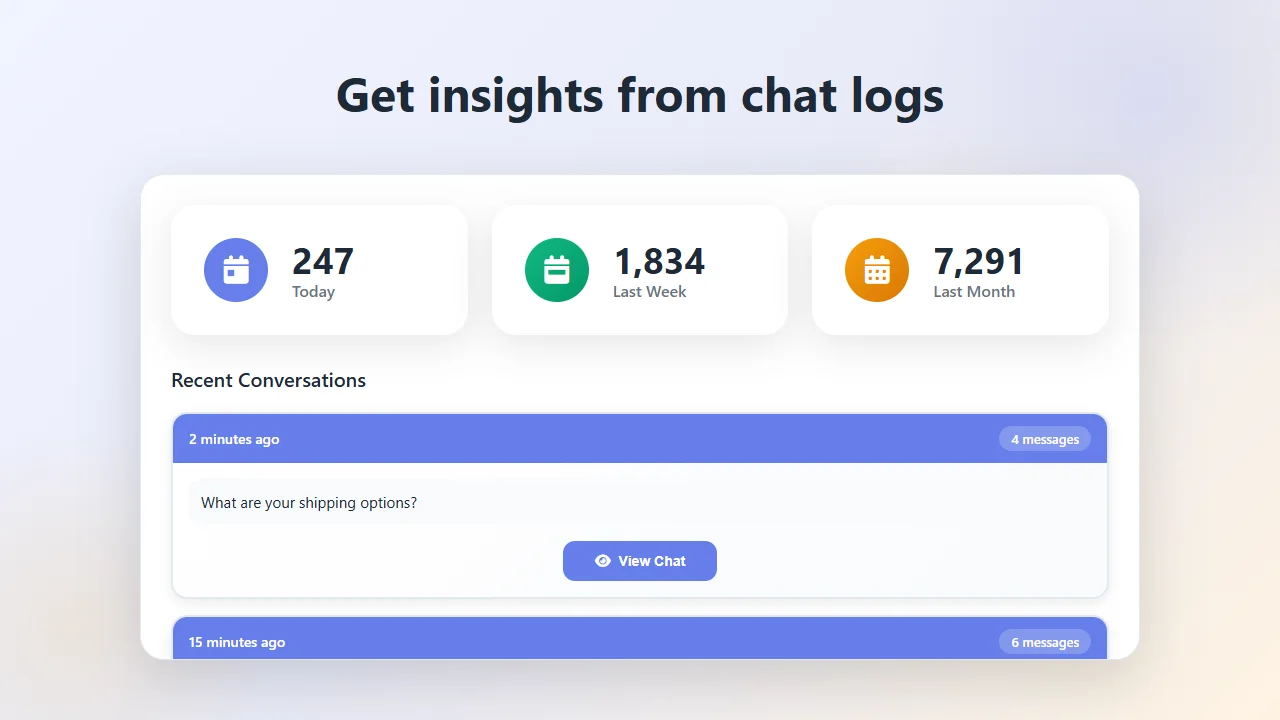
Find Content Gaps in Your HubSpot Marketing Site
Chat logs show you exactly what visitors are asking about but cannot find on your HubSpot site. Maybe prospects keep asking about an integration you have not published a page for, or customers want pricing detail that is still sitting in a sales deck. Use those insights to brief your content team, spin up a new HubSpot landing page, or publish the comparison article your audience is actually searching for.
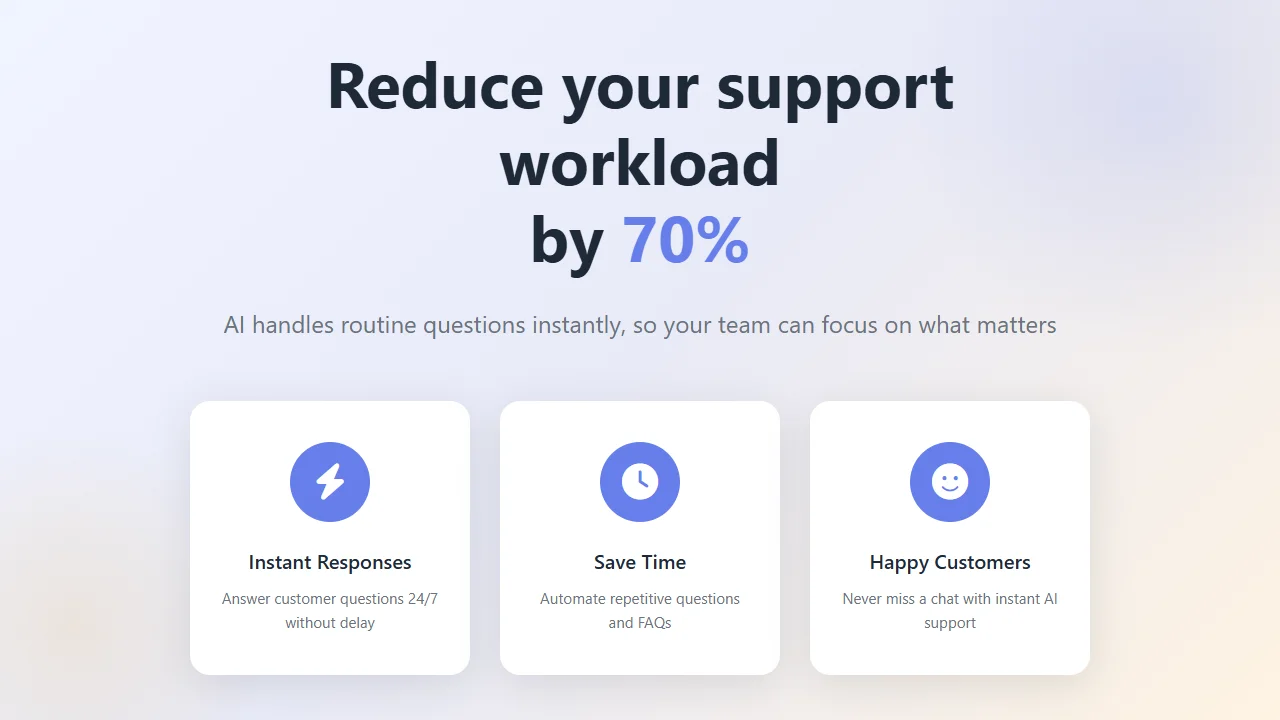
Stop Routing Every Visitor Question to Marketing or Sales
Marketing teams on HubSpot often end up fielding inbound questions that have nothing to do with campaigns — plan tier differences, feature availability, onboarding timelines, implementation specifics. The chatbot handles those repetitive inquiries automatically, so your marketers and SDRs can stay focused on the pipeline work they were hired to do instead of replying to the same pre-sales question three times a day.
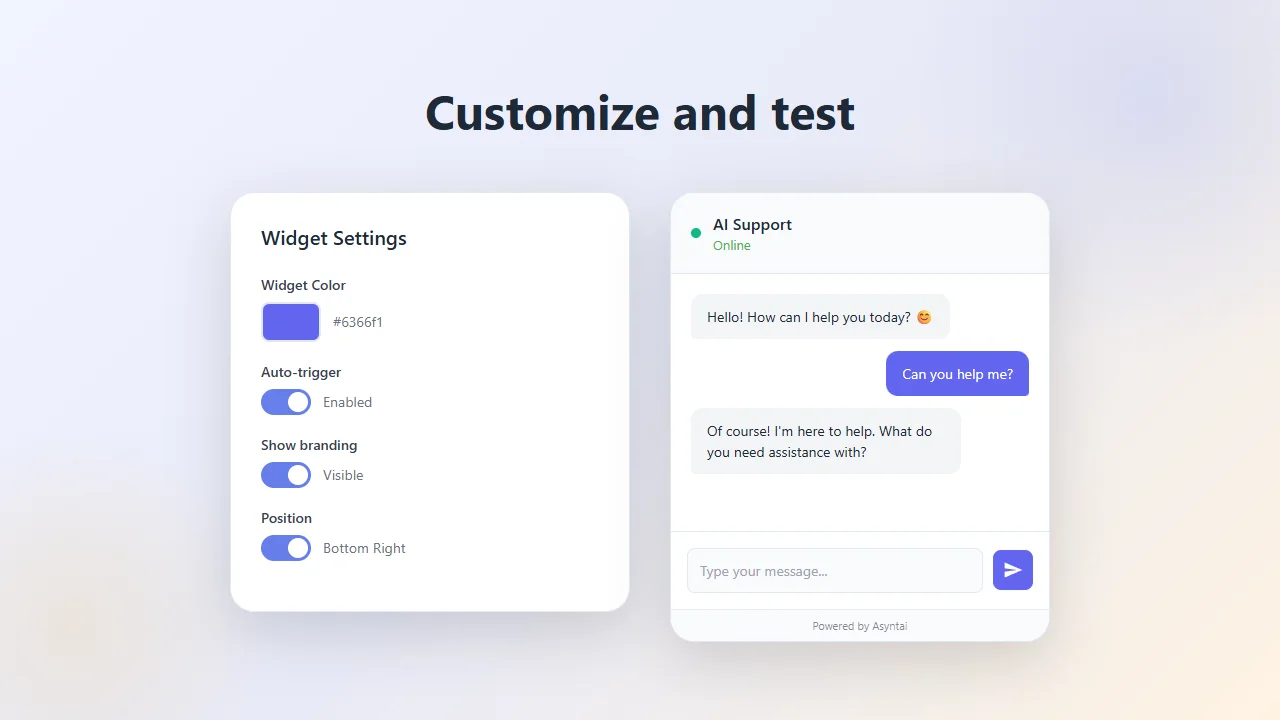
Matches Your Brand and Works Across HubSpot CMS Pages
Whether your HubSpot site is running a custom theme, a marketplace theme, or a starter template — the chat widget drops in the same way. Customize colors, position, and welcome message from your Asyntai dashboard to match your brand system. Test conversations before going live so you know the AI represents your voice accurately across every website page, landing page, and blog post you publish.
Watch Introduction Video
See how an AI chatbot fits onto a HubSpot CMS site. This short tutorial walks you through signing up, pointing the AI at your published pages, and pasting the embed code into Site Header HTML so the widget appears on every page of your HubSpot-powered site.
Have any questions? Try our AI chatbot right now
Ask it anything — it is live on this page
Built for HubSpot-Powered Sites
Simple setup, works with any HubSpot CMS theme or template. Your AI assistant is live in minutes.
Set Up in Minutes
Copy one script snippet and paste it into Settings, Website, Pages, Site Header HTML — and you are live on every page of your HubSpot site. The whole setup takes less than five minutes and does not require a developer, a new app, or a theme modification.
24/7 Coverage For Your Inbound
HubSpot marketing sites often run global demand-gen — trial signups from a dozen timezones, demo requests at any hour, partner inquiries outside business hours. The chatbot answers at 2 AM on a Sunday just as accurately as during business hours, so inbound interest never has to wait on your SDR queue.
Trains on Marketing Pages and Knowledge Base
Point it at your HubSpot site and the AI reads every published page — website pages, landing pages, pillar pages, blog posts, and Service Hub knowledge base articles. As your marketing team publishes new content in HubSpot, the chatbot keeps learning from what you ship.
Multi-Language Support
HubSpot CMS supports multi-language variants of pages and blog posts, and your chatbot should match. It auto-detects the language a visitor is typing in and replies in kind, across 32 languages. Multilingual replies are available from the Starter plan.
Works Across HubSpot CMS Pages
Website pages, landing pages, blog posts, knowledge base articles, system pages — adding the snippet to Site Header HTML ships the widget everywhere your HubSpot site renders. Works on custom themes, marketplace themes, and HubSpot starter templates with no theme changes required.
Sits Beside Your Existing HubSpot Chat
If you already use HubSpot's built-in Chat tool or chatflows, Asyntai can run alongside it — for example, HubSpot chatflows for live agent handoff and Asyntai as the always-on AI answering product and knowledge-base questions. You can also position the two widgets on opposite corners so they do not overlap.
How It Works
Get your AI chatbot live on your HubSpot CMS site in three simple steps
Sign Up & Configure
Create your Asyntai account, add your HubSpot site URL, and customize the widget appearance to match your brand system and the design of your HubSpot theme.
Paste the Embed Code Into Site Header HTML
In HubSpot, go to Settings, Website, Pages, and paste the snippet into Site Header HTML. Save. The widget will appear on every page of your HubSpot site — no theme edit required.
Publish and Go Live
Publish your site settings and the chatbot starts answering visitor questions immediately. Review conversations, leads, and analytics from your Asyntai dashboard.
Simple HubSpot Integration
Get your AI chatbot live on your HubSpot CMS site in a few steps. The install happens in Site Header HTML or Footer HTML — so it works with any HubSpot theme, any CMS tier that supports site-wide custom scripts, and across every domain connected to your HubSpot account.
-
1
Sign up and get your embed code
Create your Asyntai account, add your website URL, and copy the embed snippet from your Asyntai dashboard.
-
2
Open HubSpot site settings
In your HubSpot account, go to Settings (the gear icon), then Website, then Pages. If you manage more than one domain, pick the domain you want to apply the snippet to.
-
3
Paste into Site Header HTML
Expand the Templates section and find the Site Header HTML field. Paste the Asyntai snippet into the field and click Save. You can use Footer HTML instead if you prefer to defer script loading.
-
4
Publish and verify
Open your HubSpot site in a new tab — the chat widget should appear in the corner. For per-page installs, use Page Settings, Advanced Options, Header HTML instead of the site-wide setting.
Sign up free and get your personalized integration code instantly
Why HubSpot Site Owners Choose Asyntai
Start with 100 free messages, upgrade as your traffic grows
Answers Pre-Sales Questions Instantly
Every HubSpot-powered marketing site gets the same questions over and over — what does it cost, what is included in each tier, does it integrate with X, how long is onboarding. The chatbot answers all of those instantly from your published pages and uploaded PDFs, so prospects never have to wait for an SDR to clear their inbox.
Captures Leads From Visitors Who Don't Fill Forms
Smart Lead Capture recognises when a conversation is heading toward a sales or contact question and invites the visitor to leave their name, email, and a short message — then saves the lead to your Asyntai dashboard. Available from the Starter plan.
Works Across HubSpot CMS, Landing Pages, and Knowledge Base
One install via Site Header HTML covers your HubSpot website pages, landing pages, blog posts, and Service Hub knowledge base. No per-page work, no theme edits, no duplicated configuration — the widget is live wherever your HubSpot site renders a page.
Frequently Asked Questions
Everything you need to know about adding an AI chatbot to your HubSpot CMS site
Understanding HubSpot CMS for Your Business
What is HubSpot CMS?
HubSpot CMS Hub is the content management side of HubSpot's broader customer platform. Where other CMS tools only ship content, HubSpot bundles the CMS with the rest of its marketing, sales, and service software — so your website, landing pages, forms, email, CRM, and support ticketing all share the same contact records and reporting. For marketing teams that already use HubSpot for campaigns or CRM, the CMS is a natural extension of a tool they know.
HubSpot CMS is especially popular with B2B SaaS marketing teams, RevOps leaders at SMB and mid-market companies, and organisations running demand-gen programs where attribution from first-touch page view to closed-won deal matters. Its strengths are a mature editor, an integrated CRM, built-in analytics, A/B testing on Professional and Enterprise, and a theme marketplace that lets teams launch a marketing site without writing much custom code.
How HubSpot CMS Works
Marketers build pages inside the HubSpot editor using a theme that defines layouts, modules, and styling. Each site is served from HubSpot's infrastructure on your connected domains. When a visitor loads a page, HubSpot assembles the HTML from the theme template and the content your team published, renders it, and returns it to the browser. Forms, chat, tracking, and CRM integration are handled by HubSpot-issued scripts that load with every page.
HubSpot exposes a few places where you can drop in custom HTML and JavaScript. Site Header HTML and Site Footer HTML live in Settings, Website, Pages and apply to every page on the selected domain. Page Settings, Advanced Options, Header HTML applies to a single page. For deeper customization, developers can open Design Manager and edit theme templates directly — the base layout file is where a lot of third-party scripts typically land.
Any script you want on every page — analytics, chat, personalization, tag management — goes into one of those custom code fields. HubSpot does not require a marketplace app for third-party scripts the way some platforms do, which makes adding a widget like Asyntai straightforward: paste the snippet into Site Header HTML, save, and the widget is live on every connected domain.
Who Uses HubSpot CMS?
HubSpot CMS is a common choice for B2B SaaS marketing sites where the marketing team wants to own the website without always routing through engineering, RevOps teams that want CMS, CRM, and reporting under a single vendor, demand-gen landing pages for campaigns, customer knowledge bases built on Service Hub, partner portals and deal-registration pages, and product launch and event microsites that need to go from brief to live in days rather than weeks.
Teams pick HubSpot CMS when they want strong marketing tooling alongside the site, predictable publishing workflows for non-technical editors, and native integration with the rest of the HubSpot customer platform. The tradeoff is that HubSpot is a more opinionated environment than a headless CMS — there is a specific way to build themes, a specific way modules behave, and a specific hosting model. For marketing teams that value a turnkey setup, that is usually a plus.
Why AI Chat Fits a HubSpot Site
Sites built on HubSpot CMS tend to be marketing-led — landing pages, pillar pages, product tours, comparison pages, pricing pages, customer stories, release notes, and knowledge base articles. That is exactly the kind of content where prospects have questions whose answers exist somewhere on the site but require reading through several pages to find. The more landing pages and pillar pages you publish, the harder your own site becomes to search from the outside.
An AI chatbot that reads your published HubSpot content surfaces those answers instantly. A prospect asks 'does this work with Salesforce' or 'is SSO on the Professional plan' or 'how does your onboarding work' — and the AI pulls the answer from the marketing page, pricing page, or knowledge base article where that information actually lives. Instead of a contact form and a 12-hour wait, the visitor gets an accurate answer in seconds while they are still on the page.
And because HubSpot's multi-language support lets marketing teams publish the same page in several locales, your chatbot should match. Asyntai auto-detects the language of each visitor and replies in that language across 32 languages, so a single deployment serves every audience your HubSpot site targets. Multilingual replies are available from the Starter plan.
Adding the Chatbot to Your HubSpot Site
The install is exactly where most HubSpot admins would expect: Settings, Website, Pages, Site Header HTML. Paste the Asyntai snippet in, click Save, and the widget is live on every page of your HubSpot-connected domain. There is no marketplace app to install, no theme version to bump, and no permission changes required on your HubSpot account beyond the Super Admin or Marketing Admin role that can edit site settings.
For teams that prefer a per-page install, Page Settings, Advanced Options, Header HTML adds the snippet to one page only. For teams that prefer a version-controlled theme edit, Design Manager and the base layout template work as well. And for teams that route all third-party tags through Google Tag Manager, adding Asyntai as a GTM Custom HTML tag achieves the same result without touching HubSpot's custom code fields at all.
How AI Chat Helps HubSpot-Powered Sites
The Marketing Team's Inbound Problem
HubSpot-powered marketing sites are usually staffed by a marketer or two, an SDR, and occasional developer support when a theme or module change is needed. The website is polished. The campaigns are running. But when a visitor has a question that a form cannot answer, the usual path is still contact us or book a demo, which means someone has to read the request and reply. As traffic climbs and content volume grows, that queue of low-intent pre-sales questions becomes a steady drain on the team's time.
Most of the chat options available today fit into two categories: rule-based bots that follow rigid click-through flows and catch only the questions you have scripted, or live-chat widgets that require an agent online to be useful. Neither fully solves the problem for a B2B marketing site. Rule-based flows break the moment a prospect phrases their question in their own words. Live chat ties up the team during business hours and leaves the site silent the rest of the day — which is exactly when trial signups from other timezones are happening.
AI chat changes that equation. It reads the content you have already published through HubSpot — landing pages, pillar pages, pricing pages, knowledge base articles — and answers natural-language questions on its own. Your marketers stay focused on campaigns. Your SDRs stay focused on qualified conversations. The chatbot handles the rest.
Speed Matters for Demand Gen
Teams that pick HubSpot CMS usually care about speed-to-lead. You run paid campaigns, build landing pages, and route form fills into your CRM because you know that the faster you respond to an inbound, the more likely it converts. Minutes matter. The difference between a demo request followed up in five minutes versus five hours is measurable in close rates.
The same logic applies to the questions that happen before the form fill. A prospect who has a pre-sales question and cannot get an answer right then often moves on — either to a competitor's site or to tomorrow's to-do list they never get back to. An AI chatbot closes that gap. A visitor asks a question, the AI pulls the answer from your published HubSpot content, and replies in seconds — while the visitor is still on the page and still interested.
For a B2B SaaS marketing site, that instant answer often decides whether the visitor books a demo, starts a trial, or bounces. For a partner portal, it can be the difference between a completed application and an abandoned form. For a knowledge base, it is the difference between self-service resolution and a support ticket that your team now has to work.
AI Chat vs. Rule-Based Chatflows
Traditional chat widgets generally take one of two approaches. They either connect a visitor to a live agent (good when an agent is available, silent the rest of the time), or they follow pre-built decision trees that only answer the specific questions you have explicitly mapped. Both approaches work well for narrow use cases. Both struggle with the open-ended, natural-language questions prospects actually ask on a B2B marketing site.
AI-powered chat takes a different approach. Instead of following a script, the system understands the intent behind the question. You provide it with your site content and any supplementary documents — pricing PDFs, product briefs, internal FAQ sheets, implementation guides — and the AI constructs a relevant answer. Whether a visitor asks 'do you integrate with Salesforce' or 'can I sync deals to our CRM' or 'does it work with SFDC,' the AI recognises these all map to your Salesforce integration.
This is valuable for HubSpot-powered sites because your content is often structured, interlinked, and deep. Pillar pages link to cluster content. Product pages reference feature pages. Pricing pages point to comparison pages. Knowledge base articles cite each other. The AI can follow those relationships in its answers, pointing a visitor to the next relevant page instead of ending the conversation at a dead end.
What HubSpot Site Owners Gain
The first benefit is round-the-clock availability. B2B SaaS marketing sites often serve buyers across multiple timezones, and the typical trial signup or demo request can happen at 11 PM local time, at 5 AM local time, or in the middle of a weekend. An AI chatbot answers every one of those inquiries at full speed, so inbound interest never waits on business hours. You capture opportunity that would otherwise be lost to after-hours hesitation.
The second benefit is fit with HubSpot's existing setup. The widget loads after the page is interactive, so it stays out of the critical rendering path and does not interfere with the HubSpot tracking code, form analytics, or any other script already on your site. Your HubSpot attribution, cookie consent, and A/B testing all continue to work exactly as before. Adding Asyntai does not require disabling anything.
The third benefit is the time your team gets back. Marketers spend less of their day fielding the same 'how much does it cost' or 'do you integrate with X' questions. SDRs spend more time on qualified prospects instead of typing the same three paragraphs for the tenth time. The chatbot handles the repeat work while your team sees every conversation in the Asyntai dashboard, so you still have full visibility into what visitors are asking.
Getting Your HubSpot Content Into the Chatbot
HubSpot sites are rich in structured marketing content — landing pages, pillar pages, blog posts, product tours, pricing pages, customer stories, release notes, knowledge base articles. All of that is useful knowledge base material for the AI. The fastest way to bring your chatbot up to speed is to give it your live HubSpot site URL. The system crawls the pages your site renders and indexes the content, building an understanding of what your marketing site offers. The Free plan crawls up to 100 pages, Starter up to 500, and Standard up to 1,000.
For multi-language HubSpot sites, the AI reads each language variant your site publishes. A visitor asking a question in Spanish about your Spanish-language pricing page gets an answer drawn from that specific locale, not the English source. This keeps regional information accurate — currency, availability, regulatory language, local contact info — without you having to manually translate your chatbot training.
For content that is not published on your site — internal pricing sheets, contract templates, product specification documents, sales battle cards — you can upload files directly to the Asyntai dashboard. This extends the AI's knowledge beyond what appears on the public HubSpot site. You can also write custom instructions that shape how it responds, like always suggesting a demo for enterprise-sized prospects or directing billing-related questions to your customer success team.
Results HubSpot Site Owners See
The impact tends to show up in two areas: engagement metrics and workload reduction. Sites with the chatbot typically see visitors spend more time on the page when they interact with the AI — they ask a question, get pointed to a relevant pillar page or comparison, read it, and often come back to ask a follow-up. That engagement is visible in session duration, pages-per-session, and scroll depth analytics in HubSpot.
On knowledge-base and support-oriented HubSpot sites, the chatbot serves as a navigation assistant. Instead of a customer bouncing because they cannot find a specific troubleshooting article, they ask the chatbot and get directed to the right page. This reduces bounce rates, lowers support ticket volume, and increases the perceived value of the Service Hub knowledge base your team has been building.
On the operational side, the reduction in repetitive inbound is immediate. The questions that used to fill your marketers' and SDRs' inboxes now get handled automatically. You still see every conversation in the Asyntai dashboard, so you maintain full visibility and can spot patterns — recurring questions that deserve a dedicated landing page, content gaps in the knowledge base, or pricing confusion that suggests a copy tweak on your pricing page.
Choosing a Chat Tool for HubSpot
HubSpot teams have specific needs when adding a chat tool. First, it should install through standard HubSpot custom code fields rather than require a marketplace app — Site Header HTML and Page Settings Advanced Options are the right integration points, and anything that demands a heavier install tends to create friction with IT or admin reviews. Second, it must play well with HubSpot's existing scripts: tracking code, forms, meetings, chatflows. The chatbot should run alongside those, not replace or block them.
Third, it should respect your Core Web Vitals. HubSpot's performance depends on your theme and the scripts you stack on top of it, and every added script is a potential tax on load time. Asynchronous loading after page interactivity is the right default, and a chatbot that blocks the main thread or inflates bundle size is at odds with the speed work your team has already done on your HubSpot theme.
Fourth, consider multilingual and governance needs. B2B marketing sites built on HubSpot often run multiple language variants, and the chatbot should match what HubSpot already supports. It should also respect your brand — customizable colors, position, and welcome message help the widget feel like part of the site rather than a foreign element bolted on after the fact.
Ready to Add AI Chat to Your HubSpot Site?
Start with 100 free messages and see how AI-powered answers can keep visitors engaged and capture leads on your HubSpot CMS site.