AI Chatbot for Hugo Websites
Your Hugo site is fast and content-rich. Now make it answer visitor questions too. Your AI assistant knows every page you publish and helps visitors find exactly what they need — instantly.
Try it on your own Hugo site for free
Enter your URL and see how an AI assistant would work on your site
See It In Action
See how an AI assistant helps your Hugo site engage visitors and answer their questions instantly
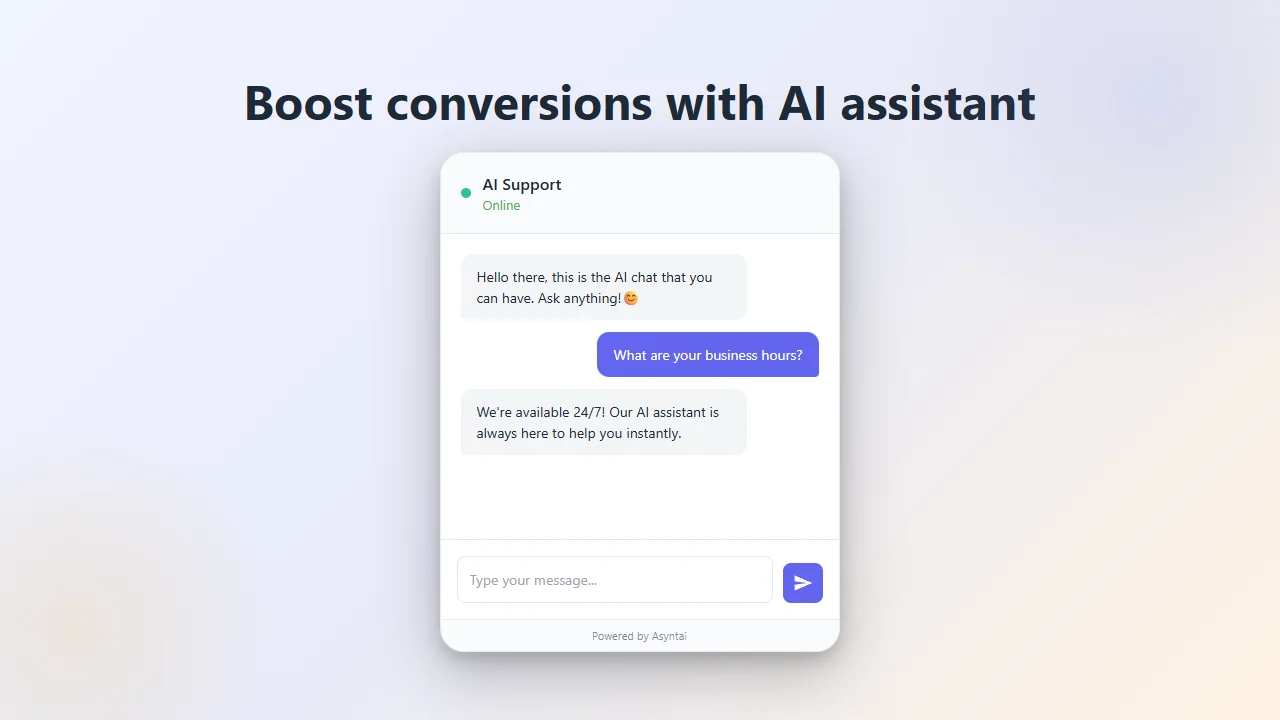
Visitors Find Answers Instantly
A reader on your Hugo blog or docs site cannot find what they need. Instead of scanning menus or using search, they ask the chatbot. It searches your entire site and points them to the right content with a relevant answer — in seconds, not minutes.
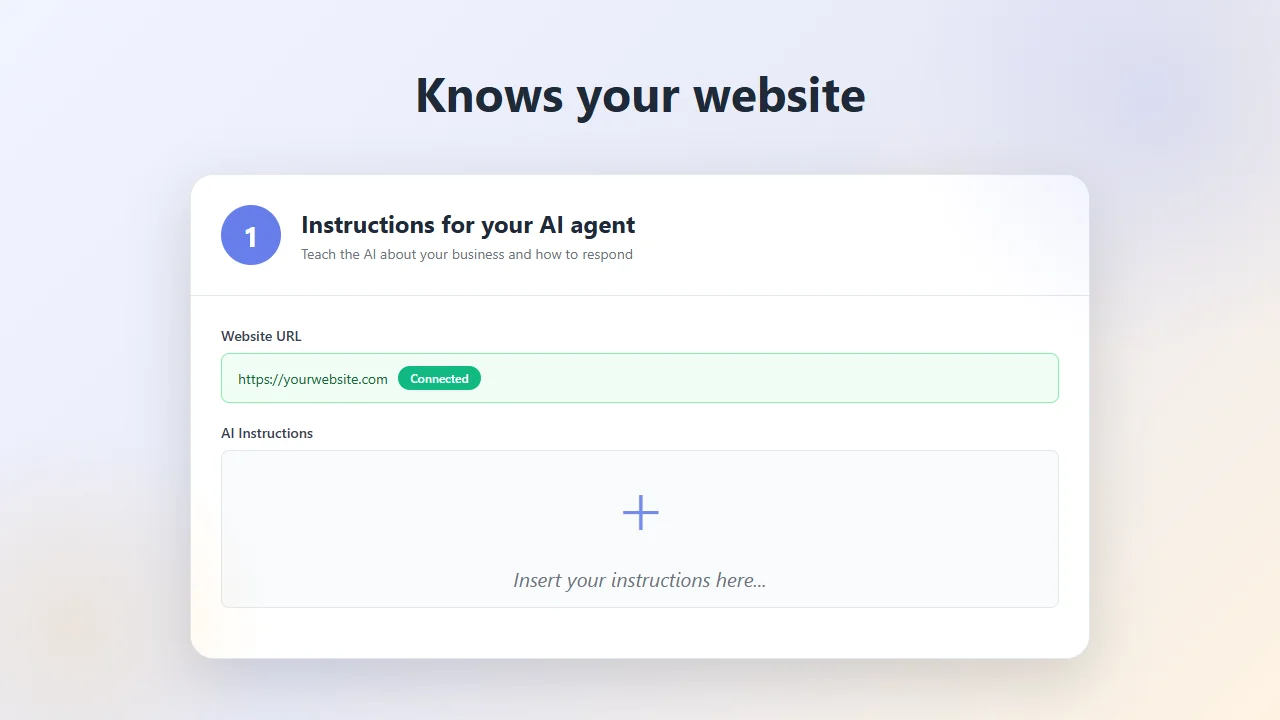
Knows Every Page You Publish
The AI reads all your published pages, blog posts, and documentation. It understands the relationships between your content across different sections. Upload PDFs for additional resources like guides, whitepapers, or reference materials that live outside your published site.
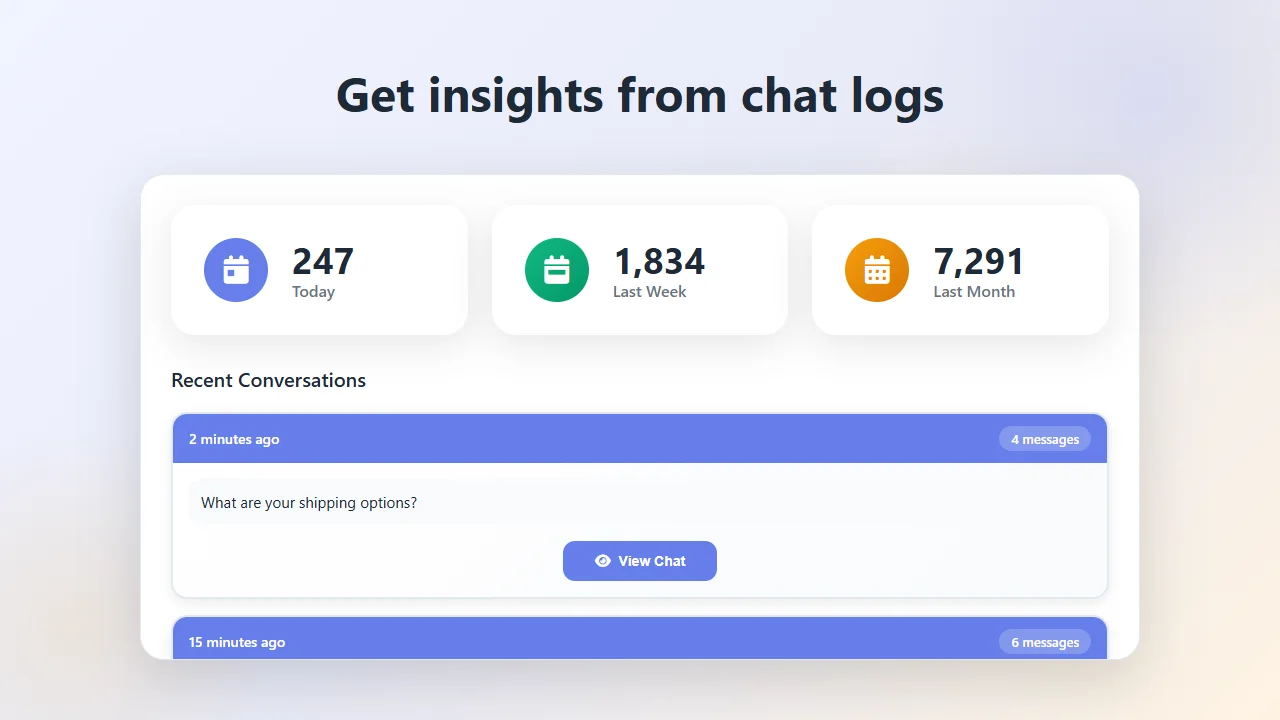
See What Visitors Actually Want
Chat logs reveal content gaps and popular topics. Maybe visitors keep asking about something you have not covered well, or everyone wants details on a specific subject. Use those insights to plan your next post around real questions your audience is already asking.
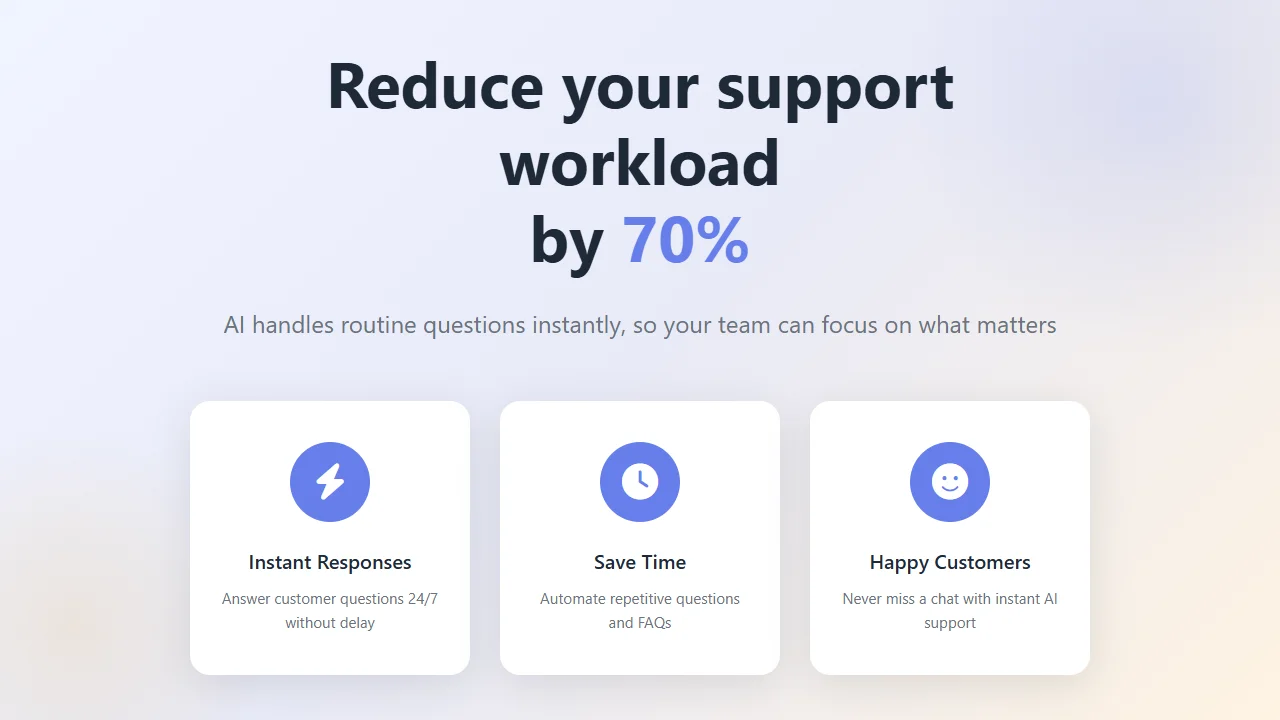
Stop Answering the Same Questions
Repetitive emails, contact form submissions, and support requests handled automatically. The chatbot answers common questions from your content 24/7, so you spend less time on support and more time creating.
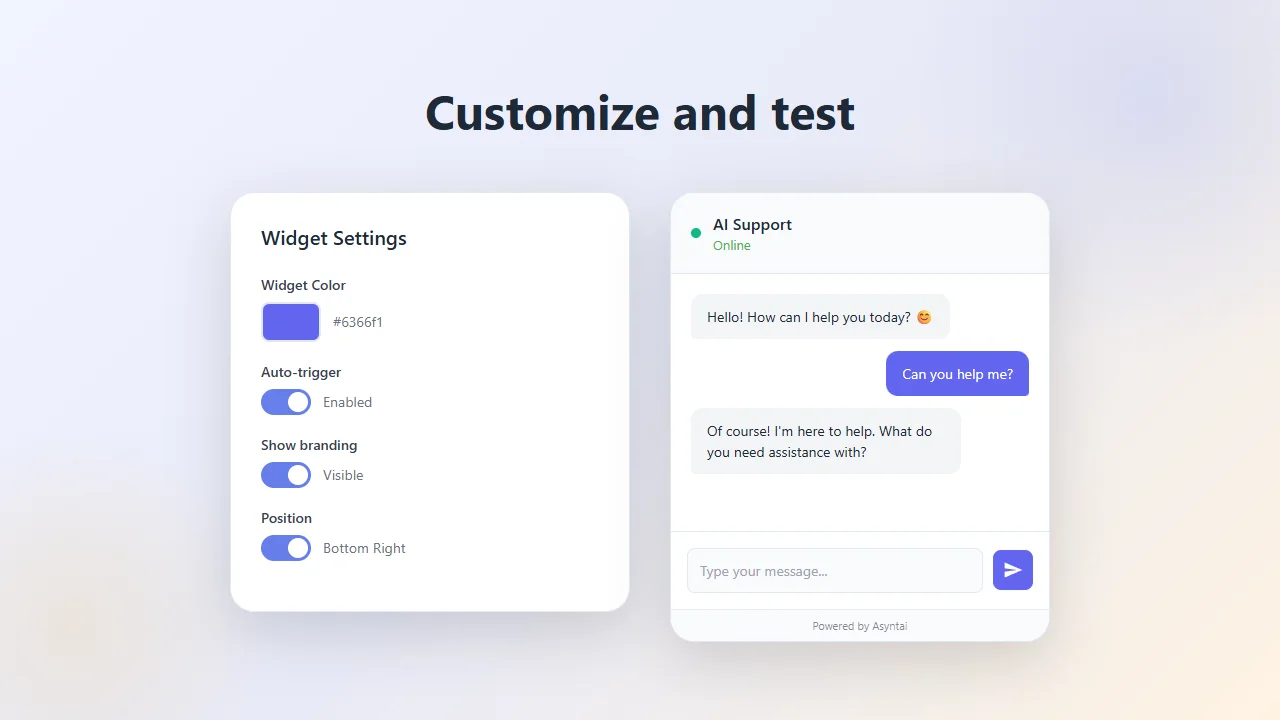
Match Your Hugo Theme
Customize the chat widget to blend seamlessly with any Hugo theme. Choose colors, position, and welcome message from your dashboard. Works with light mode, dark mode, and any custom styling you have applied.
Watch Introduction Video
See how easy it is to add an AI chatbot to your Hugo site. This quick tutorial walks you through the entire setup process, from signing up to going live with your intelligent visitor engagement assistant.
Have any questions? Try our AI chatbot right now
Ask it anything — it is live on this page
Perfect for Hugo Sites
Works with any Hugo theme. Set up in minutes.
Set Up in Minutes
Copy one snippet, add it to your site, and you are live. Works with any Hugo theme and any configuration. The entire setup takes less than five minutes — no plugins or extra tools required.
Help Visitors Around the Clock
Your visitors come from every time zone. The chatbot answers their questions at 2 AM just as well as during your working hours — no more missed inquiries or delayed responses.
Speak Your Visitors' Language
Serving a global audience? The chatbot detects what language your visitor speaks and responds automatically — no extra setup or translation configuration needed.
Your Content, Your Rules
Tell it to always link to your best posts, redirect business inquiries to your contact page, or recommend specific resources. The AI follows your guidelines and only answers using your content.
Turn Visitors into Subscribers
Every page, post, and guide you publish gives the chatbot more to work with. Engaged visitors stay longer, explore more content, and are more likely to subscribe or reach out.
Only Your Content, Nothing Else
The AI stays focused on your site topics. It will not make up answers or go off-topic — only relevant, helpful responses drawn directly from your published content and uploaded materials.
How It Works
Get your AI chatbot live on your Hugo site in three simple steps
Sign Up & Configure
Create your account and provide your Hugo site URL. Customize the chatbot's appearance to match your theme.
Add the Code
Copy a simple snippet and add it to your Hugo site. Takes less than 2 minutes.
Go Live Instantly
Your AI chatbot is now live, helping visitors find answers automatically 24/7 while you focus on creating great content.
Simple Hugo Integration
Get your AI chatbot live on your Hugo site in just a few steps. Works with any theme, any version, and all your existing configuration.
-
1
Sign up and get your code
Create your account on Asyntai, add your Hugo site URL, and copy your unique chatbot code from the dashboard.
-
2
Open your Hugo project
Find your base template or head partial. This is where your site-wide scripts live.
-
3
Paste the code
Add it before the closing body tag in your layout. One line and you are done.
-
4
Deploy
Push your changes and the chatbot appears on every page. Your AI assistant is now answering visitor questions across your entire Hugo site.
Sign up free and get your personalized integration code instantly
Why Hugo Site Owners Choose Asyntai
Start free with 100 messages, upgrade as your site traffic grows
Focus on Content, Not Support
Hugo users love writing content. Let the chatbot handle visitor questions so you can keep publishing — no more interruptions from repetitive emails and contact form submissions.
Understand Your Audience
Chat logs show what visitors want to know — plan your next post around real questions. Stop guessing what to write next; your audience is already telling you.
Grow Your Site's Value
A site that answers questions keeps visitors longer, builds trust, and drives more traffic. Engaged visitors are more likely to subscribe, share your content, and come back.
Frequently Asked Questions
Everything you need to know about adding AI chatbot to your Hugo site
How Chat Support Helps Hugo Sites
Bringing Dynamic Conversation to Static Pages
Hugo generates blazing-fast static HTML files. There is no server-side processing, no database queries, and no runtime overhead. This is precisely why developers and content creators choose Hugo: pure speed and simplicity. But static sites have an inherent limitation when it comes to visitor interaction. Once the HTML is served, there is no built-in mechanism for visitors to ask questions or get personalized help finding content.
An AI chatbot solves this without undermining Hugo's static architecture. The chatbot loads as a lightweight client-side widget, keeping the page itself static while adding a dynamic conversational layer on top. Your Hugo site stays fast, your hosting stays simple, and visitors gain the ability to ask questions and receive answers drawn from your content in real time.
The Static Site Search Problem
Search is one of the trickiest challenges for static site generators. Hugo does not include built-in search out of the box, and the solutions that exist, such as Lunr.js or Algolia, require extra configuration, JavaScript bundles, or third-party services. Even when implemented, these search tools return a list of page links that the visitor must click through and evaluate one by one.
A chatbot takes a fundamentally different approach. Instead of returning links, it reads your question, finds the relevant content across your entire Hugo site, and delivers a direct answer. For a technical blog with hundreds of posts, or a documentation site with dozens of pages, this means visitors get the specific information they need without sifting through search result pages. It is search, comprehension, and response combined into a single interaction.
Perfect for Developer Blogs and Technical Content
Hugo is especially popular among developers who publish technical blogs, project documentation, and knowledge bases. These sites attract visitors with very specific questions: How do I configure a particular tool? What are the differences between two approaches? Where is the guide for a specific integration? Technical visitors are goal-oriented and impatient with navigation that does not get them to the answer quickly.
The chatbot serves these visitors efficiently. It has read your Hugo site's content through automatic crawling, so it understands your technical material and can answer questions contextually. A developer searching your blog for deployment instructions does not need to read three loosely related posts; the chatbot synthesizes the answer from your content and presents it directly.
Fits Into Your Existing Hugo Workflow
Hugo users typically have a streamlined workflow: write content in Markdown, run the Hugo build, deploy to a CDN or static hosting service like Netlify, Vercel, or GitHub Pages. Adding the chatbot does not disrupt any of this. You embed a small script tag in your Hugo layout template, and it appears on every generated page. No build step changes, no new dependencies in your Hugo project, and no impact on your deployment pipeline.
When you publish new content and rebuild your Hugo site, a re-crawl of your URL updates the chatbot's knowledge base. Your workflow stays the same: write, build, deploy. The chatbot simply picks up the new content and starts answering questions about it. This seamless integration respects the developer-friendly approach that makes Hugo appealing in the first place.
Engagement Without Sacrificing Performance
Performance is a core reason Hugo users chose a static site generator over a traditional CMS. Page load times measured in milliseconds, perfect Lighthouse scores, minimal JavaScript. You should not have to trade any of that away to add visitor interaction. The chatbot widget is designed to load asynchronously and does not block page rendering, so your Hugo site's performance metrics remain intact.
This matters for SEO as well. Fast static sites already have an advantage in search rankings. Adding a chatbot that helps visitors find content and stay on your site longer reinforces those positive signals without introducing the page speed penalties that heavier interactive tools might cause. You get the best of both worlds: Hugo's raw speed with the added benefit of conversational content discovery.
Ready to Transform Your Hugo Website?
Start free with 100 messages and see how AI-powered visitor engagement can grow your audience.