AI Chatbot for Contentful Websites
Add an AI assistant to the frontend of your Contentful-powered site. It reads your published content, replies in every locale you ship, and works with Next.js, Nuxt, Gatsby, Astro, Remix, or React. Set it up in minutes and try it now by opening the chat in the corner.
Try it on your own website for free
Enter your URL and see how an AI assistant would work on your site
See It In Action
Whether you run a B2B SaaS marketing site, a multi-brand content hub, or an enterprise help center on Contentful — see how AI chat fits onto your headless frontend
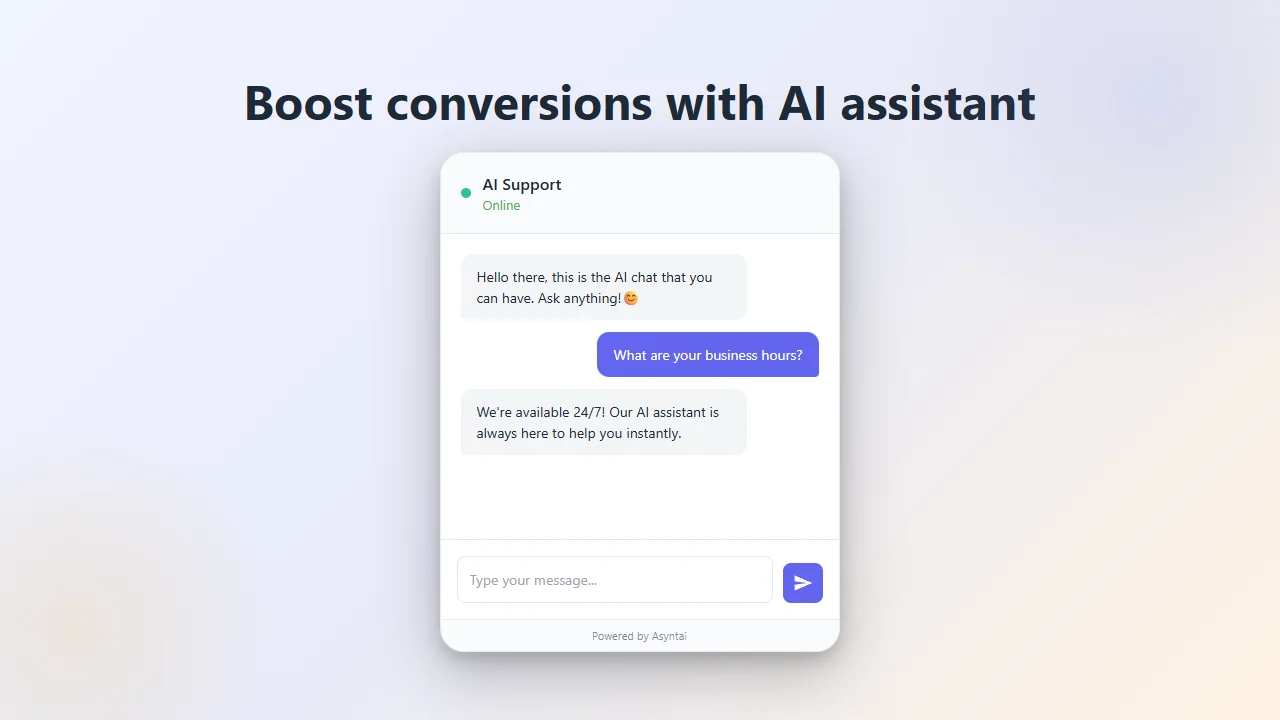
Convert Visitors Who Would Otherwise Bounce
A prospect on your SaaS marketing site wonders whether your platform handles single sign-on. A reader on your help center is trying to figure out how to reset a webhook. Instead of opening a support ticket and waiting hours for a reply, they ask the chatbot and get an instant answer drawn from your published Contentful content. That answer keeps them on the page and moving toward a demo request or self-serve solution.
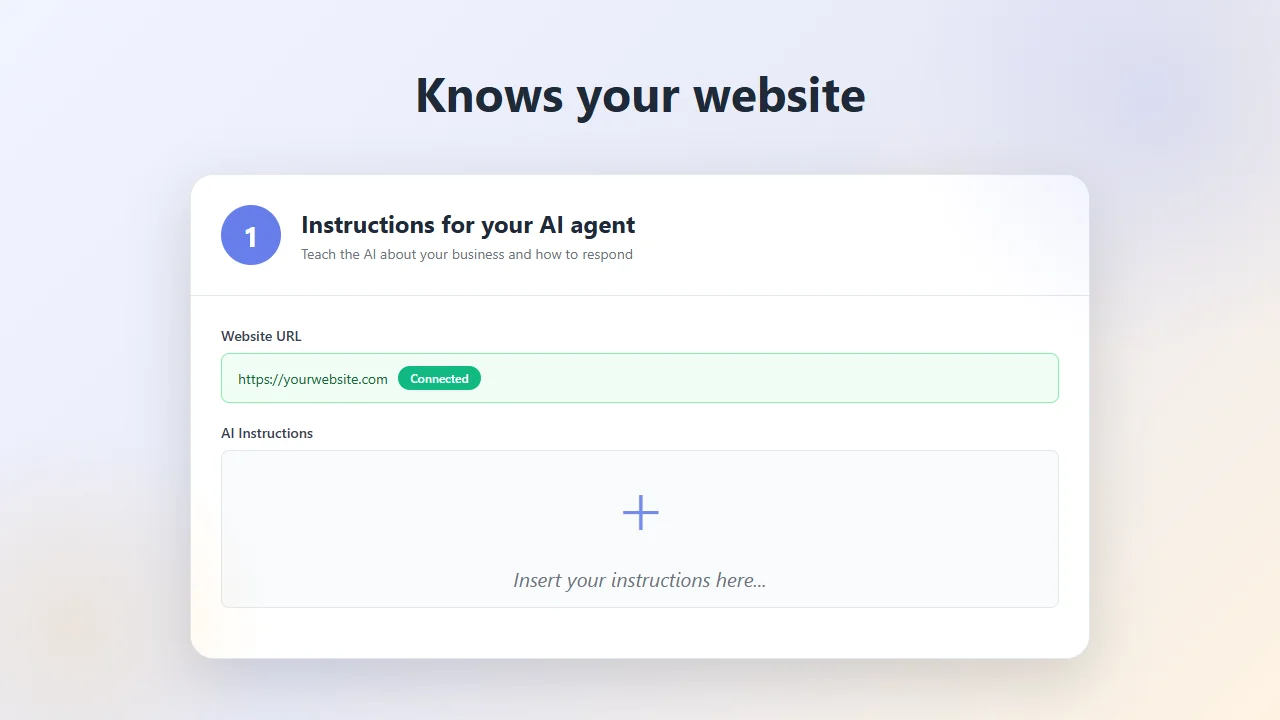
Knows Every Page Your Frontend Renders from Contentful
The AI reads the pages your Contentful entries render on your Next.js, Nuxt, Gatsby, Astro, Remix, or React frontend. Upload PDFs like product briefs, pricing sheets, or internal policy docs for knowledge that never makes it onto the live site. Every new article, landing page, or release note your editors publish adds to what the chatbot can answer.
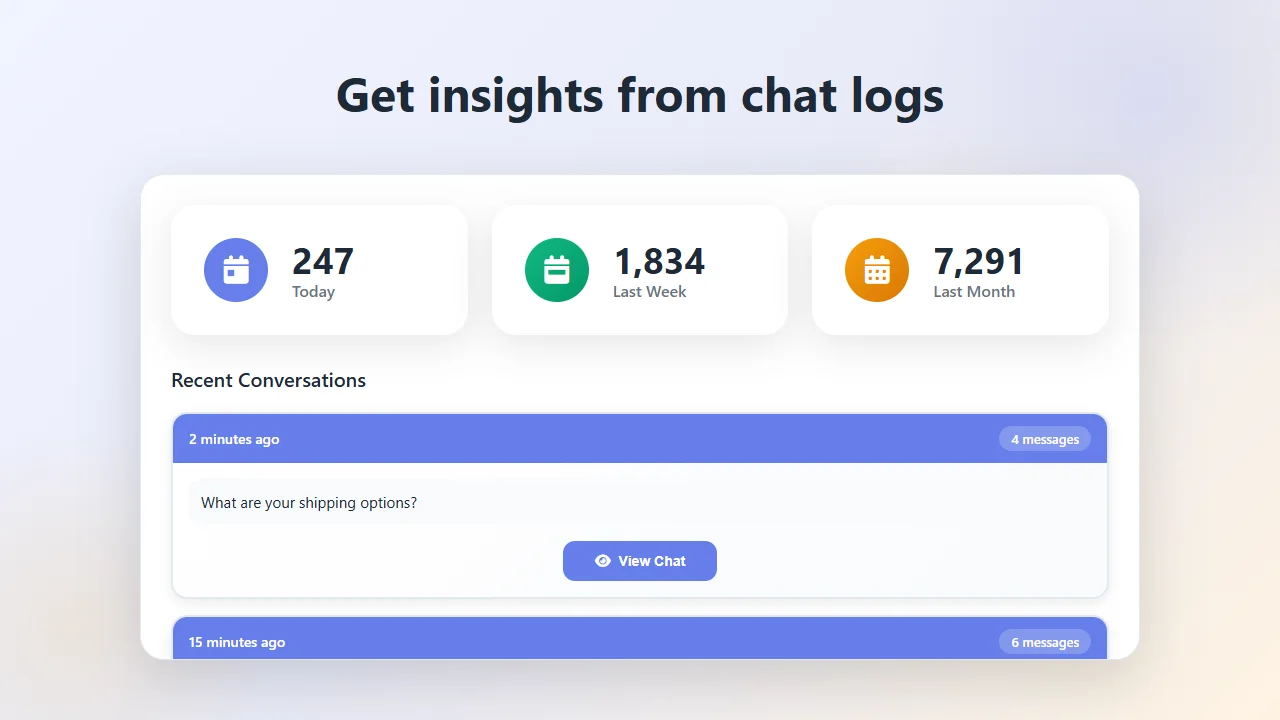
Find Content Gaps in Your Contentful Library
Chat logs show you exactly what visitors are asking about but cannot find on the site. Maybe prospects keep asking about an integration you never wrote a page for, or customers want policy details buried in a PDF. Use those insights to brief your content team, spin up a new content type in Contentful, or publish the landing page your audience is actually searching for.
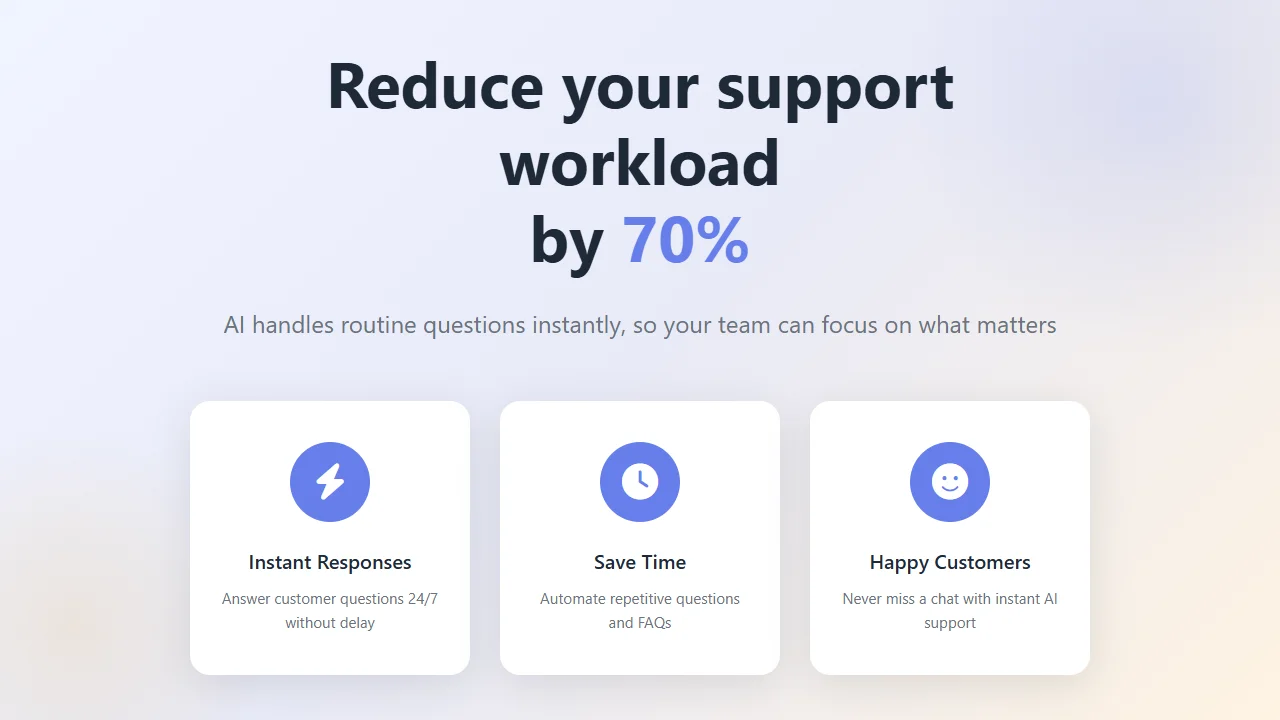
Stop Routing Every Visitor Question to Your Content Team
Content teams on Contentful sites often end up triaging inbound questions that have nothing to do with editorial — pricing, plan tiers, feature availability across brands, login issues. The chatbot handles those repetitive inquiries automatically, so your editors and developers can stay focused on publishing and shipping instead of replying to the same email three times a day.
Works with Any Contentful Frontend Framework
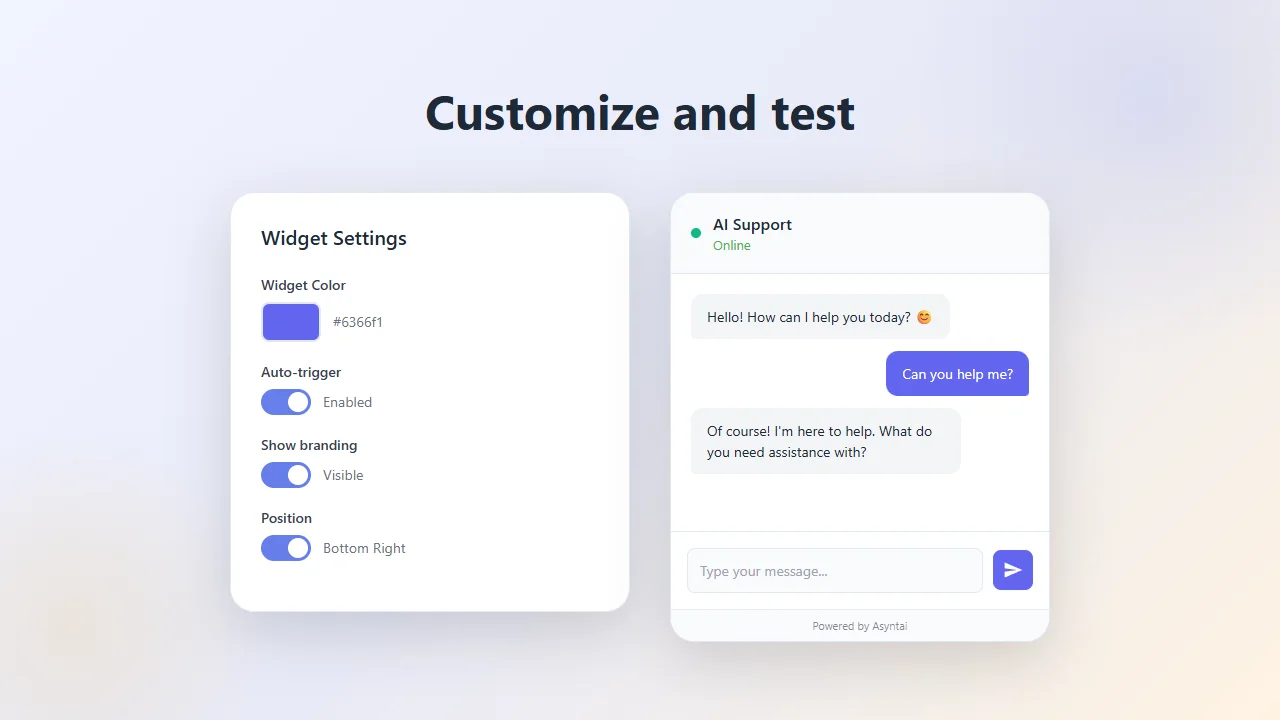
Whether your Contentful site is rendered by Next.js App Router, Nuxt 3, Gatsby, Astro, Remix, or a React single-page app — the chat widget adapts. Customize colors, position, and welcome message from your dashboard to match your brand system. Test conversations before going live so you know the AI represents your voice accurately across every space you publish to.
Watch Introduction Video
See how an AI chatbot fits into a Contentful-powered frontend. This short tutorial walks you through signing up, pointing the AI at your content, and dropping the script into your framework root layout so the widget appears on every published page.
Have any questions? Try our AI chatbot right now
Ask it anything — it is live on this page
Built for Contentful-Powered Frontends
Simple setup, works with any frontend framework rendering your Contentful content. Your AI assistant is live in minutes.
Set Up in Minutes
Copy one script snippet, paste it into your framework root layout, and you are live. Works with Next.js, Nuxt, Gatsby, Astro, Remix, and React. The whole setup takes less than five minutes and does not require a Contentful App.
24/7 Across Every Timezone
Contentful sites often serve global audiences — enterprise buyers across three continents, readers in a dozen markets, users in every timezone. The chatbot answers at 2 AM on a Sunday just as well as during business hours, so inbound interest never waits on your support queue.
Trains on Your Published Content
Point it at your live frontend and the AI reads every rendered page — articles, product pages, docs, release notes, help center entries. As your editors publish new content in Contentful and you redeploy, the chatbot keeps learning from what you ship.
Replies in Your Visitor's Language
Contentful is a strong fit for multi-locale publishing, and the chatbot should match. It detects what language a visitor is typing in and replies in kind, across 32 languages. Multilingual replies are available from the Starter plan.
Works With Any Frontend Framework
Next.js App Router, Next.js Pages Router, Nuxt 3, Gatsby, Astro, Remix, or a React single-page app — the widget drops in the same way. Add it once to your root layout and it ships on every route, with or without route-based code splitting.
Doesn't Slow Your Build or Lighthouse Score
The widget script is lightweight and loads after your page is interactive, so it stays out of the critical rendering path for your Core Web Vitals. It has no impact on build times, ISR revalidation, or the static output your frontend ships to the edge.
How It Works
Get your AI chatbot live on your Contentful-powered frontend in three simple steps
Sign Up & Configure
Create your Asyntai account, add your site URL, and customize the widget appearance to match the design system your frontend renders from Contentful.
Add the Script to Your Frontend
Copy the snippet into your framework root layout — Next.js app/layout.tsx, Nuxt nuxt.config.ts, Gatsby gatsby-ssr.js, or the equivalent for your stack. Commit and push.
Deploy and Go Live
Deploy to Vercel, Netlify, Cloudflare Pages, or wherever you host. The chatbot appears on every published page and starts answering visitor questions immediately.
Simple Contentful Integration
Get your AI chatbot live on your Contentful-powered site in a few steps. The install happens on your frontend framework, not inside the Contentful dashboard — so it works with any rendering mode, any hosting provider, and across every Space in your organisation.
-
1
Sign up and get your embed code
Create your Asyntai account, add your website URL, and copy the embed snippet from your Asyntai dashboard.
-
2
Open your frontend project
Open the repo for the framework that renders your Contentful content — typically Next.js (app/layout.tsx), Nuxt (nuxt.config.ts or app.vue), Gatsby (gatsby-config.js or gatsby-ssr.js), or React (public/index.html).
-
3
Add the Asyntai script
In Next.js, use the Script component with strategy="lazyOnload" or strategy="afterInteractive". In other frameworks, add the snippet to the root layout so it loads on every route.
-
4
Deploy and go live
Push to Vercel, Netlify, or Cloudflare Pages. The chatbot appears on every published page of your Contentful-driven site — no Contentful App required.
Sign up free and get your personalized integration code instantly
Why Contentful Site Owners Choose Asyntai
Start with 100 free messages, upgrade as your traffic grows
Replies in Every Locale You Publish
Multi-locale is a flagship capability of Contentful — your site may ship in five languages or fifteen. Your chatbot should match. It detects the language the visitor is typing in and replies in kind, across 32 languages. Multilingual replies are available from the Starter plan.
Capture Leads From Your Frontend Visitors
Smart Lead Capture recognises when a conversation is heading toward a sales or contact question and invites the visitor to leave their name, email, and a short message — then saves the lead to your dashboard. Available from the Starter plan.
Frees Up Your Editors From Repetitive Email
Content teams on Contentful sites shouldn't have to double as the support team. The chatbot handles the repeat questions — pricing, plan tiers, integration specifics, account access — so your editors can stay focused on the work they were actually hired to do.
Frequently Asked Questions
Everything you need to know about adding an AI chatbot to your Contentful-powered site
Understanding Contentful for Your Business
What is Contentful?
Contentful is a headless content management system — which means your editors write and manage content in the Contentful web app, and your content is delivered via an API to whatever frontend you choose. Unlike a traditional CMS that bundles content storage and page rendering into one application, Contentful separates the two concerns so your team can pick the best tool for each job.
Contentful is particularly known for enterprise-grade governance — workflows, roles and permissions, release scheduling, and multi-Space management — along with a mature editor experience, flexible content modelling, and first-class APIs. It is popular with mid-market and enterprise content teams, global B2B SaaS companies, publishers running multiple titles, and organisations managing several brands under one umbrella.
How Contentful Works
Editors define content types — things like Article, Product, Landing Page, Author — inside the Contentful content model. Each type has fields: short text, rich text, media assets, references to other entries, and so on. Once the model is in place, editors create entries by filling in those fields, and Contentful handles versioning, publishing workflows, scheduled releases, and locale management automatically.
When a visitor loads a page, it is not Contentful serving the HTML. A frontend framework — usually Next.js, Nuxt, Gatsby, Astro, Remix, or a React single-page app — queries the Contentful Content Delivery API at build time or request time, pulls in the entries, and renders the page. The frontend is what the user's browser actually downloads and executes.
This architecture is why any script you want to add to every page — analytics, chat, personalization, tag management — goes onto the frontend, not into Contentful itself. Contentful is the content source; the frontend is the delivery layer. The chatbot, like every other script your users interact with, lives in that delivery layer.
Who Uses Contentful?
Contentful is a common choice for mid-market and enterprise B2B SaaS marketing sites that need disciplined workflows and locale governance, global publishers managing multiple editorial titles, organisations running multi-brand content hubs across separate Spaces, help centers and developer documentation portals, app marketplaces and app-store listings, and marketing teams that want to scale content operations without scaling engineering overhead.
Teams choose Contentful when they want strong editorial controls and API-first delivery, but also want the developer freedom to pick their own frontend framework, hosting provider, and performance strategy. The tradeoff is that setup requires a developer to wire up the frontend — this is not a drag-and-drop site builder, and there is genuine engineering work involved in the initial integration.
Why AI Chat Fits a Contentful Site
Sites built on Contentful tend to be content-heavy — lots of articles, product pages, release notes, help center entries, localized landing pages, and developer documentation. That is exactly the kind of site where visitors ask questions that have answers buried somewhere in the content, but which require navigating several pages to find. The more content you publish, the harder your own site becomes to search from the outside.
An AI chatbot that reads your published content can surface those answers instantly. The visitor asks a question in natural language, the AI pulls from the same content your frontend is rendering from Contentful, and replies in seconds. For B2B SaaS marketing, this turns a forty-page marketing site into a conversational product explainer. For help centers, it answers support questions faster than a ticket. For multi-brand hubs, it lets a visitor ask about one brand and get an answer without clicking through a brand selector.
And because multi-locale is a Contentful strength, the chatbot needs to match. Asyntai auto-detects the language of each visitor and replies in that language, so a single deployment can serve readers in every locale your site publishes to. Multilingual replies are available from the Starter plan.
Adding the Chatbot to Your Frontend
The install is exactly where you would expect: the root layout of your frontend framework, the same file where you already load analytics, fonts, and global styles. For Next.js that is app/layout.tsx with the Script component. For Nuxt that is nuxt.config.ts or app.vue. For Gatsby that is gatsby-ssr.js or gatsby-browser.js. For Astro, Remix, and React single-page apps, it is the base layout or public/index.html.
No Contentful App is required because Contentful is not the thing shipping the HTML to visitors. Your editors continue working in the Contentful web app exactly as before. Your developers add one script tag, commit, push, and the chatbot is live on the next deploy. Nothing in your content model, workflow, or role configuration changes.
How AI Chat Helps Contentful-Powered Sites
The Headless Support Gap
Contentful-powered sites are usually maintained by a mix of roles — a content team in the web app, a platform team in the frontend repo, a marketing lead planning campaigns. The content side is polished. The frontend is fast. But when a visitor has a question, the usual path is still a contact form or a support ticket, which means someone has to read and reply. As the site grows and inbound volume climbs, that queue becomes a steady drain on the team.
Most chat tools available today are one of two things: rule-based bots that follow rigid click-through flows, or live-chat platforms that require an agent sitting at a keyboard. Neither is a great fit for an enterprise Contentful setup. Rule-based bots break the moment a visitor phrases a question outside the script. Live chat ties up editorial or support staff during business hours and leaves the site silent the rest of the day.
AI chat changes that equation. It reads the content you have already published through Contentful, understands natural-language questions, and answers them on its own. Your editors stay in the web app. Your developers stay in the repo. The chatbot handles the inbound questions that would otherwise have pulled them away from that work.
Speed Matters on Modern Frontends
Teams that pick Contentful usually care about performance. You chose a headless architecture partly so you could ship a fast frontend — static generation where possible, edge caching, careful image optimization, predictable Core Web Vitals. Milliseconds matter. Page speed is a conversion lever, and for enterprise sales, it is also a brand signal.
The same logic applies to visitor communication. A prospect who fills out a contact form and waits two days for a reply has already moved on, no matter how fast your pages loaded. An AI chatbot closes that gap. A visitor asks a question, the AI pulls the answer from your published content, and replies in seconds — while the visitor is still on the page and still interested.
For a B2B SaaS marketing site, that instant answer often decides whether the visitor books a demo or bounces. For a help center, it is the difference between self-service resolution and an escalated ticket. For a multi-brand content hub, it keeps a visitor engaged long enough to find the brand, the region, or the answer they actually came for.
AI Chat vs. Traditional Chat Tools on Headless Sites
Traditional chat widgets either connect to a live agent or follow pre-built decision trees. Both approaches strain at enterprise scale. Live-agent chat requires staffing — someone has to be online, trained, and available in every major timezone your Contentful site serves. Decision-tree bots only answer questions you have explicitly programmed, and visitors quickly end up in dead ends when their phrasing does not match your script.
AI-powered chat takes a fundamentally different approach. Instead of following rigid scripts, the system understands the intent behind a visitor's question. You provide it with your website content and any additional documents — product briefs, pricing PDFs, internal FAQs, policy sheets — and the AI constructs a natural, relevant answer. Whether a visitor asks 'do you support SAML SSO' or 'can I log in with Okta' or 'does your auth work with our identity provider,' the AI recognises these all map to your SSO capabilities.
This is particularly valuable for Contentful sites because your content is often structured and deep. Articles link to related articles. Product pages reference feature pages. Documentation cites APIs. Help entries point to release notes. The AI can follow those relationships in its answers, pointing a visitor to the next relevant page instead of ending the conversation at a dead end.
What Contentful Site Owners Gain
The first benefit is round-the-clock availability. Contentful sites often serve international audiences across many timezones — global B2B SaaS buyers, multi-market publishers, enterprise customers placing questions outside their own business hours. An AI chatbot answers at 3 AM on a Sunday just as accurately as at 10 AM on a Tuesday. You capture inbound interest that would otherwise be lost to after-hours hesitation.
The second benefit is fit with a modern stack. The widget loads asynchronously via a lightweight script, so it has no impact on your Core Web Vitals or Lighthouse scores — metrics that matter to performance-conscious Contentful teams. It does not interfere with ISR, SSG, SSR, or edge rendering. It does not touch your build output or your deployment pipeline.
The third benefit is the time your team gets back. Editors spend less of their day fielding the same 'how do I do X' or 'which plan includes Y' questions. Developers spend less time building and maintaining custom support flows. The chatbot handles the repeat work while your team sees every conversation in the Asyntai dashboard, so you keep visibility without doing the manual labour.
Getting Your Contentful Content Into the Chatbot
Contentful sites are rich in structured, published content — articles, product pages, landing pages, documentation, release notes, help center entries, FAQs. All of that is valuable knowledge base material for the AI. The fastest way to get your chatbot up to speed is to provide your live site URL. The system crawls the pages your frontend renders and indexes the content, building an understanding of what your site offers. The Free plan crawls up to 100 pages, Starter crawls up to 500, and Standard crawls up to 1,000.
For multi-locale Contentful sites, the AI reads each locale version your frontend publishes. A visitor asking a question in French about your French-language pricing page gets an answer drawn from that specific locale, not from the English source. This keeps regional information accurate — currencies, units, availability, legal language — without you having to manually translate your chatbot training.
For content that is not published on your site — internal pricing sheets, contract terms, product specification PDFs, enterprise sales collateral — you can upload files directly to the Asyntai dashboard. This extends the AI's knowledge beyond what appears on the frontend. You can also write custom instructions that shape how it responds, like always suggesting a demo booking for enterprise prospects or redirecting billing questions to a specific page.
Results Contentful Site Owners See
The impact tends to show up in two areas: engagement metrics and workload reduction. Sites with the chatbot typically see visitors spend more time on the page when they interact with the AI — they ask a question, get pointed to a relevant article or product page, read it, and often come back to ask another question. That engagement is visible in session duration and pages-per-session analytics.
On help center and documentation-focused Contentful sites, the chatbot serves as a navigation assistant. Instead of a user bouncing because they cannot find a specific troubleshooting article or API reference, they ask the chatbot and get directed to the right page. This reduces bounce rates, lowers support ticket volume, and increases the perceived value of the knowledge base.
On the operational side, the reduction in repetitive inbound is immediate. The questions that used to fill your editors' and support team's inboxes now get handled automatically. You still see every conversation in the dashboard, so you maintain full visibility and can spot patterns — recurring questions that deserve a dedicated article, content gaps to brief your editors on, or pricing and plan confusion that suggests a copy tweak on a landing page.
Choosing a Chat Tool for a Headless Stack
Contentful teams have specific needs when picking a chat tool. First, it must not require a CMS-side App or a specific framework plugin — it should drop in via a script tag that works with any frontend. Second, it must play well with modern rendering strategies: static generation, incremental revalidation, server rendering, and edge deployment should all work the same way. Third, it must handle multi-locale content natively, because a single-language chatbot on a multi-locale Contentful site creates a jarring visitor experience.
Fourth, it should help — not hurt — the performance work your team has already done. A chat script that blocks the main thread, inflates your JavaScript bundle, or degrades your Lighthouse score is at cross-purposes with the reason you picked a headless architecture in the first place. Asynchronous loading after page interactivity is the right default, and every Contentful site we have seen treats Core Web Vitals as a non-negotiable.
Finally, consider governance and customization. Enterprise Contentful setups often involve multiple brands, Spaces, and environments — and the chat widget should feel like part of each brand system, not a foreign element bolted on. Customizable colors, position, and welcome message help the widget blend in rather than stand out, and you can configure a separate site in Asyntai for each brand or Space if you need to.
Ready to Add AI Chat to Your Contentful Site?
Start with 100 free messages and see how AI-powered answers can keep visitors engaged on your headless frontend.