AI Chatbot for Medusa Stores
You chose Medusa because you want full control over your commerce stack. Now give your storefront visitors the same developer-grade experience on the support side — an AI assistant that answers product questions instantly, works with any Next.js or Gatsby front-end, and deploys with a single script tag.
See It In Action
Built for developer-driven stores that prioritize flexibility and customer experience
Your Custom Storefront Deserves Custom Support
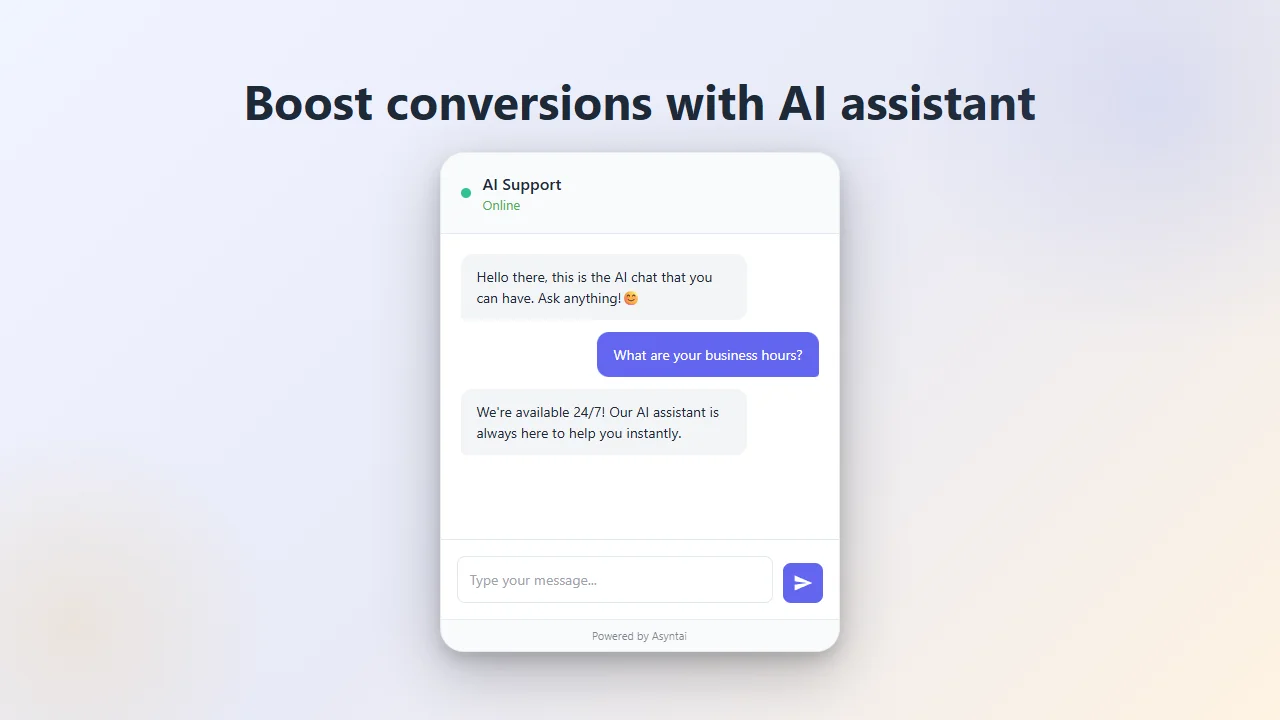
Medusa merchants build unique storefronts with Next.js, Gatsby, or their own framework of choice. That means navigation, product layout, and checkout flow are different from store to store. Instead of forcing visitors to hunt through your custom UI for answers, give them an AI assistant that knows your entire catalog and responds in plain language — regardless of how your storefront is structured.
Knows Your Products, Variants, and Policies
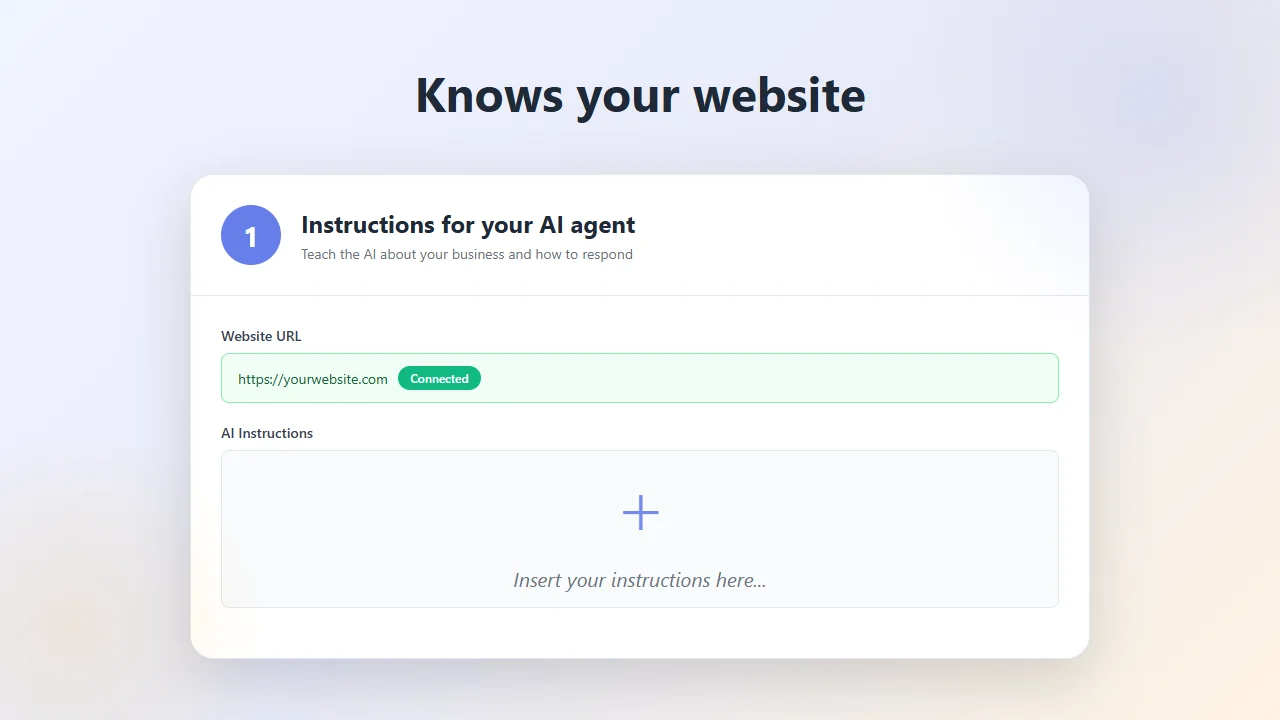
The AI reads every product page rendered on your Medusa storefront — names, descriptions, prices, variant options, and availability. Upload shipping policies, sizing guides, material specs, or return terms as PDFs for deeper coverage. When a visitor asks "is this available in the EU" or "what material is the lining made from," they get a precise answer sourced directly from your content.
Discover What Visitors Actually Want to Know
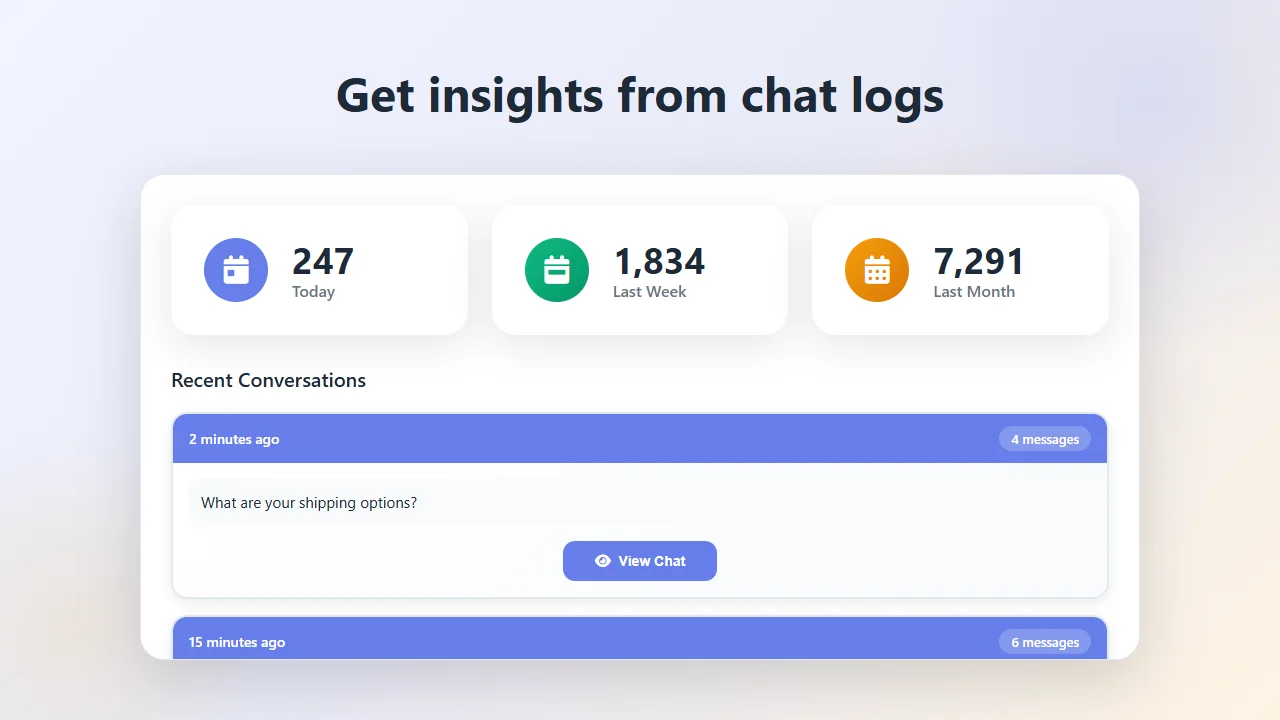
Medusa gives you full control over your data layer, and chat logs add another dimension. See exactly what questions visitors ask most often — maybe they keep asking about sizing across regions, or want to know if you ship to a country you have not listed yet. Use those patterns to refine product descriptions, add missing content, and make data-driven decisions about inventory and expansion.
Automate Repetitive Questions Across Every Region
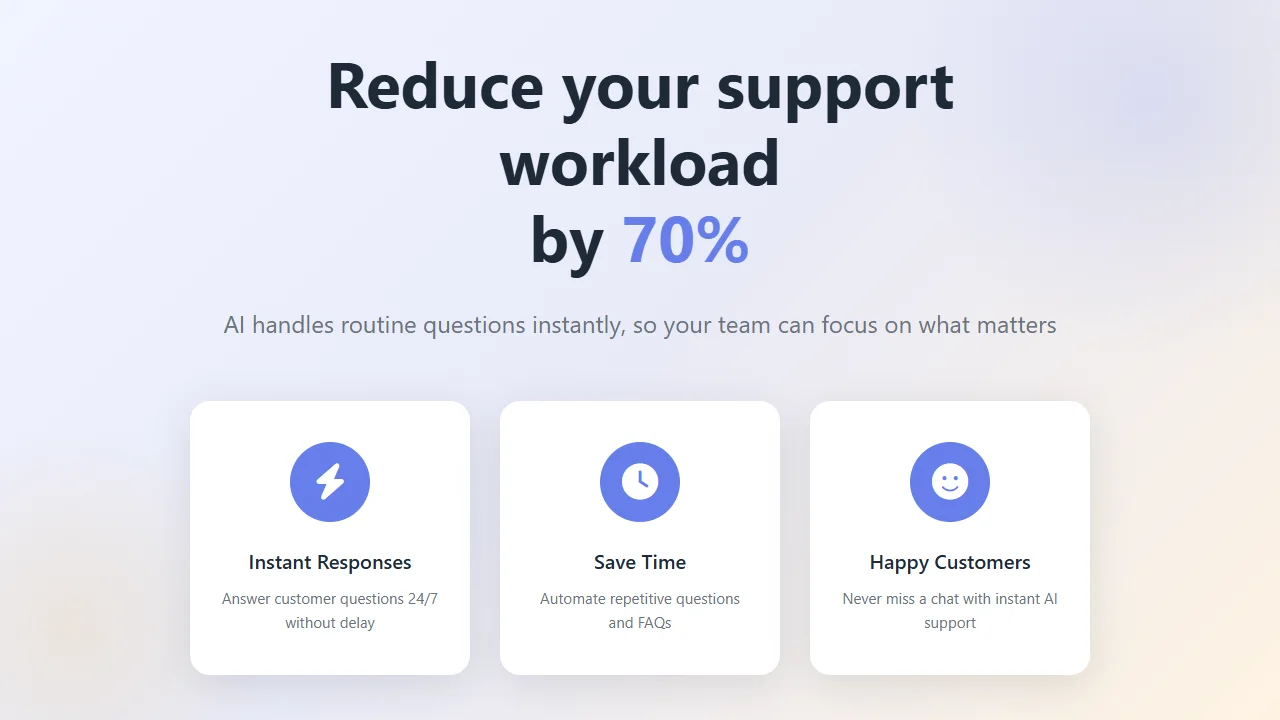
Medusa's multi-region support means you might serve customers in different countries with different currencies, tax rules, and shipping options. The same questions come up everywhere: delivery estimates, return policies, payment methods. The chatbot handles all of them instantly, in the visitor's language, so your team can focus on fulfillment, product development, and growth.
Matches Any Storefront Design
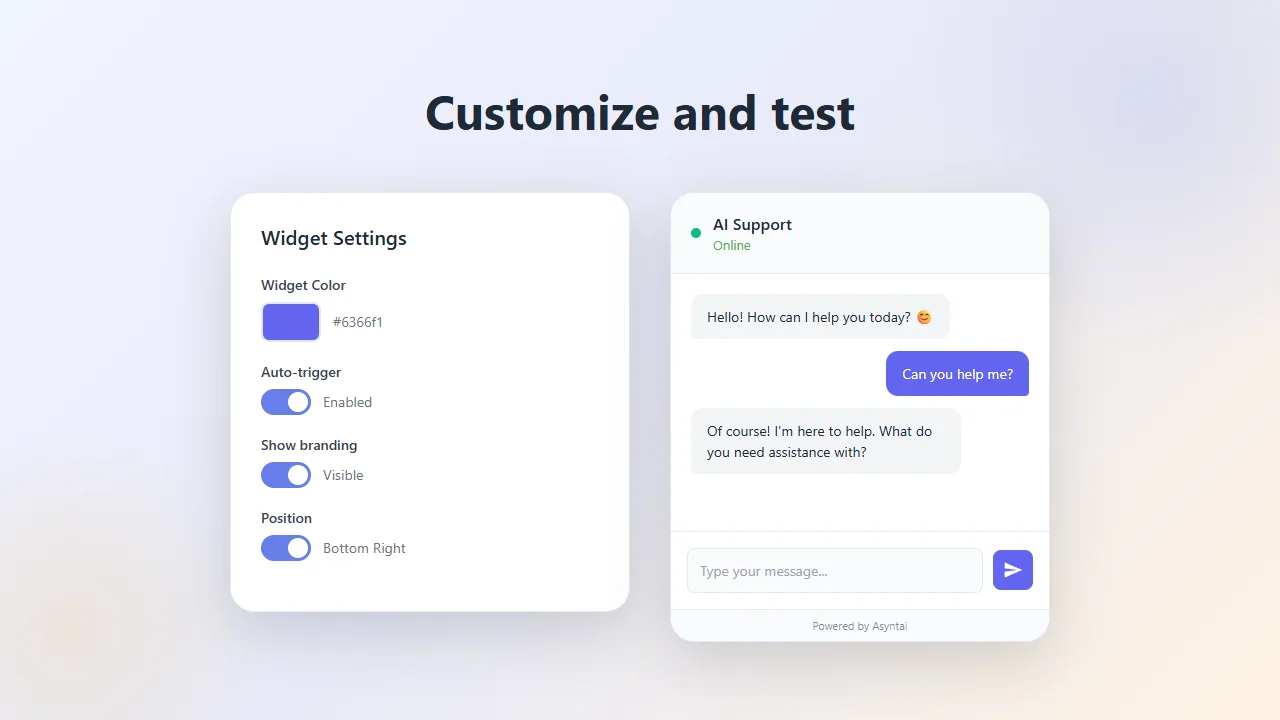
Your Medusa storefront has a custom design built from scratch — not a template chosen from a marketplace. The chat widget adapts to match. Configure colors, position, welcome message, and avatar to blend seamlessly with your front-end. Test conversations before going live to make sure the AI matches your brand tone, whether that is casual DTC or polished luxury.
Watch Introduction Video
See how easy it is to add an AI chatbot to your Medusa storefront. This quick walkthrough covers the entire setup — from creating your account to pasting the script tag into your Next.js or Gatsby project and going live.
Built for Medusa-Powered Stores
Add a single script tag to your Next.js or Gatsby storefront. No Medusa plugins, no server-side changes.
Works with Any Headless Front-End
Medusa is API-first, and your storefront could be built with Next.js, Gatsby, Remix, or a custom React app. The chatbot integrates at the front-end level with a script tag — it does not touch your Medusa back-end, your Node.js server, or your database. Deploy it the same way you would any third-party script.
Sell Around the Clock
Indie brands and DTC startups running Medusa often operate with lean teams across different time zones. Your AI assistant handles product questions, shipping inquiries, and policy clarifications 24/7 so you never miss a conversion because nobody was online to respond.
Multilingual for Multi-Region Stores
Medusa's built-in multi-region support lets you sell in different currencies and tax configurations. The chatbot complements that by detecting the visitor's language and responding automatically — whether they write in French, Japanese, or Portuguese — without you configuring separate bots per region.
Shipping, Returns, and Region-Specific Policies
Different regions mean different shipping carriers, delivery windows, and return rules. Upload your policies as documents and the chatbot answers region-specific questions accurately: "how long does delivery take to Germany" or "can I return this in Australia" — all handled automatically.
Reduce Cart Abandonment
Visitors browsing your custom storefront leave when they cannot find answers quickly. An instant response about sizing, materials, compatibility, or shipping at the moment of hesitation keeps them moving toward the Medusa checkout instead of navigating away to search elsewhere.
No Lock-In, Just Like Medusa Itself
You chose Medusa to avoid vendor lock-in. The chatbot follows the same philosophy — it runs independently of your commerce engine. If you swap your front-end framework, migrate hosting providers, or extend Medusa with custom plugins, the chat widget keeps working with zero changes.
How It Works
Get your AI chatbot live on your Medusa storefront in three simple steps
Sign Up & Connect
Create your account and provide your Medusa storefront URL. The AI automatically learns about your products, descriptions, and policies from your live pages.
Add to Your Storefront
Copy the JavaScript snippet from your dashboard and paste it into your Next.js _document.tsx, layout.tsx, or Gatsby html.js file. One line of code, deployed with your next build.
Start Converting More Visitors
Your AI chatbot is live — answering product questions, explaining policies, and guiding visitors toward checkout around the clock.
Simple Medusa Storefront Integration
Because Medusa is headless, the chatbot integrates directly with your storefront code — not with the Medusa back-end. Paste the snippet into your Next.js or Gatsby project and deploy. No server-side plugins, no environment variables, no changes to your Medusa configuration.
- ✓ Works with Next.js, Gatsby, and custom React storefronts
- ✓ No impact on Lighthouse scores or Core Web Vitals
- ✓ Mobile-responsive across all devices and screen sizes
- ✓ No Medusa plugin installation needed
Sign up free and get your personalized integration code instantly
Why Medusa Store Owners Choose Asyntai
Start free with 50 messages, scale as your store grows
Conversational Product Discovery
Your custom Medusa storefront has its own navigation and search logic. The chatbot adds a parallel discovery channel — visitors describe what they need in their own words, and the AI finds the right product across your entire catalog, no matter how your front-end is structured.
Scale Support Without Scaling Headcount
Startups and indie brands on Medusa run lean. The chatbot handles five conversations or five hundred at the same time — during a product drop, a marketing push, or a quiet Tuesday — without adding support staff or changing your infrastructure.
Framework-Agnostic, Future-Proof
Medusa developers iterate fast — swapping front-end frameworks, adding custom modules, or migrating to new hosting. The chatbot integrates at the HTML level, so it survives every architectural change. Rewrite your storefront from Gatsby to Next.js and the widget moves with a single copy-paste.
Frequently Asked Questions
Everything you need to know about adding an AI chatbot to your Medusa store
How AI Chatbot Helps Medusa Stores
Bridging the Gap in Headless Commerce Storefronts
Medusa gives developers complete control over the commerce back-end — products, orders, payments, fulfillment — through a clean Node.js and TypeScript API. The storefront, meanwhile, is an entirely separate application, usually built with Next.js or Gatsby and deployed independently. This separation of concerns is powerful for engineering teams, but it creates an interesting challenge on the customer-facing side: there is no built-in support layer that comes bundled with the storefront the way monolithic platforms provide out of the box.
An AI chatbot fills that gap without compromising the headless architecture. It lives at the HTML level of your storefront, loading asynchronously as a lightweight script tag. It does not depend on the Medusa server, does not require a custom plugin, and does not add any Node.js middleware to your back-end. Visitors get instant, intelligent answers drawn from the content rendered on your pages, while your architecture stays clean and decoupled. For teams that chose Medusa specifically to avoid monolithic complexity, this approach respects that decision completely.
Supporting Multi-Region Stores with Consistent Quality
One of Medusa's standout capabilities is native multi-region support. You can define separate regions with distinct currencies, tax configurations, shipping providers, and fulfillment options — all managed from a single Medusa instance. This is transformative for DTC brands expanding internationally, but it multiplies the number of customer questions. Visitors from Germany want to know about VAT-inclusive pricing and DHL delivery estimates. Customers in Australia ask about return shipping costs and whether duties are included. Buyers in Japan want to know if you offer Konbini payment.
The chatbot handles this regional complexity by drawing on whatever documentation you provide. Upload your shipping policies per region, your return terms for different countries, and your payment method FAQ. The AI answers in the visitor's language, referencing the policies that apply to their region. Instead of building a dedicated FAQ page for every country you serve, a single well-documented chatbot covers all of them. As you expand into new regions through Medusa's configuration, you update the chatbot's knowledge by uploading the new region's policies — no code changes, no storefront rebuilds.
Turning Product Pages into Conversations
Medusa merchants tend to sell products that require some explanation. You are not a generic dropshipper — if you were, you would be on Shopify. You might sell handcrafted goods with material and care instructions, technical equipment with compatibility requirements, or specialty food with allergen and storage details. These products demand that the buyer understand something specific before purchasing, and a static product page can only do so much.
The chatbot transforms your product catalog into a two-way conversation. A visitor looking at a leather bag can ask "will this patina over time" and get an answer pulled from your material care document. Someone browsing your electronics catalog can ask "does this work with European voltage" and receive a precise response if you have uploaded the relevant spec sheet. The AI does not guess — it pulls from the content you have provided and synthesizes it into natural, helpful answers. For product categories where buyer confidence directly drives conversions, this conversational layer pays for itself quickly.
Keeping Pace with Rapid Iteration Cycles
Teams that build on Medusa ship fast. You might push storefront updates daily, add new product collections weekly, or restructure your category taxonomy as the business evolves. Traditional support solutions struggle with this pace — knowledge bases go stale, FAQ pages lag behind product changes, and support agents need retraining every time you pivot.
The AI chatbot adapts to your pace because it reads your live storefront content. When you add new product pages, update descriptions, or change pricing, the chatbot incorporates those changes on its next content crawl. Upload a new PDF when you revise your return policy or add a new shipping carrier. There is no separate knowledge base to maintain in parallel with your store — your storefront and your uploaded documents are the knowledge base. For lean teams moving fast on Medusa, this eliminates an entire category of maintenance work that slows down competitors running on less flexible platforms.
Building Customer Trust for Independent Brands
Medusa attracts a particular kind of merchant: indie developers, bootstrapped startups, and DTC brands that want ownership of their commerce infrastructure. These businesses often compete against much larger retailers who have dedicated support teams, extensive FAQ sections, and live chat staffed around the clock. A first-time visitor to your store might hesitate to purchase from an independent brand they have never heard of, especially if they have a question and there is no obvious way to get an answer quickly.
An AI chatbot levels that playing field instantly. The moment a visitor lands on your Medusa storefront, they see a chat widget ready to help. They can ask about product details, shipping timelines, return policies, or anything else that builds the confidence needed to complete a purchase. The chatbot responds with accurate, well-sourced answers drawn from your own content — not generic boilerplate. For a brand competing on quality and authenticity rather than price and scale, this kind of responsive, knowledgeable customer interaction makes a tangible difference in conversion rates and repeat purchases. It signals to visitors that your independent store takes customer experience as seriously as the biggest players in your market.
Ready to Add AI Support to Your Medusa Store?
Start free with 50 messages and see how an AI-powered assistant transforms your storefront experience.