AI Chatbot for Norce Storefronts
Composable commerce means your front end is yours to control, and support tooling should not compromise that. The assistant is a single script that answers retail and B2B questions from your own content, with no dependency on your stack.
Try it on your own storefront for free
Enter your storefront URL and see how an AI assistant would answer your customers
See It In Action
For Norce retailers running composable storefronts and mixed B2B and B2C traffic
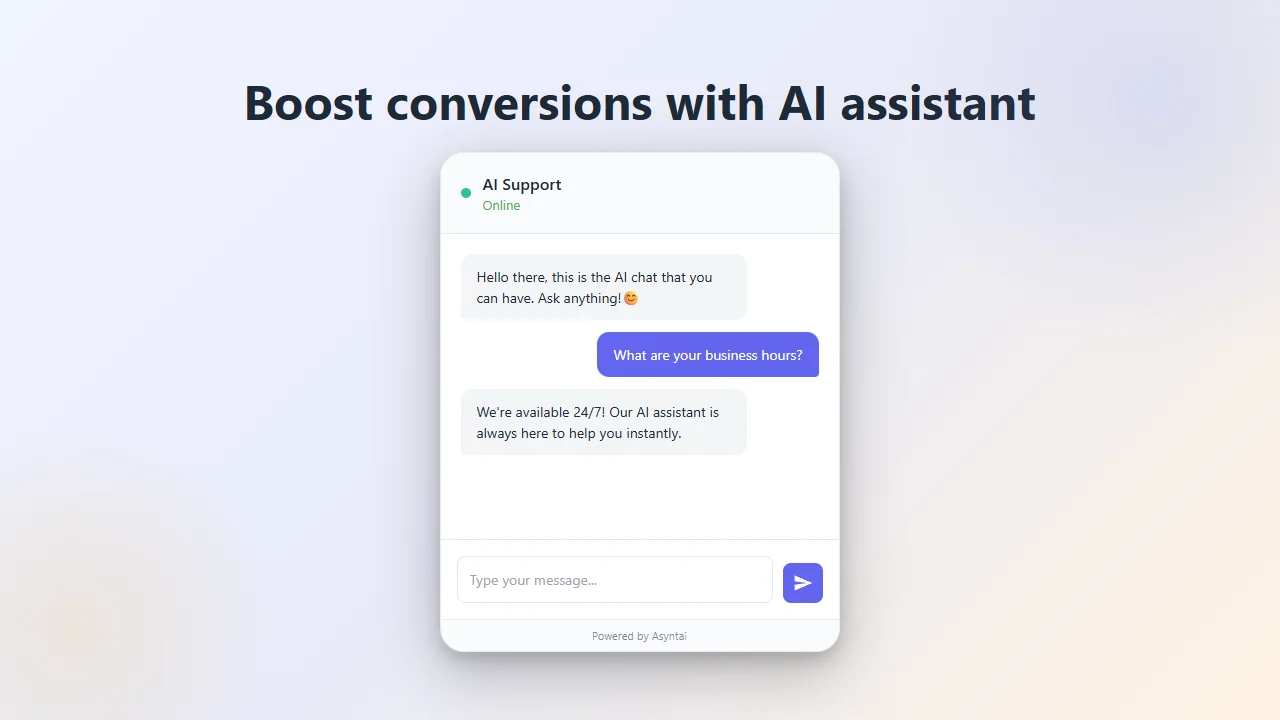
No Dependency on Your Stack
Your front end may be Next.js, Nuxt or something bespoke. The assistant is a script tag, so it does not care: no SDK, no framework coupling, nothing that constrains your next front-end decision.
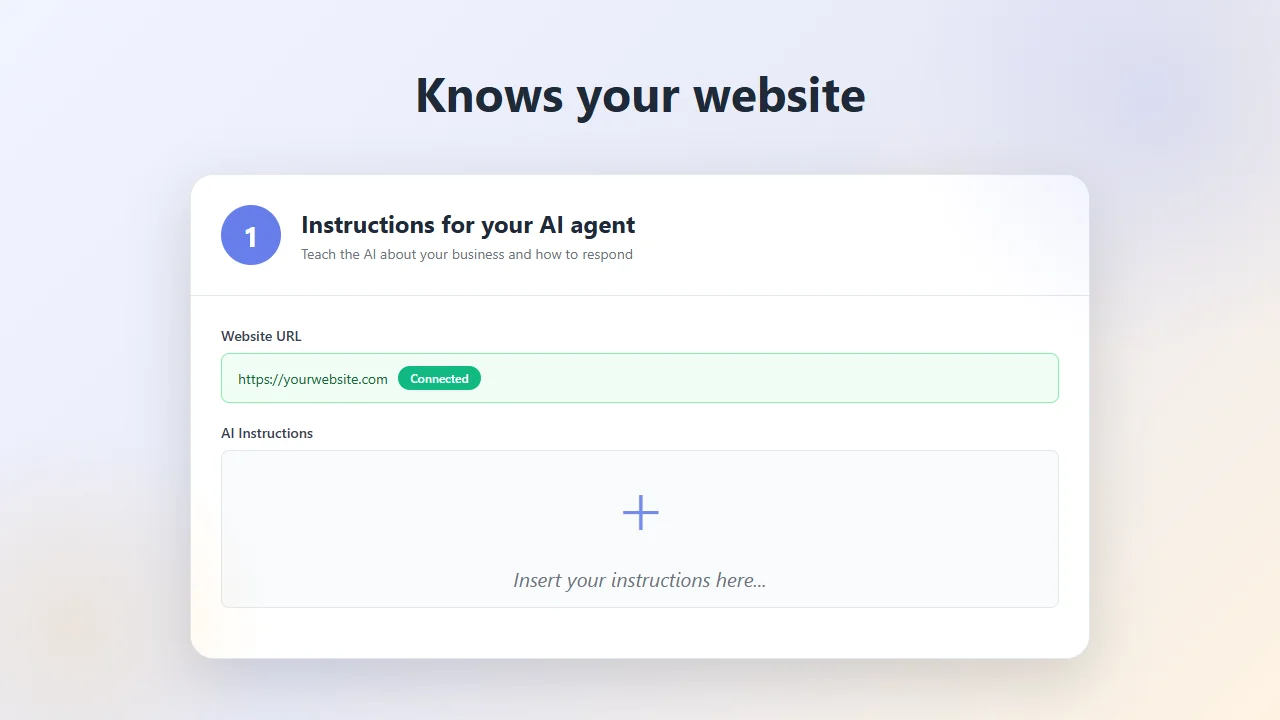
Serves B2B and Retail From One Catalogue
A trade buyer asking about net pricing and contract terms and a consumer asking about delivery both get accurate answers, and quotation requests are captured with the details your sales team needs.
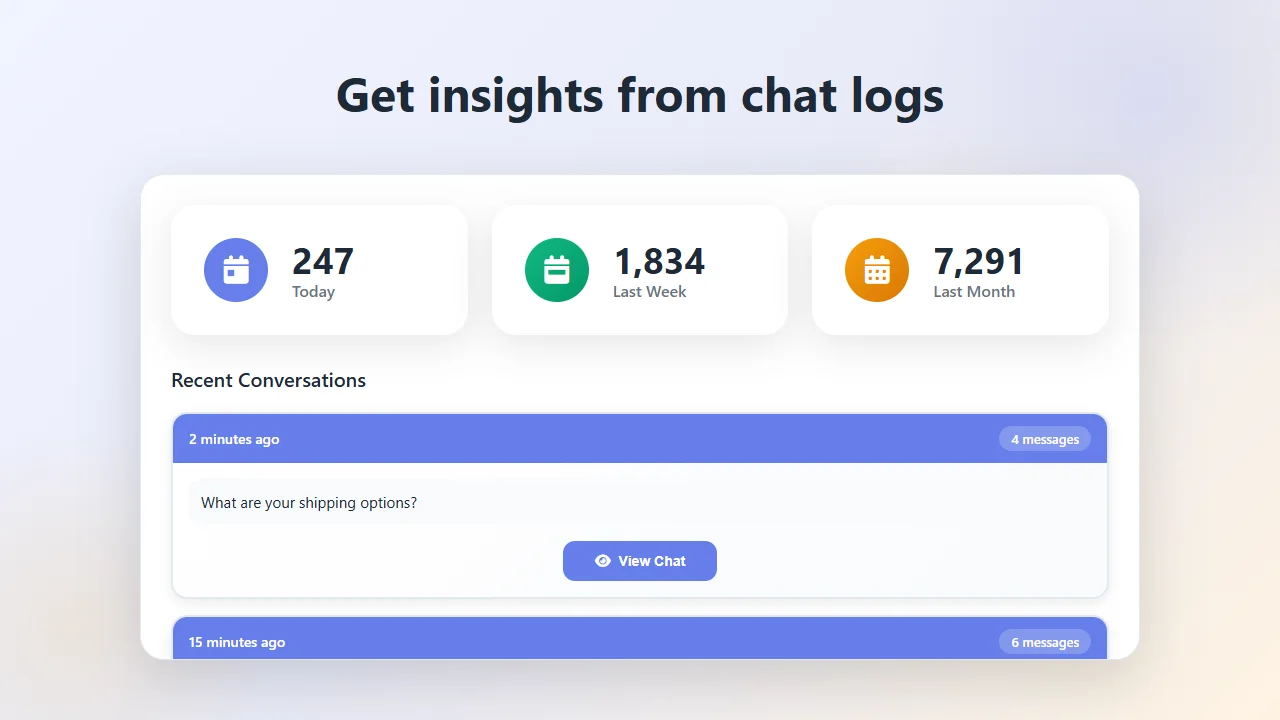
Answers From Your Own Data Only
For catalogues with technical attributes, compatibility rules and contract-specific detail, restraint matters more than fluency. It answers what your data contains and says when something is undocumented.
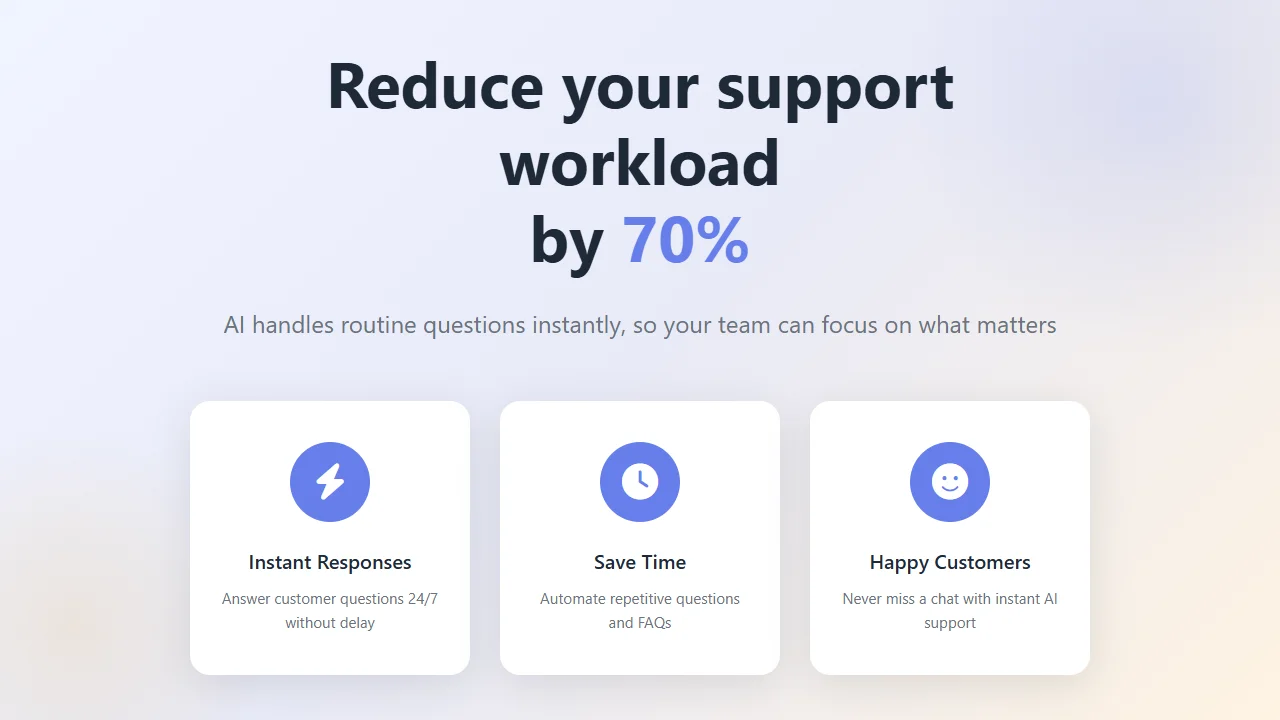
Covers Every Market You Publish
Multi-market storefronts get enquiries in several languages at several evening peaks. Language is detected per visitor across 36 of them, from one integration.
Reveals What the Storefront Fails to Explain
Recurring questions map directly to attributes missing from product data or terms buried too deep. Chat logs turn that into a prioritised list.
Have any questions? Try our AI chatbot right now
Ask it anything - it is live on this page
Built for Norce Merchants
One script tag. No SDK, no framework coupling, no build step.
Stack-Agnostic
Works on any front end because it is a plain script. Replatform the storefront and it keeps working.
B2B Ready
Net pricing, minimum quantities and contract questions answered from your documentation, with enquiries captured properly.
Attribute-Level Accuracy
Answers come from your product data and uploaded documents, not from general knowledge.
36 Languages
Detected per visitor, so multi-market storefronts need one assistant rather than several.
Deterministic Behaviour
Your instructions are applied in every conversation, which matters when nobody is reviewing transcripts daily.
Refuses to Improvise
Undocumented means undocumented. That is the only safe default for contract-driven catalogues.
Simple Norce Integration
One script tag in your storefront covers everything. There is nothing to install into the platform itself.
-
1
Sign up and copy your snippet
Create your Asyntai account, add your storefront URL so the AI can read your catalogue and policy pages, then copy the snippet from your dashboard.
-
2
Add it to your storefront layout
Place the tag in your global layout, or register it through your script management setup, so it loads on every route.
-
3
Load it after your content
Placing it at the end of the document keeps it clear of your critical rendering path.
-
4
Deploy and it is live
The assistant answers immediately. Tone, rules, documents and colours are managed from your dashboard.
Sign up free and get your personalised snippet instantly - paste it once and the widget is live
Why Norce Retailers Choose Asyntai
Start free with 100 messages, upgrade as enquiry volume grows
No Architecture Debt
A script tag adds nothing to your dependency graph, which is the whole point of choosing composable in the first place.
Qualified B2B Enquiries
Trade requests arrive with quantities and requirements attached, shortening the path to a quotation.
Support That Scales With Markets
Adding a country or a channel does not require a matching support hire.
Frequently Asked Questions
What Norce teams ask before adding the script
What an AI Assistant Adds to a Composable Storefront
Composable Means Avoiding New Coupling
Teams choose composable architecture to keep options open: swap the front end, change a service, adopt a better tool without a rebuild. Any addition that introduces an SDK or a framework dependency works against that.
A script tag is the least invasive integration available. It adds nothing to the dependency graph, requires no build step, and survives a front-end replacement untouched — which is the standard a composable stack should hold new tools to.
B2B and B2C Traffic Behave Differently
Norce retailers frequently serve both. Consumers ask about delivery and returns; trade buyers ask about net prices, contract terms, minimum quantities and lead times. Same storefront, entirely different conversations.
An assistant answering from documented terms handles both without a routing decision. Consumers get instant answers, and trade enquiries are captured with the specifics your sales team needs to quote rather than to qualify.
Technical Catalogues Need Restraint
Rich product data is an asset until a chatbot starts interpolating across it. A confidently wrong attribute becomes a wrong order, a return and, in B2B, a credibility problem with a buyer you wanted long-term.
Answering only from your own data and admitting gaps is therefore the required behaviour. It also produces a useful signal: the gaps customers notice are exactly the attributes worth enriching.
Multi-Market Support Should Not Multiply
Every market added brings enquiries in another language at another peak hour. Handled with people, that scales linearly with cost and unevenly with quality.
One integration covering 36 languages breaks that pattern. Market expansion becomes a merchandising and logistics decision again, rather than a support staffing one.
Chat Logs Are Product Data Feedback
In a composable setup, product data is the shared asset feeding every channel. Improving it improves everything downstream, and knowing what to improve is usually the hard part.
Recurring questions answer that directly. When the same attribute is asked about repeatedly, enriching it lifts conversion across every storefront and channel reading the same catalogue.
Ready to Add an Assistant Without Adding a Dependency?
Start free with 100 messages and let your storefront answer from your own data.