AI Chatbot for Webstudio Sites
Webstudio gives you visual editing without giving up control of the output. An assistant should work the same way: one HTML embed, no SDK, no framework coupling, nothing that constrains where you host or how you publish.
Try it on your own site for free
Enter your Webstudio site URL and see how an AI assistant would answer your visitors
See It In Action
For teams using Webstudio to keep visual editing without vendor lock-in
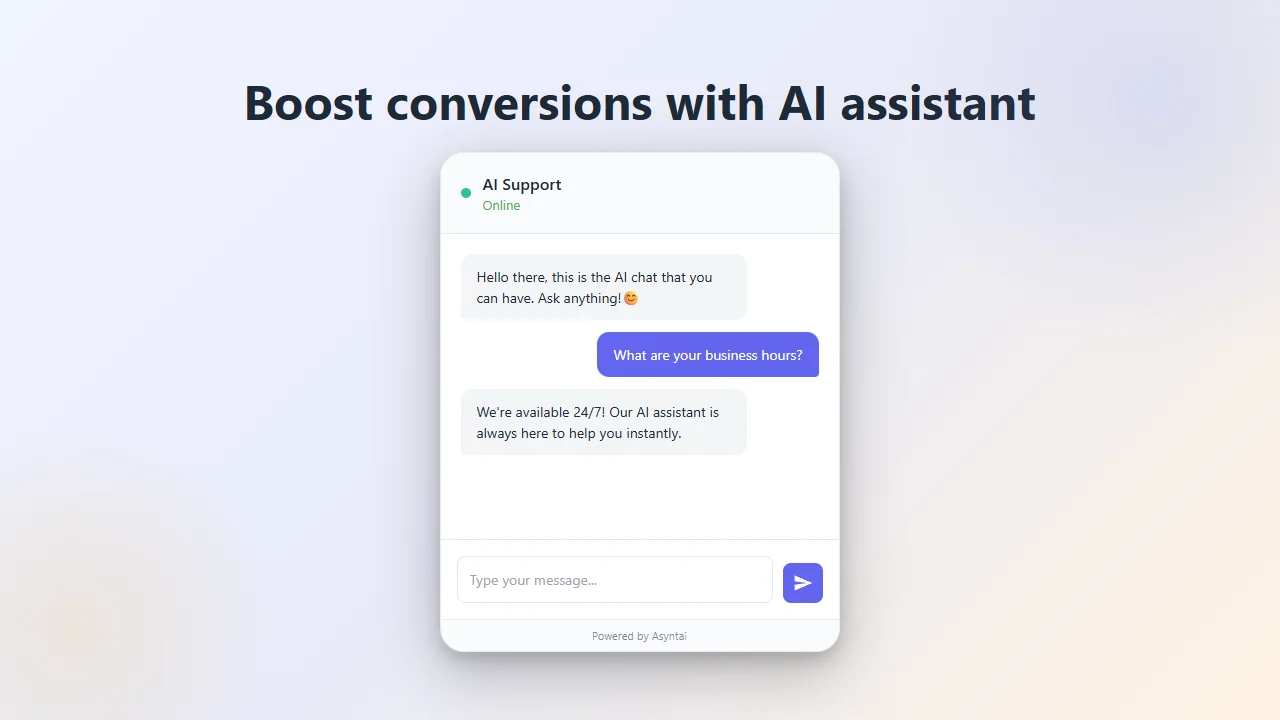
No Lock-In Added
You chose an open builder to avoid dependencies. A plain script honours that: no SDK, no package, no build step, and nothing that has to be unpicked if you move hosting or export the project.
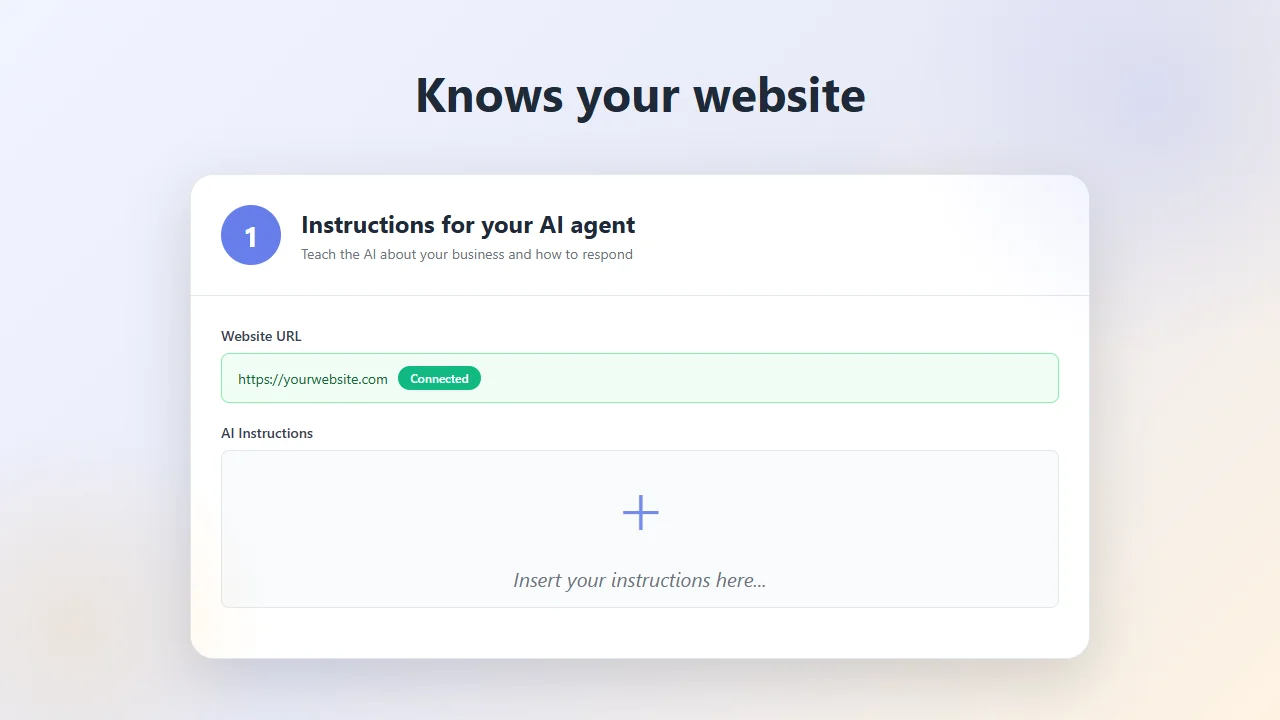
One HTML Embed
Webstudio has an HTML embed component for exactly this kind of third-party code. Drop it in, paste the snippet, publish, and the assistant is live.
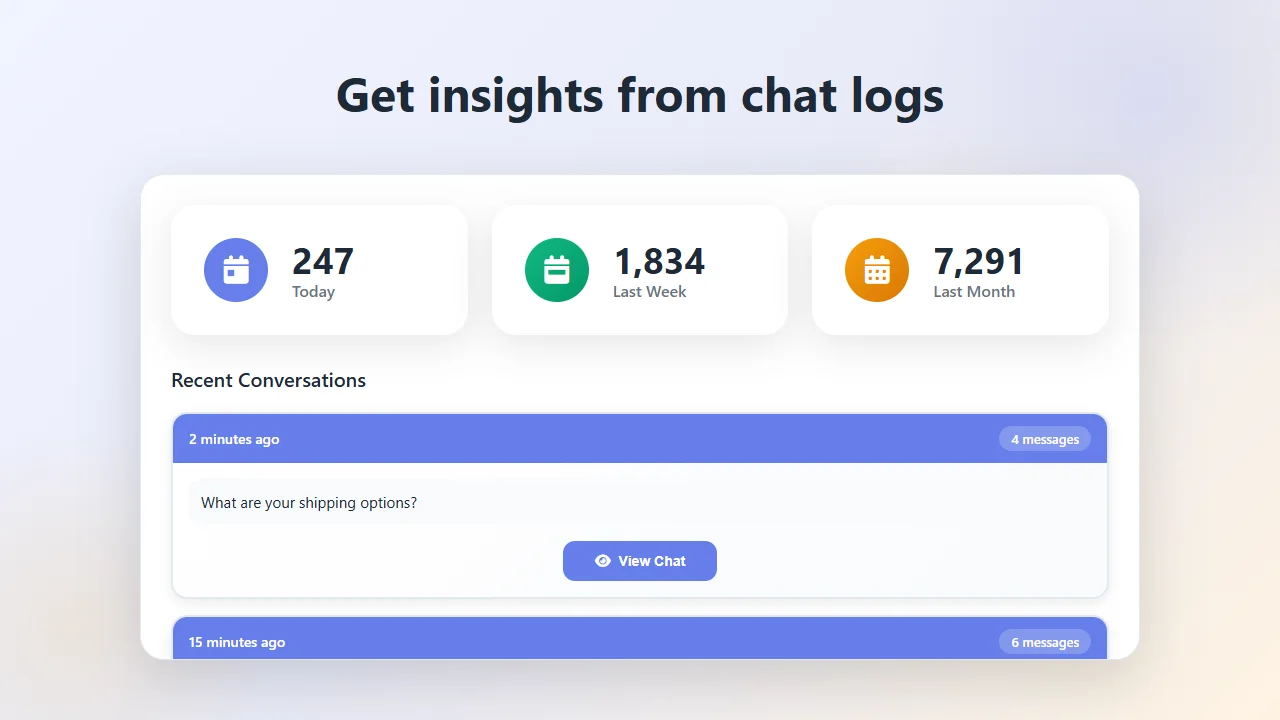
Answers From Your Own Content
It reads your published pages, so what it says matches what you wrote. No separate content system to maintain and no scripted flows to keep in sync with the site.
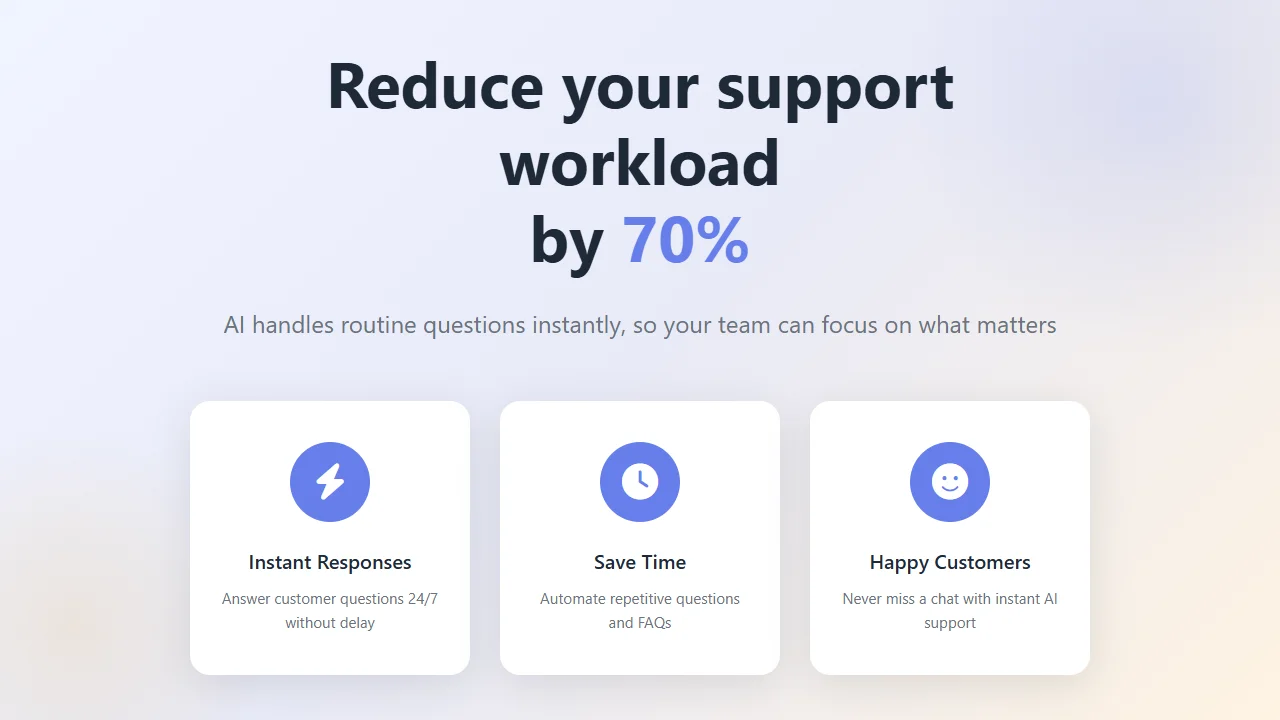
Fits Marketing and Product Sites Alike
Whether the site sells, explains a product, documents an API or collects signups, the assistant answers from what is there and collects details when a human is needed.
Thirty-Six Languages
Detected per visitor, so international traffic is served without duplicating content or configuring locales.
Have any questions? Try our AI chatbot right now
Ask it anything - it is live on this page
Built for Webstudio Merchants
One HTML embed. No SDK, no build step, no lock-in.
Plain Script Only
Nothing enters your dependency graph, so exporting or rehosting the project changes nothing.
Uses the Embed Component
The HTML embed exists for third-party code; that is all this needs.
Content-Driven Answers
It reads your pages rather than a separate script, so the site stays the single source of truth.
36 Languages
Detected per visitor, with no locale configuration required.
Collects Qualified Enquiries
Ask what you need up front and receive enquiries with context attached.
No Invented Claims
Answers come from your published material only, which matters for product and technical sites.
Simple Webstudio Integration
One HTML embed covers the site. Nothing is added to your build.
-
1
Sign up and copy your snippet
Create your Asyntai account, add your site URL so the AI can read your pages, then copy the snippet from your dashboard.
-
2
Add an HTML embed component
Place it in a global area such as the footer so it appears on every page.
-
3
Paste the snippet into the embed
The component accepts raw HTML including script tags.
-
4
Publish
The assistant answers immediately. Tone, rules, documents and colours are managed from your dashboard.
Sign up free and get your personalised snippet instantly - paste it once and the widget is live
Why Webstudio Users Choose Asyntai
Start free with 100 messages, upgrade as traffic grows
Nothing to Unpick Later
A script tag leaves no trace in your project, so it never becomes a migration problem.
No Performance Cost Worth Naming
Under 50KB, loaded after render, independent of your markup and styling.
Answers Instead of Forms
Visitors get their question resolved on the page, and you get enquiries with context.
Frequently Asked Questions
What Webstudio users ask before adding the embed
What an AI Assistant Adds to an Open Builder
Avoiding Lock-In Is the Reason You Are Here
Teams pick an open visual builder because they want the editing experience without surrendering the output. Every addition gets judged by the same standard: what happens to this if we leave.
A plain script passes that test. It is not a package, not a plugin and not a framework integration, so exporting the project or changing hosts leaves it working. Removing it is deleting an embed.
The Site Should Stay the Source of Truth
Most chat tools introduce a second content system: scripted flows, canned answers, a separate knowledge base that drifts out of sync with the site within weeks.
Reading published pages avoids that entirely. When the site is updated the answers update, which means there is exactly one place where your product is described.
Performance Budgets Are Real
Teams that care about output also care about what loads. A support widget that blocks rendering or ships hundreds of kilobytes is not acceptable on a site built deliberately.
Loading after content at under 50KB keeps the assistant well inside a sensible budget, so it can be added without a discussion about whether it is worth the weight.
Product and Marketing Sites Get Specific Questions
Visitors to a product site ask about integrations, limits, pricing edge cases and technical requirements. Those are the questions a landing page cannot cover and a form cannot answer quickly.
Handling them conversationally converts the visitor who would otherwise leave to compare alternatives, and it does so without adding another paragraph to the page.
Small Teams Cannot Absorb Maintenance
Anything requiring monthly upkeep loses to shipping work. Tools survive in small teams only if they need no attention.
There is nothing to maintain here: no version to track, no flows to update, no content to duplicate. Configuration lives outside the project and the site keeps working as built.
Ready to Add an Assistant Without Adding a Dependency?
Start free with 100 messages and let your published pages answer visitors.