AI Chatbot for Solidus Stores
You run a Rails store because you wanted control of it. Adding an assistant should not compromise that: one line in your layout, no gem, no migration, nothing in the bundle to keep compatible.
Try it on your own store for free
Enter your Solidus store URL and see how an AI assistant would answer your customers
See It In Action
For teams running Solidus and unwilling to add dependencies casually
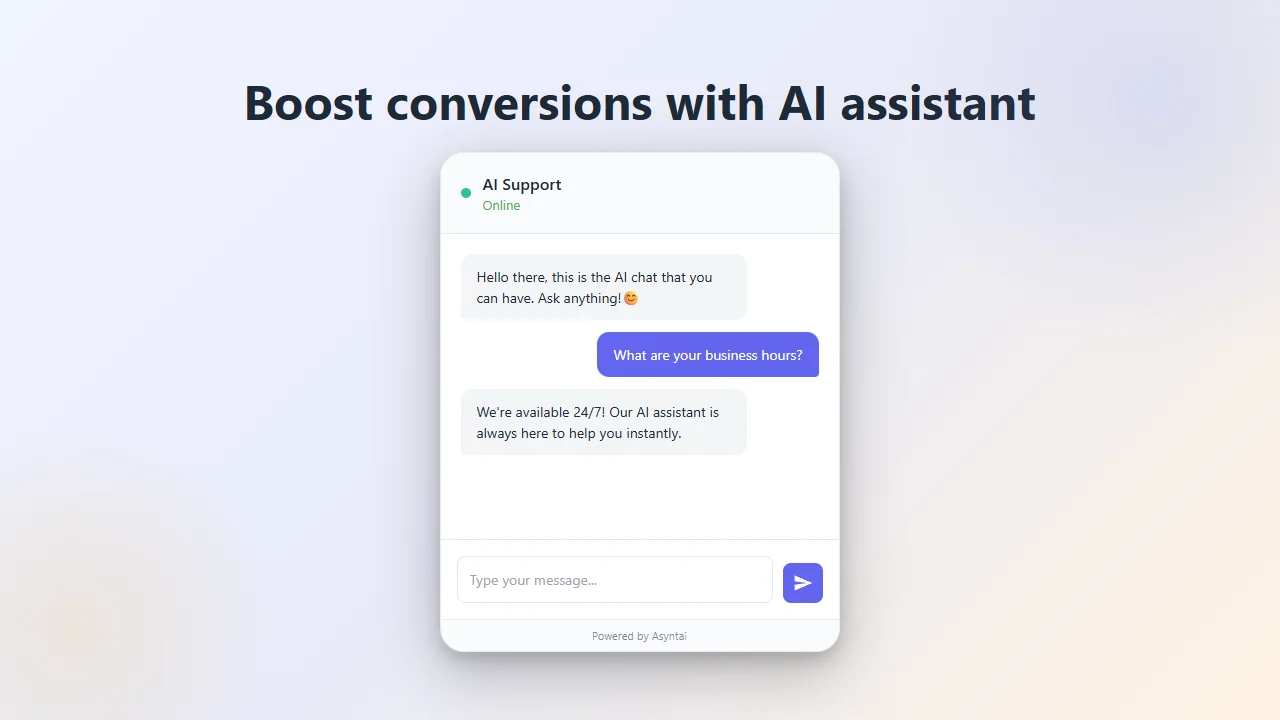
No Gem, No Migration
Adding a gem means a version constraint, a bundle update and something to audit at every upgrade. A script tag in the layout adds nothing to the dependency graph and nothing to the database.
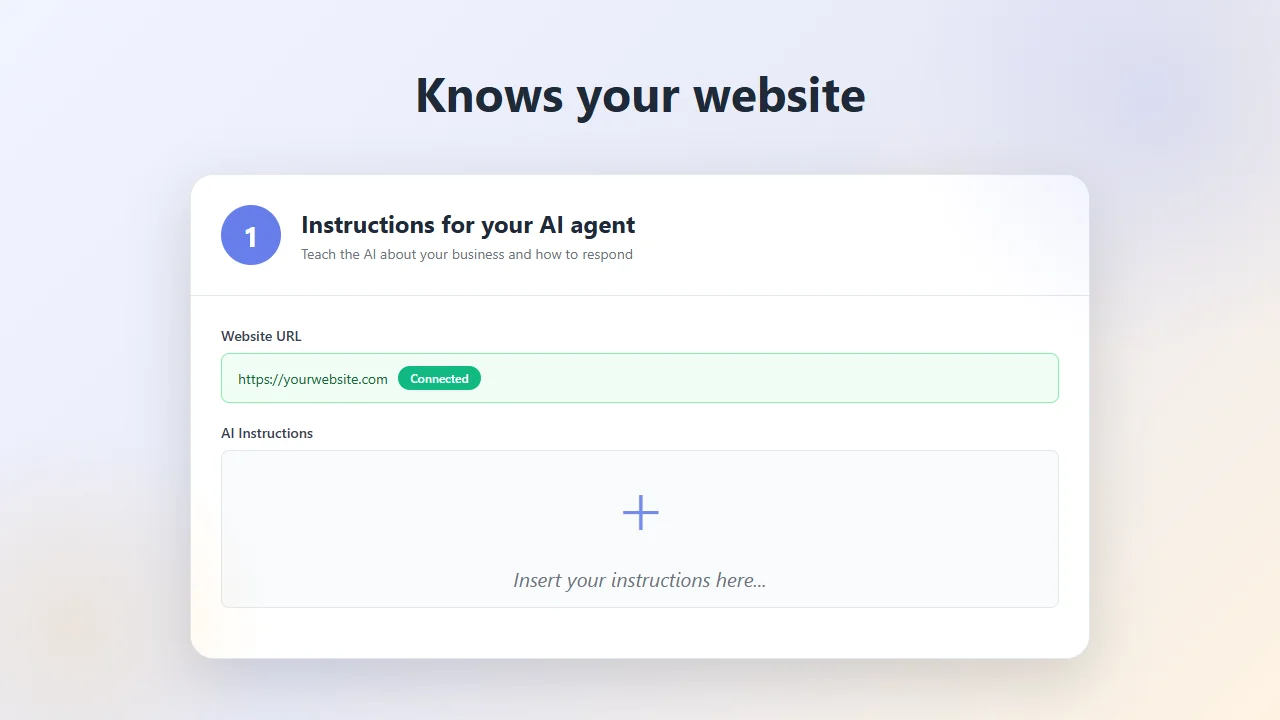
One Line in the Layout
Because you own the templates, deployment is a single line before the closing body tag. It ships with your next deploy and is removed by deleting the line.
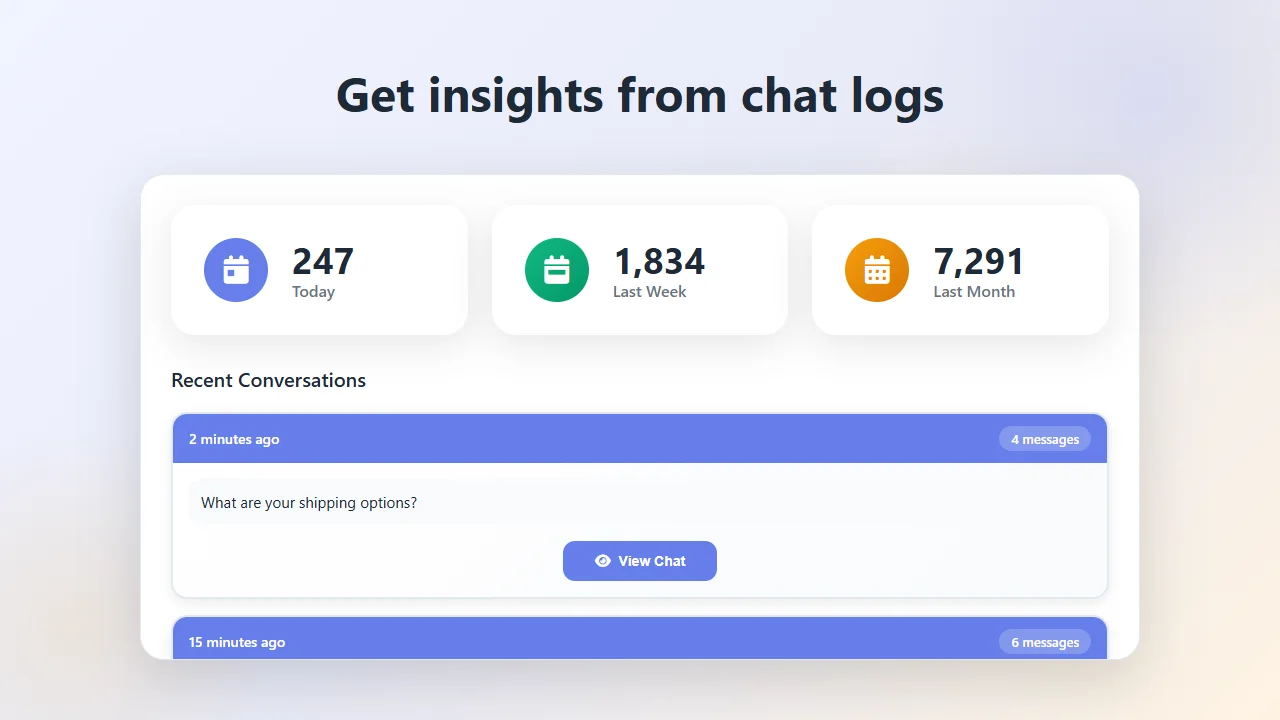
Answers From the Storefront You Built
It reads your product and policy pages rather than hooking into your models, so there is no coupling to your schema and no assumptions about how you have customised Solidus.
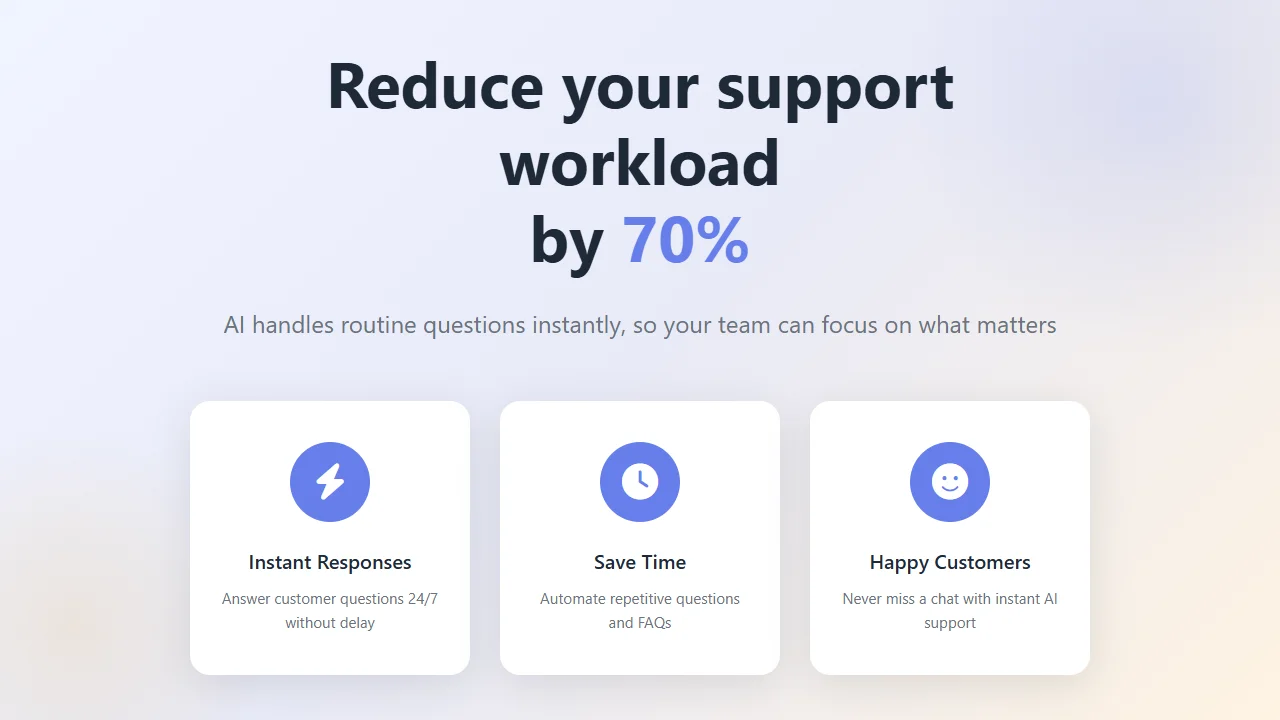
Handles the Support Layer You Never Built
Most Solidus teams build excellent commerce and no support tooling, because support is not why anyone chose Rails. This fills that gap without becoming a project.
Thirty-Six Languages
Detected per visitor, from one integration, with no locale wiring on your side.
Have any questions? Try our AI chatbot right now
Ask it anything - it is live on this page
Built for Solidus Merchants
One line in the layout. No gem, no schema change, no build step.
Nothing in Your Gemfile
No version constraints, no bundle conflicts, nothing to audit at upgrade time.
No Schema Coupling
It reads your public pages rather than your models, so customisations are irrelevant to it.
One Line, One Deploy
Ships with your normal release and is removed just as easily.
36 Languages
Detected per visitor, without locale configuration.
Rules You Define
Instructions in plain language govern tone and behaviour in every conversation.
No Invented Answers
Where your content is silent, it says so rather than guessing.
Simple Solidus Integration
One line in your layout covers the storefront. Nothing enters the bundle or the database.
-
1
Sign up and copy your snippet
Create your Asyntai account, add your store URL so the AI can read your catalogue and policy pages, then copy the snippet from your dashboard.
-
2
Open your storefront layout
Add the tag before the closing body tag, alongside any analytics you already load.
-
3
Commit and deploy
It ships with your normal release; no migration or asset pipeline work is needed.
-
4
Configure from the dashboard
Tone, rules, uploaded documents and widget appearance are managed outside your codebase.
Sign up free and get your personalised snippet instantly - paste it once and the widget is live
Why Solidus Teams Choose Asyntai
Start free with 100 messages, upgrade as volume grows
Zero Dependency Cost
Nothing to upgrade, audit or unpick later, which is the standard a Rails team applies to everything.
Support Without Building It
You get an answering layer without writing one, which is rarely the interesting part of the roadmap.
Round-the-Clock Coverage
Customers ask at all hours; the assistant answers without a rota.
Frequently Asked Questions
What Solidus teams ask first
What an AI Assistant Adds to a Rails Commerce Stack
Dependencies Are the Currency You Guard
Teams running Solidus tend to be deliberate about what enters the bundle. Every gem is a version constraint, a security surface and a future upgrade conversation, so the bar for adding one is high and correctly so.
A script tag does not participate in any of that. There is nothing to resolve, nothing to audit and nothing to remove from a Gemfile later, which makes the decision to try it small.
Support Is the Part Nobody Wants to Build
Engineering teams happily build checkout logic, promotions and inventory rules. Almost nobody wants to build a support answering layer, so it usually does not exist, and customer questions land in an inbox instead.
Buying that layer rather than building it is the pragmatic choice. It arrives complete, needs no maintenance, and leaves the roadmap free for work that differentiates the business.
Reading Pages Beats Reading Models
Integrations that hook into models are fragile against customisation, and Solidus stores are almost always customised. Any tool that assumes a standard schema breaks eventually.
Crawling the public storefront avoids that entirely. Whatever your models look like, the pages describe the products, and that is what customers ask about.
Customers Do Not Care About Your Stack
A shopper judging your store notices whether their question gets answered, not which framework rendered the page. That dimension of quality is entirely independent of engineering effort.
Which is why a small team can compete here immediately: instant, accurate answers cost one line rather than a sprint.
Reversibility Is Part of Good Design
Anything that cannot be cleanly removed becomes technical debt regardless of how useful it is. Reversibility is a feature, particularly for teams who have inherited someone else’s integrations.
Delete the line and it is gone: no data left behind, no migration to reverse, no gem to remove. That property is what makes it worth trying at all.
Ready to Add Support Without Adding a Gem?
Start free with 100 messages and keep your bundle exactly as it is.