AI Chatbot for SAP Commerce Cloud
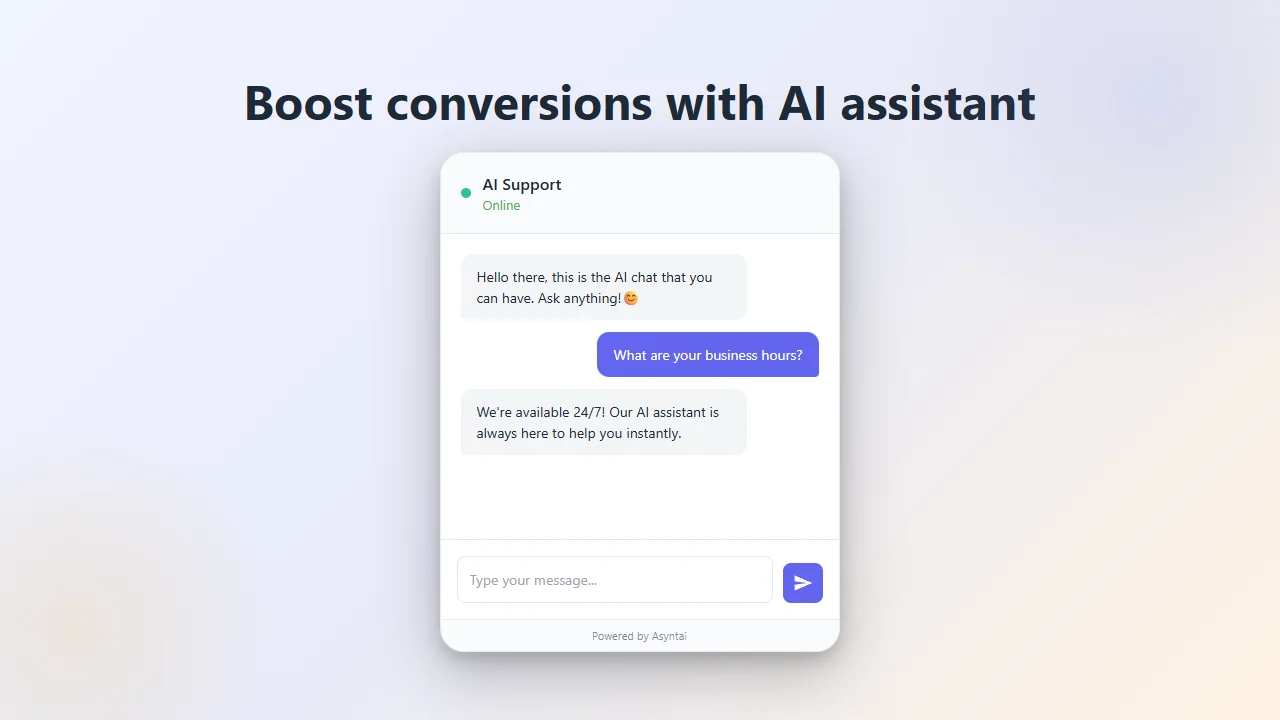
Enterprise commerce projects measure change in release cycles. This one is a script tag: no extension, no data model change, nothing to put through a build, and it answers buyer questions from your own published content.
Try it on your own storefront for free
Enter your storefront URL and see how an AI assistant would answer your buyers
See It In Action
For SAP Commerce teams who cannot wait a quarter to test something
No Extension, No Release
Adding an extension means a ticket, a build, a test environment and a release window. A script tag in the storefront template goes live the day it is approved and is removed by deleting a line.
Deflects Tickets From an Expensive Desk
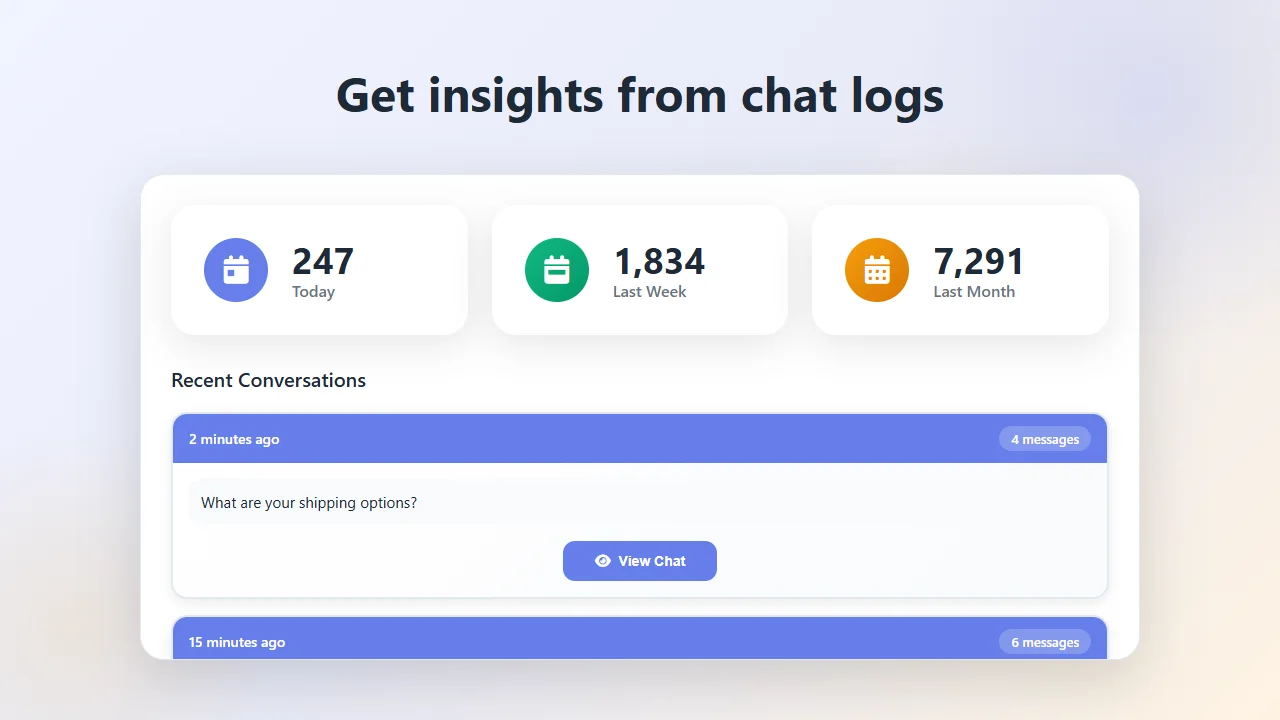
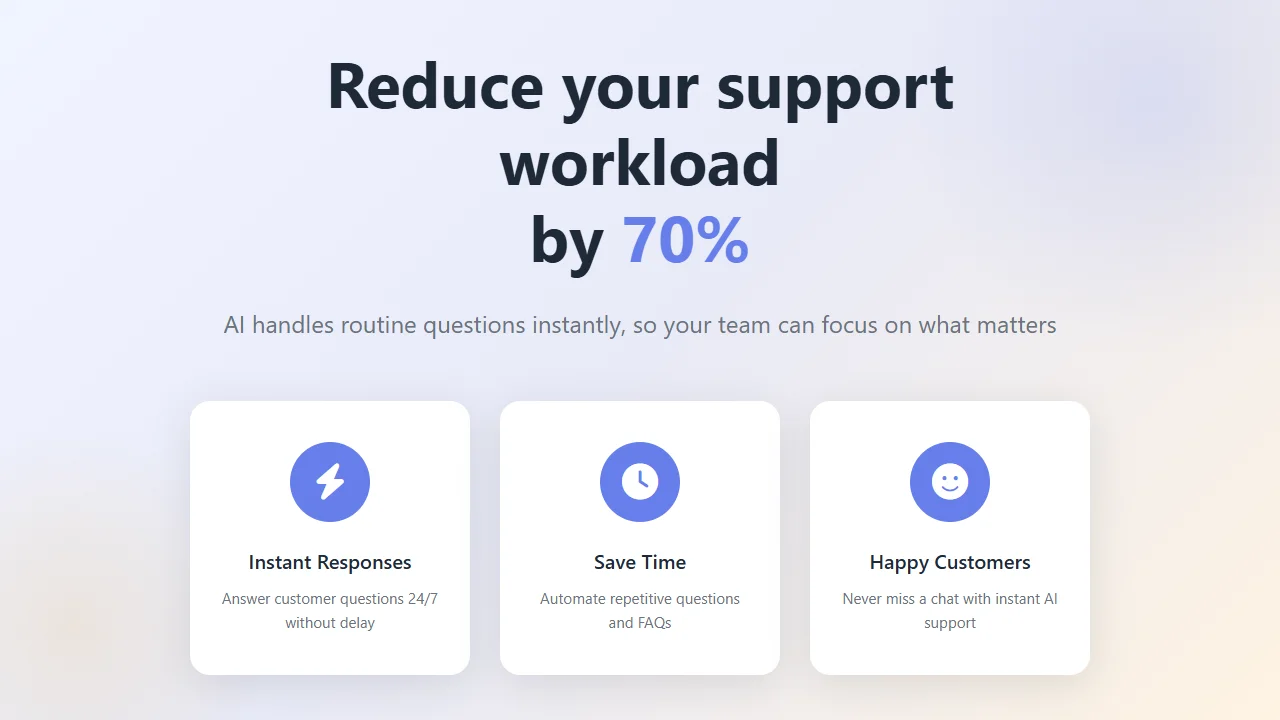
Enterprise support costs are dominated by repetitive contact: order status, delivery terms, documentation requests, who to contact. Answering those on the storefront removes volume from the most expensive channel you run.
Built for B2B Self-Service
Contract buyers want to check terms, lead times, minimum quantities and documentation without emailing an account manager. The assistant answers what you publish and captures the rest properly.
Consistent Across Every Locale
Multi-country storefronts drift: policies described slightly differently in each language. One assistant answering from one source keeps that consistent across 36 languages.
Answers Only From Your Data
For catalogues with contract pricing and technical attributes, restraint matters more than fluency. It answers what your content contains and states plainly when something is not documented.
Have any questions? Try our AI chatbot right now
Ask it anything - it is live on this page
Built for SAP Commerce Cloud Merchants
One script tag in the storefront template. No extension, no data model change.
Outside the Core
Nothing enters your extensions or data model, so upgrades and patches are unaffected.
Ticket Deflection
Repetitive contact is answered at the point of question rather than routed to an agent.
B2B Questions Handled
Terms, lead times, minimum quantities and documentation answered from your published material.
36 Languages
Detected per visitor, which keeps policy answers consistent across country sites.
Deterministic Rules
Your instructions apply in every conversation, which matters when nobody reads transcripts daily.
Refuses to Improvise
Undocumented is reported as undocumented, the only safe default for contract commerce.
Simple SAP Commerce Cloud Integration
One script tag in the storefront template covers the site. There is no extension to build or deploy.
-
1
Sign up and copy your snippet
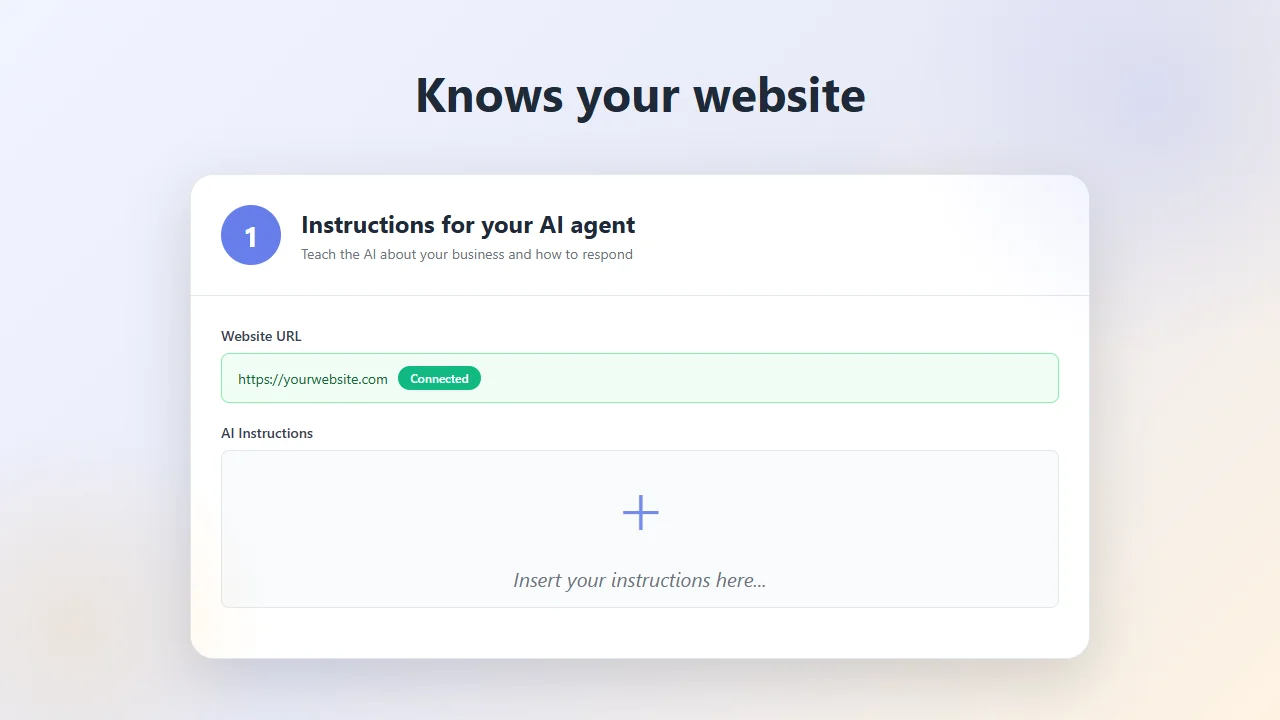
Create your Asyntai account, add your storefront URL so the AI can read your published catalogue and policy pages, then copy the snippet from your dashboard.
-
2
Add the tag to your storefront template
Place it in the global layout so it loads on every page, the same way an analytics or consent tag is added.
-
3
Load it after your content
Placing it before the closing body tag keeps it clear of the critical rendering path.
-
4
Deploy through your normal pipeline
It is a template change rather than an extension, so it moves with your usual storefront release.
Sign up free and get your personalised snippet instantly - paste it once and the widget is live
Why SAP Commerce Teams Choose Asyntai
Start free with 100 messages, scale as deflection proves out
Lower Cost Per Contact
Deflecting routine questions from agents to the storefront changes the unit economics of support without changing headcount.
No Architectural Risk
A template tag introduces no dependency, so nothing about it complicates an upgrade path.
Consistency Across Markets
Every locale answers from the same source, which is difficult to achieve with regional teams.
Frequently Asked Questions
What SAP Commerce teams ask first
What an AI Assistant Adds to Enterprise Commerce
The Barrier Is Governance, Not Technology
Enterprise commerce teams are not short of ideas; they are short of release capacity. Anything requiring an extension has to be scoped, built, tested and scheduled, which means a quarter passes before anyone learns whether it helped.
A script tag sidesteps that entirely. It can be trialled on one locale, judged on real conversations within a fortnight, and removed in minutes if the answer is no. The cost of finding out drops to almost nothing.
Support Cost Is Concentrated in Repetition
Analysis of enterprise contact volume nearly always shows the same pattern: a small number of question types generate most of the tickets, and none of them need a specialist.
Answering those at the point of question removes volume from the most expensive channel while leaving genuinely complex cases with the people who should handle them. That is the whole business case, and it is measurable within a month.
B2B Buyers Prefer Not to Ask a Human
Procurement staff would rather check a lead time themselves at eight in the evening than email an account manager and wait. Self-service is a preference, not a cost-saving measure imposed on them.
Meeting that preference improves the relationship and reduces load simultaneously. The account manager keeps the conversations that involve negotiation rather than lookup.
Consistency Is Hard Across Regions
Multi-country operations end up describing the same policy differently in each market, because each market’s team wrote their own version. Eventually a customer is told something that contradicts the contract.
One assistant answering from one source removes that drift. Regional differences that genuinely exist can be encoded deliberately rather than emerging by accident.
Restraint Is the Feature That Matters
In contract commerce a confidently wrong answer is not embarrassing, it is potentially contractual. That is why most enterprise teams are sceptical of generative chat, and rightly so.
Answering only from published content and refusing to fill gaps is what makes automation acceptable here. It also produces a useful signal: the gaps buyers hit repeatedly are the documentation worth improving.
Ready to Deflect Tickets Without a Project?
Start free with 100 messages and prove the case on one locale first.