AI Chatbot for Next.js Applications
No package, no provider component, no context wrapper. One script tag in your root layout and the assistant answers visitors from your published pages, in 36 languages, without touching your bundle.
Try it on your own site for free
Enter your site URL and see how an AI assistant would answer your visitors
See It In Action
For product sites, docs and marketing apps built on Next.js
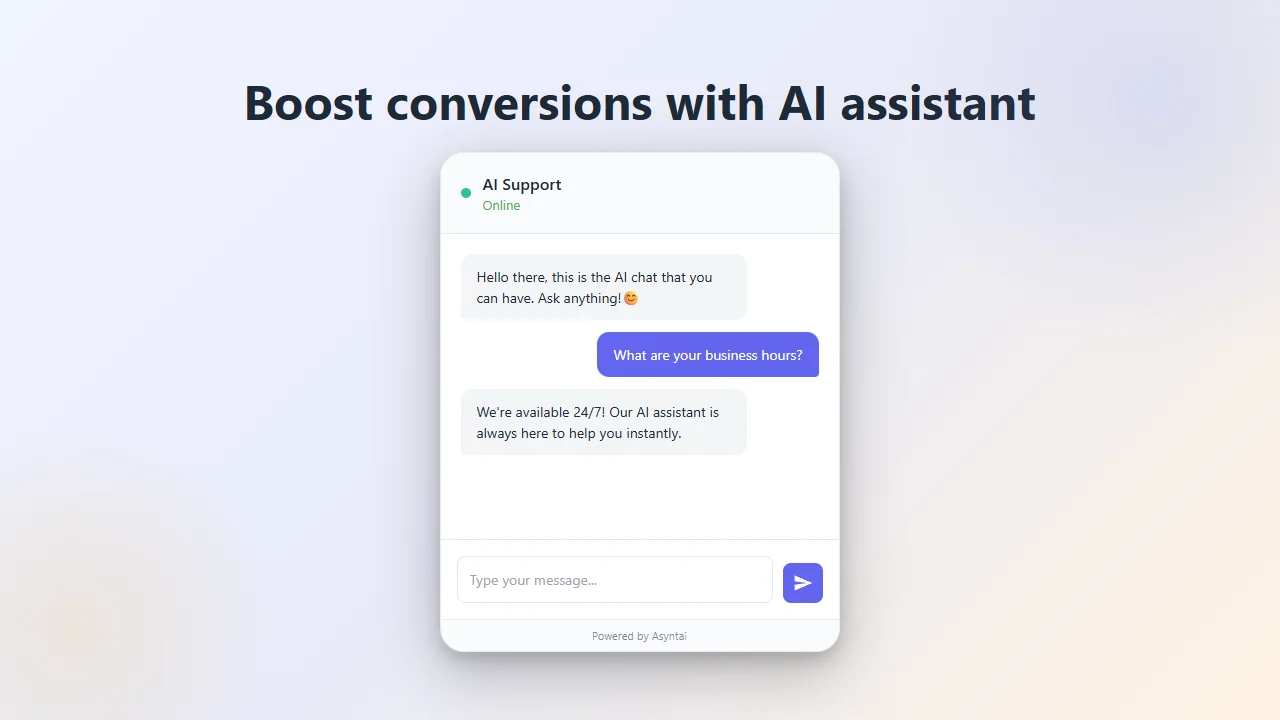
Nothing in Your Bundle
No npm package means no version to track, no peer dependency conflicts and nothing added to your client bundle at build time. The script loads at runtime from our CDN, which keeps your build output unchanged.
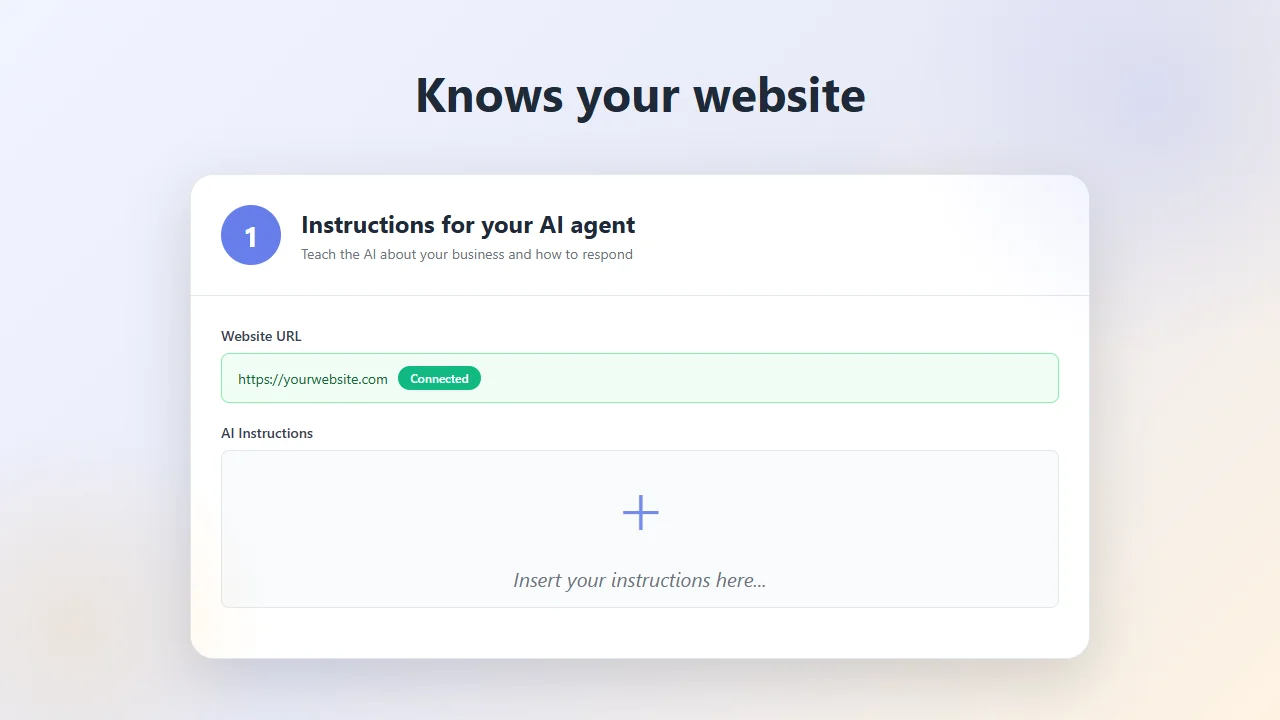
One Tag in the Root Layout
Add it to the root layout and every route is covered, App Router or Pages Router alike. No provider to wrap, no client component boundary to think about.
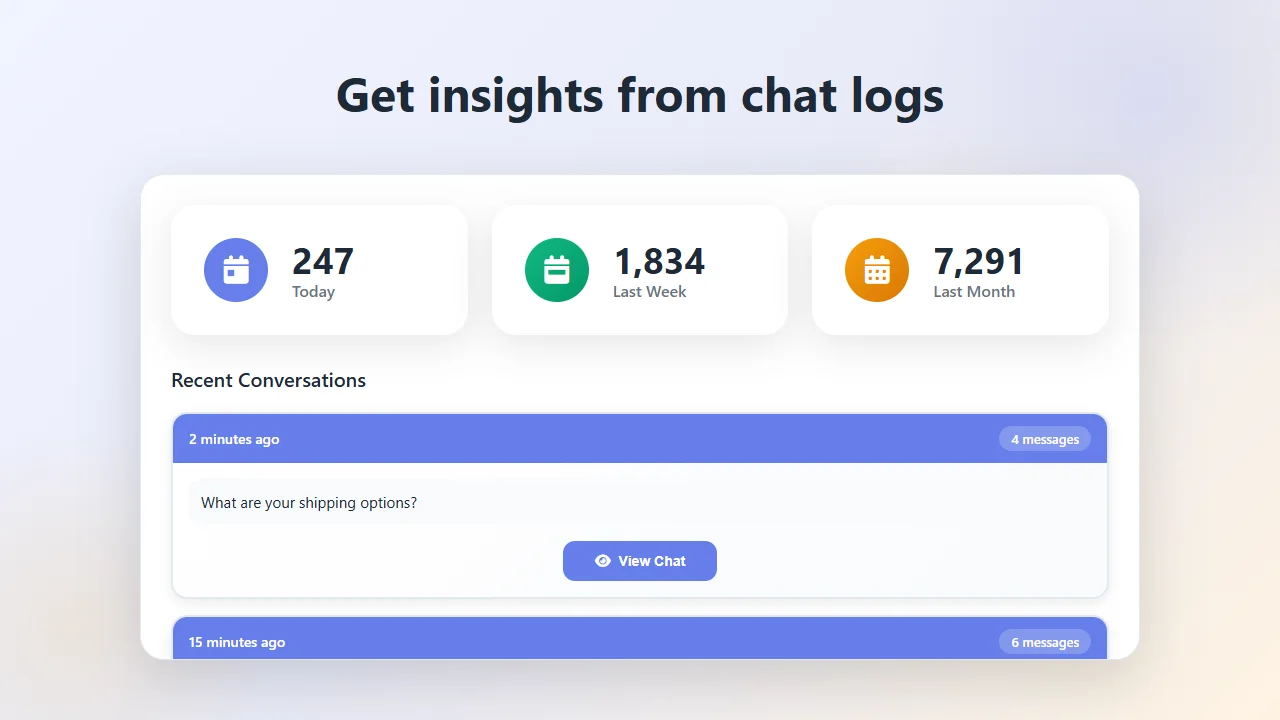
Works With Any Rendering Strategy
Static, server-rendered, streamed or incrementally regenerated — it makes no difference. The assistant reads your published pages and runs in the browser.
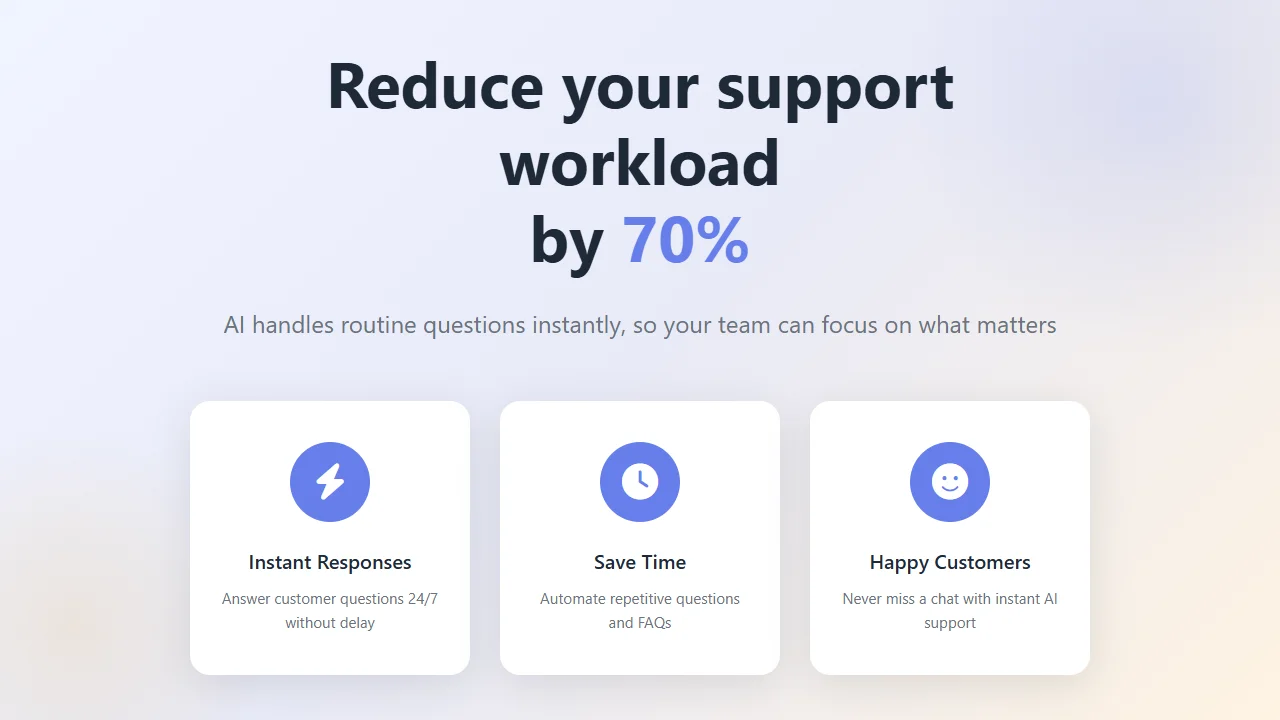
Answers Product and Docs Questions
Pricing edge cases, integration questions, limits, migration paths. The things a landing page cannot cover and a search box answers badly.
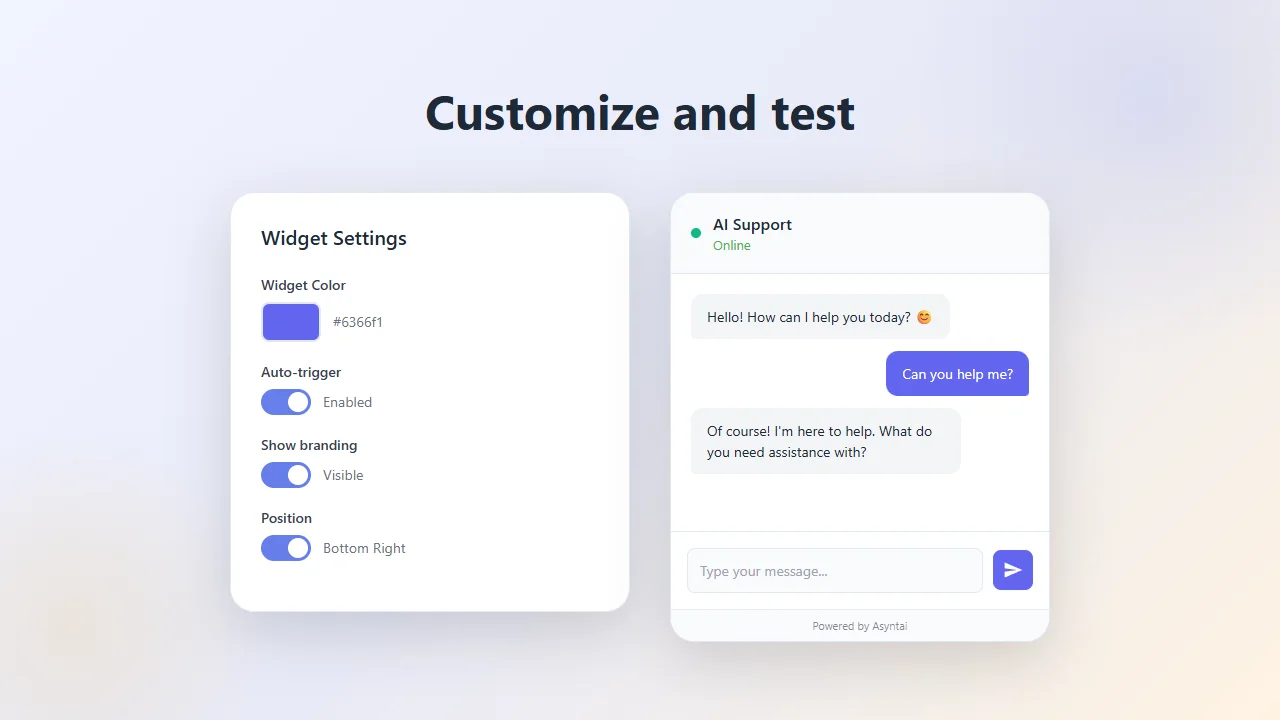
Thirty-Six Languages
Detected per visitor, with no changes to your i18n routing or middleware.
Have any questions? Try our AI chatbot right now
Ask it anything - it is live on this page
Built for Next.js Merchants
One script tag in the root layout. No SDK, no provider, no bundle impact.
No Package to Install
Nothing in package.json, so no upgrades, audits or peer dependency problems.
Router-Agnostic
App Router or Pages Router; a tag in the root layout covers both.
Rendering-Agnostic
Static, SSR, streaming and ISR all behave identically as far as the assistant is concerned.
Under 50KB, Deferred
Loads after your content, so Core Web Vitals are unaffected.
36 Languages
Detected per visitor without touching middleware or i18n config.
No Invented Answers
It answers from your published pages and states when something is not documented.
Simple Next.js Integration
One script tag in your root layout covers every route. Nothing is added to your dependencies.
-
1
Sign up and copy your snippet
Create your Asyntai account, add your site URL so the AI can read your published pages, then copy the snippet from your dashboard.
-
2
Add the tag to your root layout
Place it near the end of the body so it loads after your content. Next.js also provides a Script component if you prefer to use it.
-
3
Deploy
The assistant works on every route immediately, in production and in preview deployments.
-
4
Configure from the dashboard
Tone, rules, uploaded documents and appearance are managed outside your repository.
Sign up free and get your personalised snippet instantly - paste it once and the widget is live
Why Next.js Teams Choose Asyntai
Start free with 100 messages, upgrade as traffic grows
Zero Dependency Cost
Nothing to upgrade, patch or audit, and no risk of a breaking change in a package you did not write.
No Build Impact
Build times and bundle size are unchanged, which matters on large apps.
Better Conversion on Marketing Routes
Objections answered in the moment convert visitors a static page would lose.
Frequently Asked Questions
What Next.js teams ask first
What an AI Assistant Adds to a Next.js Application
Dependencies Are Where Maintenance Cost Accumulates
Anyone maintaining a large Next.js app knows the pattern: a package added for a small feature becomes a version constraint, then a peer dependency conflict, then the reason an upgrade takes a week.
A runtime script sidesteps all of it. There is nothing in the lockfile, nothing to audit, and no chance of a third-party release breaking your build the day before a launch.
Marketing Routes Do the Selling
In most product companies the Next.js app contains both the application and the marketing site. Those marketing routes carry the acquisition load, and their conversion depends on answering objections the copy deliberately omits.
Handling those conversationally means the page stays focused while the visitor who needs one more fact gets it immediately, which is usually cheaper than another round of copy testing.
Docs Traffic Deserves Better Than Search
Developer documentation is read by people with a specific error or a specific goal, and they rarely search using the words your docs use. Search returns near-misses and they leave.
Answering from the same pages in the reader’s own phrasing converts that frustration into a resolved question, and shows you which pages people cannot find.
Browser-Side Only Keeps the Boundary Clean
Modern Next.js apps have a careful separation between server and client work. Anything that requires server-side integration, environment variables or middleware changes adds coupling for a feature that does not need it.
Keeping the assistant entirely in the browser means no environment configuration, no middleware, and no interaction with server components or caching.
Reversibility Is Worth More Than Convenience
A tool that can be removed in one commit is easy to trial. A tool with an SDK, a provider component and configuration spread across the codebase is not, so it never gets trialled at all.
Deleting one line from a layout removes this completely. That property is what makes it reasonable to try during a normal sprint rather than planning for it.
Ready to Add an Assistant Without Touching package.json?
Start free with 100 messages and keep your bundle exactly as it is.