AI Chatbot for Jekyll Sites
Jekyll sites are often hosted where you cannot run anything server-side. That is fine: the assistant is a browser-side script, so it works on GitHub Pages exactly as it does anywhere else.
Try it on your own site for free
Enter your Jekyll site URL and see how an AI assistant would answer readers
See It In Action
For docs, project sites and blogs published with Jekyll
Works on GitHub Pages
Pages restricts which plugins can run, which rules out most integrations. A browser-side script has no such constraint: it works on Pages, on Netlify, or on a folder served by anything.
One Line in the Default Layout
Add it once to _layouts/default.html and every page that inherits it carries the assistant. No gem, no _config change, no plugin allowlist to worry about.
Answers Project Documentation Questions
Project sites get the same questions repeatedly: how to install, which version, why a flag changed, whether something is supported. All documented, rarely found.
Independent of Your Gems
No Ruby dependency, no bundle entry, nothing that has to be compatible with the Pages gem set.
Thirty-Six Languages
Detected per visitor, which matters for open-source projects with international users.
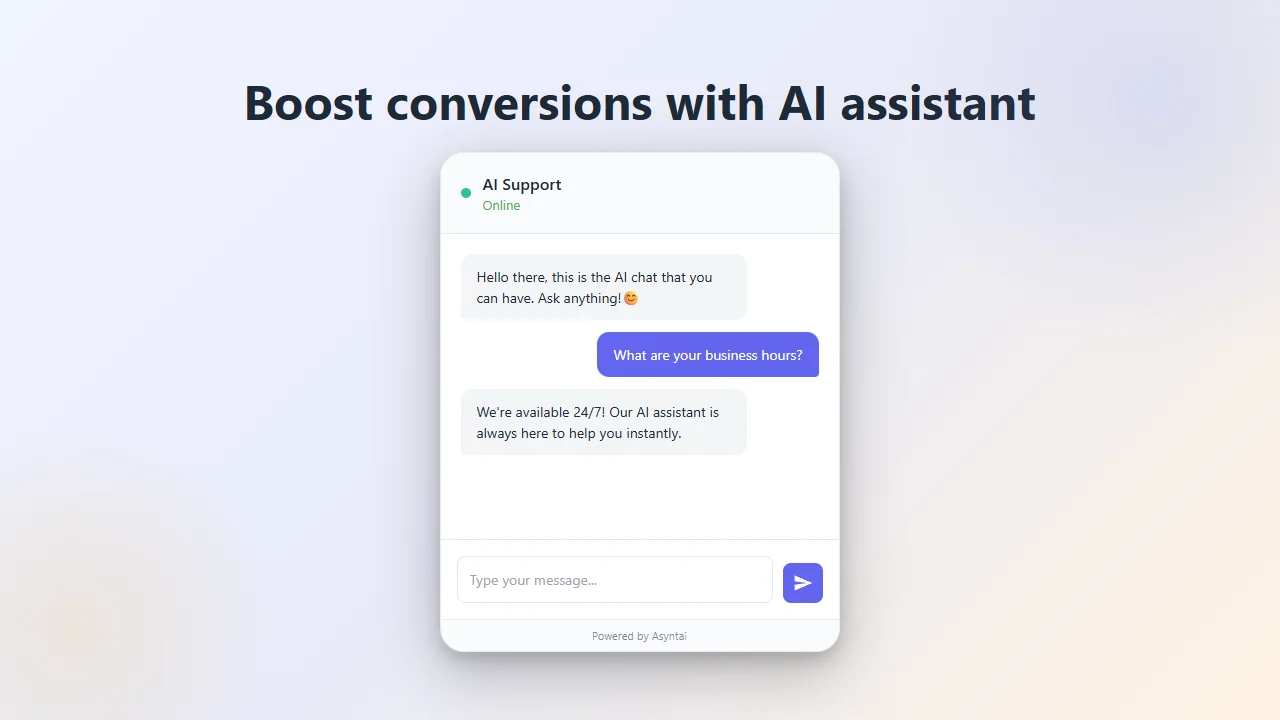
Have any questions? Try our AI chatbot right now
Ask it anything - it is live on this page
Built for Jekyll Merchants
One line in the default layout. Works on GitHub Pages.
Pages-Compatible
No plugin allowlist involvement, because nothing runs at build time.
No Gem to Add
Your Gemfile and bundle stay untouched.
Layout-Wide Coverage
One line in the default layout covers the whole site.
Reads Published Pages
Independent of collections, front matter and folder structure.
36 Languages
Chosen from the visitor’s message, no configuration.
No Invented Answers
It uses your content and reports gaps honestly.
Simple Jekyll Integration
One line in your default layout covers the site, including on GitHub Pages.
-
1
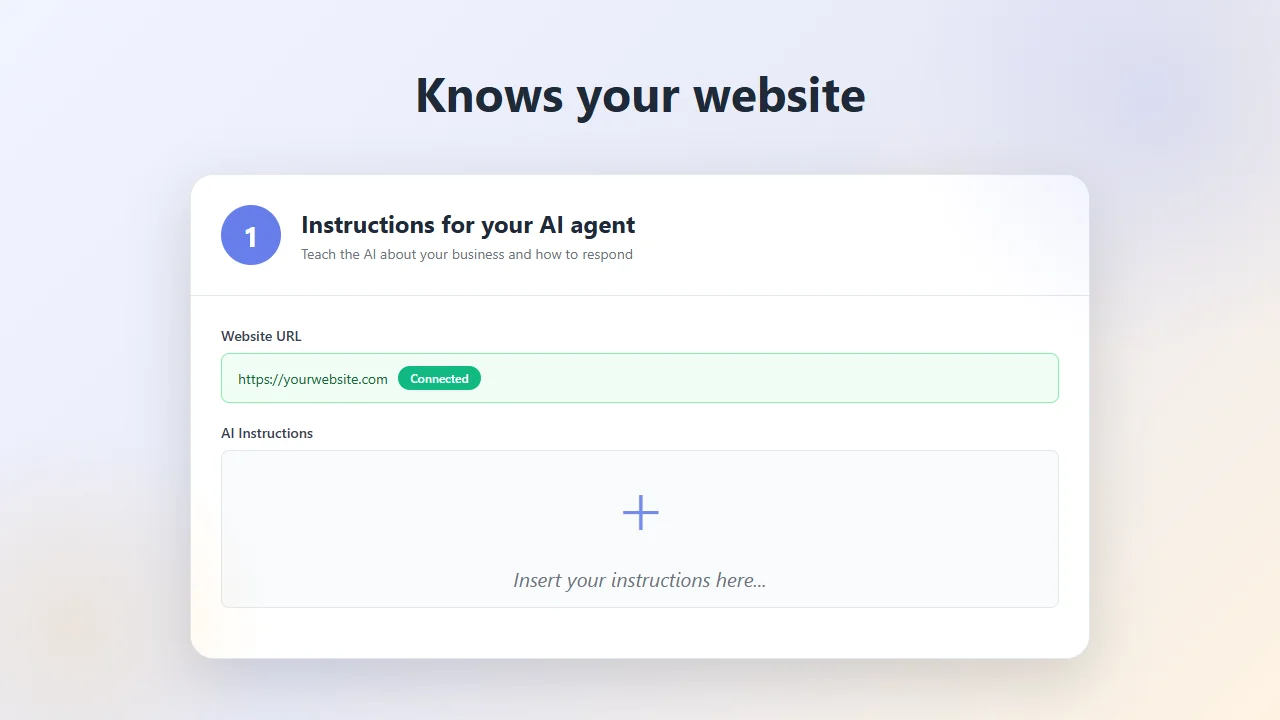
Sign up and copy your snippet
Create your account, add your site URL so the crawler can read your published pages, then copy the snippet.
-
2
Open _layouts/default.html
Add the tag before the closing body tag.
-
3
Commit and push
Pages rebuilds and the assistant is live; no plugin approval is needed.
-
4
Configure in the dashboard
Tone, rules, uploaded documents and appearance are managed outside the repository.
Sign up free and get your personalised snippet instantly - paste it once and the widget is live
Why Jekyll Users Choose Asyntai
Start free with 100 messages, which covers most project sites
No Hosting Restrictions
Works wherever your static files are served, Pages included.
Nothing in the Build
No gem, no plugin, no change to build behaviour.
Fewer Repeat Issues
Questions answered on the docs site stop arriving as issues.
Frequently Asked Questions
What Jekyll users ask first
What an AI Assistant Adds to a Project Site
Hosting Constraints Rule Out Most Tools
A large share of Jekyll sites live on GitHub Pages, where you cannot run arbitrary plugins or any server code. That eliminates most integrations before the evaluation starts.
A browser-side script has no build-time footprint at all, so the constraint simply does not apply. It works the same on Pages as on a paid host.
Docs Questions Become Issues
Open-source projects receive issues that are really documentation questions: install problems, version confusion, a flag that changed behaviour. Each one costs a maintainer a reply.
Answering them on the docs site reduces that traffic measurably, and the recurring ones point at exactly which page needs expanding.
Ruby Dependencies Are a Sore Point
Anyone who has fought a Jekyll build knows that gem versions are where the pain lives. Adding another dependency to that set is not appealing.
Nothing here touches Ruby. No gem, no bundle entry, no interaction with the Pages gem set or your local environment.
Project Sites Outlive Their Maintainers’ Attention
A docs site written during an intense month gets years of traffic afterwards, often with nobody watching it closely.
An assistant reading those pages keeps them useful without anyone maintaining a support channel, which suits the reality of most projects.
One Line Is Easy to Justify
Contributors are conservative about adding things to a project’s site, and rightly so. Anything intrusive gets rejected in review.
A single tag in one layout is trivial to review and trivial to revert, which is usually enough to get it merged.
Ready to Let Your Docs Answer Questions?
Start free with 100 messages and add one line to your layout.