AI Assistant for Your Cargo Site
Give your portfolio a quiet concierge that fields commission, representation, press, and collaboration enquiries and routes serious project leads to your inbox — all without disturbing the layout you spent so long getting right.
Try it on your own site for free
Enter your Cargo URL and see how an AI assistant would read your portfolio
See It In Action
Made for artists, designers, and studios who want enquiries handled with care while their portfolio does the talking
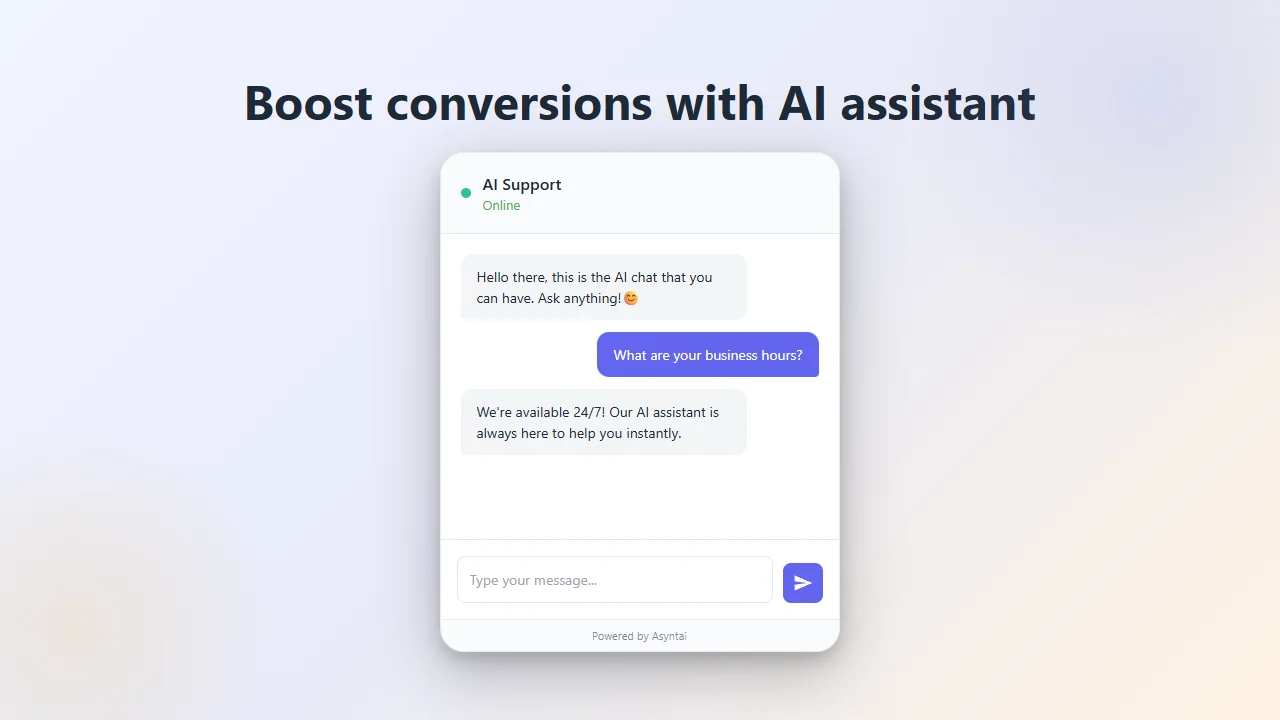
Field Commission and Representation Enquiries
A curator wants to know if you take commissions. A gallery is checking whether you are already represented. A brand is sounding you out about a collaboration. Instead of these threads dying in a contact form, the assistant answers the qualifying questions in your own words and hands you a clean brief — who they are, what they want, and how to reach them.
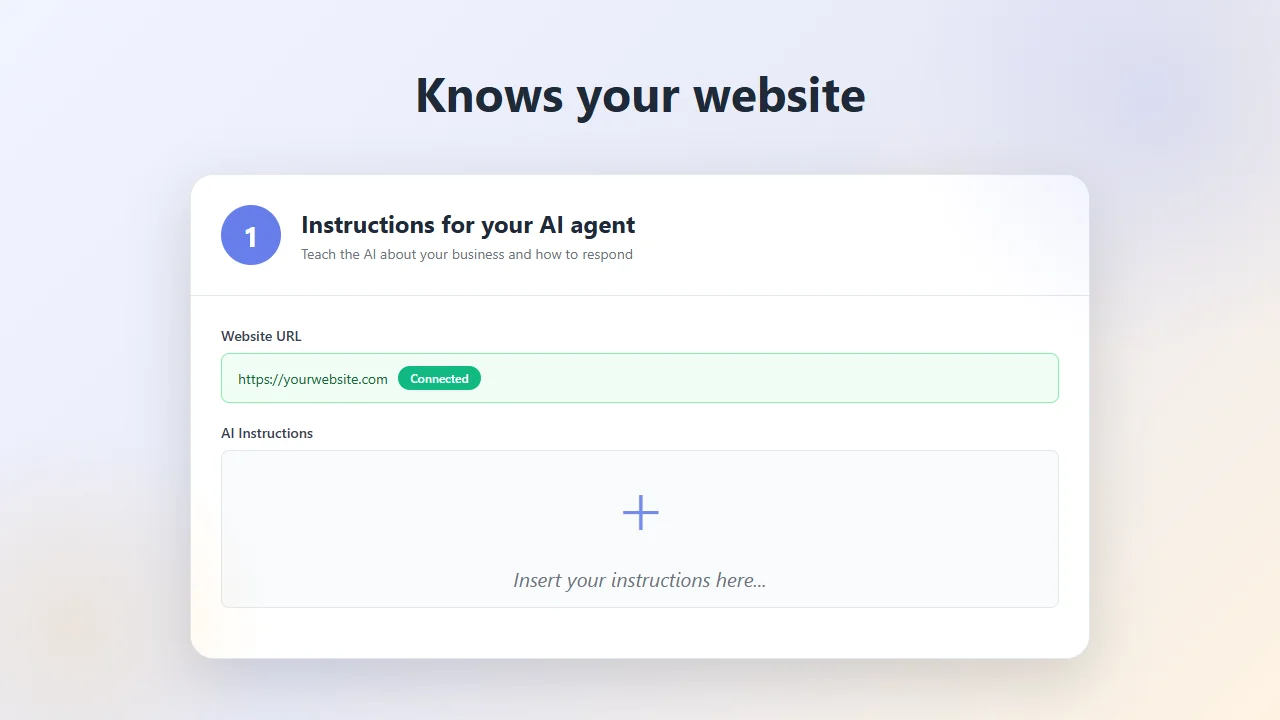
Speaks Fluently About Your Practice
Point the AI at your Cargo site and it absorbs your project pages, statement, exhibition history, and bio. Add a press kit, a rate sheet, or licensing terms as PDFs and it can speak to the things you would rather not publish openly. The result is an assistant that talks about your work the way you would, not in generic gallery-speak.
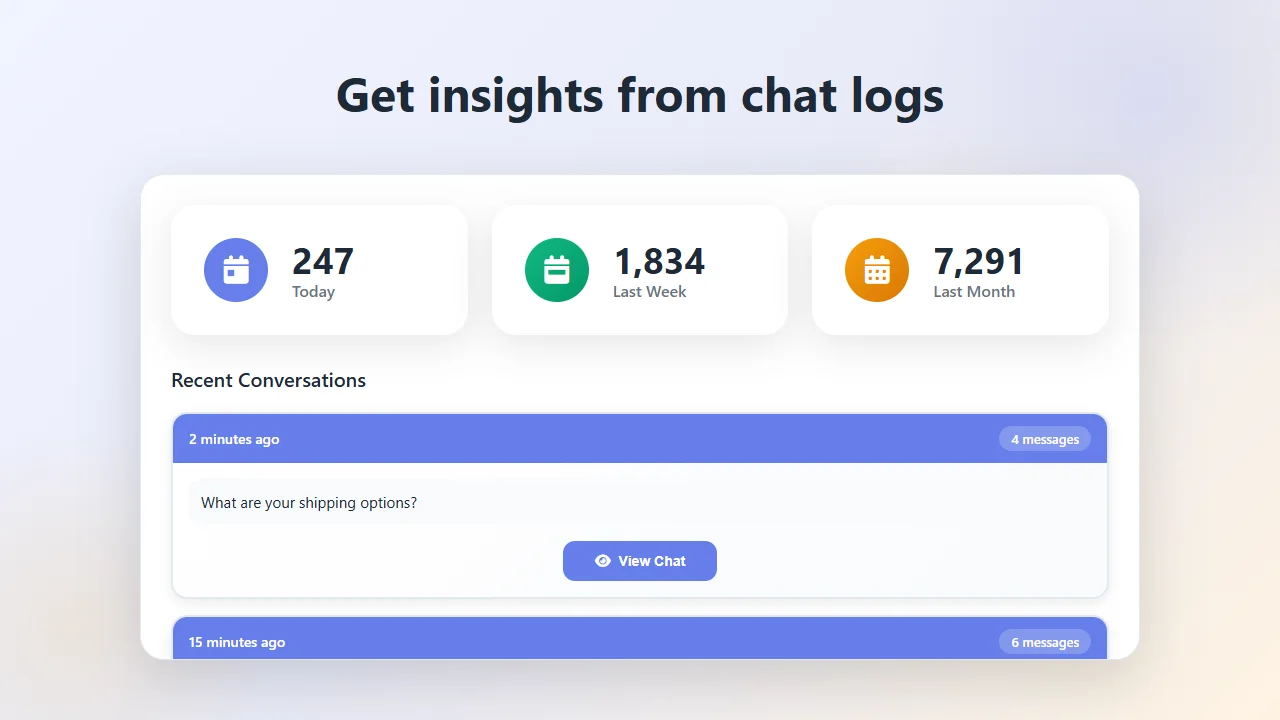
See What People Actually Ask
Read the chat logs and you learn which pieces draw the most interest, whether visitors keep asking about prints you have not listed, and how many enquiries are press versus paid work. Patterns like these never show up in a page-view chart, and they tell you exactly what to add to your site next.
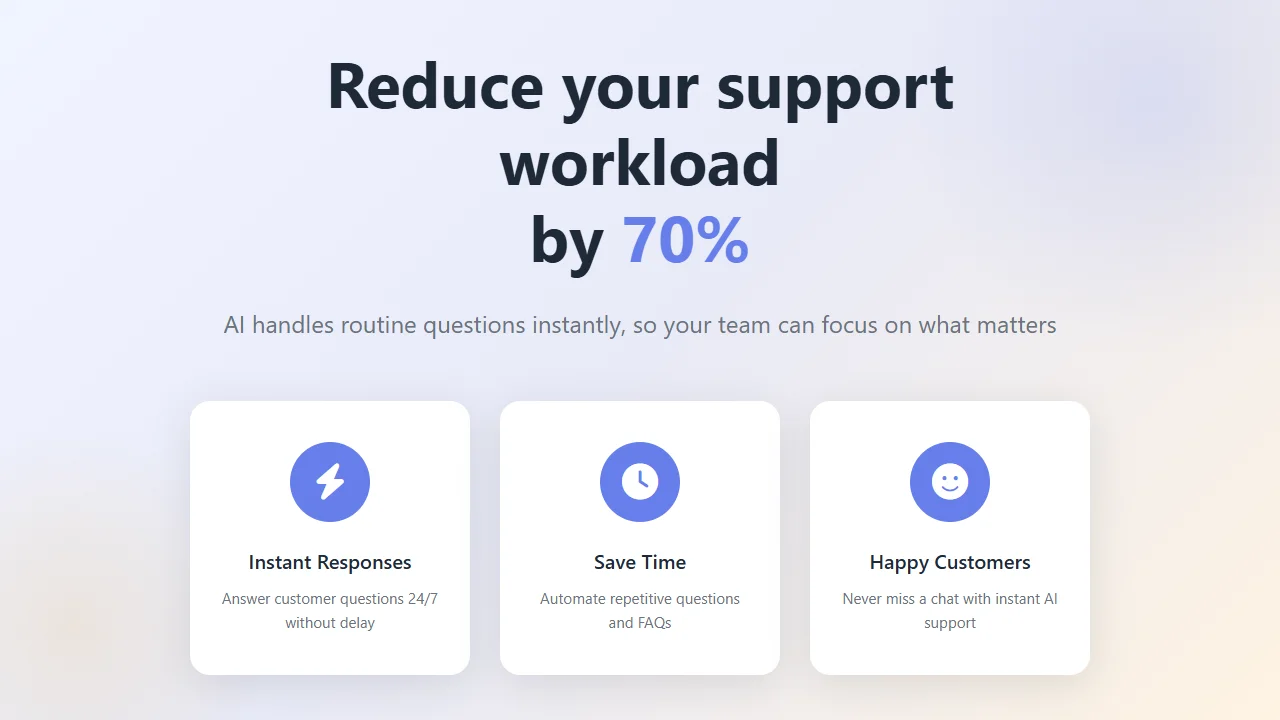
Guide Visitors to the Right Work
Someone half-remembers a series they saw in a group show. A producer is hunting for work in a particular medium for a shoot. The assistant points them straight to the relevant project, exhibition, or contact page so they find what they came for instead of scrolling past it and leaving.
Stays True to Your Aesthetic
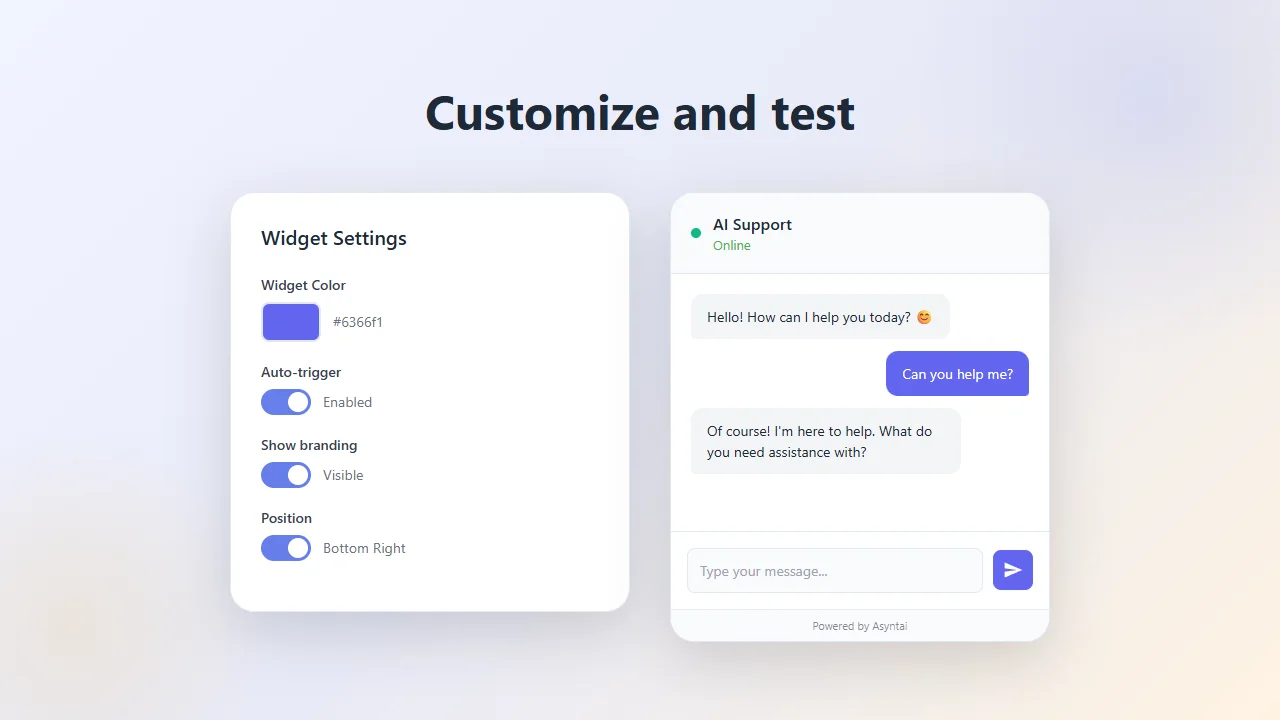
Set the accent color, the corner it sits in, the greeting, and the voice so the assistant reads as part of the design rather than a widget bolted on. A spare monochrome portfolio and a maximalist studio site can each have a concierge that looks like it was always meant to be there. Preview it before it ever goes live.
Have any questions? Try our AI chatbot right now
Ask it anything — it is live on this page
Built for Cargo Portfolios
Sits inside your Custom HTML, respects your layout, and speaks for your practice on every page.
One Paste, Live Everywhere
Drop a single snippet into Cargo's Custom HTML editor and the assistant appears across your whole site. No theme to fight, no template files to touch — just paste and click Update.
Invisible Until Wanted
It rests as a small launcher in the corner you pick and stays out of the way of your images and white space. The work keeps the spotlight; the assistant only steps forward when a visitor reaches for it.
Talks to a Global Audience
Curators, editors, and collaborators write from everywhere. The AI detects the visitor's language and replies in it, so an enquiry from Tokyo or Berlin is handled as smoothly as one from down the road.
Your Rules About Money and Access
Tell it "never quote a fee, take a brief instead" or "only share the press kit with named publications." It holds your boundaries on pricing, availability, and representation consistently, in your own register.
Turns Interest Into Briefs
When a conversation looks like real work, the assistant gathers the essentials — name, organisation, scope, timeline, contact — and delivers a tidy lead rather than a one-line "are you available?" that leads nowhere.
Grounded in Your Words Only
It answers from your project pages and uploaded documents and nothing else. It will not invent a price, claim an exhibition you never had, or speculate about your availability. If it does not know, it says so and offers to pass the question on.
How to Add It to Cargo
Cargo lets you add your own scripts through its Custom HTML editor. Because that code is applied globally, one paste puts the assistant on every page of your site.
-
1
Sign up and copy your snippet
Create your Asyntai account, add your Cargo site URL so the AI can read your work, and copy your snippet from the dashboard.
-
2
Open Cargo's Custom HTML editor
In the Cargo editor, go to Site Settings, then CSS/HTML, and select the HTML tab — this is where Cargo lets you add custom scripts.
-
3
Paste the snippet and Update
Paste the Asyntai snippet into the HTML field and click Update. Since Custom HTML applies globally, it loads on every page at once.
-
4
Publish and you are live
Save and publish your Cargo site. The assistant now sits quietly in the corner, ready to handle enquiries across your portfolio.
Sign up free and get your personalized integration code instantly
Why Artists and Studios Choose Asyntai
Start free with 100 messages, upgrade as your practice and your enquiries grow
Better Leads, Not More Admin
Instead of vague one-liners through a contact form, you receive qualified briefs with scope, budget signals, and contact details already gathered — so the time you spend on email is spent on work worth taking.
A Considered First Impression
A curator or art director landing on your site gets an articulate, on-brand response about your practice and availability the moment they ask, signalling that you are organised and serious about the work you take on.
Design Stays Untouched
The assistant adapts to your portfolio rather than the other way around. Your grid, type, and pacing stay exactly as you built them, while the concierge handles the conversations happening at the edges.
Frequently Asked Questions
Everything you need to know about adding an AI assistant to your Cargo site
An AI Concierge for Creative Portfolios
Made for People Who Care How a Site Looks
Artists, designers, and studios choose Cargo because it treats a website as a designed object, not a template to be filled in. Every margin, crop, and transition is a decision. The problem is that most chat tools were built for support desks and software dashboards, and they land on a careful portfolio like a sticker on a gallery wall. An assistant for a Cargo site has to earn its place — it should disappear into the corner until a visitor wants it, then speak with the same intention the rest of the site was built with.
That is the line Asyntai is designed to walk. It loads from Cargo's Custom HTML as a single floating layer, leaving your grid, type, and pacing exactly as you made them. You decide its colour, its corner, and its voice. The work stays the headline; the assistant is the quiet figure at the desk who knows the answers when someone finally asks.
Handling the Enquiries That Actually Matter
A working artist or studio does not field a flood of generic questions; it fields a handful of consequential ones. Are you available for a commission this autumn? Are you represented, or open to a conversation with a gallery? Can we license this image for a campaign? Would you be open to a feature, and is there a press kit? Each of these is a door, and behind some of them is the next year of your practice.
The assistant has read your project pages, your statement, and your exhibition history, and it can hold the documents you would never post publicly — a rate card, representation terms, a press pack. So when a producer or curator opens the chat, it can give a real answer about scope and availability, or take a structured brief, instead of bouncing them to a contact form that may sit unread for a week. The serious enquiries reach you as briefs; the idle ones resolve themselves.
Speaking for Your Practice in Your Absence
You are rarely at your desk when most people look at your work. They find you after an opening, at midnight, mid-deadline, in another time zone, the day a piece gets shared widely. A static portfolio can only show; it cannot respond. When a visitor arrives full of intent and meets nothing but a menu, that momentum quietly drains away.
An assistant that knows your practice keeps that moment alive. It can describe a body of work, explain that a series is part of a larger project, note that prints are available on request, or confirm that you take selected commissions. It speaks in the register you set, so a collector and an art director each meet a voice that sounds like your studio rather than a stranger reading a script.
Learning What Your Audience Wants
Every conversation is a quiet record of what people came looking for. Read the logs and patterns surface: a particular series draws the most curiosity, visitors keep asking for prints you have not yet listed, or press requests outnumber paid enquiries by a wide margin. None of this shows up in a page-view chart, and all of it is useful.
Those signals tell you what to publish next — a dedicated prints page, a clearer commissions note, a downloadable press kit. Over time your site stops guessing and starts answering the questions your audience actually asks, which makes both the portfolio and the assistant sharper with every month that passes.
Adding It Without Touching the Design
You chose Cargo so you would not have to wrangle templates or write your own front end, and adding an assistant should respect that. Cargo provides a Custom HTML editor for exactly this kind of addition, under Site Settings in the CSS/HTML panel. You paste one Asyntai snippet into the HTML tab, click Update, and because Custom HTML applies across the whole site, the assistant is present on every page at once.
From there everything else happens in the Asyntai dashboard, never in your site's code. You point it at your URL to learn your work, upload any private documents, set its tone and colour, and preview conversations before anyone sees them. If you can paste an embed into Cargo, you can give your portfolio a concierge — and you can refine how it speaks for years without ever opening the HTML field again.
Ready to Give Your Cargo Site a Concierge?
Start free with 100 messages and see how an AI assistant can field your enquiries without disturbing your design.