An AI chat plugin for OpenCart that knows your entire product catalog
OpenCart's extension marketplace has live chat modules and basic chatbots, but nothing that actually understands your products. Asyntai's AI chat plugin crawls your OpenCart store, learns every product page, category, and information article, then answers visitor questions with real knowledge — not canned responses. When a visitor asks about a product, the AI shows Dynamic Product Cards with images, prices, and buy links right inside the chat. Install it by adding a single script tag to your header.twig template or through an OCMOD extension file.
See the AI chat plugin on your OpenCart store
Enter your OpenCart store URL and watch the AI learn your products and start answering questions from your catalog
Your visitors ask questions in plain language — the AI finds the right products
OpenCart's built-in search matches keywords against product names and descriptions. When a visitor types "something for a beach vacation under $50," the search returns nothing — because no product title contains those exact words. Asyntai's AI chat plugin understands what the visitor actually wants. It reads the intent behind the question, searches your product catalog through the Real-Time Data Feed, and returns matching items as Dynamic Product Cards — visual cards showing the product image, price, description, and a direct link to the product page. Multiple matches appear as a swipeable carousel. The visitor goes from a vague idea to browsing real products without leaving the chat window or navigating through your category tree.
- Natural language product searchVisitors describe what they need in their own words — "a waterproof phone case for hiking," "something my mom would like for her birthday," "camera lenses compatible with Canon EOS." The AI interprets the intent and searches your catalog for products that match, even when the visitor uses completely different words than your product titles.
- Dynamic Product Cards in conversationMatching products appear as rich visual cards inside the chat — product image, name, price, short description, and a button linking to the product page. When there are several matches, the visitor swipes through a carousel. Products are browsed within the conversation, not on a separate search results page that breaks the flow.
- Powered by your live product dataThe AI uses your Real-Time Data Feed — a URL returning your current product catalog as JSON or CSV. Price changes, stock updates, and new arrivals reflect automatically. The AI always shows what you sell right now, with current pricing. No stale indexes, no manual resyncing after you update a product.
Order tracking, multi-store support, and a one-file install
A chat plugin that only answers product questions handles half the conversation. The other half is "where is my order?" and "can I return this?" — questions that require access to your store's order data. Asyntai's Custom Tools let the AI call your OpenCart API endpoints to look up order status, check return eligibility, or verify shipping timelines in real time. For multi-store setups, each store gets its own widget configuration while sharing the same Asyntai account. And installation is straightforward: paste a script tag into your common/header.twig file, or upload an OCMOD XML file that does it automatically.
- Custom Tools for order actionsConnect your OpenCart REST API endpoints as Custom Tools. The AI can look up order status by order number or email, check return windows, verify whether an item shipped, and answer "where is my package?" with real data from your store — not a generic "please contact support" deflection. Each tool you connect adds another action the AI performs without the visitor leaving the chat.
- Multi-store awareOpenCart's multi-store feature lets you run multiple storefronts from one admin panel. Asyntai supports this — each store gets its own widget with its own branding, knowledge base, and product feed. Visitors on Store A see Store A's products and policies; visitors on Store B get Store B's experience. One Asyntai account manages all of them.
- Simple header.twig installAdd the Asyntai script tag to your catalog/view/theme/default/template/common/header.twig file, right before the closing head tag. The widget loads asynchronously and works with any OpenCart theme — default, Journal, flavor of the month from the marketplace. Alternatively, upload an OCMOD extension XML file through Extension Installer for a code-free install that survives theme updates.
Add the AI chat plugin to your OpenCart store in minutes
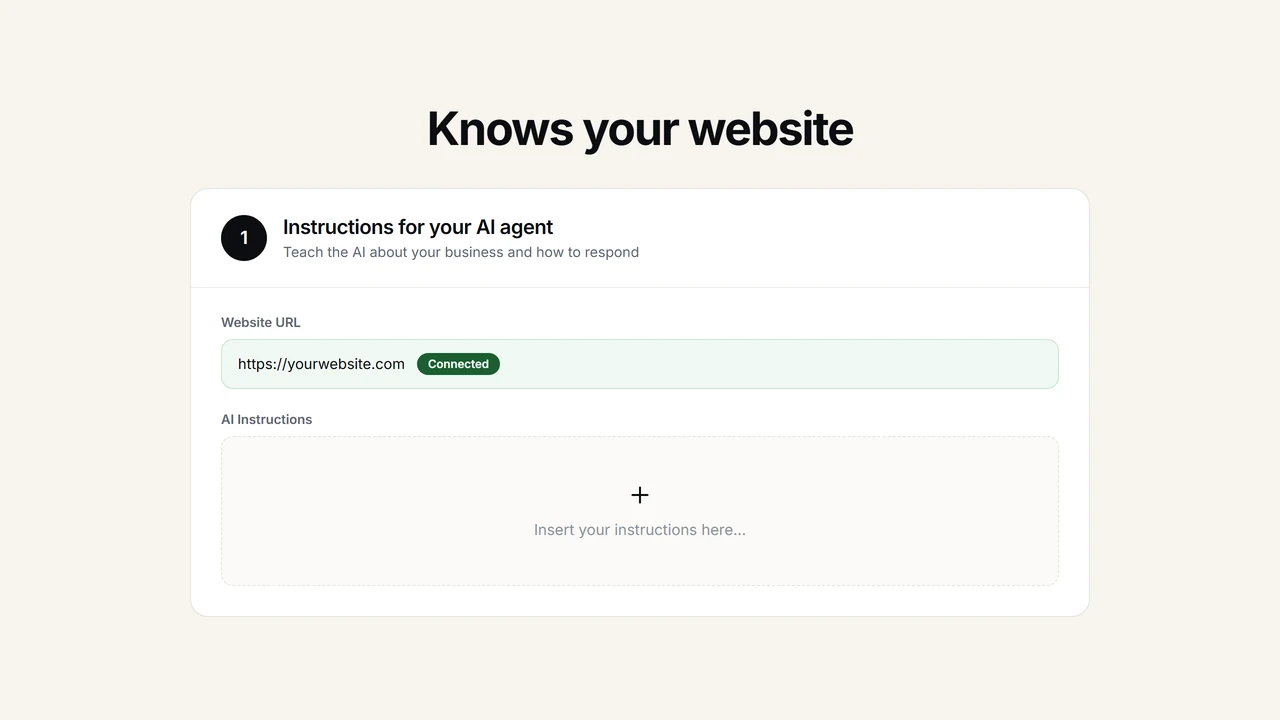
No PHP development needed. Sign up, let the AI crawl your store, paste one line into your header template, and your visitors get an intelligent chat assistant that knows your products. Connect a data feed and Custom Tools to unlock product cards and order tracking.
- Sign up at Asyntai and let the AI crawl your OpenCart store — it indexes your product pages, categories, information articles, and manufacturer pages automatically.
- Connect a Real-Time Data Feed by pasting a URL that returns your product catalog as JSON or CSV. OpenCart's built-in API or a feed extension can generate this.
- Add the Asyntai script tag to your common/header.twig template, or upload the OCMOD extension file through your OpenCart Extension Installer.
- Enable Dynamic Product Cards and connect Custom Tools for order lookups — the AI starts answering product questions and tracking orders immediately.
<!-- Add to catalog/view/theme/your-theme/template/common/header.twig -->
<script src="https://asyntai.com/widget.js"
data-id="your-site-id" async>
</script>
# One line in header.twig. The AI handles the rest.
OpenCart chat plugin — FAQs
Common questions from OpenCart store owners evaluating an AI-powered chat plugin for their storefront.
How do I install the chat plugin on my OpenCart store?
There are two methods. The simplest is to open your theme's header.twig file (typically at catalog/view/theme/your-theme/template/common/header.twig) and paste the Asyntai script tag before the closing head tag. This works with any OpenCart version from 2.x onward. The second method is to upload an OCMOD extension XML file through your OpenCart admin panel under Extensions > Extension Installer. The OCMOD approach is slightly cleaner because it injects the script tag without directly editing your theme files, which means it survives theme updates and switches. Both methods take under five minutes and require no PHP knowledge.
Does it work with OpenCart 3.x and 4.x?
Yes. The chat widget loads via a standalone JavaScript snippet that is independent of your OpenCart version, PHP version, or template engine. It works on OpenCart 2.x (which uses the older template system), OpenCart 3.x (Twig templates), and OpenCart 4.x (Twig with the updated admin). The script tag is the same across all versions — the only difference is the file path where you paste it, which varies slightly between major versions. The widget does not depend on any OpenCart module, library, or framework — it loads asynchronously and runs independently of your store's codebase.
How does the AI learn about my products?
Two ways. First, the AI crawls your OpenCart store — it reads your product pages, category pages, information articles (About Us, Shipping Policy, Returns, etc.), and manufacturer pages. This gives it broad knowledge of your store's content. Second, you can connect a Real-Time Data Feed: a URL that returns your product catalog as JSON or CSV. OpenCart's built-in REST API can serve this, or you can use a feed extension from the marketplace. The data feed gives the AI structured product data with current prices, stock levels, images, and attributes — which is what powers Dynamic Product Cards and accurate pricing in responses.
Can the AI handle order tracking and return questions?
Yes, through Custom Tools. You connect your OpenCart API endpoints as tools that the AI can call during a conversation. When a visitor asks "where is my order?" or provides an order number, the AI calls your order status endpoint, retrieves the real data, and responds with the actual status — shipped, processing, delivered, with tracking numbers if available. You can also connect tools for return eligibility checks, warranty lookups, or any other action your OpenCart API supports. The AI calls these tools automatically when the conversation requires it — no visitor action needed beyond asking the question.
Does it support OpenCart multi-store setups?
Yes. If you run multiple storefronts from a single OpenCart installation, each store can have its own Asyntai widget with separate branding, knowledge base, product feed, and Custom Tools. A visitor on your electronics store sees electronics products and electronics-specific policies. A visitor on your clothing store sees clothing products and clothing-specific sizing guides. You manage all widgets from one Asyntai dashboard. Each store needs its own script tag with a different site ID — everything else is handled through the dashboard configuration.
Will it conflict with my existing OpenCart theme or extensions?
No. The chat widget loads as an independent JavaScript application that does not interact with your OpenCart theme's DOM, CSS, or JavaScript. It does not modify your store's HTML structure, it does not inject styles that could affect your layout, and it does not depend on jQuery or any library that OpenCart uses. It has been tested with popular themes including Journal, flavor themes from the marketplace, and the default OpenCart theme. Extensions like SEO modules, mega menus, product filters, and checkout modules do not conflict because the widget operates in its own scope.
What languages does the chat plugin support?
The AI supports 36 languages. It detects the visitor's browser language and responds accordingly. A Spanish-speaking visitor on your English-language OpenCart store can ask questions in Spanish, and the AI responds in Spanish using knowledge from your English product pages and data feed. Product names, prices, and images on Dynamic Product Cards come from the feed as-is, while the conversational text — recommendations, explanations, follow-up questions — adapts to the visitor's language. You do not need a multilingual OpenCart setup or translated product pages for this to work.
What plan do I need for my OpenCart store?
The AI chat widget works on all plans, including Free, with answers based on your crawled store content. Dynamic Product Cards and Real-Time Data Feed require the Standard plan ($139/month) or Pro plan ($449/month). Standard includes up to 15,000 messages per month and 200,000 characters of data feed capacity. Pro includes 50,000 messages per month and Real-Time Data Feed Max with up to 10,000,000 characters — enough for catalogs with tens of thousands of products. Custom Tools for order tracking and other API actions are also available on Standard and above.
Why OpenCart stores need more than a basic chat module — and what AI changes about the conversation
OpenCart has always been the platform that gives store owners full control. Unlike hosted solutions that lock you into their ecosystem, OpenCart is self-hosted, open-source, and endlessly customizable through its extension marketplace. That flexibility is why developers choose it, and why businesses stay on it even as newer platforms arrive with slicker marketing. But there is one area where OpenCart's extension ecosystem has conspicuously lagged: customer communication. The marketplace has live chat modules, basic chatbot extensions, and contact form widgets — but nothing that combines the intelligence of modern AI with the specific product knowledge that makes a chat interaction actually useful to a shopper. That gap costs OpenCart stores sales every day.
The typical chat extension on OpenCart's marketplace falls into one of two categories. The first is live chat: a human operator sits at a dashboard and responds to visitor messages in real time. Live chat works well when someone is staffing it, but most small and mid-size OpenCart stores do not have dedicated support agents monitoring a chat queue during every business hour, let alone on weekends and evenings when a significant share of shopping happens. The result is that the chat widget displays "offline" more often than "online," and visitors learn to ignore it. The second category is the scripted chatbot: a decision-tree widget that presents a menu of options ("What can I help you with? 1. Shipping 2. Returns 3. Product Info") and walks the visitor through a branching set of predetermined paths. These bots answer the questions you predicted, in the exact order you predicted them, and fail the moment a visitor asks something outside the script. Neither approach actually understands the store's products, policies, or inventory — they are interfaces, not intelligence.
Asyntai's AI chat plugin for OpenCart introduces something fundamentally different: a chat widget that answers using your content. When you install the plugin, the AI crawls your entire OpenCart store — product pages with descriptions, specifications, and pricing; category pages with their hierarchies; information articles like shipping policies, return procedures, and FAQs; manufacturer pages with brand details. It reads all of it and builds a knowledge base from your actual content. When a visitor asks "do you ship to Canada?" or "what's the difference between the Pro and Standard models?" the AI answers from your store's own pages — not from a script you had to write, not from a generic response, and not from a knowledge base that someone else maintains.
The crawled content is just the foundation. The feature that transforms the chat from a question-and-answer tool into a product discovery engine is the Real-Time Data Feed. You provide Asyntai with a URL that returns your product catalog — a JSON feed, CSV export, or API endpoint. OpenCart's built-in REST API can serve this purpose, and there are marketplace extensions that generate product feeds in various formats. The AI indexes this data and uses it to power Dynamic Product Cards: when a visitor describes what they are looking for, the AI searches the feed, finds matching products, and displays them as visual cards inside the chat window. Each card shows the product image, name, current price, a short description, and a button that links directly to the product page. Multiple matches appear as a swipeable carousel. The visitor sees real products from your catalog, merchandised inside the conversation, without navigating to a category page or running a search query.
This matters more for OpenCart stores than it might for stores on other platforms, and the reason is product data structure. OpenCart's admin panel allows rich product data — options, attributes, specifications, multiple images, related products, custom fields through extensions — but its front-end search only queries product names and descriptions by default. Extensions like Journal's advanced search or third-party AJAX search modules improve this, but they still match keywords. When a visitor on your electronics store types "something to record podcasts under $200," the search returns nothing because no product is titled that way. The AI chat plugin understands the intent — the visitor wants a microphone or recording setup, priced under $200, suitable for podcasting — and searches the data feed for products whose attributes, categories, and descriptions match that use case. It might surface a USB condenser microphone at $149, a podcast starter kit at $189, and a headset with integrated mic at $139. The visitor never needed to know the word "condenser" or which category to browse.
The conversation model creates a different kind of shopping experience than a search box can deliver. Search is transactional — the visitor types a query, gets a results page, clicks or bounces. Chat is iterative. A visitor asks about podcast microphones, sees the product cards, then follows up: "Which one works with a Mac without drivers?" The AI checks the product data and narrows down. "Can I use it for Zoom calls too?" The AI answers from the product specifications. "What about the second one — does it come with a stand?" The AI looks it up. Each exchange builds on the previous one. The visitor is not restarting a search each time — they are refining a conversation, the way they would with a knowledgeable store associate who remembers what they already discussed. That progressive narrowing leads to higher confidence in the purchase and lower return rates, because the visitor made an informed choice rather than a best-guess click from a search results page.
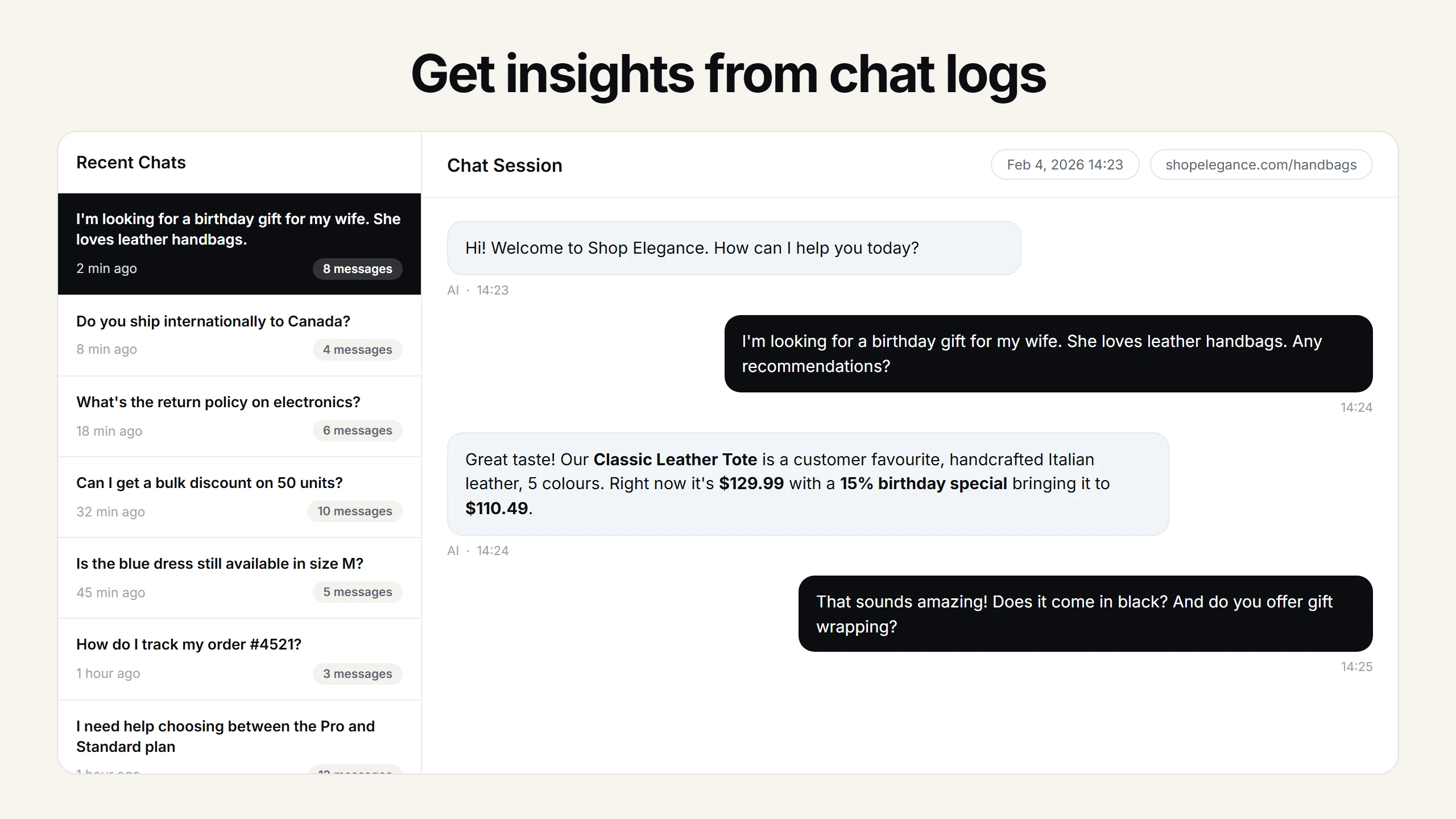
Order tracking and post-purchase support are the other half of what makes a chat plugin genuinely useful on an OpenCart store. Before a visitor asks about products, the most common chat message on any ecommerce store is some variation of "where is my order?" Scripted chatbots handle this by directing the visitor to a tracking page or telling them to email support. Neither response actually answers the question. Asyntai's Custom Tools solve this by connecting to your OpenCart API. You create a tool endpoint that accepts an order number or customer email and returns the order status — processing, shipped, delivered, with tracking number and carrier if available. The AI calls this endpoint automatically when the visitor asks about their order, and responds with the real answer: "Your order #10482 shipped on June 15 via FedEx. The tracking number is 7961234567890. Based on the carrier estimate, it should arrive by June 20." That is a complete answer that resolves the inquiry without a support ticket, a phone call, or a page redirect.
Custom Tools extend beyond order tracking. Any action that your OpenCart store can perform through an API endpoint can become a tool the AI uses during conversation. Check if a product is in stock in a specific size or color. Verify whether a coupon code applies to a specific product or category. Look up warranty status for a previous purchase. Calculate shipping costs to a specific region. Check the return window for an order placed on a specific date. Each tool adds another question the AI can answer with real data rather than a generic "please contact us" response. For OpenCart store owners who have invested in API customization — and many have, because OpenCart's API framework is well-documented and widely extended — these tools turn existing backend capability into front-end customer experience.
Multi-store support deserves specific attention because it is one of OpenCart's distinctive strengths. A single OpenCart installation can power multiple storefronts — different domains, different themes, different product catalogs, all managed from one admin panel. Asyntai supports this architecture. Each storefront gets its own widget with its own site ID, branding, knowledge base, product feed, and Custom Tools. Visitors on your automotive parts store see automotive products and automotive-specific policies. Visitors on your home electronics store see electronics products and electronics-specific support information. The widgets operate independently even though they are managed from one Asyntai account. This is particularly valuable for OpenCart merchants who have built a multi-store operation and need customer communication to reflect the distinct identity of each storefront rather than presenting a generic, one-brand-fits-all chat experience.
Installation on OpenCart is deliberately simple, which reflects a design principle: the chat plugin should be as easy to add as any marketplace extension. The most common method is to add a single script tag to your theme's header.twig file — specifically, catalog/view/theme/your-theme/template/common/header.twig. This is the template that renders the head section on every page of your store. Paste the Asyntai script tag before the closing tag, save the file, and the chat widget appears on every page. For store owners who prefer not to edit template files directly, an OCMOD extension XML file provides a code-free alternative. Upload the XML file through Extensions > Extension Installer in your OpenCart admin panel. The OCMOD system injects the script tag into the header template automatically, and it persists through theme updates because OCMOD modifications are applied as an overlay rather than a file edit. Both methods work with OpenCart 2.x, 3.x, and 4.x.
The theme compatibility question matters on OpenCart because the ecosystem has a wider variety of theme architectures than most platforms. The default OpenCart theme, Journal (the most popular premium theme), marketplace themes with custom JavaScript, and heavily customized themes with bespoke front-end code — the Asyntai chat widget works with all of them because it loads as a standalone script that does not interact with the store's DOM, CSS, or JavaScript dependencies. It does not require jQuery (though OpenCart includes it), does not inject global styles, and does not modify the page layout. It renders in its own container, positioned as a floating widget at the bottom corner of the viewport. Extensions like mega menus, product filters, quick-view modals, and one-page checkout modules do not conflict because the widget occupies its own scope entirely.
The economics of an AI chat plugin on an OpenCart store are different from those of a live chat solution, and the difference matters for the kind of merchants who choose OpenCart. OpenCart merchants tend to be cost-conscious — they chose a free, self-hosted platform over paid alternatives for a reason. Live chat requires staff: either an in-house support agent or a contracted service, with ongoing payroll or subscription costs that scale with chat volume. An AI chat plugin handles the majority of inquiries — product questions, policy questions, order status checks — without any human involvement. The cost is fixed by plan tier, not by conversation volume (within the plan's message limits). For a store that receives 200 chat inquiries per month, the comparison is stark: a part-time support agent at $1,500/month versus an AI chat plugin at $139/month that handles the same questions 24 hours a day, seven days a week, in 36 languages.
Where the AI adds revenue rather than just saving cost is product discovery. Most OpenCart stores have more products than their visitors ever see. Category navigation shows what visitors actively browse. The search bar surfaces what visitors already know how to name. Everything else — the products that would be perfect for a visitor's use case but that they never found because they did not know the right category or search term — sits unseen in the catalog. The AI chat plugin surfaces those products. When a visitor types "I need something to organize my desk that looks good in a home office" on a furniture store, the AI does not wait for them to navigate to Office > Desk Accessories > Organizers. It searches the product feed, finds the bamboo desk organizer, the minimalist cable management tray, and the magnetic pencil cup, and presents all three as Dynamic Product Cards. Each of those is a potential sale that the visitor would not have made through traditional navigation because they would not have found the products.
The OpenCart marketplace has been slow to offer AI-powered solutions. The extensions that exist tend to be wrappers around generic chatbot platforms — services not designed for ecommerce, bolted onto OpenCart through a module that adds a script tag. They do not crawl your store, do not understand your product catalog, do not show product cards, and do not connect to your order system. Asyntai was built for ecommerce from the ground up. The AI's knowledge comes from your store — crawled pages and product data feed — not from a generic training set. Dynamic Product Cards were designed specifically for product merchandising inside a chat conversation. Custom Tools were built to connect to ecommerce APIs for order tracking, inventory checks, and transactional actions. The entire system is purpose-built for the questions ecommerce visitors actually ask, which are fundamentally different from the questions a SaaS help desk or a corporate website receives.
For OpenCart store owners who have built a business on a platform that values control and flexibility, the AI chat plugin fits naturally into that philosophy. It is not a closed system that replaces your customer communication — it is a tool that enhances it. You control what the AI knows through your crawled content and data feed. You control what it can do through the Custom Tools you connect. You control how it presents itself through widget branding and behavior settings. The AI works from your content, executes actions through your APIs, and presents itself as part of your store. Visitors do not know or care that it is powered by Asyntai — they experience it as a knowledgeable, always-available assistant that knows your products, answers their questions, and helps them find what they came for.
The gap between what OpenCart's marketplace chat modules offer and what modern AI can deliver is wide. Visitors in 2026 have been conditioned by conversational AI in every other context — they expect to ask a question in natural language and receive an intelligent answer. When they encounter a scripted chatbot that offers them a menu of four options, or a live chat widget that says "we're offline, please leave a message," the experience feels dated. The AI chat plugin closes that gap for OpenCart stores. It brings the same conversational intelligence that visitors experience on the largest retail sites to stores of every size, on a platform that gives the store owner complete control over how it works. That combination — the intelligence of modern AI with the flexibility of OpenCart — is what has been missing from the marketplace. It is no longer missing.