Joomla live chat plugin that answers visitor questions from your own content
Most Joomla live chat extensions connect you to a chat queue. Asyntai gives your Joomla site an AI assistant that actually knows your content. It crawls your articles, categories, menu items, and K2 or EasyBlog posts, then answers visitor questions instantly — in 36 languages, around the clock, without anyone sitting behind a screen. Add it with a JS snippet in a Custom HTML module or your template's index.php. No JED extension required.
See the AI answer questions from your Joomla site
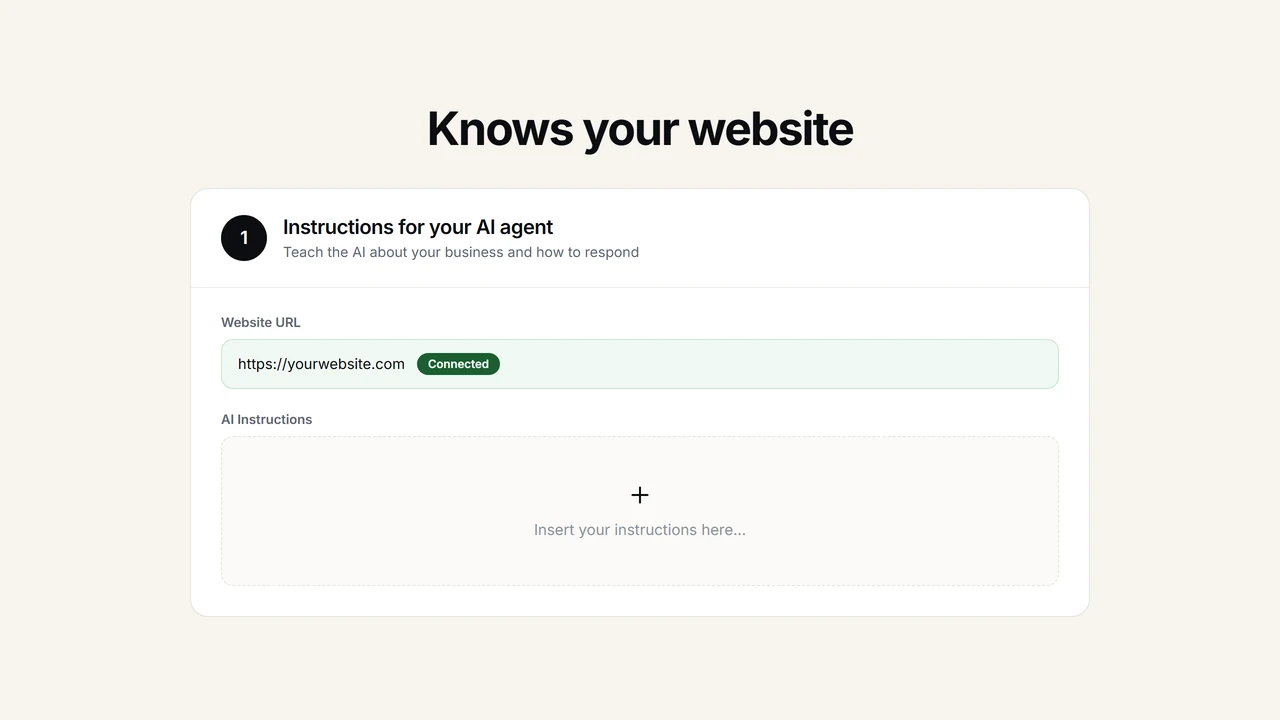
Enter your Joomla site URL and watch the AI learn your content and start answering visitor questions
Your Joomla content becomes the AI's knowledge — articles, categories, every page
Joomla sites hold their content in articles, categories, menu items, custom modules, and third-party components like K2 and EasyBlog. Asyntai's AI crawler reads all of it — public-facing HTML, whatever a browser can see. It indexes your articles, your category descriptions, your service pages, your FAQ modules, your blog posts. When a visitor asks a question, the AI searches that knowledge base and answers using your content — not generic responses, not canned scripts. A question about your event schedule gets the actual dates from your articles. A question about pricing gets the numbers from your service page. The AI speaks 36 languages, so a visitor browsing in Japanese gets answers in Japanese from your English content. No translation plugins needed.
- Crawls your entire Joomla site automaticallyThe AI reads every public page on your Joomla site — articles, categories, menu items, component pages, K2 content, EasyBlog posts, and any other content accessible via URL. It builds a knowledge base from your actual site content, not a manually curated FAQ list.
- Answers in 36 languages from any source languageA visitor browsing your Joomla site in Spanish, German, or Arabic gets answers in their language — even if your content is written entirely in English. The AI handles the translation layer; your content stays in whatever language you wrote it in. No Joomla multilingual extensions required for the chat.
- Answers using your content, not generic fillerEvery response the AI gives is grounded in the content it crawled from your Joomla site. It cites your articles, references your service descriptions, and pulls specifics from your pages. Visitors get real answers about your organization, not chatbot boilerplate that could apply to any website.
Custom HTML module or template snippet — works with any Joomla template
You don't need to install a JED extension or modify core files. Paste the Asyntai JS snippet into a Joomla Custom HTML module (set to display on all pages) or add it directly to your template's index.php before the closing body tag. Either method takes under two minutes and works with any Joomla template — Gantry, Helix, JA templates, Astroid, or any custom build. The widget loads asynchronously, so it won't slow down your page load. And because it runs independently of Joomla's component architecture, it works on Joomla 3.x and 4.x without compatibility issues. Beyond answering content questions, the AI connects to your Real-Time Data Feed for live product or listing data, and Custom Tools let it call your own API endpoints to perform actions like checking order status or looking up account information.
- Two install methods, both under two minutesMethod one: create a Custom HTML module in Joomla's module manager, paste the JS snippet, assign it to all pages, and publish. Method two: open your template's index.php file and paste the snippet before the closing body tag. Both methods work identically. Choose whichever fits your workflow — no developer needed either way.
- Real-Time Data Feed for live dataIf your Joomla site sells products, lists properties, or publishes frequently changing information, connect a Real-Time Data Feed — a URL (JSON, CSV, or API) that returns your current data. The AI reads it on each query, so prices, availability, and listings are always current. Perfect for Joomla ecommerce extensions like VirtueMart, HikaShop, or J2Store.
- Custom Tools for actions beyond answersThe AI can do more than answer questions. Custom Tools let it call your own API endpoints to check order status, look up booking availability, verify membership levels, or trigger any action your backend supports. The visitor stays in the chat while the AI fetches live data from your systems.
Add AI live chat to your Joomla site in minutes
No JED extension to install, no Joomla version conflicts to worry about. Paste one JS snippet into a Custom HTML module or your template file, let the AI crawl your site, and your visitors get an AI assistant that knows your content.
- Sign up at Asyntai and copy your widget JS snippet from the dashboard.
- In Joomla, create a Custom HTML module (Extensions > Modules > New > Custom HTML), paste the snippet, assign it to all pages, and publish. Or add the snippet to your template's index.php before the closing body tag.
- Let the AI crawl your Joomla site — it automatically indexes your articles, categories, menu items, and any public content.
- Optionally connect a Real-Time Data Feed for live product or listing data, and configure Custom Tools for actions like order lookups or booking checks.
<!-- Paste in Custom HTML module or template index.php -->
<script src="https://asyntai.com/widget.js"
data-id="your-site-id" async>
</script>
# Works with Joomla 3.x and 4.x — any template.
Joomla live chat plugin — FAQs
Common questions from Joomla site owners, administrators, and agencies evaluating AI-powered live chat for Joomla.
Do I need to install a Joomla extension from the JED?
No. Asyntai's live chat widget loads via a small JavaScript snippet — you paste it into a Custom HTML module or directly into your template's index.php file. There's no .zip extension to install, no JED listing to manage, and no Joomla update conflicts to worry about. The widget runs independently of Joomla's component system, which means it works with any Joomla version (3.x and 4.x) and any template framework (Gantry, Helix, JA, Astroid, or custom). If your Joomla site loads in a browser, the widget works.
How does the AI learn my Joomla site content?
The AI crawls your Joomla site by visiting every public URL — articles, categories, menu items, component pages, and content from extensions like K2 or EasyBlog. It reads the rendered HTML, the same content a visitor sees in their browser. The crawl happens automatically after you set up the widget. You don't need to export content, create an API endpoint, or manually upload anything. As you publish new articles or update existing ones, the AI picks up the changes during its regular re-crawl cycle. You can also upload additional files (PDFs, documents) to the knowledge base for content that isn't on your public site.
Does it work with K2, EasyBlog, and other Joomla components?
Yes. The AI crawls rendered HTML pages, not Joomla's internal database. Any content that's accessible via a public URL — whether it comes from K2 articles, EasyBlog posts, VirtueMart product pages, HikaShop listings, Kunena forum threads, or any other component — gets indexed automatically. The AI doesn't need to know which component generated the page. It reads the content as a visitor would and adds it to the knowledge base.
Will it slow down my Joomla site?
No. The widget script loads asynchronously, which means it doesn't block your page from rendering. Your Joomla site loads first — all its CSS, JavaScript, modules, and content — and the chat widget appears once the page is ready. The script itself is under 50KB. Visitors with slow connections see the page content before the widget appears. There's no server-side load on your Joomla hosting because all AI processing happens on Asyntai's servers.
Can I use it with Joomla's built-in multilingual system?
You can, but you don't need to. Joomla has a robust multilingual system with language associations and content translation. Asyntai works alongside it but doesn't depend on it. The AI supports 36 languages natively — it detects the visitor's browser language and responds accordingly. If your Joomla site is only in English, a German-speaking visitor still gets German responses sourced from your English content. If your site already has multilingual content via Joomla's language system, the AI crawls all language versions and uses the appropriate one. Either way, the visitor gets answers in their language.
How do I install it — Custom HTML module or template edit?
Both methods work identically. The Custom HTML module approach is easier: go to Extensions > Modules > New > Custom HTML, paste the JS snippet, set the module position to one that appears on all pages, assign it to all menu items, and publish. The template approach is more direct: open your template's index.php file, paste the snippet before the closing </body> tag. Choose whichever you prefer. The Custom HTML module is better if you want to enable or disable the chat from Joomla's admin without editing files. The template edit is better if you want to ensure it loads on every page regardless of module positions.
What plan do I need for a Joomla site?
The AI chat widget works on all plans, including Free, with answers sourced from your crawled Joomla content. The Free plan includes 50 messages per month — enough to test the widget and see how visitors interact with it. The Starter plan ($39/month) gives you 800 messages. Standard ($139/month) adds Real-Time Data Feed, Custom Tools, and 15,000 messages — ideal for Joomla sites with ecommerce components or frequently changing data. Pro ($449/month) includes 50,000 messages and Real-Time Data Feed Max for large catalogs.
Can the AI handle questions it doesn't know the answer to?
Yes — gracefully. When a visitor asks something that isn't covered by your Joomla site content or knowledge base, the AI acknowledges the limitation instead of making something up. You can configure it to suggest contacting you directly, to redirect visitors to specific pages, or to collect the visitor's question for later follow-up. The AI only answers using your content and the knowledge sources you've connected — it never invents information or pulls from external websites.
Why Joomla sites struggle with live chat — and how AI changes the equation
Joomla powers millions of websites — government portals, nonprofit organizations, community forums, small business sites, educational institutions, and membership associations. It's a mature CMS with a flexible architecture that handles complex content structures well. But when it comes to live chat, Joomla site owners face a frustrating reality: the Joomla Extension Directory has a handful of chat extensions, most of them outdated or thinly maintained, and the ones that work are conventional live chat tools that require a human operator behind every conversation. For organizations running Joomla sites — many of which are small teams, volunteer-run nonprofits, or one-person businesses — staffing a live chat queue isn't realistic. The chat bubble sits on the site, a visitor clicks it, and nobody is there to answer. That's worse than having no chat at all.
The core problem isn't the software. It's the model. Traditional live chat assumes someone is available to respond in real time. For large ecommerce companies with dedicated support teams, that works. For a Joomla-powered community site maintained by two volunteers, or a small consultancy whose owner is out with clients all day, or a nonprofit that runs on grant funding and part-time staff — traditional live chat is a promise the site can't keep. Visitors see "Chat with us!" and expect immediate help. When the response is silence, or an auto-reply saying "We'll get back to you in 24 hours," the trust damage is worse than if the chat button hadn't been there. The visitor came with a question and left with the impression that nobody is home.
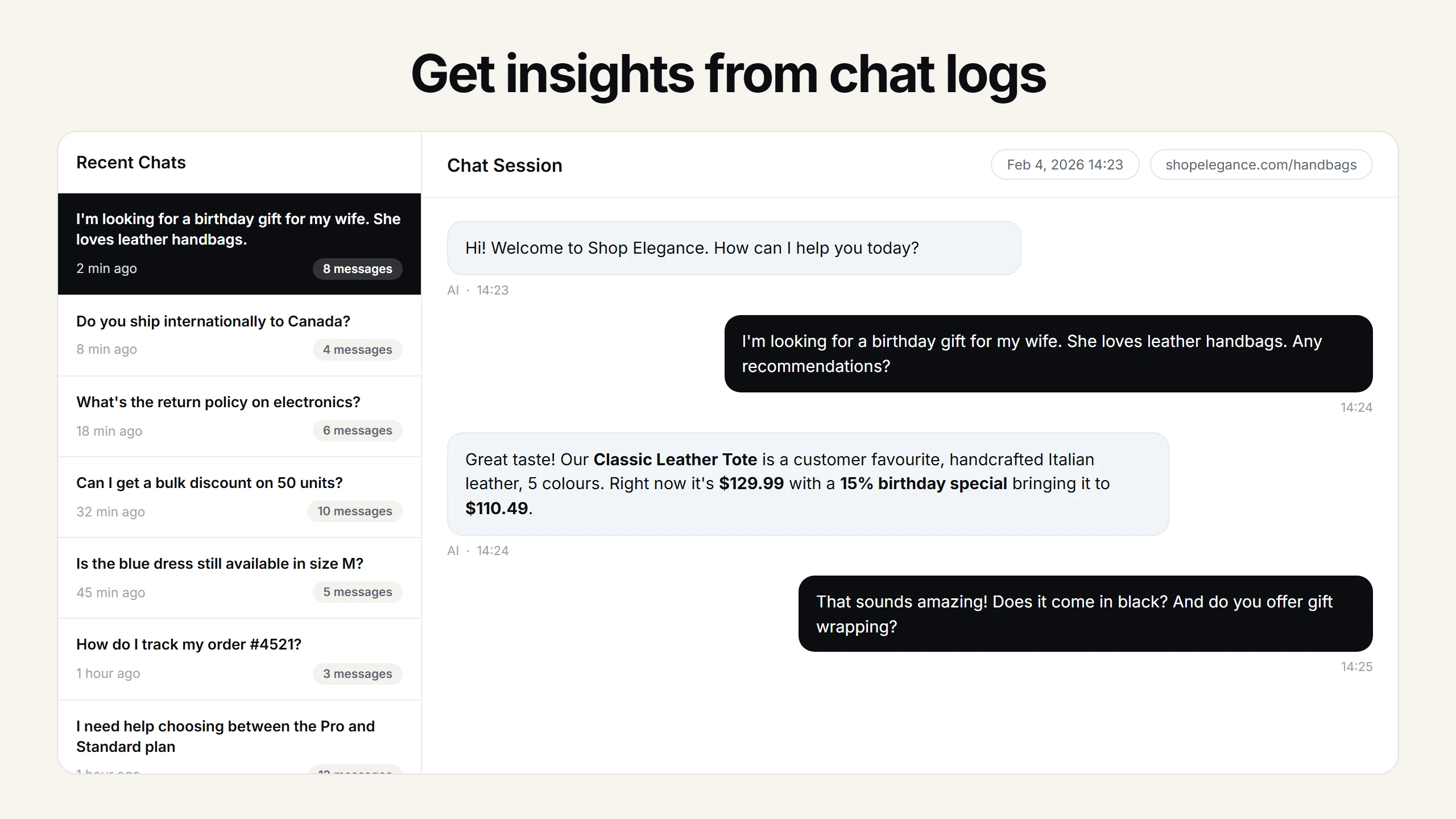
AI live chat flips this model entirely. Instead of routing visitor messages to a human queue, the AI reads the question, searches the site's content, and responds immediately — with an answer sourced from the site's own pages, articles, and documents. No operator needed. No queue. No "we'll get back to you" holding pattern. The visitor asks "What are your membership fees?" and the AI finds the membership page, extracts the fee structure, and answers in seconds. The visitor asks "When is the next community meeting?" and the AI pulls the date from the events article. Every answer comes from content the site owner already wrote and published. The AI is a reader and retriever, not an inventor.
For Joomla specifically, this works well because of how Joomla structures content. Joomla articles sit inside categories, which map to menu items, which create navigable URLs. The AI crawler follows the same URL structure a visitor would — it reads every public page, indexes the content, and builds a knowledge base. K2 articles, EasyBlog posts, VirtueMart product pages, HikaShop listings, Kunena forum threads, custom component pages — if it renders as HTML at a URL, the AI reads it. The site owner doesn't need to create a separate FAQ database or manually input Q&A pairs. The site's existing content is the knowledge base. Every article you've published, every service page you've written, every event you've listed — it's all searchable by the AI the moment the crawl completes.
The language dimension matters more for Joomla sites than many site owners realize. Joomla has a sophisticated built-in multilingual system — language associations, content translation, language switcher modules — and many Joomla sites serve international audiences. Government portals serve multilingual populations. Nonprofits operate across borders. Community organizations include members who speak different languages at home. Asyntai's AI supports 36 languages natively. A visitor whose browser is set to Arabic gets responses in Arabic. A visitor browsing in Portuguese gets Portuguese. The AI translates the meaning from your content, regardless of what language you wrote it in. This means a Joomla site with English-only content can serve visitors in 36 languages through the chat widget — without setting up Joomla's multilingual system, without creating translated articles, without installing language packs. The chat handles languages the rest of the site doesn't.
Installation on Joomla is deliberately simple because Joomla site owners shouldn't need to install another extension with its own update cycle and compatibility concerns. Joomla 3 to Joomla 4 migration already causes enough extension headaches — component API changes, deprecated MVC patterns, Bootstrap version conflicts. The last thing a site administrator needs is a live chat extension that breaks during a Joomla update. Asyntai avoids this entirely. The widget is a single JavaScript snippet that runs in the browser, independent of Joomla's server-side architecture. It doesn't use Joomla's plugin system, doesn't hook into Joomla events, doesn't query Joomla's database. It loads asynchronously in the visitor's browser after the page renders. Whether you're on Joomla 3.10 or Joomla 4.4 or the eventual Joomla 5, the widget works the same way because it doesn't touch Joomla's internals.
The two installation methods give administrators flexibility. The Custom HTML module approach uses Joomla's native module system — you create a module, paste the snippet, assign it to all pages via menu item assignment, and publish it. This is the cleaner option for administrators who want to manage the chat from within Joomla's admin panel. You can unpublish it temporarily, restrict it to certain pages via menu assignment, or move it to a different module position. The template approach — adding the snippet to index.php — is more direct and guarantees the widget loads on every page regardless of module configurations. Site owners who've been burned by module position issues or template overrides often prefer this method. Both produce identical results on the front end.
What separates AI live chat from a simple FAQ chatbot is the depth of understanding. FAQ chatbots match keywords to pre-written answers. If a visitor doesn't use the right keywords, they get "I didn't understand that" or a wrong answer. AI live chat understands the question's intent, searches across the entire crawled knowledge base, and constructs a response from the relevant content. "How do I become a member?" and "What's the process for joining your organization?" and "Can I sign up?" all map to the same membership article — even though the keywords barely overlap. The AI doesn't need exact keyword matches because it understands what the visitor is asking, not just what words they used.
For Joomla community sites and membership organizations, this capability transforms how visitors interact with the site. A community association's Joomla site might have dozens of articles covering bylaws, meeting schedules, membership tiers, event calendars, committee rosters, and policy documents. A new visitor trying to understand how the community works shouldn't have to navigate through nested categories and menu items to find answers. With AI live chat, they ask their question and get a direct answer sourced from the relevant article — with enough context to be useful, without the visitor needing to know the site's information architecture. The chat widget becomes the front door to the site's entire content library.
Joomla business sites benefit differently. A consultancy, a law firm, a marketing agency — these sites exist primarily to communicate expertise and generate leads. The live chat widget becomes a 24/7 sales assistant that knows the firm's services, case studies, team bios, and areas of expertise. A visitor lands on the site at 11 PM and asks "Do you handle immigration cases?" The AI checks the practice areas content, finds the immigration law article, and responds with specifics about the firm's immigration services — pulled directly from the site's own content. That visitor might have bounced if they had to browse through menu items at 11 PM looking for the answer. Instead, they got an immediate, specific response and now they're more likely to fill out the contact form.
Nonprofit Joomla sites face a unique version of this problem. They need to communicate their mission, programs, impact, donation processes, volunteer opportunities, and event calendars — often to audiences that are less tech-savvy and less patient with complex navigation. A potential donor wants to know how their money will be used. A volunteer wants to know what opportunities exist this month. A community member wants to know if the food bank is open on Saturdays. These are simple questions with straightforward answers that exist somewhere on the site. AI live chat surfaces those answers without requiring the visitor to find the right page. For nonprofits running on tight budgets with minimal staff, the AI handles the repetitive informational questions that would otherwise go unanswered or consume staff time.
The Real-Time Data Feed adds a dimension that crawled content alone can't provide. Joomla ecommerce sites running VirtueMart, HikaShop, or J2Store have product catalogs with prices and stock levels that change frequently. Crawled pages reflect the state at the time of the last crawl. The Real-Time Data Feed connects the AI to a live URL — a JSON or CSV export of your product catalog — that it reads on each query. Price changes reflect immediately. Out-of-stock items stop appearing in results. New products show up within 24 hours. For a Joomla site selling products, this means the AI's product recommendations are always current. A visitor asks "Do you have the blue model in stock?" and the AI checks the live feed, not a cached crawl from last Tuesday.
Custom Tools extend the AI beyond answering questions into performing actions. When a Joomla site has backend systems — an order management system, a booking engine, a membership database, an event registration system — Custom Tools let the AI query those systems on behalf of the visitor. "What's the status of my order?" The AI calls your order lookup API and returns the shipping status. "Are there seats available for Saturday's workshop?" The AI checks your booking system and confirms availability. "Can you check if my membership is current?" The AI queries the membership database. Each Custom Tool is a URL endpoint that the AI calls when a visitor's question requires live data that isn't in the crawled content or data feed. It turns the chat from an information desk into a service counter.
The economics of AI live chat on Joomla sites differ from the WordPress and Shopify ecosystem in an important way. Joomla sites tend to be run by organizations — nonprofits, associations, government agencies, professional firms — rather than individual entrepreneurs. These organizations often have substantial content (hundreds of articles accumulated over years) but limited technical staff. Traditional live chat plugins fail for them not because the software is bad, but because they can't staff the chat. AI live chat succeeds precisely because it removes the staffing requirement. The AI handles the volume of repetitive informational questions — business hours, program details, membership processes, event schedules — that constitute 80% of what visitors want to know. The remaining 20% that require human judgment or sensitive handling can be escalated via the contact form or collected as a lead for follow-up.
Joomla's position in the CMS market makes this particularly relevant right now. Joomla sites tend to be older, more content-rich, and more structurally complex than the average WordPress blog. Many have been accumulating articles for years — a community association might have 500+ articles spanning a decade. That's a deep content library, but it's practically invisible to visitors who land on the homepage and see a menu with six items. AI live chat makes the entire content library searchable through natural conversation. A visitor asks a question and the AI finds the relevant article from 2019 that perfectly answers it — an article the visitor would never have found through menu navigation because it's buried four levels deep in a category hierarchy. The AI doesn't just answer questions. It resurfaces content that would otherwise sit unused.
Security and privacy concerns come up frequently with Joomla administrators, who tend to be more technically aware than average. The AI operates entirely from crawled public content — it reads the same pages any visitor can see in their browser. It doesn't access Joomla's admin panel, doesn't connect to the database, doesn't read unpublished articles or protected content. The chat widget runs in the visitor's browser and communicates with Asyntai's servers, not with the Joomla installation's server. The Joomla site's hosting, database, and admin remain untouched. For organizations with strict IT policies — government agencies, educational institutions, regulated nonprofits — this separation is important. The chat widget is functionally equivalent to embedding a YouTube video or a Google Maps widget. It runs client-side and doesn't interact with the CMS backend.
The gap between what Joomla site visitors expect and what most Joomla sites deliver in terms of interactive assistance is wider than in any other major CMS ecosystem. WordPress has dozens of chat plugins. Shopify has built-in chat. Joomla's JED live chat category is sparse, and the extensions that exist assume a human operator model that most Joomla organizations can't support. AI live chat fills this gap not by adding another extension to maintain, but by adding an AI layer that works with the content you already have. Your Joomla articles become answers. Your categories become navigation. Your site becomes conversational. And the visitor who lands on your Joomla site at 3 AM with a question about your services gets a helpful, accurate, content-grounded response — without anyone waking up to type it.