Bot automation software that actually understands the question
Traditional bot builders make you map every possible conversation before the bot can say anything useful. Asyntai reads your website content, understands what visitors are really asking, and answers naturally — no flowcharts, no scripted paths, no decision trees.
See an AI bot built from your website in minutes
Enter your URL and watch the AI learn your content — then try asking it anything
Your content is the script — no flowcharts to build
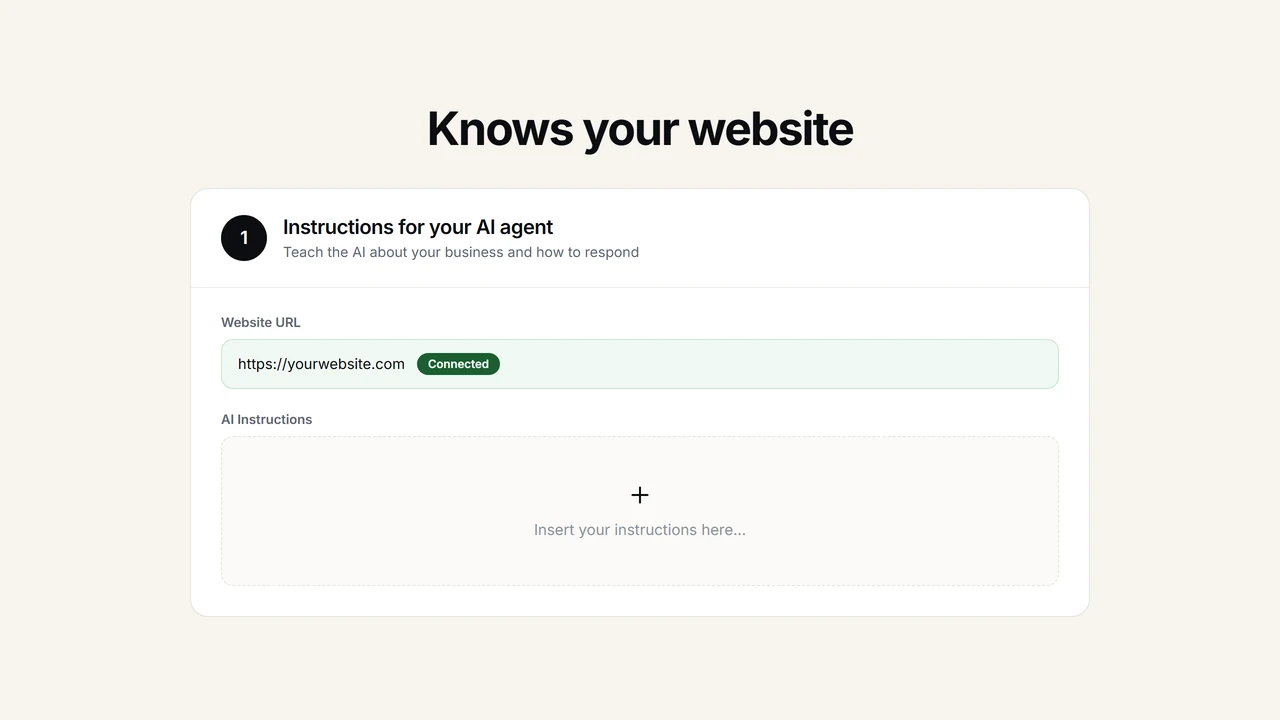
Every bot builder on the market asks you to do the same thing: map out conversation flows before the bot can handle a single interaction. If-this-then-that logic, branching paths, fallback messages, button menus. The result is a bot that works perfectly for the five scenarios you anticipated and fails the moment a visitor phrases something differently. Asyntai takes a fundamentally different approach. It crawls up to 50 pages of your website, reads your content the way a new employee would, and answers questions based on what it learned. No flow to map. No tree to build. No scripts to maintain.
- Understands intent, not keywordsVisitors phrase the same question a dozen different ways. The AI understands what they mean regardless of wording — no synonym lists or keyword matching required.
- Handles unexpected questions gracefullyDecision-tree bots break on anything outside the flow. Asyntai answers from your content — if the answer exists on your site, the AI finds it, no matter how the visitor phrased the question.
- Zero maintenance overheadNo branches to update when your content changes. Re-crawl your site or re-upload your documents, and the AI's knowledge refreshes immediately. No flow diagrams to untangle.
Pull live data into the conversation when static content is not enough
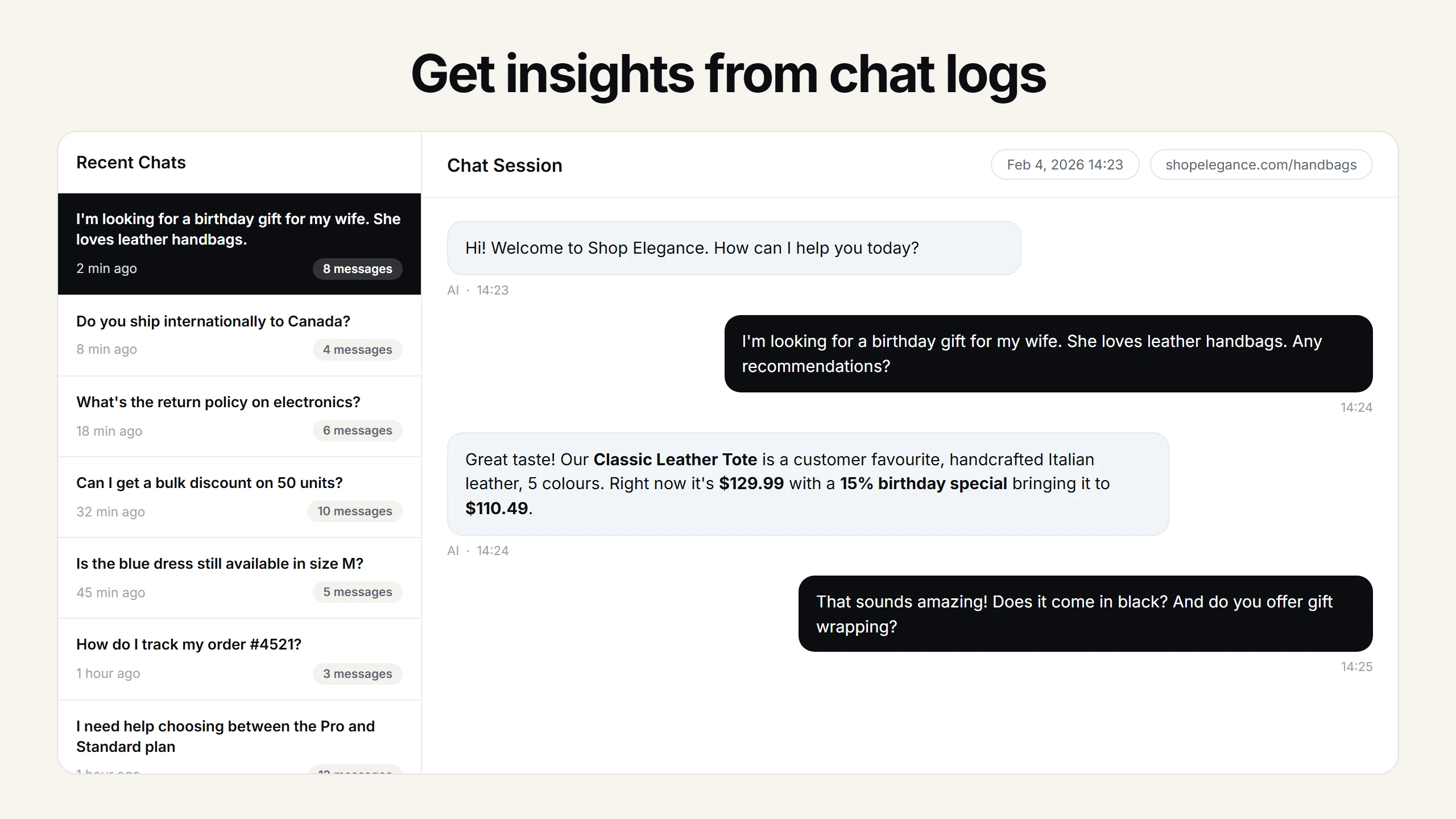
Most questions on your website can be answered from your published content. But some questions need live data — current availability, order status, account details, appointment slots. With Custom Tools on the Standard ($139/month) and Pro ($449/month) plans, the AI calls your own API endpoints mid-conversation to fetch real-time information. A visitor asks "is this still available?" and the AI checks your inventory system. A customer asks "what's the status of my ticket?" and the AI queries your CRM. You define which endpoints are accessible and what the AI can retrieve — it handles the conversation flow automatically.
- Inventory and availability checksThe AI queries your system in real time when a visitor asks about product stock, service availability, or appointment slots — no static FAQ, an actual answer.
- Customer account lookupsLogged-in users ask about their order, subscription, or balance. The AI fetches their data through User Context and answers personally, with no ticket created.
- Ticket and request statusCustomers checking on open support tickets, applications, or service requests get the real status from your system — not a generic "we'll follow up."
- Booking and schedulingThe AI checks available time slots through your scheduling endpoint and helps visitors find a suitable appointment — no redirect to a separate booking page needed.
From zero to live bot in minutes, not months
Traditional bot automation means weeks of flow design, testing branches, writing fallback messages, and praying nothing breaks when a visitor goes off-script. Asyntai means pasting one line of code and letting the AI read your site. The bot is live the same day.
- Create a free account and paste your website URL
- The AI scans up to 50 pages and builds a knowledge base from your content
- Copy the one-line embed snippet into your site header
- The chatbot goes live — answering visitor questions in 36 languages
<script src="https://asyntai.com/widget.js"
data-id="your-site-id" async>
</script>
</head>
# One line. No flowcharts. Just answers.
Bot automation software — FAQs
Questions from teams evaluating AI-powered bot automation versus traditional bot builders.
Traditional chatbot builders require you to design conversation flows in advance — if-this-then-that logic, button menus, branching paths. You map the bot's responses before it can handle a single conversation. Asyntai skips all of that. It reads your website content and answers questions based on what it learned. No flows to design, no branches to maintain, no fallback messages to write. The AI understands natural language and responds conversationally.
If the answer isn't in your knowledge base, the AI doesn't guess. It lets the visitor know it doesn't have that information and offers to connect them with a human. The AI captures their name, email, and the full conversation, then delivers the escalation to your dashboard and optionally to your email inbox. Your team picks up the thread with complete context.
No. You paste a single script tag into your website header — via your CMS settings, a header plugin, or the HTML template directly. The AI crawls your site automatically. You can optionally upload additional documents and write custom instructions in plain English. No coding, no API configuration, and no flow diagram required for the core bot to work.
Yes, through custom instructions written in plain English. "Never quote pricing for custom projects — offer a consultation instead." "Always redirect support issues to our help desk." "Don't discuss competitor products." The AI follows those rules in every conversation. You can update them anytime and changes take effect immediately.
Yes. The widget interface supports 36 languages, and the AI detects the visitor's language from their first message. Your content can stay in its original language — the AI translates the response automatically. A German visitor gets German answers, a Japanese visitor gets Japanese, from the same English-language knowledge base.
Free: $0 for 1 site and 50 messages/month. Starter: $39/month for 2 sites and 800 messages. Standard: $139/month for 3 sites, 15,000 messages, and Custom Tools for live data integrations. Pro: $449/month for 20 sites and 50,000 messages. You can start on the free plan and upgrade as your usage grows.
Yes. Free supports 1 site, Starter supports 2, Standard supports 3, and Pro supports up to 20. Each site gets its own separately configured bot with its own knowledge base and custom instructions — useful for agencies, multi-brand companies, or businesses with distinct product lines.
Why flowchart bots lost and content-aware AI won
For the better part of a decade, building a bot for your website meant one thing: opening a visual flow editor and mapping out conversation paths. You'd start with a greeting node, branch into topic categories ("Sales," "Support," "General"), add button options under each branch, write responses for each button, create fallback messages for unrecognized inputs, and wire it all together with arrows and conditions. The result was a decision tree disguised as a conversation — functional if the visitor clicked the right buttons, useless the moment they typed a question the tree didn't anticipate. Every business that deployed one of these bots learned the same lesson: the bot handles the conversations you planned for and frustrates visitors with everything else.
The fundamental problem with flowchart bots is not that they're poorly built. Many are technically sophisticated, with conditional logic, variable storage, API integrations, and multi-channel deployment. The problem is architectural. A decision tree can only respond to inputs its designer predicted. A visitor who types "what are your hours on Saturday?" when the tree expects "opening hours" or a button click labeled "Hours" gets the fallback: "I didn't understand that. Please try again or click one of the options below." The visitor didn't say anything unusual. They phrased a simple question in natural language. But natural language has infinite variations, and a decision tree has finite branches. The gap between the two is where every flowchart bot fails.
Asyntai's approach to bot automation eliminates the flowchart entirely. Instead of mapping conversation paths, you point the AI at your website. It crawls up to 50 pages — your homepage, product pages, about page, pricing, FAQ, help docs, policies — and reads the content the way a new hire would read the company website on their first day. When a visitor types a question, the AI searches its knowledge base for the relevant content and composes a response. Not a canned reply from a pre-written list. Not a button menu. A conversational answer that addresses what the visitor actually asked, drawn from the content you actually published. The visitor can phrase their question however they want — formally, casually, in fragments, in any of 36 supported languages — and the AI understands the intent.
The setup difference is not incremental. It is categorical. A traditional bot builder requires you to anticipate every question category, write a response for each, design branching logic for follow-ups, test each path, and maintain the entire tree as your content changes. For a simple bot with ten topics and three layers of branching, that's hundreds of nodes. For a comprehensive bot covering an entire business, it's thousands. Most companies never finish building the tree — they launch with a partial version and accept that the bot handles some topics and punts on the rest. Asyntai requires you to paste one script tag and point the AI at your URL. The bot is live the same afternoon. When your content changes, you re-crawl the site. No nodes to update, no branches to reroute, no fallback messages to rewrite.
The quality of responses is the second categorical difference. A flowchart bot's response is whatever text you typed into the response node six months ago. It doesn't adapt to context, doesn't rephrase for clarity, doesn't combine information from multiple pages to answer a compound question. "What's included in the Standard plan and how does it compare to Pro?" would require a flowchart bot to have a specific node for that exact comparison — and most don't, because you can't predict every combination of questions. Asyntai's AI handles compound questions naturally. It retrieves the Standard plan details from one page, the Pro plan details from another, and composes a comparison that addresses the specific question. The answer is assembled from your content in real time, not recalled from a pre-written response.
Maintenance is where the long-term cost difference becomes clearest. A flowchart bot is a living document that requires updates every time your business changes. New product? Add nodes. Updated pricing? Find and edit every pricing node. Changed return policy? Hunt through the tree for every branch that references returns. Renamed a service? Update every node that mentions it. For active businesses, this maintenance becomes a part-time job. Asyntai's maintenance is re-crawling your website when content changes — a single action that refreshes the entire knowledge base. Upload a new document or update a page, and the AI's answers reflect the change immediately. The maintenance burden scales with the frequency of your content changes, not with the complexity of a conversation diagram.
Custom instructions give you the same kind of control that flowchart bots provide through scripted responses, but without the scripting. You write rules in plain English: "When someone asks about enterprise pricing, capture their email and company name, then let them know a team member will follow up with a custom quote." "Never discuss unreleased features." "If someone asks about a competitor, focus on our product's strengths without mentioning the competitor by name." "Redirect any complaint to [email protected]." These instructions apply to every conversation, in every language, without building a single flow node. You can update them at any time and the changes are instant.
Custom Tools, available on the Standard plan at $139/month and the Pro plan at $449/month, add the one capability that traditional bots historically did well: fetching live data during a conversation. You configure API endpoints that the AI can call — inventory systems, CRMs, booking platforms, ticketing systems — and the AI uses them when a question requires real-time information. "Is this product in stock?" triggers an inventory check. "What time slots are available this Thursday?" queries your scheduling system. "What's the status of my support ticket?" checks your ticketing platform. The AI handles the conversation flow around these lookups naturally, without the rigid scripted sequences that bot builders require for API integrations.
Escalation in a flowchart bot usually means a "Talk to a human" button that dumps the visitor into a live chat queue with no context. The agent starts from scratch. Asyntai's escalation preserves the entire conversation. When the AI encounters something it can't answer — or something you've instructed it to escalate — it captures the visitor's name, email, and the full conversation transcript. The escalation arrives in your Asyntai dashboard and optionally in your email inbox with every message from the conversation attached. Your team picks up exactly where the AI left off. No "how can I help you?" when the visitor already explained their situation three messages ago.
The pricing model reflects the simplicity of the product. Free: $0 for one site and 50 messages per month — enough to deploy a working bot and validate the concept. Starter: $39/month for two sites and 800 messages — enough for a small business handling regular daily chat volume. Standard: $139/month for three sites, 15,000 messages, and Custom Tools for live data integrations. Pro: $449/month for 20 sites and 50,000 messages — built for agencies and multi-brand operations. Compare this to the total cost of a flowchart bot: the platform subscription plus the hours spent building flows, testing branches, maintaining nodes, and fixing the inevitable breakage when a visitor goes off-script. The AI approach costs less upfront, less in maintenance, and less in visitor frustration.
The shift from scripted bots to content-aware AI is not a feature upgrade. It is a rethinking of what a bot is supposed to do. A scripted bot is a menu system wearing a chat interface — functional within its designed paths, useless outside them. An AI bot is a reader that learned your content and can discuss it conversationally — functional for any question your content can answer, honest about the ones it can't. The flowchart era gave businesses their first taste of automation, but it also gave visitors their first taste of chatbot frustration. The next generation of bot automation doesn't ask you to predict every conversation. It asks you to have good content — and if your website already has that, the bot is essentially already built.