AI search for TYPO3 that answers what your visitors mean
TYPO3 runs the big sites: councils, universities, hospitals, agencies. They hold hundreds of pages, and visitors know what they need but not what the page is called. Indexed search matches the words a visitor types against an index of the words on your pages, so a visitor who asks "when are you open at the weekend" gets nothing. Asyntai's AI Search Bar reads the meaning and finds your Opening hours page, even though none of those words is in its title. One extension, installed by Composer or from the Extension Repository, and no template work.
See the AI search your TYPO3 content
Enter your TYPO3 site URL and watch the bar find real answers in your own pages
Visitors ask in their own words, and the bar finds the right page
Whatever search your TYPO3 site runs, it matches words. Indexed search, ke_search and a Solr install are all good at what they do, and what they do is find pages containing the words the visitor typed. That assumption holds for a visitor who already knows your vocabulary. It fails for everybody else, and on a public sector or institutional site almost every visitor is a first-time visitor. They describe a situation. They ask "the lift in the main building is broken", not "report a facilities fault". They ask "can I get married at the town hall", not "register office ceremony rooms". The search finds no overlap and returns an empty page, so the visitor concludes the information is not on your site and telephones instead. The Asyntai AI Search Bar reads the whole question, works out what the visitor is trying to do, and returns the pages that answer it.
- Meaning, not matchingA visitor asks "when are you open at the weekend" and the bar returns your Opening hours page, even though none of those words is in its title. The words do not overlap. The meaning does. On a site of several hundred pages written over a decade by a dozen editors, that gap is where most searches fail.
- Results while the visitor typesResults appear under the bar as the question is typed, as a short ranked list with a title and a line of context. The visitor picks one and lands on the page. Arrow keys move through the list, Enter opens the highlighted result. Nothing loads a separate results page and nothing sends the visitor away from where they were.
- We read your site ourselvesYou do not build or maintain an index. We read your pages, content elements, news records and anything else a visitor can open, and we keep reading as your editors publish. There is no indexer to schedule, no scheduler task to watch and no index to rebuild after a bulk edit.
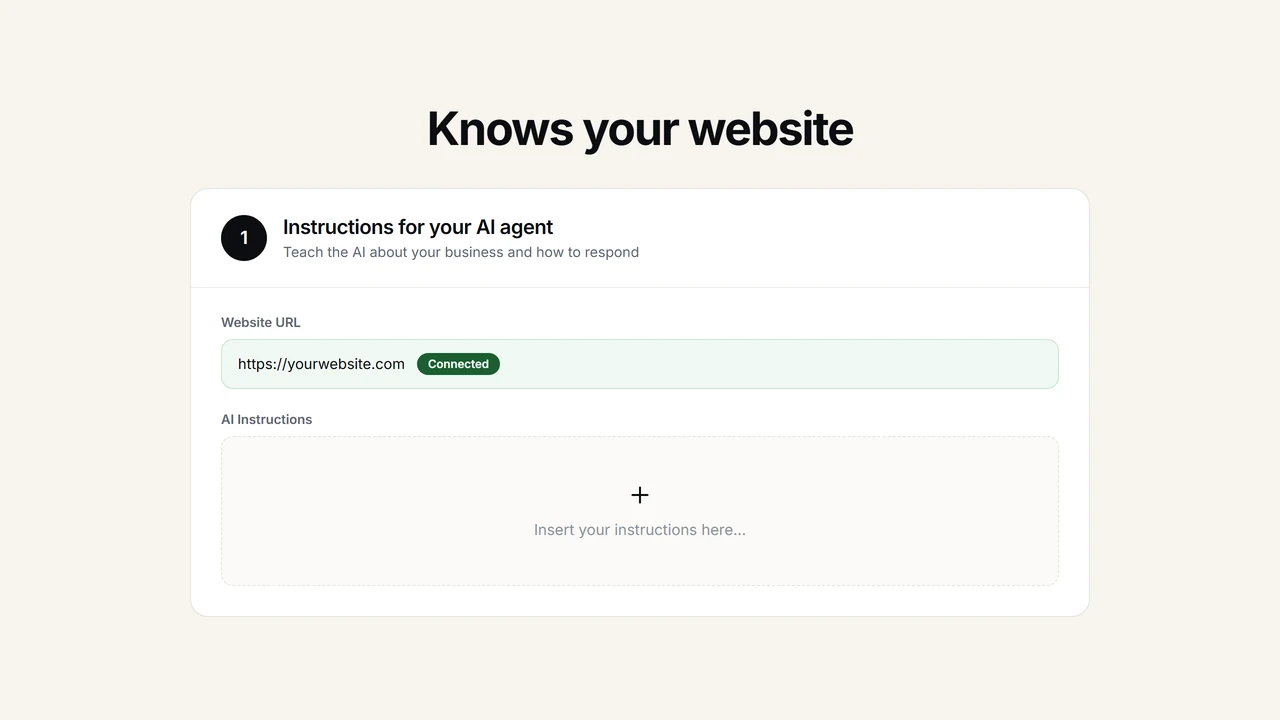
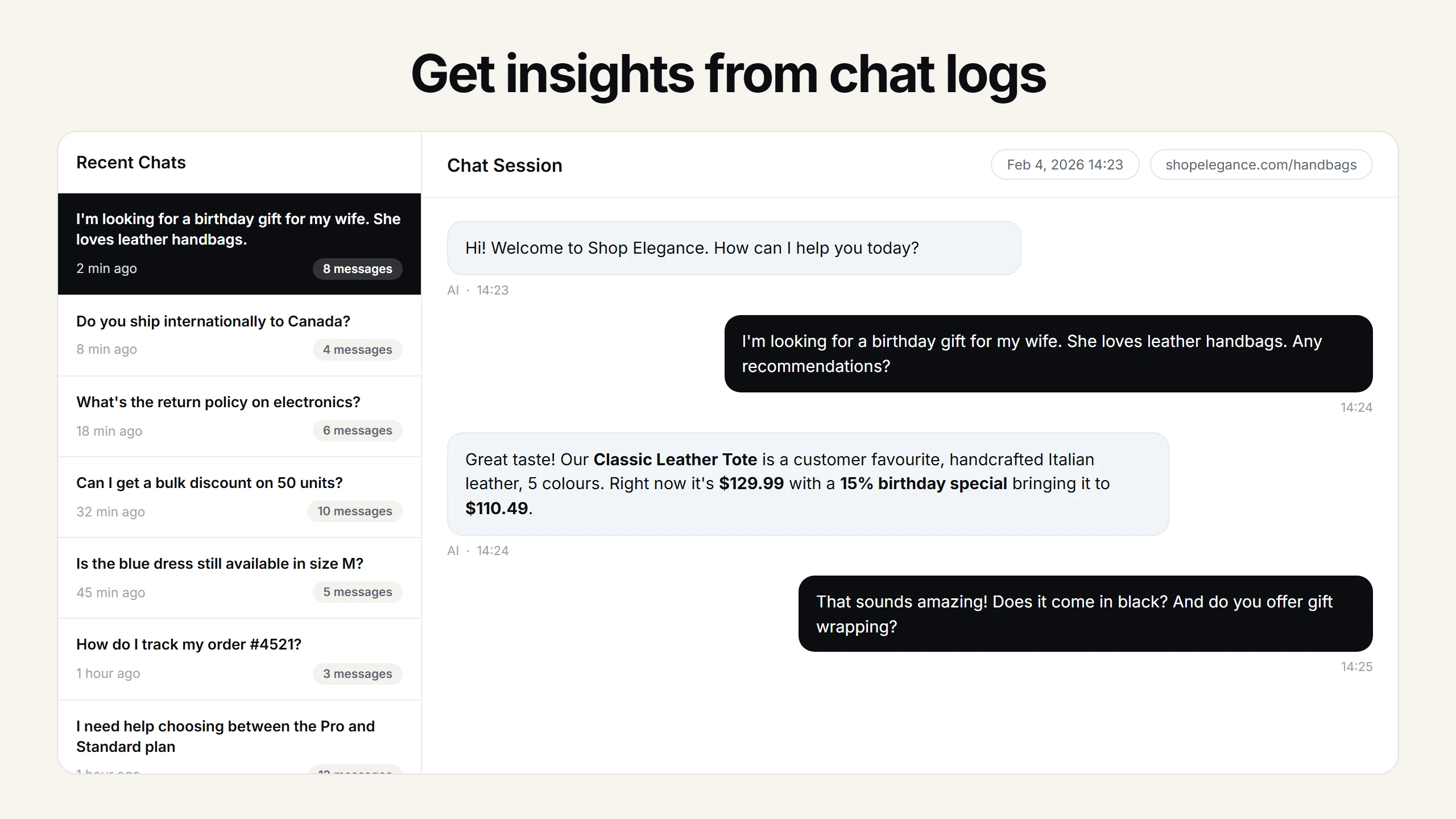
Composer or TER, a content element or your own Fluid layout, and no cache to clear
Install with composer require asyntai/typo3-ai-search, or find asyntai_search in the Extension Repository through Admin Tools, Extensions. Then open Admin Tools, Asyntai AI Search, and press Connect Asyntai. There is no API key to create and nothing to paste. After that you make one decision about where the bar goes: it takes the place of the search box your site already shows, or it appears only where you put it. Both paths leave your templates untouched, and the bar is added after TYPO3 has rendered the page, outside the page cache, so connecting, disconnecting and changing a setting all take effect at once.
- It takes the place of your site search boxChoose "In place of my site search box" and the bar finds the search box your site already shows, hides it, and sits in exactly the same spot. This works with the search forms of indexed_search, ke_search, the Solr extension and any hand-built form. If a visitor presses Enter without picking a result, your usual search page still opens, so the route they know still works.
- Or a content element, or your own Fluid partialChoose "Only where I place it" and there are two ways to do it. Add the Asyntai AI Search bar content element to a page: it is in the Special group when you create a new element. Or put
<div data-asyntai-search></div>anywhere in your own Fluid layout, for example in the header partial. The extension already loads the script on every page. - Outside the page cache, so nothing needs clearingThe bar is added to each page after TYPO3 has rendered it. Connecting, disconnecting and changing a setting take effect immediately, with no cache to clear. The allowance check runs in the background on ordinary visitor traffic, so it does not need the TYPO3 scheduler either.
Add AI search to your TYPO3 site without touching a template
There is no API key to create and nothing to paste. Install the extension, press one button to connect your account, and choose where the bar goes. We read your site and tell you in the module when the bar is live.
- Install with composer require asyntai/typo3-ai-search, then run vendor/bin/typo3 extension:setup. Or open Admin Tools, Extensions, choose Get Extensions, search for asyntai_search and press Import and Install.
- Open Admin Tools, then Asyntai AI Search. The module is for administrators only.
- Press Connect Asyntai. A window opens where you sign in or create a free account. We then start reading your site.
- Set Where the bar goes. Pick "In place of my site search box", or add the Asyntai AI Search bar content element and pick "Only where I place it".
composer require asyntai/typo3-ai-search
vendor/bin/typo3 extension:setup
# TYPO3 12.4, 13.4 or 14 · PHP 8.1 or newer
# Then: Admin Tools > Asyntai AI Search > Connect
See the bar answer a question
This is the AI Search Bar itself. Your visitors type a description, and the bar finds the page.
Not one of these titles contains the words the visitor typed. That is the difference between matching words and reading meaning.
AI search for TYPO3 — FAQs
Common questions from TYPO3 administrators, integrators and agencies looking at AI-powered site search.
How is this different from indexed search or Solr?
They build an index of the words on your pages and return the pages that contain the words a visitor typed. They are good at that, and they are fast. The Asyntai AI Search Bar works on meaning instead. It reads the whole question, works out what the visitor is trying to do, and returns the pages that answer it, even when the visitor's words and your words do not overlap. A visitor asking "when are you open at the weekend" finds your Opening hours page. A word index finds nothing for that query, because none of those words is on it.
Do I have to remove my existing search?
No, and you should not. The bar sits on top of what you already run. If a visitor presses Enter without picking one of the results, your usual search page opens exactly as before. Indexed search, ke_search, Solr, your search plugin and any menu item pointing at a search page all keep working. Visitors who already know how your search works keep that route. Visitors who describe what they want in a sentence get an answer instead of an empty page.
Which TYPO3 versions does it support?
TYPO3 12.4, 13.4 and 14, on PHP 8.1 or newer. Your server also needs to be able to make outgoing HTTPS requests, because the extension talks to us directly. Most hosts allow this, and the module says plainly if yours does not.
How do I install it?
Two ways. With Composer, run composer require asyntai/typo3-ai-search, then run vendor/bin/typo3 extension:setup, or open the Extension Manager once so TYPO3 creates the extension's database table. Without Composer, open Admin Tools, Extensions, choose Get Extensions, search for asyntai_search and press Import and Install. Then open Admin Tools, Asyntai AI Search, and press Connect.
Where can the bar go?
Either it replaces the search box your site already shows, or you place it yourself. For the first, the bar finds that box, hides it and takes exactly the same position, so your layout and styling continue to apply. It works with the search forms of indexed_search, ke_search, the Solr extension and any hand-built form. For the second, add the Asyntai AI Search bar content element to a page, which you will find in the Special group, or put <div data-asyntai-search></div> anywhere in your own Fluid layout. The extension already loads the script on every page.
Does it break the page cache?
No. The bar is added to each page after TYPO3 has rendered it, outside the page cache. That means connecting, disconnecting and changing a setting take effect at once, with no cache to clear, and it also means your cached pages stay cached. The allowance check runs in the background on ordinary visitor traffic, so the extension does not need the TYPO3 scheduler either.
What does the bar actually search?
Your pages, as we read them from your site: content elements, news records and anything a visitor can open. If you run a shop on TYPO3, its product pages are read the same way, because they are pages on your site. You do not configure indexing configurations, select record types or run an indexer. We read the site and keep reading it as your editors publish.
We run several sites in one installation. What happens?
The module connects its first site, and the address is shown in the module before you press Connect, so you can see exactly which one you are about to connect. The module is under Admin Tools and only administrators see it.
What plan do I need?
A site connected through this extension runs the bar on any plan, including the free one. Your monthly reply allowance applies, and searches and chat replies share it. The module shows how much of the month is left. When the allowance runs out, the bar removes itself and your site's own search box comes straight back, so visitors keep being able to search. The extension checks in the background and the bar returns by itself when the allowance resets.
Why big TYPO3 sites lose visitors at the search box, and what changes with AI search
TYPO3 is the CMS people choose when a site has to be large, multilingual, governed and long-lived. Councils run on it. So do universities, hospitals, ministries and the agencies that build for them. A ten-year-old TYPO3 site holds several hundred pages, written by a dozen editors across a dozen departments, each using the vocabulary of their own department. The information a visitor needs is nearly always on the site. The question is whether they can reach it.
The search box is supposed to be how they reach it, and on most of these sites it is the weakest part of the whole build. Indexed search, ke_search and Solr are all competent word engines, and every one of them rests on the same assumption: the visitor will type words that appear on your pages. That assumption is wrong for the people these sites exist to serve. A resident does not know the page is called "Waste and recycling collections". They type "my bin was not collected". A patient does not know the page is called "Outpatient appointment changes". They type "I need to move my appointment". The search finds no overlap and returns nothing.
An empty search result on a public sector site is expensive in a way that is easy to miss, because the cost does not land in the web team. It lands in the contact centre. The visitor who searched and found nothing does not try a second phrasing: they telephone, or they send an email, or they turn up at a counter. Every one of those is a staffed channel answering a question the website already answers. The search log shows a query that returned zero results, and almost nobody reads the search log.
The Asyntai AI Search Bar replaces the matching step with an understanding step. When a visitor types a question, the bar does not look for those words on your pages. It works out what the question means, then finds the pages that answer it. "The lift in the main building is broken" and "Report a building fault" share no words at all, and the bar connects them, because it is reasoning about the subject rather than comparing strings. That single change turns a large class of failed searches into answers, without anybody rewriting a page title or restructuring a page tree.
What visitors see is deliberately ordinary. They type into the search box in the place your site has always had one. Results appear underneath as they type, each with a title and a line of context, and each one a real link to a real page on your site. Arrow keys move through the list and Enter opens the highlighted result. There is no chat window to open and no new interface to learn. The only thing that changed is that the box now finds things.
That is also why the extension leaves your existing search in place. If a visitor ignores the suggestions and presses Enter, your usual search page opens, exactly as before. Your search plugin still works. Your search page still works. Any link or menu item pointing at it still works. On a site with a decade of internal links, printed leaflets and third-party references built around existing URLs, that matters more than it sounds: nothing anybody already depends on has to be unpicked before the bar can help.
Installation fits how TYPO3 teams actually work, which increasingly means Composer. Run composer require asyntai/typo3-ai-search and then vendor/bin/typo3 extension:setup, and the extension creates its single database table. Teams not in Composer mode install asyntai_search from the Extension Repository through Admin Tools, Extensions, in the ordinary way. Then open Admin Tools, Asyntai AI Search, and press Connect. There is no API key to generate, no site ID to paste and no template to edit. The module is for administrators only, and it shows the site address before you connect, so a multi-site installation connects the site you meant.
Placement is built around the fact that TYPO3 sites are built by agencies, and no two layouts are alike. If your site shows a search box, the bar finds it, hides it, and takes the same position, inheriting the layout and styling around it. That works with the search forms of indexed_search, ke_search, the Solr extension and any form somebody hand-built in Fluid five years ago. If your layout shows no search box at all, add the Asyntai AI Search bar content element to a page, or drop <div data-asyntai-search></div> into your own Fluid partial. The extension already loads the script on every page, so the container is all it needs.
Caching deserves its own sentence, because on a large TYPO3 site it is the first question an integrator asks. The bar is added to each page after TYPO3 has rendered it, outside the page cache. Your cached pages stay cached, and there is nothing to exclude, no USER_INT to introduce and no cache to clear when you change a setting. Connecting, disconnecting and editing a setting all take effect at once. The allowance check runs in the background on ordinary visitor traffic, so the extension does not need the scheduler, which is useful on the many installations where the scheduler is somebody else's responsibility.
The remaining settings are deliberately few, and each can be left empty. Leave the search box selector empty and we find the form ourselves; fill it in only if we pick the wrong one on a custom layout. Leave the placeholder empty and every visitor sees it in their own language, which matters on the multilingual sites TYPO3 is chosen for. Leave the accent colour empty to use the colour set in your Asyntai dashboard, or set a hex value to match the site. The extension is not trying to become another configuration surface to document and hand over.
Before any visitor sees it, the module has a Try your search bar button that opens your real bar, on your real content, in a new tab. Searches run there do not count against your monthly allowance. This is the honest way to judge whether it helps on your site: not on a demo, but on your own pages, with the questions your own contact centre answers every day. Type the five most common calls and look at what comes back.
The plan model suits institutions, where procurement is slow and pilots need to start before it finishes. The bar runs on every plan, including the free one, so an agency can demonstrate it on a client's staging site without a purchase order. Searches and chat replies draw on the same monthly reply allowance, and the module shows how much of the month remains. When the allowance runs out, the bar removes itself and the site's own search box comes straight back, so visitors keep being able to search, and the bar returns by itself when the allowance resets.
The search box on a big TYPO3 site is one of the least examined parts of it. It was specified in a tender, built once, and has returned something ever since. The queries it fails are invisible from the web team's side, because they surface as telephone calls in a different department's statistics. Putting a bar in that same spot that answers what people mean, rather than matching what they typed, is a small change to the page and a large change to how much of your own site your visitors can actually reach.