AI search for OpenCart that understands what your shoppers are looking for
OpenCart's built-in search runs MySQL LIKE queries against product names. It has no understanding of intent, no fuzzy matching, no way to handle "something for a baby shower under $30." Asyntai's AI search reads what your shoppers actually mean, searches your product catalog through a Real-Time Data Feed, and displays matching items as Dynamic Product Cards — visual cards with images, prices, and buy buttons inside the chat widget. Not a search results page full of near-misses. A shopping conversation that finds the right products.
See AI search find products from your OpenCart store
Enter your OpenCart store URL and watch the AI search your product catalog in real time
Shoppers describe what they want — the AI understands and finds it
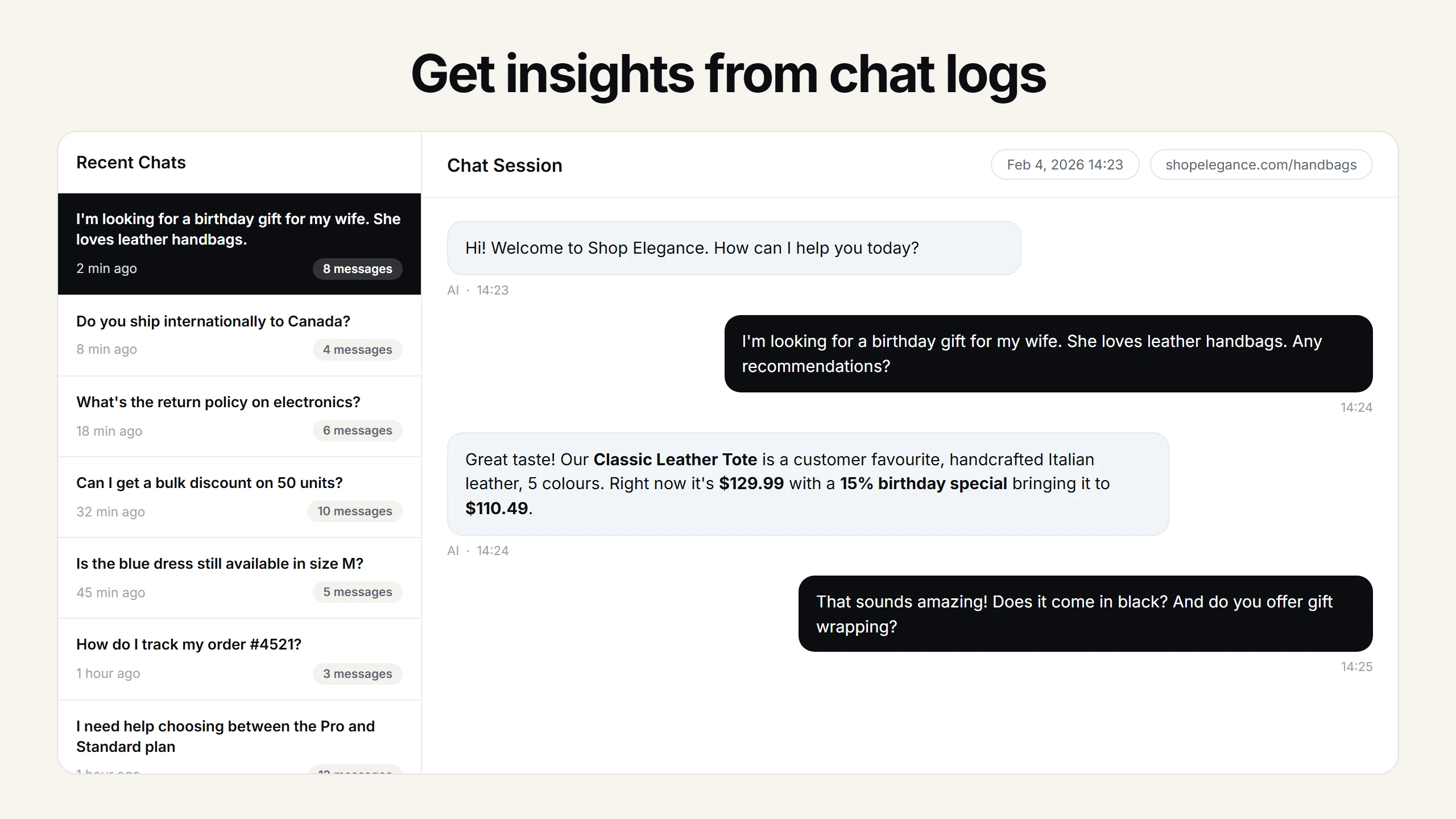
OpenCart's default search runs a SQL LIKE query against the product name and description fields. If a shopper types "cute outfit for a 6-month-old," it looks for those exact words in your product table — and usually returns nothing useful. Asyntai's AI search understands shopping intent and product attributes. It reads the full query, reasons about what the shopper needs (infant clothing, age-appropriate sizing, appealing design), searches your catalog through the Real-Time Data Feed, and returns matching items as Dynamic Product Cards: visual cards with product image, price, description, and a buy button. Multiple matches appear as a swipeable carousel. The shopper goes from describing a need to browsing real products in seconds, without leaving the chat.
- Natural language replaces keyword guessingShoppers ask in their own words — "something for a baby shower under $30," "organic skincare gift set for my mom," "boys winter boots size 4 toddler." The AI understands the intent behind the words, not just the words themselves, and searches your catalog for products that actually match what the shopper described.
- Dynamic Product Cards inside the conversationWhen the AI finds matching products, it displays them as rich visual cards — product image, name, price, short description, and a direct buy/view button. Multiple results appear as a carousel the shopper can swipe through. Products are presented inside the chat, not on a separate search results page that breaks the browsing flow.
- Powered by your live product dataThe AI searches your Real-Time Data Feed — a URL (JSON, CSV, or API endpoint) that returns your current OpenCart product data including options and variants. Price changes, stock updates, and new arrivals reflect automatically. The AI always shows what you actually sell right now, not a stale search index from last week.
Real-Time Data Feed, multi-store support, and a simple template install
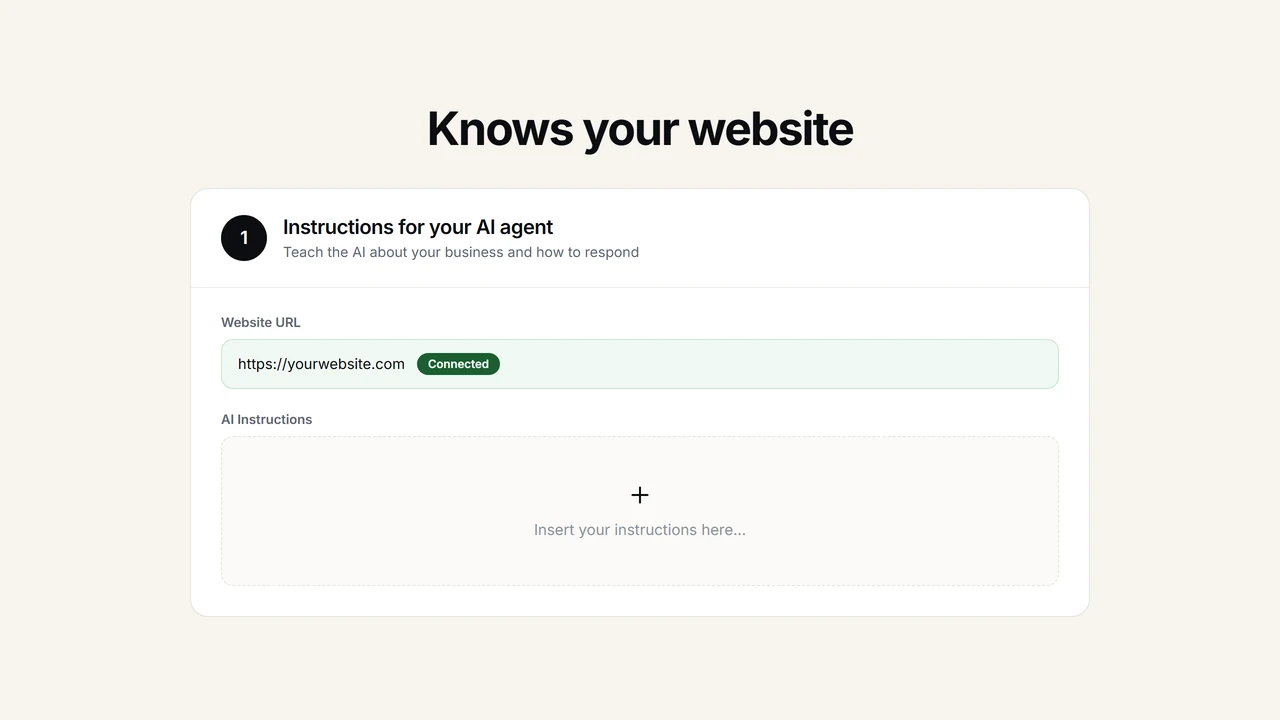
AI search is only useful if it knows what you sell right now. Asyntai's Real-Time Data Feed keeps the AI's product knowledge synchronized with your OpenCart catalog — price drops reflect immediately, out-of-stock items disappear from results, new products appear within 24 hours. The AI also crawls your OpenCart storefront pages, category descriptions, and CMS content, so it can answer questions beyond products too. Installation takes minutes: add the script tag to your header.twig template, or use an OCMOD extension for a code-free approach. Multi-store setups work seamlessly with separate knowledge bases per store.
- Real-Time Data Feed stays synchronizedPoint Asyntai at a URL that returns your OpenCart product catalog — a JSON feed, CSV export, or the OpenCart REST API. The AI indexes it automatically. When you update a price or disable a product, the feed reflects it immediately. New products appear within 24 hours. Standard plan supports up to 200,000 characters; Real-Time Data Feed Max handles up to 10,000,000 characters — roughly 25,000 products with full descriptions.
- Multi-store works out of the boxRunning multiple OpenCart stores from one admin panel? Each store gets its own Asyntai widget with its own knowledge base, data feed, and AI personality. Products, pricing, and branding stay separate. Shoppers on Store A never see products from Store B. Set up each store as a separate Asyntai site — same account, independent configurations.
- Simple template install or OCMOD extensionAdd a single script tag to your common/header.twig template — one line of code, paste and save. If you prefer not to touch template files, use an OCMOD XML extension to inject the snippet automatically. Either way, the widget loads on every page of your store. Works with Journal, flavor themes, and any custom OpenCart theme.
Add AI search to your OpenCart store in minutes
No developer required. Paste the script tag into your header template, connect a product data feed URL, and enable Dynamic Product Cards. Your shoppers get intelligent product search within minutes — no OpenCart extensions marketplace needed.
- Sign up at Asyntai and copy the embed script from your dashboard.
- Open your OpenCart admin, navigate to Design > Theme Editor, edit common/header.twig, and paste the script tag before the closing </head> tag. Alternatively, create an OCMOD extension to inject it automatically.
- Connect a Real-Time Data Feed by pasting a URL that returns your product catalog (JSON or CSV). You can use OpenCart's REST API, a third-party feed extension, or a manual CSV export URL.
- Enable Dynamic Product Cards in your Asyntai widget settings — the AI will render matching products as visual cards with images, prices, and buy buttons inside the chat.
<!-- Add to common/header.twig before </head> -->
<script src="https://asyntai.com/widget.js"
data-id="your-site-id" async>
</script>
# One line in your template. The AI handles the rest.
AI search for OpenCart — FAQs
Common questions from OpenCart store owners, developers, and agencies evaluating AI-powered product search.
How is this different from OpenCart's built-in search?
OpenCart's default search runs a MySQL LIKE query against the product name and description columns. If a shopper searches "cute outfit for a newborn," it tries to match those exact words in your database — and typically returns nothing or irrelevant results. Asyntai's AI search understands shopping intent. It reads the full query, figures out what the shopper actually wants (infant clothing, newborn sizing, appealing styles), searches your product catalog through the Real-Time Data Feed, and returns matching items as Dynamic Product Cards with images, prices, and buy buttons. The shopper can then refine naturally — "something in pink" or "do you have that in 0-3 months?" — because the search is a conversation, not a one-shot keyword query.
How does the AI get my OpenCart product data?
Three sources work together. First, the AI crawls your OpenCart storefront — product pages, category pages, CMS information pages, and manufacturer pages. Second, you connect a Real-Time Data Feed: a URL (JSON, CSV, or API endpoint) that returns your current product catalog with prices, images, options, and stock status. OpenCart's REST API or a third-party product feed extension works well for this. Third, you can upload files (PDFs, spreadsheets) directly to the knowledge base. The AI searches across all sources simultaneously and presents the best matches as product cards.
Does it handle OpenCart product options and variants?
Yes, as long as your data feed includes option and variant information. When your JSON or CSV export includes product options (size, color, material) and their associated prices and stock levels, the AI can search against those attributes and display the correct pricing. A shopper asking "do you have the organic cotton blanket in the large size?" gets an answer based on the actual option data in your feed, not a guess from the product description. If a specific option is out of stock, the AI can flag that too — provided your feed includes per-option stock data.
Will it work with my OpenCart multi-store setup?
Yes. If you run multiple stores from a single OpenCart admin panel, each store gets its own Asyntai widget with its own knowledge base, data feed, and configuration. Create a separate Asyntai site for each store, install the widget snippet in each store's header template, and connect a data feed specific to that store's product catalog. Shoppers on each store only see products from that store. Pricing, branding, and AI personality are fully independent per store — all managed from your single Asyntai account.
What do Dynamic Product Cards look like?
Dynamic Product Cards are visual cards that appear directly inside the chat conversation. Each card shows the product image, name, price, a short description, and a "View Product" button that links to the product page on your OpenCart store. When the AI finds multiple matching products, the cards display as a horizontal carousel the shopper can swipe through. They look clean and modern on both desktop and mobile. They transform the chat from a text-only conversation into a visual product browsing experience — shoppers see what they are considering without leaving the widget.
How do I install it on OpenCart?
Two options. The simplest is to edit your common/header.twig template file in Design > Theme Editor and paste the Asyntai script tag before the closing head tag — one line of code. If you prefer not to edit template files directly, you can create a small OCMOD XML extension that injects the script automatically. Either way takes under five minutes. The widget loads asynchronously and does not affect your store's page speed. It works with Journal, flavor themes, default OpenCart themes, and any custom theme.
How quickly do product changes show up?
Price and stock changes in your Real-Time Data Feed reflect immediately — the AI reads the feed on each relevant query, so it always has current data. If you drop the price on a product for a flash sale, the next shopper who asks about it sees the new price on the product card. New products added to the feed appear within 24 hours as the AI re-indexes. For crawled OpenCart product pages, updates follow your crawl schedule (typically daily). The data feed is the fastest path for keeping product information current.
What plan do I need for AI search with product cards?
The AI chat widget works on all plans — including Free — with knowledge base answers from your crawled OpenCart content. Real-Time Data Feed and Dynamic Product Cards require the Standard plan ($139/month) or Pro plan ($449/month). Standard includes up to 15,000 messages/month and 200,000 characters of data feed capacity. Pro includes 50,000 messages/month and access to Real-Time Data Feed Max (10,000,000 characters). Custom Tools for advanced actions like order status lookups are also available on Standard and above.
Why OpenCart search fails at product discovery — and how conversational AI fills the gap
OpenCart is one of the most capable self-hosted ecommerce platforms available. It handles multi-store configurations, product options and variants, multiple currencies, tax rules, and complex catalog structures that would choke simpler platforms. But its built-in search has barely evolved since OpenCart 1.x. Under the hood, it runs a MySQL LIKE query — the SQL equivalent of "does this text contain these words?" — against the product name and description fields. That approach worked passably when online stores had fifty products and shoppers searched by brand name. It collapses when a shopper types "something cute for a baby shower under $30" and expects the store to understand what they mean.
The problem is structural, not cosmetic. MySQL LIKE queries cannot understand intent. They cannot handle synonyms. They cannot parse price constraints embedded in natural language. They cannot reason about occasion ("baby shower"), audience ("for a toddler"), or attribute combinations ("organic cotton in pastel colors"). When a shopper's query doesn't contain words that literally appear in your product names or descriptions, the search returns nothing — or worse, returns a wall of irrelevant results that makes the shopper conclude you don't carry what they need. The shopper doesn't file a support ticket. They close the tab and buy elsewhere.
There are OpenCart extensions that improve search — autocomplete modules, Ajax search add-ons, extensions that search across attributes and tags. These are better than the default, but they are still keyword-matching tools. They still operate on the assumption that the shopper will provide words that exist somewhere in your product data. They still present results as a grid of product thumbnails on a search results page. They still cannot handle conversational queries, follow-up refinements, or the kind of exploratory browsing where a shopper knows roughly what they want but not the exact product name. Bolting a better autocomplete onto a MySQL LIKE query is an incremental improvement. It doesn't change the fundamental mismatch between how shoppers describe what they want and how the search engine finds products.
Asyntai's AI search for OpenCart replaces that keyword-matching model with conversational product discovery. Instead of a search box that queries your database, shoppers interact with an AI-powered chat widget that understands natural language, searches your live product catalog through a Real-Time Data Feed, and displays matching products as Dynamic Product Cards — visual cards with product images, prices, descriptions, and buy buttons, right inside the chat window. The search unfolds as a conversation: the shopper describes what they need, the AI presents options, the shopper refines, the AI narrows the results. It behaves like a knowledgeable shop assistant who understands your entire catalog and remembers everything the shopper has said so far.
The engine behind this is the Real-Time Data Feed. You provide Asyntai with a URL that returns your OpenCart product catalog — a JSON feed, a CSV export, or a REST API endpoint. OpenCart's built-in API can serve product data, and several extensions generate product feeds in JSON or CSV format for Google Shopping, Facebook Catalog, or comparison shopping engines. Any of these work as a data feed source. The AI indexes the feed and uses it as its primary source of product knowledge. When a shopper asks "do you have wooden toys for a 2-year-old?", the AI searches the feed — not just for the words "wooden toys" and "2-year-old," but for products whose categories, descriptions, attributes, and age ranges match that intent. It might surface products tagged "educational toys," "natural materials," or "ages 1-3" even if the shopper used none of those terms.
What happens after the search is where the experience diverges from traditional search entirely. Instead of redirecting the shopper to a search results page, the AI responds with Dynamic Product Cards — rich visual cards that display the product image, name, price, a short description, and a "View Product" button linking to the product page on your OpenCart store. When there are multiple matches, the cards appear as a swipeable carousel. The shopper sees the products right there in the conversation, compares them visually, and clicks through to the one they want. There is no results page to wade through, no pagination, no "sort by relevance" dropdown that never quite works. The AI curates and the shopper browses — inside the same chat window.
OpenCart's product options and variants system is one of the platform's strengths, but it creates challenges for traditional search. A single product might have dozens of option combinations — size, color, material, each with its own price modifier and stock level. The default search treats the product as a single entity and ignores options entirely. A shopper searching for "red wool scarf" won't find your scarf product if the word "red" only exists as an option value, not in the product name or description. The AI search handles this differently. When your data feed includes option data — colors, sizes, materials, and their associated prices — the AI can reason about options as searchable attributes. "Do you have the cashmere throw in king size?" becomes a query the AI can answer with the specific option variant, including the correct price after any option price modifier.
Multi-store is another area where OpenCart excels and traditional search limitations compound. Running multiple stores from a single OpenCart admin — a common setup for store owners who sell across different niches or regions — means each store has its own product catalog, pricing, and customer base. The default search is store-scoped by default, but it still has all the same LIKE-query limitations within each store. With Asyntai, each store gets its own widget instance, its own data feed, and its own knowledge base. A shopper on your baby products store only sees baby products. A shopper on your outdoor gear store only sees outdoor gear. The AI personalities, greeting messages, and product knowledge are fully independent per store, all managed from a single Asyntai account.
The data feed is where freshness and accuracy come together. The AI reads your Real-Time Data Feed on each relevant query, which means price changes and stock updates are reflected immediately. If you mark a product as out of stock in your OpenCart admin and your feed reflects that change, the next shopper who asks about it gets told it's unavailable — or the AI simply doesn't show it. If you run a flash sale and cut prices by 20%, the product cards immediately show the new prices. This is fundamentally different from search extensions that re-index periodically and may serve stale prices during promotions — the exact moment when accurate pricing matters most. The feed is the single source of truth, and the AI reads it live.
Capacity scales to match your catalog. The Standard plan supports Real-Time Data Feeds up to 200,000 characters, which covers most small-to-medium OpenCart stores — a few hundred products with full descriptions, prices, image URLs, and option data. For larger catalogs, Real-Time Data Feed Max extends the capacity to 10,000,000 characters, handling roughly 25,000 products with complete data. The AI also crawls your OpenCart storefront pages — product pages, category pages, manufacturer pages, and CMS information pages — with no hard limit on crawled content. Between the structured data feed and crawled pages, even large OpenCart catalogs with thousands of SKUs and complex option matrices are fully searchable.
The conversational format solves a problem that no search results page can handle: iterative refinement. When a shopper types "baby gifts" into the OpenCart search bar and gets 80 results, they scroll through thumbnails, click into products, hit back, scroll more, maybe adjust the search query and try again. Each iteration is a fresh start. In a conversation with Asyntai's AI search, refinement is cumulative. "I'm looking for a baby shower gift." The AI shows product cards. "Something more practical, like feeding supplies." The AI narrows results. "Do you have any sets? Gift-ready?" The AI searches again with those constraints layered on. "What about that BPA-free set — is it dishwasher safe?" The AI checks the product data. Each exchange builds on the conversation. The shopper steers the search like talking to someone who knows the catalog and remembers every word of the conversation.
For OpenCart stores specifically, the AI search addresses a pain point that extension developers have largely ignored: the gap between catalog complexity and search capability. OpenCart's database schema supports attributes, option groups, option values, product-to-category mappings, related products, recurring profiles, and manufacturer associations. Most search extensions only query the product name and description, ignoring this rich structured data entirely. When the AI searches your data feed, it reasons across all the fields you include — category paths, attribute values, manufacturer names, option lists, weight, dimensions, whatever your feed contains. A query like "lightweight stroller under 15 pounds that folds flat" searches against weight data, feature descriptions, and price simultaneously. No LIKE query can do that.
Custom Tools extend the AI beyond product discovery into post-purchase actions. Once a shopper finds a product through AI search and places an order, Custom Tools let the AI handle follow-up interactions. Connect your OpenCart API as a Custom Tool, and the AI can look up order status ("where's my order?"), check return eligibility, verify shipping estimates, or confirm whether a coupon code applies to a specific product. Each tool you connect adds a capability the AI can use during the conversation. Search becomes the entry point, but the AI stays useful through the entire customer lifecycle — from "I'm looking for..." to "I ordered last week, has it shipped?"
Installation on OpenCart is straightforward for anyone comfortable with the admin panel. The most direct method is editing the common/header.twig template file through Design > Theme Editor in the OpenCart admin. You paste a single script tag — one line of code — before the closing head tag, save, and the widget appears on every page of your store. If you prefer not to edit template files, you can create a small OCMOD XML file that injects the script tag automatically during the template rendering process. OCMOD is OpenCart's built-in modification system, and it requires no core file changes. Either method takes under five minutes and works with any OpenCart theme — Journal, flavor themes, the default theme, and custom builds.
The economic case for AI search on OpenCart is straightforward. Search users on ecommerce sites convert at 2-3x the rate of browsing users because search signals purchase intent. But that conversion advantage vanishes when search returns irrelevant results. A shopper who searches, sees nothing useful, and leaves is the most expensive kind of lost sale: someone who was ready to buy, couldn't find the product, and went to a competitor. AI search recovers those shoppers. Every product card shown to a visitor who would have bounced from a failed LIKE query represents incremental revenue your store would never have captured. The question isn't whether AI search is worth the subscription — it's how many failed searches your store produces per day and what those lost shoppers are worth.
Multilingual search extends this to international audiences. Asyntai supports 36 languages, which means a shopper can ask "busco un regalo para baby shower menos de $30" and the AI searches your English-language product data feed, finds matching items, and presents the product cards with a response in Spanish. The product names, prices, and images on the cards come directly from your feed. The conversational text — the AI's recommendation, follow-up question, comparison notes — is in the shopper's language. You don't need a multilingual OpenCart catalog. The AI handles the language layer; the data feed handles the product layer. For multi-store setups that serve different regions, this means even stores with a single-language catalog can serve international shoppers effectively.
Self-hosted ecommerce platforms like OpenCart give store owners control over their data, their hosting, their customizations, and their costs. But that control has historically come with a search experience that lags far behind hosted platforms with deep pockets for search R&D. Asyntai's AI search levels that playing field. A single-store OpenCart operator with 500 products gets the same conversational product discovery, the same Dynamic Product Cards, the same iterative refinement that shoppers have come to expect from the largest retailers. The technology is platform-agnostic — it works from the data feed and the crawled content, not from deep platform integrations that only exist on Shopify or BigCommerce. If your OpenCart store has products and a way to export them, it has everything the AI needs.
The stores that get the most from AI search share a characteristic: they sell products that shoppers describe in terms of occasion, recipient, attribute, or need rather than product name. Baby and children's products ("something safe for teething, BPA-free"), gifts ("anniversary present for someone who cooks"), home goods ("blackout curtains for a tall window"), specialty food ("nut-free snacks for school lunches"), beauty and skincare ("gentle face wash for sensitive skin, no fragrance"). In every case, the shopper knows what they need but doesn't know what it's called in your catalog. MySQL LIKE queries force them to guess your vocabulary. Conversational AI search meets them where they are — with their words, their constraints, their context — and translates that into the products you sell. That translation is where the revenue lives.
The default OpenCart search bar isn't disappearing. Shoppers who know exactly what they want — a specific product name or model number — will still use it, and it will still work fine for those direct lookups. But for the larger group of shoppers who are browsing, exploring, looking for gift ideas, or trying to find something they can picture but can't name, the AI search widget provides a fundamentally different experience. It's not a replacement for the search bar. It's a new channel for product discovery that a LIKE query was never designed to handle. And it sits on every page of your store, ready to help the moment a shopper has a question that starts with "I'm looking for..." — which, for most OpenCart stores, is a moment that happens far more often than search logs suggest, because the shoppers who can't find what they need don't search twice. They leave.