AI search for Ghost that finds the post your reader half remembers
Ghost search matches words. A reader who types "the piece about why my sourdough goes flat" gets nothing, although the post that answers it is called "When your starter stalls in a cold kitchen". Asyntai's AI Search Bar reads the question and finds the post, even when the two share no words at all. It sits behind the search icon your theme already has, so readers find it where they already look, and the / and Cmd+K shortcuts open it too. The whole install is one paste into Code injection.
See the AI search your Ghost archive
Enter your Ghost site URL and watch the bar find real posts from your own writing
Readers describe what they remember, and the bar finds the post
Ghost's search is fast and does exactly what it was built to do: it matches the words a reader types against your post titles and excerpts. That works when the reader knows the title. It fails in the far more common case, which is a reader who read something once, remembers the idea, and has no memory of what you called it. They type "the piece about why my sourdough goes flat". They type "that thing you wrote about quitting the newsletter grind". Neither query shares a word with the post they want, so Ghost search returns nothing, and a reader who came back to your archive on purpose leaves it empty-handed. The Asyntai AI Search Bar reads the whole question, works out which piece they mean, and returns it.
- Meaning, not matchingA reader types "why does my sourdough go flat" and the bar returns "When your starter stalls in a cold kitchen". The words do not overlap. The meaning does. For a publication with a good title style, where posts are named for effect rather than for keywords, this gap is not an edge case. It is most of your archive.
- It sits behind the icon readers already useEvery official Ghost theme marks its search icon with
data-ghost-search. The block takes that click before Ghost's own search sees it and opens the AI bar instead. The / and Cmd+K shortcuts open it too. On a theme with a plain search form rather than an icon, the bar takes the form's place. - We read your site the way a reader doesPublished posts and pages are found by following your site, and new ones are picked up as we re-read it. Nothing is sent to us from inside Ghost and there is no Content API key to create. Your theme's own search keeps working until the bar switches itself on, so readers always have a working search box.
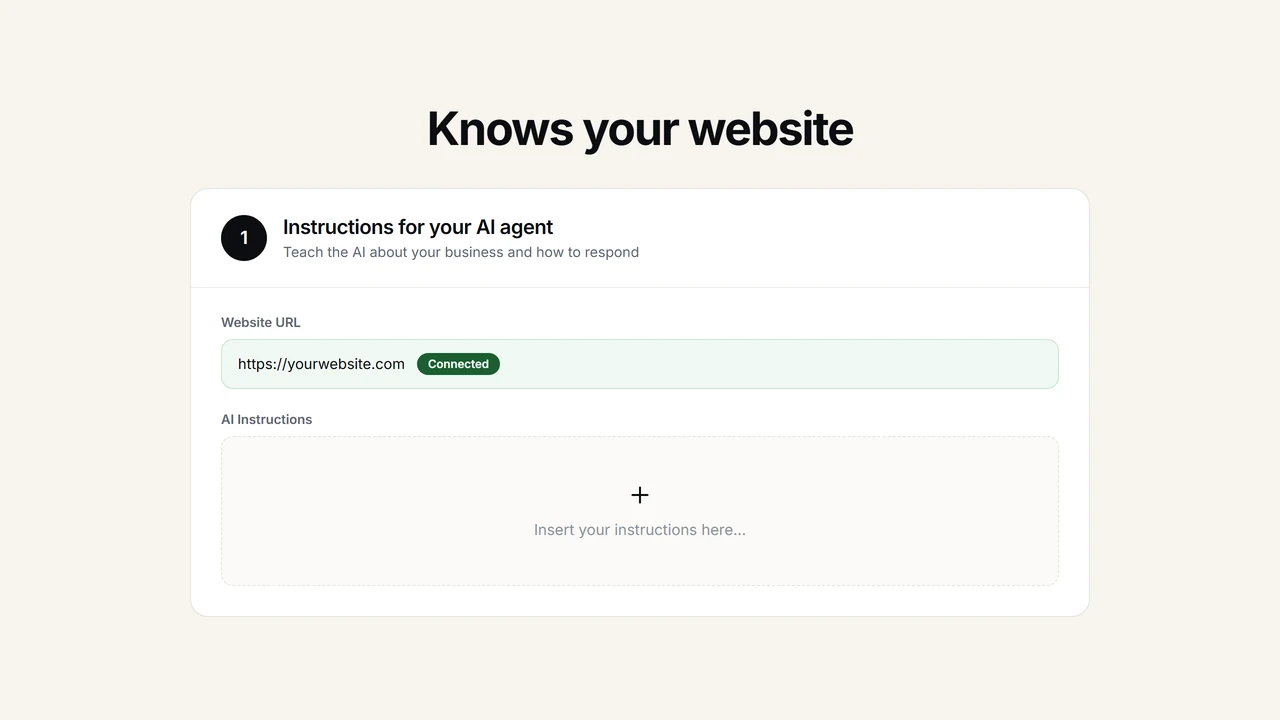
One paste into Code injection, no theme to edit and nothing to upload
There is no plugin system in Ghost, and this install does not pretend otherwise. You download a single file, paste it into Settings, Code injection, Site footer, and save. Then you open your site at /#asyntai-search, where a setup panel appears, press Connect, and sign in or create a free account. The panel prints the same block back with your site id filled in, you paste that over the first one, and save again. That is the whole install. It works on self-hosted Ghost and on Ghost(Pro), because it never needs anything but Ghost Admin.
- Three settings, and two of them are optionalThree lines sit at the top of the block.
SITE_IDis filled in for you by the setup panel.ACCENTtakes a highlight colour such as'#111111', andPLACEHOLDERtakes the text inside the empty bar. Leave either empty for the default. There is nothing else to configure. - Your theme's search keeps working until the bar is readyAfter you connect, we read your site. The bar switches itself on as soon as your posts are indexed, and the setup panel tells you where we have got to. Until then your theme's own search carries on as usual, so there is no window where your readers have a search box that answers nothing.
- Removing it is one deleteDelete the block from Settings, Code injection, Site footer, and save. Your theme's search returns to normal at once. There is no database table left behind, no theme file that was edited and nothing to uninstall, because nothing was ever installed into Ghost.
Add AI search to your Ghost site with one paste
No theme to edit and nothing to upload. Paste the block into Code injection, open your site at the setup address, connect your account, and paste the finished block back. It works the same on self-hosted Ghost and on Ghost(Pro).
- Download asyntai-ai-search-ghost.zip and open asyntai-search.html from it in any text editor.
- In Ghost Admin open Settings, then Code injection. Paste the whole file into the Site footer box and press Save.
- Open https://yoursite.com/#asyntai-search in your browser. A setup panel appears. Press Connect and sign in, or create a free account.
- The panel prints the same block back with your site id filled in. Press Copy the code, paste it over what you pasted in step 2, and save again.
<!-- Settings > Code injection > Site footer -->
<script>
var SITE_ID = 'your-site-id';
var ACCENT = '';
var PLACEHOLDER = '';
</script>
# Ghost 5.0 or later. Self-hosted and Ghost(Pro).
See the bar find a half-remembered post
This is the AI Search Bar itself. Readers describe what they remember, and the bar finds the post.
Not one of these titles contains the words the reader typed. That is the difference between matching words and reading meaning.
AI search for Ghost — FAQs
Common questions from Ghost publishers, newsletter writers and the developers who build their themes.
How is this different from Ghost's built-in search?
Ghost search matches the words a reader types against your post titles and excerpts. It is quick and it works when the reader knows the title. The Asyntai AI Search Bar works on meaning instead. It reads the whole question, works out which post the reader means, and returns it even when the query and the title share no words. A reader asking "why does my sourdough go flat" finds "When your starter stalls in a cold kitchen". Ghost search returns nothing for that query, because none of those words is in the title or the excerpt.
Do I have to change my theme?
No. There is no theme to edit and nothing to upload. Every official Ghost theme marks its search icon with data-ghost-search, and the block takes that click before Ghost's own search sees it, then opens the AI bar instead. The / and Cmd+K shortcuts open it too. On a theme that shows a plain search form rather than an icon, the bar takes the form's place.
How exactly do I install it?
Download the zip, open asyntai-search.html in any text editor, and paste the whole file into Settings, Code injection, Site footer, then save. Open your site at /#asyntai-search and a setup panel appears. Press Connect and sign in or create a free account. The panel prints the same block back with your site id filled in. Copy it, paste it over the first one and save again. That is the whole install.
Does it work on Ghost(Pro)?
Yes. Self-hosted Ghost and Ghost(Pro) both work, on Ghost 5.0 or later. The install needs nothing but access to Ghost Admin, because everything happens in Code injection. There is no server to configure, no file to upload and no integration to set up inside Ghost.
Do I need a Content API key?
No. We read your site the same way a reader does, by following your pages. Published posts and pages are found automatically and new ones are picked up as we re-read the site. Nothing is sent to us from inside Ghost, so there is no integration to create in Ghost Admin and no key to keep safe.
What happens between pasting and the bar working?
Your theme's own search keeps working. After you connect, we read your site, and the bar switches itself on only once your posts are indexed. The setup panel tells you where we have got to. That means there is no window in which a reader clicks your search icon and gets a box that answers nothing.
Can I change the colour and the placeholder?
Yes. Three lines sit at the top of the block. SITE_ID is filled in for you. ACCENT takes a highlight colour such as '#111111', and PLACEHOLDER takes the text inside the empty bar. Leave either empty for the default, and the placeholder then appears in each reader's own language.
How do I remove it?
Delete the block from Settings, Code injection, Site footer, and save. Your theme's search returns to normal at once. Nothing was installed into Ghost, so there is no database table left behind, no theme file that was edited and nothing to uninstall.
What plan do I need?
A site connected this way runs the bar on any plan, including the free one. Your monthly reply allowance applies, and searches and chat replies share it. If you also run our Ghost chatbot, the two sit side by side on the same pages and share the same knowledge base, so anything the bar can find, the assistant can answer.
Why your Ghost archive is harder to search than it should be
A Ghost site that has been running for a few years is an archive of good writing with a search box that cannot reach it. That is not a criticism of Ghost. The search is fast, it is built in, it costs nothing and it does what a word search does. The mismatch is between how the search works and how a publication names things.
Writers do not title posts for retrieval. They title them for effect. "When your starter stalls in a cold kitchen" is a better title than "Sourdough troubleshooting in winter", and every editor would pick the first one. But a reader coming back six months later does not remember either title. They remember the idea: something about why the loaf went flat. They type that, Ghost search looks for those words in your titles and excerpts, finds none of them, and returns an empty page. The better your titles are, the worse your search performs. That is a genuinely awkward trade, and it is invisible, because nobody reports a search that found nothing.
The same thing happens with the questions readers have about the publication itself. "Do I have to pay to read this" is the single most common question a membership site receives, and the page that answers it is usually called something like "Membership" or "Subscribe". No word overlap, no result. The reader either emails you or assumes the answer is no and leaves.
The Asyntai AI Search Bar replaces the matching step with an understanding step. When a reader types, the bar does not look for those words in your posts. It works out what they mean, then finds the posts that answer it. "The piece about why my sourdough goes flat" and "When your starter stalls in a cold kitchen" share no words at all, and the bar connects them, because it is reasoning about the subject rather than comparing strings. Your titles stay as good as they were, and they become findable anyway.
What readers see is deliberately ordinary, and that is the point of putting it behind the icon they already use. Every official Ghost theme marks its search icon with data-ghost-search. The block takes that click before Ghost's own search sees it, and opens the AI bar in the same place with the same gesture. The / and Cmd+K shortcuts open it too, so the readers who use keyboard shortcuts keep using them. Nobody has to be told that the search changed.
The install reflects the fact that Ghost has no plugin system, and it does not try to invent one. You paste a single block into Settings, Code injection, Site footer, and save. You open your own site at /#asyntai-search, where a setup panel appears that only you will ever see. You press Connect and sign in, or create a free account. The panel prints the same block back with your site id filled in, you paste that over the first one and save again. Two pastes, no theme edit, no upload, no file on a server. It works identically on self-hosted Ghost and on Ghost(Pro), because it never needs anything except Ghost Admin.
There is no Content API key, and that is deliberate. We read your site the same way a reader does: by following your pages. Published posts and pages are found automatically, and new ones are picked up as we re-read the site. Nothing is pushed to us from inside Ghost. For a publisher that means one less credential to create, store and eventually forget about, and it means the reading can never see anything a reader could not see.
The handover between the old search and the new one is handled so that your readers never fall through the gap. After you connect, we read your site, and the bar switches itself on only once your posts are indexed. Until then your theme's own search carries on exactly as it did. The setup panel tells you what we are waiting for. There is no moment where somebody clicks your search icon and gets an empty box, which is what usually goes wrong when a search is swapped on a live site.
Configuration is three lines and two of them are optional. SITE_ID is filled in for you by the setup panel. ACCENT sets the highlight colour, so the bar can match a publication with a strong visual identity. PLACEHOLDER sets the text in the empty bar, and if you leave it empty each reader sees it in their own language. There is nothing else, because there is nothing else worth adding: the bar's job is to find the right post, not to become another surface to design.
Removal is the part worth knowing before you install rather than after. Delete the block from Code injection and save. Your theme's search returns to normal at once. There is no database table left behind, no theme file that was edited, and no uninstall routine to run, because nothing was ever installed into Ghost. A publisher trying something on a live site should be able to undo it in ten seconds, and here that is literally true.
Publications that gain most from this share a shape: a deep archive, distinctive titles, and readers who come back on purpose. Newsletters with years of back issues. Food and craft sites where every post answers a practical question under a memorable name. Technical writing where the reader remembers the problem, not the article. Membership sites where the same handful of questions about access and billing arrive by email every week, all of them answered by a page nobody can find. In each case the reader knows exactly what they want and cannot name it, and naming it is the only thing a word search can do.
The search icon on a Ghost site is one of the least examined parts of it. It came with the theme, it has always opened something, and nobody checks what comes back. The searches it fails leave no trace: a reader who finds nothing does not write in to say so, they simply stop looking, and an archive that cannot be searched slowly becomes an archive that is not read. Putting a bar behind that same icon which answers what readers mean, rather than matching what they typed, costs one paste and makes years of your own writing reachable again.