AI search for Concrete CMS that answers what your visitors mean
A Concrete site is built from pages you wrote yourself, and visitors know what they want but not what you called it. Somebody types "when are you open at the weekend" and your search finds nothing, because none of those words is in the title of your Opening hours page. Asyntai's AI Search Bar reads the meaning and finds it. One package, installed through Extend Concrete, with no theme work and nothing to paste. Your editors keep the dashboard exactly as it is, because the bar never appears there.
See the AI search your Concrete content
Enter your Concrete site URL and watch the bar find real answers in your own pages
Visitors ask in their own words, and the bar finds the right page
Concrete's page search indexes the words on your pages and returns the ones that contain the words a visitor typed. It is a reasonable keyword engine and it does exactly that. The trouble is that visitors rarely type the words you wrote. They describe a situation, a problem or a plan. They ask "is the hall free on a Saturday in June", not "venue hire availability". They ask "who do I tell about a broken street light", not "report a street lighting fault". The search finds no overlap and returns an empty page, and the visitor concludes the information is not on your site. On the kind of site Concrete is usually chosen for, a club, a charity, a parish, a small institution, that visitor then telephones somebody who volunteers their evenings. The Asyntai AI Search Bar reads the whole question, works out what the visitor is trying to do, and returns the pages that answer it.
- Meaning, not matchingA visitor asks "is the hall free on a Saturday in June" and the bar returns your Hall hire page, even though none of those words is in its title. The words do not overlap. The meaning does. On a site written over years by whoever had time, that gap is where nearly every failed search comes from.
- Results while the visitor typesResults appear under the bar as the question is typed, as a short ranked list with a title and a line of context. The visitor picks one and lands on the page. Arrow keys move through the list, Enter opens the highlighted result. Nothing loads a separate results page and nothing sends the visitor away from where they were.
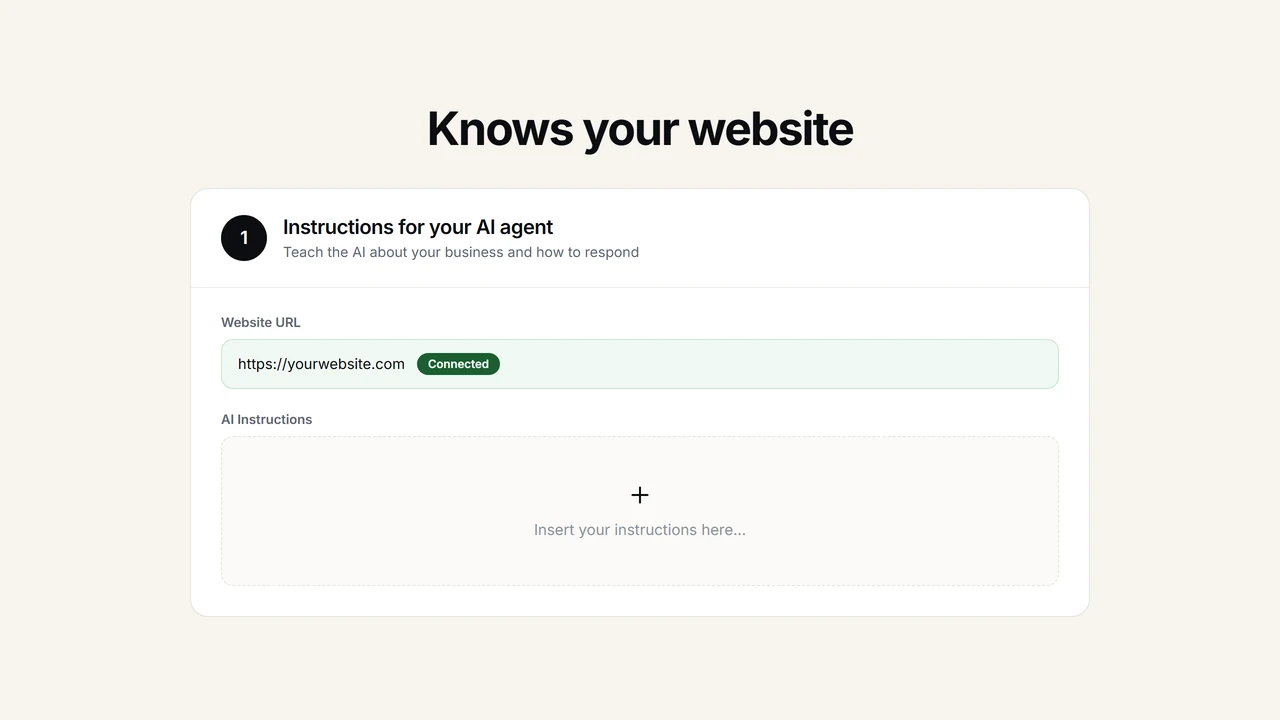
- We read your site ourselvesYou do not build or maintain an index. We read your pages as a visitor sees them, and we keep reading them as your editors publish. There is no index to rebuild after a bulk edit, no job to schedule and no search attribute to configure on a page type.
A package, a block, and a dashboard your editors keep exactly as it is
Copy the asyntai_search folder into your packages folder, install it from Extend Concrete, then open Asyntai AI Search in the dashboard and press Connect. There is no API key to create and nothing to paste. After that you choose where the bar goes: it takes the place of the search form your site already renders, or it appears only where you place the block. Either way your theme is untouched, and pressing Save puts the change on your site at once with no cache to clear.
- It takes the place of your Search blockChoose "In place of my search box" and the bar finds the search form your site already renders, hides it, and sits in exactly the same spot. Nothing in your theme has to be edited. If a visitor presses Enter without picking a result, your usual search page still opens, so the route they know still works.
- Or the Asyntai AI Search Bar block, anywhereAdd the block wherever you want the bar. It works on a page and in a global area, the same as any other block, and it has nothing to fill in. The block prints a container the bar renders into, and prints nothing at all while the bar is off, so your page is left exactly as it was.
- The dashboard never gets the barNeither does a page you are editing. Concrete's own page search stays exactly as it is for you and your editors, and a block you are arranging is still the block you click. The bar is for visitors, and it stays on the visitor side of the site.
Add AI search to your Concrete site without touching your theme
There is no API key to create and nothing to paste. Install the package, press one button to connect your account, and choose where the bar goes. We read your site and tell you on the settings screen when the bar is live.
- Copy the asyntai_search folder into your site's packages folder.
- In the dashboard, open Extend Concrete and install Asyntai AI Search.
- Open Dashboard, then Asyntai AI Search, and press Connect Asyntai. A window opens where you sign in or create a free account.
- Set Where the bar goes. Pick "In place of my search box", or add the Asyntai AI Search Bar block and pick "Only where I place the block".
# Copy the folder, then: Dashboard > Extend Concrete
Package packages/asyntai_search
Block Asyntai AI Search Bar
Concrete 8.5 or later, including 9
# No API key, no code, no theme edits.
See the bar answer a question
This is the AI Search Bar itself. Your visitors type a description, and the bar finds the page.
Not one of these titles contains the words the visitor typed. That is the difference between matching words and reading meaning.
AI search for Concrete CMS — FAQs
Common questions from Concrete CMS site owners, editors and the developers who look after them.
How is this different from Concrete's page search?
Page search indexes the words on your pages and returns the ones containing the words a visitor typed. It works when the visitor already knows your vocabulary. The Asyntai AI Search Bar works on meaning instead. It reads the whole question, works out what the visitor is trying to do, and returns the pages that answer it, even when the visitor's words and your words do not overlap. A visitor asking "is the hall free on a Saturday in June" finds your Hall hire page. Page search returns nothing for that query, because none of those words is in its title.
Do I have to remove the Search block?
No, and you should not. The bar sits on top of what you already run. If a visitor presses Enter without picking one of the results, your usual search page opens exactly as before. Your Search block, your search page and any link pointing at it all keep working. Visitors who know how your search works keep that route. Visitors who describe what they want in a sentence get an answer instead of an empty page.
Which Concrete versions does it support?
Concrete CMS 8.5 or later. Concrete 9 is supported, and so is Concrete 8.5 on PHP 7.4. You also need the PHP curl extension, which every Concrete install already requires, and a server that can make outgoing HTTPS requests. Most hosts allow this, and the settings screen says plainly if yours does not.
What if my site has no search box?
A Concrete site has a search box only where somebody placed a Search block, and plenty of sites have none. In that case "In place of my search box" has nothing to replace, and the settings screen says so rather than leaving you to guess. Add the Asyntai AI Search Bar block instead, on a page or in a global area, and set Where the bar goes to "Only where I place the block".
Does the bar appear in the dashboard?
Never, and neither does it appear on a page you are editing. Concrete's own page search stays exactly as it is for you and your editors, and a block you are arranging is still the block you click. This matters more than it sounds: an editor who has to fight a visitor-facing widget while arranging a page will stop using it, and the site will quietly go back to the old search.
Do I have to clear the cache after changing a setting?
No. Press Save on the settings screen and the change is on your site at once. The same is true of connecting and disconnecting. There is no cache to clear and no page to re-approve.
We serve several sites from one install. What happens?
The connection belongs to the Concrete install, so every site it serves shares one Asyntai account and one search index. Connect from the dashboard once and the bar is on all of them. That suits a group of related sites, such as a parish and its hall, and it is worth knowing before you connect if your sites are meant to stay separate.
What plan do I need?
A site connected through this package runs the bar on any plan, including the free one. Your monthly reply allowance applies, and searches and chat replies share it. The settings screen shows how much of the month is left. When the allowance runs out, the bar removes itself and your own search box comes straight back, so visitors keep being able to search. The package checks in the background and the bar returns by itself when the allowance resets.
Can I try it before my visitors do?
Yes. The settings screen has a Try your search bar button. It opens your real search bar, on your real content, in a new tab. Searches you run there do not count against your monthly allowance, so you can check the results on your own pages before you place the block or switch the bar on.
Why small sites lose visitors at the search box, and what AI search changes
Concrete CMS is chosen by the organisations that have to run a real website without a web team. Village halls, parish councils, charities, sports clubs, independent schools, small institutions of every kind. The content is written by whoever had time, over years, in whatever words felt right on the day. There is no content strategy and no taxonomy review. There is a site with a few hundred pages that genuinely answers the questions people ask, and a search box that cannot find any of them.
Concrete's page search is a reasonable keyword engine. It indexes your pages and returns the ones containing the words a visitor typed. That assumption, that the visitor will use your words, is exactly the one that fails on this kind of site, because the words on the page were chosen by somebody on the committee and the words in the query were chosen by somebody who has never seen the site before. The page is called "Venue hire". The visitor types "is the hall free on a Saturday in June". No overlap, no result.
The cost of that empty result is unusually visible on a small site, because it lands on a person rather than on a department. The visitor telephones the number on the contact page, and the person who answers is a volunteer, or a clerk working two days a week, or the head teacher. They answer the same handful of questions again and again, every one of which the website already answers on a page nobody can find. The search log records a query that returned nothing, and on a site like this nobody has ever opened the search log.
The Asyntai AI Search Bar replaces the matching step with an understanding step. When a visitor types a question, the bar does not look for those words on your pages. It works out what the question means, then finds the pages that answer it. "Who do I tell about a broken street light" and "Report a fault" share no words at all, and the bar connects them, because it is reasoning about the subject rather than comparing strings. Nobody has to rename a page, restructure the sitemap or rewrite anything.
What visitors see is deliberately ordinary. They type into a search box in the place your site has always had one. Results appear underneath as they type, each with a title and a line of context, and each one a real link to a real page. Arrow keys move through the list, Enter opens the highlighted result. There is no chat window to open and nothing new to learn. The only thing that changed is that the box now finds things.
That is also why the package leaves your existing search alone. If a visitor ignores the suggestions and presses Enter, your usual search page opens exactly as before. Your Search block keeps working, your search page keeps working, and the link to it in your footer keeps working. On a site where the last person who understood the theme left the committee three years ago, that matters: nothing anybody depends on has to be touched before the bar can help.
Installation is the ordinary Concrete route. Copy the asyntai_search folder into your packages folder, open Extend Concrete in the dashboard, and install Asyntai AI Search. Then open the settings screen, press Connect Asyntai, and sign in or create a free account in the window that opens. There is no API key to generate, no site ID to paste into a config file and no theme file to edit. Concrete 8.5 and later are supported, including Concrete 9 and including 8.5 on PHP 7.4, which matters on the sites that have not been upgraded in a while.
Placement is built around a fact about Concrete: a site only has a search box where somebody once placed a Search block, and plenty of sites never did. If yours has one, the bar finds it, hides it and takes the same position, inheriting your theme's styling. If yours does not, the settings screen says so instead of silently doing nothing, and you add the Asyntai AI Search Bar block wherever the bar belongs. It works on a page and in a global area, the same as any other block, and there is nothing to fill in when you add it.
The bar never appears in the dashboard, and it never appears on a page you are editing. This is a small decision with a large effect on whether the thing survives. Concrete's own page search stays exactly as it is for you and your editors, and a block you are arranging is still the block you click. An editor who has to fight a visitor-facing widget while laying out a page will complain until it is removed, and the site will go quietly back to a search that does not work.
Changing a setting takes effect immediately. Press Save and the change is on your site, with no cache to clear and no page to re-approve. The same is true of connecting and disconnecting. The remaining settings are few and every one can be left empty: leave the selector empty and we find your search form ourselves, leave the placeholder empty and each visitor sees it in their own language, leave the accent colour empty to use the colour from your Asyntai dashboard.
If your install serves several sites, it is worth knowing how that works before you connect. The connection belongs to the Concrete install, so every site it serves shares one Asyntai account and one search index. Connect once from the dashboard and the bar is on all of them. For a group of related sites, a parish and its hall, a school and its foundation, that is exactly what you want. For sites that must stay separate, it is the thing to check first.
Before any visitor sees it, the settings screen has a Try your search bar button that opens your real bar, on your real pages, in a new tab. Searches run there do not count against your monthly allowance. Type the three questions the office answers most often and look at what comes back. That is the honest test, and it takes two minutes. The bar also runs on every plan, including the free one, so a club or a charity can use it without a budget conversation at all.
The search box on a small organisation's site is one of the least examined parts of it. It came with the theme or was added once, it has always returned something, and nobody has checked what. The searches it fails leave no trace, because the person who finds nothing does not report it: they telephone, and the volunteer who answers thinks of it as a phone call rather than as a website failure. Putting a bar in that same spot that answers what people mean, rather than matching what they typed, gives your visitors the site you already wrote.