AI search for BigCommerce that turns shoppers into buyers
Your BigCommerce search bar matches keywords. Asyntai's AI search understands shopping intent. A customer types "I need a birthday gift for a 10-year-old who likes science" and the AI searches your product catalog, identifies the right items, and displays them as Dynamic Product Cards with images, prices, and buy buttons — right inside the chat widget. No search results page. A guided shopping conversation that ends with a purchase.
See AI search find products from your BigCommerce store
Enter your BigCommerce store URL and watch the AI search your catalog and display matching products
Shoppers describe what they want — the AI searches your catalog and shows it
BigCommerce's built-in search handles direct keyword queries well enough. If a shopper knows the exact product name or SKU, they'll find it. But most shoppers don't search that way. They describe a need: "something for my nephew's birthday, he's into space," or "waterproof phone case that clips to a bike." Keyword search can't bridge that gap between intent and inventory. Asyntai's AI search can. It reads the shopper's natural language query, searches your product catalog through the Real-Time Data Feed, and returns matching products as Dynamic Product Cards — visual cards with product images, current prices, descriptions, and buy buttons. Multiple matches display as a swipeable carousel. The shopper goes from describing a need to browsing real products without ever leaving the chat.
- Shopping intent, not just keywordsShoppers describe what they need in plain language — "anniversary gift for someone who cooks," "laptop bag that fits a 16-inch MacBook and looks professional," "dog toy that won't get destroyed in a day." The AI parses the intent behind the words and matches it against your product catalog, surfacing items that fit the need rather than just containing matching keywords.
- Dynamic Product Cards inside the conversationMatching products appear as rich visual cards — product image, name, current price, short description, and a direct buy button. Multiple results display as a horizontal carousel that shoppers swipe through. Products are merchandised within the chat itself, not buried on a search results page that shoppers have to navigate separately.
- Powered by your live BigCommerce catalogThe AI searches your Real-Time Data Feed — your BigCommerce product catalog exported via API or CSV. Price updates, stock changes, and new arrivals reflect automatically. The AI always shows what you actually sell right now with accurate pricing, not a stale snapshot from last week's index.
Live product data, Custom Tools, and a Script Manager install
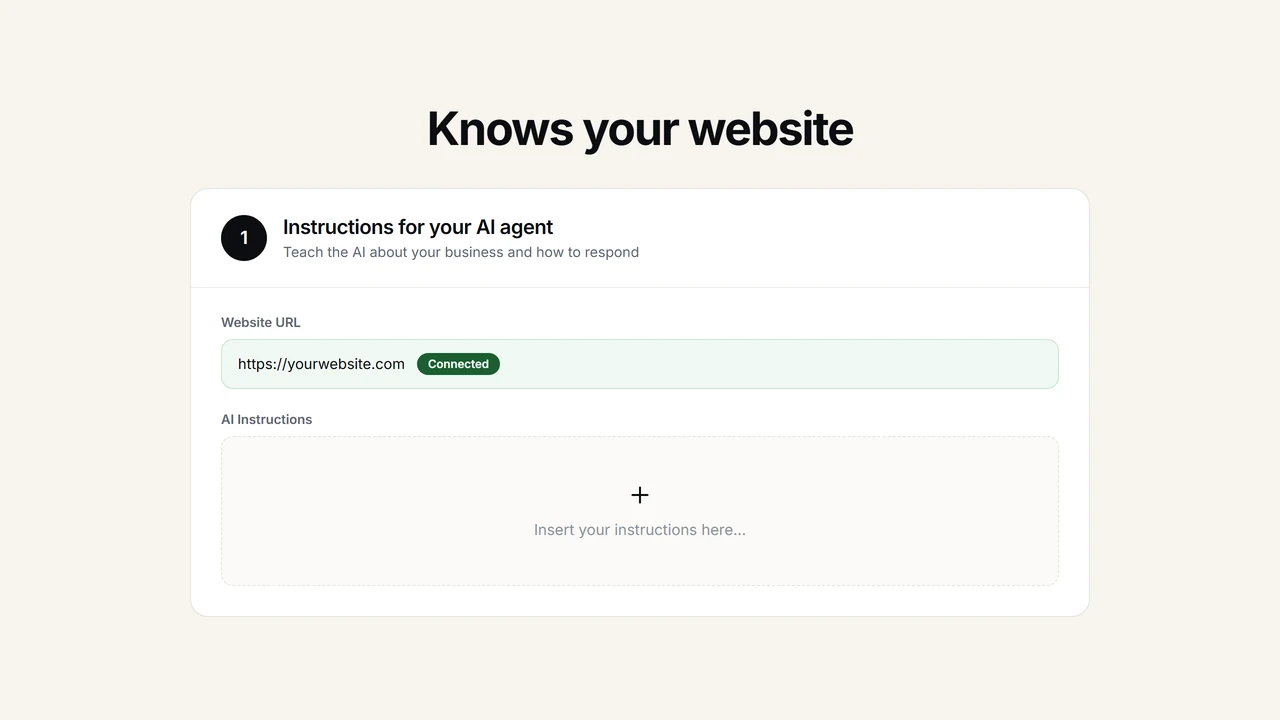
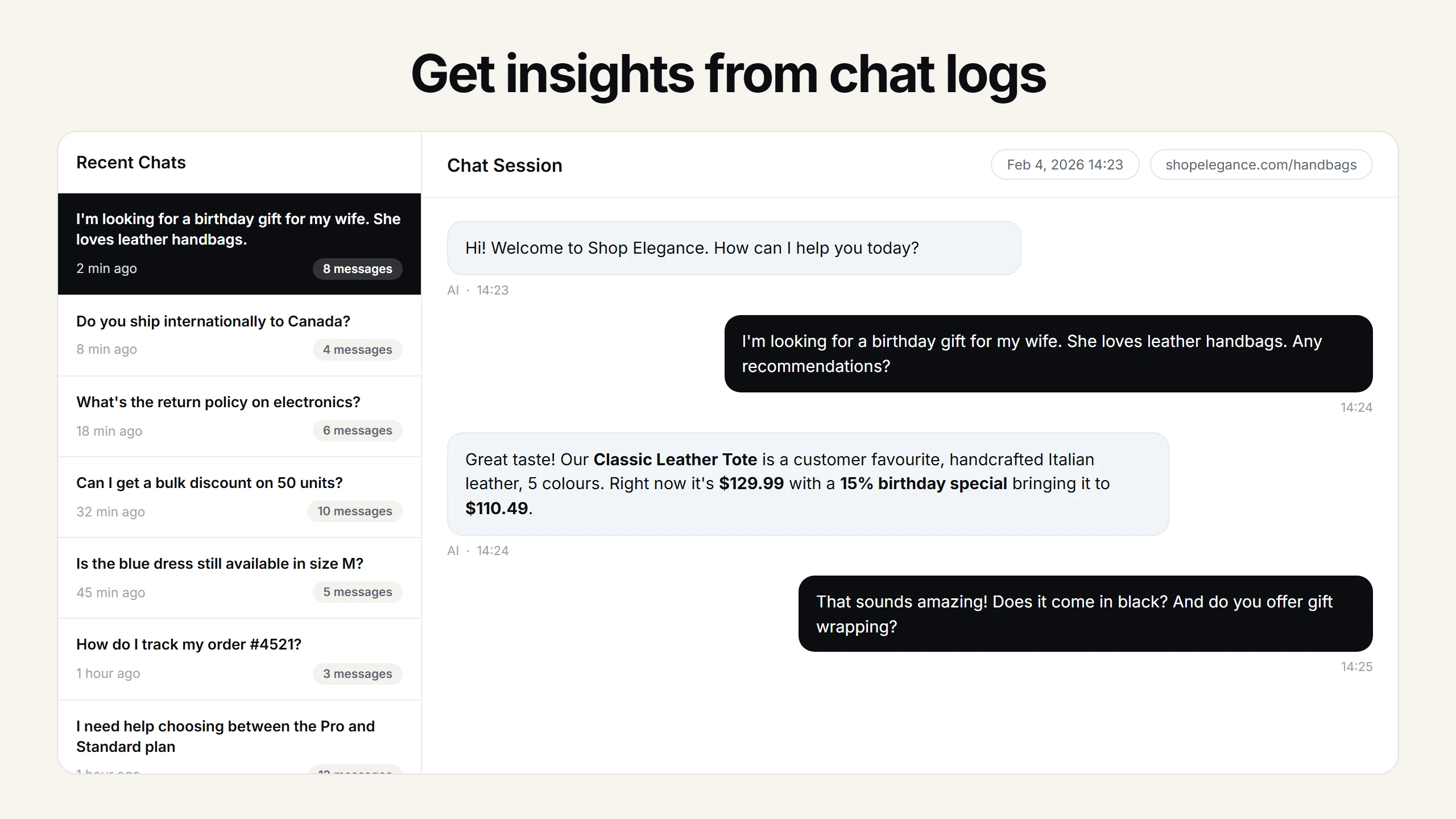
AI search only works if the product data behind it is current. Asyntai's Real-Time Data Feed keeps your BigCommerce catalog data fresh — price changes reflect immediately, out-of-stock items stop appearing, new products surface within 24 hours. Beyond product search, Custom Tools let the AI take action: check order status via your BigCommerce API, verify inventory for specific variants, or process return requests. And installation takes two minutes — paste a script tag into BigCommerce's Script Manager under Footer Scripts. No theme editing, no app conflicts, no developer needed.
- Real-Time Data Feed stays synchronizedExport your BigCommerce product catalog as a CSV or connect via the BigCommerce REST API. Asyntai indexes it automatically. Price changes and stock updates reflect immediately — the AI reads the feed on every relevant query. New products appear within 24 hours. The Standard plan supports up to 500 items. Real-Time Data Feed Max handles up to 25,000 products with full descriptions, pricing, and image URLs.
- Custom Tools for post-search actionsProduct discovery is just the start. Connect your BigCommerce API endpoints as Custom Tools and the AI can check real-time inventory for specific sizes or colors, look up order status for returning customers, verify shipping estimates, or even initiate return requests — all within the same chat conversation. Search becomes the entry point to a full shopping experience.
- Script Manager install, no theme editingGo to your BigCommerce admin, open Storefront > Script Manager, create a new script, paste the Asyntai widget code into Footer Scripts, and save. The chat widget appears on every page of your store immediately. Works with Cornerstone, every Stencil theme, and headless BigCommerce storefronts. No app installs, no theme file edits, no conflicts with other scripts.
Add AI search to your BigCommerce store in minutes
No developer needed. Paste one script into Script Manager, connect your product feed, and enable Dynamic Product Cards. Your shoppers get intelligent product search within minutes — on every page of your store.
- Sign up at Asyntai and copy the widget script tag from your dashboard.
- In your BigCommerce admin, go to Storefront > Script Manager. Create a new script, set placement to Footer, and paste the Asyntai widget code.
- Connect a Real-Time Data Feed — export your BigCommerce catalog as CSV or provide your BigCommerce API endpoint. The AI indexes it within hours.
- Enable Dynamic Product Cards in your widget settings — the AI will display matching products as visual cards with images, prices, and buy buttons.
<!-- Add via Storefront > Script Manager > Footer -->
<script src="https://asyntai.com/widget.js"
data-id="your-site-id" async>
</script>
# Script Manager handles the embed. You handle the products.
AI search for BigCommerce — FAQs
Common questions from BigCommerce store owners, agencies, and merchants evaluating AI-powered product search.
How is this different from BigCommerce's built-in search?
BigCommerce's native search matches keywords against product titles, descriptions, and SKUs. If a shopper types "lightweight hiking boots," it looks for products containing those words and returns a results page. Asyntai's AI search works differently — it understands the shopping intent behind a query. When someone types "comfortable shoes for walking all day at a trade show," the AI figures out they need cushioned, professional-looking shoes with good arch support, then searches your catalog for matching products. Results appear as visual product cards with images, prices, and buy buttons right inside the chat widget. The shopper can refine naturally — "something in black under $120" — and the AI adjusts without starting over.
How does the AI access my BigCommerce product catalog?
Two primary methods. First, the AI crawls your BigCommerce storefront — product pages, category pages, and any other content on your site. Second, you connect a Real-Time Data Feed: either a CSV export of your BigCommerce catalog or a connection to the BigCommerce REST API. The data feed gives the AI structured product data with accurate prices, stock levels, variant information, and image URLs. You can also upload supplementary files like size guides or product spec sheets to the knowledge base. The AI searches across all sources simultaneously and presents the best matches as Dynamic Product Cards.
Will it work with my BigCommerce theme?
Yes. The Asyntai widget loads via a standalone script tag added through BigCommerce's Script Manager. It operates independently of your theme — Cornerstone, any Stencil-based theme, or even headless BigCommerce setups with a custom frontend. The widget doesn't modify your theme files, doesn't conflict with other apps or scripts, and doesn't require any CSS customization. If your BigCommerce store loads in a browser, the widget works.
How quickly do price and stock changes show up?
Price and stock changes in your Real-Time Data Feed reflect immediately — the AI reads the feed on each query, so it always has current data. If you drop the price on a product for a flash sale, the next shopper who asks about it sees the new price on the product card right away. Out-of-stock items stop appearing in results automatically. New products added to the feed are indexed within 24 hours. This is faster than search tools that rely on periodic re-indexing and can serve stale pricing during sales events.
How many products can the data feed handle?
The Real-Time Data Feed on the Standard plan supports up to 500 products with full descriptions, pricing, and image URLs. For larger catalogs, Real-Time Data Feed Max handles up to 25,000 products. The AI also crawls your BigCommerce product pages with no hard product limit on crawled content. Between the data feed for structured product data and crawled pages for supplementary content, BigCommerce stores with thousands of SKUs are well within range.
Does it support BigCommerce multi-storefront?
Yes. If you run multiple storefronts on BigCommerce, you can set up a separate Asyntai widget for each storefront — each with its own data feed, knowledge base, and widget customization. This way each storefront's AI search returns products from that store's specific catalog, with the right pricing, branding, and product selection. Add the appropriate script tag to each storefront's Script Manager, connect the relevant data feed, and each store gets its own tailored AI search experience.
What are Custom Tools and do I need them?
Custom Tools let the AI call your own API endpoints to take actions beyond product search. For example, you can connect your BigCommerce API so the AI can check real-time inventory for a specific variant, look up an order's shipping status, verify whether a coupon code applies to a product, or initiate a return request. They're optional — AI search and Dynamic Product Cards work without them. But if you want the AI to go beyond "here are matching products" and handle post-purchase questions too, Custom Tools make that possible. They require the Standard plan or higher.
What plan do I need for AI search with product cards?
The AI chat widget works on all plans — including Free — answering questions from your crawled BigCommerce content. Real-Time Data Feed and Dynamic Product Cards require the Standard plan ($139/month) or Pro plan ($449/month). Standard includes up to 15,000 messages per month and supports up to 500 products in the data feed. Pro includes 50,000 messages per month and access to Real-Time Data Feed Max for up to 25,000 products. Custom Tools for actions like order lookups and inventory checks are also Standard and above.
Why BigCommerce search leaves revenue on the table — and how conversational AI recovers it
BigCommerce is built for serious ecommerce. Multi-channel selling, robust APIs, strong B2B features, flexible pricing rules — it's a platform that handles the complexity of running an online store at scale. But the search experience on most BigCommerce stores hasn't kept pace with how shoppers actually look for products. The native search matches keywords against product fields and returns a filtered grid of results. That works when a shopper knows what they want — "Nike Air Max 90 black size 10." It breaks down completely when they're exploring, gift shopping, or trying to describe a product they can picture but can't name. And that second category of shopper represents far more lost revenue than most store owners realize.
Consider the query "I need a birthday gift for a 10-year-old who likes science." That sentence contains zero product keywords. A keyword-based search engine has nothing to match against. It might return nothing, or it might return every product that contains the word "science" somewhere in its description — a stack of loosely related results that the shopper has to wade through. Neither outcome helps the shopper find the right product, and both outcomes end the same way: the shopper leaves. They go to Amazon, where search is smarter, or they go to Google, where the answer might point to a competitor. The sale was there. The search just couldn't capture it.
This is the gap that conversational AI search fills. Asyntai adds an AI-powered chat widget to your BigCommerce store that understands natural language, searches your product catalog, and displays matching products as Dynamic Product Cards — visual cards with product images, prices, descriptions, and buy buttons, right inside the chat window. When that shopper types "birthday gift for a 10-year-old who likes science," the AI reasons about the query: age-appropriate, educational, science-themed, gift-worthy. It searches the catalog and might surface a chemistry experiment kit, a build-your-own robot set, and a constellation projector lamp — products the shopper never would have found through keyword search, displayed as cards they can browse without leaving the conversation.
The product data behind the AI comes from the Real-Time Data Feed. You export your BigCommerce catalog as a CSV, or connect the BigCommerce REST API, and Asyntai indexes it. The feed includes product names, descriptions, prices, images, categories, variants, and any custom fields you include. The AI uses this structured data to understand your products holistically — not as bags of keywords, but as items with attributes, purposes, and contexts. When the feed includes "ages 8-12" in a product's description and "STEM" in its category, the AI connects those dots to the "10-year-old who likes science" query. That's not keyword matching. That's comprehension.
What makes Dynamic Product Cards different from a search results page is context. On a results page, products appear as a grid with minimal information — the shopper clicks one, reads the product page, hits back, clicks another, reads, hits back. Each click is a context switch. In Asyntai's chat widget, product cards appear inline with the AI's recommendation. The AI might say "Here are three science kits in your budget — the chemistry set is the most popular for that age group, but the robotics kit has better reviews from parents." The cards sit right below that recommendation, with images and prices visible at a glance. The shopper sees the products in the context of why they were chosen, which makes the decision faster and the conversion more likely.
The conversational format also enables iterative refinement in a way that no search results page can replicate. A shopper asks "outdoor furniture for a small balcony." The AI shows three compact dining sets as product cards. "Something more casual — like lounge chairs." The AI adjusts and shows folding chairs and bistro sets. "Do any of those come in teal?" The AI checks variant data from the feed. Each exchange builds on the last, narrowing from a broad need to a specific product without the shopper ever restarting the search. It's the digital equivalent of working with a knowledgeable sales associate who remembers every preference you've mentioned in the conversation.
For BigCommerce merchants specifically, the Real-Time Data Feed solves a problem that plagues third-party search tools: data freshness. BigCommerce stores often run frequent promotions, flash sales, and dynamic pricing — especially B2B stores with customer-specific pricing tiers. A search tool that re-indexes nightly will serve yesterday's prices during today's sale. Asyntai's data feed is read on every query, which means price changes reflect immediately. When you drop a product from $89 to $59 for a weekend sale, the next shopper who asks about it sees $59 on the product card. When an item sells out, it stops appearing in results. The AI never recommends products you can't sell at the price it quotes.
Catalog capacity matters for BigCommerce stores, which tend to run larger and more complex catalogs than stores on lighter platforms. The Standard plan supports up to 500 products in the Real-Time Data Feed — sufficient for stores with a focused product line. Real-Time Data Feed Max scales to 25,000 products, handling enterprise BigCommerce catalogs with thousands of SKUs, multiple variants per product, and detailed descriptions. The AI doesn't slow down as the catalog grows because it's not doing brute-force keyword matching — it's reasoning about what products best match the shopper's expressed need, regardless of whether the catalog has 50 items or 15,000.
The AI doesn't just search the data feed. It also crawls your BigCommerce storefront — product pages, category pages, about pages, blog posts, and any other content on your site. This means the AI can answer questions that live outside the product catalog: shipping policies, return windows, warranty information, sizing guides, material care instructions. A shopper might ask "do you ship to Canada?" and get an answer from your shipping policy page, then follow up with "show me your best-selling winter coats" and get Dynamic Product Cards from the data feed. The AI draws from both sources seamlessly, creating a unified experience where product discovery and information access happen in the same conversation.
Custom Tools extend the AI beyond search into transactional actions. By connecting your BigCommerce API endpoints, the AI can check real-time inventory for a specific variant ("do you have this in XL?"), look up an order's shipping status ("where's my order #12345?"), verify whether a promo code applies to a particular product, or even initiate a return request. Each tool you connect adds a capability that previously required the shopper to navigate to a separate page or contact support. A returning customer can ask "I ordered the blue sweater last week — can I exchange it for the green one in medium?" and the AI can look up the order, check inventory on the green variant, and start the exchange process — all in one conversation.
BigCommerce's multi-storefront feature adds a layer of complexity that Asyntai handles cleanly. If you operate separate storefronts for different regions, brands, or customer segments, each storefront gets its own Asyntai widget with its own data feed, knowledge base, and branding. A shopper on your US storefront sees US pricing and US-available products. A shopper on your EU storefront sees EUR pricing and EU inventory. The AI search experience is tailored to each storefront without any cross-contamination of product data or pricing. You manage each storefront's feed independently, and the AI keeps them separate.
Installation is deliberately simple because the biggest barrier to better search isn't technology — it's implementation friction. In BigCommerce, you go to Storefront > Script Manager, create a new script, set the placement to Footer, paste the Asyntai widget code, and click Save. The chat widget appears on every page of your store within seconds. There's no app to install, no theme files to edit, no developer to hire. It works with Cornerstone, every Stencil-based theme, headless BigCommerce implementations, and alongside any other scripts or apps you're running. The entire setup — from signing up to seeing the widget live on your store — takes less time than configuring a single faceted search filter.
The multilingual capability matters more for BigCommerce merchants than many realize. BigCommerce supports selling internationally, and many stores serve customers across language boundaries. Asyntai supports 36 languages, which means a Spanish-speaking shopper can ask "necesito un regalo para un nino de 10 anos que le gusta la ciencia" and the AI searches the same English-language product feed, finds matching science kits, and presents the product cards with a response in Spanish. The product names and prices come directly from the feed; the conversational text — recommendations, comparisons, follow-up questions — is in the shopper's language. You don't need translated product data. The AI handles the language layer while the data feed handles the product layer.
The economic case for conversational AI search on BigCommerce comes down to a number that most analytics dashboards don't track: shoppers who had purchase intent but couldn't find the right product. These aren't window shoppers or price-comparison visitors. They came to your store looking for something specific — or at least something in a specific category — and left because the search experience couldn't connect their need to your inventory. On most BigCommerce stores, the native search converts well for exact-match queries but drops off sharply for exploratory searches. AI search targets precisely that drop-off zone: the shopper who knows what they want but not what it's called in your catalog.
Consider the difference in shopping experience. With keyword search: the shopper types a query, gets a grid of products sorted by relevance (a relevance algorithm that can't read intent), scrolls through results that may or may not match, clicks into product pages one by one, uses the back button repeatedly, and either finds something or abandons. With conversational AI search: the shopper describes what they need, sees curated product cards with images and prices, asks a follow-up question to narrow the results, gets refined suggestions, and clicks through to the product page ready to buy. The second experience has fewer steps, less friction, and a higher probability of ending in a purchase — because the AI did the work of translating intent into products.
The stores that benefit most from AI search on BigCommerce share a pattern: they sell products where the shopper's language doesn't match the catalog's vocabulary. Home goods ("something cozy for a reading nook"), electronics ("a camera that's good for real estate photography"), supplements ("something to help with joint pain during marathon training"), fashion ("outfit for a beach wedding, not too formal"), specialty foods ("nut-free snacks for a school party"). In every case, the shopper's query is a description of a situation or need, not a product name. Keyword search demands that the shopper translate their need into your terminology. Conversational AI search does that translation for them — matching their words to your products, their intent to your inventory, their budget to your pricing. That translation is where the conversion happens.
BigCommerce stores already have the infrastructure for this to work. The REST API exports structured product data. The platform supports script injection through Script Manager. The catalog management tools make it straightforward to maintain a clean product feed. What's been missing is the layer that sits between the shopper and the catalog — the layer that understands "birthday gift for a 10-year-old who likes science" and turns it into three product cards with a chemistry kit, a robotics set, and a constellation lamp. That layer is conversational AI search, and it turns the BigCommerce search experience from a keyword lookup tool into a product discovery engine that actually matches how shoppers think, talk, and buy.