An AI-driven enterprise search solution that connects every data source you already have
Your enterprise data lives in product catalogs, knowledge bases, CRM systems, and internal documentation spread across a dozen platforms. Traditional enterprise search tools require months of integration work and still return ranked links instead of answers. Asyntai connects to your existing data sources — Real-Time Data Feed, auto-crawl, document upload, Custom Tools for live API queries — and makes everything searchable through natural language conversation. Visitors and employees ask questions in plain language and get direct answers with visual Dynamic Product Cards. No indexing pipelines. No infrastructure. Just your data, made findable.
See how the AI searches across your data sources
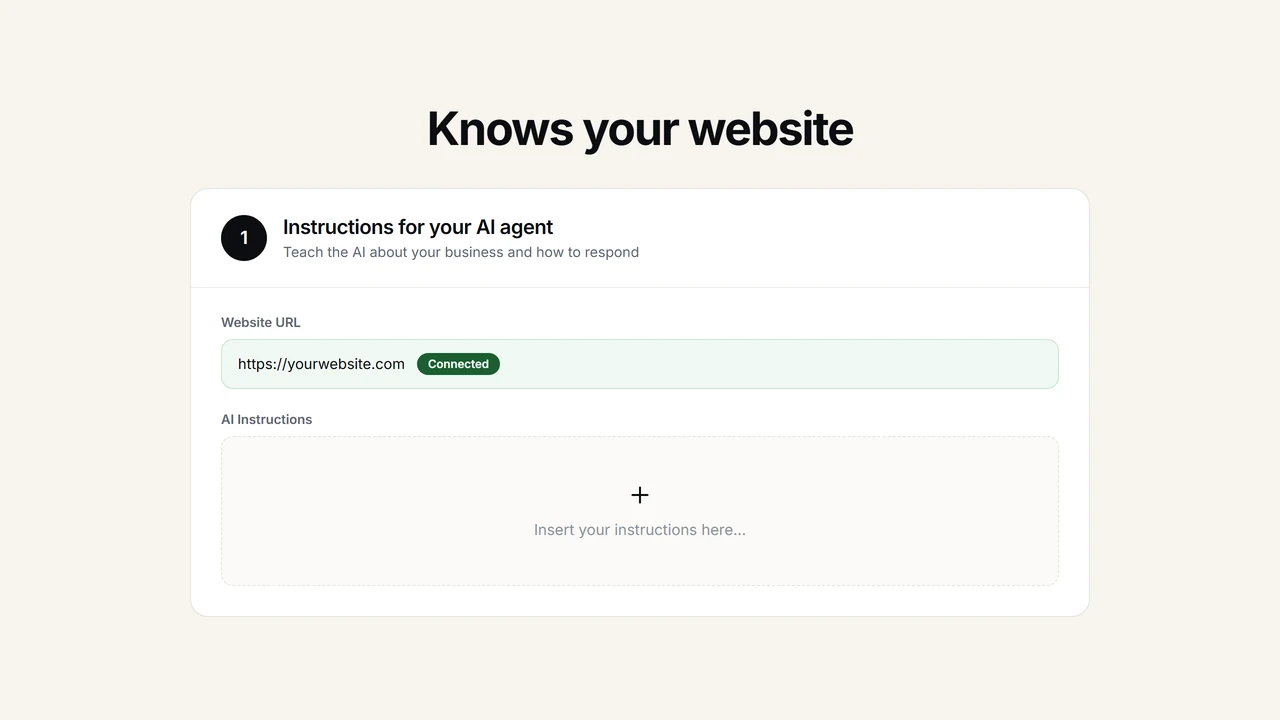
Enter your website URL and watch the AI connect to your content, understand natural language queries, and return direct answers
Real-Time Data Feed, auto-crawl, document upload, Custom Tools — four paths into one AI search
Enterprise search fails when it can only see part of your data. Asyntai's AI-driven enterprise search solution connects to your information through four distinct channels, each optimized for different data types. The Real-Time Data Feed ingests structured data — product catalogs, inventory databases, resource directories — via JSON, CSV, or API endpoint, supporting up to 25,000 items with live pricing and availability. Auto-crawl indexes your websites, intranets, and knowledge bases without any manual configuration. Document upload handles PDFs, Word documents, and other files that live outside your web properties. And Custom Tools let the AI query your live systems — CRM lookups, order status checks, inventory queries — in real time during a conversation. All four sources feed into a single search experience. A visitor asks one question and the AI searches across everything.
- Real-Time Data Feed for structured dataPoint the AI at a URL that returns your structured data — product catalogs, resource directories, employee directories, pricing tables — as JSON, CSV, or through any API endpoint. The feed supports up to 10,000,000 characters on the Pro plan, enough for roughly 25,000 items with full descriptions, images, and metadata. Price changes and stock updates reflect immediately because the AI reads the feed live.
- Auto-crawl for web-based contentThe AI automatically crawls your websites, intranet portals, knowledge bases, and help centers. It reads every page, extracts the content, and makes it searchable through natural language. No sitemap configuration, no manual page selection — point it at a domain and it indexes everything accessible. Updates follow your crawl schedule, typically refreshing daily.
- Custom Tools for live system queriesConnect the AI to your own API endpoints so it can query your systems in real time during a conversation. A customer asks "what's the status of my order?" and the AI calls your order management API, retrieves the answer, and responds — all within the chat. CRM lookups, inventory checks, shipping estimates, account details — any system with an API becomes searchable through conversation.
No servers, no indexing pipelines, no DevOps team — enterprise search as a service
Traditional enterprise search platforms require dedicated infrastructure: servers to host the search cluster, engineers to build and maintain indexing pipelines, DevOps to monitor performance and scale capacity. A typical deployment takes three to six months and costs six figures before a single query is served. Asyntai eliminates all of that. The AI-driven enterprise search solution runs as a SaaS service — you connect your data sources, the AI indexes and understands them, and search works immediately. No servers to provision, no schema to design, no relevance tuning to maintain. When your data changes, the AI adapts automatically. When query volume spikes, the service scales without intervention. Your team focuses on the data itself, not the search infrastructure around it.
- Deploy in hours, not monthsTraditional enterprise search implementations involve schema design, field mapping, relevance tuning, synonym lists, and query pipeline configuration — work that stretches across months. Asyntai skips all of it. Connect your data sources, enable the widget, and enterprise search is live. The AI handles relevance, synonyms, and intent understanding without manual configuration.
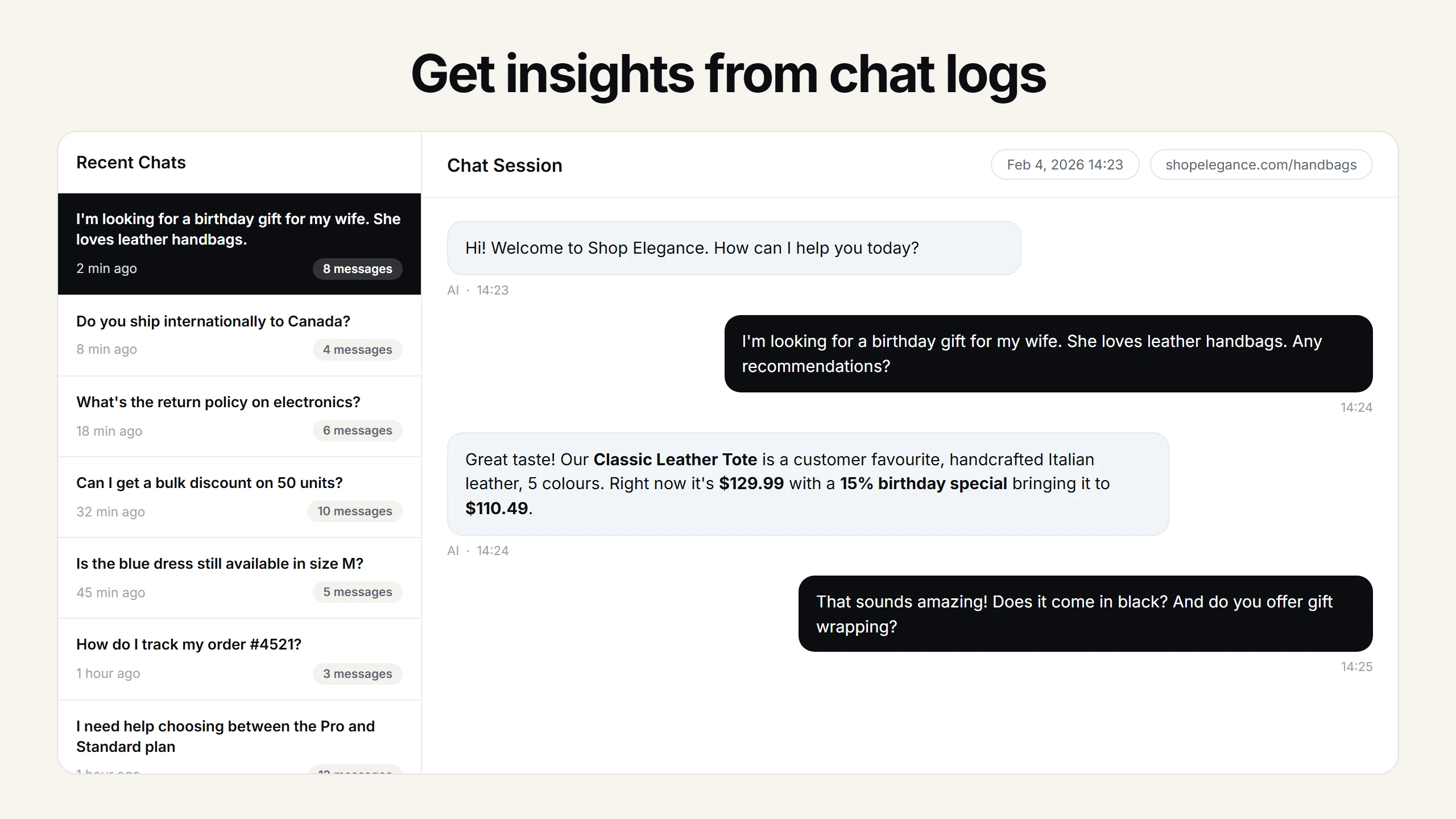
- Natural language replaces query syntaxEmployees and visitors don't need to learn search operators, Boolean logic, or faceted filtering. They type or speak what they need in plain language — "what's our return policy for international orders over $500" or "show me all server rack options that support hot-swap drives." The AI parses the intent, searches across all connected data sources, and returns a direct answer.
- 36 languages from a single deploymentOne Asyntai deployment serves every language without separate search indexes per locale. A French-speaking employee asks a question in French, the AI searches your English-language data sources, and responds in French with accurate results. No need to maintain translated indexes or configure language-specific analyzers. The AI handles the language layer; your data stays in whatever language it already exists in.
Connect your enterprise data sources in four steps
No infrastructure team needed. Connect your data through the dashboard, the AI indexes it automatically, and your enterprise search is live — serving natural language answers from every source you connected.
- Sign up at Asyntai and let the AI auto-crawl your website, intranet, or knowledge base — it indexes all accessible pages automatically.
- Connect a Real-Time Data Feed by pasting a URL that returns your structured data (product catalog, resource directory, or any dataset) as JSON, CSV, or API response.
- Upload documents — PDFs, Word files, internal guides — directly to the knowledge base for content that lives outside your web properties.
- Configure Custom Tools by pointing the AI at your API endpoints (CRM, order management, inventory) so it can query live systems during conversations.
<!-- Embed on any page, intranet, or portal -->
<script src="https://asyntai.com/widget.js"
data-id="your-site-id" async>
</script>
# One script tag. Every data source. Enterprise search.
AI-driven enterprise search — FAQs
Common questions from IT leaders, enterprise architects, and teams evaluating AI-driven search solutions for their organization.
What data sources can Asyntai connect to?
Asyntai connects to enterprise data through four channels. The Real-Time Data Feed accepts any URL that returns structured data as JSON, CSV, or API response — product catalogs, resource directories, pricing tables, employee databases, anything you can expose as a feed. Auto-crawl indexes websites, intranets, knowledge bases, and help centers by reading every accessible page. Document upload handles PDFs, Word documents, and other files that exist outside your web properties. Custom Tools connect the AI to your live APIs — CRM systems, order management, inventory databases, ticketing platforms — so it can query them in real time during a conversation. All four sources feed into a single unified search experience.
How frequently does the data update?
Update frequency depends on the data source type. The Real-Time Data Feed is read live on each relevant query, so price changes, stock updates, and data modifications reflect immediately — there is no indexing delay. New items added to the feed appear within 24 hours as the AI re-indexes. Auto-crawled content follows your crawl schedule, typically refreshing daily. Uploaded documents are indexed within hours of upload. Custom Tool queries are always live — the AI calls your API endpoint during the conversation and returns the current response. For data that changes frequently (inventory levels, order status, live pricing), Custom Tools or the Real-Time Data Feed are the best channels because they have zero propagation delay.
How accurate is the AI at finding the right information?
The AI's accuracy comes from understanding intent rather than matching keywords. When someone searches "what's our policy on returning electronics purchased more than 30 days ago," a keyword search engine looks for documents containing those words. The AI understands the question — it's about return policy, specifically electronics, specifically the time window — and finds the relevant policy section even if it uses different terminology like "consumer electronics refund period" or "extended warranty return window." Accuracy improves further when your data sources are well-structured: a Real-Time Data Feed with complete product attributes lets the AI reason about products holistically, and Custom Tools let it verify facts against live systems rather than relying on potentially stale indexed content.
How does this compare to traditional enterprise search platforms?
Traditional enterprise search platforms are infrastructure products — they require servers, indexing pipelines, schema design, relevance tuning, and ongoing DevOps maintenance. Deployment takes months. Query results are ranked links that the user must click through and evaluate. Asyntai is fundamentally different in three ways. First, it's SaaS — no infrastructure to deploy or maintain. Second, it returns direct answers in natural language instead of ranked links — the AI reads your data, understands the question, and responds with the answer. Third, it renders results as visual Dynamic Product Cards when the data includes products or resources, turning search into a visual browsing experience inside the conversation. The trade-off: traditional platforms offer deeper customization of ranking algorithms and indexing behavior. Asyntai trades that control for zero-maintenance deployment and conversational search.
Is our enterprise data secure?
Enterprise data security is handled at multiple levels. Each Asyntai deployment is isolated — data from one organization is never accessible to another, and the AI never uses your data to improve its responses for other customers. The Real-Time Data Feed reads from a URL you control, so you decide what data to expose. Custom Tool API calls go directly to your endpoints with your authentication. Auto-crawled content respects your access controls — it only indexes pages it can reach. Uploaded documents are stored in your isolated workspace. All data transmission uses TLS encryption. For organizations with strict compliance requirements, the Pro plan includes additional controls and you can review the full security documentation on the Asyntai trust portal.
Can the AI query our internal APIs in real time?
Yes — that's exactly what Custom Tools are designed for. You define an API endpoint, specify the parameters the AI should send, and describe what the tool does in plain language. When a conversation requires live data — order status, account details, inventory levels, shipping estimates — the AI recognizes the need, calls your API with the right parameters, and weaves the response into the conversation. For example, an employee asks "how many units of SKU-4829 do we have in the Dallas warehouse?" The AI calls your inventory API with the SKU and warehouse location, gets the count, and responds with the answer. You can connect multiple Custom Tools to cover different systems — CRM, ERP, order management, ticketing — giving the AI access to live data across your enterprise.
How difficult is it to migrate from our current search solution?
Migration is straightforward because Asyntai doesn't require you to rebuild your data layer. Your existing data sources stay where they are — the AI connects to them rather than replacing them. If you already have a product feed (JSON, CSV, or API), you paste the URL into Asyntai's dashboard and the AI indexes it. Your website and knowledge base get crawled automatically. Internal documents get uploaded to the knowledge base. Custom Tools point at your existing APIs. Most organizations run Asyntai alongside their existing search solution during a transition period — the chat widget adds conversational AI search without removing the existing search bar. The typical timeline from signup to a live deployment serving all data sources is days, not months.
What does this cost compared to traditional enterprise search?
Traditional enterprise search platforms involve infrastructure costs (servers, cloud compute), licensing fees (often per-document or per-query pricing), and engineering costs (integration, maintenance, relevance tuning) — a combination that typically runs into six figures annually for mid-size deployments. Asyntai's pricing is straightforward: the Standard plan at $139/month includes Real-Time Data Feed, Dynamic Product Cards, Custom Tools, and up to 15,000 messages/month. The Pro plan at $449/month extends the data feed capacity to 10,000,000 characters (roughly 25,000 items) and 50,000 messages/month. There are no per-document fees, no infrastructure costs, and no engineering overhead. For organizations currently spending heavily on search infrastructure, the cost difference is substantial.
The enterprise search problem isn't search — it's connecting to the data that matters
Every enterprise search project begins with the same ambition: make our information findable. And every enterprise search project runs into the same wall: the information lives in too many places, in too many formats, behind too many systems. Product data sits in an ERP. Knowledge base articles live in a wiki. Policy documents exist as PDFs on a shared drive. Customer data is locked inside the CRM. Internal procedures are scattered across intranet pages that nobody has updated since 2021. The search problem isn't building a search engine — that technology has existed for decades. The problem is connecting the search engine to all the places where the information actually lives, and keeping those connections current as systems change.
Traditional enterprise search platforms attack this problem with connectors — pre-built integrations that crawl each system, extract content, transform it into a common schema, and index it in a central search cluster. On paper, it sounds clean. In practice, each connector requires configuration, authentication, field mapping, and ongoing maintenance. The SharePoint connector needs API credentials and handles permissions differently from the Confluence connector. The database connector requires a SQL query that defines which rows become searchable documents. The file system connector needs to know which directories to scan and which file types to read. Before a single search query is served, an engineering team has spent months building, testing, and deploying an indexing pipeline that touches every data source in the organization. And when a source changes its schema, moves to a new platform, or adds a new content type, the pipeline breaks and the search results degrade until someone fixes it.
The maintenance burden is where traditional enterprise search becomes genuinely expensive. Indexing pipelines don't maintain themselves. When the product team migrates from one catalog platform to another, the search connector needs to be rebuilt. When HR launches a new internal wiki, someone needs to add a new connector and configure it. When the data warehouse adds a new table, the SQL query needs updating. Each change is manageable in isolation, but enterprises don't change one thing at a time — they change everything, constantly, and the search infrastructure team is always playing catch-up. The result is a search experience that's perpetually incomplete, perpetually stale in some areas, and perpetually surprising in its gaps. Employees learn not to trust it. They bypass the search bar and ask a colleague instead. The search investment delivers diminishing returns.
Asyntai's AI-driven enterprise search solution approaches the data connection problem differently. Instead of building and maintaining dozens of specialized connectors, it provides four generalized data channels that cover the full spectrum of enterprise information — and each channel is designed to be connected in minutes, not months. The Real-Time Data Feed handles structured data: any URL that returns JSON, CSV, or an API response becomes a live data source. Auto-crawl handles web-based content: point it at a domain and it reads every accessible page. Document upload handles files: PDFs, Word documents, spreadsheets, and internal guides that exist as downloadable files. Custom Tools handle live system queries: connect the AI to your APIs so it can query CRM, ERP, order management, or any other system in real time during a conversation.
The Real-Time Data Feed is the channel that changes how enterprises think about making structured data searchable. Traditionally, making a product catalog searchable means building an indexing pipeline: extract data from the source system, transform it into a search-engine-friendly schema, load it into the index, and schedule regular re-indexing to keep it current. With Asyntai, you provide a URL that returns your data. That's it. The AI reads the feed, understands the structure, and makes every item searchable through natural language. When a visitor or employee asks a question about a product, the AI searches the feed — not by keyword matching, but by understanding what the person is looking for and reasoning about which items match. A product catalog, a resource directory, an employee directory, a course catalog, a parts inventory — any structured dataset that can be served as JSON or CSV becomes a searchable, conversational data source.
The feed's capacity scales with enterprise needs. The Standard plan supports up to 200,000 characters of feed data, sufficient for catalogs of a few hundred items with full descriptions. The Pro plan extends this to 10,000,000 characters — roughly 25,000 items with complete metadata, descriptions, prices, and image URLs. For organizations with larger datasets, multiple feeds can cover different data domains. And because the AI reads the feed live on each relevant query, changes to the source data reflect immediately. A price update, a stock change, a new item added to the catalog — the next query sees the current data, not yesterday's index. This eliminates the stale-data problem that plagues traditional enterprise search, where the gap between when data changes and when the search index reflects that change creates a trust deficit that undermines the entire search experience.
Auto-crawl covers the vast category of enterprise information that lives on web pages — corporate websites, intranet portals, knowledge bases, help centers, HR policy pages, department wikis, FAQ collections, and any other content that exists as HTML accessible through a URL. The AI crawls every page it can reach from the starting domain, reads the content, and makes it searchable. There's no sitemap to configure, no page-by-page selection, no content-type filtering. If a page exists and is accessible, the AI can find and use the information on it. Updates follow a regular crawl schedule, typically daily, so changes to your web-based content propagate within 24 hours.
What makes auto-crawl particularly valuable for enterprise search is that it captures the long tail of organizational knowledge — the information that lives on pages nobody remembers exist. Every organization has an intranet full of pages that were created for a specific purpose, served their audience, and then disappeared from collective memory. The benefits enrollment page from last year. The disaster recovery procedures document. The vendor onboarding checklist that the procurement team put together. These pages still exist, still contain valuable information, but they're effectively invisible because nobody remembers the URL and the intranet's own search is too weak to surface them. Auto-crawl makes this invisible knowledge findable again, because the AI reads every page and can answer questions from any of them.
Document upload handles the information that never made it to a web page — PDFs that live on shared drives, Word documents that circulate via email, training manuals that exist as downloadable files, compliance documents that were created by legal and distributed as attachments. This content is often the most authoritative information in an organization, yet it's the hardest to search because it exists as files, not as indexed web content. Traditional enterprise search needs a file system crawler and a content extraction pipeline to make these documents searchable. Asyntai needs a file upload. Drop the PDF into the knowledge base, and the AI reads it, understands it, and can answer questions from it. When someone asks "what's our maximum liability under the vendor agreement with Acme Corp," the AI finds the relevant clause in the uploaded contract and quotes it — a query that would return zero results in a keyword search because nobody would think to search for the exact legal phrasing.
Custom Tools represent the most powerful data connection channel because they provide live access to enterprise systems during a conversation. The other three channels — feed, crawl, upload — involve the AI reading and understanding data that's been provided to it. Custom Tools flip the model: the AI reaches out to your systems in real time, queries them with specific parameters, and uses the response to answer the current question. This is the difference between searching indexed data and querying live systems. An employee asks "how many open support tickets does Acme Corp have?" The AI doesn't search a cached database — it calls your ticketing system's API, retrieves the current count, and responds. The answer is always current because it came from the live system, not from an index that might be hours or days behind.
Custom Tools work by defining an API endpoint, the parameters the AI should send, and a plain-language description of what the tool does. The AI reads the description, understands when to use the tool based on the conversation, and constructs the API call with the right parameters extracted from the user's question. You can connect as many Custom Tools as your workflows require — one for the CRM, one for the order management system, one for inventory, one for the HR database. Each tool gives the AI access to a different system, and the AI decides which tools to use based on what the person is asking. A single conversation might involve the AI searching the knowledge base (from auto-crawl), looking up a product in the data feed, and then calling a Custom Tool to check inventory — all without the person knowing or caring which data source provided each piece of information.
The combination of these four channels solves the fundamental enterprise search problem — unified access to distributed data — without the infrastructure burden of traditional solutions. There are no indexing pipelines to build. No schema mappings to maintain. No connectors to configure and monitor. No search cluster to scale. The AI handles relevance, ranking, and result presentation without manual tuning. When a new data source needs to be added, it takes minutes: paste a feed URL, point the crawler at a new domain, upload a document, or connect a new Custom Tool. When a data source changes, the AI adapts: feeds are read live, crawled content refreshes daily, uploaded documents can be replaced, and Custom Tool endpoints can be updated without downtime.
The search experience itself is fundamentally different from what traditional enterprise search delivers. Traditional platforms return a ranked list of links. The user clicks through each link, reads the page, decides if it answers their question, and either finds what they need or goes back to try a different result. It's the same paradigm as web search engines from 2005, transplanted into the enterprise. Asyntai replaces this paradigm with direct answers in natural language. The AI reads the question, searches across all connected data sources, and responds with the answer — not a list of documents that might contain the answer, but the answer itself, with enough context to be useful and enough specificity to be trustworthy.
When the search results involve products, resources, or other structured items, the AI renders them as Dynamic Product Cards — visual cards that display the item's image, name, key details, and an action button, right inside the conversation. Multiple results appear as a swipeable carousel. This visual presentation works for any type of structured data in the Real-Time Data Feed, not just physical products. A course catalog becomes browsable cards with course name, instructor, schedule, and an "Enroll" button. An internal resource directory becomes cards with resource name, description, and a "View Details" button. A parts inventory becomes cards with part number, specifications, stock level, and an "Order" button. The visual format turns enterprise search from a text-based question-and-answer exchange into a browsable, visual discovery experience.
Multi-site isolation ensures that each department, brand, or division gets its own search scope. An enterprise with multiple business units can deploy separate Asyntai instances — each with its own data sources, its own knowledge base, its own Custom Tools — so that the sales team's search doesn't return results from the engineering team's internal documentation, and the customer-facing widget for Brand A doesn't show products from Brand B. Each deployment is completely isolated: separate data, separate conversations, separate analytics. This solves the permissions and scope problem that makes many enterprise search deployments chaotic — where a single search bar returns results from across the organization and the user has to figure out which ones are relevant to their context.
The multilingual capability deserves attention because it eliminates one of the most expensive aspects of enterprise search at scale. Organizations operating across multiple countries traditionally need separate search indexes for each language — a French index for the French knowledge base, a German index for the German documentation, a Japanese index for the Japanese product catalog. Each index needs its own language-specific tokenization, stemming, and relevance tuning. Maintaining parallel search infrastructure across a dozen languages is a significant cost multiplier. Asyntai serves all 36 supported languages from a single deployment. The AI understands questions in any supported language, searches the same data sources regardless of the query language, and responds in the language the person used. A Japanese employee can search an English-language knowledge base and get answers in Japanese. No translated indexes required. No language-specific configuration. One deployment, every language.
The cost comparison between traditional enterprise search and Asyntai's AI-driven approach reveals the economic logic of the shift. A mid-size traditional deployment involves infrastructure costs (cloud compute for the search cluster, storage for the index), licensing fees (per-document or per-query pricing from the platform vendor), and engineering costs (the team that builds, maintains, and tunes the search infrastructure). Annual costs in the six-figure range are common, and that's before accounting for the opportunity cost of the engineering time spent on search infrastructure instead of core product development. Asyntai's pricing starts at $139/month for the Standard plan and $449/month for Pro. Even at the Pro tier with maximum data feed capacity and Custom Tools, the annual cost is under $4,000 — a fraction of what traditional enterprise search platforms cost. The trade-off is customization depth: traditional platforms offer granular control over ranking algorithms, indexing behavior, and query processing. Asyntai trades that control for simplicity, speed of deployment, and zero maintenance overhead.
The organizations that benefit most from an AI-driven enterprise search solution share a pattern: their information is distributed across multiple systems, their users need answers rather than document links, and they don't have (or don't want to allocate) a dedicated search infrastructure team. This describes most mid-market and growing enterprises. They've outgrown the phase where everyone knows where everything is, but they haven't reached the scale where a dedicated search engineering team is justified. They need their product data, knowledge base, internal documentation, and CRM accessible through a single search experience — and they need it deployed this quarter, not next year. Asyntai's four data channels — Real-Time Data Feed, auto-crawl, document upload, and Custom Tools — give them exactly that: unified, conversational, AI-driven search across every data source that matters, live in days instead of months, maintained by no one instead of a team.
The shift from keyword search to AI-driven search is happening across the enterprise software landscape, and the organizations that move first gain a compounding advantage. Every day that employees spend manually searching for information — navigating to the right system, constructing the right query, scanning through results, clicking into documents, extracting the answer — is a day where that time could have been spent on the work itself. Every customer inquiry that bounces through a help center's keyword search and ends up in a support ticket is a resolution that could have been instant. Every product discovery session that stalls because the search bar didn't understand the question is a potential conversion that evaporated. AI-driven enterprise search doesn't just make search better — it makes every workflow that depends on finding information faster, because the information finds the person instead of the other way around.