Digital process automation starts with a question — the AI answers it
Before any process can be automated, someone has to explain it. Asyntai reads your process documentation and guides visitors and employees through every step — no workflow builder, no decision trees, no coding required.
See how AI guides people through your processes
Enter your URL and see how the AI would explain your workflows to visitors and employees
Your process docs become a conversation, not a scavenger hunt
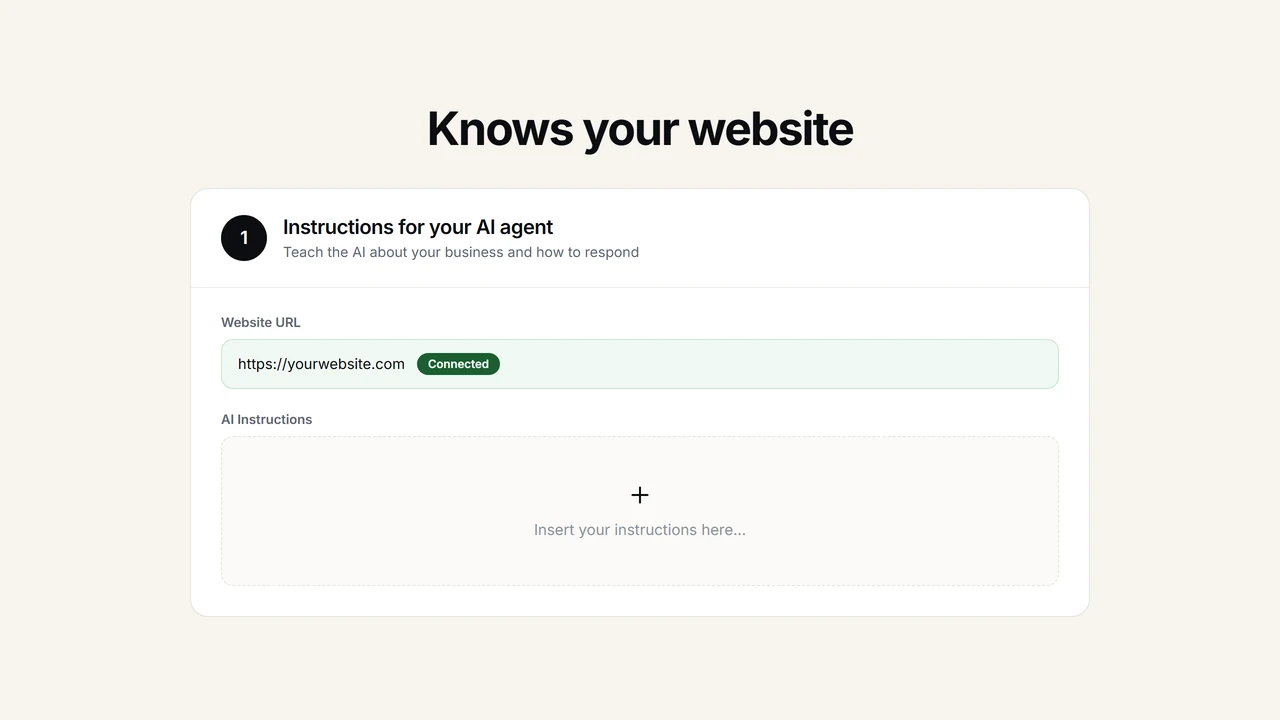
Most organizations have thorough process documentation buried in intranets, knowledge bases, and PDF manuals. The problem is never that the documentation doesn't exist — it's that people don't find it, don't read it, or don't understand which steps apply to their situation. Asyntai crawls up to 50 pages of your site and accepts uploaded process documents. When someone asks "how do I do X?", the AI walks them through the relevant steps using your actual documentation as the source — not generic advice, not invented procedures.
- Crawl your process pages automaticallyPoint the AI at your site and it indexes process guides, SOPs, how-to articles, and procedural documentation within minutes — up to 50 pages per crawl.
- Upload internal procedure manualsSOPs, compliance checklists, approval workflows, onboarding sequences — upload them as PDFs or paste directly. The AI references the exact steps you documented.
- Step-by-step guidance in natural languageInstead of handing someone a 40-page PDF, the AI answers their specific question with the specific steps that apply — in conversational language, in their own language.
The AI doesn't just explain the process — it checks where you are in it
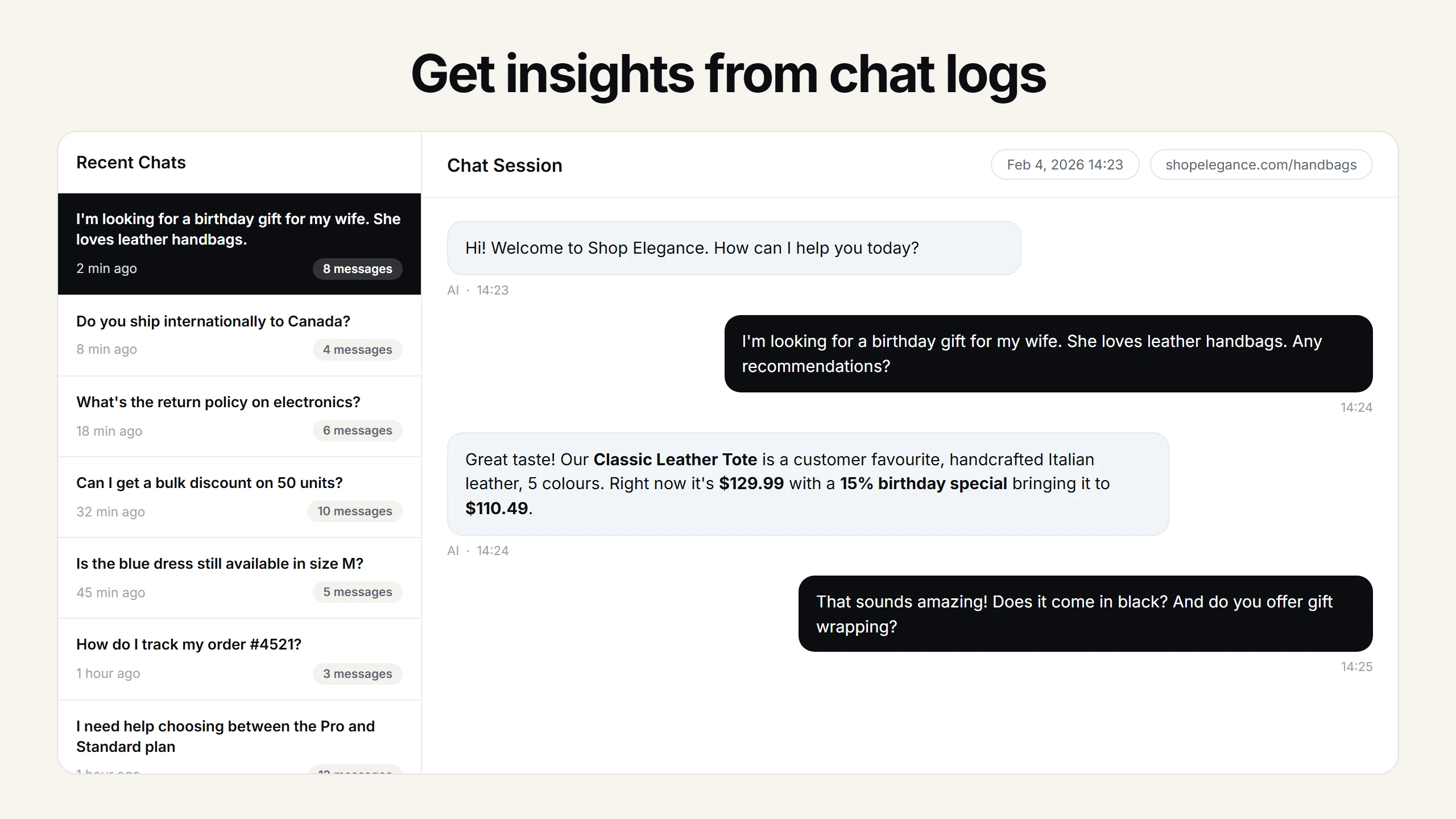
Explaining a process is useful. Knowing where someone stands within that process is transformative. With Custom Tools on the Standard ($139/month) and Pro ($449/month) plans, the AI calls your internal system endpoints to fetch real-time status. A vendor asks "what's the status of my invoice?" and the AI checks your AP system and returns the answer. An employee asks "has my request been approved?" and the AI queries your approval workflow. You define which endpoints are accessible — the AI handles the conversation naturally.
- Application status lookupsApplicants, vendors, and partners ask about their submission status — the AI checks your system and returns the current stage instead of a generic "we'll get back to you."
- Approval workflow trackingEmployees ask whether their purchase request, travel authorization, or budget approval has moved forward. The AI queries your workflow system and reports the real status.
- Document submission verificationSomeone asks "did you receive my signed contract?" The AI checks your document management endpoint and confirms receipt, outstanding items, or next steps.
- Compliance checkpoint lookupsFor regulated processes, the AI verifies which steps have been completed and which certifications or documents are still pending — pulling from your compliance tracking system.
Deploy process guidance without a systems integration project
Traditional process automation platforms require months of workflow mapping, API development, and stakeholder alignment before anything goes live. Asyntai reads your existing documentation and starts guiding people through it immediately. One script tag, one document upload, one afternoon.
- Create a free account and paste your website URL
- The AI scans up to 50 pages and builds a knowledge base from your content
- Copy the one-line embed snippet into your site header
- The chatbot goes live — answering visitor questions in 36 languages
<script src="https://asyntai.com/widget.js"
data-id="your-site-id" async>
</script>
</head>
# One line. Every process explained.
Digital process automation — FAQs
What operations, IT, and compliance teams typically ask before deploying AI-guided process automation.
Traditional BPM tools automate the execution of workflows — routing approvals, triggering notifications, moving records between systems. Asyntai automates the explanation layer: when someone asks "how do I do X?" or "what's the status of my request?", the AI answers using your process documentation. The two are complementary — Asyntai handles the human-facing question layer, while your BPM tool handles the backend execution.
Yes. When your documentation describes a sequence of steps — "first submit form A, then wait for manager approval, then upload the signed copy to portal B" — the AI walks the person through those steps conversationally. If they ask a follow-up about step 3 specifically, it addresses that step without repeating the entire sequence.
If your documentation distinguishes between user types — "employees follow process A, vendors follow process B, new hires follow process C" — the AI asks clarifying questions to determine which process applies and then guides accordingly. You can also use custom instructions to direct the AI to handle certain categories of questions differently.
Re-upload the updated document or re-crawl the relevant pages. The AI's knowledge base refreshes immediately — there is no retraining cycle or waiting period. For organizations where procedures change quarterly, this means the AI always reflects the current version of the process.
Yes. You can deploy the widget on your public website for external visitors — vendors, applicants, partners — and separately on your intranet for employees. Each deployment gets its own knowledge base, so the public-facing AI only knows public processes while the internal AI can reference confidential procedures.
The widget interface supports 36 languages and the AI detects the user's language automatically. Your process documentation can remain in its original language — the AI translates the guidance on the fly. A Spanish-speaking vendor and a Japanese-speaking partner both receive process instructions in their own language from the same knowledge base.
Free: $0 for 1 site and 50 messages/month — enough to test the concept. Starter: $39/month for 2 sites and 800 messages. Standard: $139/month for 3 sites and 15,000 messages, plus Custom Tools for live system lookups. Pro: $449/month for 20 sites and 50,000 messages. Most operations teams start on Starter and move to Standard when they need live data integrations.
The overlooked first layer of digital process automation
Digital process automation has been an enterprise priority for two decades now, and the tools have become genuinely powerful. Workflow engines route approvals. RPA bots move data between legacy systems. Integration platforms connect SaaS applications through APIs and webhooks. But there is a layer of process automation that nearly every organization overlooks, and it sits right at the surface: the moment a person asks "how do I do this?" That question is where every process begins for the person who needs to follow it. Before any workflow fires, before any form gets submitted, before any approval route triggers — someone has to understand what the process is and what their first step should be.
This question layer is staggeringly expensive to serve manually. Consider how a mid-size organization actually handles process inquiries today. An employee needs to file an expense claim for a conference trip. They search the intranet for "expense report." They find three documents — a policy overview from 2022, a quick-start guide from 2024, and a video walkthrough that no longer matches the current portal interface. They Slack the finance coordinator. The coordinator answers, then answers the same question from another employee an hour later, then again the next day. A vendor needs to submit an invoice. They email accounts payable. AP responds with a PDF of submission instructions. The vendor replies asking which fields are mandatory. AP responds again. A new hire needs to set up their laptop. They search the IT knowledge base, find a setup guide, but it references a VPN client that was replaced six months ago. They open a ticket. IT responds with the updated steps. None of these interactions are complex. Every answer already exists in documentation somewhere. The cost is entirely in the retrieval — in the human time spent locating, interpreting, and relaying information that was written down but not findable in the moment it was needed.
Asyntai occupies this exact layer. You upload your process documentation — SOPs, procedure guides, compliance checklists, onboarding sequences, vendor instructions, application procedures — and the AI uses that content to answer questions conversationally. When someone asks "how do I submit an expense report?", the AI returns the specific steps from your current procedure document, in order, with the details that apply. When a vendor asks "what documents do I need for onboarding?", the AI lists the requirements from your vendor onboarding guide. The responses are grounded in your content, not generated from generic knowledge. The AI answers using your own documentation because that is all it knows.
The distinction between process automation and process explanation is important because they solve different problems. A workflow automation tool ensures that once an expense report is submitted, it routes to the correct approver based on the cost center and amount threshold. That is valuable and Asyntai does not replace it. What Asyntai replaces is the thirty minutes the employee spent figuring out how to submit the expense report in the first place — the Slack messages, the outdated wiki search, the email to finance, the reply chain. It replaces the identical thirty minutes the next employee will spend tomorrow. And the one after that. The explanation layer and the execution layer are complementary, and most organizations have invested heavily in the execution layer while leaving the explanation layer entirely manual.
Crawling handles the public-facing portion. Asyntai scans up to 50 pages of your website or portal, indexing process descriptions, step-by-step guides, application procedures, and FAQ content. For organizations with substantial public-facing processes — universities with admissions procedures, government agencies with permit applications, service companies with client onboarding flows — the crawl alone provides enough content for the AI to handle the majority of inbound process questions. For internal procedures that live behind authentication — IT setup guides, procurement workflows, HR procedures — you upload the documents directly. PDFs, text files, copy-pasted content from internal wikis. The AI indexes all of it into a unified knowledge base.
The language dimension is particularly relevant for process automation in global organizations. A European company with offices in six countries maintains process documentation in English, but employees in each office think and ask questions in their native language. Translating every SOP into six languages is a perpetual project that never quite stays current. Asyntai's AI detects the user's language from their first message and responds in kind — 36 languages are supported in the widget interface. A French employee asks about the travel reimbursement process in French and gets French instructions. A Polish employee asks the same question in Polish and gets Polish instructions. Both answers are sourced from the same English-language procedure document. The translation happens at the conversation level, not the documentation level, which means your process team maintains one version of each document instead of six.
Custom Tools, available on the Standard plan at $139/month and the Pro plan at $449/month, extend the AI from static process guidance into dynamic status checking. You configure API endpoints that the AI can call when a question requires live data. "What's the status of my vendor application?" triggers a call to your vendor management system. "Has my purchase order been approved?" queries your procurement workflow. "Did you receive my signed NDA?" checks your document management system. The AI fetches the answer in real time and presents it conversationally. This is not a full workflow automation layer — it does not route approvals or trigger actions — but it eliminates the most common reason people contact operations teams: "where does my thing stand right now?"
The deployment model intentionally avoids the complexity that makes traditional process automation projects take months. There is no workflow diagram to build. There is no integration middleware to configure. There is no decision tree to map. You embed a single script tag, upload your process documents, write custom instructions for any topics that should be escalated to a human, and go live. When a process changes, you re-upload the affected document. When a new process is added, you upload the new documentation. The AI's knowledge base updates immediately. For organizations accustomed to six-month BPM implementation timelines, the deployment speed feels almost suspicious — but the scope is different. Asyntai automates the question-and-answer layer, not the workflow execution layer, and that narrower scope is what makes afternoon deployment realistic.
Escalation handling ensures the AI knows when to stop answering and start connecting. Some process questions genuinely require human judgment: "I need an exception to the standard procurement limit", "this compliance requirement conflicts with our client contract", "the system rejected my submission and I don't understand why." Custom instructions let you define these boundaries in plain English — "escalate any exception request to [email protected]", "redirect compliance conflicts to the legal team", "offer human help when the user reports a system error." When the AI escalates, it captures the person's name, email, and the full conversation transcript, and delivers everything to your dashboard and optionally to an email inbox. The human who picks up the thread sees exactly what was discussed and where the process broke down.
The organizations where this approach delivers the most measurable value share a common profile: they have well-documented processes, a high volume of "how do I do X?" inquiries, and a staff that spends meaningful time answering questions instead of doing the work those processes are supposed to enable. Universities fielding thousands of admissions procedure questions per semester. Government agencies explaining permit applications to hundreds of applicants per month. Professional services firms onboarding new clients who each need to understand the engagement workflow. Enterprises where every new hire generates a week of "how do I set up X?" messages to IT and HR. In every case, the documentation exists. The expense is in the retrieval. Asyntai makes the retrieval instant, accurate, multilingual, and available around the clock — so the people who wrote the process documentation can stop personally reciting it and get back to the work they were hired to do.