Best AI tools for PR agencies — start with the one that answers your website visitors
Deploy an AI chatbot on your PR agency website that handles media inquiries, answers prospect questions about your services, and turns after-hours visits into qualified leads.
See how AI handles visitors on a PR agency website
Enter a PR agency website URL and watch the AI answer questions about services, expertise, and media capabilities
Reads your agency website and answers like a member of your team
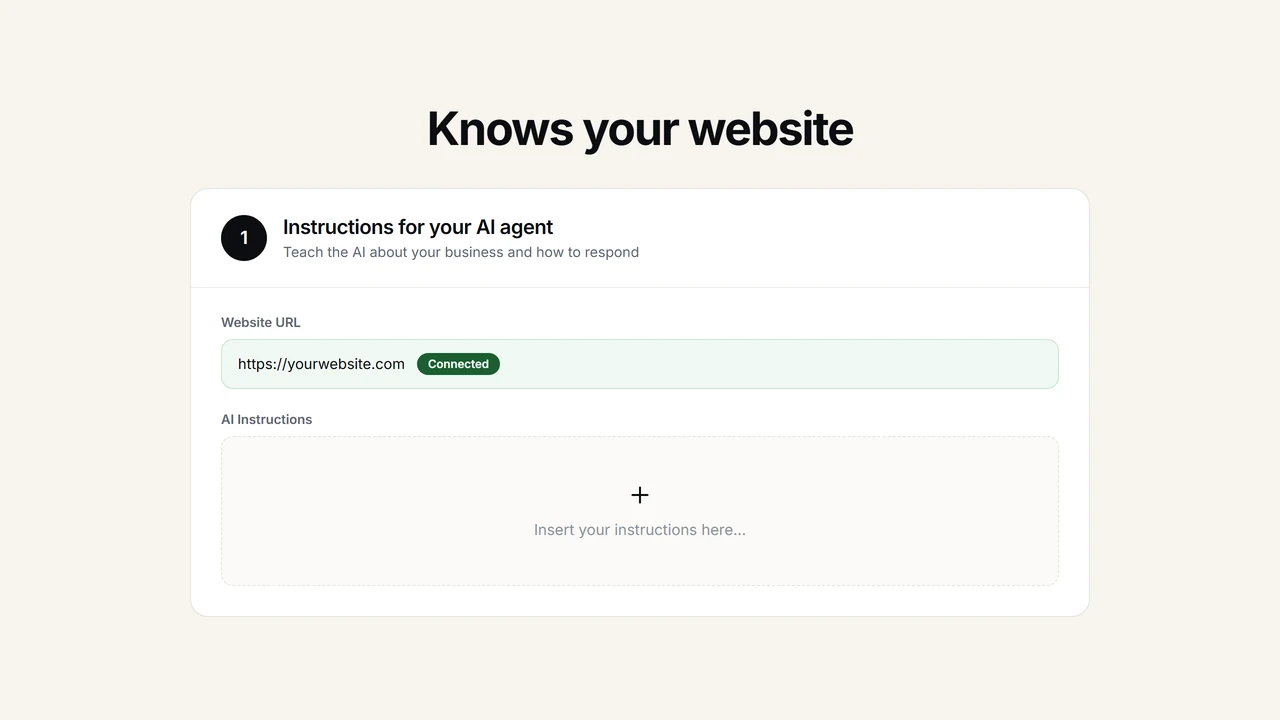
A PR agency website carries dense, specialized content — service breakdowns across media relations, crisis communications, event PR, digital strategy, and influencer programs. Asyntai crawls up to 50 pages and builds a knowledge base from everything it finds: leadership bios, case studies, industry verticals you serve, awards, methodology descriptions. The AI uses this content to answer visitor questions accurately, in any of 36 languages, without anyone on your team lifting a finger.
- Surfaces the right expertise for the right questionA journalist asking about your healthcare PR experience gets specifics from your case studies page. A prospect asking about crisis work gets details from your crisis communications service page. The AI matches the question to the most relevant content across your entire site — not just a single FAQ section.
- Knows your people and their specialtiesIf your site has team bios, the AI knows who leads which practice area. "Who handles your tech clients?" gets a real answer — not a form redirect. Visitors feel like they are talking to someone familiar with the agency, because the AI actually is.
- Works across languages for international mediaA French journalist browsing your English-language site can ask questions in French and receive responses in French. The AI detects the visitor's language automatically. No translated microsites needed — one website, 36 languages.
Handles every type of visitor a PR agency website attracts
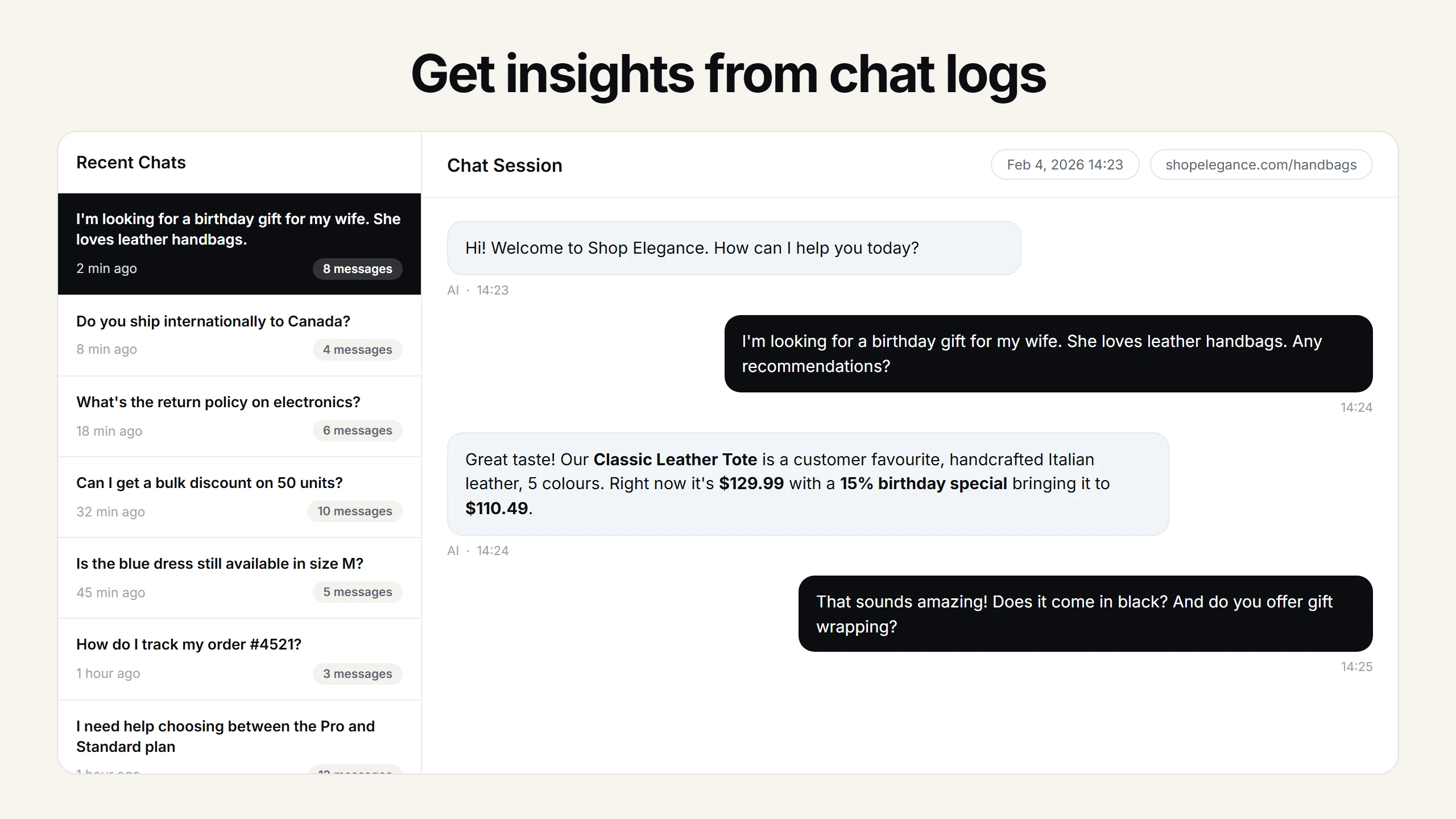
PR agency websites serve an unusually diverse set of visitors: journalists on deadline, CMOs evaluating agencies, event planners scoping partnerships, job candidates, and existing clients checking campaign progress. Each arrives with different intent and different urgency. The AI chatbot handles initial engagement for all of them — qualifying prospects, directing media contacts, and capturing leads — so your team focuses on conversations that move the needle.
- Engages journalists when your team is unavailableA reporter working a story at 10 PM visits your site looking for a source or a quote. The AI can answer questions about your clients' industries, direct them to the right media contact on your team, and capture their details so your publicist follows up first thing in the morning — before they move on to another agency.
- Qualifies prospective clients without a discovery callA marketing director lands on your site from a Google search and wants to know if you handle B2B tech, what your retainers look like, and whether you have experience in their vertical. The AI answers from your service pages and case studies. By the time they book a call, your team already knows what they need.
- Handles press kit and media resource requestsJournalists and editors frequently visit agency sites looking for press kits, logos, headshots, or backgrounders on specific clients. The AI can direct them to downloadable resources linked on your site and answer follow-up questions about availability for interviews or comments.
- Captures every inquiry — even the ones that arrive at 2 AMPR is a global business. Media contacts in different time zones, international clients, and reporters working overnight shifts all visit when your office is closed. The AI keeps your website responsive around the clock, collecting contact details and context so nothing falls through.
Add the AI chatbot to your PR agency website
One JavaScript snippet turns your agency website into an interactive resource for journalists, prospects, and partners. The AI reads your existing content and starts answering visitor questions immediately.
- Sign up at Asyntai and enter your PR agency website URL. The AI crawls your pages — services, case studies, team bios, media resources — and builds the knowledge base automatically.
- Add custom instructions to shape how the AI handles different visitor types: direct journalists to your media contact, qualify prospects by asking about their industry and goals, escalate urgent requests.
- Copy the script tag from your Asyntai dashboard and paste it into your website's HTML header.
- Customize the chat widget's appearance — colors, avatar, greeting message — to match your agency's brand identity.
<script src="https://asyntai.com/widget.js"
data-id="your-site-id" async>
</script>
</head>
# Your website, always responsive.
AI chatbot for PR agencies — FAQs
Common questions from PR firms evaluating AI chatbots for their agency websites.
Can the AI handle sensitive media inquiries appropriately?
You control exactly how the AI responds through custom instructions written in plain English. You can tell it to never comment on active client crises, to redirect all media inquiries about a specific topic to a named team member, or to collect the journalist's name and outlet before answering any questions. The AI follows your rules for every conversation. You can update the instructions anytime as situations evolve.
Can the AI provide press kits or media resources?
If your website links to downloadable press kits, media backgrounders, logos, or headshots, the AI can direct visitors to those resources and explain what each contains. It reads the content on your media resources page and answers questions about availability. It does not create or attach files — it guides visitors to what already exists on your site.
Does it work for crisis communications pages?
Yes. If you have a crisis communications service page, the AI reads that content and answers questions about your crisis capabilities, response process, and team experience. For active crisis situations, you can set custom instructions like "If anyone asks about [topic], respond only with: please contact [name] at [email] immediately." This gives you precise control over messaging during sensitive moments.
How does it handle international and multilingual media markets?
The AI detects the visitor's language automatically and responds in kind — 36 languages supported. A German journalist browsing your English-language agency website gets answers in German. A Brazilian media contact asks in Portuguese and gets a Portuguese reply. Your website content stays in English; the AI handles the translation layer in real time. No separate language versions of your site needed.
What does this cost for a boutique PR firm?
The Free plan gives you 50 messages per month at no cost — enough to see how it works. The Starter plan at $39/month covers 800 messages and 2 sites. Most boutique PR firms fit comfortably on Starter or Standard ($139/month for 15,000 messages). If you manage multiple agency brands or client microsites, the Pro plan at $449/month covers up to 20 sites with 50,000 messages and full white-label branding.
What if a journalist needs to reach a human immediately?
You can configure the AI to offer live handoff to your team through Asyntai's built-in escalation. You can also set rules like "If someone identifies as a journalist with a same-day deadline, immediately provide [media contact name]'s direct email and phone number." The AI triages the urgency and connects them to the right person — you define what qualifies as urgent and who handles it.
Does the AI learn from my website automatically or do I need to enter information manually?
Automatically. You provide your website URL, and Asyntai crawls up to 50 pages — service descriptions, team bios, case studies, blog posts, media resources, everything publicly accessible. The AI uses that content to answer visitor questions. No manual entry, no FAQ databases to build. If you update your website, you can re-crawl from the dashboard to refresh the knowledge base.
Can I use this on my agency website and on client campaign microsites?
Yes. Each site gets its own knowledge base and its own widget configuration. Your agency site has the AI answering questions about your PR services. A client's campaign microsite has its own AI answering questions about that specific campaign. The Standard plan covers 3 sites and the Pro plan covers 20 — each completely independent with its own content, branding, and custom instructions.
Why the best AI tool for a PR agency is the one that never leaves your website unattended
PR agencies sell two things above all else: relationships and responsiveness. The ability to pick up the phone on the second ring, to return a journalist's email within the hour, to have the right answer ready before the client finishes asking the question. Responsiveness is the product. And yet, visit most PR agency websites after 6 PM and you will find a contact form, a general inbox address, and silence. The cobbler's children have no shoes.
The gap is not laziness. PR teams are stretched thin across client accounts, media pitches, event logistics, and campaign reporting. Nobody is sitting idle, waiting for the agency website to ping. The website is a brochure — updated quarterly, checked occasionally, treated as a digital business card rather than a working tool. Meanwhile, the people visiting that website — journalists, prospective clients, event partners — arrive with specific questions and real deadlines. A contact form does not respect their time.
An AI chatbot on a PR agency website changes the dynamic because it turns a static page into a conversation. A journalist lands on the site at 11 PM researching a story about sustainable fashion. She wants to know if the agency represents any apparel brands and who handles that vertical. The AI reads the agency's client roster page, the team bios, and the case study about the organic clothing brand launch. It answers her question in seconds. She gets what she needs. The agency gets a media opportunity that would have evaporated by morning.
That scenario plays out constantly in public relations, and the math is unforgiving. A missed journalist inquiry does not come back. Reporters have deadlines, source lists, and alternatives. If they visit your site, do not find the information they need, and leave — they call another agency. There is no follow-up, no second chance, no "we'll check back later." The placement goes to whoever was available. An AI chatbot does not guarantee the placement, but it guarantees the conversation happens.
Prospective clients are the other half of the equation, and their decision process is quieter but equally time-sensitive. A CMO evaluating PR agencies will shortlist three or four firms, visit each website, and form impressions before ever making contact. The agency whose website answers her questions — "Do you have healthcare experience?" "What does a typical retainer look like?" "Who would be my account lead?" — earns a level of familiarity that the brochure-style sites never achieve. She arrives at the discovery call already half-sold because she already had a conversation.
PR agencies serve an unusual mix of visitor types, and this is where a generic chatbot falls short. Journalists want sources, quotes, and press materials. Prospects want case studies, pricing signals, and team credentials. Event partners want logistics capabilities and past event references. Job candidates want culture information and open roles. Each visitor type arrives with different vocabulary, different urgency, and different expectations. An AI chatbot that reads the agency's full website content handles all of these naturally — it does not need separate conversation flows for each audience. The content is already there. The AI just makes it accessible through conversation.
The boutique firm versus large agency dynamic makes this particularly interesting. A ten-person PR shop cannot staff a receptionist to handle website inquiries all day. They certainly cannot afford someone overnight. But their website traffic includes the same high-value visitors — editors, CMOs, brand managers — as any global firm. The AI chatbot levels the playing field. A visitor's experience on the boutique firm's website becomes indistinguishable from a staffed enterprise operation. The small firm appears bigger, more responsive, and more organized than it could otherwise afford to be.
International media markets amplify the advantage. A PR agency in Toronto that represents European luxury brands receives inquiries in French, German, and Italian. A London agency with Middle Eastern clients gets Arabic-language visits. Hiring multilingual staff for website coverage is impractical. The AI detects the visitor's language and responds in kind — 36 languages — using the English-language content from the agency's website. One site, global reach, no translation overhead. For agencies working across borders, this alone justifies the cost.
Crisis communications adds another dimension. When a client faces a crisis, the PR agency's own website sometimes becomes a destination for journalists and stakeholders seeking comment. Custom instructions let the agency control exactly what the AI says — and does not say — during a sensitive period. "Do not comment on [topic]. Direct all inquiries to [name] at [phone]." The AI enforces that message discipline consistently, without the risk of an intern accidentally freelancing a response. When the crisis passes, you update the instructions and the AI adjusts immediately.
The practical setup takes minutes, not weeks. Asyntai crawls the agency website — service pages, case studies, team bios, blog posts, media resources — and builds a knowledge base the AI uses to answer questions. No manual FAQ entry. No conversation flow design. The AI reads what exists and starts answering. Agencies that rewrite their website copy or add new case studies can re-crawl from the dashboard to keep the AI current. The knowledge base reflects the website; the website reflects the agency.
Custom instructions shape the AI's personality and boundaries without requiring technical skills. "Always ask for the journalist's name and outlet before answering detailed questions." "When a prospect asks about pricing, explain that retainers start at $X and suggest scheduling a call for a custom quote." "If anyone mentions [competitor name], do not engage — redirect to our differentiators page." These instructions are written in plain English and take effect immediately. A senior partner can set the tone; the AI maintains it across every conversation.
The economics are straightforward for a PR agency. The Starter plan at $39 per month handles 800 messages across 2 sites — more than enough for most boutique firms. A single new client won through the chatbot covers the annual cost in the first month's retainer. A single media placement saved from a late-night journalist inquiry delivers more value than years of chatbot subscription. The ROI calculation is not close. PR agencies routinely spend more on a single media database subscription than on a full year of AI chatbot service.
For agencies managing multiple brands — their own site plus client microsites or campaign landing pages — the Standard plan at $139 per month covers 3 sites, and the Pro plan at $449 per month covers 20. Each site gets its own knowledge base, its own custom instructions, and its own widget branding. The agency's site talks about PR services. A client's product launch microsite talks about the product. A campaign landing page talks about the campaign. All powered by the same platform, all managed from one dashboard.
The question PR agencies should ask is not whether they need AI tools. They already use AI for media monitoring, content generation, sentiment analysis, and reporting. The question is whether their own website — the first thing a journalist or prospect sees — is doing its job when no one is watching. If the answer involves a contact form and a 24-hour response promise, there is a gap. An AI chatbot fills it with the same responsiveness the agency promises its clients. The best AI tool for a PR agency is the one that practices what the agency preaches.