AI search for Webflow that goes far beyond native site search
Webflow's built-in search indexes your pages and returns a list of links. Asyntai's AI search understands what your visitor actually means. Someone types "minimalist desk setup under $300" and the AI searches your CMS collections, product pages, and live catalog data, then presents matching items as Dynamic Product Cards — visual cards with images, prices, and buy buttons, right inside the chat widget. No search results page. No keyword guessing. A real product conversation on your design-first Webflow site.
See the AI search your Webflow content live
Enter your Webflow site URL and watch the AI find and display content from your CMS collections and product pages
Understands intent, searches CMS collections and products, returns Dynamic Product Cards
Webflow's native search does keyword matching across your published pages. It returns a list of links ranked by relevance — the same approach every basic search has used for decades. When a visitor searches "wireless headphones for commuting under $150," Webflow search looks for pages containing those exact words and usually returns nothing useful. Asyntai's AI search reads the intent behind the query, searches your CMS collections and product catalog through the Real-Time Data Feed, and returns matching products as Dynamic Product Cards: visual cards with product images, prices, descriptions, and buy buttons rendered directly inside the chat. Multiple results display as a swipeable carousel. The visitor goes from describing a need to browsing real products in seconds — without navigating away from the page they were on.
- Natural language, not keyword matchingVisitors ask in their own words — "a birthday gift for a photographer," "something like the Studio Monitor but portable," "mechanical keyboard with quiet switches under $200." The AI interprets the full intent, not individual keywords, and searches your product data for items that match what the visitor actually wants — even when they don't use the exact terms from your CMS collection fields.
- Dynamic Product Cards inside the conversationWhen the AI finds matching products, it renders them as rich visual cards — product image, name, price, short description, and a direct buy or view button. Multiple matches appear as a horizontal carousel the visitor swipes through. Products are merchandised inside the chat, not on a separate search results page. For design-conscious Webflow sites, the cards provide a polished browsing experience that feels native to the brand.
- Powered by your live product catalogThe AI searches your Real-Time Data Feed — a URL (JSON, CSV, or API endpoint) that returns your current product data. Price drops, new arrivals, and stock changes reflect automatically. The AI always shows what you actually sell right now, not a stale crawl from last week. For Webflow Ecommerce stores with frequently changing inventory, this keeps every product card accurate.
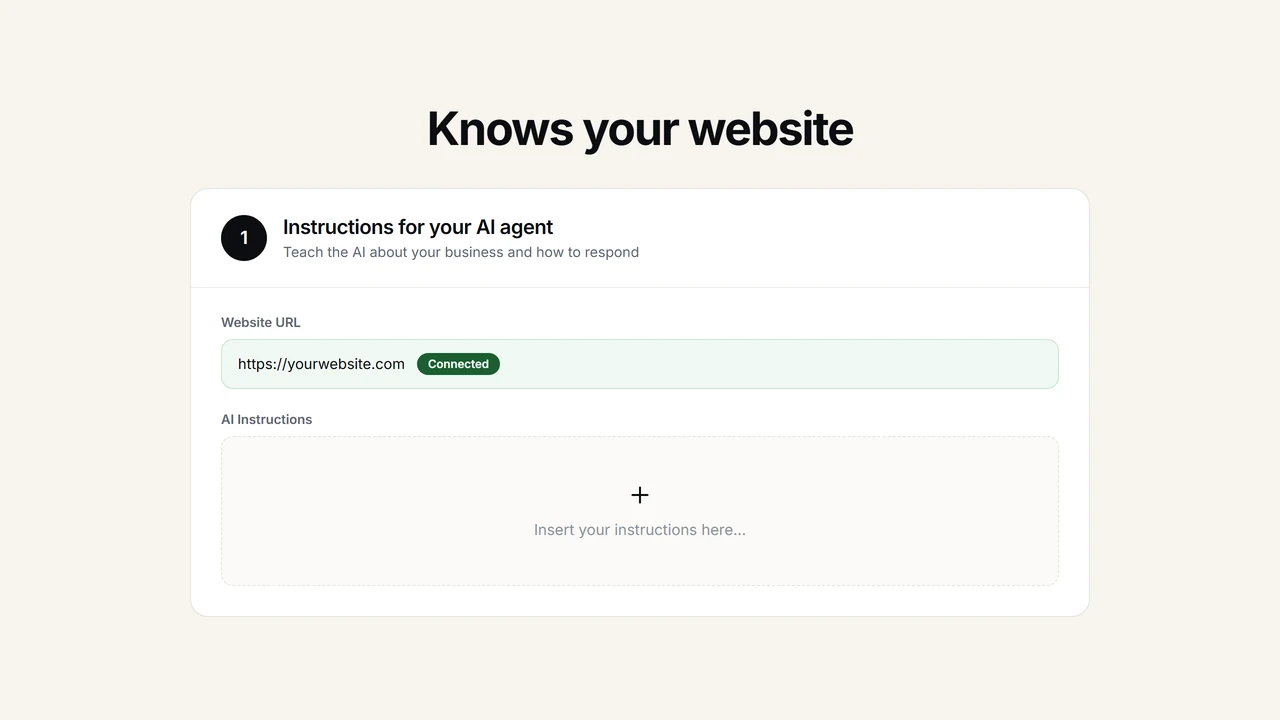
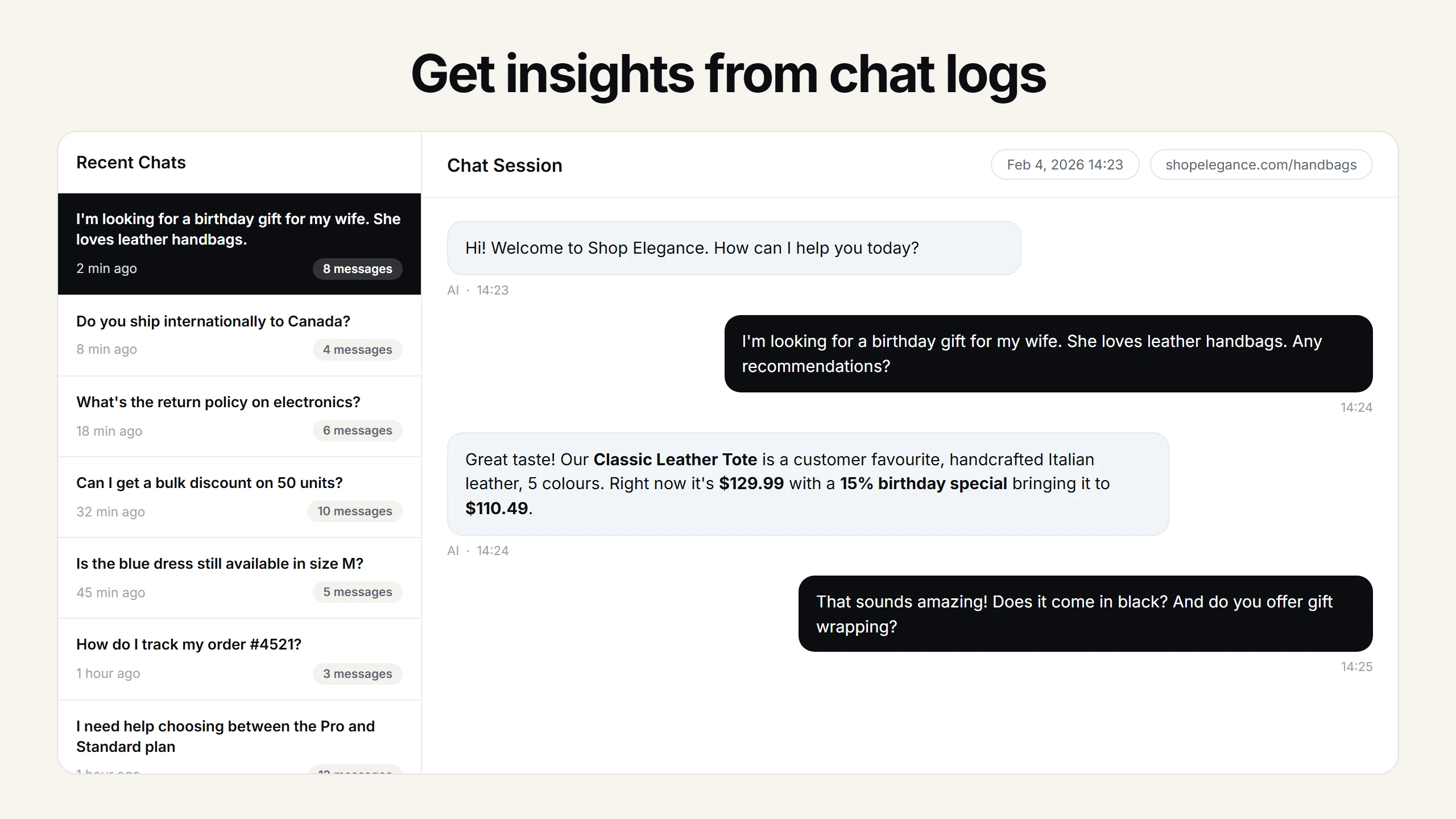
Custom Code or Embed element, auto-crawl CMS, Real-Time Data Feed for live pricing
Webflow sites are built for visual impact, and the search experience should match. Asyntai's AI search installs in minutes — paste the embed code in Project Settings > Custom Code > Footer Code for site-wide coverage, or drop it into an Embed element on specific pages. The AI auto-crawls your entire Webflow site including CMS collection pages, blog posts, and static pages, building its knowledge base from your published content. For live product data with real-time prices and inventory, connect a Real-Time Data Feed — a JSON, CSV, or API endpoint that the AI indexes automatically. Your design stays untouched. The search gets intelligent.
- Real-Time Data Feed stays synchronizedPoint Asyntai at a URL that returns your product catalog (JSON, CSV, or any API endpoint). The AI indexes it automatically. When you change a price or update stock, the feed reflects it immediately. New products appear within 24 hours. Standard plan supports up to 200,000 characters; Real-Time Data Feed Max handles up to 10,000,000 characters — roughly 25,000 products with full data.
- Auto-crawl covers your entire Webflow siteThe AI crawls your published Webflow pages — CMS collection pages, blog posts, static pages, product listings — and builds a knowledge base from the content. When a visitor asks a question that lives on your site (shipping policy, return process, sizing guide), the AI answers using your content. Data feed for structured product data, crawled content for everything else.
- Webflow-native install, zero design impactPaste the embed snippet in Project Settings > Custom Code > Footer Code and it loads on every page. Or use a Webflow Embed element to place the widget on specific pages only. The widget loads asynchronously — no impact on your page speed, no conflict with Webflow Interactions or custom animations, no CSS overrides needed. Works on every Webflow template and custom build.
Add AI search to your Webflow site in minutes
No developer needed. Paste the embed code in Webflow's Custom Code settings, the AI crawls your CMS collections automatically, and Dynamic Product Cards are enabled with a toggle. Your visitors get intelligent search within minutes.
- Sign up at Asyntai and copy the embed code from your dashboard.
- In Webflow, go to Project Settings > Custom Code > Footer Code and paste the snippet. Publish your site.
- The AI auto-crawls your Webflow site — CMS collections, blog posts, product pages, and static content are indexed automatically.
- Connect a Real-Time Data Feed by pasting a URL that returns your product catalog (JSON or CSV). Enable Dynamic Product Cards in your widget settings.
<!-- Paste in Project Settings > Custom Code > Footer Code -->
<script src="https://asyntai.com/widget.js"
data-id="your-site-id" async>
</script>
# One snippet. Every page. Publish and done.
AI search for Webflow — FAQs
Common questions from Webflow designers, Webflow Ecommerce store owners, and agencies evaluating AI-powered search.
How is this different from Webflow's native site search?
Webflow's built-in search indexes your published pages and matches keywords against page content. If a visitor searches "lightweight laptop bag for travel," Webflow search looks for pages containing those words — and typically returns irrelevant results or nothing. Asyntai's AI search understands intent. It reads the full query, figures out what the visitor actually wants, searches your product catalog and CMS content, and returns matching items as visual product cards with images, prices, and buy buttons. It works through conversation, so the visitor can refine naturally — "something a bit smaller" or "do you have that in leather?" — without re-searching.
Does it work with Webflow CMS collections?
Yes. The AI auto-crawls your entire Webflow site including all published CMS collection pages — product listings, blog posts, case studies, portfolio items, team bios, whatever you've built with CMS collections. The crawled content becomes part of the AI's knowledge base, so visitors can ask questions about anything on your site. For structured product data with live pricing, you connect a Real-Time Data Feed separately — the AI combines crawled CMS content with live feed data for the most complete search experience.
Do I need a Webflow Ecommerce plan?
No. Asyntai's AI search works on any Webflow plan — CMS, Business, or Ecommerce. If you're on a Webflow Ecommerce plan, the AI can crawl your product pages and connect to your product data via a Real-Time Data Feed for live pricing and stock data. If you're on a CMS or Business plan without native Ecommerce, you can still use the AI to search your CMS collections and display items as Dynamic Product Cards — you just provide the product data through a JSON/CSV feed or API endpoint from whatever backend handles your inventory.
How do I install it on my Webflow site?
Two options. For site-wide coverage, go to your Webflow Project Settings > Custom Code > Footer Code and paste the Asyntai embed snippet. Publish your site and the widget appears on every page. For placement on specific pages only, add a Webflow Embed element wherever you want the widget and paste the snippet there. Both methods take under a minute. No custom CSS, no conflicting scripts, no design changes needed.
Does it work on my staging site before I publish to production?
Yes. The embed code works on your webflow.io staging domain the same way it works on your custom domain. You can install the snippet on staging first, test the AI search, crawl your content, and verify everything works before publishing to your live site. Just add the snippet to Custom Code on your staging project and the AI will crawl whatever is published there. When you're ready for production, the same snippet works on your custom domain without changes.
Will it affect my Webflow Interactions or animations?
No. The Asyntai widget loads asynchronously via its own JavaScript — it's completely isolated from Webflow's Interactions engine, page transitions, scroll animations, and any custom code you've added. It doesn't inject CSS that could override your styles, doesn't modify the DOM in ways that conflict with Webflow's rendering, and doesn't affect page load performance. If your Webflow site works before adding the snippet, it works exactly the same after.
How does the AI get my product data?
Three sources work together. The AI automatically crawls your Webflow site — all published pages including CMS collections, product pages, and blog posts. For structured product data with prices, images, and stock levels, you connect a Real-Time Data Feed: a URL (JSON, CSV, or API endpoint) that returns your current catalog. You can also upload files (PDFs, spreadsheets) to the knowledge base. The AI searches across all sources simultaneously and presents the best matches as product cards.
What plan do I need?
The AI chat widget works on all plans — including Free — with knowledge base answers from your crawled Webflow content. Real-Time Data Feed and Dynamic Product Cards require the Standard plan ($139/month) or Pro plan ($449/month). Standard includes up to 15,000 messages/month and 200,000 characters of data feed. Pro includes 50,000 messages/month and access to Real-Time Data Feed Max (10,000,000 characters). Custom Tools for advanced actions like order lookups are also Standard+.
Why Webflow sites deserve better search — and how conversational AI delivers it
Webflow changed how designers build websites. The visual builder, CMS collections, and pixel-perfect control over every element made it possible to create sites that look custom-coded without writing a line of backend. Agencies build client portfolios on it. DTC brands launch stores on it. SaaS companies run their entire marketing site on it. But when it comes to search — the experience visitors use to find things on those beautifully designed sites — Webflow still offers a basic keyword-matching search bar that feels like it belongs to a different era. The gap between how polished a Webflow site looks and how primitive its search behaves is one of the platform's most underappreciated blind spots.
Webflow's native search indexes your published pages and matches visitor queries against the text content on those pages. It returns a list of links ranked by keyword relevance. For a simple blog or documentation site, this is adequate. But for any site where visitors are trying to find specific products, compare options, or discover items they can picture but cannot name, keyword search breaks down almost immediately. A visitor on a Webflow Ecommerce site who types "comfortable work-from-home headphones under $200" gets a results page of links — if anything matches at all. The visitor has to click each link, scan the page, back-button, click the next link, and repeat. On a site built to deliver a curated visual experience, the search funnel is the one place where that experience collapses into a generic list of blue links.
The problem isn't that Webflow's search is poorly implemented. It does what keyword search does. The problem is that keyword search is the wrong paradigm for product discovery. When a visitor describes what they want in natural language — "a minimalist mechanical keyboard for my home office," "wireless earbuds that won't fall out during running," "a gift for a developer who has everything" — they're expressing intent, not typing keywords. A keyword search engine doesn't understand intent. It matches strings. The result is either a noisy list of tangentially related pages or, more often on Webflow sites with limited content, nothing at all. The visitor leaves. The sale is lost. And the Webflow analytics dashboard shows a bounce that could have been a conversion.
Asyntai's AI search for Webflow replaces the keyword-matching model with conversational product discovery. Instead of a search bar that returns a list of links, visitors interact with an AI-powered chat widget that understands natural language, searches your product catalog and CMS content, and displays matching products as Dynamic Product Cards — visual cards with product images, prices, descriptions, and buy buttons, rendered directly inside the chat window. The visitor describes what they want in their own words, the AI finds it, and the results appear as a shoppable carousel they can browse without leaving the conversation. For Webflow sites that invest heavily in visual design, it's a search experience that finally matches the quality of the rest of the site.
The foundation of AI search is the Real-Time Data Feed. You provide Asyntai with a URL that returns your product catalog — a JSON feed, a CSV export, or a REST API endpoint from whatever backend system manages your inventory. For Webflow Ecommerce stores, this might be an export from your fulfillment system, an API from your inventory management tool, or a manually maintained JSON file hosted anywhere. The AI indexes the feed and uses it as its primary source of product knowledge. When a visitor asks "do you have any USB-C hubs with HDMI output?", the AI searches the data feed — not just for the words "USB-C" and "HDMI," but for products whose descriptions, specs, and categories indicate they match what the visitor is looking for. It might surface products described as "multi-port dock" or "connectivity hub" even if the visitor didn't use those terms.
What happens after the search is what separates this from any search plugin or third-party search widget. Instead of returning a list of links to CMS collection pages, the AI responds with Dynamic Product Cards — rich visual cards that display the product image, name, price, a short description, and a "View Product" button. When there are multiple matches, the cards appear as a swipeable carousel. The visitor sees products right there in the conversation, compares them visually, and clicks through to the one they want. No search results page. No pagination. No back-button loops. The AI curates and presents, and the visitor browses within the chat. For design-driven Webflow sites where the visual experience is the brand, this is a fundamentally different kind of search.
Dynamic Product Cards pull from any knowledge source that Asyntai has access to — not just the Real-Time Data Feed. If the AI finds a relevant product from your crawled Webflow CMS collection pages, from an uploaded product spreadsheet, or from any other connected data source, it can render it as a card. The visual format is consistent regardless of where the data originated. This means even Webflow sites that haven't set up a data feed yet get product cards from their crawled CMS content. The data feed adds real-time pricing accuracy and stock awareness, but the visual search experience starts working as soon as your site is crawled.
For Webflow Ecommerce stores specifically, the Real-Time Data Feed solves a problem that crawling alone cannot: freshness. Webflow Ecommerce product pages are static until you publish changes. If you run a flash sale and drop a price from $249 to $179, the crawled version of that product page might still show the old price until the next crawl cycle. The Real-Time Data Feed reflects price changes immediately — the AI reads the feed on each relevant query. Stock updates work the same way: if an item sells out, the feed reflects it and the AI stops recommending it. For stores that run promotions, rotate seasonal inventory, or sell limited-edition items, the feed ensures that every product card the visitor sees is accurate at the moment they see it.
The conversational format unlocks something no search results page can provide: iterative refinement. When a visitor types "wireless headphones" into a search bar and gets twenty results, they scroll through a list. If none match, they retype the query with different words and try again. Each search is isolated. In a conversation with Asyntai's AI search, refinement happens naturally. "I'm looking for wireless headphones for music production." The AI shows studio-quality options as product cards. "Those are too expensive — anything under $150?" The AI narrows the results without losing context. "Do any of those come with a carrying case?" The AI checks the product data. "What about the second one — is it compatible with Mac?" The AI answers from the product description. Each exchange builds on the last. The visitor steers the search like a conversation with someone who knows the catalog — because the AI does know the catalog.
CMS collection discovery is where AI search transforms Webflow sites that aren't traditional ecommerce stores. Many Webflow sites use CMS collections for portfolios, service listings, resource libraries, event calendars, recipe databases, real estate listings, or course catalogs. These collections can contain hundreds or thousands of items, and the native Webflow search is the only built-in way for visitors to navigate them. AI search makes those collections conversational. A visitor on an architecture portfolio site can ask "show me residential projects in the Pacific Northwest with sustainable materials" and the AI searches the CMS collection, understands the combination of location, project type, and material constraint, and surfaces matching projects. On a recipe site, "quick weeknight dinners without dairy" returns matching recipes from the collection — no tagging taxonomy required, because the AI reads and understands the content itself.
For agencies building Webflow sites for clients, AI search is a deliverable that elevates the entire project. Most agencies hand off a Webflow site with the native search bar and a note that "search works out of the box." But when the client's visitors actually use that search, the experience rarely matches the quality of the rest of the site. AI search changes the handoff. The agency installs the Asyntai embed code in Custom Code, configures the crawl, optionally connects a data feed, and the client's site launches with intelligent, conversational search that understands natural language queries. It's a value-add that justifies higher project fees and creates an ongoing relationship — the client stays on Asyntai for the AI search, and the agency gets credit for delivering a search experience that their competitors' Webflow sites don't have.
Installation on Webflow is deliberately simple because Webflow designers shouldn't need to leave the visual builder's ecosystem. The embed code goes in one of two places: Project Settings > Custom Code > Footer Code for site-wide deployment, or inside a Webflow Embed element for page-specific placement. The Footer Code method is the most common — paste the snippet, publish, and the widget appears on every page. The Embed element method gives more control for designers who want the chat widget only on certain pages, like the shop section or a product landing page. Both methods load the widget asynchronously, which means zero impact on page speed scores, no conflict with Webflow Interactions or page transitions, and no CSS side effects on the existing design.
The widget's asynchronous loading deserves emphasis because Webflow designers care about performance. The Asyntai script loads independently of the page's render path. It doesn't block the DOM, doesn't delay Webflow's Interactions engine, and doesn't inject styles that could interfere with the designer's carefully crafted CSS. Lighthouse scores stay the same. Webflow Interactions — scroll-triggered animations, hover effects, page transitions — continue to work exactly as designed. The widget lives in its own layer, styled independently, and the only visual change to the site is the chat icon in the corner. For designers who treat every pixel as intentional, this isolation is non-negotiable, and the Asyntai widget is built to respect it.
Multilingual search extends the reach of Webflow sites that serve international audiences. Asyntai supports 36 languages, which means a French-speaking visitor can ask "je cherche un clavier mecanique silencieux" and the AI searches the same English-language product data feed, finds matching keyboards, and presents the product cards with a conversational response in French. The product names, prices, and images on the cards come from the feed data as-is, while the AI's conversational text — its recommendation, comparison notes, follow-up questions — appears in the visitor's language. You don't need a multilingual Webflow site. The AI handles the language gap between your visitor and your catalog.
Custom Tools extend the AI from search into action. Once a visitor finds a product through AI search, the conversation can continue into post-search tasks. With Custom Tools, the AI can check real-time inventory for a specific variant by calling your backend API. It can look up shipping estimates for the visitor's region. It can verify whether a discount code applies to a particular item. It can pull up order status for a returning customer. Each tool you connect adds another action the AI can take without the visitor navigating away from the chat. Search becomes the starting point of a full shopping interaction, not a dead end that dumps the visitor onto a product page and hopes they figure out the rest.
The economic case for AI search on Webflow comes down to product discovery. Visitors who use site search convert at significantly higher rates than browsers — because searching signals intent. But that conversion premium evaporates when search returns poor results. A visitor who searches, gets nothing useful, and leaves is the most expensive kind of bounce: a motivated buyer you failed to connect with a product. Webflow sites are especially vulnerable here because CMS collections and Ecommerce products often use creative, brand-aligned copywriting that doesn't match how visitors search. A product named "The Voyager" with a poetic description about "journeys and craftsmanship" won't surface when someone searches "leather travel backpack" — unless the search understands that "The Voyager" is, in fact, a leather travel backpack. AI search makes that connection. Keyword search never will.
The brands that benefit most from AI search on Webflow share a pattern: they sell products or services that visitors describe by need rather than by name. Design studios ("I need branding for a fintech startup"). DTC consumer brands ("sustainable activewear that doesn't look like activewear"). Specialty electronics ("a portable speaker with real bass for outdoor parties"). Boutique furniture ("mid-century desk that fits a small apartment"). Curated gift shops ("something for a design nerd who's impossible to buy for"). In each case, the visitor knows what they want but has no idea what it's called in your CMS collection. Keyword search makes them guess your vocabulary. Conversational AI search meets them where they are — their words, their context, their intent — and translates that into the products you sell. That translation is where the revenue lives, and on a Webflow site built to convert, it's the one piece of infrastructure that most designers have never thought to upgrade.
Webflow gave designers the power to build sites that look and perform like custom engineering. The visual builder, CMS collections, Ecommerce, and Interactions engine make it possible to create experiences that rival anything a dev team could hand-code. But the search experience on those sites is still stuck in the keyword era — a generic text box that returns a list of links, disconnected from the visual craft that defines everything else on the page. Asyntai's AI search brings the search experience up to the standard the rest of the site already meets. Visitors describe what they want. The AI understands. Products appear as polished visual cards inside the conversation. For Webflow sites that refuse to compromise on design, it's the search layer that was always missing.