AI search for Shopify that turns browsers into buyers
Shopify's default search matches keywords. Asyntai's AI search understands intent. A visitor types "a gift for someone who loves cooking, under $50" and the AI searches your synced product catalog, finds the right items, and presents them as Dynamic Product Cards — visual cards with images, prices, and buy buttons right inside the chat widget. Not a search results page. A shopping assistant that knows your entire store. Install from the Shopify App Store and your catalog syncs automatically.
See your Shopify products found by AI in real time
Enter your Shopify store URL and watch the AI search and display products from your catalog
Your catalog syncs automatically — the AI knows every product you sell
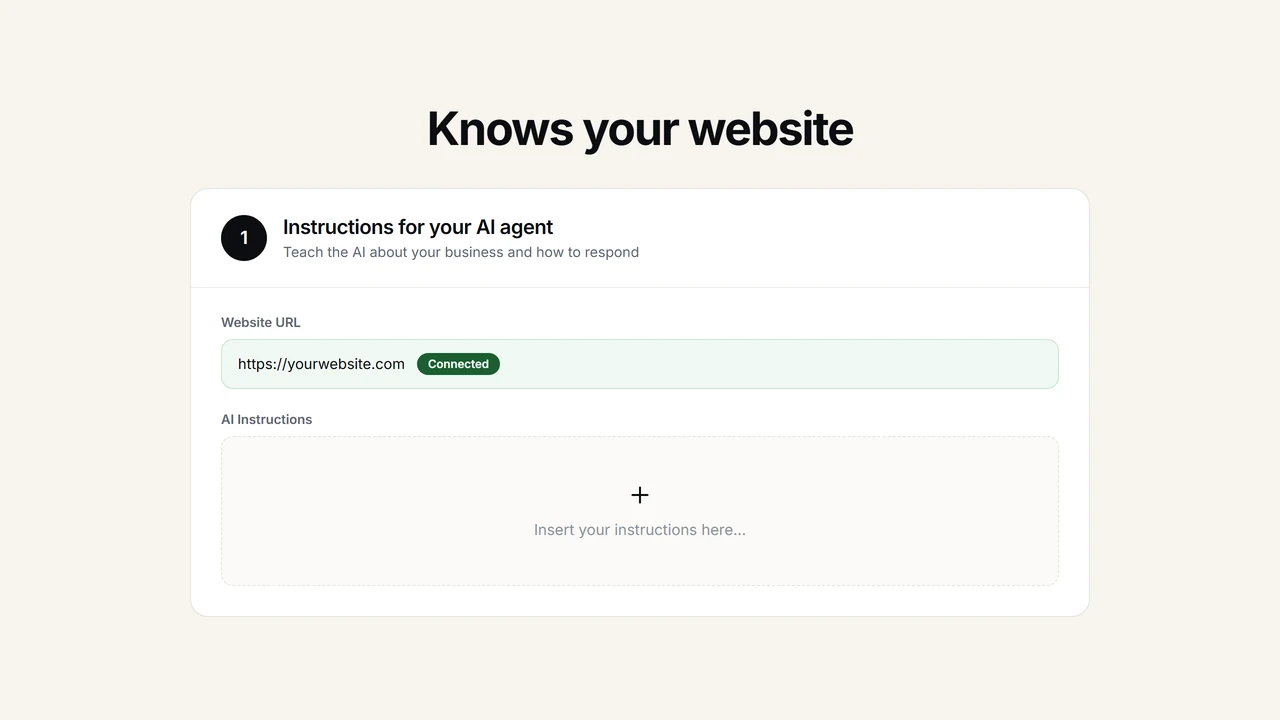
Most AI search tools require you to build a data feed, export a CSV, or wire up an API endpoint before anything works. With Asyntai's native Shopify integration, your entire product catalog — titles, descriptions, prices, images, variants, inventory status — syncs automatically the moment you install the app. The AI immediately understands your product attributes and can reason across variants, collections, and tags. When a visitor describes what they want, the AI searches your live catalog and returns matching products as Dynamic Product Cards: visual cards with the product image, current price, description, and a buy button that links directly to the product page. Multiple matches display as a swipeable carousel the visitor browses without leaving the chat.
- Zero-configuration catalog syncInstall from the Shopify App Store and your products are available to the AI immediately. Titles, descriptions, prices, images, variants (size, color, material), collections, tags, and inventory levels all sync without any manual data feed setup. New products, price changes, and stock updates reflect automatically.
- Dynamic Product Cards inside the conversationWhen the AI identifies matching products, it renders them as rich visual cards — product image, name, current price, a concise description, and a direct buy button linking to your Shopify product page. When multiple products match, the cards display as a horizontal carousel. Visitors browse products within the chat, not on a separate results page.
- Variant-aware product intelligenceThe AI understands Shopify's variant structure. A visitor asking for "that blue linen shirt in large" gets an answer that accounts for color, material, and size — not just a keyword match on "shirt." Out-of-stock variants are flagged. Price differences across variants are reflected accurately on the product cards.
Intent understanding, conversational refinement, and real actions on your store
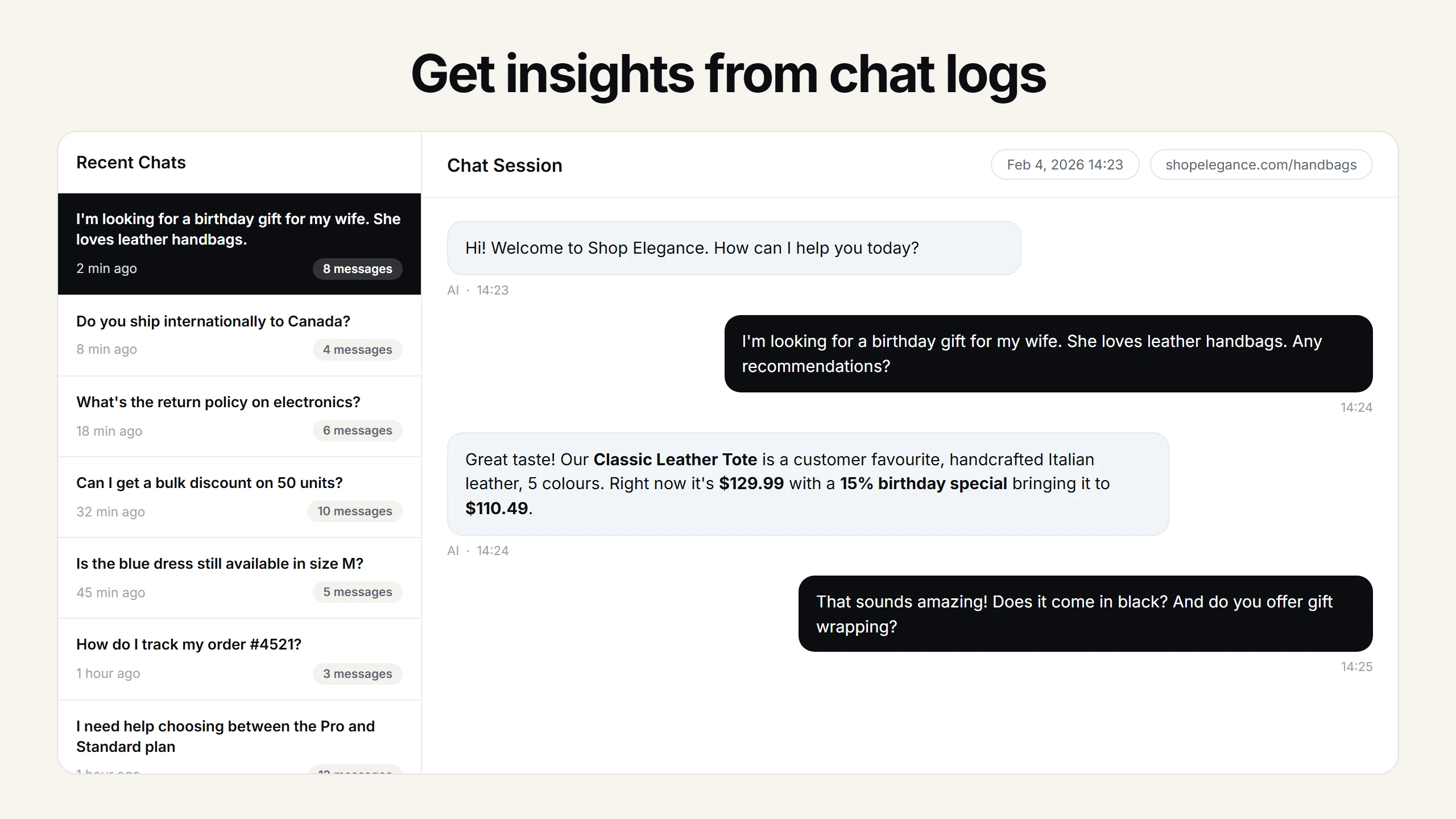
Shopify's built-in search returns products that contain the visitor's keywords. That works when someone types an exact product name. It fails when they describe a need — "something for a beach vacation," "hypoallergenic moisturizer for sensitive skin," "a housewarming gift around $40." Asyntai's AI reads the intent behind the query, searches your synced catalog, and presents curated matches as Dynamic Product Cards. The conversation continues naturally — "something a bit cheaper," "do you have that in green?" — and the AI refines results without the visitor starting over. With Custom Tools, the AI goes further: checking real-time inventory, looking up order status, or processing return requests through your Shopify API endpoints.
- Conversational product discoveryVisitors refine their search through natural dialogue. "Show me running shoes." "Something with more cushioning." "Under $120." Each message builds on the last — the AI remembers the full conversation and narrows results progressively. No retyping queries, no back-button loops, no scrolling through 200 search results hoping to spot the right one.
- Always-current product dataBecause the Shopify integration syncs your catalog continuously, the AI always shows current prices, accurate stock levels, and your latest products. Flash sale pricing reflects immediately. Sold-out items stop appearing in results. Seasonal collections surface as soon as they go live. The AI never recommends a product at yesterday's price.
- Custom Tools for post-search actionsOnce a visitor finds products, the conversation can go further. Connect Custom Tools to let the AI check real-time inventory for specific variants, look up order status for returning customers, process return requests, or apply discount codes — all through your Shopify API. Search becomes the front door to a full service experience. Standard plan and above.
Add AI search to your Shopify store in minutes
No developer needed. Install from the Shopify App Store, your product catalog syncs automatically, enable Dynamic Product Cards with a toggle, and your visitors get intelligent product discovery immediately.
- Install Asyntai from the Shopify App Store — your product catalog (titles, descriptions, prices, images, variants) syncs automatically.
- The AI crawls your Shopify store pages — product descriptions, collections, policies, and blog content are all indexed.
- Enable Dynamic Product Cards in your widget settings — the AI will display matching products as visual cards with images, prices, and buy buttons.
- Optionally connect Custom Tools to let the AI check inventory, track orders, or perform actions through your Shopify API endpoints.
<!-- Added automatically by the Shopify app -->
<script src="https://asyntai.com/widget.js"
data-id="your-site-id" async>
</script>
# The Shopify app handles the embed. You handle the products.
AI search for Shopify — FAQs
Common questions from Shopify store owners, Shopify Plus merchants, and agencies evaluating AI-powered product search.
How is this different from Shopify's built-in search?
Shopify's default search matches keywords against product titles, descriptions, and tags. If a visitor searches "something cozy for winter evenings," Shopify looks for those literal words and usually returns nothing useful. Asyntai's AI search understands intent. It reads the full query, figures out the visitor wants warm, comfortable indoor clothing or accessories, searches your catalog, and returns matching products as visual product cards with images, prices, and buy buttons right inside the chat widget. It also works conversationally — the visitor can follow up with "something in blue" or "a bit cheaper" and the AI refines the results without starting over. It replaces the search-results-page experience with a product discovery conversation.
How does the AI get my Shopify product data?
When you install the Asyntai app from the Shopify App Store, your entire product catalog syncs automatically — product titles, descriptions, prices, images, variants (size, color, material), collections, tags, and inventory status. No CSV exports, no API configuration, no data feed URLs to set up. The sync is continuous, so new products, price changes, and inventory updates are reflected automatically. The AI also crawls your Shopify storefront pages for supplementary content like blog posts, collection descriptions, and policy pages. For merchants who also want to connect non-Shopify data sources (external inventory, custom databases), the Real-Time Data Feed feature is available on the Standard plan and above.
Do price changes and stock updates show immediately?
Yes. The Shopify catalog sync keeps product data current — when you change a price, update inventory, or mark a variant as sold out, those changes reflect in the AI's responses and on the Dynamic Product Cards. If you run a flash sale dropping a jacket from $180 to $129, the next visitor who asks about jackets sees $129 on the card. Sold-out products and variants stop appearing in search results automatically. New products become searchable shortly after they are published in your Shopify admin. You never have to manually refresh or re-index anything.
What do Dynamic Product Cards look like?
Dynamic Product Cards are visual cards that appear directly inside the chat conversation. Each card displays the product image (pulled from your Shopify media), the product name, current price, a concise description, and a "View Product" button that links to the product page on your Shopify store. When the AI returns multiple matching products, the cards display as a horizontal carousel the visitor can swipe through on mobile or scroll on desktop. The cards are styled with a clean, modern look and adapt to both desktop and mobile viewports. They transform the chat from a text-only Q&A into a visual product browsing experience.
Does it understand Shopify product variants?
Yes. The Shopify integration syncs all variant data — size, color, material, and any other variant options you define. When a visitor asks "do you have the Classic Tee in medium, in navy?", the AI checks your variant data and responds with accurate availability. If that specific combination is out of stock, it can suggest available alternatives — "Navy is sold out in medium, but we have it in large, or the teal colorway is available in medium." Variant-specific pricing is also reflected accurately on the product cards, so products with price differences across sizes or materials show the correct price for the variant being discussed.
Can the AI do more than search — like check orders or process returns?
Yes, through Custom Tools. Beyond product search, you can connect API endpoints that let the AI perform actions: check real-time inventory for a specific variant, look up order status by email or order number, initiate return or exchange requests, verify discount code validity, or check shipping estimates for a visitor's region. Each Custom Tool is an API endpoint you configure — the AI calls it when a visitor's question requires that action. This turns the chat widget from a search tool into a full customer service assistant. Custom Tools are available on the Standard plan and above.
What if I also sell on other platforms besides Shopify?
The Shopify integration handles your Shopify catalog automatically. For products or data from other platforms — a wholesale portal, a custom database, external inventory — you can connect a Real-Time Data Feed: a URL (JSON, CSV, or API endpoint) that returns your additional product data. The AI searches across all connected sources simultaneously and presents results from any source as Dynamic Product Cards. The Shopify sync handles your primary catalog; the data feed handles everything else. Both are searched together, so a visitor asking about products gets results regardless of where the data originates.
What Shopify plan and Asyntai plan do I need?
The Asyntai Shopify app works with all Shopify plans — Basic, Shopify, Advanced, and Plus. On the Asyntai side, the AI chat widget with knowledge base answers works on all plans including Free. Dynamic Product Cards and the native Shopify catalog sync require the Standard plan ($139/month) or Pro plan ($449/month). Standard includes up to 15,000 messages/month. Pro includes 50,000 messages/month and Real-Time Data Feed Max for additional non-Shopify data sources (up to 10,000,000 characters). Custom Tools for actions like order lookups are also Standard+.
Why Shopify's search bar loses sales — and how conversational AI product discovery recovers them
Shopify has built one of the best ecommerce platforms in the world. Store setup, payment processing, inventory management, shipping — it handles the operational complexity of online retail with remarkable polish. But search — the mechanism by which a motivated visitor finds the product they want to buy — remains surprisingly primitive. The default Shopify search bar does keyword matching against product titles, descriptions, tags, and vendor names. It returns a list of products sorted by relevance score. For visitors who know exactly what they want and type the product name, this works adequately. For everyone else — the visitor who knows what they need but not what it's called — it's a dead end that costs Shopify merchants revenue every single day.
Consider how real people search when they're shopping. They don't type "SKU-4582-BLU-M." They type "a warm sweater for my husband, something casual, not too expensive." They type "face cream that won't break me out." They type "running shoes for bad knees." These are descriptions of needs, not keywords. Shopify's search treats each word as an independent token and looks for products where those tokens appear in text fields. The result is a page of products that happen to contain some of the same words — often in irrelevant contexts — sorted by an opaque relevance algorithm. The visitor scrolls, doesn't find what they imagined, and leaves. Your analytics attribute this to "low search conversion." The real diagnosis is simpler: your search couldn't understand what they said.
Asyntai's AI search for Shopify replaces keyword matching with conversational product discovery. Instead of a search bar that produces a results page, visitors interact with an AI-powered chat widget that understands natural language, searches your live Shopify catalog, and presents matching products as Dynamic Product Cards — rich visual cards with product images, current prices, descriptions, and buy buttons, displayed right inside the chat window. The visitor describes what they want in their own words, the AI interprets the intent, searches across your products, variants, and collections, and curates a response. Multiple matching products appear as a swipeable carousel. The visitor browses, asks follow-up questions, and refines — all within a single conversation. It's the difference between searching a catalog and being guided through it.
The foundation of this experience on Shopify is the native app integration. When you install Asyntai from the Shopify App Store, your entire product catalog syncs automatically. Product titles, descriptions, prices, images, variants (every size, color, material option), collections, tags, and real-time inventory levels — all of it flows into the AI's product knowledge without you exporting a CSV, configuring an API, or setting up a data feed. This is a meaningful advantage over generic AI search tools that require manual data pipeline setup before they can access your products. On Shopify, it works out of the box because the integration speaks Shopify's native product data model. The AI doesn't just get a flat list of product names — it gets the full relationship structure between products, variants, collections, and inventory.
This structural understanding changes what the AI can do with a visitor's query. When someone asks "do you have that blue ceramic mug in a set of four?", a keyword search looks for products containing "blue," "ceramic," "mug," and "four" — and probably returns a single blue mug alongside random items tagged "ceramic." The AI, with access to your variant and collection data, understands the query differently. It looks for ceramic mugs, filters by blue colorway variants, and checks whether you sell multi-packs or sets. If you have a "Set of 4 — Ocean Blue" variant, it surfaces that directly. If you don't sell sets but have individual mugs, it says so honestly and offers the single option. The response is intelligent because the underlying data is structured, not because the search algorithm is cleverer with keywords.
Dynamic Product Cards are the visual layer that transforms this intelligence into a shopping experience. When the AI finds matching products, it doesn't respond with a text list of product names. It renders each match as a visual card: the product image pulled from your Shopify media library, the product name, the current price (variant-specific if relevant), a brief description, and a "View Product" button linking directly to your Shopify product page. When there are multiple matches — which is the common case for open-ended queries like "gifts under $50" — the cards display as a horizontal carousel that visitors can swipe on mobile or scroll on desktop. The visual format does what a text list cannot: it lets the visitor evaluate products at a glance, compare aesthetics, and feel the emotional pull of an image. Product cards don't just present information — they merchandise products within the conversation itself.
The carousel format is particularly effective for the kinds of queries that keyword search handles worst. "I'm redecorating my bathroom, looking for matching accessories" is a query that spans towels, soap dispensers, bath mats, and organizers — products from different categories that keyword search would never group together. The AI understands the cross-category intent, selects items that coordinate visually and thematically, and presents them as a carousel that the visitor swipes through like a curated mood board. Each card leads to a different product page, but the curation happens in one place. This is the kind of shopping assistance that a knowledgeable salesperson provides in a physical store — and that no search results page has ever managed to replicate.
Conversational refinement is where the gap between AI search and keyword search becomes uncrossable. In a traditional search flow, refinement means editing the search query and submitting again. Each iteration discards the context of the previous attempt. The visitor starts from scratch every time. In an Asyntai conversation, refinement is additive. "Show me gold earrings." The AI presents a carousel. "Something more delicate, for everyday wear." The AI narrows the selection. "Do any of those come with matching necklaces?" The AI checks for coordinating sets. "What's the return policy on jewelry?" The AI answers from the store's crawled policy page. Four exchanges, zero restarts, zero page navigations. Each message builds on the last because the AI maintains conversational context. The visitor steers the search like a dialogue, not a command line.
The economic logic of conversational product discovery centers on a metric most Shopify merchants track but rarely interrogate: search exit rate. On average, 30-40% of visitors who use site search leave the store without clicking a single result. These aren't casual browsers — these are visitors who typed a query, which signals purchase intent. When a third of those visitors bounce, the store is losing its highest-intent traffic at the moment of peak motivation. AI search intervenes precisely at that failure point. Instead of a results page the visitor judges in two seconds and abandons, they get a conversational response that addresses their specific need, shows them curated products, and invites them to refine. The bouncing visitor becomes a browsing visitor. The browsing visitor becomes a buyer.
Real-time accuracy underpins the entire experience. Because the Shopify integration syncs catalog data continuously, the AI always works with current information. A flash sale dropping prices by 30%? Product cards show the new prices immediately. A popular size sells out? The AI stops recommending it and suggests available alternatives. A new collection goes live for the holiday season? It enters the AI's searchable catalog as soon as it's published in your Shopify admin. This eliminates one of the most damaging failure modes in ecommerce search: showing a visitor a product at an old price or in a size that's no longer available. Every product card represents a product the visitor can actually buy, at the price they'll actually pay. That accuracy builds trust, and trust converts.
For Shopify merchants with complex catalogs — stores selling products with multiple variant axes (size, color, material, fit), products with conditional pricing, or products organized across deep collection hierarchies — the AI's variant awareness is particularly valuable. A visitor asking "lightweight summer dress, size 8, something in linen" is specifying requirements across three variant dimensions simultaneously. Keyword search treats this as a bag of words. The AI treats it as a structured filter: category (dress), material (linen), season (summer/lightweight), size (8). It returns only products that satisfy all constraints, with each product card reflecting the price for the specific variant. If a linen dress costs $10 more than the cotton version, the card shows the linen price. If size 8 is out of stock in one dress but available in another, only the available one appears. The AI handles the combinatorial complexity that keyword search with faceted filters forces onto the visitor.
Custom Tools extend the AI's capabilities from search into service. Once a visitor finds products through the conversational search, the AI can do more than link to product pages. With Custom Tools configured, it can check real-time inventory for a specific size and color at a specific warehouse. It can look up an order by email address and tell a returning customer where their package is. It can verify whether a promo code applies to the product they're looking at. It can initiate a return or exchange by collecting the order number and reason. Each tool is an API endpoint you configure in your Asyntai dashboard — the AI calls it when the conversation requires that action. The search widget becomes a service portal. A visitor who came to find a product can check their order, verify a code, and start a return — all without leaving the chat. For Shopify stores with high support volume, this reduces the load on email and live chat teams by handling the repetitive, data-lookup queries that account for most support tickets.
Multilingual capability extends product discovery across language barriers without requiring a multilingual catalog. Asyntai supports 36 languages, so a French-speaking visitor can ask "je cherche un cadeau pour un ami qui aime cuisiner, moins de 50 dollars" and the AI searches the same English-language Shopify catalog, finds matching cooking-related gifts under $50, and presents the product cards with the conversational response in French. The product names, prices, and images on the cards come from your Shopify data — the AI translates only its own responses and recommendations. You don't need translated product descriptions. You don't need a multi-currency setup. The AI bridges the language gap while your catalog stays in its original language. For Shopify stores with international traffic — which is most of them — this opens product discovery to visitors who would otherwise bounce from an English-only search experience.
Installation takes minutes and requires no developer. You find Asyntai in the Shopify App Store, click install, and authorize the app. Your product catalog syncs immediately. The chat widget appears on your storefront — every page, every collection, every product page. You enable Dynamic Product Cards from your Asyntai dashboard with a toggle. Optionally, you configure Custom Tools if you want the AI to perform actions beyond search. There are no theme files to edit, no Liquid code to write, no JavaScript snippets to paste. The app handles everything through Shopify's native app architecture. It works with every Shopify theme — Dawn, Prestige, Impulse, Debut, custom themes, and everything in between. It works on Shopify Basic, Shopify, Advanced, and Plus. If your store is on Shopify, the app works.
The stores that benefit most from AI search share a pattern: they sell products that visitors describe in terms of occasion, attribute, or need rather than by exact name. Fashion ("outfit for a beach wedding"), beauty ("moisturizer for oily skin that isn't greasy"), home goods ("minimalist desk organizer under $30"), food and beverage ("gift basket for someone who doesn't drink alcohol"), sporting goods ("beginner yoga mat, something thick for bad knees"). In every case, the visitor has a clear mental picture of what they want but no idea what it's called in your store's taxonomy. Keyword search demands that the visitor translate their need into your vocabulary. Conversational AI search does the reverse — it translates your catalog into the visitor's vocabulary. That translation, performed in real time for every query, is the mechanism that turns product discovery from a frustrating scavenger hunt into an effortless conversation.
Shopify has done the hard work of making it easy to sell online. The checkout is seamless, the payment processing is reliable, the shipping integrations are polished. What remains underserved is the moment before checkout — the moment when a visitor is deciding what to buy. Shopify's search bar, functional as it is, serves that moment poorly for the majority of queries that aren't exact product names. Asyntai's AI search sits alongside it as a complementary channel for product discovery — handling the queries that describe needs, compare options, explore categories, and ask for recommendations. It doesn't replace the search bar. It handles everything the search bar can't. And it does it through conversation, with visual product cards, using your live Shopify data, in 36 languages, with zero configuration. That's what AI search for Shopify looks like: a chat widget that knows your store as well as your best salesperson.