AI search for PrestaShop that navigates your entire catalog — combinations and all
PrestaShop's built-in search matches keywords against product names. When a shopper types "waterproof hiking boots in brown, size 42," it doesn't know what to do with that. Asyntai's AI search does. It understands the full request — product type, material, color, size — searches your catalog through a Real-Time Data Feed connected to your PrestaShop Webservice API, and returns matching products as Dynamic Product Cards with images, prices, and buy buttons right in the chat widget. Not a search results page full of mismatches. A conversation that leads directly to the right product, in the right combination.
See AI search work against a real PrestaShop catalog
Enter your PrestaShop store URL and watch the AI find and display products from your catalog — including combinations
Understands your catalog — product combinations, categories, manufacturers, attributes — returns Dynamic Product Cards
PrestaShop catalogs are structured differently from most platforms. Products have combinations — size/color/material variants that each carry their own price, stock level, and reference. Categories nest deeply. Manufacturers and suppliers add another layer. The default search ignores most of this structure, matching keywords against product names and descriptions while combinations remain invisible. Asyntai's AI search reads the full catalog through your Real-Time Data Feed and understands products holistically — including every combination. A shopper asks for "navy polo shirt in XL" and the AI doesn't just find the polo shirt; it checks that the navy/XL combination exists and is in stock, then displays it as a Dynamic Product Card with the correct variant price, image, and a direct link to that specific combination.
- Combination-aware search that shoppers actually needPrestaShop combinations (size, color, material variants) are first-class data in the AI's product knowledge. When a shopper says "do you have this jacket in medium and black?", the AI checks whether that specific combination exists and is in stock — not just whether the parent product has "medium" or "black" somewhere in its description. The answer is precise, not a guess.
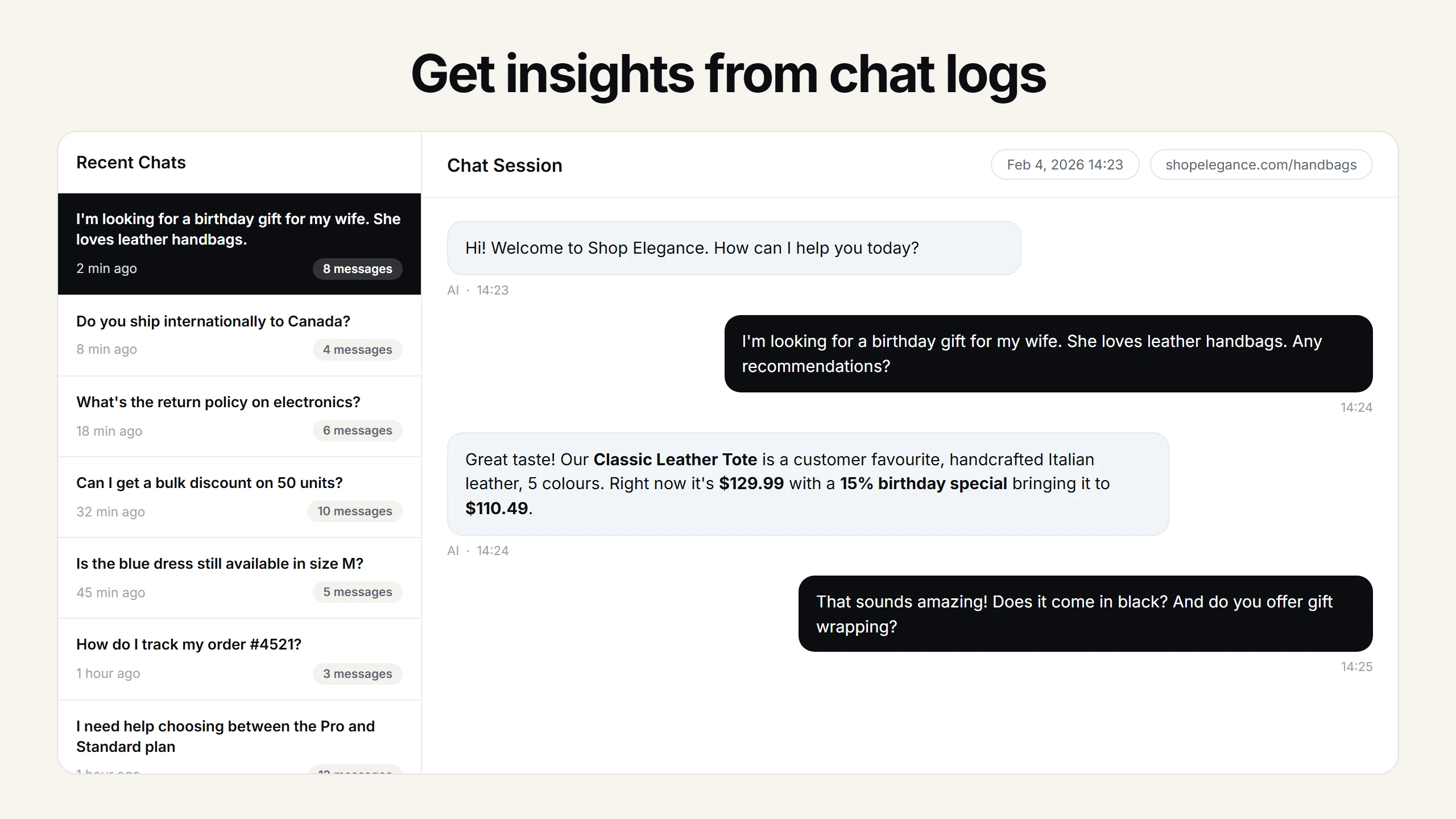
- Dynamic Product Cards with real variant dataMatching products appear as rich visual cards inside the chat — product image, name, price for that specific combination, a short description, and a direct buy/view button. Multiple results display as a carousel the shopper swipes through. Products are merchandised inside the conversation, not buried on a search results page the shopper has to parse.
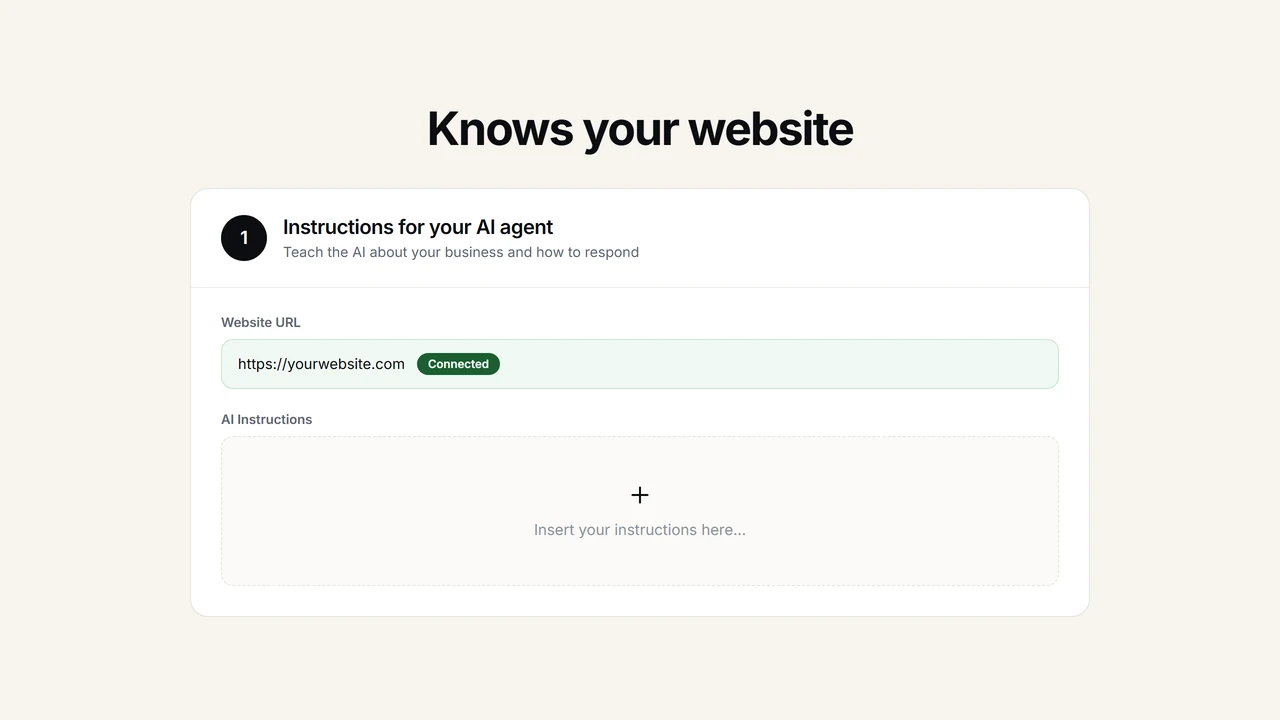
- Connected to your live catalog via Real-Time Data FeedThe AI searches your Real-Time Data Feed — a URL returning your current product data from PrestaShop's Webservice API or a CSV export. Prices, stock, and new arrivals update automatically. The AI always shows what you sell right now, including combination-level pricing and availability, not data from last week's index.
Connected to PrestaShop — Real-Time Data Feed via Webservice API, Custom Tools for order actions, multilingual support
PrestaShop stores are often multilingual from day one — the platform supports it natively, and many merchants sell across borders. Asyntai matches that capability. The AI auto-detects each visitor's language (36 supported) and responds accordingly, searching the same product data feed regardless of what language the shopper uses. A French visitor asking "chaussures de randonnée imperméables taille 42" and a German visitor asking "wasserdichte Wanderschuhe Größe 42" both get the same product results, presented in their own language. Beyond search, Custom Tools let the AI perform real actions through your PrestaShop API — order status lookups, stock checks for specific combinations, shipping estimates. Installation takes minutes via a custom HTML module or a snippet in your theme header.
- Real-Time Data Feed via PrestaShop Webservice APIPrestaShop's built-in Webservice API exposes your full catalog as structured data — products, combinations, categories, manufacturers, stock, images. Point Asyntai at your API endpoint or a CSV product export. The AI indexes it automatically. Price changes reflect immediately. New products appear within 24 hours. Standard plan supports up to 200,000 characters; Real-Time Data Feed Max handles up to 10,000,000 characters — enough for catalogs with tens of thousands of product-combination pairs.
- 36-language multilingual supportPrestaShop merchants who sell internationally already manage multilingual product data. The AI leverages this — a Spanish-speaking visitor asks about products and gets responses in Spanish, while the product cards show data from your catalog. You don't need separate chat widgets per language. The AI handles the language layer; your data feed handles the product layer. All 36 languages work out of the box.
- Custom Tools for post-search actionsConnect Custom Tools so the AI can call your PrestaShop API for live actions — check if a specific combination is in stock, look up an order status by reference number, retrieve shipping estimates, or verify whether a cart rule applies. Search becomes the entry point to a full shopping conversation, not just a product lookup that dead-ends.
Add AI search to your PrestaShop store in minutes
No PrestaShop module marketplace needed. Install the widget snippet via a custom HTML module or paste it into your theme header. Connect your product data through the Webservice API, enable Dynamic Product Cards, and your shoppers get intelligent product search immediately.
- Sign up at Asyntai, copy the widget embed code from your dashboard.
- In PrestaShop Back Office, add the snippet via a custom HTML module (e.g., "Custom text block") positioned in the header, or paste it directly into your theme's header.tpl file.
- Connect a Real-Time Data Feed by pasting your PrestaShop Webservice API URL or a product CSV export link. The AI indexes your catalog — including combinations — within hours.
- Enable Dynamic Product Cards in your widget settings — the AI will render matching products as visual cards with images, combination-specific prices, and buy buttons.
{* Add to header.tpl or via custom HTML module *}
<script src="https://asyntai.com/widget.js"
data-id="your-site-id" async>
</script>
# One snippet. Your entire catalog becomes searchable.
AI search for PrestaShop — FAQs
Common questions from PrestaShop store owners and agencies evaluating AI-powered search for their product catalogs.
How does this handle PrestaShop product combinations?
PrestaShop uses combinations to represent product variants — size, color, material, and other attributes that each carry their own price, stock level, and reference code. Asyntai's AI treats combinations as first-class data. When a shopper asks "do you have this in blue, size L?", the AI checks whether that specific combination exists and is in stock, then shows the correct price for that variant on the product card. This is fundamentally different from keyword search, which has no concept of combinations and simply matches the words "blue" and "L" against product text fields.
How does the AI connect to my PrestaShop catalog?
Two primary methods. First, the AI crawls your PrestaShop product pages automatically — reading descriptions, features, categories, and manufacturer info. Second, you connect a Real-Time Data Feed: either your PrestaShop Webservice API endpoint or a CSV product export URL. The Webservice API is ideal because it exposes structured data including combinations, stock levels, and images. The AI indexes the feed and uses it as its primary product knowledge source. Both methods work together — the feed provides structured, real-time product data while crawled pages fill in content like CMS pages, blog posts, and shipping policies.
Does it work with PrestaShop's multistore feature?
Yes. If you run multiple PrestaShop stores from a single back office, you can set up a separate Asyntai widget for each store with its own data feed. Each widget searches only the catalog for that specific store. Alternatively, if your stores share inventory and you want a unified search experience, you can point multiple widgets at the same data feed. The setup is flexible because the AI's product knowledge comes from the data feed URL you provide, not from a platform-specific integration that assumes a single store.
How quickly do price and stock changes appear in search results?
Changes in your Real-Time Data Feed reflect immediately — the AI reads the feed on each relevant query, so it always has current pricing and stock data. If you drop the price on a product for a promotion or a combination goes out of stock, the very next shopper who asks about it sees the updated information. New products added to the feed are indexed within 24 hours. For crawled product pages, updates follow your crawl schedule (typically daily). The data feed is always the fastest path for keeping product information accurate.
Can the AI handle large PrestaShop catalogs with thousands of products?
Yes. The Real-Time Data Feed on the Standard plan supports up to 200,000 characters of product data, which handles catalogs of several hundred products with full descriptions. For larger catalogs, Real-Time Data Feed Max extends that to 10,000,000 characters — enough for roughly 25,000 products with complete data including combination details. PrestaShop stores with extensive catalogs and many combinations per product fit comfortably within these limits. The AI also crawls your product pages with no hard limit on crawled content, so between both sources, large catalogs are fully covered.
How do I install the widget on PrestaShop?
Two straightforward options. The simplest is using a custom HTML module in PrestaShop's Back Office — modules like "Custom text block" let you paste the Asyntai widget snippet and position it in the header hook so it loads on every page. Alternatively, you can add the script tag directly to your theme's header.tpl file. Either method takes about two minutes. The widget loads asynchronously and doesn't interfere with your theme, page builder modules, or other front-end customizations. It works with any PrestaShop 1.7+ or 8.x theme.
Can the AI answer questions beyond product search?
Absolutely. The AI crawls your entire PrestaShop site — CMS pages, blog posts (if you use a blog module), manufacturer pages, and any other content. So when a shopper asks about your return policy, delivery times to a specific country, or how to care for a product, the AI answers using your own content. With Custom Tools connected to your PrestaShop API, the AI can also perform live actions: look up an order status, check if a specific combination is available in a particular warehouse, or verify whether a voucher code is valid. It's a full shopping assistant, not just a search bar.
What plan do I need for AI search with product cards?
The AI chat widget works on all plans — including Free — with knowledge base answers from your crawled content. Real-Time Data Feed and Dynamic Product Cards require the Standard plan ($139/month) or Pro plan ($449/month). Standard includes up to 15,000 messages/month and 200,000 characters of data feed. Pro includes 50,000 messages/month and access to Real-Time Data Feed Max (10,000,000 characters). Custom Tools for actions like order lookups and stock checks are also Standard+. Most PrestaShop stores with active catalogs find Standard the right starting point.
Why PrestaShop search struggles with product discovery — and how conversational AI changes the equation
PrestaShop is one of the most capable open-source ecommerce platforms available. Its product data model is remarkably sophisticated — products with combinations that each carry independent pricing, stock, and reference codes; deeply nested categories; manufacturers and suppliers as first-class entities; feature values and attributes that describe products with structured precision. For catalog management, this structure is a strength. For search, it becomes a liability. The default PrestaShop search indexes product names and descriptions, occasionally attributes if configured correctly, and returns a flat list of results ranked by keyword relevance. The entire combination system — the color/size/material matrix that defines how products actually exist in inventory — is invisible to the search engine. A shopper looking for "blue linen shirt in size 42" gets results for any shirt that mentions "blue" or "linen" or "42" anywhere in its text, regardless of whether that specific combination exists.
This gap between data richness and search capability is not unique to PrestaShop, but PrestaShop's combination system makes it particularly acute. On platforms without structured variants, the search problem is simpler: find products matching keywords. On PrestaShop, the real question is often more specific: does this product exist in this combination, at what price, and is it in stock? The default search cannot answer that question because it operates at the product level, not the combination level. Third-party search modules improve keyword matching — weighting attributes, boosting exact matches, adding faceted filtering — but they still fundamentally work by matching words to text fields and presenting results as a list. They cannot interpret "I need a waterproof hiking boot in brown, size 42, under 120 euros" as a structured query with product type, material attribute, color variant, size combination, and price constraint. That interpretation requires understanding language, not just matching it.
Asyntai's AI search for PrestaShop replaces keyword matching with conversational product discovery. Instead of a search box that returns a paginated list, shoppers interact with an AI chat widget that understands natural language, searches the live product catalog through a Real-Time Data Feed, and returns matching products as Dynamic Product Cards — visual cards with product images, prices, descriptions, and buy buttons displayed directly inside the chat. The conversation format means shoppers can refine, compare, and ask follow-up questions without restarting the search. "Show me hiking boots." "Something waterproof." "Do you have that in brown?" "What about a size 42?" Each message builds on the last, narrowing results conversationally — exactly how a shopper would interact with a knowledgeable sales associate in a physical store.
The foundation of this capability is the Real-Time Data Feed. PrestaShop's built-in Webservice API is one of the platform's most underutilized features. It exposes the entire catalog as structured data — products, combinations, categories, manufacturers, stock quantities, images, feature values, attributes — accessible via authenticated REST endpoints. You point Asyntai at your Webservice API URL (or a CSV product export, if you prefer), and the AI indexes your catalog. This is not a one-time import. The feed is live. When you change a price in the back office, the next shopper who asks about that product sees the updated price on the product card. When a combination goes out of stock, it stops appearing in results. New products added to your catalog are indexed within 24 hours. The AI's product knowledge is always synchronized with your actual inventory.
Dynamic Product Cards are what transform the chat from a text conversation into a visual shopping experience. When the AI finds products matching a shopper's request, it renders them as rich cards — each showing the product image, name, price (specific to the matching combination if applicable), a short description, and a "View Product" button linking directly to the product page. Multiple matches display as a horizontal carousel the shopper can swipe through. The cards appear inline in the conversation, surrounded by the AI's commentary — "The first two are waterproof-rated, the third is water-resistant but lighter" — creating a guided shopping experience that no search results page can replicate. Shoppers see products in context, with the AI acting as curator and advisor simultaneously.
The combination-awareness of this system deserves particular emphasis because it solves a problem that PrestaShop merchants know intimately. Consider a fashion store selling shirts in 5 sizes, 8 colors, and 3 materials — 120 combinations per product. A shopper searching for "white cotton shirt XL" on the default search might find the base product, but they have no idea whether the white/cotton/XL combination is actually in stock until they click through and manually select each attribute from dropdowns. With Asyntai's AI search, the answer is immediate. The AI checks the data feed for that specific combination, confirms availability, shows the correct price (which may differ by combination), and presents it as a product card. If white/cotton/XL is out of stock but white/cotton/L is available, the AI can say so. If the same shirt in linen costs more, the AI shows the linen price. This combination-level intelligence is native to how the AI processes product data — it doesn't require custom configuration or special attribute mapping.
Multilingual search is where PrestaShop stores gain an advantage they may not realize they need. PrestaShop's native multilingual support means many stores already maintain product data in multiple languages. But the default search typically operates within the current language context — a French-language visitor searching on the French version of the site searches French product names. What happens when a tourist visits your French store and searches in English? Or when an expat searches in their native language on a store configured for the local language? The default search fails silently, returning no results because the keywords don't match the current language's product names. Asyntai supports 36 languages and auto-detects the visitor's language. A German-speaking visitor on your French PrestaShop store can ask "wasserdichte Wanderschuhe" and the AI searches the same product data, understands the intent (waterproof hiking boots), finds matches, and responds in German — with product cards showing data from your catalog. The language barrier that would have been an invisible lost sale becomes a completed product discovery.
The conversational nature of the search solves iterative refinement in a way that no filter sidebar can match. On a traditional PrestaShop search results page, a shopper who wants to refine their results has to use faceted filters — clicking checkboxes for category, price range, attributes. This works reasonably well when the shopper knows the catalog's taxonomy. It fails when they don't. A shopper looking for "a gift for my wife who runs marathons, budget around 80 euros" has no filter combination that expresses this. They would need to navigate to the running category, guess which subcategory to choose, set a price filter, and hope something gift-worthy appears. In a conversation with Asyntai's AI, they simply state what they need. The AI searches across categories, understands that marathon running implies certain product types (performance shoes, technical apparel, running accessories), applies the budget constraint, and returns a curated selection as product cards. The shopper never needs to understand your category structure. The AI translates their intent into catalog queries.
Custom Tools extend the AI beyond product discovery into transactional territory. PrestaShop's Webservice API is bidirectional — it can read data and perform actions. By connecting Custom Tools, the AI can make live API calls during a conversation. A returning customer asks "where is my order?" — the AI calls your order endpoint, retrieves the status by reference number, and reports back. A shopper asks "is this jacket available in your Madrid store?" — the AI calls your stock endpoint filtered by warehouse. A shopper wants to know if a cart rule applies to a product — the AI checks. Each Custom Tool you connect adds another action the AI can perform without the shopper navigating away from the chat. The search conversation becomes a shopping conversation, handling the full journey from "I'm looking for..." through "is this in stock?" to "where's my order?" — all in the same chat window.
Installation on PrestaShop is deliberately simple. The widget is a single JavaScript snippet — a script tag that loads asynchronously. You can add it via a custom HTML module in PrestaShop's back office (any module that allows HTML in the header hook — "Custom text block" or similar), or paste it directly into your theme's header.tpl file. No module marketplace submission, no compatibility conflicts, no dependency on specific PrestaShop versions. The snippet works on PrestaShop 1.7, 8.x, and any theme because it loads independently of the page's DOM structure. It doesn't modify your templates, doesn't inject CSS that conflicts with your theme, and doesn't add database tables. One snippet, positioned in the header, and the AI search widget appears on every page of your store.
The economics of AI search on PrestaShop come into focus when you consider the cost of failed search. PrestaShop analytics typically show that shoppers who use the search function have higher purchase intent than browsers — they know what they want and are actively looking for it. When that search returns poor results or, worse, no results, you lose not a casual browser but a motivated buyer. These are your highest-intent visitors, and the default search fails them regularly. Every "waterproof jacket for autumn" that returns nothing, every "blue shirt size M" that returns all shirts regardless of color or size, every "gift under 50 euros" that the search engine cannot parse — each represents a buyer who tried to give you money and was turned away by your own search tool. AI search intercepts those queries and serves the products that should have appeared in the first place.
PrestaShop stores with large catalogs and many combinations benefit disproportionately from AI search. A store with 500 base products and an average of 20 combinations each has 10,000 purchasable items. The default search treats this as 500 products. The AI, connected to a data feed that includes combination data, treats it as 10,000 purchasable options, each with its own price and availability. When a shopper asks a specific question — "do you have this in red, size S?" — the AI gives a specific answer. This specificity directly reduces the click-through-to-abandonment pattern that plagues stores with complex variant structures, where shoppers find a product via search, click through, discover the combination they want is unavailable, and leave. The AI catches the mismatch before the shopper wastes a click.
Category and manufacturer navigation is another area where conversational search outperforms traditional navigation. PrestaShop stores with deep category trees — Electronics > Computers > Laptops > Gaming Laptops — require shoppers to know where in the tree their desired product lives. Many don't. A shopper looking for "a laptop good for video editing under 1500 euros" might navigate to Laptops but miss that the relevant products are split across "Professional Laptops" and "Content Creator Laptops" in your taxonomy. The AI doesn't care about category hierarchy. It searches the flat catalog, evaluates products against the shopper's stated needs, and returns the best matches regardless of which category they're filed under. Manufacturer-specific queries work the same way — "do you carry Samsung monitors?" triggers a search filtered by manufacturer, returning results organized by what the shopper asked for rather than by your internal category structure.
The gap between what shoppers expect from search and what PrestaShop delivers is growing. Visitors in 2026 have been conditioned by conversational AI — they've talked to ChatGPT, asked Siri complex questions, used Google's AI overviews. They expect search to understand them, not require them to guess the right keywords. A PrestaShop store with a keyword search bar is asking visitors to translate their needs into your catalog's vocabulary. Asyntai's AI search inverts that relationship. The shopper speaks naturally. The AI translates. The products appear as visual cards with correct prices and buy buttons. That's the interaction model shoppers already expect from the best online experiences — and it's now available for any PrestaShop store, regardless of size, theme, or technical complexity.
For PrestaShop agencies and freelancers who manage multiple client stores, AI search represents a high-value add-on. A PrestaShop store without conversational search is indistinguishable from every other store using the default search module. A store with AI-powered product discovery — where shoppers can describe what they want and see matching products appear as visual cards in a chat — immediately stands apart. The installation is per-store, per-widget, and takes minutes. The data feed connects to the existing Webservice API that every PrestaShop store already has built in. There's no module to maintain, no version-specific compatibility to track, and no theme modifications to manage. For agencies managing dozens of PrestaShop stores, it's a differentiation layer that scales without adding technical overhead to each deployment.
The stores that will gain the most from AI search share a common trait: they sell products that shoppers describe by need, not by name. Fashion ("something formal but not too stiff, navy, for a summer event"), sporting goods ("trail running shoes for rocky terrain, wide fit"), home furnishings ("a dining table that seats eight, extendable, modern style, under 800 euros"), specialty foods ("organic gluten-free pasta variety pack"), beauty and cosmetics ("anti-aging serum for combination skin"). In every case, the shopper has a clear mental picture but no product name. PrestaShop's default search requires product names or at least close keyword matches. Conversational AI search requires only a description of need — and it translates that description into the products sitting in your catalog, displayed as visual cards the shopper can browse, compare, and buy. That translation — from what the shopper wants to what you sell — is the fundamental value of AI search, and it works whether your catalog has 50 products or 50,000.