An AI real estate agent that works your listings around the clock
Asyntai's AI real estate agent knows every property in your portfolio, answers buyer and renter questions at 2 AM, qualifies leads by budget and timeline, and books viewings through your calendar — all from a single chat widget on your website. Not a form that sits there. An agent that sells while you sleep.
See the AI agent handle real property inquiries
Enter your real estate website URL and watch the AI real estate agent answer questions using your actual listings and content
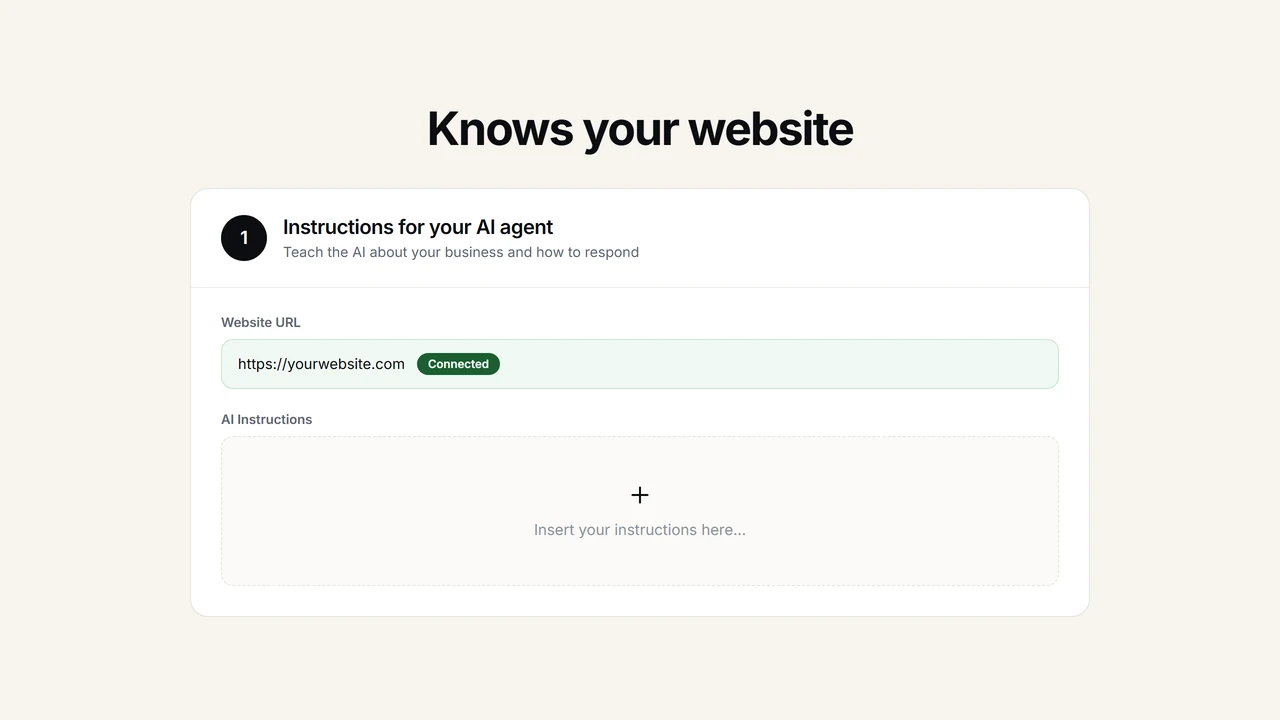
Knows your listings, neighborhoods, and buying process inside out
The AI real estate agent crawls your entire website — every property listing, neighborhood guide, agent bio, mortgage FAQ, and buying process page — and uses that content to answer visitor questions accurately. Buyers get instant, detailed answers about properties, areas, and policies without waiting for an agent to call back.
- Every listing detail at its fingertipsSquare footage, bedroom count, lot size, year built, HOA fees, parking, amenities — the AI reads your listing pages and answers specific property questions instantly, even when a buyer is browsing at midnight.
- Neighborhood expertise on demandSchool districts, walkability, commute times, nearby restaurants, crime stats, park access — if it's on your site, the AI delivers it in conversation. Buyers exploring areas get the local knowledge that builds confidence.
- Process and policy questions handledHow does the offer process work? What documents do I need for pre-approval? What are your commission rates? The AI draws from your content pages to walk buyers through every step without tying up your agents' phone lines.
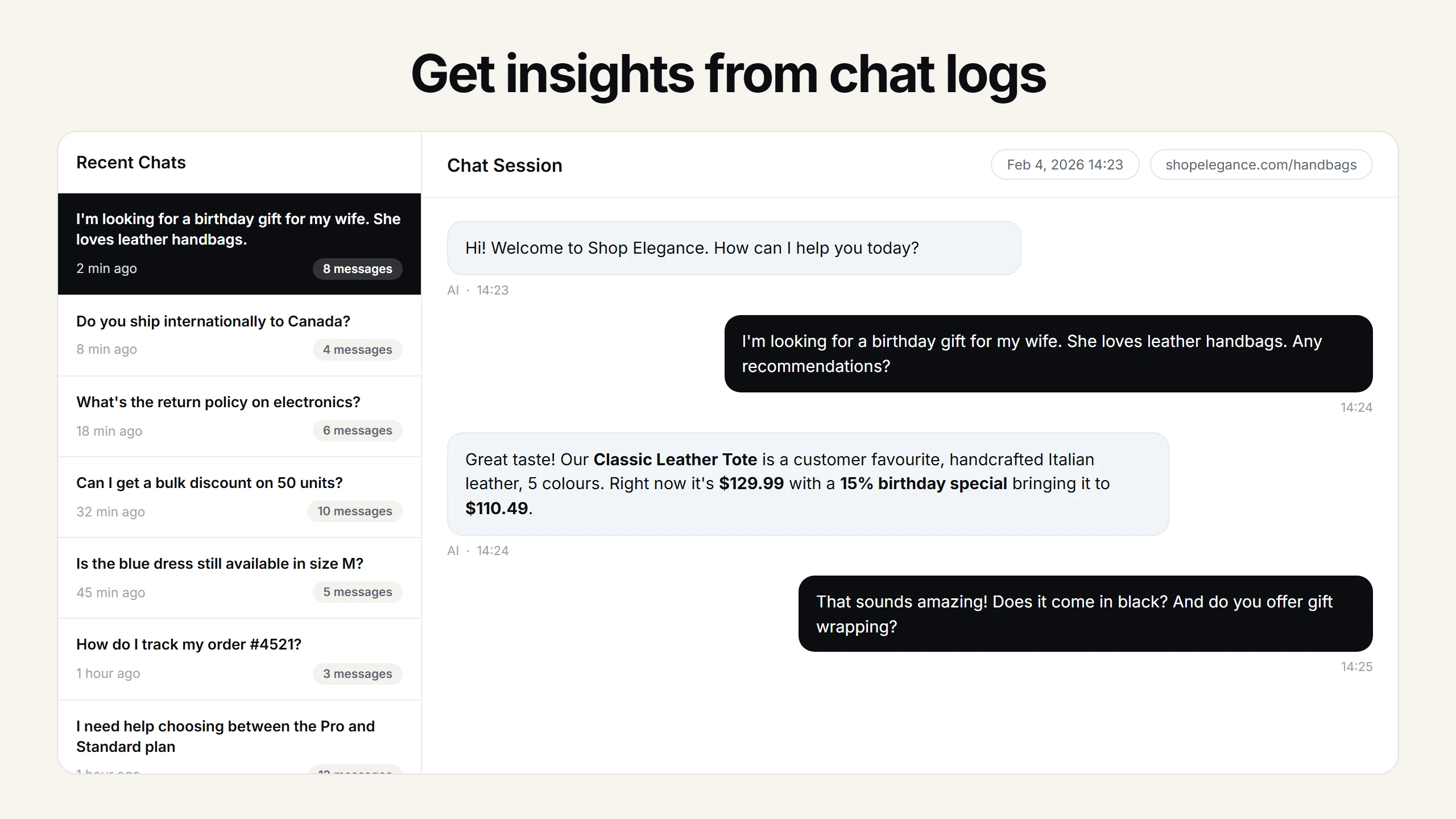
Looks up live listings, qualifies leads, and books viewings mid-conversation
What makes Asyntai an AI real estate agent — not just a property FAQ bot — is Custom Tools. The AI calls your own endpoints during the conversation to check listing availability, pull comparable sales, collect buyer qualifications, and schedule viewings through your calendar API. Real actions, not referrals to "call our office."
- Live listing lookups and availability checksWhen a buyer asks "is the 3-bed on Oak Street still available?", the AI calls your MLS feed or listing API, confirms the property status in real time, and shares the current asking price — no stale data, no guessing.
- Lead qualification that happens naturallyThe AI collects budget range, timeline, preferred neighborhoods, bedroom requirements, and pre-approval status through conversation — not a rigid form. Qualified leads land in your CRM with every detail already captured.
- Viewing appointments booked on the spotConnect your scheduling API and the AI books property viewings directly. A buyer says "can I see it Saturday afternoon?" — the agent checks available slots, confirms the booking, and sends the details. No phone tag required.
Add the AI real estate agent to your site in minutes
One script tag on your website, and the AI agent starts learning your listings and content immediately. Connect your listing API or calendar for live lookups and booking — no SDK, no middleware, no IT project.
- Add the Asyntai snippet to your site's
<head>and let the agent crawl your property listings and content pages. - Customize the agent's personality — set it to match your brokerage's tone, add your office hours, and define escalation rules for complex inquiries.
- Go to Custom Tools in your dashboard to connect your listing API, calendar system, or CRM for live data lookups and viewing bookings.
- Test it by asking property questions — the AI answers from your content and calls your endpoints for live availability and scheduling.
<script src="https://asyntai.com/widget.js"
data-id="your-site-id" async>
</script>
</head>
# One snippet. Your AI agent is live.
AI real estate agent — FAQs
Common questions from brokers, agency owners, and property managers evaluating AI agents for their real estate websites.
How does the AI learn about my property listings?
The AI agent crawls your entire website — every listing page, neighborhood guide, agent bio, and informational page. It extracts property details like price, bedrooms, square footage, amenities, and location automatically. When you add or update listings on your site, you can trigger a re-crawl from your dashboard so the agent always has current information. For real-time availability and pricing, you can connect your listing API via Custom Tools so the agent pulls live data during each conversation.
Can the AI actually book viewings, or does it just collect contact info?
Both, depending on what you connect. Out of the box, the AI collects the visitor's name, preferred time, and property of interest — and delivers that to you via email notification or your dashboard. If you connect a scheduling API through Custom Tools — Calendly, your CRM's booking endpoint, or a custom calendar system — the AI checks available slots and confirms the booking directly in the conversation. The buyer walks away with a confirmed appointment, not a "someone will call you back."
How does lead qualification work?
The AI gathers buyer details through natural conversation — budget range, timeline to purchase, preferred neighborhoods, bedroom and bathroom requirements, pre-approval status, and whether they're working with another agent. This happens organically as the buyer asks questions, not through a rigid form. You can configure Custom Tools to push these qualified leads directly into your CRM with all collected details, or the AI captures them in the conversation log for your team to review.
What if a buyer asks about a property that just sold or went under contract?
If you've connected your listing feed via Custom Tools, the AI checks status in real time and tells the buyer accurately — "that property went under contract on June 12th." It can then suggest similar available listings based on the buyer's criteria. If you're using the knowledge base only (no API connection), the agent answers based on the last crawl of your site. You control how often re-crawls happen, and you can trigger one manually whenever your inventory changes.
Does the AI handle rental inquiries, or just sales?
Both. The AI agent works from whatever content is on your site. If you list rental properties alongside sales, the agent handles questions about both — monthly rent, lease terms, pet policies, move-in costs, application process. If you manage a rental portfolio, you can connect your property management system via Custom Tools so the AI checks unit availability, current pricing, and application status in real time.
Can the AI communicate with buyers in other languages?
Yes. Asyntai supports 36 languages and auto-detects the visitor's language. A Mandarin-speaking buyer can ask questions in Chinese, the AI understands the intent, retrieves listing data from your English-language API, and responds entirely in Mandarin. Your listings and API endpoints don't need translation — the AI handles the language layer. This is particularly valuable for agencies in international markets or cities with diverse buyer populations.
What happens with complex situations the AI can't handle?
You define the boundaries. For example: "Answer questions about listings and neighborhoods, qualify leads, and book viewings — but if someone wants to make an offer or negotiate price, capture their contact info and escalate to a human agent." When the AI escalates, it hands over the full conversation transcript, the buyer's collected details (budget, timeline, preferences), and any listing data it retrieved — so your agent picks up with complete context, not a cold lead.
Which plans support Custom Tools for listing lookups and booking?
Custom Tools are available on Standard and Pro plans. Free and Starter plans include the full AI agent with knowledge base answers — your listings, neighborhood content, FAQs, and multilingual support all work without Custom Tools. Standard adds tool calling for live listing lookups, calendar booking, CRM integration, and lead qualification via your own APIs. Pro adds higher message volume for high-traffic agency sites.
What an AI real estate agent actually does — and why every brokerage needs one
A real estate website has a fundamental timing problem. Buyers browse listings in the evening, on weekends, during lunch breaks — exactly when your agents are showing properties, driving between appointments, or off the clock entirely. The listing page answers some questions. The neighborhood guide helps. But the moment a buyer wants to know something specific — "is this property still available?", "what are the schools like within walking distance?", "can I see it Saturday morning?" — they hit a contact form and wait. Some wait hours. Some wait until Monday. Some never come back. The listing was right there. The buyer was ready. The only thing missing was someone to answer.
An AI real estate agent fills that gap — not with canned responses and "an agent will contact you shortly" messages, but with actual answers drawn from your listings, your content, and your connected systems. It knows every property in your portfolio because it crawled every listing page. It knows your neighborhoods because it read your area guides. It knows your buying process because it absorbed your FAQ pages. And when a buyer asks something that requires live data — current availability, price history, appointment slots — it calls your systems through Custom Tools and delivers the answer in the same conversation. That's the difference between an AI agent and a contact form with a chatbot skin.
The knowledge base side of the AI real estate agent handles the questions that account for the majority of website visitor inquiries. How many bedrooms does this unit have? What's the HOA fee? Is there a garage? These answers exist on your listing pages, and the AI delivers them instantly in conversation without the buyer needing to hunt through property details tabs. But the questions go deeper than listing specs. What's the neighborhood like? Are there good schools nearby? How far is the commute to downtown? What's the buying process for a first-time buyer? Do I need pre-approval before viewing? How do your commission rates work? All of this content lives on your website — in neighborhood guides, blog posts, FAQ pages, agent bio pages — and the AI absorbs it all during the initial crawl. Every page on your site becomes part of the agent's working knowledge.
This matters because real estate is an information-asymmetry business. Buyers have dozens of questions before they're confident enough to request a viewing. Every unanswered question is friction. Every "I'll have to check on that and get back to you" is a delay that lets the buyer's attention drift to another listing, another agency, another neighborhood. The AI real estate agent eliminates that friction by answering instantly, accurately, and consistently — at 10 PM on a Sunday, during a holiday weekend, or in the middle of your team's annual retreat. The information was always on your website. The agent just makes it accessible through a conversation instead of requiring the buyer to find it themselves.
But an AI real estate agent that only answers from static content still leaves the most valuable interactions on the table. "Is this property still available?" requires a live check against your listing feed. "What similar homes have sold nearby?" requires pulling comparable sales data. "Can I book a viewing for Saturday?" requires checking your calendar. "We're pre-approved for $450K — what do you have in Riverside?" requires searching your inventory by criteria. These are the interactions that convert browsers into buyers, and they all require the AI to take action — not just recite content. That's where Custom Tools transform the agent from a smart FAQ reader into something that genuinely sells properties.
Custom Tools work by connecting the AI to your own endpoints. You define each tool in your Asyntai dashboard: a name, a plain-English description of when the AI should use it, your API endpoint URL, and the parameters it needs. When a buyer's question matches a tool's description, the AI extracts the relevant values from the conversation and calls your endpoint. Your system returns the data. The AI reads it and composes a natural-language response. The buyer gets a real answer — not a redirect to another page, not a promise that someone will follow up.
Consider the listing availability check. A buyer is browsing your site at 9 PM and finds a property they love. They open the chat: "Is the 3-bed on 42 Oak Street still available?" The AI extracts the address, calls your listing API, and confirms: "Yes, 42 Oak Street is currently active at $425,000. It's been on the market for 12 days. Would you like to schedule a viewing?" That confirmation — in real time, at 9 PM — is the difference between a buyer who books a viewing and a buyer who bookmarks the page and forgets about it by morning. The data came from your system. The AI just made it accessible at the moment the buyer cared most.
Lead qualification through conversation is where the AI real estate agent pays for itself most directly. Traditional lead capture on real estate sites is a form: name, email, phone, maybe a dropdown for budget range. Conversion rates on these forms hover around 2-3% because most visitors aren't ready to hand over their contact info to a stranger. The AI qualifies leads differently. A buyer starts by asking about a property. The AI answers. The buyer asks a follow-up. The AI answers that too. Naturally, the conversation moves toward the buyer's situation: "We're looking for something under $500K with at least three bedrooms, ideally in the Riverside area. We're pre-approved and hoping to close by September." The AI has just captured budget, bedroom requirements, neighborhood preference, financing status, and timeline — all through conversation, without a single form field. That qualified lead lands in your dashboard or CRM with complete context, not just an email address.
The scheduling capability closes the loop. Once a buyer is interested and qualified, the natural next step is a viewing. Without the AI agent, this requires the buyer to call during office hours, email and wait for a response, or fill out another form. With Custom Tools connected to your calendar or scheduling system, the AI handles it on the spot: "I'd love to see the Oak Street property. Are you available Saturday?" The agent checks your available slots and responds: "Saturday works — I have 10 AM and 2 PM open. Which do you prefer?" The buyer picks a time, the agent confirms the booking, and a viewing is scheduled without a single phone call or email exchange. The buyer experience goes from "submit form, wait for callback, play phone tag, agree on a time" to "ask, pick a slot, done." That compression of the lead-to-viewing pipeline is where deals are won and lost.
The after-hours coverage angle alone justifies the AI agent for most brokerages. Real estate is fundamentally an evenings-and-weekends business on the buyer side. According to industry data, the majority of online property searches happen outside business hours — between 7 PM and 10 PM on weekdays, and throughout the weekend. These are your highest-intent visitors: they're actively browsing, comparing, shortlisting. A contact form captures maybe 2% of them. The AI real estate agent engages all of them — answering questions, providing listing details, qualifying their needs, and booking viewings — during the exact hours when your human agents are unavailable. Every viewing booked at 9 PM on a Thursday is a viewing that would not have existed without the AI agent.
Multilingual capability matters more in real estate than in most industries. International buyers, immigrants navigating an unfamiliar market, families relocating from abroad — these are significant segments in virtually every major metropolitan market. A Mandarin-speaking buyer browsing your English-language site can ask questions in Chinese. The AI understands, retrieves listing data from your English API, and responds in Mandarin. A Spanish-speaking family can ask about school districts and the buying process in Spanish and get complete, accurate answers drawn from your English content. Your website doesn't need translation. Your API endpoints don't need localization. The AI handles the language layer while your systems provide the data layer. For agencies in diverse markets, this is the equivalent of having a multilingual receptionist available around the clock — without the staffing cost.
The economics compare favorably to the alternatives. A full-time receptionist or inside sales agent costs $35,000-$50,000 per year in salary alone, plus benefits, training, and turnover costs. They work fixed hours, handle one conversation at a time, and need days off. A virtual answering service charges per call and provides scripted responses with no property knowledge. An AI real estate agent from Asyntai starts at $39/month, handles unlimited concurrent conversations, works every hour of every day, knows every listing on your site, and improves its accuracy as you add more content. At $139/month for the Standard plan with Custom Tools, you get live listing lookups, lead qualification, and viewing booking — capabilities that would require a dedicated inside sales person to replicate. The math isn't close.
For property management companies, the AI agent handles an equally valuable but different set of conversations. Prospective tenants ask about available units, monthly rent, lease terms, pet policies, parking, laundry, and the application process. Current tenants ask about maintenance request procedures, lease renewal terms, move-out timelines, and building policies. The AI answers all of these from your website content and, with Custom Tools, checks unit availability in real time and initiates maintenance tickets through your property management API. A 200-unit property that receives 50 inquiry calls a week can redirect the majority to the AI agent — freeing your leasing staff to focus on showings and closings rather than answering the same questions about pet deposits and parking spots.
The comparable sales capability deserves specific attention because it addresses one of the most common buyer questions: "What have similar homes sold for?" With a Custom Tool connected to your market data API — or a simple endpoint that queries your local MLS feed — the AI can pull recent comparable sales when a buyer asks. "Three similar 3-bedroom homes in Riverside have sold in the last 90 days, ranging from $410,000 to $445,000. The most recent closed at $430,000 on May 28th." This kind of data-backed response builds buyer confidence and positions your agency as knowledgeable and transparent. The data comes from your system. The AI delivers it conversationally, at the exact moment the buyer is evaluating a property.
Integration with your existing tech stack is straightforward because the AI agent sits at the conversation layer, not the data layer. Your CRM — whether it's Follow Up Boss, kvCORE, LionDesk, Sierra Interactive, or a custom solution — stays your system of record. The AI pushes qualified leads into it via Custom Tools. Your MLS feed or IDX integration stays your listing source. The AI queries it for live data. Your calendar system stays your scheduling backbone. The AI books viewings through it. Nothing changes about how your brokerage operates internally. The AI agent adds a conversational interface on top of the systems you already use, making them accessible to buyers who would otherwise need to call, email, or fill out forms.
The conversation data itself becomes a strategic asset. When you review conversations in your Asyntai dashboard, you see exactly what buyers are asking about — which neighborhoods generate the most inquiries, which property features buyers ask about most, what price ranges dominate the questions, which listings get the most viewing requests. This is demand intelligence that doesn't exist in your web analytics. Google Analytics tells you which listing pages get traffic. The AI agent tells you what buyers actually want to know about those listings. "How far is Oak Street from the elementary school?" tells you that school proximity matters for that listing's market. "Is the basement finished?" tells you that the listing description isn't clear enough about finished square footage. These patterns help you write better listings, prioritize your marketing, and price properties more accurately.
The escalation model is designed for how real estate transactions actually work. The AI handles information, qualification, and scheduling — the high-volume, time-consuming front of the sales funnel. When a buyer is ready to discuss offers, negotiate terms, review contracts, or navigate the closing process, the AI captures everything it knows about the buyer and hands the conversation to your human agent. Your agent receives the buyer's name, contact info, budget, timeline, neighborhood preference, pre-approval status, properties they've asked about, viewings they've booked, and the full conversation transcript. That's not a cold lead from a web form. That's a qualified, engaged buyer with documented preferences and demonstrated intent — delivered to your agent with full context, ready for a human relationship to begin.
Deploying the AI real estate agent is a one-snippet installation. You paste a script tag into your website's <head> section — one line of code that works with any website platform, whether you're on WordPress, Squarespace, a custom IDX site, or a brokerage platform like kvCORE or Sierra. The agent crawls your site immediately and starts answering questions from your content within minutes. Custom Tools for live listing lookups and scheduling are configured through your dashboard — name the tool, describe when the AI should use it, paste your endpoint URL, define the parameters. Most agencies connect their first tool in a single sitting.
The real estate industry has been slow to adopt AI in meaningful ways, partly because most "AI" offerings in the space are glorified chatbots that ask "what's your name and email?" after three messages. An AI real estate agent that actually knows your listings, answers neighborhood questions, qualifies leads through genuine conversation, checks availability against live data, and books viewings on the spot is a different category of tool. It doesn't replace your agents. It handles the hours they can't work, the volume they can't manage, and the repetitive inquiries that consume their selling time. Every listing question answered at midnight, every lead qualified on a Sunday morning, every viewing booked without a phone call — that's time and opportunity your human agents would have lost. The AI agent captures it instead.
The agencies that see the fastest impact share a pattern: they have strong website content (detailed listings, neighborhood pages, process FAQs) and at least one system with an API (listing feed, CRM, calendar). The more content the AI can learn from, the more questions it answers accurately. The more endpoints you connect, the more actions it can take. Start with the knowledge base — let the agent learn your listings and content. Add Custom Tools as you identify the highest-value actions: availability checks first, then lead qualification, then viewing booking. Each tool you connect is another step in the buyer journey that the AI handles autonomously, 24 hours a day, 365 days a year. The buyers are already on your site. The AI real estate agent makes sure they never leave without getting an answer.