AI for staffing agencies: answer candidate and employer questions while your recruiters focus on placements
An AI chatbot that sits on your staffing agency website, fields job seeker inquiries, responds to employer requests for temporary workers, and captures every lead — day and night, in 36 languages.
See how AI handles real staffing agency inquiries
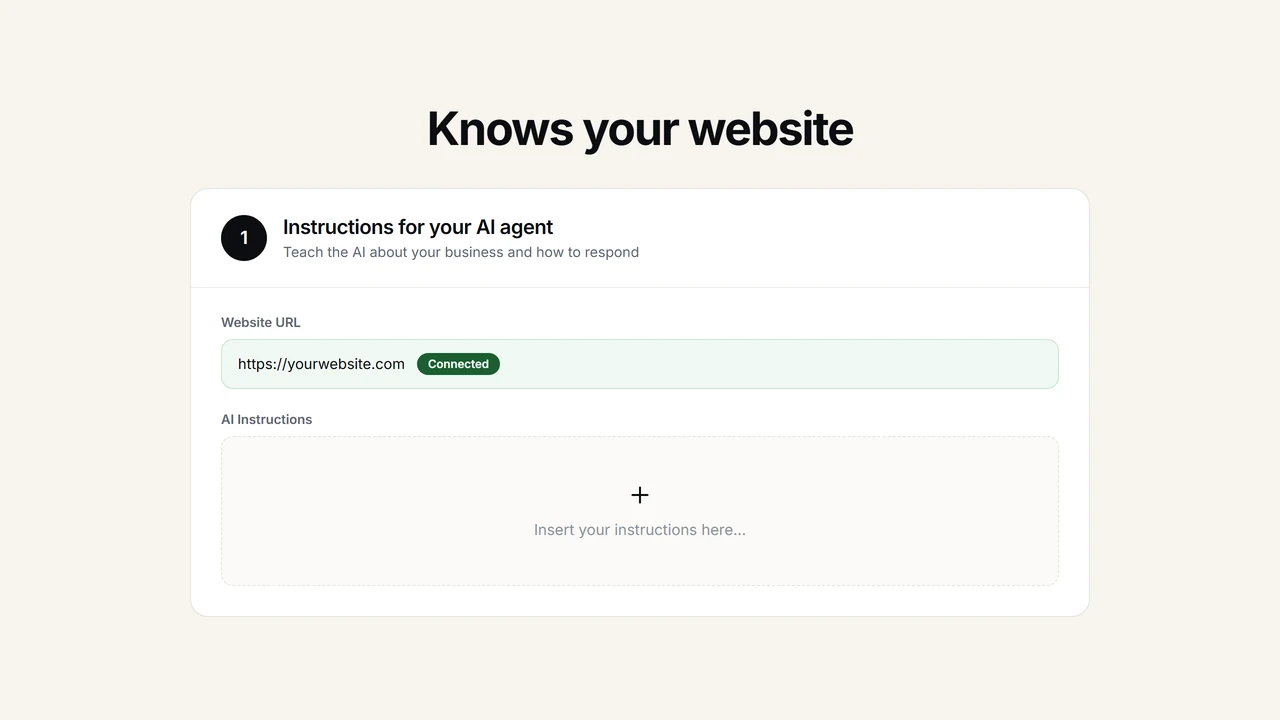
Paste your staffing agency website URL below. The AI reads your job listings, service descriptions, and company info — then answers questions the way your front desk would.
Two completely different audiences hitting one website — and nobody free to answer either
Staffing agencies operate with a split personality that most businesses never deal with. On one side, job seekers arrive wanting to know about open positions, pay rates, shift schedules, and how to apply. On the other side, employers arrive wanting to know if you can supply 12 forklift operators by Monday or staff an entire warehouse expansion. Both audiences expect immediate answers. Both leave if they do not get them. And your recruiters — the people who could answer these questions — are on the phone with clients, conducting interviews, running background checks, and coordinating placements. The front desk is overwhelmed, the voicemail fills up, and your website sits there like a brochure while hot leads from both sides walk away. An AI chatbot changes the equation by fielding inquiries from candidates and employers simultaneously, around the clock, using the information already on your website — job listings, service areas, application requirements, compliance details. Candidates get instant answers about open roles. Employers get immediate responses about your staffing capabilities. Your recruiters stay focused on the high-value work of matching people to positions.
- Candidates get job answers without waiting on holdA warehouse worker checking your site at 11 PM wants to know if you have forklift positions in their zip code. A nurse browses your healthcare staffing page during a break and asks about travel assignments. The AI reads your job listings and responds with specifics — role details, locations, shift types, how to apply — without a recruiter picking up the phone.
- Employers get staffing answers before they call your competitorA construction project manager needs 20 laborers for a site starting next week. A logistics company wants to know your light industrial capabilities and minimum order lead times. The AI fields these employer inquiries using your website content — service areas, industries served, workforce sizes, turnaround times — and captures the lead so your sales team follows up within hours, not days.
- After-hours coverage without after-hours staffStaffing never sleeps, but your office does. Candidates browse job boards at night and land on your site at 2 AM. Employers in different time zones send inquiries on your Saturday. The AI handles every after-hours conversation with the same accuracy as a weekday call, and every captured lead is waiting in your dashboard Monday morning.
Connect your ATS and let the chatbot check real job data mid-conversation
Static answers cover the basics — your service areas, how to apply, what industries you staff. But candidates and employers ask questions that need live data. "Do you have any warehouse jobs in Phoenix right now?" "Can you check if my application was received?" "What is the status of the order I placed last week for 10 assemblers?" Custom Tools — available on Standard ($139/month) and Pro ($449/month) plans — let the AI chatbot call your own systems during a conversation to pull real answers from your ATS, CRM, or internal database.
- Real-time job matching from your ATSConnect a Custom Tool to your applicant tracking system's API. When a candidate asks "do you have any CDL driver jobs near Dallas?", the AI queries your ATS, finds matching openings, and presents them with pay range, shift, and start date — no recruiter intervention needed.
- Application status lookupsCandidates call constantly to ask "did you get my application?" or "where am I in the process?" A Custom Tool connected to your ATS lets the AI answer instantly: "Your application for the assembly line position was received on June 12. It is currently under review by our light industrial team."
- Employer order status checksWhen an existing client asks about a staffing request they submitted, the AI can look up the order in your system and report back: how many positions are filled, how many are still being sourced, and the expected completion date. Your account managers spend less time on status update calls.
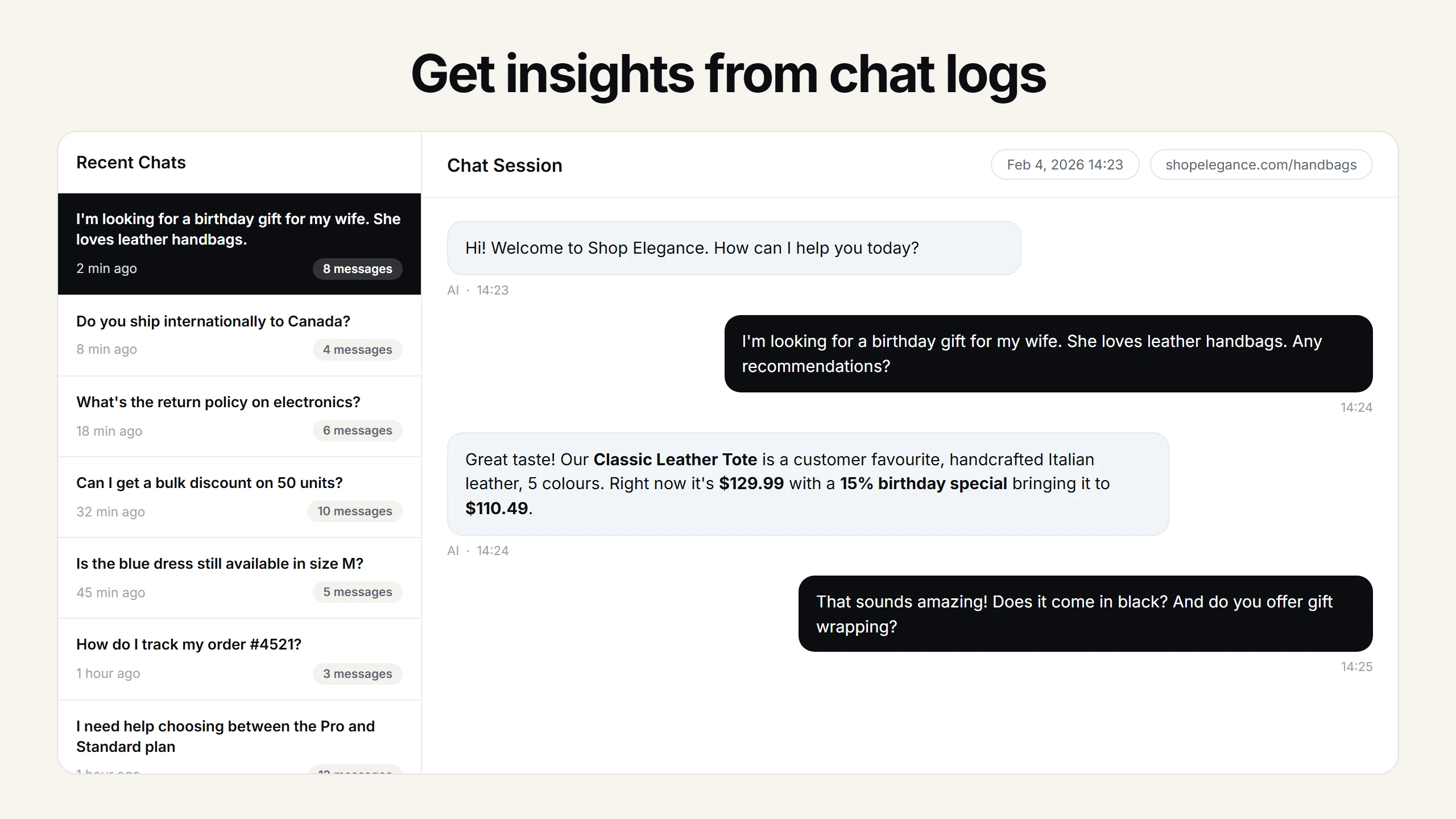
- Lead capture with qualification dataEvery conversation — candidate or employer — ends with captured contact information. But beyond name and email, the AI gathers qualification data naturally: what role the candidate wants, their availability, certifications they hold, or for employers, how many workers they need and by when. Your recruiters open the lead with context already attached.
- Multilingual workforce communicationStaffing agencies place workers who speak Spanish, Portuguese, Haitian Creole, Mandarin, and dozens of other languages. The AI detects each visitor's language automatically and responds in kind — 36 languages supported. A Spanish-speaking candidate browsing your English-language site gets answers in Spanish without you configuring anything.
Get the AI chatbot running on your staffing agency website
No IT department required. Sign up, point the AI at your site, and paste one line of code. Your recruiters do not need to change anything about how they work.
- Pick a plan at asyntai.com/pricing — the Free tier gives you 1 site and 50 messages to test with real visitor traffic. Starter ($39/month) handles 800 messages for a single-branch agency.
- Add your staffing agency website URL in the dashboard. The AI crawls up to 50 pages — job listings, service descriptions, application instructions, compliance information, location pages — and builds its knowledge base automatically.
- Customize the chat widget to match your agency brand. Set your name, colors, logo, and greeting message. Add any supplementary content — onboarding documents, pay rate sheets, benefits summaries — as uploaded files to fill gaps beyond what the website covers.
- Copy the single-line embed script and paste it into your website. Works on WordPress, Wix, Squarespace, custom-built sites, and 30+ other platforms. The chatbot goes live immediately and starts fielding candidate and employer questions.
<script src="https://asyntai.com/widget.js"
data-id="your-site-id" async>
</script>
# One script. Handles candidates and employers.
# Live on any website platform in under 5 minutes.
AI for staffing agencies — FAQs
Common questions from staffing and temp agency operators evaluating AI chatbots for their websites.
Can the AI handle both candidate and employer inquiries on the same website?
Yes. The AI reads all the content on your website — job listings aimed at candidates and service pages aimed at employers — and responds to each visitor based on what they are asking. A candidate asking "do you have forklift jobs?" gets an answer from your job listings. An employer asking "can you staff a distribution center?" gets an answer from your service descriptions. There is no need to build separate chatbots or separate pages. The AI distinguishes between audience types by the nature of the question.
Will it answer questions about specific job openings and requirements?
If the information is on your website, yes. The AI reads your job listing pages and uses that content to answer questions about available positions, required certifications, shift schedules, locations, and application steps. If you keep your job listings updated on your site, the chatbot's answers stay current automatically. For real-time job matching against your ATS database, Custom Tools on Standard and Pro plans let the AI query your system directly during a conversation.
How does it handle compliance-sensitive questions?
You control the AI's behavior through custom instructions written in plain English. You can instruct it to always include specific disclaimers — "We are an equal opportunity employer" — or to redirect certain topics: "If a candidate asks about workers' compensation claims, tell them to contact our HR department at this number." The AI follows these rules consistently across every conversation, which is more reliable than depending on front desk staff to remember every compliance requirement.
Does it work with our applicant tracking system?
If your ATS has a REST API — and most modern systems do — you can connect it through Custom Tools on Standard ($139/month) and Pro ($449/month) plans. You define the API endpoint, tell the AI when to use it and what parameters to extract from the conversation, and the AI handles the rest. Common integrations include job search queries, application status lookups, and candidate pre-qualification checks. No coding is required on the Asyntai side — you fill out a form in your dashboard.
Our candidates speak multiple languages. How does that work?
The AI supports 36 languages and detects the visitor's language automatically. A Spanish-speaking candidate browsing your English website gets answers in Spanish. A Portuguese-speaking worker asking about warehouse positions gets answers in Portuguese. Your website content does not need to be translated — the AI reads the English content and delivers the response in the visitor's language. This is included on every plan at no additional cost.
Can I use this across multiple branch offices?
Yes. Each branch office website or location page can have its own chatbot with its own knowledge base — or you can run a single chatbot across the entire company site. The Starter plan covers 2 sites, Standard covers 3, and Pro covers up to 20. For staffing agencies with many branches, the Pro plan at $449/month is the most common choice since it also includes white-label branding and 50,000 shared messages across all locations.
What does it cost, and can I try it first?
The Free tier gives you 1 site and 50 messages per month — enough to test with real visitors and see how the AI handles your staffing inquiries. Starter is $39/month with 800 messages. Standard is $139/month with 15,000 messages and Custom Tools. Pro is $449/month with 50,000 messages, 20 sites, Custom Tools, and white-label branding. All plans are month-to-month with no contracts. You can upgrade, downgrade, or cancel at any time.
How quickly can we get this running?
Most staffing agencies have the chatbot live on their website within 20 minutes. You sign up, add your website URL (the AI crawls and reads the content automatically), customize the widget appearance, and paste the embed script on your site. If you want to add Custom Tools for ATS integration, that takes additional setup time depending on your ATS's API, but the knowledge-based chatbot works immediately while you configure the tools.
What happens when the AI cannot answer a question?
You define the fallback behavior through custom instructions. Common staffing agency configurations include: collecting the visitor's name, phone number, and a brief description of their inquiry so a recruiter can call back; displaying the branch office phone number for urgent employer requests; or routing specific topics like injury reports or payroll disputes directly to HR. The AI captures the lead data regardless, so no inquiry is lost even when it cannot fully resolve the question itself.
AI for staffing agencies: the front desk that never clocks out
Staffing agencies run on a paradox that nobody outside the industry fully appreciates. The product you sell is people's time — and the bottleneck that limits how much of it you can sell is your own people's time. Every minute a recruiter spends answering a phone call from a candidate asking "do you have any warehouse jobs?" is a minute they are not spending placing that candidate or closing a deal with an employer. Every hour your front desk staff devotes to fielding walk-in questions about application requirements is an hour subtracted from processing onboarding paperwork, verifying credentials, and coordinating start dates. The phone rings constantly. The inbox fills faster than anyone can read it. And the website — the one place that could absorb some of this demand — sits there passively, offering a phone number and a contact form that somebody will get to eventually.
The root of the problem is that staffing agencies serve two fundamentally different audiences through the same front door. Candidates want jobs. Employers want workers. Both arrive at your website with urgent questions, and both expect the kind of responsiveness that a local business should provide. A warehouse worker browsing job listings at 10 PM after their current shift wants to know if you have anything closer to home starting next week. A plant manager who just lost three temps to no-shows needs replacements by tomorrow morning. Neither of these people wants to fill out a contact form and wait 24 hours. They want an answer now, and if your website cannot give them one, they will find an agency whose website can — or more likely, they will call your competitor directly.
An AI chatbot built for staffing addresses this by turning your website into a working front desk. The AI reads your existing site content — job listings, service area descriptions, application instructions, company policies, branch locations, industries served — and uses it to answer visitor questions in natural conversation. A candidate asks "do you have any CDL jobs in the Houston area?" and the chatbot responds with specifics pulled from your job listing pages. An employer asks "can you provide temporary administrative staff for a three-month project?" and the chatbot answers using your service descriptions, then captures their contact details so your sales team can follow up. The chatbot does not replace your recruiters. It handles the repetitive first-contact questions that consume their day so they can focus on the calls that actually result in placements.
The volume dynamics of staffing make this particularly impactful. A single recruiter at a busy light industrial agency might field 40 to 60 inbound calls per day — and the majority of those calls are some version of the same five questions. "What jobs do you have?" "How do I apply?" "What are the pay rates?" "Do I need steel-toed boots?" "Where is your office?" These are legitimate questions that deserve real answers, but they do not require recruiter expertise. They require information that is already on your website, delivered in a conversational format. An AI chatbot absorbs these inquiries without queuing, without hold times, and without recruiter burnout. The calls that do reach your team are the ones that matter: a candidate ready to interview, a client ready to place an order, a worker reporting a job site issue that requires human judgment.
After-hours coverage is where the economics get particularly clear. Staffing agencies serve industries that operate around the clock — warehousing, manufacturing, healthcare, hospitality, construction. The people who work these shifts browse your website outside normal business hours because that is when they are free to look. A night-shift warehouse associate checking job listings at 1 AM is exactly the kind of candidate you want to capture, but your office closed at 5 PM. A restaurant owner realizing on Sunday afternoon that they need four servers for a banquet on Tuesday is a hot lead that will go cold by Monday if nobody responds. The AI chatbot is there for both of them, answering questions and capturing lead information that would otherwise evaporate overnight.
The multilingual dimension of staffing cannot be treated as a nice-to-have. In light industrial, logistics, food processing, and construction staffing, a significant portion of the candidate pool communicates primarily in Spanish, Portuguese, Haitian Creole, or other languages. An English-only website with an English-only contact form creates friction that silently filters out qualified candidates. The AI chatbot detects each visitor's language automatically and responds in kind — 36 languages, no configuration required. A Spanish-speaking candidate asks about available positions, and the chatbot answers in Spanish using your English-language website content. This does not require translated web pages, multilingual staff, or any additional setup. The AI handles the language bridge, and the candidate gets the same quality of response as an English-speaking visitor.
Employer lead capture is the revenue side of the equation, and it is where most staffing agency websites fail hardest. An employer visiting your site is evaluating whether to place a staffing order with you — potentially worth tens of thousands of dollars per month in billing. What do most staffing websites offer this person? A phone number, a generic contact form, and maybe a page that lists industries served. The AI chatbot changes this interaction fundamentally. The employer asks "can you staff a 50-person warehouse operation with a two-week ramp?" and the chatbot provides a substantive answer based on your service capabilities, then asks for their contact information and details about the requirement. When your sales team opens that lead, they have the employer's name, company, phone number, the size of the request, the timeline, and the industry — everything needed to make the first call productive instead of exploratory.
Seasonal surge handling is one of the most practical applications. Staffing agencies experience predictable demand spikes — holiday warehouse staffing, summer hospitality, back-to-school logistics, tax season administrative needs. During these periods, candidate inquiry volume can triple or quadruple while your recruiter headcount stays the same. The AI chatbot scales with the traffic. Whether ten people or two hundred people are on your website asking about seasonal positions, they all get immediate answers. Your recruiters handle the placement calls; the chatbot handles everything upstream — informing candidates about available seasonal roles, explaining pay rates and shift schedules, directing them to the application, and capturing their contact details for recruiter follow-up.
For agencies running Custom Tools on the Standard or Pro plan, the chatbot moves beyond answering from static content into querying your actual systems. If your applicant tracking system has a REST API, you can connect it as a Custom Tool. The AI then answers "do you have any warehouse jobs in Phoenix?" not from a job listing page that might be a week out of date, but from a live query against your ATS, returning positions that are open right now with current pay rates and start dates. Similarly, a Custom Tool connected to your order management system lets the chatbot answer employer questions like "what is the status of the 15 assemblers I requested last Tuesday?" with specific fill counts and expected completion dates. Each Custom Tool is configured through a simple form in your dashboard — no coding, no custom integration projects.
Compliance is a persistent concern in staffing, and the AI chatbot handles it more consistently than a rotating cast of front desk personnel. You write custom instructions in plain English that the AI follows in every conversation: "Always mention that we are an equal opportunity employer when discussing available positions." "If a candidate asks about workers' compensation or injury procedures, provide the HR hotline number and do not attempt to answer the question." "Include the statement that all placements are subject to background check and drug screening where applicable." These rules fire on every relevant conversation, every time, without the variability that comes with different staff members remembering different things.
Branch office deployment deserves specific attention for agencies with multiple locations. Each branch can have its own chatbot with location-specific job listings and service area information, or the agency can run a single chatbot across the corporate site that directs candidates to the nearest branch. The Pro plan covers 20 sites, which means a regional agency with a dozen branches can deploy location-specific chatbots under a single subscription. The white-label branding on Pro ensures every widget carries the agency brand with no third-party logos visible — important for agencies that have invested in local brand recognition.
Temp-to-perm conversion — one of the highest-margin outcomes in staffing — also benefits from the chatbot. Candidates who are already on assignment sometimes visit the agency website to explore permanent placement options. An AI chatbot can answer questions about direct-hire services, salary ranges for permanent positions, and the process for transitioning from temporary to permanent status. This captures a high-intent lead that might otherwise never reach a recruiter, because the candidate was not going to call the office to ask about it — they were just browsing, and the chatbot turned that browse into a conversation.
The cost structure makes this approachable for agencies of any size. A single-branch temp agency can start on the Free tier — one site, 50 messages per month — and test how the chatbot handles real candidate and employer inquiries with zero financial risk. If it works, the Starter plan at $39/month gives 800 messages, which covers a moderate-traffic agency website comfortably. Standard at $139/month adds Custom Tools for ATS integration and 15,000 messages. Pro at $449/month is built for multi-branch operations: 20 sites, 50,000 messages, white-label branding, and full Custom Tools access. Every plan is month-to-month with no contract — you can scale up before a seasonal surge and scale back down after.
The practical impact shows up fastest in two metrics: recruiter phone time and lead response time. Agencies that deploy the chatbot typically see a meaningful drop in routine inbound calls within the first week, because candidates who would have called are getting answers from the chatbot instead. Lead response time improves from hours or days to seconds, because the chatbot answers and captures information in real time rather than depending on someone checking a contact form inbox. These are not theoretical benefits that take months to materialize. A staffing agency can install the chatbot on a Monday morning and see the difference in their Tuesday call volume.
Ready to stop losing candidates and employer leads to unanswered website visits? Start with the Free plan and see how the AI handles your staffing inquiries — or go straight to Standard for Custom Tools and ATS integration.