White label ticketing software alternative — deflect support tickets with AI before they reach the queue
Your clients do not need another ticketing system. They need fewer tickets. This AI chatbot answers visitor questions instantly — so the support queue shrinks and your clients see results from day one. Brand it as yours and resell.
Watch the ticket-deflecting AI chatbot in action
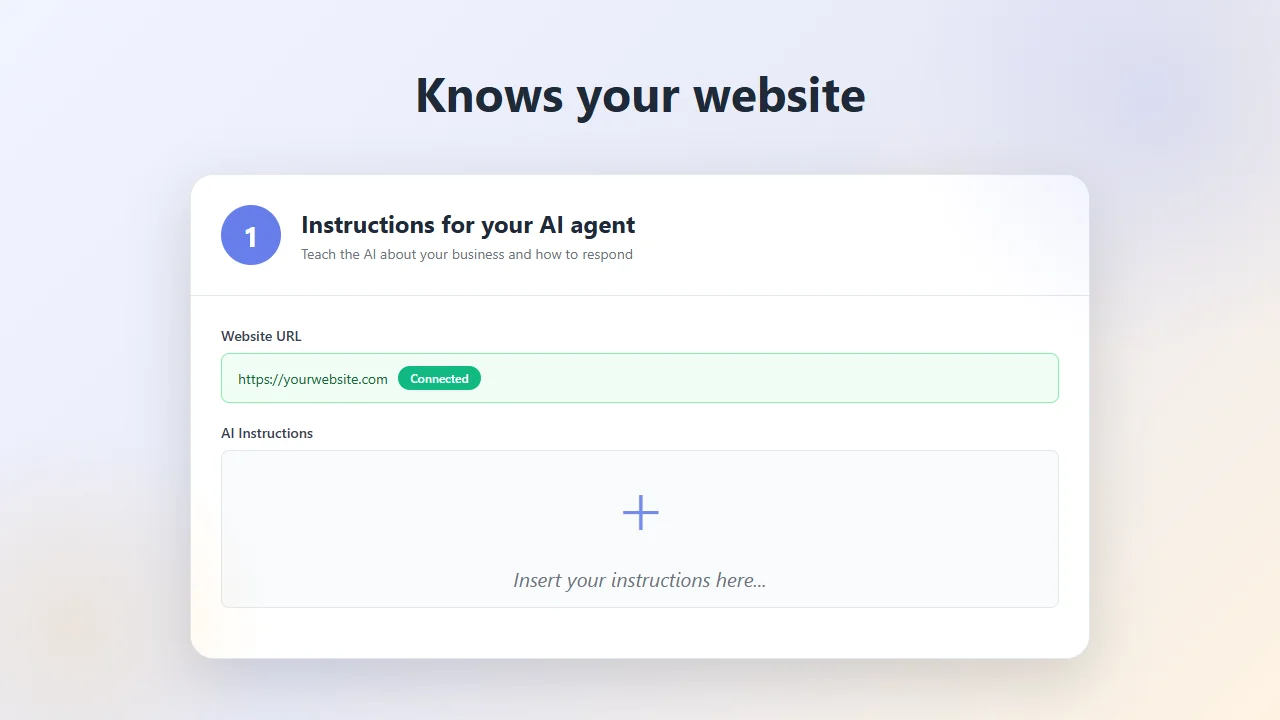
Enter any website URL below. The AI will crawl the content and build a knowledge base — then start answering the kind of questions that would normally land in your client's support queue
Every support interaction carries your name — from the chat widget to the client analytics portal
White labeling is not cosmetic. On the Pro plan, every element your clients and their visitors interact with belongs to you. The "Powered by Asyntai" badge disappears. The chat widget that deflects tickets on your client's site shows your agency name, your logo, and your brand colors. The client-facing dashboard — where your clients review deflected conversations, track how many inquiries the AI handled without human intervention, and export captured leads as CSV — embeds on your own website via a JS snippet and displays your branding throughout. Your clients never see our name. They see the ticket deflection tool you built for them. Standard plan resellers who want branding removal can email [email protected] for manual activation.
- Full branding removal on ProThe Pro plan strips every trace of Asyntai from the chat widget — no "Powered by" badge, no footer links, no watermarks. What visitors see is a clean support chatbot that looks like a product your agency developed. The widget header carries your name and your logo, not ours.
- Widget branding per client siteEach of your client sites gets independent widget styling. Set a different agency name, logo, welcome message, and color palette for each deployment. A law firm client gets a professional navy theme. A retail client gets vibrant brand colors. Every widget is configured separately and matches the client's expectations of your service.
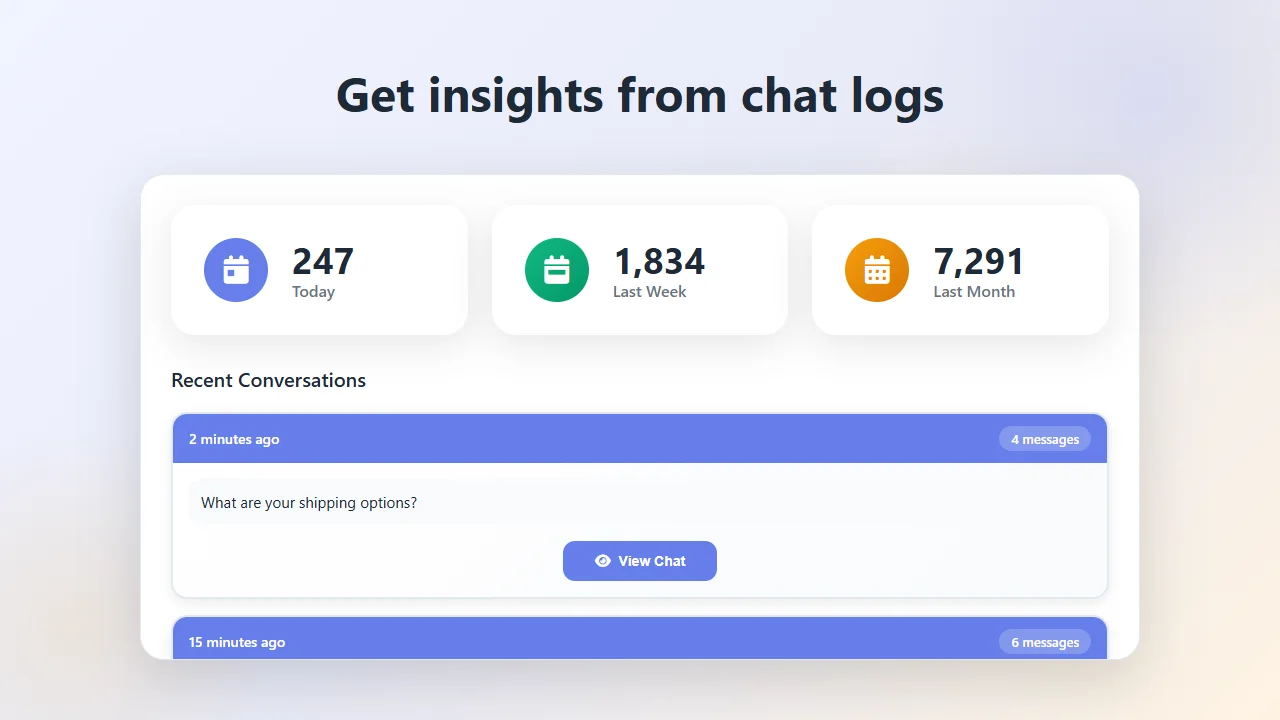
- White-labeled client dashboard with ticket deflection metricsGive each client access to a branded dashboard with three tabs: Conversations (full transcripts of every deflected inquiry), Analytics (message volume, deflection rates, peak hours), and Leads (captured visitor contact information with CSV export). Embed it on your website using a JS snippet. Password protection and domain restrictions keep each client's data secure.
Sell fewer tickets as a service — twenty clients, one subscription, full margin
The Pro plan costs $449/month and covers up to 20 sites with 50,000 messages. Your cost per client: roughly $22. Position the service as a ticket deflection solution — "reduce your support volume by handling common questions with AI" — and charge $150, $200, $300 per month per client. You bill them directly, keep the full margin, and never share revenue with anyone. Each client gets a completely independent setup: their own knowledge base built from their website content, their own widget branding, their own AI behavior tuned to their support patterns. Agencies with more than 20 clients can move to a Custom Pro plan for higher limits.
- Pro plan: $449/month for up to 20 client sitesAt full capacity, each client costs you approximately $22 per month. Charge $150-$300 for an AI-powered ticket deflection service and the margin math is immediate — $2,500 to $5,500 per month from a single subscription, before your first client even notices the savings on their support team's workload.
- You set the price, you keep 100% of the marginNo revenue share. No percentage going back to us. No minimum sales targets or annual contracts. You decide what ticket deflection is worth to each client, you send the invoice, and every dollar above your Pro subscription is profit.
- Isolated knowledge base and configuration per clientThe dental clinic's patient FAQ never leaks into the SaaS company's product documentation. Each of your 20 client sites has a sealed environment — its own crawled content, uploaded documents, widget settings, AI instructions, and conversation history. Zero cross-contamination between client environments.
- Custom Pro plan when you outgrow 20 sitesIf your agency scales past 20 clients or needs more than 50,000 messages per month, the Custom Pro plan extends both site and message limits to match your volume.
- Custom Tools let the bot resolve issues, not just answer questionsOn Standard+ plans, Custom Tools allow the AI to call your client's own API endpoints mid-conversation — checking order status, looking up account details, verifying appointment availability. The chatbot does not just deflect the question. It resolves the issue on the spot, which means even fewer tickets reach the human team.
Deploy ticket-deflecting AI for your first client
No development. No API plumbing. From signup to a white-labeled AI chatbot answering support questions on your client's website — four steps, about twenty minutes.
- Sign up for the Pro plan at asyntai.com/pricing — this gives you white-label branding removal, 20 client sites, and 50,000 messages per month for ticket deflection across all sites.
- Add your client's website in the dashboard and configure the widget — set your agency name, logo, and colors so the chatbot looks like your own ticket deflection product.
- Let the AI crawl the client's site to build a support knowledge base from their existing content — FAQs, help articles, product pages, policies. Upload any additional documents to cover gaps.
- Copy the embed script and paste it into the client's website. The AI chatbot is live, intercepting support questions and answering them before they become tickets.
<!-- Answers support questions before they become tickets -->
<script src="https://asyntai.com/widget.js"
data-id="client-site-id" async>
</script>
# Your brand deflecting tickets. Their visitors getting instant answers.
# No trace of anyone else's platform.
How reselling works
From signing up to billing your first client — four simple steps.
Choose a plan
Subscribe to a plan that fits how many client websites you need. Pro is the most popular for resellers — white-label plus up to 20 websites.
View plans →Add a client website
Each website you add under your account is one client's chatbot. Add up to the number your plan allows.
Go to your dashboard →Set up the chatbot
Add the client's content, customize the widget to their brand, and install it on their site. You can also give the client read-only access to their chat logs, analytics and leads on your own website.
Setup guide →Resell at your price
Charge your client whatever you like. You own the relationship and bill them directly — the margin is yours, every month.
Reseller Resources
Everything you need to get started, answer client questions, and see the dashboard in action
Reseller Guide
Step-by-step walkthrough: white-label branding, the embeddable client dashboard, and how to get your first client live.
Read the guideReseller FAQ
Pricing, margins, billing, white-label details, platform compatibility, and everything else partners ask before starting.
View FAQClient Dashboard Demo
See the embeddable white-label dashboard with sample data — conversations, analytics, and leads under your brand.
See the demoWhite label ticketing software — FAQs
Common questions from agencies and IT service providers evaluating AI-powered ticket deflection as a white-label service.
Is this actually ticketing software, or something different?
It is something different — and that is the point. Traditional ticketing software organizes and routes support requests after they arrive. This AI chatbot intercepts those requests before they become tickets. It sits on your client's website, reads their content (help articles, FAQs, product pages, policies), and answers common visitor questions instantly. The visitor gets an immediate answer. The support team never sees the inquiry. You are not replacing the ticketing system — you are dramatically reducing how much it gets used. For agencies, this is a high-value service because the outcome is measurable: fewer tickets, faster resolution for visitors, and lower support costs for the client.
What kinds of support questions can the AI deflect?
Any question that can be answered using content already on the client's website or in uploaded documents. That covers a wide range: order status inquiries, return and refund policies, shipping information, account setup guides, billing FAQs, business hours and locations, product specifications, troubleshooting steps, and how-to instructions. With Custom Tools on Standard+ plans, the AI can also call the client's own API endpoints to look up live data — checking an order's tracking number, verifying an appointment time, or pulling account details. The chatbot does not just recite FAQ answers; it resolves the specific issue the visitor came with.
What plan do I need for white-label ticket deflection?
The Pro plan at $449/month is the primary white-label plan. It includes complete branding removal, up to 20 client sites, and 50,000 messages per month across all sites. If you are on the Standard plan ($139/month, 3 sites, 15,000 messages) and want white-label activation, email [email protected] to request manual setup. The Pro plan is recommended for resellers because it supports significantly more clients and message volume, making the per-client economics much stronger.
How does the AI build a knowledge base from client websites?
When you add a client's website, the AI automatically crawls their pages — help articles, FAQs, product listings, blog posts, policy pages, and any other publicly accessible content. It reads and indexes this content to build a knowledge base specific to that client. You can also upload additional documents like PDFs, internal guides, or spreadsheets. The AI uses all of this content to answer visitor questions accurately. When the client updates their website — adding a new help article, changing a policy, updating product information — the next crawl picks up those changes automatically. You do not need to rebuild anything manually.
Can my clients see which tickets the AI deflected?
Yes. Each client gets access to a white-labeled dashboard with three tabs: Conversations shows full transcripts of every chat interaction where the AI handled a visitor's question (these are the inquiries that would have been tickets without the chatbot). Analytics tracks message volume, peak support hours, and response metrics. Leads captures visitor contact information with CSV export. You embed this dashboard on your own website via a JS snippet, branded with your logo, name, and colors. Clients review their deflection data under your brand, not ours.
What happens when the AI cannot answer a question?
When the chatbot encounters a question it cannot answer from the knowledge base, it lets the visitor know and can direct them to the appropriate support channel — email, phone, or the client's existing ticketing system. The AI does not fabricate answers. If the information is not in the knowledge base, the chatbot acknowledges this honestly and guides the visitor to human support. This means the tickets that do reach the support team are the genuinely complex issues that require human judgment, not the repetitive questions that the AI already handles.
Does the ticket deflection AI work in multiple languages?
Yes. The AI supports 36 languages and auto-detects the visitor's language. A French visitor asking a question in French gets a response in French. A Japanese visitor asking in Japanese gets an answer in Japanese. The knowledge base content can be in any language — the AI handles the language layer automatically. For agencies with international client rosters, this means one deployment covers all visitor languages without separate configurations per language or per region.
How many client sites can I manage from one account?
The Pro plan supports up to 20 sites — each one is an independent client chatbot with its own knowledge base, widget branding, and configuration. If your agency grows beyond 20 clients, the Custom Pro plan extends both site and message limits. The 50,000 messages per month on the Pro plan are shared across all sites, which works well when you have a mix of low-traffic and moderate-traffic clients.
Can the AI chatbot integrate with existing ticketing systems?
The AI chatbot operates independently as a front-line deflection layer. It does not plug directly into ticketing systems like Zendesk or Freshdesk — it sits upstream of them. The chatbot handles the questions it can answer, and the questions it cannot answer still reach the client's existing support workflow, however that is set up. With Custom Tools on Standard+ plans, you can configure the AI to call external APIs, which could include triggering ticket creation in a client's system for escalated issues. The result is a clean separation: the AI handles the volume, the ticketing system handles the exceptions.
Why AI-powered ticket deflection is the most sellable white-label service an agency can offer today
Every business with a website and a support team has the same problem: a large percentage of their support tickets are repetitive questions with answers that already exist somewhere on their site. What is your return policy? Where is my order? How do I reset my password? What are your business hours? Do you ship internationally? These questions arrive as tickets — via email, contact forms, or live chat — and each one consumes a human agent's time even though the answer is sitting on a help page the visitor did not find. The math is brutal: if a support agent costs $20 per hour and handles 8 tickets per hour, each ticket costs $2.50 in labor alone, not counting tooling, management, and overhead. Multiply that by the hundreds or thousands of repetitive tickets a business receives each month, and the cost of answering questions that could be automated becomes significant. This is the exact gap an AI chatbot fills — it sits on the website and answers those questions before they ever become tickets, using the business's own content as its source of truth.
The distinction between ticketing software and ticket deflection matters, because it changes how you position the service to clients. Traditional ticketing software — help desks, support queues, routing engines — manages tickets after they are created. It organizes the chaos. An AI chatbot that deflects tickets operates upstream: it prevents the chaos from happening. The visitor arrives on the site, has a question, and instead of submitting a support form or emailing a help address, they ask the chatbot. The AI searches the business's knowledge base — built automatically from their website content and any uploaded documents — and delivers the answer in seconds. No ticket is created. No agent is notified. The visitor leaves satisfied, and the support team never knew the interaction happened. When you sell this as a white-label service, you are selling a measurable outcome: fewer tickets. That is easy for a client to understand and easy for them to verify by comparing their ticket volume before and after deployment.
The economics of reselling ticket deflection under your brand are built on the Pro plan's structure. At $449 per month, you get access to 20 sites and 50,000 messages. Each site is one client's chatbot, which means you can serve up to 20 businesses from a single subscription. At 20 clients, your cost per client is approximately $22 per month. A ticket deflection AI chatbot is a premium service — businesses paying $50 to $150 per seat for help desk software understand the value of reducing ticket volume. Charging $150 per client per month is conservative; $200 to $300 is reasonable for clients who experience meaningful support cost savings. At 20 clients paying $200 each, your revenue is $4,000 per month against a $449 cost, yielding $3,551 in gross margin. These numbers hold whether your clients are dental practices, ecommerce stores, SaaS companies, or professional services firms. The per-client cost is fixed, the margin grows with each client added, and the subscription cost does not change until you exceed 20 sites.
White labeling is what turns ticket deflection from a referral into a product. On the Pro plan, every element the visitor or client touches is branded as yours. The "Powered by Asyntai" badge — normally displayed at the bottom of the chat widget — is removed entirely. The widget header shows your agency name. Your logo appears in the chat window. Your brand colors define the visual identity of the support experience. A visitor interacting with the chatbot sees a polished, professional tool that appears to be built by whatever agency name you choose. There is no footer link, no watermark, no hidden reference. The branding story extends to the client-facing dashboard: when your clients log in to review their deflected conversations and support analytics, they see your logo, your brand name, and your primary color. They access the dashboard on your website, embedded via a JS snippet, with password protection and domain restrictions per client. Your clients experience this as your product. The underlying platform is invisible.
The client dashboard is central to selling ticket deflection as a managed service, because it gives clients visibility into what the AI handled without requiring them to ask you for reports. The dashboard has three tabs. Conversations shows full transcripts of every chat interaction — the visitor's question, the AI's response, timestamps, and visitor details. This is where clients can see exactly which questions the chatbot answered and verify the quality of responses. Analytics tracks message volume over time, peak hours, response metrics, and usage trends. For ticket deflection, the analytics tab effectively shows how many support interactions the AI handled that would otherwise have been tickets. Leads captures visitor contact information — name, email, phone, company — submitted through the chatbot, with CSV export for importing into CRMs or email marketing tools. The dashboard is white-labeled to your brand and embedded on your site, which means clients check their ticket deflection data without ever leaving your platform.
The multi-site architecture is what makes this practical for agencies rather than just a nice idea for a solo consultant. Each of your 20 sites on the Pro plan operates in complete isolation. Client A is a medical practice with patient FAQs, insurance information, and appointment scheduling content. Client B is an ecommerce store with product catalogs, shipping policies, and return procedures. Client C is a law firm with practice area descriptions, intake forms, and consultation scheduling. Each client's knowledge base is built from their specific website content. Each has its own widget branding — different colors, different welcome messages, different AI instructions. Each has its own conversation history, analytics, and lead data. There is zero cross-contamination. The medical practice's patient information is completely walled off from the ecommerce store's product catalog. You manage all 20 from a single dashboard, switching between clients as needed, but each environment is a sealed compartment. This isolation is not just a security feature — it means the AI gives accurate, client-specific answers because it only has access to that client's content.
Custom Tools elevate the white-labeled chatbot from a question-answering widget to an issue-resolving agent. Available on Standard and Pro plans, Custom Tools let you configure the AI to call your client's own API endpoints during a conversation. For an ecommerce client, this means the chatbot can look up a specific order by order number, return the current shipping status, and tell the visitor exactly when to expect delivery — without a human agent touching the inquiry. For a SaaS client, the bot can check a user's subscription status, verify their account email, or trigger a password reset link. For a service business, it can check appointment availability and book a slot. Each client's Custom Tools are configured independently, tailored to the APIs and systems that business uses. The result is that the AI does not just deflect the question — it resolves the underlying issue. The visitor who would have submitted a ticket asking "where is my order?" gets a specific answer with a tracking number in seconds, and the support team never sees the interaction.
Language support makes ticket deflection viable across borders without multiplying your setup work. The AI supports 36 languages and auto-detects the visitor's language. If your client's website serves customers in Germany, France, and Japan, a single chatbot deployment handles all three languages. The German visitor asks in German and gets a response in German. The French visitor asks in French and receives the answer in French. The knowledge base content can be in any language — the AI processes it regardless. You do not need separate chatbot instances, separate knowledge bases, or language-specific configurations for each market. For agencies that serve international clients or clients with multilingual customer bases, this eliminates a layer of complexity that would otherwise make ticket deflection impractical to resell across regions.
Deployment across client platforms is straightforward because the embed method is universal. The chatbot loads via a single line of JavaScript that works on any website supporting custom HTML — which covers essentially every platform in use today. WordPress clients can use an official plugin distributed from the dashboard. Shopify clients install through the Shopify App Store. Clients on Wix, Squarespace, Webflow, Magento, Joomla, Drupal, OpenCart, and dozens of other platforms paste the script into their site header or a custom code block. The widget loads asynchronously and does not interfere with existing site functionality, themes, or page builders. With plugins for over 30 platforms, you will not encounter a client whose website you cannot deploy to. This universality is important for agencies because your client base is never homogeneous — some clients are on WordPress, some on Shopify, some on custom-built sites. One deployment method covers all of them.
Vertical specialization is where agencies extract the most value from white-label ticket deflection. Instead of selling a generic "AI chatbot," you position your service for a specific industry and optimize the setup for that vertical. A ticket deflection service for ecommerce stores comes pre-configured to handle order tracking, returns, shipping questions, product availability, and payment issues — the five categories that generate the majority of ecommerce support tickets. A service for dental or medical practices handles appointment inquiries, insurance coverage questions, procedure FAQs, and post-care instructions. A service for SaaS companies addresses account setup, feature how-tos, billing questions, and integration troubleshooting. The platform is identical across verticals, but your packaging, pricing, and AI instruction templates are tailored. This lets you charge premium prices because you are not selling technology — you are selling a ready-made solution for a specific problem the client already has.
The knowledge base refinement process creates a natural retention flywheel. When you first deploy the AI for a client, it crawls their website and builds a knowledge base from existing content — pages, blog posts, product listings, help articles, policy documents. This baseline handles a large portion of common questions immediately. Over the following weeks, you refine the AI's behavior based on actual conversation data: you see which questions visitors are asking, identify gaps in the knowledge base, upload additional documents to fill those gaps, and tune the AI's instructions to match the client's preferred response tone and escalation behavior. Each refinement makes the chatbot more accurate, more comprehensive, and more aligned with the client's brand voice. After three months of tuning, the chatbot is materially better than it was on day one. This accumulated improvement is a switching cost — a client who has invested time refining their AI's knowledge base and response quality is not going to start over with a competitor's product. Retention is built into the mechanics of the service.
For agencies that prefer a lighter touch, the affiliate program offers an alternative path. Instead of white-labeling and managing client deployments, you refer businesses to Asyntai using a tracking link and earn a 20% recurring commission on their subscription for up to 12 months per referral. A referral who signs up for the Pro plan at $449/month earns you $89.80 per month, every month, with zero setup, zero support, and zero client management on your part. Some agencies run a hybrid model: white-label deployments for their managed clients (where they control the branding and charge premium prices) and affiliate links for referrals they do not want to manage (consultants they advise, businesses they encounter at events, audience members from their content). The two programs serve different segments of the same opportunity and can run simultaneously.
The competitive window for establishing yourself as the ticket deflection provider in your niche is open right now, but it will not stay open indefinitely. Businesses are actively looking for ways to reduce support costs with AI, but most do not have the technical capability to evaluate, deploy, and configure an AI chatbot themselves. They need a service provider — and the first agency to offer a white-labeled ticket deflection solution in a given vertical or market captures the client relationship for years. Once a client has a chatbot that is deflecting tickets, reducing support costs, and improving response times, they do not switch. The knowledge base is tuned, the conversations are flowing, and the metrics prove the value. The agency that deploys first wins. White-label ticket deflection is not a project with a delivery date. It is a recurring service that compounds in value — each month the AI handles more accurately, each month the client depends on it more, and each month the subscription renews.
Setting up a new client takes about twenty minutes and requires no development work. You add the client's domain in your dashboard, configure the widget (your agency name, logo, colors, welcome message), and let the AI crawl their website. The crawl reads help articles, FAQ pages, product listings, policy documents, and any other content on the site. Within hours, the AI has a knowledge base and can answer visitor questions. You copy the single-line embed script, paste it into the client's site, and the chatbot is live — intercepting support questions and answering them before they become tickets. If the client has internal documents, policy manuals, or product catalogs not published on their site, you upload those to the knowledge base. The entire deployment is a configuration exercise, not an engineering project. This is what makes the model scalable: you can onboard a new client in the time it takes to hold a kickoff call with them.
Questions about white-label ticket deflection? Reach out at [email protected] — we respond within 24 hours.