White label LMS software: add an AI assistant to any learning platform
Give students instant answers from course content — syllabi, lecture notes, assignment rubrics, campus policies — on Moodle, Canvas, Blackboard, or any LMS. White-label it under your brand and deploy across schools and departments.
See the AI learning assistant on your LMS
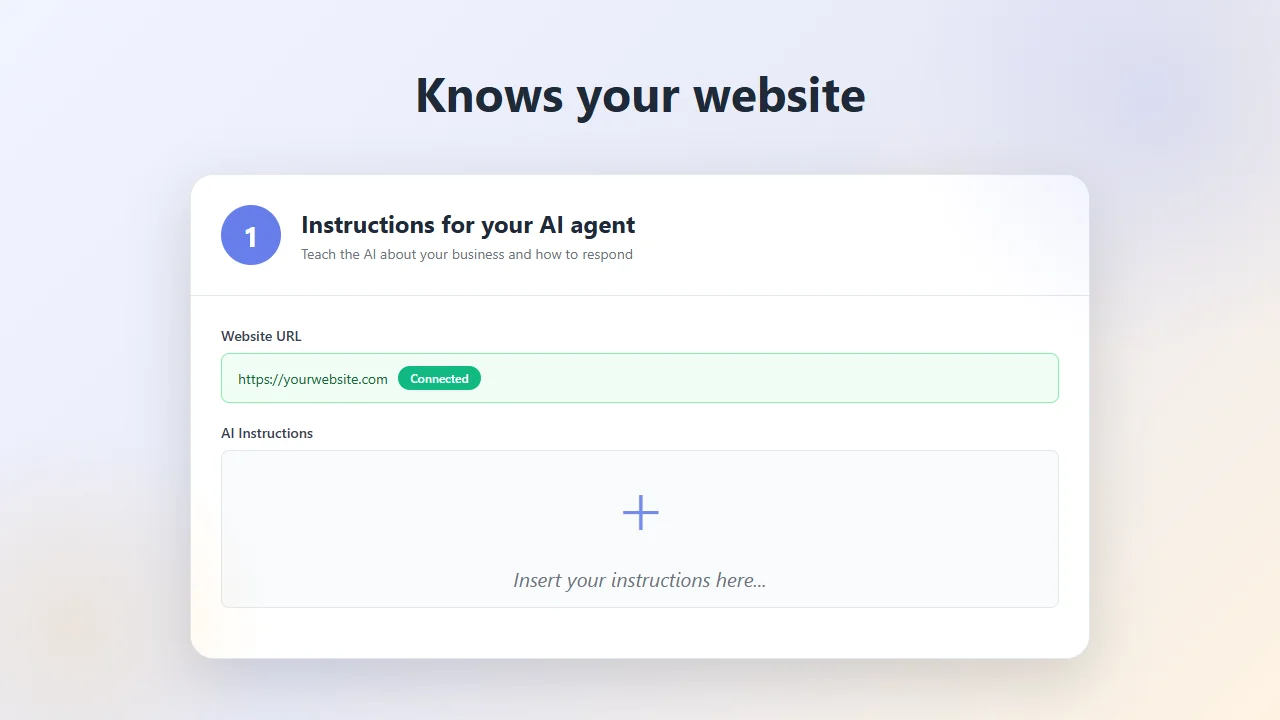
Enter a university or course website URL and watch the AI build a knowledge base from the content — then picture it answering student questions under your brand
Students see your name on the chat widget — never ours
White label LMS software means the AI chatbot that lives on your client's learning platform carries your ed-tech brand or the institution's own identity. On the Pro plan, every trace of Asyntai disappears. The chat widget shows your company name, your logo, and your color palette. Students interact with what looks and feels like your product. The client-facing dashboard — where administrators review conversations, check analytics, and export lead data as CSV — embeds on your own website via a JS snippet with your branding. Standard plan users who want white-label activation can email [email protected] for manual setup.
- Full branding removal on ProThe "Powered by Asyntai" badge vanishes completely on the Pro plan. What remains is a clean AI assistant that looks native to the learning platform. No footer links, no watermarks, no third-party references anywhere students or faculty can see.
- Your identity on every widgetEach LMS deployment gets its own widget configuration — your ed-tech company name in the header, your logo in the chat window, your brand colors throughout. Whether you serve five schools or twenty, each widget carries your identity while the knowledge base stays specific to that institution.
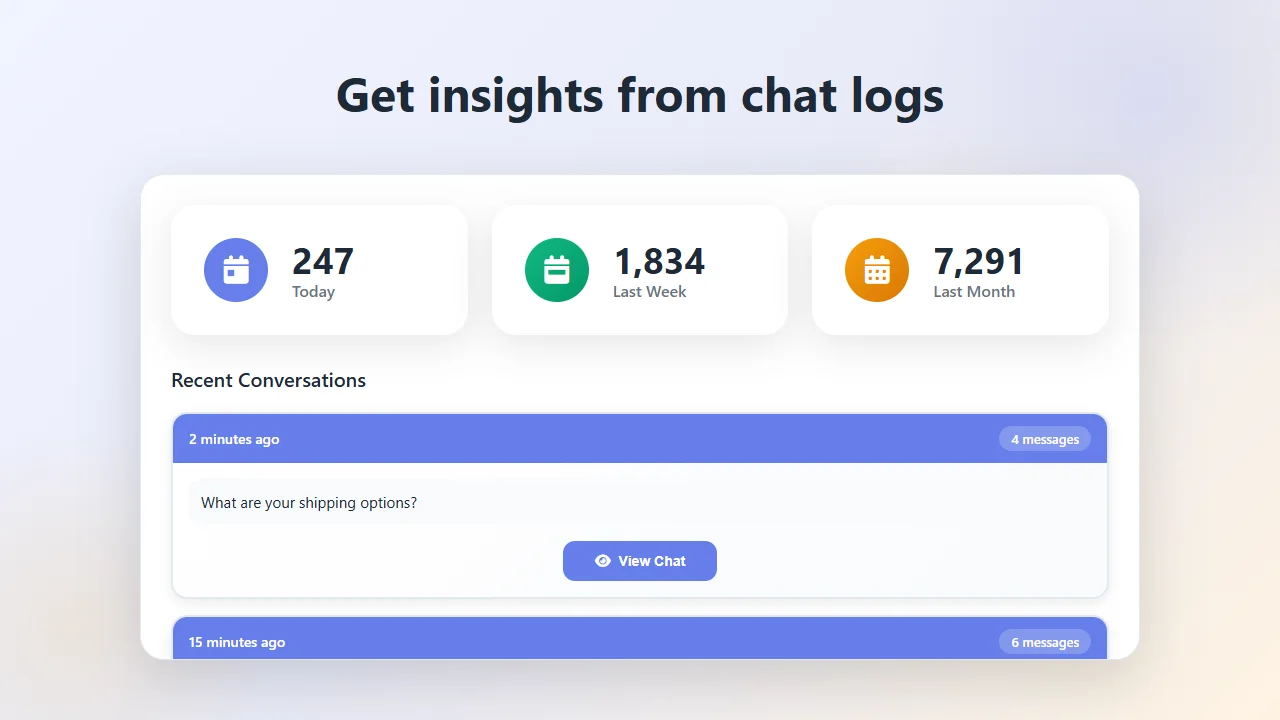
- Embeddable admin dashboard for institutionsGive each school access to a white-labeled dashboard with three tabs: Conversations (full chat transcripts with student queries), Analytics (message volume, response metrics, peak usage times), and Leads (captured contact info with CSV export). Embed it on your portal. Set your logo, brand name, and primary color. Add password protection and domain restrictions per institution.
Serve twenty schools from one account — margin stacks with every new institution
The Pro plan runs $449/month and supports up to 20 sites with 50,000 messages. Each site is one institution or department. Your per-school cost lands around $22. Charge each school $200, $350, or $500 per month for a branded AI assistant that answers student questions around the clock — the price is yours to set. You bill the institution directly. No revenue share, no royalties, no minimum commitments. Each school gets its own knowledge base built from their course content, their own widget configuration, and their own analytics. Ed-tech companies scaling past 20 institutions can move to a Custom Pro plan with higher limits.
- Pro plan math: $449/month covers 20 institutionsAt full capacity, each school costs you roughly $22 per month. Charge $250 per institution and your monthly margin is $4,551. Start with three schools, grow to twenty — the subscription cost stays fixed while your revenue scales.
- You set the price, you keep everything above costThere is no revenue share. No commission split. No percentage flowing back to us. You decide what an AI learning assistant is worth to each institution, invoice them directly, and retain the full difference.
- Isolated knowledge base per institutionA community college's nursing program has no connection to a university's engineering department. Each of your 20 sites runs in complete isolation — separate content, separate widget design, separate AI instructions, separate conversation history. Zero data crossover between schools.
- 36 languages with automatic detectionInternational schools, multilingual campuses, and study-abroad programs all work seamlessly. A student asking in Spanish gets a response in Spanish. A student asking in Mandarin gets a response in Mandarin. No separate configuration needed per language.
- Custom Tools for live integrationsOn Standard+ plans, Custom Tools let the AI call institutional APIs during a conversation — checking library hours, pulling semester calendars, looking up registration deadlines. Each school's integrations are configured independently.
Deploy a white-labeled AI assistant on your first LMS
No LMS plugin development. No API complexity. From signup to a branded AI chatbot answering student questions on a learning platform — four steps, about twenty minutes.
- Sign up for the Pro plan at asyntai.com/pricing — you get full white-label branding, 20 sites, and 50,000 messages per month.
- Add the institution's LMS or course website in your dashboard. Configure widget branding with your ed-tech company name, logo, and colors.
- Let the AI crawl the LMS pages to build a knowledge base automatically — course catalogs, syllabi, FAQ sections, department pages. Upload any additional documents like student handbooks or policy PDFs.
- Copy the embed script and paste it into the LMS site header or custom HTML block — the branded AI assistant is live, answering student questions using the institution's own content.
<!-- Answers student questions from course content -->
<script src="https://asyntai.com/widget.js"
data-id="lms-site-id" async>
</script>
# Your brand on the learning platform. Students see your name.
# Zero trace of the underlying platform.
How reselling works
From signing up to billing your first client — four simple steps.
Choose a plan
Subscribe to a plan that fits how many client websites you need. Pro is the most popular for resellers — white-label plus up to 20 websites.
View plans →Add a client website
Each website you add under your account is one client's chatbot. Add up to the number your plan allows.
Go to your dashboard →Set up the chatbot
Add the client's content, customize the widget to their brand, and install it on their site. You can also give the client read-only access to their chat logs, analytics and leads on your own website.
Setup guide →Resell at your price
Charge your client whatever you like. You own the relationship and bill them directly — the margin is yours, every month.
Reseller Resources
Everything you need to get started, answer client questions, and see the dashboard in action
Reseller Guide
Step-by-step walkthrough: white-label branding, the embeddable client dashboard, and how to get your first client live.
Read the guideReseller FAQ
Pricing, margins, billing, white-label details, platform compatibility, and everything else partners ask before starting.
View FAQClient Dashboard Demo
See the embeddable white-label dashboard with sample data — conversations, analytics, and leads under your brand.
See the demoWhite label LMS software — FAQs
Common questions from ed-tech agencies, IT consultants, and learning platform providers evaluating white-label AI chatbot solutions for education.
Is this an LMS or a chatbot for LMS platforms?
It is an AI chatbot that you embed on LMS websites — not an LMS itself. The chatbot reads course content, syllabi, FAQs, department pages, and any documents you upload, then answers student questions using that content. It works alongside Moodle, Canvas, Blackboard, or any learning platform that supports custom HTML or JavaScript. You white-label it under your brand and deploy it as an add-on service for educational institutions.
How does the AI get access to course content?
When you add an institution's website to your dashboard, the AI crawls the site automatically — reading course catalogs, department pages, FAQ sections, event listings, and any publicly accessible content. For materials that live behind a login (syllabi PDFs, student handbooks, policy documents), you upload them directly to the knowledge base. The AI incorporates both crawled and uploaded content, so students get answers drawn from the full range of institutional information. The knowledge base updates as new content is added.
What plan do I need to serve multiple schools?
The Pro plan at $449/month is the standard choice for ed-tech resellers. It includes complete branding removal, up to 20 sites (one per institution or department), and 50,000 messages per month. If you are on the Standard plan ($139/month, 3 sites, 15,000 messages) and want white-label activation, email [email protected] for manual setup. Agencies scaling past 20 institutions can request a Custom Pro plan with higher limits.
Can students ask questions in languages other than English?
Yes. The AI supports 36 languages and auto-detects the student's language. An international student on a Canadian university's Moodle site can ask a question in French, Mandarin, Arabic, or Hindi, and the AI responds in the same language. The knowledge base content can be in any language — the AI handles the language layer automatically. No per-language configuration is needed, making this a natural fit for multilingual campuses and international programs.
Does each institution get its own isolated knowledge base?
Completely isolated. Each of your 20 sites operates independently with its own knowledge base, widget configuration, AI instructions, and conversation history. The community college's nursing program content has no connection to the university's business school content. No data crosses between institutions. You manage all deployments from one dashboard, but each institution's environment is a sealed compartment.
Can the chatbot do more than answer questions — like check schedules or deadlines?
Yes, with Custom Tools (available on Standard+ plans). Custom Tools let you configure the AI to call institutional APIs during a conversation. The bot can check library hours, pull semester calendars, look up registration deadlines, verify office hours, or query any other system that has an API endpoint. Each institution's tools are configured independently, so the community college bot checks different systems than the university bot. This turns the chatbot from a Q&A tool into a functional campus assistant.
How do institutions see their chat data?
Each institution gets access to a white-labeled dashboard with three tabs: Conversations (full transcripts of every student interaction), Analytics (message volume, peak hours, response metrics), and Leads (captured contact information with CSV export). You embed this dashboard on your own website via a JS snippet. It carries your logo, brand name, and primary color. You can set password protection and restrict access by domain for each institution's token. Administrators see their data under your brand — never ours.
What platforms does the chatbot work on?
The embed script is a single line of JavaScript that works on any platform supporting custom HTML — which covers virtually all LMS platforms and institutional websites. Moodle administrators can paste the script into a custom HTML block or the site header. Canvas, Blackboard, and Brightspace support similar embed methods. Standard institutional websites built on WordPress, Drupal, or any other CMS work just as well. There are official plugins for 30+ platforms including WordPress and Shopify, but the JavaScript embed works universally.
How do I get started or ask questions?
Sign up for the Pro plan directly — you get instant access to white-label features, 20 sites, and 50,000 messages. If you want to discuss education-specific use cases, volume pricing for large deployments, or have questions about serving multiple institutions, reach out at [email protected] and we will respond within 24 hours.
Why education is the ideal vertical for white-label AI chatbot reselling
Every semester begins the same way. Thousands of students arrive on campus or log into their LMS, and every one of them has questions. Where is the syllabus for Intro to Psych? When is the drop deadline? What are the library hours during finals? How do I access the course materials for a section I just enrolled in? These questions pile up in faculty inboxes, departmental phone lines, and student services desks. The answers exist — scattered across course pages, PDF handbooks, departmental websites, and policy documents that nobody reads until they need a specific detail. An AI chatbot that reads all of that content and answers student questions instantly, accurately, and around the clock is not a novelty. It is the most practical improvement an institution can make to its student support infrastructure without hiring additional staff.
Ed-tech agencies and IT consultants serving the education sector are in a unique position to deliver this. Schools do not buy chatbot platforms the way businesses buy SaaS tools. They buy solutions from vendors they already work with — the company that built their website, the consultant who manages their Moodle instance, the ed-tech firm that handles their digital strategy. If you are already in that relationship, adding a white-labeled AI assistant to your service offering is a natural extension. You are not selling a chatbot. You are selling a student support solution that runs under your brand, on the institution's existing LMS, answering questions from the institution's own content. The fact that the underlying technology comes from Asyntai is invisible to everyone except you.
The mechanics of deploying this on a learning platform are deliberately simple. Moodle, which is the LMS where we see the strongest adoption among our education customers, supports custom HTML blocks on any page. You paste the embed script into a site-wide header or a custom block on the student portal, and the AI assistant appears. Canvas supports custom JavaScript via its theme editor. Blackboard and Brightspace have similar embed options through their administrative settings. For institutions running their main website on WordPress, Drupal, or a custom CMS alongside their LMS, the embed script works identically — one line of JavaScript, loaded asynchronously, no interference with existing functionality. The chatbot appears on whatever pages you choose and is ready to answer questions the moment the knowledge base is built.
Building the knowledge base for an educational institution follows a pattern that gets faster with each deployment. The AI crawls the institution's public-facing pages automatically — course catalogs, department listings, faculty directories, event calendars, FAQ pages, admissions information, financial aid policies. For content that lives behind a login — syllabi, student handbooks, academic policy documents, grading rubrics — you upload the files directly. PDFs, Word documents, and text files all work. The AI reads, indexes, and cross-references everything. When a student asks "What is the prerequisite for Advanced Statistics?", the AI finds the answer in the course catalog. When they ask "Can I still withdraw without academic penalty?", the AI checks the withdrawal policy dates. The answers come from the institution's own content, not from a generic database.
The white-label dimension is what transforms this from a useful tool into a scalable business. On the Pro plan, every trace of Asyntai disappears from the student-facing experience. The chat widget header shows your ed-tech company name. Your logo sits in the chat window. Your brand colors are applied throughout. A student at a community college in Ohio interacting with the chatbot sees "Powered by AcademicAI" (or whatever brand you choose) — not "Powered by Asyntai." The institution's administrator logging into the dashboard sees your logo, your brand name, and your portal. You have built, in the eyes of your clients, a proprietary AI student support product. The development cost was zero. The time to market was twenty minutes per deployment.
The economics for education-focused resellers are compelling because institutions pay for outcomes, not technology. A university that hires one additional student services staff member pays $45,000 to $65,000 per year in salary alone, plus benefits, office space, and management overhead. An AI chatbot that handles 70% of routine student inquiries — the ones that have clear, factual answers — costs the institution whatever you choose to charge. At $300 per month, you are offering an alternative that costs $3,600 per year against a staffing cost that runs ten to fifteen times higher. The institution is not comparing your price to other chatbot vendors. They are comparing it to the alternative of doing nothing or hiring more staff. That comparison is why education clients convert well and retain long-term.
Multi-department deployments within a single university illustrate how the site model works in practice. A large university might want an AI assistant on the Admissions website, a separate one for the School of Business, and another for Student Financial Services. Each of these counts as one site on your Pro plan. Each gets its own knowledge base — Admissions content stays separate from Business School content stays separate from Financial Services content. Each gets its own widget branding, which could match the department's visual identity or your ed-tech brand. Each gets its own AI instructions tailored to the types of questions that department receives. A single university can occupy three to five of your twenty Pro plan slots, generating $900 to $1,500 per month from one client relationship while your cost remains a fixed $449.
The 36-language support with automatic detection addresses a reality that every institution with international students faces. A student from South Korea navigating a Canadian university's Moodle site can ask the chatbot a question in Korean and receive an accurate answer in Korean, drawn from the English-language course content. The AI handles the language layer — the knowledge base does not need to be translated, and no separate chatbot instance is required per language. For institutions with significant international enrollment, this feature alone can justify the cost. For ed-tech agencies serving diverse campuses, it removes a configuration headache that would otherwise require per-language deployments.
Custom Tools on Standard+ plans open integration possibilities that matter specifically in education. If the institution has an API for its course registration system, the chatbot can check whether a section is full. If the library system has an API, the bot can look up a book's availability. If the calendar system is accessible, the bot can tell students when the next advising office hours are. Each institution's Custom Tools are configured independently, so the integrations for a medical school are entirely different from those for a community college. These integrations turn the chatbot from a static Q&A tool into a functional campus assistant — one that does not just know information but can check live systems on the student's behalf.
Seasonal usage patterns in education make the message allocation math favorable. The 50,000 messages per month on the Pro plan are shared across all your sites. Most institutions see heavy chatbot usage during specific periods — the start of each semester, registration windows, finals week, admissions season — and much lighter usage during breaks and between those peaks. Because the message pool is shared, quiet institutions during off-peak months offset busy ones during enrollment surges. An ed-tech agency serving a mix of institutions across different academic calendars benefits from this naturally staggered demand. If you do hit the ceiling during a particularly intense registration period, the Custom Pro plan scales your message limit to match.
Client retention in the education vertical is structurally high for reasons beyond the technology. Once an AI assistant is deployed on an institution's LMS with a knowledge base refined over two or three semesters — with AI instructions tuned to handle the specific types of questions that institution's students ask, with uploaded documents covering edge cases, with Custom Tools configured for their specific systems — the switching cost is substantial. Rebuilding that accumulated configuration on a different platform would take weeks and produce inferior results during the transition. More importantly, the institution's staff has learned to rely on the chatbot handling routine inquiries. Removing it means going back to answering those questions manually. The value becomes clearer over time, which means renewals are the default and price increases are negotiable.
The Moodle ecosystem deserves specific attention because it represents our strongest education segment. Moodle is open-source, which means institutions running it often work with external IT consultants and ed-tech providers for customization, hosting, and support. If you are one of those providers, adding an AI chatbot to your Moodle service package is a direct revenue expansion with no additional infrastructure. Moodle supports custom HTML in its page structure, making the embed straightforward. The Moodle community is also active and interconnected — a successful deployment at one institution generates referrals to others. Ed-tech consultants who specialize in Moodle and add AI chat to their offering report that it differentiates them from competitors who offer only traditional LMS configuration and support.
Comparing the white-label model to building a custom AI solution for education puts the value in perspective. To build a comparable product from scratch, an ed-tech company would need a conversational AI engine capable of handling academic queries across disciplines, a content ingestion system that can crawl LMS pages and parse uploaded documents, a chat widget optimized for both desktop and mobile student use, multi-tenant architecture for serving multiple institutions in isolation, an admin dashboard for institutional staff, support for 36 languages with auto-detection, and the infrastructure to keep it all running reliably during peak registration periods. The engineering cost runs into hundreds of thousands of dollars before the first institution goes live. The white-label model provides all of it for $449 per month. The decision is not about technology preference. It is about whether you want to spend eighteen months building or twenty minutes deploying.
The affiliate program offers an alternative path for education consultants who prefer referral income over managed services. Instead of white-labeling and billing institutions directly, you refer them to Asyntai using a tracking link and earn a 20% recurring commission. An institution that signs up for a Pro plan at $449/month generates $89.80 per month in passive income for you, for up to 12 months, with no setup or support work on your part. Some ed-tech agencies use both models: white-label for their managed LMS clients where they want full brand control and higher margins, affiliate links for institutions they advise but do not want to manage ongoing.
Questions about deploying AI chatbots on learning platforms? Reach out at [email protected] — we respond within 24 hours.