White-label chatbot automation that handles your clients' support around the clock
Deploy AI chatbots under your brand that answer visitor questions, capture leads, and take real actions — automatically, 24/7, with zero human intervention required.
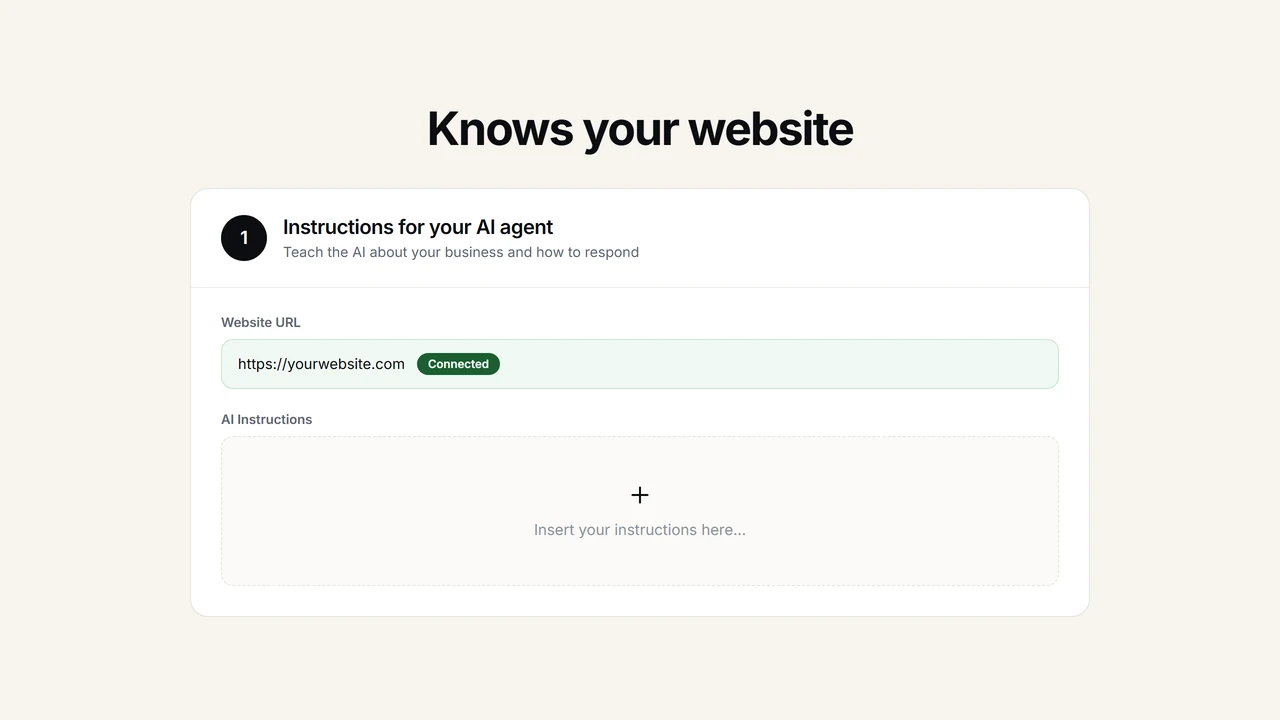
Watch the automated chatbot build itself from any website
Paste a URL and see how the AI reads the site content, then starts answering visitor questions on its own — no scripting, no decision trees, no manual training
The chatbot reads, learns, and responds — you just point it at a website
Most chatbot products require you to write scripts, build decision trees, or manually configure every possible question-and-answer pair. This one does not. You add a client's website, the AI crawls every page and builds a knowledge base from the content it finds, and from that point forward it answers visitor questions accurately and instantly — without anyone monitoring it. When the client updates their website, the chatbot picks up the changes on the next crawl automatically. On the Pro plan ($449/month), all Asyntai branding is removed. Standard plan users ($139/month) who want white-label activation can email [email protected] for manual setup.
- Always on, always currentThe AI chatbot responds to visitors at 2 AM on a Sunday the same way it does at 10 AM on a Tuesday. It does not take breaks, miss messages, or go offline. When the client's website content changes — a new blog post, updated pricing, revised office hours — the knowledge base refreshes automatically on the next crawl. No one has to remember to update the bot.
- Lead capture runs in the backgroundWhen a visitor asks a question that signals buying intent or requests contact, the chatbot collects their name, email, and inquiry details. Every captured lead appears in the client dashboard's Leads tab and can be exported as a CSV. Lead capture notifications can be sent via email, so neither you nor your client has to check the dashboard to know when a prospect has engaged.
- 36 languages without configurationThe AI detects the visitor's language and responds in it automatically. A French visitor on a Canadian client's site gets a French response. A Korean visitor on the same site gets Korean. There is no per-language setup, no translation management, and no additional cost. The automation extends to language handling — one bot covers every language a visitor might use.
Custom Tools turn the chatbot into an autonomous agent that takes action
Answering questions is the baseline. With Custom Tools on Standard and Pro plans, the chatbot calls your client's own API endpoints to perform real tasks during a conversation — checking order status, booking appointments, looking up account details, initiating returns. The visitor never leaves the chat window, and no human agent has to intervene. For agencies managing more than 20 client sites, the Custom Pro plan scales both site and message limits to match your volume.
- Order status and shipping trackingAn ecommerce client's chatbot can look up an order by number or email, return the current status and tracking number, and tell the visitor when to expect delivery — all within the chat. The visitor gets an instant answer instead of searching their inbox or waiting for a support email.
- Appointment booking and availabilityA service-based client's chatbot can query a scheduling API to check available time slots and book appointments directly. The visitor selects a date and time, the bot confirms it, and the booking appears in the client's calendar system. No phone tag, no back-and-forth emails.
- Returns and refund initiationInstead of directing visitors to a form or email, the chatbot can accept a return request, validate the order, and start the return process through the client's API. The visitor receives confirmation and next steps immediately.
- Account lookups and password resetsFor SaaS or membership-based clients, the chatbot can look up account details by email, check subscription status, and trigger password reset emails — resolving the most common support requests without any human involvement.
- Each client's tools are independentCustom Tools are configured per site, so the dental practice bot books appointments while the ecommerce bot tracks orders. There is no overlap, no shared configuration, and no risk of one client's actions affecting another's. You set up each client's tools once and the automation runs on its own.
Deploy automated AI support for a client in under twenty minutes
No scripts to write. No decision trees to build. From signup to a fully automated chatbot running on your client's site — four steps.
- Subscribe to the Pro plan at asyntai.com/pricing — $449/month for white-label branding removal, 20 sites, and 50,000 messages per month.
- Add your client's domain and let the AI crawl their website automatically. It reads every page, blog post, product listing, and FAQ section to build a knowledge base from the actual content.
- Customize the widget with your brand — your name in the header, your logo, your colors. Optionally configure Custom Tools if the client has APIs for order lookup, booking, or other actions.
- Paste the embed script into the client's site. The automated chatbot goes live immediately — answering questions, capturing leads, and handling visitor requests around the clock.
<!-- No scripts, no decision trees, no manual updates -->
<script src="https://asyntai.com/widget.js"
data-id="client-site-id" async>
</script>
# One line of code. Fully automated support.
# The bot handles everything from here.
How reselling works
From signing up to billing your first client — four simple steps.
Choose a plan
Subscribe to a plan that fits how many client websites you need. Pro is the most popular for resellers — white-label plus up to 20 websites.
View plans →Add a client website
Each website you add under your account is one client's chatbot. Add up to the number your plan allows.
Go to your dashboard →Set up the chatbot
Add the client's content, customize the widget to their brand, and install it on their site. You can also give the client read-only access to their chat logs, analytics and leads on your own website.
Setup guide →Resell at your price
Charge your client whatever you like. You own the relationship and bill them directly — the margin is yours, every month.
Reseller Resources
Everything you need to get started, answer client questions, and see the dashboard in action
Reseller Guide
Step-by-step walkthrough: white-label branding, the embeddable client dashboard, and how to get your first client live.
Read the guideReseller FAQ
Pricing, margins, billing, white-label details, platform compatibility, and everything else partners ask before starting.
View FAQClient Dashboard Demo
See the embeddable white-label dashboard with sample data — conversations, analytics, and leads under your brand.
See the demoWhite-label chatbot automation — FAQs
Common questions about how the automated AI chatbot works, stays current, and handles edge cases without human oversight.
How does the chatbot know what to say without being manually programmed?
When you add a client's website, the AI crawls every accessible page — product listings, service descriptions, blog posts, FAQ sections, about pages, contact details — and builds a knowledge base from that content. When a visitor asks a question, the AI searches the knowledge base and generates a response using the relevant information it found. There are no scripts to write and no question-answer pairs to configure. The AI reads the content and answers from it, the same way a knowledgeable employee would after reading the entire website. You can also upload additional documents — PDFs, spreadsheets, policy manuals — to fill in information that is not on the website.
Does the chatbot update automatically when my client changes their website?
Yes. When a client updates their website — adds a new product, changes their hours, publishes a blog post, revises pricing — the next crawl picks up those changes and incorporates them into the knowledge base. The chatbot's answers reflect the updated content without anyone having to manually edit or retrain anything. You do not need to notify the system, trigger an update, or re-upload content. The automation covers content freshness as well as response generation.
What happens when the chatbot encounters a question it cannot answer?
If the knowledge base does not contain enough information to answer a question accurately, the AI acknowledges the gap rather than guessing. It can suggest the visitor contact the business directly, offer to collect their contact information so someone can follow up, or redirect to a relevant page on the client's website. You can customize this behavior through AI instructions — setting fallback messages, specifying when to escalate, and defining what topics the bot should or should not attempt to address. The bot stays helpful without making things up.
Can the automated chatbot do more than answer questions?
Yes. With Custom Tools on Standard and Pro plans, the chatbot can call your client's API endpoints to perform real actions during a conversation. An ecommerce bot can check order status and initiate returns. A dental practice bot can query a scheduling system and book appointments. A SaaS bot can look up account details and trigger password resets. Each action is configured per client site, so every bot has capabilities specific to that business. The visitor gets things done inside the chat window without waiting for a human agent.
How does automated lead capture work?
The chatbot identifies buying intent and inquiry signals during conversations and collects visitor contact details — name, email, phone number, and the nature of their question. Captured leads appear in the client dashboard's Leads tab and can be exported as a CSV for import into any CRM. You can configure email notifications so the client receives an alert the moment a lead is captured. The entire process happens within the chat flow — the visitor does not fill out a separate form or navigate to a different page.
Is the automation truly hands-off after initial setup?
For the vast majority of client deployments, yes. Once the chatbot is configured and installed, it handles visitor questions, captures leads, and performs Custom Tools actions without any daily oversight. Content updates happen automatically through periodic crawls. The only reasons you would need to log in are to review analytics, adjust AI instructions for tone or scope, or add Custom Tools when a client wants new actions. Many resellers report spending less than five minutes per client per month on maintenance after the initial setup.
Does the chatbot work outside of business hours?
The chatbot responds instantly at any hour — 3 AM, weekends, holidays. There is no schedule and no downtime. This is one of the strongest selling points for your clients: their website visitors get immediate, accurate answers at the exact moment they are interested, regardless of when the business is staffed. For many small businesses, 30-50% of website visits happen outside business hours. The automated chatbot captures that engagement instead of losing it to a "We'll get back to you" contact form.
How many automated chatbots can I manage from one account?
The Pro plan supports up to 20 sites, each running as a fully independent automated chatbot with its own knowledge base, widget branding, Custom Tools configuration, and analytics. All 20 share a pool of 50,000 messages per month. If you need more than 20 sites or higher message volume, the Custom Pro plan scales both limits to fit your agency's requirements.
Can I white-label the automated chatbot so my clients never see the original brand?
On the Pro plan, all Asyntai branding is removed — including the "Powered by" badge. The widget shows your name, your logo, and your colors. The embeddable client dashboard (Conversations, Analytics, Leads) carries your branding as well. Your clients and their visitors see your brand on every surface. Standard plan users who want white-label branding can email [email protected] for manual activation.
Why agencies are replacing manual support setups with white-label chatbot automation
The traditional model for offering customer support services to clients involves hiring people, training them on each client's business, staffing shifts, and managing turnover. Even a scaled-back version — where you install a live chat tool and handle queries yourself — creates a labor dependency that limits how many clients you can serve. White-label chatbot automation eliminates that dependency entirely. The AI reads each client's website content, answers visitor questions from that content, captures leads, and performs actions through Custom Tools — all without a human operator in the loop. You deploy it, configure it once, and it runs. The result is a service you can sell to dozens of clients simultaneously, with per-client maintenance measured in minutes per month rather than hours per day.
The word "automation" gets used loosely in the chatbot industry, often to describe rule-based bots that follow a decision tree. Those systems are automated in the sense that they execute pre-written scripts, but someone has to write and maintain every branch of every script. When a client adds a new product or changes their return policy, someone has to update the script manually. The automation offered here is fundamentally different. The AI reads the client's actual website content — every page, every product listing, every FAQ entry — and generates responses from that content in real time. When the content changes, the chatbot's responses change with it. There are no scripts to write, no trees to maintain, and no manual updates to push. The automation covers not just response generation but content synchronization.
Consider what happens at 11 PM on a Saturday when a potential customer visits your client's website. With no chatbot, they browse, maybe check the FAQ page, and leave if their question is not answered. With a rule-based chatbot, they might get routed through a rigid decision tree that does not address their specific situation. With AI chatbot automation, they type their question in natural language and get a direct, accurate answer pulled from the client's own website content — instantly. If the client runs an ecommerce store, the bot can check order status through Custom Tools. If the client is a dental practice, the bot can describe available services and suggest booking a consultation. The visitor gets the same quality of response they would receive from a knowledgeable staff member during business hours, at a moment when no staff member is available.
Lead capture is one of the highest-value automations for your clients, and it runs entirely within the conversational flow. When a visitor asks about pricing, requests a quote, or inquires about availability, the chatbot recognizes the buying signal and naturally asks for their contact information. The visitor provides their name, email, and a brief description of what they need. This captured lead appears in the dashboard's Leads tab, where it can be reviewed or exported as a CSV for import into a CRM. The client can also receive an email notification the moment a lead is captured, so their sales team can follow up promptly. The difference between this and a static contact form is substantial: the visitor has already had their initial questions answered, which means the lead arrives warmer and more qualified than a cold form submission.
Custom Tools represent the most advanced layer of automation available on the platform. On Standard and Pro plans, you configure the chatbot to call your client's own API endpoints during a conversation. The tool definitions specify what parameters the AI should collect from the visitor and what endpoint to call. When an ecommerce visitor asks "Where is my order?", the bot asks for their order number or email, calls the client's order-lookup API, and returns the status and tracking information — all within the chat window. For a property management company, the bot could accept maintenance requests by collecting the unit number, issue description, and urgency level, then submitting the request through the client's maintenance API. Each client's Custom Tools are configured independently, which means you can tailor the automation to each business's specific workflows and available integrations.
The economics of automated support versus human support are not close. Hiring a customer support agent costs a minimum of $2,500-$4,000 per month depending on location, and that agent can handle one conversation at a time during their shift. The Pro plan costs $449 per month and supports up to 20 client sites with 50,000 messages, handling dozens of simultaneous conversations around the clock. When you pitch this to a client, the comparison sells itself: replace the cost of a part-time support hire with a chatbot that handles an order of magnitude more conversations, never calls in sick, never needs training on new products, and automatically stays current when the website content changes. You are not competing with their existing support team — you are offering a layer of automation that covers the hours and volume that team cannot.
The self-updating knowledge base is what makes the automation genuinely low-maintenance rather than just low-effort at launch. Many chatbot products require an initial content upload and then ongoing manual updates whenever the client's information changes. This creates a hidden service burden — you become responsible for keeping every client's bot current, which scales poorly beyond a handful of sites. Here, the AI crawls the client's website periodically and incorporates any changes it finds. A new blog post about seasonal services? The bot can reference it. An updated price list? The bot quotes the new prices. A new location added to the contact page? The bot knows about it. You do not have to remember to update twenty clients' chatbots when their websites evolve. The automation handles the maintenance, not just the responses.
Multilingual automation deserves specific attention because it removes an entire category of setup work. The AI supports 36 languages and auto-detects the visitor's language. A German visitor on an Austrian client's site gets German responses. A Spanish visitor on a Miami-based client's site gets Spanish responses. A Japanese visitor on a global ecommerce store gets Japanese responses. All of this happens without per-language configuration, separate knowledge bases, or translated scripts. The bot reads the client's content (in whatever language it is written in) and responds in the visitor's language. For agencies serving clients in multilingual markets — which is most of North America, Europe, and Asia — this eliminates the work and cost of setting up language-specific support channels.
Deploying automated support for a new client follows a consistent, repeatable process that takes roughly twenty minutes. You add the client's domain in your dashboard, let the AI crawl their site, configure the widget branding (your name, your logo, your colors), optionally set up Custom Tools if the client has APIs available, and paste the embed script into the client's website. The script is a single line of JavaScript that works on WordPress, Shopify, Wix, Squarespace, Webflow, Magento, and virtually any other platform — there are official plugins for 30+ platforms, and the raw script works on anything that supports custom HTML. The bot goes live the moment the script loads. Within an hour of starting, the client has an automated AI chatbot on their website that answers questions, captures leads, and handles requests without anyone monitoring it.
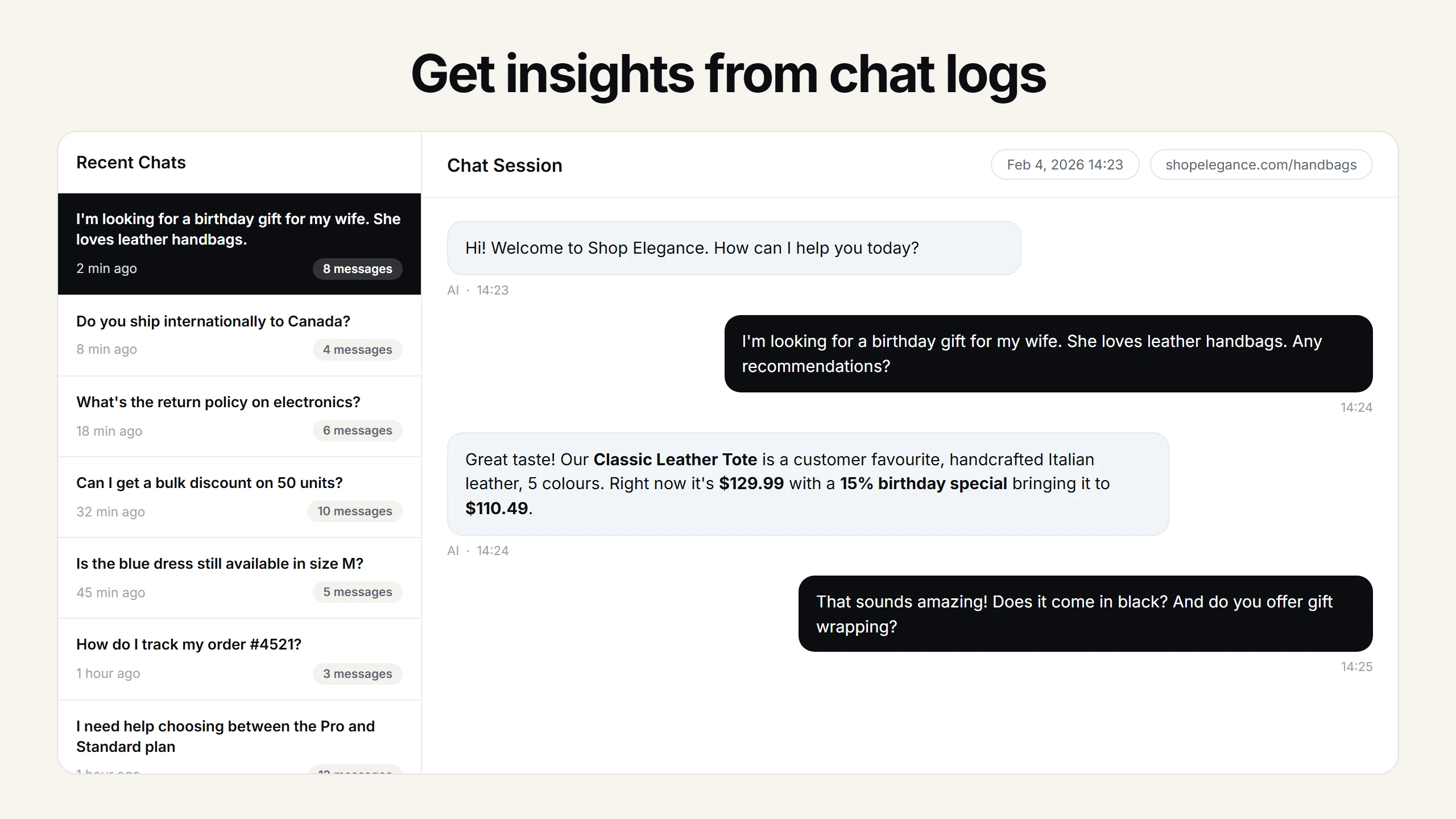
The client dashboard gives your clients visibility into what the automation is doing without requiring them to contact you for reports. Through the embeddable dashboard — which you host on your own website, branded with your logo and colors — each client can see three tabs. Conversations shows full chat transcripts with visitor details, so the client can review exactly what the bot said and how visitors responded. Analytics tracks message volume, engagement patterns, and usage trends over time. Leads displays every captured contact with their inquiry, and offers CSV export for CRM import. This transparency builds client confidence in the automation. They can see that the bot is handling real questions accurately, which reinforces the value of the service you are billing them for each month.
Reliability is not a feature that gets highlighted often, but it matters enormously for automated systems that run without oversight. The chatbot loads asynchronously on the client's website, which means it does not interfere with page load speed or existing functionality. If the client's website goes down, the chatbot is unaffected — it is served from Asyntai's infrastructure. If the internet connection between the visitor and the chatbot experiences a hiccup, the widget handles reconnection gracefully. The system is designed for the reality that automated tools need to work without someone watching them. There is no "the bot went offline and nobody noticed until Monday" scenario. It runs, it responds, it captures leads, and it stays current — continuously, without intervention.
Vertical specialization amplifies the value of automation for specific industries. A real estate agency client's bot can answer questions about listings, neighborhood amenities, and open house schedules — all pulled from the website content — and capture buyer leads with their budget, preferred area, and timeline. A fitness studio client's bot can describe class schedules, membership options, and trainer specialties, then collect trial class sign-ups. An accounting firm's bot can outline service areas, explain the onboarding process, and collect prospective client details for tax season. In each case, the automation handles the most common visitor questions and lead capture scenarios for that vertical, which means you can position your offering as industry-specific automated support rather than a generic chatbot. Industry-specific positioning lets you charge higher prices because the client perceives a tailored solution rather than a one-size-fits-all tool.
Scaling from five to twenty clients — and beyond — is where the automation model separates from any service that involves human labor. Your fifth client requires the same twenty-minute setup as your first. Your twentieth client requires the same. There is no incremental staffing cost, no additional support shifts, and no proportional increase in your workload. The Pro plan's 50,000 monthly messages are shared across all your sites, and quiet sites naturally subsidize busier ones. When you reach the ceiling of 20 sites or 50,000 messages, the Custom Pro plan extends both limits. The marginal cost of adding a client is functionally zero until you hit the plan ceiling, and even then, the incremental cost is far below what hiring additional support staff would require.
The pitch to clients becomes straightforward when you can demonstrate automation rather than describe it. You add the prospect's website URL to a demo environment, let the AI crawl it, and within minutes you have a working chatbot that answers real questions about their business using their own content. You open the chat widget and ask it a question you know their visitors ask — store hours, return policy, product availability, pricing for a specific service — and it answers accurately from the prospect's own website content. The prospect watches an AI chatbot demonstrate, in real time, that it can handle their visitors' questions without any setup work beyond pointing it at their URL. That demo closes deals because the automation is not hypothetical. It is running on their content, answering their questions, in front of their eyes.
Questions about white-label chatbot automation? Reach out at [email protected] — we respond within 24 hours.