A chatbot for your ecommerce website — embedded in minutes, answering from your catalog
Asyntai is a chatbot built to live directly on ecommerce websites. One JavaScript snippet embeds it on any storefront, the AI absorbs your product pages and policies, and visitors get real answers in 36 languages without leaving the page they landed on.
See a chatbot on your ecommerce website
Paste your store URL below and preview exactly how the chatbot would behave on your pages
Lives on your website the way a search bar does — always there, never in the way
A chatbot for an ecommerce website needs to feel like part of the site, not a third-party popup hijacking the page. Asyntai embeds as a lightweight widget that sits in the corner, opens when a visitor has a question, and stays invisible when they do not. It reads the same catalog your product pages display, so its answers match what the visitor is already looking at.
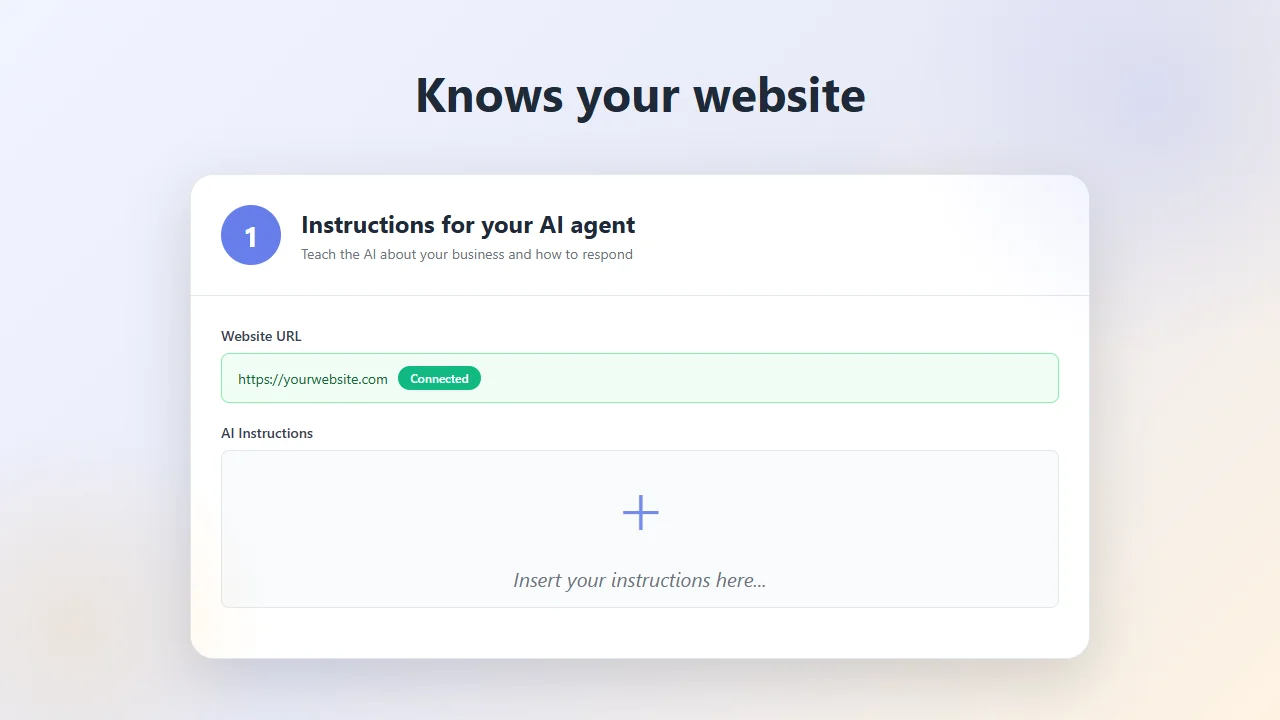
- Absorbs your product pages automaticallyPoint the crawler at your ecommerce website and it reads every product, collection, policy, and FAQ it can reach — turning your existing site content into the chatbot's working knowledge.
- Supplement with documents visitors cannot seeInternal supplier lead times, restock schedules, wholesale pricing rules, unpublished care guides — upload as files or paste as text, giving the chatbot access to information it can cite without revealing it publicly on the website.
- WooCommerce REST API for live catalog dataWooCommerce sites can connect read-only API keys so the AI chatbot for WooCommerce pulls current prices, variant stock, and product images directly — no re-crawl needed when inventory changes.
Catches the visitor who would have left your website in the next ten seconds
Most ecommerce website visitors who leave do so silently — no abandoned-cart email, no exit survey, no contact-form submission. The chatbot intercepts that silence by surfacing at the moment hesitation sets in, offering a direct answer before the visitor switches tabs.
- Configurable auto-open on key pagesSet the chatbot to surface after a delay on product pages, cart pages, or checkout — separately tuned for desktop and mobile so it nudges without disrupting.
- Order tracking through User ContextOn Standard and Pro plans, your website passes the logged-in buyer's order data to the chatbot via a JavaScript object. The AI answers tracking and status questions inline, no separate support portal needed.
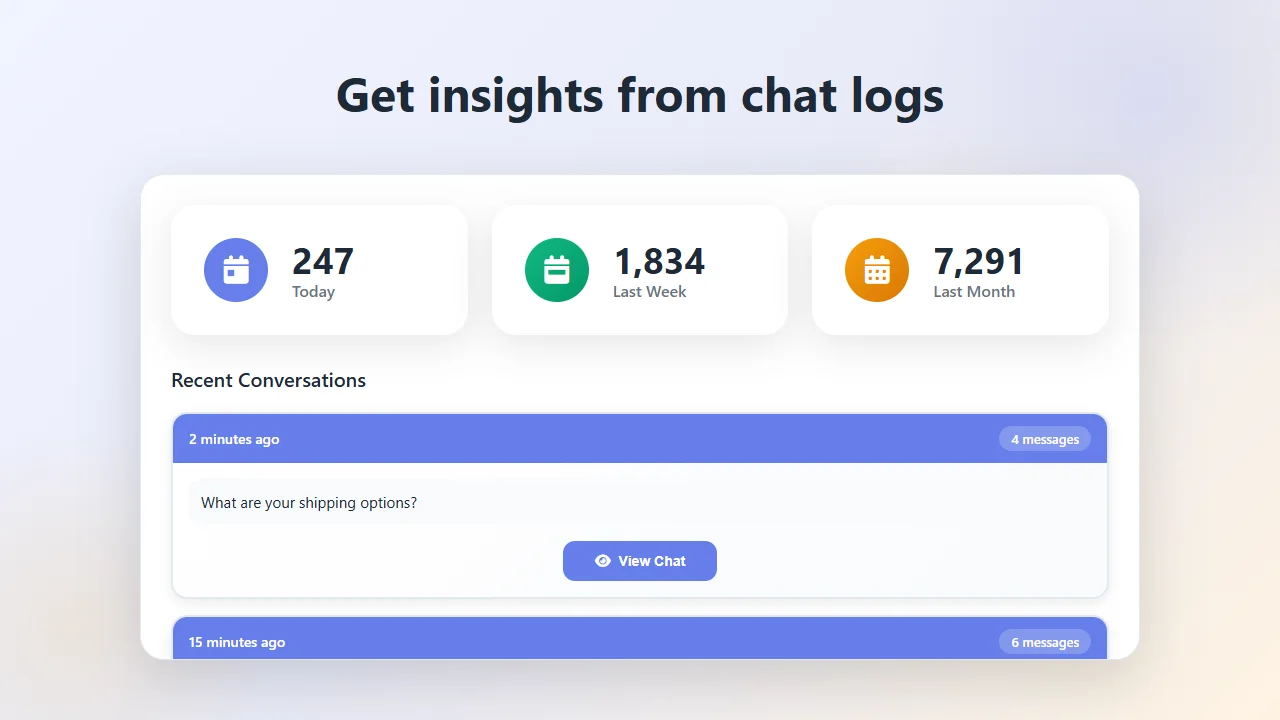
- Leads saved with full conversation historyWhen the chatbot cannot resolve a question itself, it collects an email or phone number. The contact and the entire transcript appear in your Asyntai dashboard and optionally arrive in your team inbox by email.
One snippet turns any ecommerce website into a conversational storefront
The chatbot is a single async JavaScript tag. It does not depend on your ecommerce platform, your theme framework, or your hosting provider. Paste it into the site header, and the chatbot is present on every page your storefront serves.
- Sign up for Asyntai — free, no card required, 100 messages included to start.
- Copy your personal embed snippet from the dashboard.
- Paste it into your ecommerce website's
<head>tag via theme editor, CMS header field, or tag manager. - Point the crawler at your site URL, review a few test conversations, then publish.
<script src="https://asyntai.com/widget.js"
data-id="your-store-id" async>
</script>
# Same tag whether the website runs on Shopify,
# WooCommerce, Magento, or a custom stack.
Chatbot for ecommerce website — FAQs
Practical questions store owners ask before embedding a chatbot on their website.
Does the chatbot work on any ecommerce website, or only specific platforms?
Any website that renders HTML in a browser. The chatbot is a JavaScript embed, not a platform plugin, so it runs the same way whether your ecommerce website is built on Shopify, WooCommerce, Magento, BigCommerce, PrestaShop, Wix Stores, Squarespace Commerce, OpenCart, a headless frontend, or a fully custom codebase. If the site loads in a browser, the snippet works.
How does the chatbot learn what my website sells?
You give it your site URL and the training crawler reads every reachable page — products, categories, policies, FAQs, about pages. It assembles a knowledge base drawn directly from your website's own content. For WooCommerce specifically, an optional REST API connection syncs structured product data including variants and live pricing. You can also upload private documents the website does not display publicly.
Will it interfere with my website's checkout or page speed?
No. The script loads asynchronously after the rest of your page has rendered. It behaves the same way as an analytics pixel or a marketing tag — off the critical path, no blocking of checkout scripts, payment gateways, or above-the-fold rendering.
Can visitors on my website get order status through the chatbot?
Yes. The User Context hook on Standard and Pro tiers lets your website inject a JavaScript object containing the signed-in buyer's order details — status, tracking number, carrier, estimated delivery — which the chatbot reads at session start. The AI weaves that data into its replies naturally. Your website controls exactly what gets shared; Asyntai has no direct access to your store backend.
What languages does the chatbot handle for international visitors?
The widget interface ships in 36 languages. When a visitor writes their first message, the AI identifies the language and responds in kind — automatically, with no manual setup. A Korean-speaking visitor browsing your English-language ecommerce website types a question in Korean and receives a Korean reply. No translation plugin, no locale toggle, no duplicated site content needed.
Can I match the chatbot's appearance and tone to my website's brand?
Yes. Color scheme, placement, greeting text, avatar, and auto-open timing are all editable inside the Asyntai dashboard, with changes visible in a live preview. You also write behavior instructions in plain English — shaping how the chatbot sells, what it recommends, when it escalates, and what it must never say — all reflected instantly on your website.
How many ecommerce websites can I run the chatbot on?
Depends on your plan: Free supports 1 website, Starter 2, Standard 3, Pro up to 10. Each website gets a separate chatbot with its own catalog knowledge, conversation history, and behavior rules — useful for multi-brand operations, regional storefronts, or agencies managing client websites.
What does the chatbot cost for a typical ecommerce website?
Free to start: 100 monthly messages, no card on file. When volume grows, the entry paid plan costs $39/month and covers 2,500 messages — sufficient for most small-to-medium ecommerce websites under normal traffic. You receive email alerts before the cap is reached, so a sudden sale spike does not silently shut off the chatbot.
Why embedding a chatbot directly on your ecommerce website changes the economics of every visit
Think about what happens on an ecommerce website between the moment a visitor arrives and the moment they either buy or leave. They click an ad, a search result, a social post, or a referral link. The browser loads a product page. The visitor scans photos, reads whatever copy exists, scrolls through reviews if there are any, and within thirty to ninety seconds forms a question the page did not answer. Maybe it is about fit. Maybe about compatibility with something they already own. Maybe about whether international shipping includes duties. Maybe about a restock date for the variant they actually want. The question is specific, the answer exists somewhere on the website, and the visitor cannot find it before their patience runs out. They close the tab and the merchant never knows what happened. A chatbot for an ecommerce website exists to catch that visitor during those thirty to ninety seconds and deliver the answer before the tab closes.
The website framing matters here because it distinguishes this from help desks, ticketing systems, email bots, and social-media auto-responders. Those tools operate after the visitor has already left the website. A chatbot embedded on the ecommerce website itself operates while the visitor is still browsing, still warm, still holding a half-formed purchase intent. The timing difference is everything. A visitor who gets a sizing answer while standing on the product page is dramatically more likely to add to cart than a visitor who gets the same answer in an email reply six hours later. The chatbot turns the website from a static catalog into a surface that responds.
What makes ecommerce websites specifically suited for embedded chatbots is the density of structured information they already contain. A fashion site has hundreds of product pages, each with images, descriptions, variant selectors, and occasionally a size guide somewhere. A homeware site has dimensions, materials, assembly notes, and shipping restrictions per product. A beauty brand has ingredient lists, usage instructions, and skin-type recommendations spread across product and editorial pages. All of this content already lives on the website — the visitor just cannot search it efficiently in the moment they need it. Asyntai's training crawler reads every reachable page on your ecommerce website, absorbs the content, and uses it to ground every chatbot response in actual catalog data. On WooCommerce sites, a REST API sync adds structured product details — variants, stock levels, live pricing — so the chatbot's answers stay accurate even when inventory shifts daily.
The embed itself is intentionally simple because the install experience determines whether merchants actually deploy the chatbot or abandon it during setup. It is one JavaScript tag. You paste it into the header of your ecommerce website — through a theme editor on Shopify, a header-scripts field on BigCommerce, a child-theme function on WooCommerce, a code-injection panel on Squarespace, or a custom template on any self-hosted cart. The tag loads asynchronously after the rest of the page has rendered, so it never delays product images, checkout scripts, or payment gateway calls. Once pasted, the chatbot is live across every page your ecommerce website serves. No marketplace submission, no approval queue, no theme dependency, no version lock. The website owns the embed the way it owns any other script tag.
Proactive behavior on the website is where conversion impact concentrates. A chatbot that sits in a corner and waits for a click handles only the visitors who are already inclined to seek help — a tiny fraction of total traffic. The auto-open feature triggers the chatbot after a merchant-defined pause on whichever pages you select: product pages, the cart, the checkout step. Separate timing for desktop and mobile prevents the full-screen interruption that drives mobile visitors away. The opener message is yours to write — a gentle prompt that matches your brand voice, not a generic template. Merchants who calibrate this well find that proactive opening is the single largest source of chatbot conversations and, by extension, the largest source of recovered revenue from visitors who were otherwise seconds from leaving.
Multilingual capability on an ecommerce website is a sharper advantage than it first appears. Consider a DTC brand that ships to fifteen countries from a single English-language website. Organic search, social sharing, and paid ads in non-English markets all drive visitors who arrive on the English product page and either muddle through or leave. Embedding a chatbot that responds in whatever language the visitor writes — covering 36 languages, recognized from the opening message — means a German visitor asking about shipping to Munich receives a German reply sourced from the shipping policy on your English website. No translation plugin, no multi-storefront setup, no hreflang configuration. The chatbot becomes the multilingual layer the website itself lacks, and for brands with even modest international traffic, this feature alone regularly justifies the subscription in recovered sessions.
Post-purchase questions are the highest-volume support category on most ecommerce websites, and historically the category that forces merchants into either a full helpdesk tool or a stream of manual email replies. The User Context hook — accessible on Standard and Pro tiers — lets your ecommerce website inject signed-in buyer data into a JavaScript object that the chatbot reads when the session begins. Order status, tracking number, carrier, estimated delivery, items purchased — whatever the website chooses to share. The chatbot references that data conversationally: "Your order shipped this morning with DPD, tracking reference enclosed, expected Friday." The merchant controls the scope completely. Asyntai never calls your store's API; your website decides what context the chatbot receives, per page, per visitor.
Lead capture serves the conversations the chatbot cannot close on its own. A bulk engraving inquiry, a wholesale request from a boutique buyer, a return dispute involving a damaged parcel — these need human follow-up. The chatbot recognizes the boundary, collects an email or phone number, and saves the entire conversation to your Asyntai dashboard. With email notifications enabled, the transcript also lands in your team inbox within seconds. The lead record includes browsing context, the visitor's exact questions, and the chatbot's attempted responses — so your team replies informed, not cold. The website never loses a visitor's intent even when the chatbot cannot fulfill it alone.
Analytics from the chatbot turn your ecommerce website's conversation log into a live audit of where your product pages fall short. Every repeated visitor question is a signal that specific information is missing or buried on the site. If a dozen visitors this month asked whether a particular jacket is water-resistant, the product page needs a fabric-specs section. If international visitors consistently ask about customs duties at checkout, the shipping page needs a duties callout above the fold. If visitors keep asking for comparisons between two similar products, a comparison table on the collection page would preempt the question entirely. Over weeks, the chatbot's conversation data becomes the most actionable feedback loop a merchandising team can review — not survey responses, not NPS scores, but the exact questions real visitors typed when they were trying to spend money and could not find the answer on the page in front of them.
Brand consistency matters because a chatbot that sounds generic undermines the trust the rest of the website has built. Asyntai handles this through plain-English behavior instructions that govern every exchange, regardless of language. A luxury brand writes "warm tone, no exclamation marks, reference craftsmanship." A sports nutrition brand writes "lead with macros, never make health claims." A toy store writes "enthusiastic, mention age suitability, suggest play-theme bundles." The chatbot absorbs those rules and shapes every response accordingly, so the conversation window feels native to the website rather than dropped in from a template library.
Running multiple ecommerce websites from one account is straightforward. Plan tiers define the ceiling: Free allows one website, Starter two, Standard three, Pro scales to ten. Every website runs an independent chatbot — separate crawler scope, separate documents, separate behavior rules, separate logs. A holding company with four DTC brands manages them from one dashboard; an agency with eight client websites fits on Pro. No cross-contamination of product knowledge or policies between sites.
Pricing is built around the premise that a chatbot for an ecommerce website should cost less than the revenue it recovers in its first week. The free tier — 100 messages per month, no credit card — exists for merchants who want to verify that visitors on their specific website actually engage with a chatbot before committing a dollar. The entry paid plan runs $39/month and includes 2,500 messages — enough for the typical monthly chat volume of a small-to-medium ecommerce website with steady organic and paid traffic. Higher tiers scale up for websites with heavier volume — active DTC brands, flash-sale cycles, holiday peaks. Email warnings fire before you approach the message cap, giving you time to upgrade before the chatbot pauses during a busy period.
The honest constraint worth naming is that no chatbot can answer questions whose underlying information does not exist. If a product page has no sizing data, the chatbot will not invent measurements. If no return policy has been added anywhere, the chatbot will not fabricate one. Answer quality is directly proportional to the information available on and behind the ecommerce website. Merchants who spend thirty minutes uploading internal knowledge alongside the crawl see a clear accuracy improvement. The chatbot is a force multiplier for the content your website already has — it does not replace the need to have that content in the first place.
Setup follows a predictable arc. Paste the snippet into the website header. Point the crawler at the homepage. Upload any internal documents the public site does not contain. Write a handful of behavior instructions capturing the brand voice. Test a few conversations, then publish. Most merchants finish in under an hour. From that point the chatbot operates continuously — intercepting questions that would otherwise end in silent bounces, delivering multilingual answers the website alone cannot provide, collecting leads the site would never have captured, and highlighting product-page gaps that deserve editorial attention. Every visitor your website receives from ads, search, email, or social meets a storefront that talks back.