AI Chatbot for ReadMe API Docs
Let developers ask your documentation a question instead of scrolling through it. Your AI assistant reads your ReadMe hub — endpoint reference, auth guides, quickstarts — and replies with the exact answer and a link to the page it came from.
Try it on your own docs for free
Enter your documentation URL and see how an AI assistant would answer developer questions
See It In Action
Built for teams who maintain a ReadMe hub and want developers to get unblocked without filing a ticket or pinging dev-rel
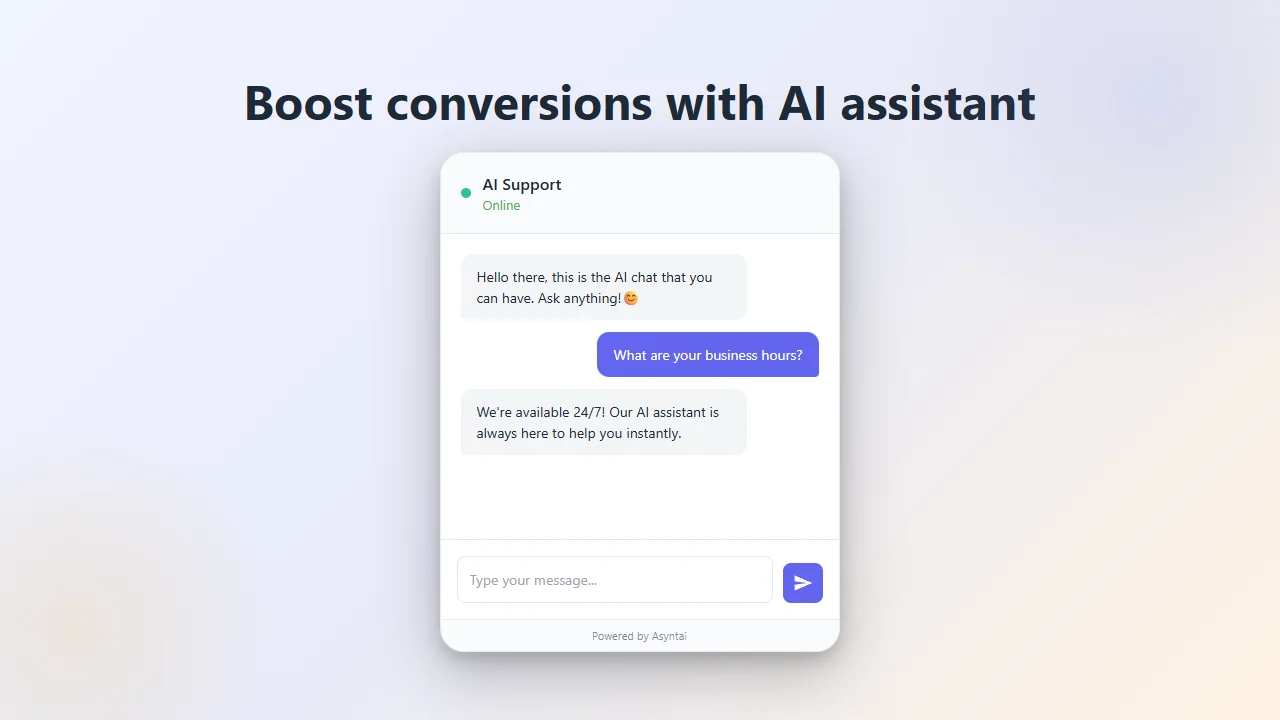
Answer Integration Questions in the Docs
A developer is wiring up your API and needs to know which header carries the auth token, or what shape a webhook payload takes. Rather than skimming five reference pages or opening a support thread, they ask the assistant and get the answer drawn straight from your ReadMe content — with a link to the exact endpoint or guide so they can keep building.
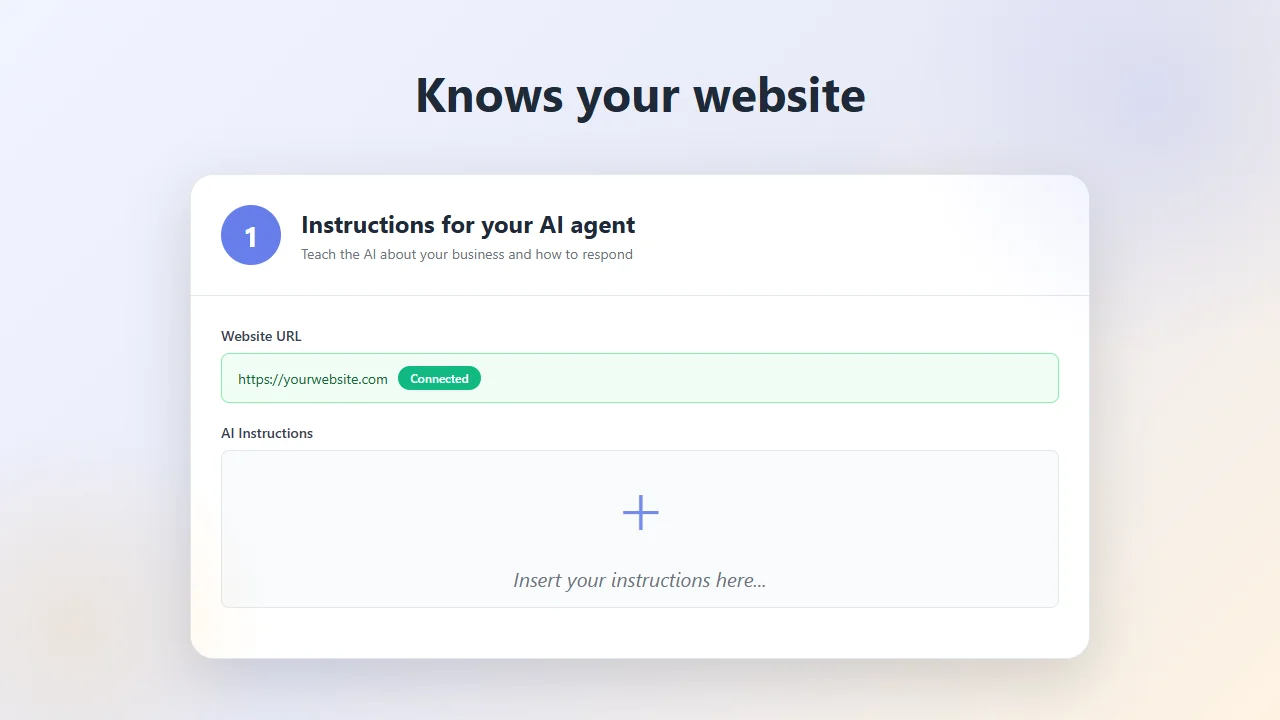
Knows Your Whole API Reference
Point the assistant at your ReadMe hub and it indexes every reference page, quickstart, authentication guide, and recipe you publish. Add internal material the hub does not cover — an SDK changelog, a migration FAQ, sample payloads — as PDFs or text files. The result is one place that understands your entire developer surface, not just the page someone happens to land on.
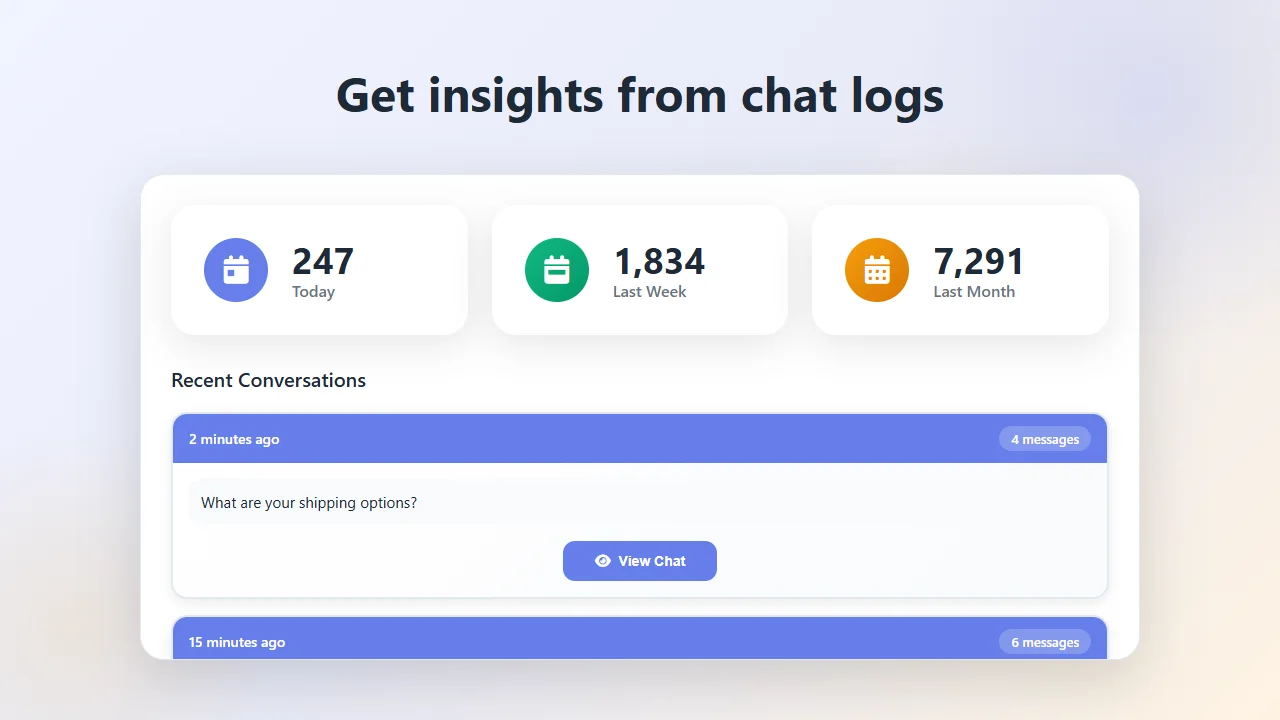
See Where Developers Get Stuck
Read the chat logs and you will see exactly where your reference falls short. Maybe everyone asks about pagination because it is buried in one endpoint, or the OAuth scopes are never spelled out. These are gaps you would never catch from page views alone, and each one points to a doc you can fix to cut the next round of questions.
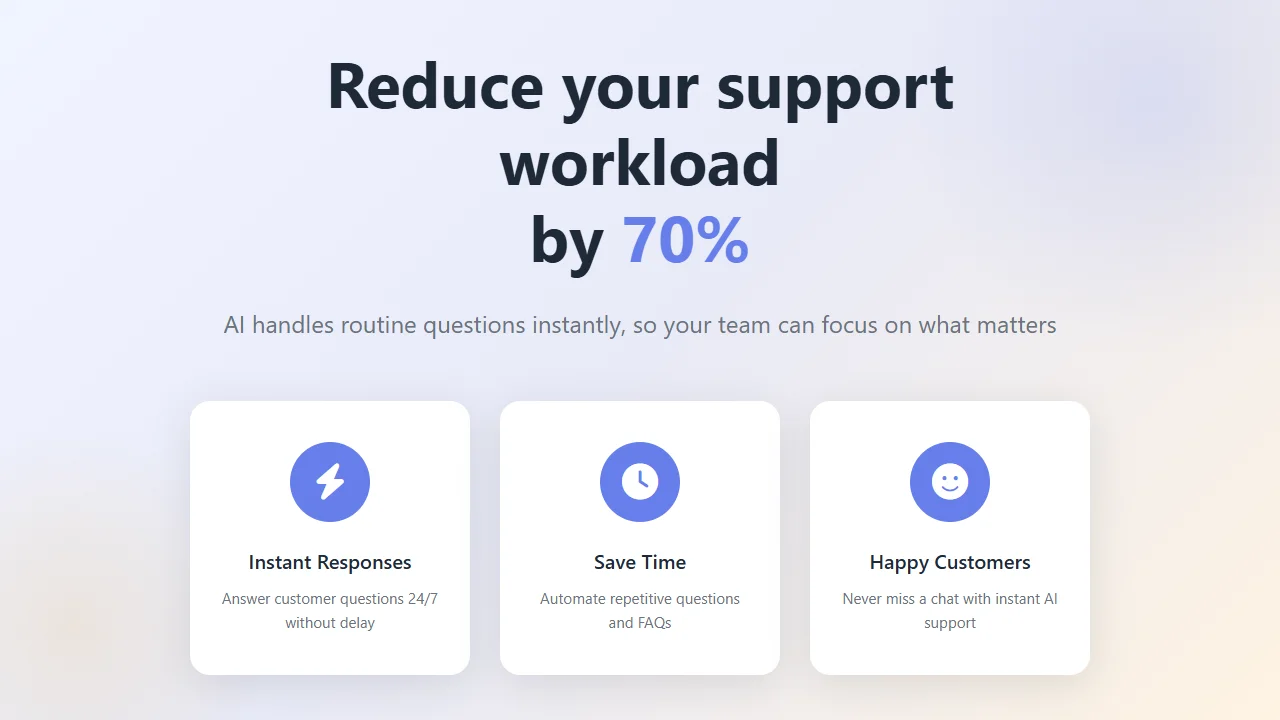
Take Pressure Off Dev-Rel and Support
"What's the rate limit?" "Why am I getting a 401?" "Is there a Python example?" The same handful of integration questions land in your support queue and developer community day after day. The assistant resolves them right inside the docs from your own reference, so your engineers and dev-rel team spend their time on the hard problems instead of repeat answers.
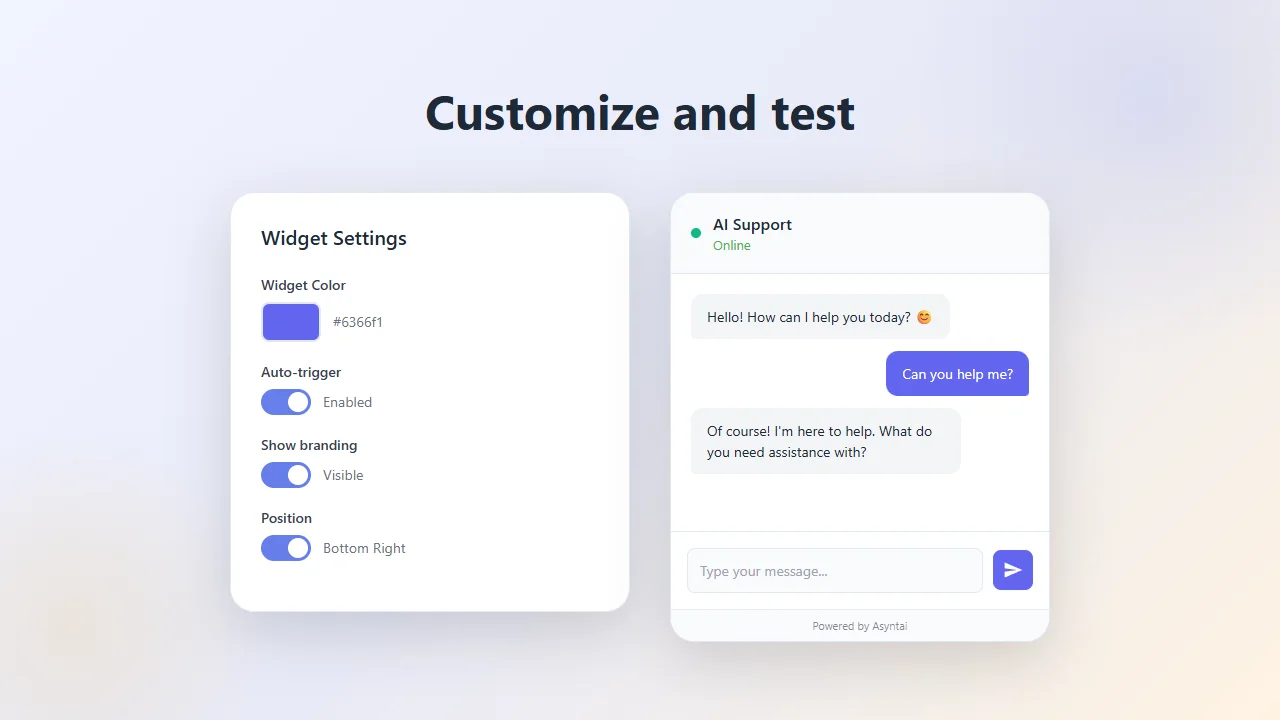
Match Your Developer Hub
Set the widget colors, position, and welcome message so it reads as a native part of your ReadMe hub rather than a bolted-on chat box. Tune the tone for a technical audience, add instructions like pointing SDK questions to the right quickstart, and test conversations before you publish the snippet live.
Have any questions? Try our AI chatbot right now
Ask it anything — it is live on this page
Built for ReadMe Developer Hubs
Paste one snippet into Custom JavaScript and your reference, guides, and quickstarts become answerable in plain language.
One Snippet, No Build Step
Drop the Asyntai snippet into ReadMe's Custom JavaScript field and the assistant appears across your hub. There is nothing to fork, deploy, or maintain in your docs repo — ReadMe injects it on every page for you.
Speaks in Endpoints and Params
Because it is grounded in your reference, the assistant answers the way a developer asks — naming the right endpoint, the parameters it accepts, the auth header it needs, and the response field they are after, with a link back to the source page.
Returns Code, Not Just Prose
If your docs include request examples and snippets, the assistant can surface them in its reply, so a developer asking "show me a curl example for this call" gets a usable starting point instead of a paragraph describing one.
Routes Questions Your Way
Add instructions such as "send SDK questions to the Node quickstart" or "always link the rate-limit page when usage comes up." The assistant follows your routing rules so developers land on the canonical guide every time.
Answers a Global Dev Audience
Your API is consumed by developers everywhere. The assistant detects the language a question is asked in and responds in kind, so a developer reading your reference from Berlin or São Paulo gets the same clear answer.
Grounded in Your Docs Only
The assistant answers strictly from your ReadMe content and uploaded files. It will not invent an endpoint that does not exist or guess at a parameter — if your docs do not cover something, it says so and points to support rather than hallucinating an API.
Add It to ReadMe in Four Steps
You add the assistant through ReadMe's built-in Custom JavaScript field, so it appears across your whole hub without changing your docs source. Custom JavaScript is available on ReadMe's paid plans.
-
1
Sign up and copy your snippet
Create your Asyntai account, add your documentation URL so the assistant can index your hub, and copy your unique snippet from the dashboard.
-
2
Open Custom CSS & JavaScript in ReadMe
In your ReadMe project, go to the Appearance settings and open the Custom CSS & JavaScript section.
-
3
Paste into the Custom JavaScript box
Add the Asyntai snippet to the Custom JavaScript field. ReadMe includes it at the bottom of every page in your hub automatically.
-
4
Save and you are live
Save your changes and the assistant is ready, answering developer questions across your reference and guides.
Sign up free and get your personalized integration code instantly
Why Teams Add Asyntai to Their ReadMe Hub
Start free with 100 messages, upgrade as your developer traffic grows
Lighter Load on Dev-Rel and Support
The integration questions that flood your community channels and support queue get resolved inside the docs from your own reference. Your engineers and developer advocates get their focus back for SDK work, sample apps, and the genuinely tricky tickets.
Faster Time to First Call
A developer who can ask "how do I authenticate?" and get an exact answer with a link gets to a working request sooner. Removing friction in the first ten minutes is what turns an evaluator into someone who actually ships on your API.
A Map of Your Documentation Gaps
Every question is a signal. The chat logs show you which endpoints confuse people, which guides are missing, and which errors go unexplained — a prioritized backlog for improving your reference that you cannot get from page views.
Frequently Asked Questions
Everything you need to know about adding an AI assistant to your ReadMe developer hub
An AI Assistant for Your ReadMe Developer Hub
From Reading Docs to Asking Them
ReadMe gives you a polished home for an API reference and a set of guides, with an explorer that lets developers try calls without leaving the page. What it does not do is let someone phrase a question in their own words and get a direct answer. A developer with a specific problem — the right scope for an OAuth token, the field that holds a cursor for pagination — still has to guess which page holds it and read until they find it. An AI assistant closes that gap by sitting on top of the same content and turning your reference into something a developer can simply ask.
Because the assistant is grounded in the pages you already publish, it does not replace your documentation; it makes it reachable from a single question. Someone deep in an integration can type what they are stuck on and get the relevant endpoint, the parameter they missed, or the example they need, along with a link to the canonical page. The work you put into writing good docs pays off more often, because more developers actually reach the right page.
The Questions Every API Gets
Every developer hub fields a recognizable set of questions. How do I authenticate? Which base URL should I use? What are the rate limits, and what happens when I hit them? Why is this call returning a 422 instead of the object I expected? Is there a code sample in my language? These are not signs of bad documentation — they are the natural questions of someone integrating for the first time, and they arrive constantly.
The assistant fields this layer of questions directly. It has indexed your authentication guide, your endpoint reference, and any error tables or recipes you publish, so it can explain which header carries the key, what a given status code means in your API, or how to page through a large result set. A developer integrating at 2am in another time zone gets the same precise answer your best engineer would give, drawn from the same source of truth.
A Better Developer Experience, Measured
Developer experience is often discussed and rarely measured. With an assistant in your hub, the conversations become data. You can see which endpoints generate the most confusion, which guides developers cannot find, and which errors send people searching. Instead of guessing where your reference is thin, you get a ranked list of the things real integrators struggle with — a backlog for your documentation that comes straight from usage rather than intuition.
That feedback loop compounds. You answer a recurring question once by improving the underlying doc, the assistant then serves that improved content, and the question stops reaching your team. Over a few release cycles the reference gets sharper exactly where it matters, and the support and developer-relations time that used to go to repeat integration questions goes to SDKs, sample projects, and the work that actually moves adoption.
Set Up Without Touching Your Docs Pipeline
Adding the assistant does not mean changing how you author or deploy your docs. ReadMe exposes a Custom JavaScript field in its Appearance settings, and that is the only place you touch. You create an Asyntai account, point it at your documentation URL so it can index the hub, copy your snippet, and paste it into that field. ReadMe loads it at the bottom of every page for you, so there is nothing to add to your Markdown, your OpenAPI file, or your build.
From there, everything is configured in the Asyntai dashboard. You can upload supplementary material the hub does not cover, write routing instructions so certain topics always link to the right quickstart, set the tone for a technical audience, and style the widget to match your hub. The reference stays the single source of truth in ReadMe, and the assistant stays a thin layer on top that you tune without ever redeploying your documentation.
Make Your API Docs Answerable
Start free with 100 messages and let developers ask your ReadMe hub instead of digging through it.