AI Chatbot for Your Helpjuice Knowledge Base
Readers often skim three articles and still leave unsure. Add an AI assistant that reads your Helpjuice content and hands customers and teammates a direct answer in plain language, with a link to the exact article it came from.
Try it on your own knowledge base for free
Enter your help center URL and see how an AI assistant would answer from your articles
See It In Action
Built for support and knowledge teams who would rather their Helpjuice content answer the question than have it sit unread
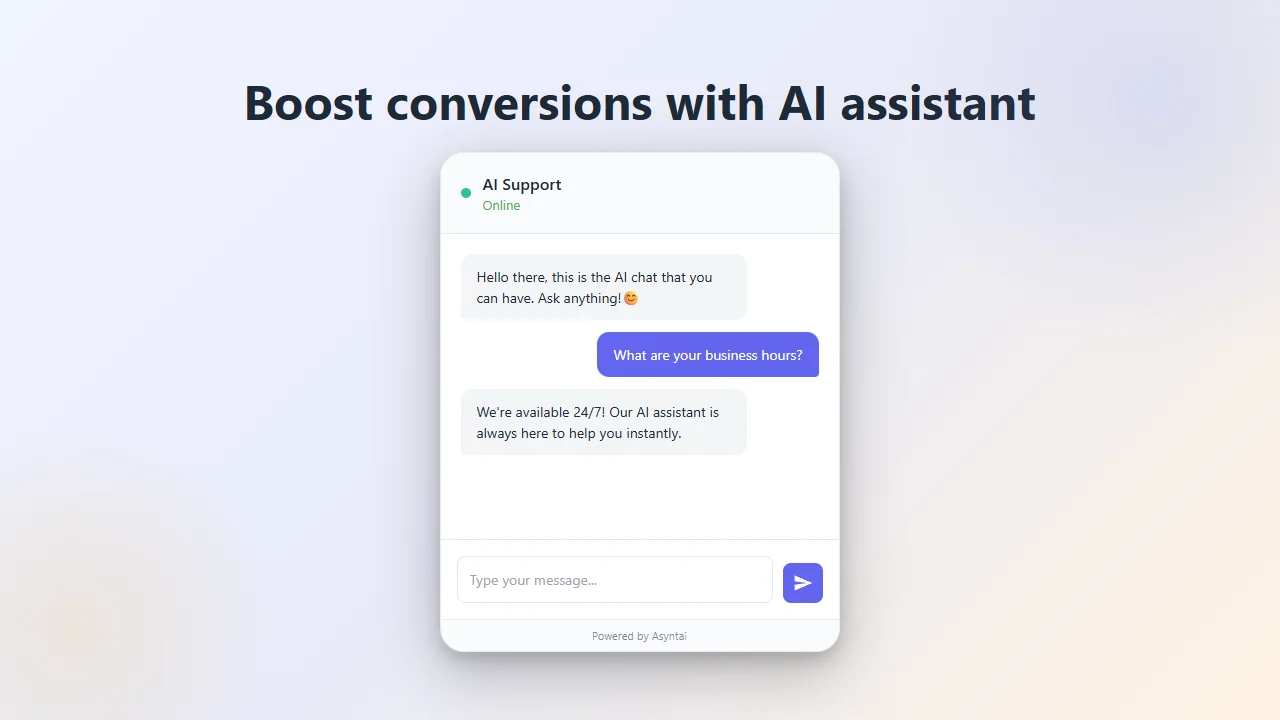
Give Readers the Answer, Not a List of Articles
Someone searching your help center for "how do I change my plan" usually gets a page of blue links and has to guess which one fits. The assistant reads the relevant articles and replies with the actual steps, then cites the source so the reader can dig deeper if they want. Fewer dead ends, fewer people giving up and emailing support.
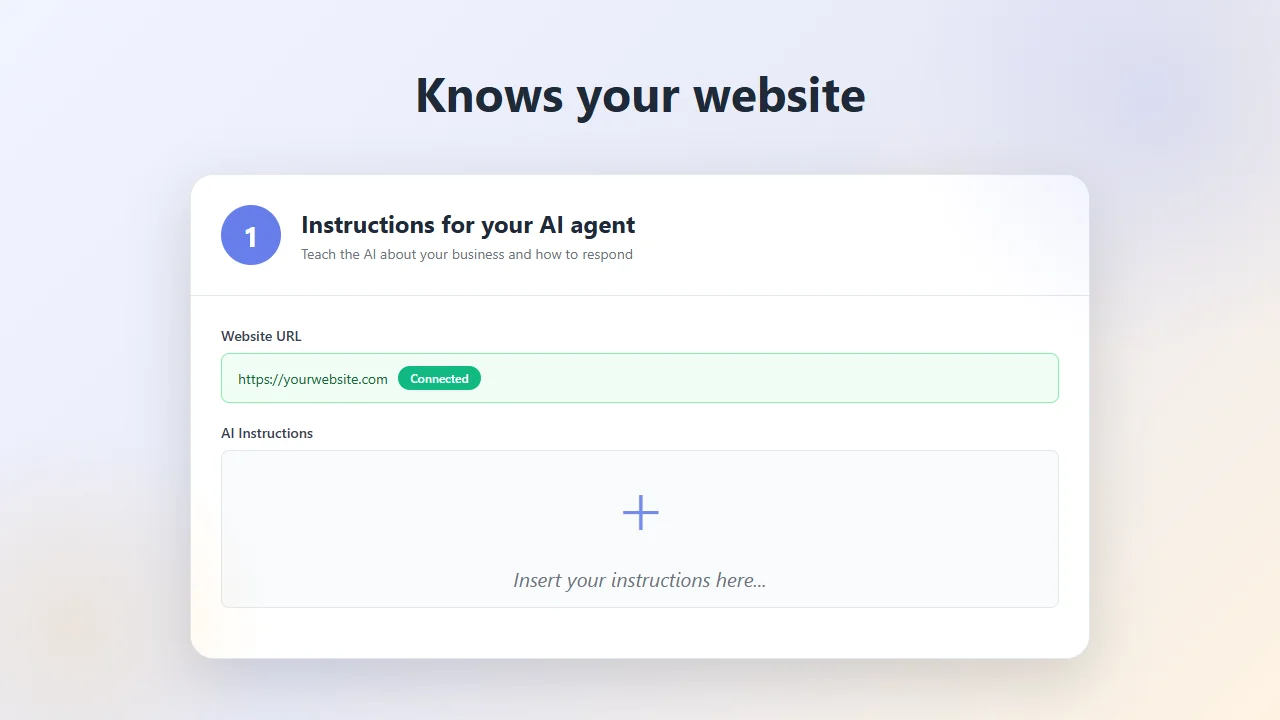
Built From Your Whole Knowledge Base
Point Asyntai at your Helpjuice URL and it reads every published article and category automatically. Add the things that never made it into an article — internal billing rules, an onboarding checklist, a release-notes PDF — and the assistant folds them in too. It answers from your help content, so it stays on-message instead of inventing things.
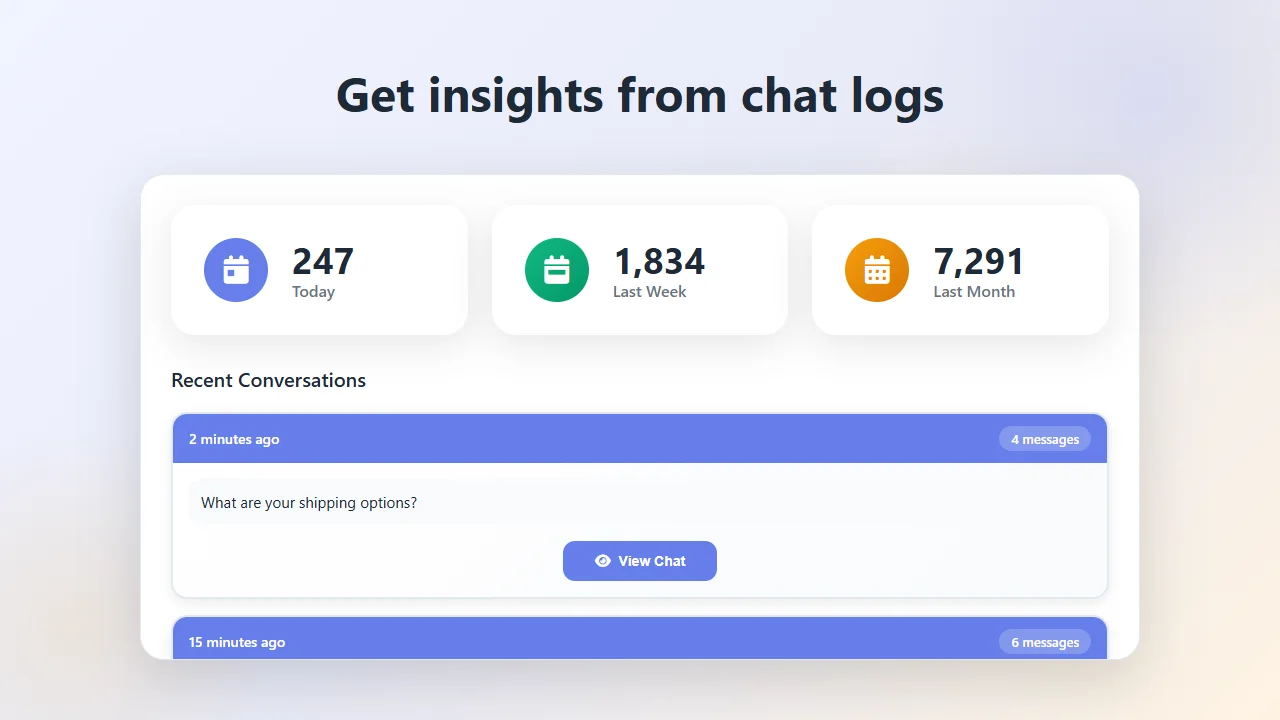
See the Gaps in Your Documentation
Every conversation is a log of what people actually came to your help center looking for. When the assistant has to say "I could not find that," you have found a missing article. Read the transcripts and you will spot the questions your docs never covered, the wording customers use that your titles do not match, and the topics worth writing next.
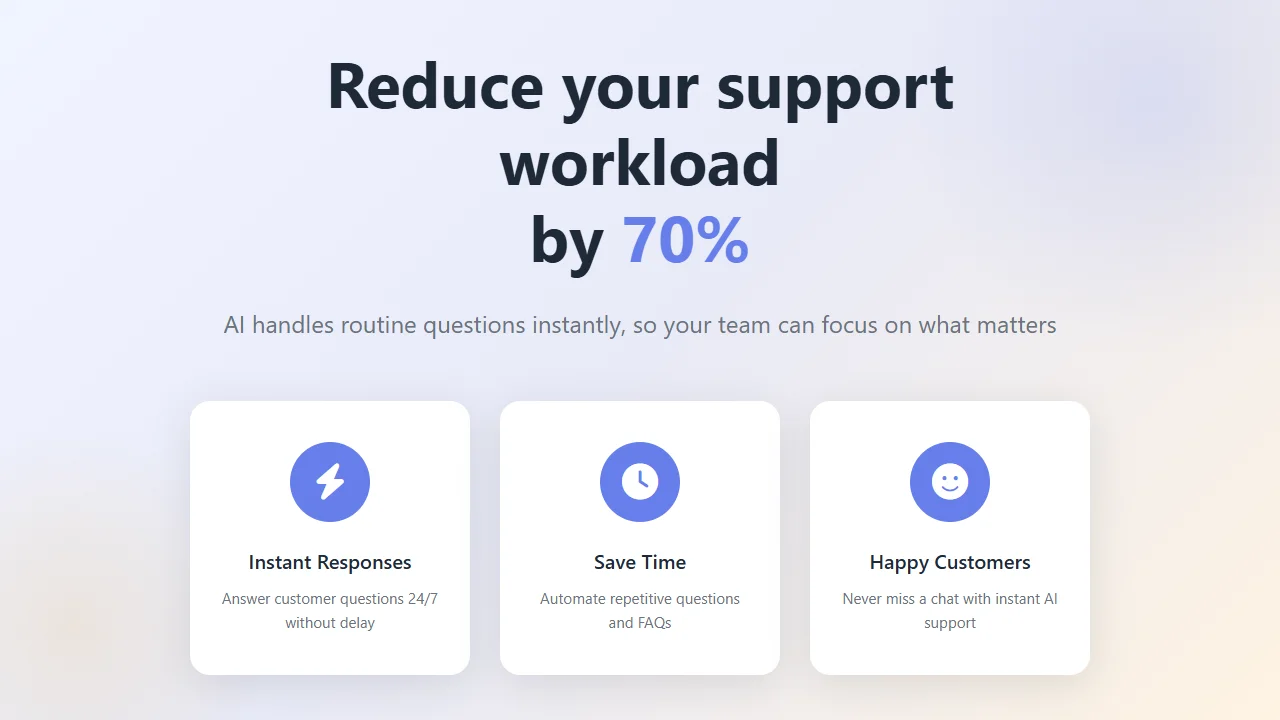
Catch Tickets Before They Reach the Queue
A lot of support volume is questions your knowledge base already answers — people just did not find the right article. When the assistant resolves those in the help center, they never become a ticket. Your agents spend their day on the genuinely hard cases instead of pasting the same setup steps for the hundredth time.
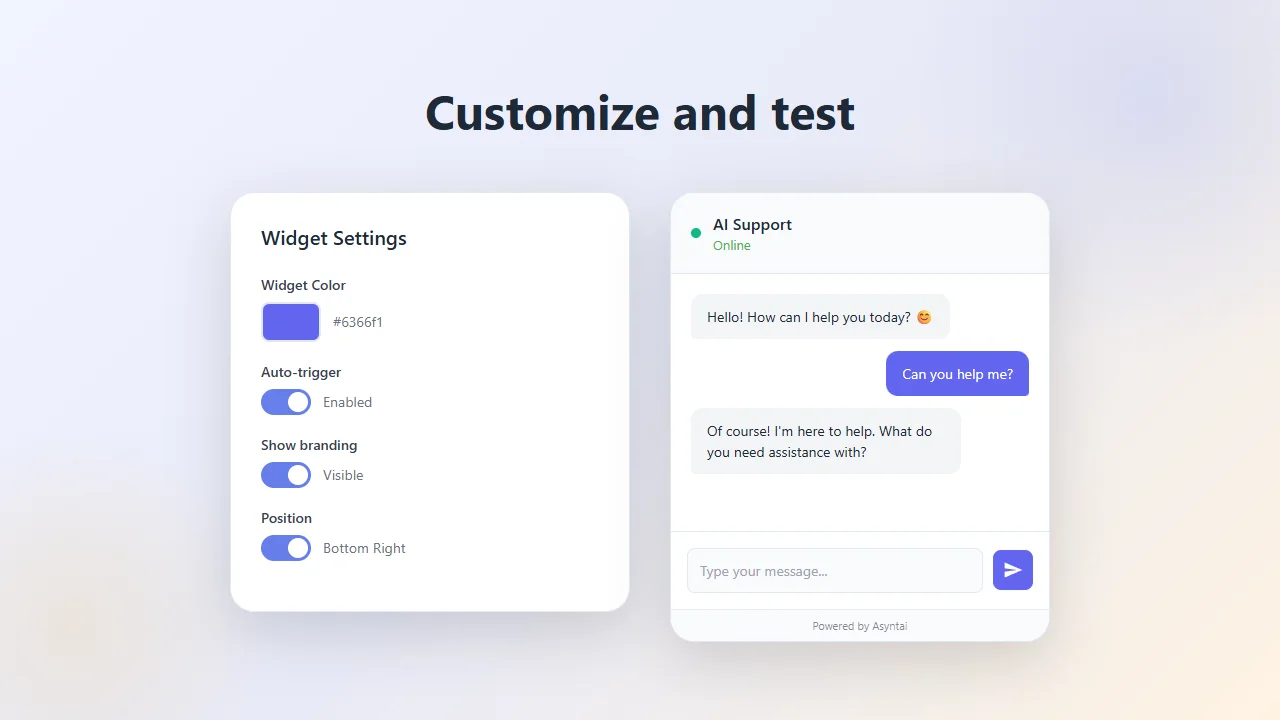
Looks Like Part of Your Help Center
Set the widget colors, position, and welcome message so it sits naturally inside your Helpjuice theme. Choose a tone that matches how your team writes, add instructions for sensitive topics, and run test conversations before you publish. To a reader it feels like a built-in feature of your knowledge base, not a third-party bolt-on.
Have any questions? Try our AI chatbot right now
Ask it anything — it is live on this page
Made for Helpjuice Knowledge Bases
One snippet in your Main Layout and the assistant is live on every article, for customers or for your internal team.
One Snippet in the Layout
Paste a single line into your Helpjuice Main Layout before the closing body tag and save. It loads on every article, category, and search page across your knowledge base without touching anything else.
Answers, Not Search Results
Keyword search makes the reader do the work of picking and reading the right article. The assistant does that step for them — it pulls the answer out of your content and explains it directly, with a link to the source.
Replies in the Reader's Language
If your customers or staff span several countries, the assistant detects the language of the question and responds in it, drawing on the same English help content. One knowledge base serves a global audience.
You Set the Ground Rules
Add instructions like "for account access issues always link the security article" or "hand billing disputes to a human." The assistant follows them in every conversation, so sensitive topics are handled the way your team wants.
Customer-Facing or Internal
Run it on a public help center so users self-serve, or on an internal Helpjuice base so support, sales, and ops staff get answers without interrupting a colleague. Same install, two very different jobs.
Stays Inside Your Content
The assistant answers only from your articles and uploaded documents. It will not improvise policy or wander off-topic, and when something genuinely is not documented it says so and can point the reader to your support channel.
Installing on Helpjuice
Helpjuice lets you edit your theme's Main Layout, which is the wrapper rendered around every article and category. Adding the assistant means dropping one snippet into that layout.
-
1
Sign up and get your snippet
Create your Asyntai account, add your knowledge base URL so it can read your articles, and copy your snippet from the dashboard.
-
2
Open the Helpjuice Code Editor
In your Helpjuice admin, go to the Customization area (the Code Editor) and open the Main Layout theme document.
-
3
Paste before the closing body tag
Add the Asyntai snippet just before the </body> tag in the Main Layout. Because it lives in the shared layout, it applies to every page automatically.
-
4
Save and you are live
Save the layout. The assistant now appears across your knowledge base, ready to answer from your help articles.
Sign up free and get your personalized integration code instantly
Why Teams Pair Asyntai With Helpjuice
Start free with 100 messages and grow as your knowledge base does
A Lighter Support Queue
When the assistant resolves the questions your articles already cover, those interactions never turn into tickets. Your agents get to spend their hours on the cases that actually need a person rather than re-explaining documented basics.
Your Content Finally Gets Used
You have invested real effort in writing help articles. An assistant that surfaces the right one in a sentence means that work actually reaches the reader, instead of sitting in a base nobody quite knows how to navigate.
Teammates Stop Interrupting Each Other
On an internal knowledge base, staff can ask the assistant and get the right procedure on the spot. That is one fewer Slack ping to a senior colleague and one fewer new hire stuck because they could not find the doc.
Frequently Asked Questions
Everything you need to know about adding an AI assistant to your Helpjuice knowledge base
Turning a Helpjuice Base Into a Self-Service Layer
Where Search Stops and Answers Begin
A Helpjuice knowledge base is excellent at organizing and storing what your team knows. The friction shows up at the last step. A reader types a phrase into the search box, gets a ranked list of articles, then has to judge which one is relevant, open it, and read until the specific detail they need appears. Most of your content is genuinely good, but that final stretch of work is exactly where people lose patience and decide it is faster to message support instead.
An AI assistant closes that last stretch. It takes the same question, finds the passages in your articles that bear on it, and replies with the specific answer phrased for the person asking, with a link back to the article it drew from. The knowledge base stops being a library the reader has to search and becomes something closer to a colleague who already read everything and can summarize the relevant part on request.
Customer Help Centers
For a public Helpjuice site, the assistant works as a front line that never sleeps. A customer trying to reset their password, find a setting, or understand a charge on their invoice can describe the problem in their own words and get pointed straight to the answer. Because it pulls from your published articles, the guidance stays consistent with what your support team would say, and every reply names its source so the customer can verify and read further.
The payoff is in what does not happen. The contacts that the assistant handles in the help center are contacts that never become a ticket, an email, or a chat with a human agent. Your team is left with the cases that genuinely need judgment, and customers who would have waited in a queue for a documented answer get it in seconds instead.
Internal Knowledge Bases
Plenty of Helpjuice bases are private, built for support agents, sales reps, or operations staff rather than customers. These bases hold the procedures, policies, and tribal knowledge a team runs on, and they suffer from the same last-step friction. A new agent who cannot quickly find the refund procedure asks the person next to them, which interrupts two people instead of one.
Putting the assistant on an internal base lets staff ask in plain language and get the exact procedure with a citation, on the spot. New hires ramp faster because they can interrogate the documentation conversationally instead of guessing at article titles. Senior staff get interrupted less. And because the assistant only answers from the content you have approved, everyone is working from the same source of truth rather than half-remembered advice.
Documentation That Improves Itself
Every question put to the assistant is a signal about what your readers actually need. When it cannot find an answer, you have located a hole in your documentation in the most direct way possible: a real person asked and the content was not there. The transcripts also reveal the language readers use, which often differs from the headings your team wrote, so you can retitle and rephrase articles to match how people really search.
Feeding those findings back into Helpjuice creates a loop. You write or fix an article, the assistant immediately starts answering from it, and the next round of conversations tells you what to address after that. Over a few weeks the combination of a well-tended knowledge base and an assistant that surfaces it turns scattered documentation into a self-service layer your readers actually rely on.
Setting It Up Without a Developer
Adding the assistant does not require touching your application or writing code. You create an Asyntai account, give it your knowledge base URL so it can read your articles, and copy a snippet. In Helpjuice you open the Customization area, edit the Main Layout theme document, and paste that snippet in front of the closing body tag. Because the Main Layout wraps every page, the assistant appears across the whole base the moment you save.
From there, everything else is managed in the Asyntai dashboard rather than in Helpjuice. You can upload supplementary documents the articles do not cover, write instructions for how sensitive topics should be handled, adjust the tone, and review conversations. The layout edit is a one-time step, and refining how the assistant behaves never again means editing your theme.
Ready to Make Your Helpjuice Base Answer Back?
Start free with 100 messages and see how an AI assistant turns your help articles into instant answers.