Live chat plugin for OpenCart that never clocks out
Your OpenCart store gets live chat that actually works around the clock. Asyntai's AI handles product questions, surfaces items as visual product cards, tracks orders, and escalates to a human when the conversation needs one. Visitors get instant responses at 3 AM on a Tuesday or noon on Black Friday — same speed, same quality, zero staffing overhead. It is not a chatbot pretending to be live chat. It is live chat powered by AI that answers using your content, your product catalog, and your policies.
See live chat working on your OpenCart store
Enter your OpenCart store URL below and watch the AI respond to visitor questions using your actual product data
Instant responses around the clock without hiring a single agent
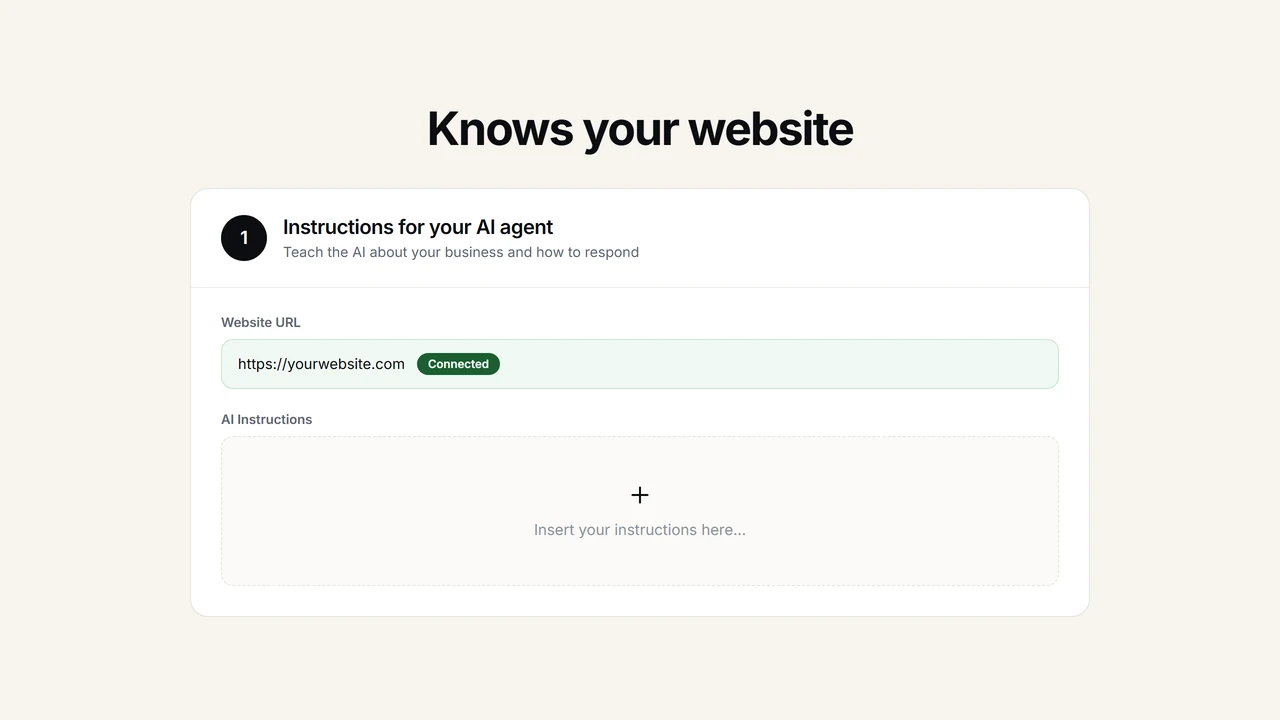
Traditional live chat for OpenCart means staffing a support desk. Somebody has to be online when a customer types "is this laptop compatible with..." at 11 PM. With Asyntai, the AI is always on. It reads the question, searches your product pages and knowledge base, and replies in seconds. Product questions get answered with real information pulled from your site. Order tracking queries get resolved through Custom Tools that call your OpenCart API. Shipping and return policy questions get handled using the exact language from your policy pages. The visitor sees a live chat experience — a real-time conversation with immediate, relevant answers — and you see a support channel that runs itself.
- Genuine 24/7 coverage with zero payrollThe AI responds within seconds at any hour, any day, any timezone. No shift scheduling, no overtime, no "we'll get back to you during business hours" messages. Visitors who shop late at night or browse from different time zones get the same quality of support as someone visiting at peak hours. Coverage is constant because the AI does not sleep, take breaks, or call in sick.
- Answers from your actual contentThe AI answers using your content — product descriptions, policy pages, FAQs, and anything else on your OpenCart site. It does not generate generic advice. When a customer asks about a specific product, the response references real specs, real descriptions, and real pricing from your store. The answers sound like they came from someone who works at your company because they are built from information your company published.
- Order tracking through Custom ToolsWith Custom Tools, the live chat connects to your OpenCart backend to pull real-time order data. A returning customer types "where's my order?" and the AI calls your API, retrieves the shipment status, and replies with a tracking update — all within the chat conversation. No ticket created, no wait, no redirect to a separate tracking page.
Routes complex issues to humans and shows products as visual cards
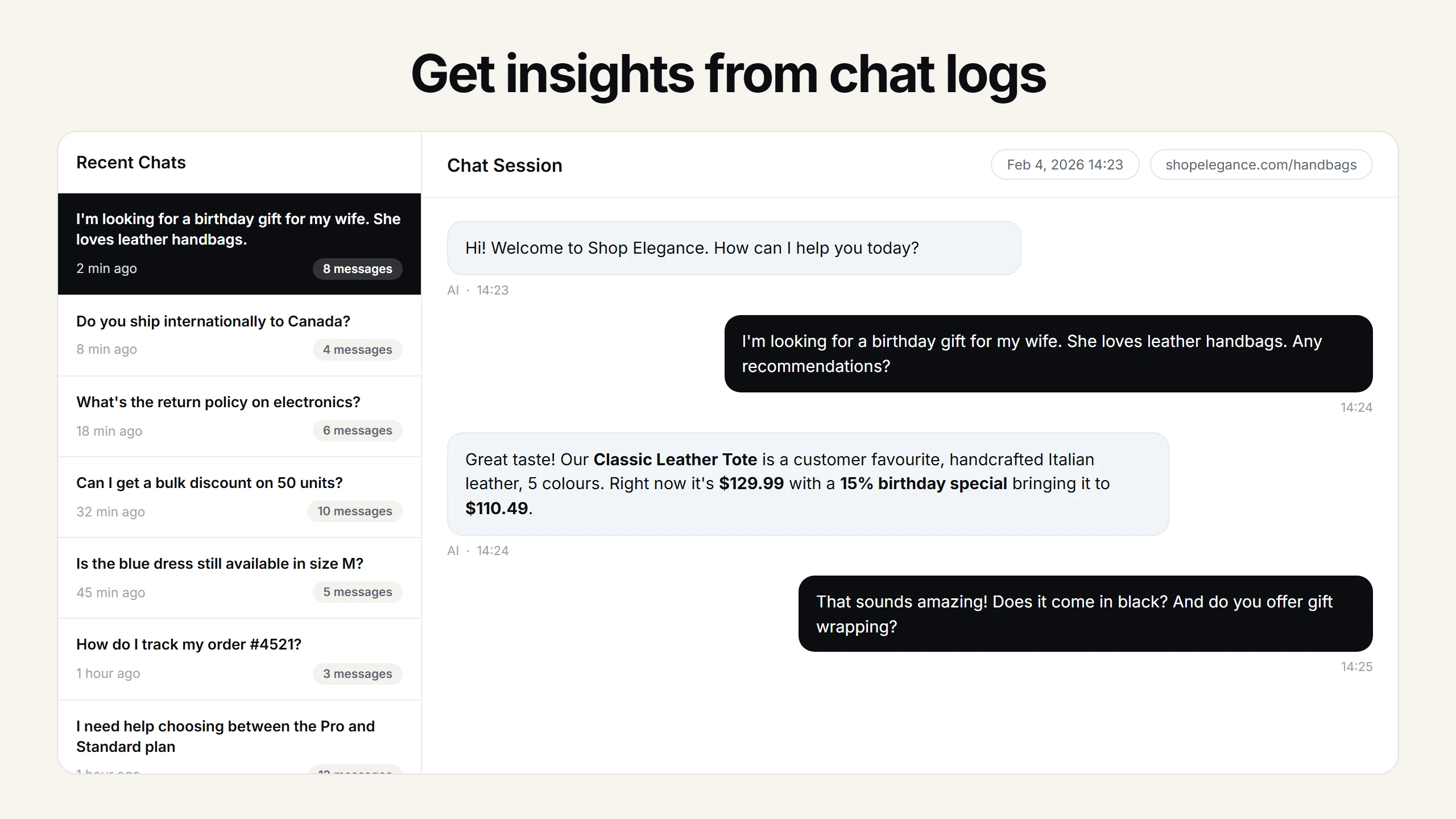
Not every conversation belongs to AI. Warranty disputes, angry customers, custom order negotiations — these need a human touch. Asyntai's live chat recognizes when a conversation exceeds what AI should handle and routes it to your team via email notification or a connected helpdesk. The AI collects the context first — what the customer asked, what product is involved, what was already discussed — so the human agent picks up without asking the customer to repeat themselves. Meanwhile, for the 80% of questions the AI handles directly, Dynamic Product Cards turn conversations into shopping moments: the customer asks about a product and sees a visual card with image, price, and a direct link to buy.
- Human escalation with full contextWhen the AI determines that a conversation needs a human — based on sentiment, topic complexity, or explicit customer request — it routes the conversation to your team. The handoff includes the full transcript, the customer's question, and relevant product or order details. Your support agent reads the history and responds without making the customer start over. Escalation is seamless, not a dead end.
- Dynamic Product Cards in the conversationWhen a customer asks about a product or describes what they need, the AI retrieves matching items from your Real-Time Data Feed and displays them as visual cards — product image, name, price, short description, and a direct link to the product page. Multiple matches appear as a swipeable carousel. The live chat becomes a visual shopping assistant, not just a text-based Q&A box.
- Multi-store and multilingual readyRunning multiple OpenCart stores or selling to international customers? The AI supports 36 languages and can be deployed across separate storefronts. A French-speaking visitor on your EU store gets responses in French. A customer on your main English store gets English. Same live chat, same knowledge base, different languages — handled automatically based on the visitor's browser language.
Install the live chat plugin on OpenCart in minutes
No OpenCart development skills needed. Copy the widget script into your store's template footer, connect your product data, and your live chat is operational. Visitors start getting instant answers immediately.
- Create your Asyntai account, let the AI crawl your OpenCart store, and grab your widget script from the dashboard.
- Paste the script into your OpenCart template's footer file — it loads asynchronously and won't slow down your store.
- Connect a Real-Time Data Feed with your product catalog URL (JSON or CSV) so the AI has current prices and stock levels.
- Enable Dynamic Product Cards and configure escalation rules — your live chat is ready to handle visitors.
<!-- Paste before </body> in your footer template -->
<script src="https://asyntai.com/widget.js"
data-id="your-site-id" async>
</script>
# One script. Always-on live chat. No staffing.
Live chat plugin for OpenCart — FAQs
Common questions from OpenCart merchants evaluating AI-powered live chat for their stores.
How is this different from a traditional live chat plugin?
Traditional live chat plugins connect a visitor to a human agent. If nobody is online, the visitor gets a "leave a message" form. Asyntai's live chat plugin uses AI to respond instantly — drawing answers from your OpenCart product pages, knowledge base, and connected data feeds. The AI handles the bulk of conversations automatically: product questions, shipping inquiries, return policies, order tracking. When something genuinely needs a human — a complex complaint, a custom order request — the AI escalates with full context. You get the responsiveness of live chat without the headcount that traditional live chat demands.
Can it handle order tracking and account questions?
Yes, through Custom Tools. You define API endpoints that the AI can call during a conversation — order status lookups, shipment tracking, account details. When a customer asks "where is my order?" the AI calls your OpenCart API, retrieves the relevant data, and responds with the tracking information. This happens inside the chat, in real time. Custom Tools are available on Standard and Pro plans and support any REST API endpoint your OpenCart installation exposes.
What happens when the AI cannot answer a question?
The AI escalates to your team. You configure escalation rules — by topic, sentiment, or customer request — and the AI routes conversations accordingly. The handoff includes the full chat transcript and any customer details collected during the conversation. Your human agent sees exactly what was discussed and picks up where the AI left off. If no human is available, the AI can collect the customer's contact information and create a support ticket. The visitor never hits a dead end.
Does the live chat slow down my OpenCart store?
No. The widget loads asynchronously via a single script tag — it does not block your page rendering or affect your store's load time. The script is lightweight (under 50KB), loads from a CDN, and initializes after your page content is already visible. It has been tested on OpenCart stores running with various themes and extensions without performance impact. Your PageSpeed and Core Web Vitals scores remain unaffected.
Which versions of OpenCart does it work with?
The live chat plugin works with OpenCart 2.x, 3.x, and 4.x. Because the widget is a standalone JavaScript snippet pasted into your store's template, it is not dependent on OpenCart's extension system or version-specific APIs. Any OpenCart store that renders HTML in a browser can run the widget. If you are using a custom theme, the installation is identical — paste the script before the closing body tag in your footer template.
Can visitors chat in languages other than English?
Yes. The AI supports 36 languages and detects the visitor's browser language automatically. If a visitor browses your store in German, the live chat responds in German — even if your product data and knowledge base are in English. The AI translates its responses while keeping product names, prices, and technical specs accurate from your original data. You do not need separate chat configurations for each language.
How does the AI know about my products?
Two ways. First, the AI crawls your OpenCart store — product pages, category pages, information pages, blog posts — and builds a knowledge base from your published content. Second, you can connect a Real-Time Data Feed: a URL that returns your product catalog as JSON or CSV. The data feed gives the AI structured product data with current prices, stock levels, and images, enabling Dynamic Product Cards in the chat. Between crawled pages and the data feed, the AI has comprehensive, up-to-date knowledge of everything you sell.
What plan do I need for live chat with escalation?
The AI chat widget works on all plans, including Free (100 messages/month). Human escalation via email notifications is available on all plans. Custom Tools for order tracking and API integrations require Standard ($139/month, 15,000 messages) or Pro ($449/month, 50,000 messages). Real-Time Data Feed and Dynamic Product Cards are also Standard+. Most OpenCart merchants handling moderate traffic start on Standard for the combination of Custom Tools, product cards, and escalation capabilities.
The economics of live chat for OpenCart — and why AI changes the math entirely
Every OpenCart merchant eventually faces the same support problem. The store grows, customers multiply, and questions pile up. Product compatibility inquiries, shipping timelines, return requests, order status checks, pre-purchase sizing questions — the volume increases predictably with revenue. The natural instinct is to add live chat. Customers prefer it. It converts better than email. It feels modern. But the moment you install a traditional live chat plugin, you discover the hidden cost: someone has to be sitting there, reading messages and typing replies, during every hour your store is open for business. And if your store is open 24/7 — which every online store effectively is — the staffing math gets uncomfortable fast.
A single full-time live chat agent costs between $25,000 and $45,000 per year in salary, depending on location. That covers roughly 40 hours per week. Your OpenCart store is open 168 hours per week. To cover all hours with human agents, you need a minimum of four full-time staff, plus coverage for sick days, vacations, and turnover. Suddenly the live chat that was supposed to improve customer experience costs $100,000 to $180,000 annually — before you factor in training, management overhead, and the quality inconsistency that comes with human teams. For a store doing $500,000 a year in revenue, that is 20-36% of gross revenue going to a chat window. Most OpenCart merchants look at that math and either limit live chat to business hours — leaving the majority of shoppers without support — or skip live chat entirely and fall back to email with 24-hour response times.
AI-powered live chat breaks this equation. The cost structure is flat, not linear. Asyntai's Standard plan handles 15,000 conversations per month for $139. The Pro plan handles 50,000 for $449. Compare that to human-staffed live chat at roughly $3-5 per conversation (salary divided by monthly volume), and the difference is not incremental — it is structural. An OpenCart store handling 5,000 support conversations per month spends $15,000-$25,000 per month on human agents or $139 per month on AI live chat that covers the same hours with faster response times. The 99% cost reduction is not a marketing claim. It is arithmetic.
But cost alone does not justify the switch if quality drops. The relevant question is: what percentage of live chat conversations actually require a human? Analysis across ecommerce support channels consistently shows that 70-85% of live chat questions fall into a handful of categories. "Do you ship to [country]?" "What's the return policy?" "Is this item in stock?" "When will my order arrive?" "What's the difference between product A and product B?" "Do you have this in [size/color]?" These are not complex questions. They are lookup questions. A human agent answering them is reading from the same knowledge base the AI uses — your product pages, your shipping policy, your FAQ — and typing out a paraphrased version. The AI does the same thing faster, more consistently, and without needing a coffee break.
The remaining 15-30% of conversations are where human judgment matters. A customer whose order arrived damaged and is upset. A B2B buyer negotiating volume pricing. Someone requesting a product modification. A loyalty customer asking for an exception to a policy. These conversations require empathy, authority, and flexibility that AI does not provide. The answer is not to force AI on these conversations — it is to let the AI handle the 70-85% it excels at and escalate the rest. Asyntai's escalation system does exactly this. The AI recognizes conversations that exceed its scope, collects the relevant context, and hands off to your team with a full transcript. The human agent walks into the conversation informed, not starting from scratch. The customer does not repeat themselves.
For OpenCart specifically, the live chat advantage compounds with platform-specific capabilities. OpenCart stores have structured product data — prices, options, stock levels, categories, attributes — that the AI can reference in real time through the Real-Time Data Feed. When a customer asks "is the Samsung Galaxy case available for the S24 Ultra?", the AI does not give a generic answer. It checks your current catalog, finds the specific product, verifies stock for that variant, and shows it as a Dynamic Product Card with the image, price, and a link to buy. The conversation moves from question to answer to purchase opportunity in seconds. This is what makes AI live chat genuinely different from a basic FAQ bot — it does not just answer questions; it sells products within the conversation.
Dynamic Product Cards transform the live chat from a support tool into a sales channel. In traditional live chat, a human agent might type "yes, we have that — here's the link" and paste a URL. The customer clicks, leaves the chat, navigates to the product page, and might or might not buy. With Dynamic Product Cards, the product appears right inside the chat as a visual card with the image, price, description, and a direct link. The customer sees the product without leaving the conversation. If they want alternatives, the AI shows more cards. If they want to compare, the AI shows them side by side. The live chat becomes a guided shopping experience, and the customer's momentum — that critical window between "I'm interested" and "I'll buy" — is preserved rather than interrupted by page navigation.
The "live" in live chat has traditionally meant "a live human is responding." Asyntai redefines it as "a live conversation is happening." The distinction matters because what customers actually want from live chat is not a human — it is immediacy. They want to type a question and get an answer now, not in 30 seconds while a human agent finishes another conversation, not in 24 hours via email, and certainly not from a scripted chatbot that redirects them to a FAQ page. AI-powered live chat delivers that immediacy at scale. Every visitor gets an instant response. Every conversation happens in real time. The experience is "live" in the only way that matters to the customer sitting at their keyboard waiting for an answer.
Response time has a direct, measurable impact on conversion. Research from multiple ecommerce studies shows that live chat responses within 10 seconds convert at significantly higher rates than responses that take 30 seconds or more. Human agents average 23 seconds to first response in best-case scenarios — when they are not handling multiple conversations simultaneously. When they are (and most agents handle 2-4 concurrent chats), response times climb to 45-90 seconds. AI answers in seconds, every time, regardless of concurrent volume. During peak traffic — a sale event, a product launch, holiday season — human-staffed live chat degrades exactly when it matters most. AI-powered live chat stays at the same speed whether it is handling 1 conversation or 100.
The installation process for OpenCart reflects the simplicity of the approach. There is no complex extension to install, no OpenCart-version-specific module to configure, no database modifications. You paste a single JavaScript snippet into your OpenCart template's footer — before the closing body tag — and the chat widget appears on every page. The widget loads asynchronously, meaning it does not affect your store's page load speed or Core Web Vitals scores. It works with OpenCart 2.x, 3.x, and 4.x, with any theme, alongside any other extensions you have installed. The entire process takes minutes, not hours, and does not require a developer.
Once installed, the AI immediately begins answering questions from your crawled content. It reads your product pages, category descriptions, information pages (shipping, returns, about us), and blog posts. Within hours, it can handle most general questions about your store. Adding a Real-Time Data Feed — a JSON or CSV URL that exports your product catalog — enables Dynamic Product Cards and gives the AI structured, always-current product data. Connecting Custom Tools — API endpoints for order lookups, inventory checks, or shipping estimates — extends the live chat into post-purchase support. Each layer you add makes the AI more capable, but the base experience works from day one with just the crawled content.
Multilingual support removes another traditional barrier to live chat. An OpenCart store selling internationally faces a choice: hire support agents who speak each target language (expensive and logistically complex) or provide live chat only in your primary language (excluding a significant portion of your customer base). Asyntai's AI supports 36 languages. A German visitor gets responses in German. A Japanese visitor gets responses in Japanese. The AI uses your product data and knowledge base — which can be in any language — and translates its conversational responses to match the visitor's language. Product names, prices, and specifications stay in their original form on Dynamic Product Cards. You serve a global audience with a single installation, no language-specific configuration required.
The competitive landscape among OpenCart merchants is shifting toward stores that provide superior customer experience, not just lower prices. Live chat has been part of that shift for years — but only for merchants who could afford to staff it. AI-powered live chat democratizes that advantage. A solo OpenCart operator running a niche store from a home office can now offer the same live chat responsiveness as a large retailer with a 20-person support team. The AI does not care about your team size, your operating hours, or your support budget. It answers every question the same way: instantly, accurately, and using your content. The playing field levels when the technology handles the volume and the merchant handles the strategy.
The objection most OpenCart merchants raise is: "will customers know it's AI?" Some will. Most will not care — because the relevant metric is whether their question got answered, not who or what answered it. A customer who asks "do you ship to Canada?" and gets an accurate, immediate response does not feel shortchanged because a human did not type it. A customer who asks about a specific product and sees a Dynamic Product Card with the image, price, and buy link does not wish a human had pasted a URL instead. The only customers who notice — and mind — are the ones with genuinely complex issues, and those are the conversations the AI escalates to humans. The system is designed so that AI handles the conversations it is good at, humans handle the conversations they are good at, and the customer gets the right experience either way.
Looking at the economics from a return-on-investment perspective: an OpenCart store on the Standard plan pays $139/month and gets a live chat that handles up to 15,000 conversations. If even 1% of those conversations lead to a sale that would not have happened otherwise — because the customer got an instant answer to a question that would have caused them to leave — that is 150 additional sales per month. At an average order value of $50, that is $7,500 in incremental revenue against a $139 cost. The ROI is not theoretical. It is a function of how many visitors have questions they would leave unanswered without live chat, and how many of those questions the AI can resolve instantly. For most OpenCart stores with meaningful traffic, the payback period is measured in days, not months.
The stores where AI live chat makes the biggest impact share a profile: they sell products that generate questions. Electronics stores where customers ask about compatibility and specifications. Fashion stores where sizing and material details matter. Specialty food stores where ingredient and allergen questions are common. Auto parts stores where fitment verification is critical. Home improvement stores where customers need guidance on which product solves their particular problem. In each case, the gap between "interested visitor" and "confident buyer" is a question that needs answering. Live chat bridges that gap. AI-powered live chat bridges it instantly, around the clock, at a fraction of the cost of a human team. For an OpenCart merchant, that is not just a better chat plugin — it is a structural advantage in how you convert visitors into customers.