Internal customer service software that turns company knowledge into instant answers
Deploy Asyntai on your intranet or internal portal. Employees ask questions about HR policies, IT procedures, benefits, or onboarding — the AI answers from your own documentation, instantly, in 36 languages.
See it work on your internal site
Paste the URL of your intranet, HR portal, or internal wiki to see how the AI would serve your team
Stop fielding the same HR and IT questions a hundred times a month
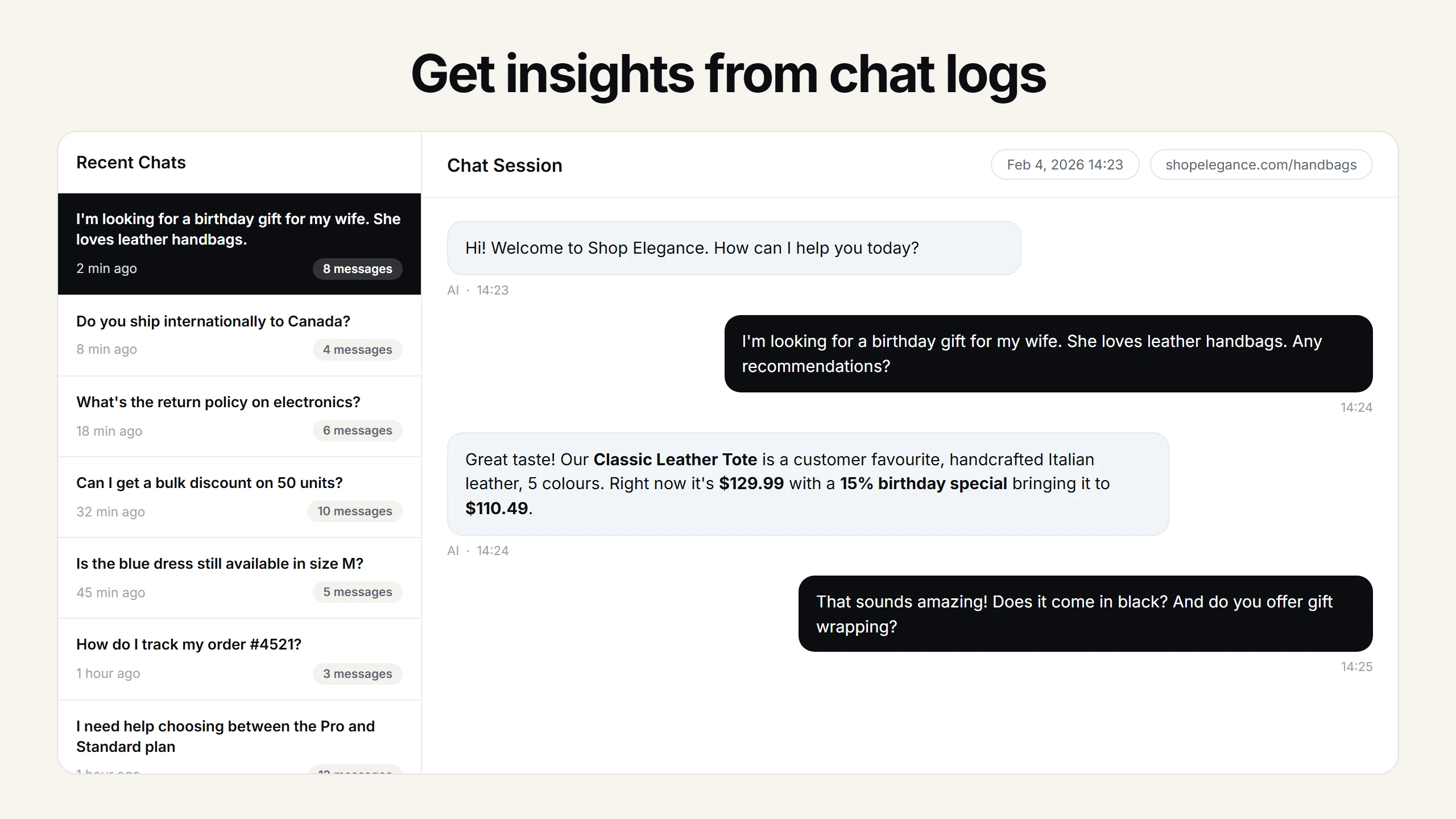
Every organization has a handful of questions that consume a disproportionate amount of internal support time. How do I reset my VPN password? What's the parental leave policy? Where do I submit an expense report? The answers exist — buried in a SharePoint folder, scattered across a Confluence wiki, or locked inside a PDF that was last updated by someone who left the company. Asyntai crawls your internal documentation, absorbs the content, and makes it instantly searchable through a conversational interface. Employees get precise answers in seconds instead of filing a ticket and waiting two days for someone in HR to forward the same PDF they could have found themselves.
- HR policy lookups in plain languageLeave balances, benefits enrollment, expense procedures, dress code, remote work rules — employees ask in their own words and get the official answer, sourced from your documentation.
- IT troubleshooting without a ticketPassword resets, VPN setup, printer configuration, software installation guides — the AI walks employees through standard fixes before they ever reach the help desk.
- Onboarding that scales with hiringNew hires get 24/7 access to company procedures, org charts, tool guides, and culture docs. No more scheduling a human to repeat the same orientation briefing for every cohort.
Connect conversations to your internal systems
Answering questions is the floor. On Standard ($139/month) and Pro ($449/month) plans, Custom Tools let the AI chatbot reach into your internal systems during the conversation. An employee asks about their remaining PTO — the chatbot calls your HRIS API and returns the number. Someone needs to check the status of an IT ticket — the chatbot queries your ticketing system and replies with the update. The conversation becomes an action channel, not just an information channel. You decide which endpoints the chatbot can call and what data it can access, keeping security boundaries exactly where your compliance team needs them.
- HRIS and benefits lookupsConnect your HR system so employees can check PTO balances, benefits details, or payroll dates directly in the chat without navigating three different portals.
- IT ticket status checksEmployees ask about their open tickets and get real-time status without logging into the service desk. Fewer "any update?" emails clogging your queue.
- Facilities and resource bookingConference room availability, parking reservations, equipment checkout — the chatbot handles routine requests that currently require manual coordination.
- Compliance-first data boundariesYou control exactly which APIs the chatbot accesses and what data it surfaces. Nothing leaves your perimeter unless you've explicitly configured the connection.
Set up internal support in an afternoon
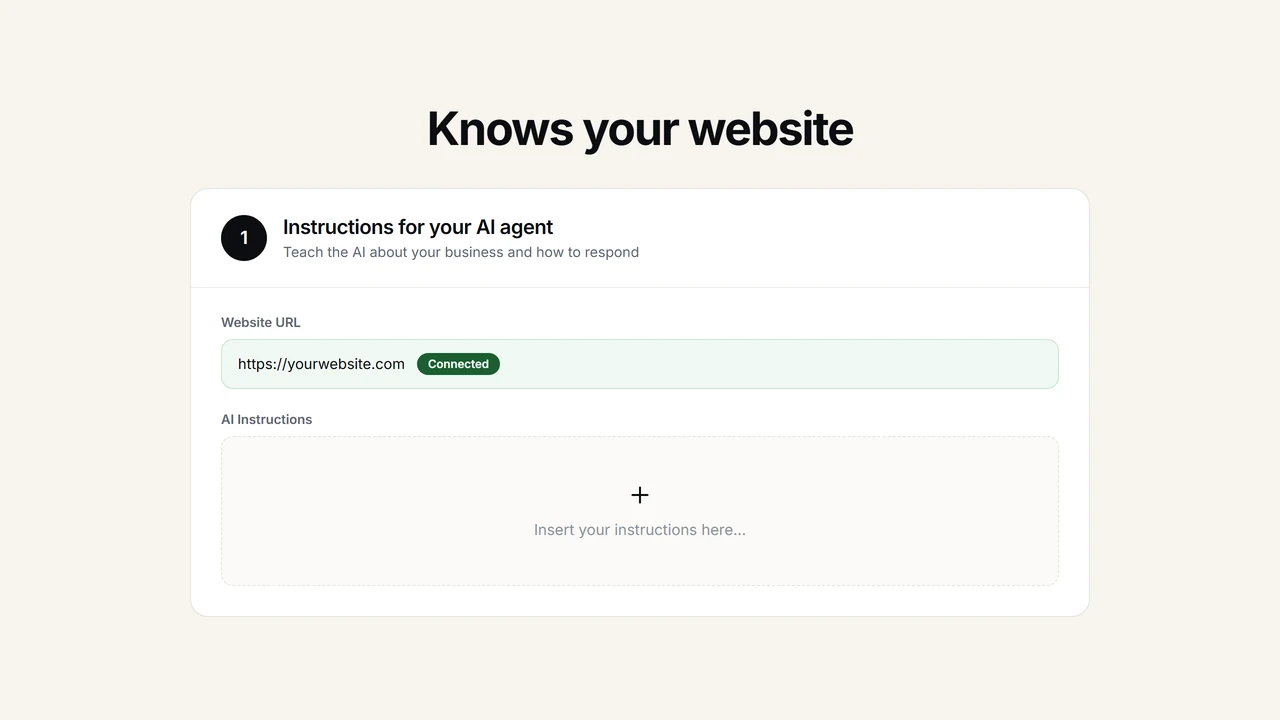
No enterprise deployment project. No integration timeline. Point the AI at your internal documentation, embed the snippet on your intranet, and employees start getting answers immediately.
- Create a free account and paste your internal site or documentation URL
- The AI scans up to 50 pages and builds a knowledge base from your content
- Copy the one-line embed snippet into your intranet or internal portal header
- The chatbot goes live — answering employee questions in 36 languages
<script src="https://asyntai.com/widget.js"
data-id="your-site-id" async>
</script>
</head>
# Internal help desk, always available, every department.
Internal customer service software — FAQs
Questions from HR leaders, IT directors, and operations managers evaluating AI for internal employee support.
Can this really replace our internal help desk?
It's not about replacing humans — it's about freeing them. The chatbot handles the repetitive, documentation-answerable questions that consume most of your internal support team's time: policy lookups, procedure walkthroughs, benefit details, password reset guides. Your HR and IT teams stop being a search engine for information that already exists in writing and focus on the work that actually requires human judgment — complex employee relations issues, system architecture decisions, exception handling.
Is our internal documentation secure if we use Asyntai?
Asyntai processes your content to build the knowledge base and uses it to answer questions within the chatbot. The content is not shared with other customers, not used to train models, and not accessible outside your widget. You control what documentation the AI can access — if something shouldn't be in the knowledge base, don't include it. For sensitive HR documents like salary bands or disciplinary procedures, you decide the boundaries.
We have employees in multiple countries — does it handle different languages?
Yes. Asyntai supports 36 languages with automatic detection. An employee in the Madrid office asks in Spanish and gets a Spanish answer. A colleague in Seoul asks in Korean and gets a Korean answer. Both draw from the same underlying knowledge base. You don't need to translate your documentation into 36 languages — the AI handles the linguistic adaptation. If your source documentation is in English, employees still get accurate answers in their preferred language.
How do we handle questions the AI can't answer?
You write escalation rules in your custom instructions. "If the question involves a harassment complaint, immediately tell the employee to contact HR directly at this email." "If the IT issue involves data access permissions, collect the details and escalate to the security team." The chatbot follows your escalation rules exactly. When it escalates, it captures the employee's question, the conversation history, and any details collected, and delivers the package to your team's inbox or dashboard.
What types of internal documentation work best?
Anything text-based. Employee handbooks, IT knowledge bases, onboarding checklists, benefits guides, facilities policies, tool documentation, standard operating procedures, FAQ pages. The AI crawls web-based content directly and you can upload PDFs for offline documents. The more comprehensive your documentation, the more questions the chatbot can answer — but even a company with scattered, imperfect docs will see immediate value from making what they have conversationally searchable.
How much does it cost compared to enterprise internal support platforms?
Enterprise service desk and internal support platforms typically cost $20 to $80 per employee per month, plus implementation fees. Asyntai pricing is per-site, not per-employee. The Free plan includes 50 messages. Starter is $39/month for 800 messages across 2 sites. Standard is $139/month for 15,000 messages across 3 sites. Pro is $449/month for 50,000 messages across 20 sites. A 200-person company on the Starter plan pays $39/month total, not $39 per head.
Can we restrict the chatbot to only answer questions about certain topics?
Completely. Your custom instructions define the chatbot's scope. "Only answer questions about HR policies, IT procedures, and facilities." "Do not discuss salary information." "Refer any legal questions to the legal team." The AI treats your instructions as hard rules. If an employee asks about something outside the defined scope, the chatbot acknowledges the boundary and suggests who to contact instead — it doesn't guess or hallucinate an answer.
Why internal support deserves the same AI your customers get
There is an odd asymmetry in how companies think about support. Billions of dollars flow into customer-facing chatbots, knowledge bases, and help desks every year, while the people who actually work at the company — the employees — are left to navigate a landscape of outdated wikis, overloaded HR inboxes, and IT ticket queues with a three-day average response time. The irony is sharp: a company will spend $150,000 on a customer experience platform to make sure a stranger's question gets answered in under two minutes, while their own engineers are spending 40 minutes trying to figure out how to enroll in the dental plan. Internal support is the unlit back office of the employee experience, and it costs more than most companies realize.
The hidden cost isn't the HR coordinator's salary or the IT help desk's Jira license. It's the collective time employees spend looking for answers that already exist somewhere in the organization's documentation. A mid-size company with 300 employees might have 15,000 internal questions per year about policies, procedures, tools, and benefits. If each question takes an average of 12 minutes to resolve — between searching, asking a colleague, filing a ticket, waiting for a response, and eventually finding the answer in a document that was two clicks from the intranet homepage — that's 3,000 hours of productive time evaporated annually. At a blended hourly cost of $50, that's $150,000 per year spent on the act of finding information that the company already wrote down. The documentation exists. The retrieval doesn't.
Asyntai was built to answer questions using your own content, and that capability doesn't care whether the person asking is a customer or an employee. The same AI that crawls a product website and answers shopper questions can crawl an intranet and answer employee questions. The deployment is identical: point the crawler at your internal documentation URL, let it scan up to 50 pages, and embed the chatbot snippet on your intranet or internal portal. Employees ask questions in natural language — "how do I submit a travel expense over $500?" or "what's the process for requesting a standing desk?" — and the AI answers from your company's own policies and procedures. No ticket filed. No waiting. No tracking down the one person who knows where the facilities request form lives.
The HR use case alone justifies the deployment for most organizations. Benefits enrollment, leave policies, expense procedures, workplace accommodations, performance review timelines, promotion criteria, remote work rules — this is a domain defined by documented procedures that employees need to access frequently and urgently. The current experience at most companies is a Confluence page that hasn't been updated since the last HR coordinator left, or a 47-page employee handbook PDF that nobody has ever read cover to cover. The chatbot makes that content conversationally accessible. An employee doesn't need to know where the parental leave policy is filed. They type "how much parental leave do I get?" and receive the answer with the relevant details, sourced from whatever document your HR team has published. If the policy changed last month and the document was updated, the chatbot's answer updates with it.
IT support is the second pillar, and arguably the one where the ROI is most immediately visible. Tier-1 IT tickets — password resets, VPN configuration, printer setup, software installation, email signature updates, two-factor authentication troubleshooting — are overwhelmingly solved by following a documented procedure. The procedure exists in your IT knowledge base. The problem is that employees don't search IT knowledge bases; they file a ticket and wait. An AI chatbot that can walk an employee through "how to connect to the VPN on macOS" using your IT team's own documentation resolves the issue in two minutes instead of two days. Your IT team stops being a concierge service for instructions they've already written down and starts working on the infrastructure, security, and architecture problems that actually need their expertise.
Onboarding is where internal AI support compounds over time. Every new hire arrives with the same set of questions: where do I find the org chart, how do I set up my development environment, who approves my equipment request, what's the code review process, where do I submit time off. At a company hiring 50 people a year, that's 50 repetitions of the same answers, typically delivered by a buddy or a manager who's doing it alongside their actual job. The chatbot handles the procedural layer of onboarding — the questions with documented answers — so that the human onboarding experience can focus on the cultural and relational aspects that actually shape whether a new hire sticks around. The buddy system stops being a search engine assignment and starts being what it was supposed to be: a relationship.
Language support matters more for internal use than many companies expect. A company with offices in three countries — or a single office with a multilingual workforce — faces the same documentation access problem multiplied by languages. The benefits FAQ is in English, but the office manager in the Barcelona branch fields the same questions in Spanish every week. The IT guide was written for the London team, but the developer in Tokyo needs the same steps in Japanese. Asyntai handles 36 languages natively. The AI detects the employee's language and responds in kind, drawing from the same knowledge base. You don't need to maintain translated versions of every internal document — the AI handles the linguistic conversion while preserving the accuracy of the underlying content.
Custom Tools on Standard and Pro plans turn the chatbot from an information source into an operational interface. When the AI can call your HRIS API to check a PTO balance, or query your IT ticketing system for a ticket status, or check a facilities booking calendar for room availability, the employee gets their answer without navigating to three different internal applications. This is where internal support software stops being a glorified search bar and starts being a genuine productivity tool. The employee's question — "how many vacation days do I have left?" — gets a number, not a link to the portal where they can look it up themselves. The difference in experience is the difference between a tool that respects people's time and one that treats them as capable of self-service but not worth the API call to actually serve them.
The cost comparison against traditional internal support tooling is lopsided in a way that deserves scrutiny. Enterprise service desk platforms charge per-employee per-month, which means costs scale linearly with headcount. A 500-person company at $40 per employee per month is paying $240,000 per year for the platform alone, before configuration, training, and ongoing administration. Asyntai charges per-site, not per-user. The Starter plan at $39/month covers 800 messages — not 800 people, but 800 messages from however many people ask questions. For a 160-person company where each employee asks an average of five internal questions per month, that's 800 messages — covered on the $39 plan. The math isn't competitive; it's a different category. And because there's no implementation project — no consultant, no data migration, no training program — the total cost of ownership stays in the hundreds per year instead of the hundreds of thousands.