HR automation software that turns your handbook into instant employee answers
Your HR team fields the same PTO, benefits, and policy questions dozens of times a week. Asyntai reads your employee handbook and internal documents, then gives every employee accurate, instant answers — day or night, in any language.
See how it handles your HR content
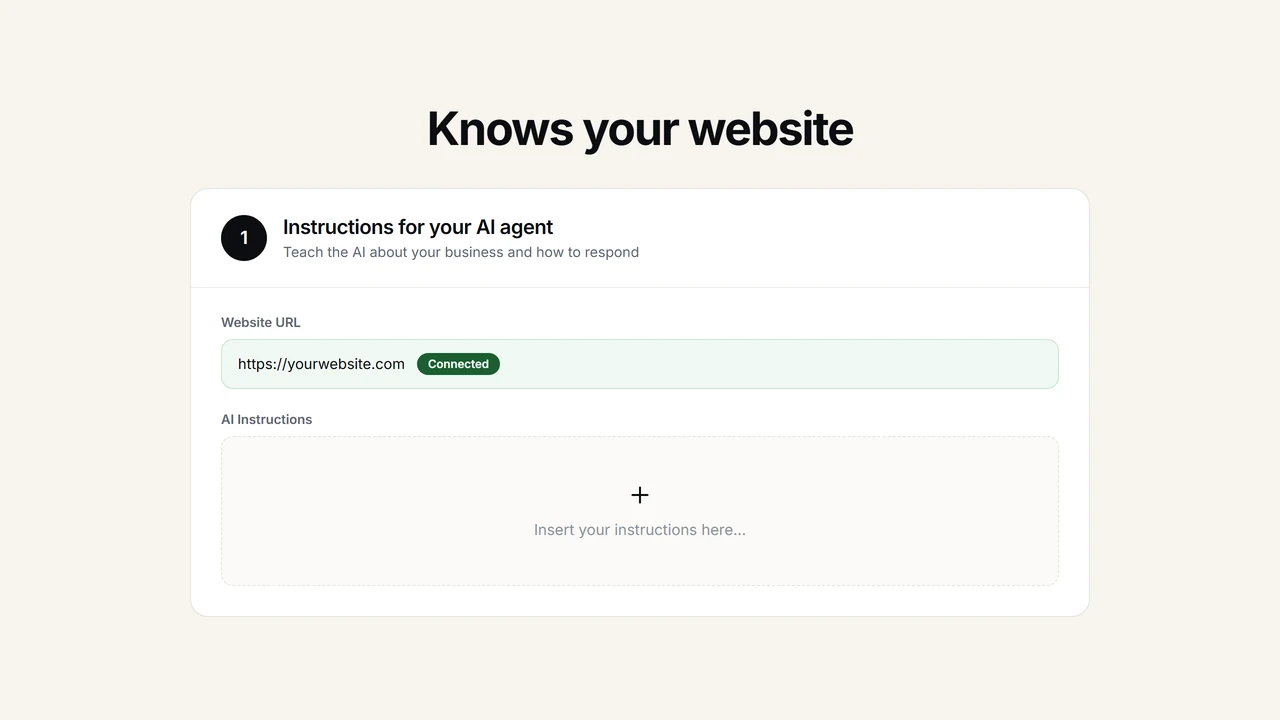
Enter your company website and watch the AI build an HR knowledge base from your public content
Absorbs your policies so employees stop asking HR to recite them
Every HR department maintains a handbook that nobody reads front to back. Benefits summaries, PTO accrual rules, expense report procedures, travel policies, code of conduct — it all exists in documents that employees open once during onboarding and forget. Asyntai crawls up to 50 pages of your company site and accepts uploaded documents like PDF handbooks, policy memos, and benefits guides. The AI uses your actual content to answer employee questions accurately, without inventing anything beyond what you wrote.
- Upload your full employee handbookPDFs, internal wikis, benefits summaries, onboarding checklists — the AI absorbs them all and references the correct policy in every answer.
- Crawl your internal HR portalPoint the AI at your HR pages and it indexes up to 50 pages of content within minutes, covering everything from leave policies to expense procedures.
- One consistent answer every timeNo more three different managers giving three different interpretations of the parental leave policy. The AI cites the same source document for every employee.
Connect the AI to your HR systems for personalized, real-time answers
Policy questions are only half the picture. Employees also ask about their own data — remaining PTO balance, next pay date, benefits enrollment status, expense reimbursement progress. With Custom Tools on the Standard ($139/month) and Pro ($449/month) plans, the AI calls your HRIS or payroll API endpoints to fetch live, employee-specific information. An employee asks "how many vacation days do I have left?" and the AI returns the actual number from your system, not a generic policy excerpt. You control which endpoints the AI can access and what data it returns.
- PTO balance lookupsEmployees ask about remaining vacation days and get their real balance pulled from your HRIS — no HR ticket, no portal login required.
- Benefits enrollment statusThe AI checks enrollment endpoints to confirm health plan selections, dependent coverage, and open enrollment deadlines for each employee.
- Expense reimbursement trackingEmployees ask "where is my expense report?" and the AI returns submission status, approval stage, and expected payout date from your finance system.
- Payroll and compensation queriesNext pay date, direct deposit confirmation, tax withholding details — the AI fetches from your payroll system so employees stop emailing HR for routine lookups.
- You define the boundariesCustom Tools call only the endpoints you configure. Sensitive data stays behind your own access controls — the AI never sees more than you permit.
Live in an afternoon, not a fiscal quarter
HR automation projects usually mean vendor evaluations, IT security reviews, and a six-month implementation timeline. Asyntai takes one embed snippet and a document upload. Your HR AI assistant can be answering employee questions today.
- Create a free account and paste your website URL
- The AI scans up to 50 pages and builds a knowledge base from your content
- Copy the one-line embed snippet into your site header
- The chatbot goes live — answering visitor questions in 36 languages
<script src="https://asyntai.com/widget.js"
data-id="your-site-id" async>
</script>
</head>
# One line. Every HR question covered.
HR automation software — FAQs
Common questions from HR leaders and people ops teams evaluating AI-powered automation.
Yes. You upload your handbook as a PDF or paste the content directly. The AI uses your actual policies — PTO accrual rules, benefits details, expense procedures, code of conduct — to answer employee questions. It does not generate answers from generic knowledge; every response is grounded in the documents you provide.
Uploaded documents and conversation data are stored encrypted and are not used to train any AI models. If you use Custom Tools for live data lookups, the AI calls your endpoints in real time and does not store the response data. You control which endpoints are accessible and what employee data the AI can retrieve.
Policy-based questions where the answer exists in your documentation: PTO balances and accrual rules, benefits plan details, expense report submission steps, travel policy limits, dress code, remote work policies, holiday schedules, parental leave eligibility, and similar. Questions requiring human judgment — performance disputes, harassment reports, accommodation requests — should be escalated, and you configure those rules in plain English.
Yes. Custom instructions let you define exactly what the AI should and should not address. You can tell it to only answer HR policy questions, to never discuss salary bands, to always escalate complaints to a specific email, or to redirect compensation questions to a manager. The AI follows those rules in every conversation.
Yes. The AI detects the employee's language automatically and responds in kind. The widget interface supports 36 languages. For multinational companies, this means a single HR knowledge base serves employees across every office location without separate translation efforts.
Same as any Asyntai deployment. Free: $0 for 1 site and 50 messages/month. Starter: $39/month for 2 sites and 800 messages. Standard: $139/month for 3 sites and 15,000 messages. Pro: $449/month for 20 sites and 50,000 messages. Custom Tools for live HRIS lookups require the Standard or Pro plan.
When the AI encounters a question outside its knowledge base or one you have flagged for human handling, it captures the employee's name, email, and the full conversation, then delivers the escalation to your dashboard and optionally to an email inbox. Your HR team picks up the thread with full context — no "please repeat your question" loop.
Why HR automation starts with the questions employees actually ask
Human resources carries an unusual burden among business functions. Every other department serves external customers, partners, or the market at large. HR serves the entire internal population of the company, and every single employee is a potential "customer" with questions that need answers. A 200-person company doesn't have 200 occasional users of the HR department. It has 200 people who each need to understand their benefits, file expense reports, request time off, interpret policies, navigate onboarding, and find the right form at the right time. The math is relentless: as the company grows, the number of internal HR inquiries grows linearly, but the HR team rarely scales at the same rate.
The traditional response to this imbalance has been documentation — handbooks, internal wikis, FAQ pages pinned in Slack channels, benefits summaries mailed during open enrollment. The problem isn't that the documentation doesn't exist. The problem is that employees don't search it. They ask. They message the HR coordinator. They reply-all to a benefits email with a question that was answered in the third paragraph. They walk to someone's desk. They file a ticket. The documentation sits in a SharePoint folder while the same ten questions consume three hours of someone's Tuesday. HR automation, in its most useful form, is not about replacing the documentation. It is about making the documentation answer back.
That is what Asyntai does for internal HR teams. You upload your employee handbook, benefits guides, PTO policies, expense procedures, travel rules, and any other internal document the AI should know. Asyntai also crawls up to 50 pages of your company website or intranet. From that combined knowledge base, the AI answers employee questions in natural language — not by keyword-matching a canned FAQ, but by understanding the question and composing a response grounded in your actual content. An employee asks "can I carry over unused PTO?" and the AI returns your company's specific carryover policy, citing the relevant section. No ticket filed. No HR coordinator interrupted. No three-day wait for a one-sentence answer.
The questions that consume the most HR bandwidth are remarkably consistent across companies. Benefits eligibility and plan details account for a large share — "does our dental plan cover orthodontics?", "when is open enrollment?", "how do I add a dependent?" PTO and leave policies follow closely — accrual rates, carryover limits, parental leave duration, sick leave documentation requirements. Expense reporting generates another cluster — submission deadlines, approval workflows, per diem rates, which receipts are required. Then comes the long tail: dress code, remote work policies, referral bonus programs, holiday schedules, tuition reimbursement eligibility. Every one of these questions has an answer in a document that already exists. The AI makes that document accessible through conversation instead of search.
Consistency is the benefit that HR leaders mention most often once the AI has been running for a few weeks. A five-person HR team will answer the same PTO carryover question slightly differently across five conversations — not because anyone is wrong, but because each person remembers the policy document differently, phrases the carryover cap differently, and may or may not mention the exception for employees hired after October. The AI pulls from one knowledge base. The answer to "can I carry over PTO?" is identical for every employee, every time, in every language. For companies that have been burned by inconsistent policy communication — an employee who was told one thing by a coordinator and something different in the handbook — this consistency isn't cosmetic. It prevents disputes.
For multinational companies, language support changes the HR automation equation entirely. A company with offices in Germany, Japan, Brazil, and France traditionally needs either multilingual HR staff in each location or a willingness to operate HR entirely in English and accept that non-native speakers will misunderstand critical benefits details. Asyntai's widget interface supports 36 languages, and the AI detects each employee's language from their first message. A German employee asks in German and gets a German answer. A Brazilian employee asks in Portuguese and gets Portuguese. The underlying knowledge base stays in whatever language your documents are written in — the AI handles the translation on the fly. One handbook, every language, zero translation project.
The limitation worth naming honestly is that not every HR question should be answered by AI. Performance reviews, harassment complaints, accommodation requests, disciplinary conversations, salary negotiations, termination procedures — these require human judgment, empathy, and legal awareness that no AI should attempt. Asyntai handles this through custom instructions written in plain English: "escalate any complaint about workplace conduct to [email protected]", "never discuss individual salary information", "redirect any termination-related question to the employee's direct manager." The AI respects those boundaries and hands off with the employee's name, email, and conversation transcript so the HR team picks up the thread with context instead of starting cold.
Custom Tools, available on the Standard plan at $139/month and the Pro plan at $449/month, extend the AI from policy questions into personalized data lookups. Your engineering team configures API endpoints — connecting to your HRIS, payroll system, or benefits platform — and the AI calls those endpoints when an employee asks a question that requires their specific data. "How many vacation days do I have left?" returns their actual balance. "When is my next pay date?" returns the real date. "What health plan did I enroll in?" returns their enrollment record. The AI never stores the response data — it fetches, answers, and moves on. You control which endpoints are exposed and what data flows through them.
The economics of HR automation are straightforward once you measure where time actually goes. An HR coordinator earning $55,000 a year spends, conservatively, 30-40% of their time answering questions that exist in the handbook. That is $16,500-$22,000 in annual salary allocated to repeating information that was already written down. Asyntai's Starter plan costs $39/month — $468/year — and handles 800 messages per month. For a 200-person company where each employee asks two or three HR questions per month, the Starter plan covers the entire volume. The Standard plan at $139/month adds Custom Tools for live data lookups and supports up to 15,000 messages — enough for larger organizations or heavier usage periods like open enrollment season.
Deployment does not require an IT project. You embed a single script tag in your intranet or internal portal header, upload your HR documents, write a few custom instructions about escalation rules and topic boundaries, and test a handful of common scenarios. Most HR teams go from signup to live AI assistant within a single afternoon. There is no workflow builder, no decision tree to map, no integration middleware. The AI reads your content and answers from it. When your policies change — a new PTO structure, updated benefits plans, a revised expense policy — you re-upload the affected document and the AI's knowledge refreshes immediately.
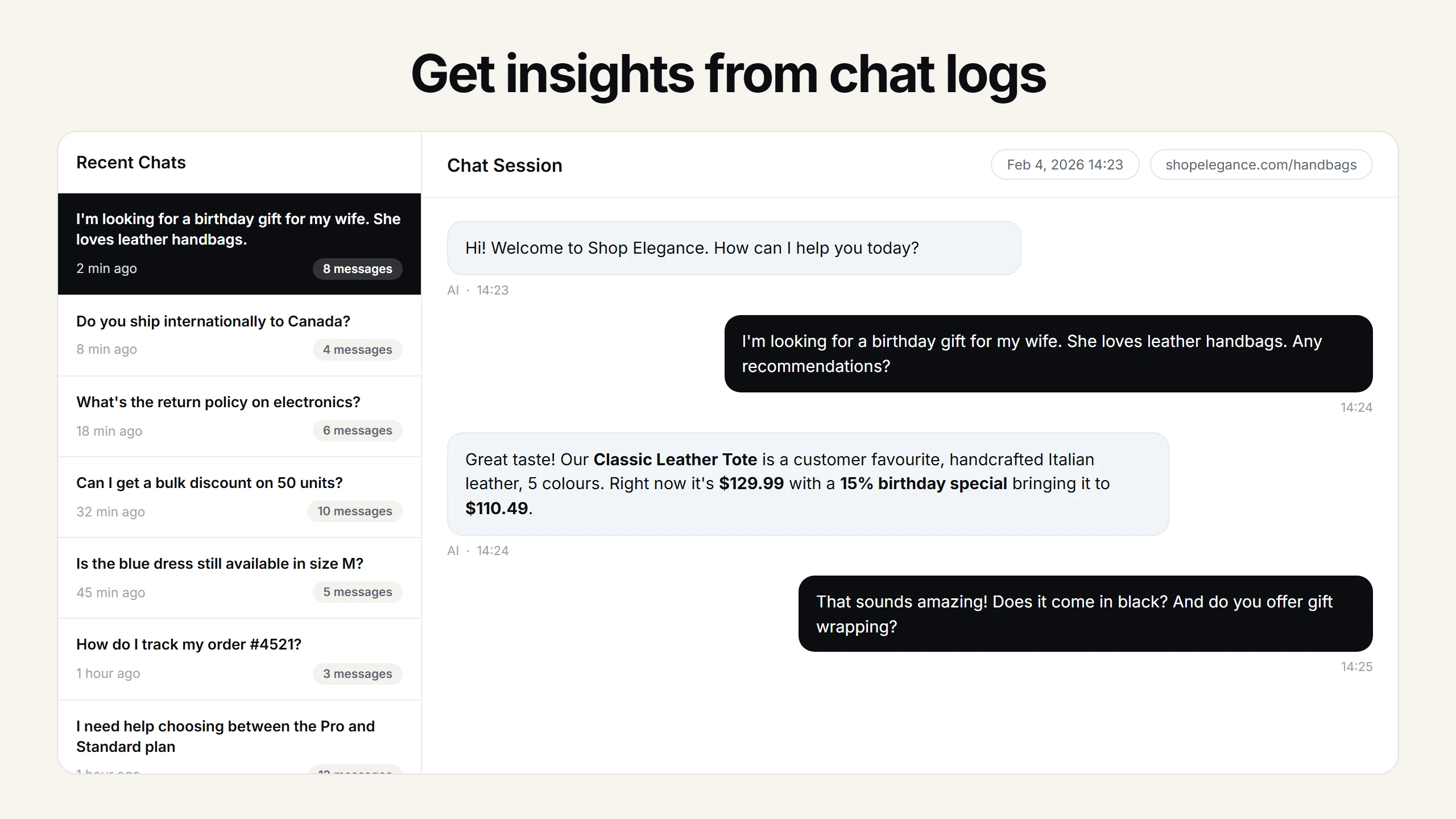
The pattern that HR teams settle into after the first month is predictable and useful. The AI handles the daily volume of routine policy questions without human involvement. Employees get instant answers instead of waiting for someone to check Slack during business hours. The HR team's inbox shrinks to the questions that genuinely need human handling — the sensitive, the unusual, the edge cases that deserve real attention. Conversation analytics reveal which policies generate the most confusion, pointing directly at documentation that needs rewriting. Over time, the AI doesn't just automate HR question answering — it makes the HR team measurably better at communicating policies, because it surfaces exactly where the communication gaps are.