Digital customer onboarding that never leaves a new user stranded
Asyntai absorbs your setup guides, help articles, and product documentation — then answers every first-timer question on the spot, in 36 languages, before the thought of opening a ticket even forms.
See how the AI onboards visitors using your own content
Enter your website URL below — the AI will crawl your pages and show you what automated onboarding looks like for a brand-new user
Turns your existing documentation into a real-time onboarding companion
New customers arrive with momentum. They just signed up, they are ready to explore, and every unanswered question bleeds a little of that energy away. Most onboarding documentation sits in a help center they have not bookmarked yet, organized by categories they do not know the names of. Asyntai closes that distance by reading your public pages, setup guides, and FAQ articles — then surfacing the right answer the moment a new user types a question. No searching, no navigating, no waiting. The knowledge your team already wrote becomes a conversational guide that meets every customer exactly where they get stuck.
- Instant setup answersNew users asking about configuration steps, account settings, or getting-started workflows receive a direct answer pulled from your own guides — not a link to a 2,000-word article they have to parse themselves.
- Contextual follow-upsQuestions rarely come alone during onboarding. The assistant holds the conversation thread so a follow-up like "and what about the email integration?" picks up right where the last answer left off.
- Graceful handoff when neededIf a question requires account-level access or falls outside your published documentation, the assistant offers to connect the user with your team — forwarding the transcript and context so nobody starts from scratch.
Answer account-specific onboarding questions with Custom Tools
Static documentation handles the universal questions — how do I set up my profile, where is the billing page, what file formats do you accept. But onboarding also generates questions that depend on the individual account: has my import finished, what plan did I sign up for, is my domain verified yet. Custom Tools on Standard ($139/month) and Pro ($449/month) plans let the AI call your own endpoints mid-conversation, pull live account data, and weave it into a natural response — no backend exposure, no engineering sprint required.
- Account setup statusThe AI checks whether a new user has completed key onboarding milestones — email verification, first project creation, billing details — and guides them to the next incomplete step.
- Import and migration progressFor products that involve data migration, the assistant can query your import API and tell the user exactly how far along their transfer is and what to expect next.
- Plan and quota visibilityNew users frequently ask what their plan includes. Custom Tools let the AI look up their specific subscription and respond with actual limits, usage, and upgrade paths.
- Integration verificationWhen your product connects to third-party services, the assistant can confirm whether the user's integration is active, pending, or needs attention — eliminating a common onboarding blocker.
Deploy digital onboarding in a single afternoon
No SDK, no staging environment, no six-week project plan. One code snippet in your site template and the AI starts answering onboarding questions using the content you already publish.
- Sign up for a free Asyntai account — the free tier gives you 1 site and 50 messages per month, enough to test the full onboarding flow before scaling.
- Drop the widget snippet into your site's
<head>tag — works with any CMS, static site, or single-page application. - Point the AI at your help center, setup documentation, and onboarding guides. Upload any internal PDFs or paste text for content that is not publicly accessible.
- Scale when you are ready: Starter at $39/month covers 2 sites and 800 messages, Standard at $139/month adds Custom Tools and 15,000 messages, Pro at $449/month handles 20 sites and 50,000 messages with full white-label.
<script src="https://asyntai.com/widget.js"
data-id="your-site-id" async>
</script>
# Snippet placed. New users get guided onboarding instantly.
Digital Customer Onboarding Software — FAQs
What product, growth, and support teams want to know before automating their onboarding experience.
How does Asyntai know what to tell new users during onboarding?
The AI reads your publicly accessible pages — help articles, setup guides, FAQ entries, product documentation — and uses that content to answer questions. You can also upload private documents like internal runbooks or onboarding checklists as PDFs. Every response is grounded in your content, not generated from generic knowledge. When a question falls outside the material you have provided, the assistant says so clearly and offers to connect the user with your team.
Will this replace our existing onboarding flow or sit alongside it?
It sits alongside everything you already have. Product tours, email sequences, in-app tooltips — none of that needs to change. Asyntai adds a conversational layer that catches the questions your existing flow does not anticipate. Think of it as the teammate who is always available when a new user hits something confusing, rather than a replacement for structured onboarding steps.
Can it handle onboarding in multiple languages without separate content?
Yes. The widget interface supports 36 languages, and the AI responds in whichever language the visitor types. A user writing in Japanese receives a Japanese response drawn from your English documentation. You do not need to maintain translated help centers to serve an international audience during their first session.
What happens when a new user asks something the documentation does not cover?
The assistant acknowledges the gap honestly rather than guessing. It offers to capture the question and the user's contact details so your team can follow up. Over time, these unanswered questions become a clear signal about what to add to your documentation — essentially a prioritized list of content gaps surfaced by real onboarding behavior.
How quickly can we go live with digital onboarding?
Most teams finish setup in under an hour. Sign up, paste the snippet, let the AI crawl your help pages, and you are live. Fine-tuning — uploading private documents, writing custom instructions for tone and escalation rules — typically takes another session. There is no engineering project involved unless you want to connect Custom Tools for account-specific data.
Does it work on mobile and inside web applications?
The widget is fully responsive and renders cleanly on any screen size. It works on marketing sites, inside authenticated dashboards, on mobile browsers, and within single-page applications. Wherever a new user might have a question during setup, the assistant can be present.
Can we customize the look to match our product's brand?
Yes. You control colors, position, greeting message, avatar, and the assistant's name through the dashboard. Pro plans include automatic white-labeling with no Asyntai branding visible. Standard plans can request manual white-labeling by contacting [email protected].
What does digital customer onboarding software cost?
Asyntai starts with a free tier — 1 site, 50 messages per month — so you can test the onboarding experience without a commitment. Paid plans begin at $39/month for Starter (2 sites, 800 messages), scale to Standard at $139/month (3 sites, 15,000 messages, Custom Tools), and reach Pro at $449/month (20 sites, 50,000 messages, full white-label). Most products with moderate sign-up volume find that Starter or Standard covers their onboarding traffic comfortably.
Why the first fifteen minutes decide whether a customer stays
There is a window after every sign-up where the relationship between a product and its newest customer is at its most fragile. The user has just handed over an email address, maybe a credit card, definitely some trust. They click into the dashboard for the first time and the clock starts. If the next few minutes feel productive — settings configured, first project created, data imported — that trust compounds. If the next few minutes feel like stumbling through an unfamiliar interface with no one to ask, the tab closes and often never reopens. Digital customer onboarding software exists to make sure those early minutes land on the productive side of that divide.
The conventional playbook for onboarding leans on three tools: a welcome email sequence, a product tour with animated tooltips, and a help center link tucked into the footer. Each serves a purpose and none of them is sufficient on its own. Emails arrive on the platform's schedule, not the user's. Tooltips explain what they were designed to explain and go silent the moment something unexpected happens. Help centers require the user to leave the context of what they were doing, search for a term they may not know, and read an article written for a general audience rather than their specific situation. The gap between these tools and the questions new users actually ask is where onboarding breaks down — and where most of those day-one support tickets originate.
Asyntai fills that gap with a conversational layer that lives directly on your site. It reads your setup guides, help articles, knowledge base entries, and any private documentation you upload, then answers onboarding questions the moment they surface. A user wondering how to connect their email integration does not need to locate the Integrations category in your help center and scan five article titles. They type the question and receive a concise, specific answer drawn directly from the guide your team already wrote. The experience feels like having a knowledgeable colleague sitting next to them during setup — except this colleague is available at three in the morning and speaks thirty-six languages.
What makes conversational onboarding fundamentally different from static documentation is that it adapts to the sequence each individual user follows. No two people set up a product the same way. One starts with billing, another starts with team invitations, a third jumps straight to the API. A help center assumes a linear reading path. A product tour assumes a predetermined click path. The AI assistant assumes nothing — it waits for the question and answers it in whatever order the user encounters their confusion. That flexibility is why conversational onboarding resolves issues that rigid flows miss entirely.
The economics of onboarding failure are rarely calculated explicitly, but they ripple through every metric a product team watches. A user who churns in the first week never reaches the features that would have made them a long-term customer. A user who opens a support ticket during their first session has already downgraded their expectation of the product. A user who quietly abandons setup and moves to a competitor never generates a data point at all — they simply vanish from the funnel. The cost of each of those outcomes dwarfs the cost of answering the setup question that would have prevented it. Digital onboarding software is not an expense line; it is the cheapest form of retention a product team can deploy.
International onboarding is the dimension where automation becomes indispensable. A SaaS product with users across Europe, Latin America, and Southeast Asia cannot staff onboarding specialists fluent in every language during every time zone. Without conversational support, those users face English-only documentation and business-hours-only help — a combination that virtually guarantees higher churn among non-English-speaking cohorts. Asyntai's widget detects the visitor's language automatically and responds in kind. A new user in Seoul asking about data import in Korean receives a Korean answer sourced from English documentation, without any translation layer your team needs to manage. The barrier drops and the onboarding completion rate rises proportionally.
Personalization during onboarding goes deeper when your site pushes account context into the widget. On Standard and Pro plans, User Context lets your application share details — the user's name, their plan tier, whether they have completed specific setup steps — so the AI can tailor its responses. Instead of a generic explanation of how billing works, the assistant says which plan the user is on and what their next invoice date is. Instead of listing all integration options, it highlights the ones available on their tier. That kind of specificity turns a help tool into something that feels more like a concierge, and concierge-level onboarding produces measurably lower churn.
Custom Tools on Standard and Pro plans push the boundary further by letting the AI call your own API endpoints during a conversation. A new user asks whether their data import succeeded and the assistant queries your import status endpoint, then reports back with a count and a timestamp. A user asks what storage quota they have left and the assistant checks in real time rather than quoting documentation that may not reflect their specific plan. These interactions eliminate an entire category of onboarding tickets — the ones where the user's question is not about how the product works in general but about what is happening in their account right now.
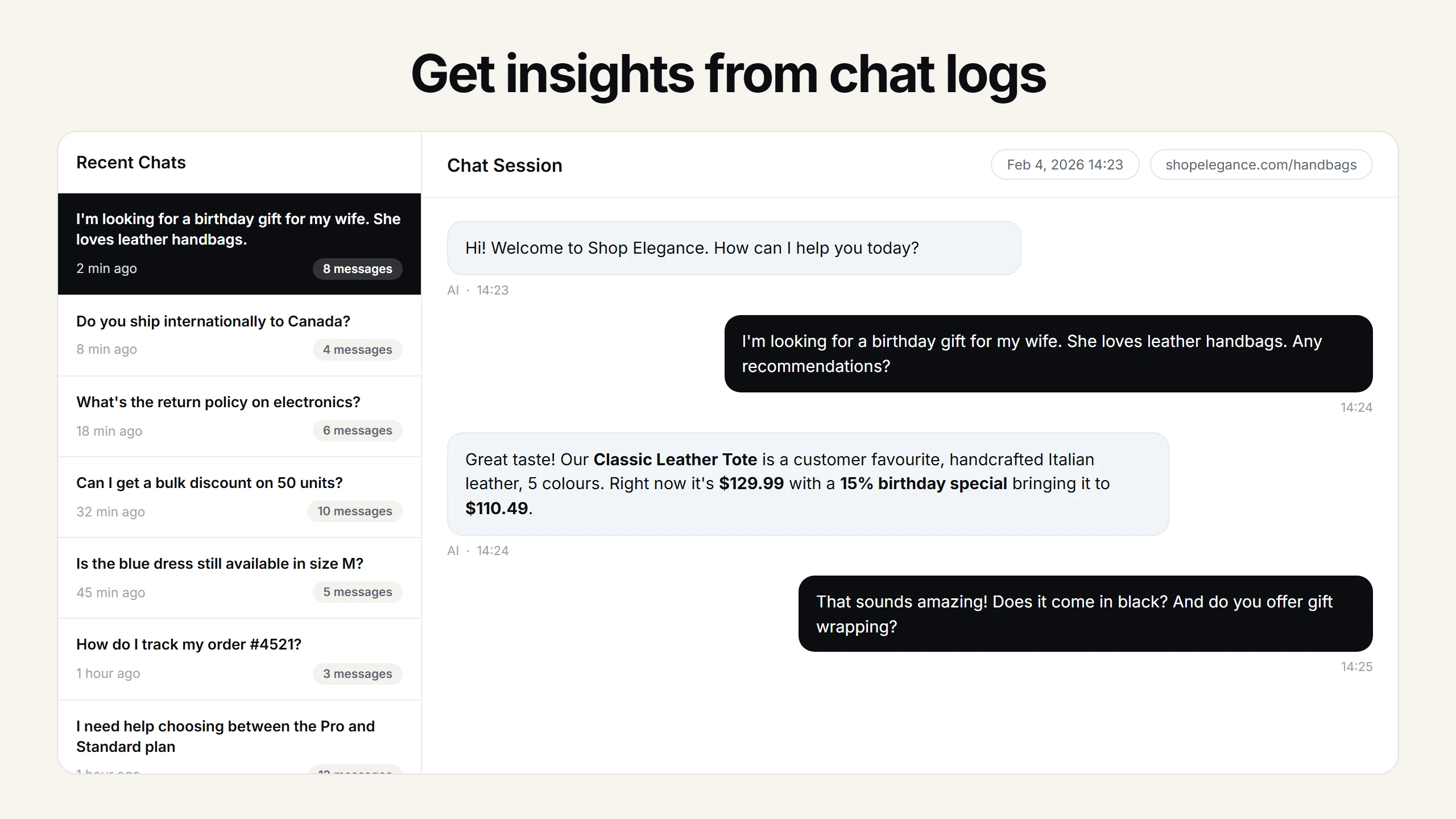
One of the less obvious benefits of digital onboarding software is the pattern recognition it enables. Every question the AI receives during setup is a signal about where your onboarding flow is creating friction. If dozens of new users each week ask how to reset their password during first login, that is not a documentation problem — it is a UX problem the product team can fix at the source. If a spike of questions appears around a specific integration, the guide for that integration probably needs rewriting. The conversation analytics dashboard in Asyntai surfaces these patterns grouped by topic and frequency, turning raw support conversations into a prioritized improvement roadmap your product team can act on without running a single user interview.
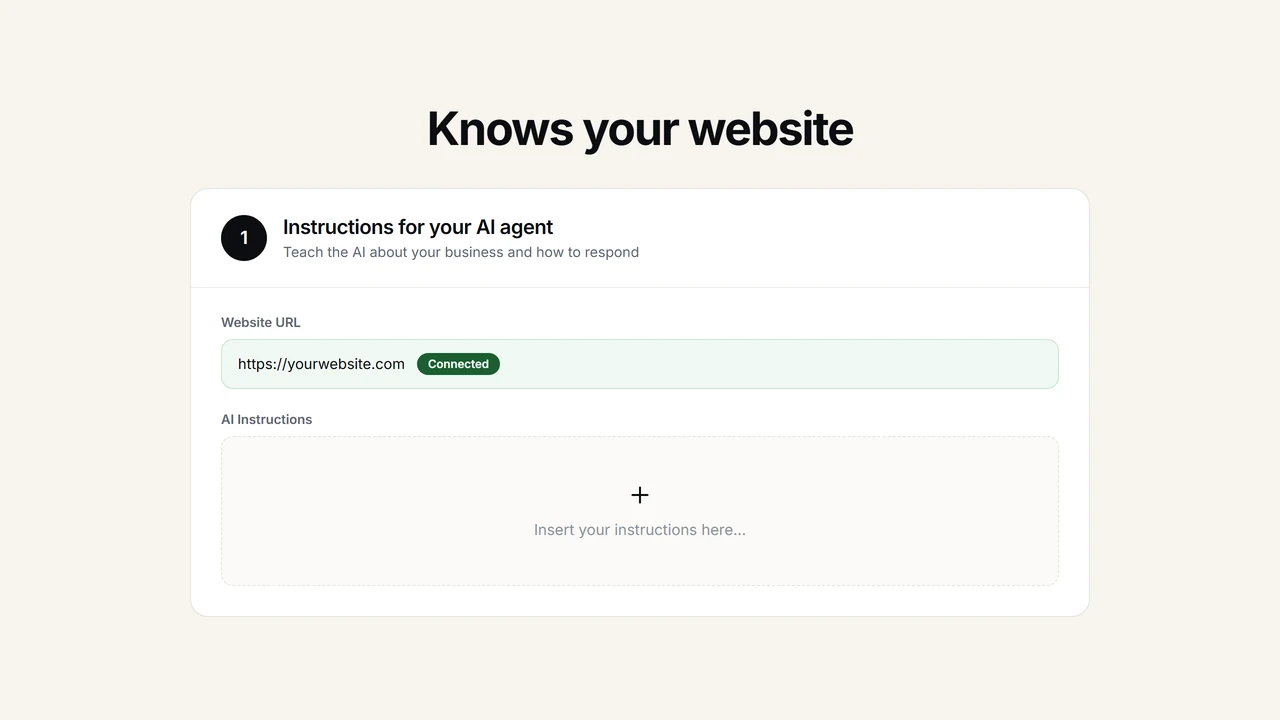
The deployment model is deliberately lightweight because onboarding software that takes weeks to implement defeats its own purpose. You paste a single JavaScript snippet into your site's head tag. The AI crawls your public documentation — up to fifty pages — and you upload any private material as PDFs or plain text. Custom instructions let you set the assistant's tone, define escalation triggers, and specify topics it should redirect to a human. The entire process fits comfortably into a single afternoon, and the onboarding assistant is live before your next batch of sign-ups arrives.
Brand consistency matters during onboarding because the widget is often the first interactive touchpoint a new user encounters after signing up. Asyntai lets you customize colors, position, avatar, greeting message, and the assistant's display name so it looks native to your product. Pro plans remove all Asyntai branding automatically. Standard plans can request the same treatment by emailing [email protected]. The result is an onboarding experience that feels like a built-in feature of your product rather than a third-party add-on — which is exactly how it should feel during a user's first impression.
Scaling onboarding across multiple products or brands is handled through plan-tier site limits. Free covers one site, Starter two, Standard three, and Pro twenty. Each site gets its own knowledge base, its own custom instructions, and its own conversation history. Agencies managing onboarding for multiple clients, SaaS companies with separate product lines, and multi-brand organizations each get isolated onboarding experiences without managing separate accounts.
There is a philosophical point underneath the practical one, and it shapes how Asyntai approaches digital onboarding differently from a ticket deflection tool. Deflection treats the user's question as a cost to be avoided. Good onboarding treats it as a moment to be seized. When a new customer asks how to set up their first project, that is not a support burden — it is proof they are engaged and trying. The right response is not to redirect them to an article and hope they find the paragraph they need. The right response is to answer clearly, immediately, and specifically enough that they finish the setup and move on to the next thing they want to build. Every resolved onboarding question is a small deposit in the relationship that makes the customer less likely to churn, more likely to explore advanced features, and more likely to expand their account over time.
The pricing reflects the reality that onboarding volume is predictable and finite. New sign-ups generate a burst of questions that tapers as users become proficient. Most products find that Starter at $39/month handles early-stage onboarding traffic, while growing products with higher sign-up velocity move to Standard at $139/month for Custom Tools and deeper personalization. In either case, the cost sits far below what a single support hire would add to the payroll — and the assistant never takes a vacation during your product launch week.