Your portal already has the answers — customers just can't find them
Asyntai places an AI assistant directly inside your customer portal. It reads your existing content and answers questions on the spot, so visitors resolve issues themselves instead of opening tickets.
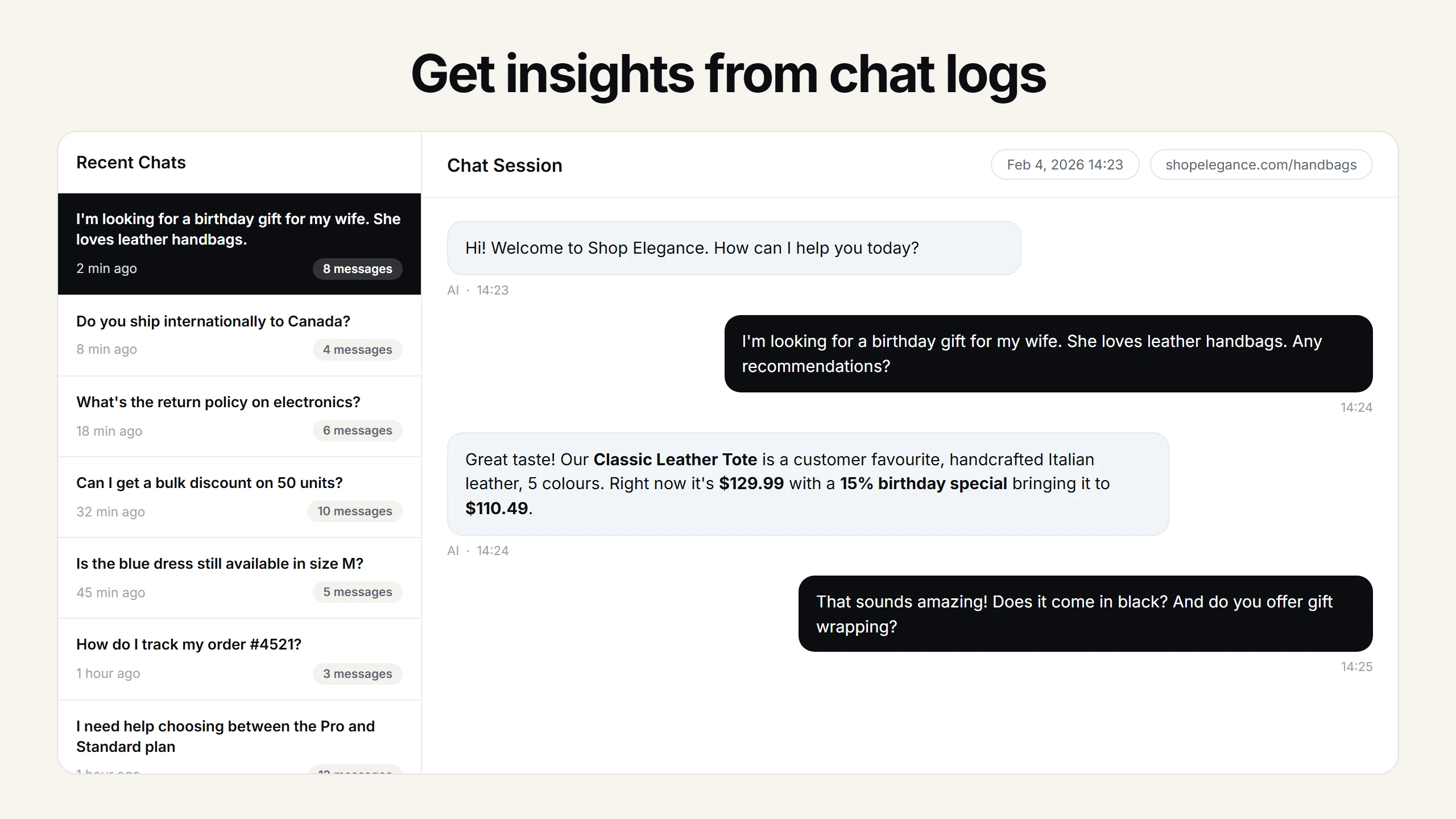
See how AI transforms your portal content into instant answers
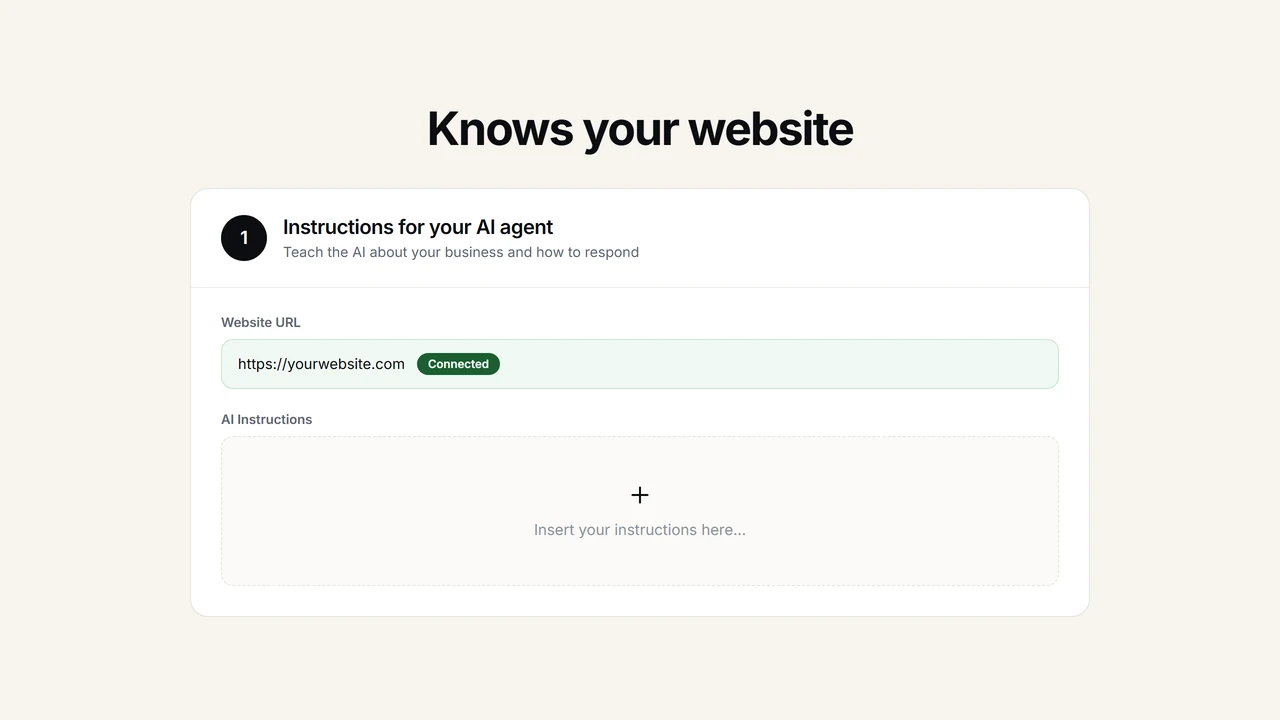
Enter your portal or website URL and watch the AI respond to real customer questions using your own pages
Stop burying answers behind login screens and menu trees
Customer portals accumulate knowledge over years — billing guides, troubleshooting steps, account management walkthroughs, policy documents, product FAQs. The problem is never a lack of content. It's that portals organize information for the company, not for the person searching. A customer wondering whether their invoice includes tax doesn't think in terms of menu categories. They think in questions. Asyntai bridges that disconnect by letting visitors ask naturally and receiving a direct answer drawn from the pages you've already published.
- Natural language over navigationVisitors describe their issue in their own words. The AI finds the relevant portal page and returns a specific answer — no clicking through five menus to reach a buried article.
- Always current, always consistentWhen you update a portal page, a re-crawl refreshes the AI's knowledge. Customers always get the latest policy, the current pricing, the most recent procedure — not a cached version from last quarter.
- Understands follow-up questionsConversations carry context. A visitor who asks about billing and then says "what about annual plans?" doesn't need to start over. The AI remembers what the conversation is about.
Pull live data into portal conversations with Custom Tools
Static answers cover most portal questions, but some require live data — order status, account balances, subscription renewal dates, usage metrics. Custom Tools on Standard ($139/month) and Pro ($449/month) plans let the AI call your own API endpoints during a conversation. A customer asking "when does my subscription renew" gets a real-time answer pulled from your system, not a generic redirect to the account settings page. The portal stops being a directory and starts being a concierge.
- Real-time account lookupsConnect endpoints for order tracking, billing history, usage stats, or subscription details. The AI queries them mid-conversation and returns personalized answers instantly.
- Action-capable responsesGo beyond lookups — let the AI initiate returns, reset passwords, update preferences, or escalate cases by calling your backend endpoints directly during the chat.
- User Context for personalizationPush signed-in customer data into the widget before it loads — name, tier, account age, recent activity. The AI tailors every response to who's asking, not just what's asked.
- Escalation with full transcriptWhen the question exceeds what automation should handle, the AI hands off to your team with the entire conversation and customer context attached — no one repeats themselves.
- 36-language portal supportThe widget auto-detects visitor language and responds in kind. A customer typing in Japanese gets Japanese answers sourced from your English portal content — no separate portal per language required.
Add AI to your portal in a single afternoon
No API integration, no portal redesign, no vendor meetings. One script tag in your portal's header is all the engineering work required. The AI handles everything else — crawling your content, understanding questions, and delivering answers.
- Create a free account and paste your portal URL
- The AI scans up to 50 pages and builds a knowledge base from your content
- Copy the one-line embed snippet into your portal's site header
- The chatbot goes live — answering visitor questions in 36 languages
<script src="https://asyntai.com/widget.js"
data-id="your-site-id" async>
</script>
</head>
# Portal self-service — live on every page.
Customer self-service portal — questions before you start
What portal owners typically want to know before adding an AI self-service layer.
How does the AI know what's in our portal if the content sits behind a login?
Asyntai crawls any publicly accessible pages you point it at — up to 50 per site. For gated portal content that lives behind authentication, you can upload documents directly as PDFs or paste text into the dashboard. The AI references both sources when answering, so nothing is out of reach regardless of where the original content lives.
Will the AI fabricate answers if a question falls outside our portal content?
No. The AI is grounded in the content you provide. When a question has no matching material in your crawled pages or uploaded documents, the assistant says so clearly and offers to capture the visitor's details for your team. You can reinforce this behavior with custom instructions for specific topics — pricing commitments, legal terms, or anything where a wrong answer would be worse than no answer.
Can we control which portal topics the AI handles versus which go to a human?
Entirely. Custom instructions let you write plain-language rules: escalate anything about cancellations, hand off refunds over a certain amount, always connect billing disputes to a person. The AI follows those rules and passes conversations to your team with the full transcript attached, so the agent picks up mid-conversation without asking the customer to repeat anything.
Does this replace our existing customer portal?
Not at all. Asyntai sits as a layer on top of your portal — a chat widget in the corner of every page. Your portal's structure, navigation, account dashboards, and download sections remain untouched. The AI simply gives visitors a faster path to answers than clicking through menus. Think of it as a concierge desk inside a building that already has all the rooms — it doesn't redesign the building, it helps people find the right room.
What languages does the portal AI support?
The widget interface and AI responses cover 36 languages with automatic detection. A visitor typing in Portuguese receives Portuguese answers, someone typing in Korean receives Korean — all sourced from your existing content regardless of what language it was originally written in. No separate portal translations required on your end.
How much does it cost compared to hiring another support agent?
The free tier gives you 50 messages to test on one site. Starter runs $39 per month for 800 messages across 2 sites. Standard is $139 per month for 15,000 messages and 3 sites, and Pro is $449 per month for 50,000 messages across 20 sites. Even the Pro tier costs a fraction of a single full-time support hire, and each resolved self-service conversation carries no additional marginal cost.
Can the AI pull live account data like order status or subscription details?
Yes, through Custom Tools available on Standard and Pro plans. You connect your own API endpoints, and the AI calls them during conversations to fetch real-time data — order tracking, billing history, usage stats, renewal dates. The visitor gets a personalized answer without leaving the chat or navigating to a different portal section.
How quickly can we get this running on our portal?
Most teams go from signup to live widget in under an hour. You create an account, paste your portal URL for crawling, copy a single script tag into your portal's header, and the AI is answering questions. Custom instructions and escalation rules add polish, but the base layer works immediately after the crawl completes.
The portal paradox — and how AI resolves it
Every customer portal ships with the same quiet promise: everything you need is right here. Account details, billing history, troubleshooting guides, policy documents, upgrade paths, onboarding walkthroughs — all organized into sections, subsections, and sub-subsections that made perfect sense to the team that built them. The paradox is that the more content a portal accumulates, the harder it becomes for any individual visitor to find the one piece they actually came for. The information is there. The findability is not. And when findability breaks down, customers do what any reasonable person would do — they open a support ticket and ask a human to find it for them.
That ticket is a failure of interface, not a failure of content. The billing policy exists. The cancellation procedure is documented. The upgrade comparison table was updated last month. But the customer who just spent four minutes clicking through nested menus doesn't care that it exists somewhere — they care that they couldn't reach it in the moment they needed it. By the time they submit a ticket, they've already decided that your portal doesn't work. No amount of improving the portal's navigation will fully solve this, because the fundamental mismatch is structural: portals organize information by category, and customers organize their needs by question.
Asyntai resolves that mismatch by adding a conversational layer on top of whatever portal you already run. The AI crawls up to 50 of your portal's public pages, absorbs the content — every FAQ answer, every policy clause, every how-to step — and then sits as a chat widget on every page. When a visitor types "how do I update my payment method," the AI doesn't return a list of articles. It returns the answer: go to Account Settings, click Billing, select Update Card, enter the new details. Sourced directly from the page you wrote six months ago that the visitor never found on their own. The portal content hasn't changed. The path to it has collapsed from twelve clicks to one question.
What makes this approach different from bolting a search bar onto the portal is depth of understanding. A keyword search for "payment" returns every page that mentions the word — billing FAQ, pricing page, refund policy, payment terms, maybe a blog post about payment trends. The visitor still has to read through results and decide which one applies. The AI, by contrast, understands the intent behind the question and pulls the specific paragraph that answers it. It distinguishes between "how do I update my payment method" and "what payment methods do you accept" and "when is my next payment due" — three questions that a keyword search would treat identically but that require three completely different answers from three different portal pages.
For portal operators, the immediate impact is measurable in ticket deflection. Every question the AI resolves is a ticket that never reaches your queue. Not because you've hidden the submit button or added friction to the escalation path — visitors can always reach a human — but because the answer arrived before the visitor decided to ask a person. Teams running Asyntai on their portals typically see the AI handle the bulk of routine volume: password resets, feature questions, pricing clarifications, policy lookups, account navigation help. What remains in the human queue is genuinely complex — disputes, edge cases, emotional situations — which is exactly the work that benefits from human judgment.
The personalization layer is where portal self-service starts to feel fundamentally different from a glorified FAQ. With User Context on Standard and Pro plans, your portal can push signed-in customer data into the widget before it loads: name, account tier, subscription status, recent activity, open cases. The AI uses that context to deliver answers that would be impossible without it. A customer asking "am I on the right plan?" gets an answer based on their actual usage, not a generic comparison table. A customer asking "when does my trial end?" gets their specific date, not a link to the trials documentation page. The portal stops feeling like a reference library and starts feeling like it knows who you are.
Custom Tools on Standard and Pro plans push this further by letting the AI call your own backend endpoints during a conversation. The visitor asks "what's the status of my latest order?" and the AI calls your order API, retrieves the tracking information, and responds with the actual status — shipped yesterday, currently in transit, estimated delivery Thursday. No redirect to the orders page. No "please check your account dashboard." The answer arrives inside the conversation, in the same flow as every other question. For portal operators who've spent years trying to reduce the friction between customers and their own data, this is the layer that closes the last gap.
Language coverage deserves specific attention because portals disproportionately serve international users who have fewer alternatives when self-service fails. The widget renders in 36 languages and the AI responds in whichever language the visitor uses. A customer in Munich types in German and gets German answers. A customer in Seoul types in Korean and gets Korean answers. Both are sourced from the same English portal content your team maintains. For companies that serve global markets but can't justify maintaining 36 translated portal versions, this is a meaningful expansion of who can actually use the self-service layer you built.
The economics work differently than most portal investments. Adding a new section to your portal requires content creation, design review, navigation updates, and QA across devices. Deploying Asyntai requires pasting one script tag. The free tier gives you 50 messages to validate the approach on your own content with real visitor questions. Starter at $39 per month covers 800 messages across 2 sites — enough for most small portals. Standard at $139 per month handles 15,000 messages across 3 sites with Custom Tools and User Context. Pro at $449 per month scales to 50,000 messages and 20 sites. Each tier costs less than a fraction of a support salary, and unlike a new hire, the AI doesn't need onboarding, doesn't take sick days, and doesn't forget the policy update from last week.
There's a compounding benefit that emerges over the first few weeks. Every question the AI receives is a signal about what your portal visitors actually need. The conversation analytics in the Asyntai dashboard group questions by topic and frequency, revealing patterns that no amount of page-view analytics would surface. You might discover that forty percent of portal questions are about a billing edge case that's technically documented but buried in the third paragraph of a secondary page. That discovery alone — knowing what customers are really confused about — often leads to portal improvements that make the self-service layer even more effective. The AI doesn't just answer questions; it quietly maps the gap between what your portal offers and what your customers actually need.
Deployment is deliberately fast because the biggest risk with any portal improvement is the project that never ships. There's no integration sprint, no vendor onboarding, no design review cycle. You sign up, point the crawler at your portal, copy the snippet, write a few custom instructions about tone and escalation boundaries, and the AI is live. Most teams finish the entire process in under an hour. From that point forward, every portal visitor has a faster path to every answer your portal contains — and your support team gets to spend their time on the conversations that actually need them.