Customer reference management that matches the right story to the right prospect
Asyntai turns your case studies, testimonials, and success stories into a searchable AI library. Prospects describe their situation — the chatbot surfaces the reference that fits, instantly, without your sales team playing matchmaker.
See how AI would serve your reference library
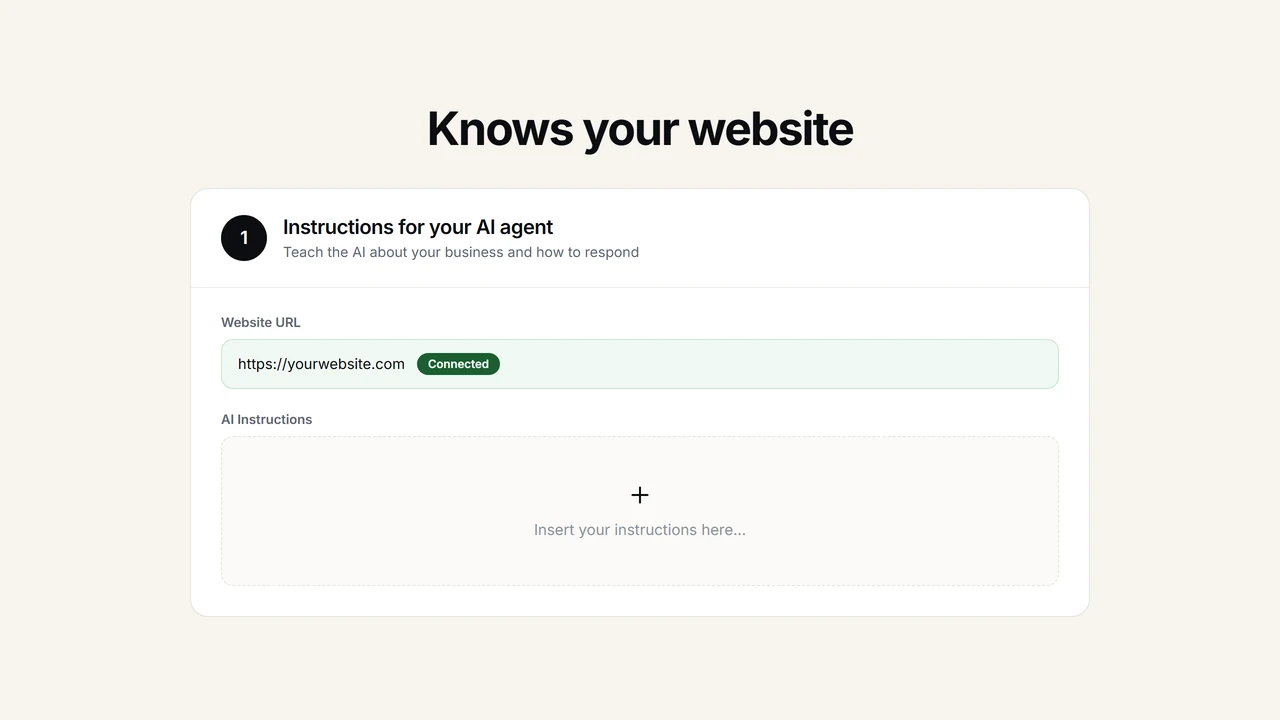
Paste the URL of your case studies or testimonials page and watch the chatbot surface relevant stories
Your best proof points are useless if nobody can find them
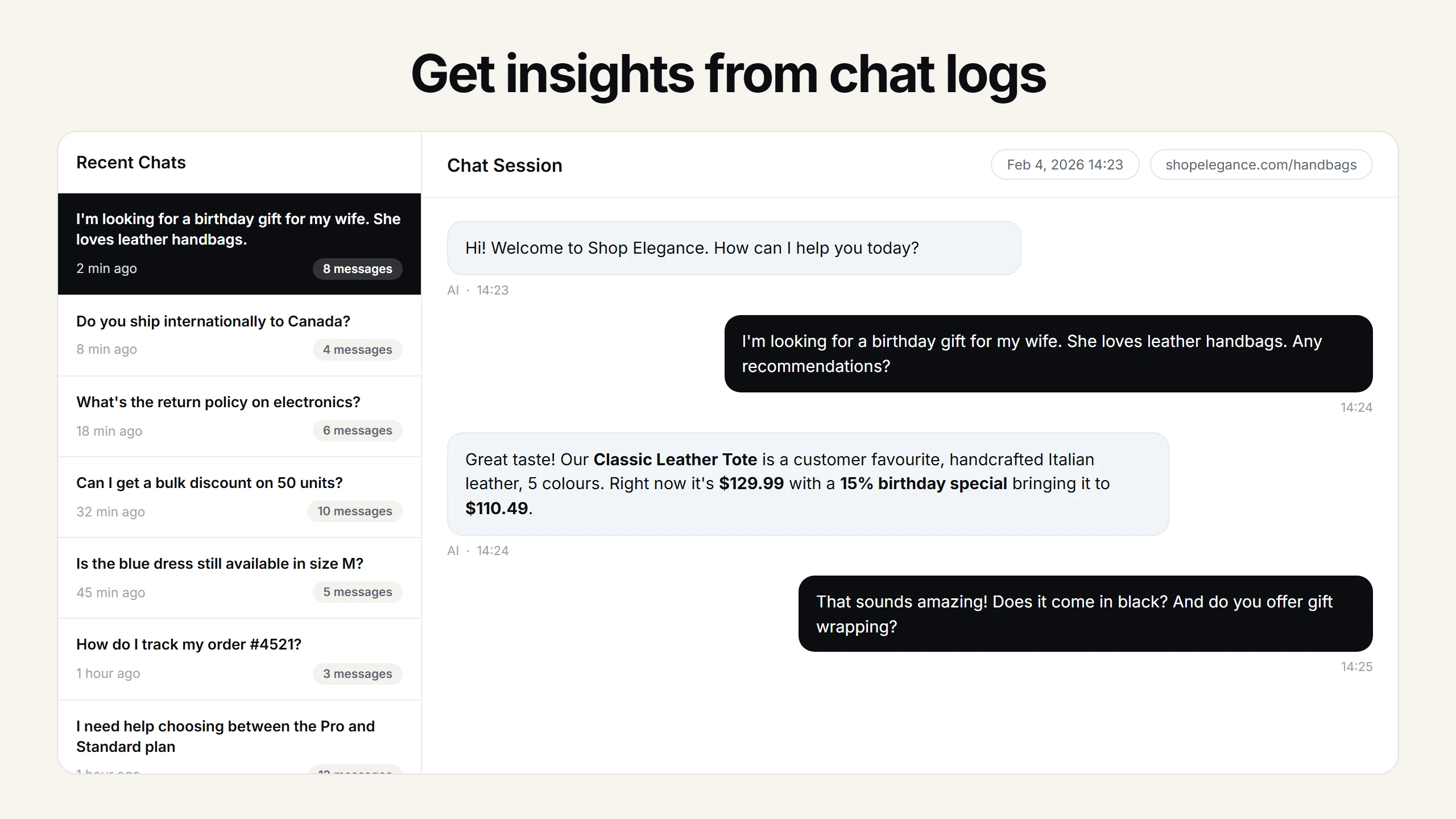
Most companies invest heavily in building a reference library — interviewing customers, writing case studies, polishing testimonials, filming video stories — and then bury the results in a filterable grid that prospects never use. The sales team manually searches through a spreadsheet to find a reference that matches the prospect's industry, use case, and company size. The prospect waits. The reference gets stale. The deal momentum stalls. Asyntai makes your entire reference library conversationally accessible. A prospect types "do you have customers in healthcare with over 500 employees?" and the chatbot surfaces the relevant case study with specific results — not a link to a search page, but the story itself, quoted and cited.
- Natural language reference searchProspects describe their situation in their own words — industry, team size, challenge, geography — and the AI finds the closest matching reference from your library in seconds.
- Results with context, not just linksThe chatbot doesn't dump a URL. It summarizes the relevant case study, highlights the outcomes that match the prospect's criteria, and offers to share the full story.
- Always current, never staleWhen you publish a new case study or update an existing one, the AI picks it up on the next crawl. No manual tagging, no spreadsheet updates, no taxonomy maintenance.
Arm your sales team with proof that sells
Reference management isn't just about prospects self-serving — it's about making your sales team faster. On Standard ($139/month) and Pro ($449/month) plans, Custom Tools let the chatbot pull reference data dynamically during conversations, matching not just by industry but by deal size, deployment timeline, and specific outcomes. Your reps stop spending fifteen minutes hunting for the right case study before a call and start entering conversations with the perfect story already queued up. The chatbot also serves as an internal resource — reps can ask "what's our strongest retail reference under 100 employees?" and get an answer pulled from the same library that serves prospects.
- Prospect-facing reference conciergeOn your website or in a shared evaluation portal, the chatbot lets prospects explore your reference library through conversation. They ask, it matches, they get proof.
- Internal sales toolReps ask the chatbot for references matching a specific deal profile. Instead of searching a spreadsheet, they get a curated recommendation with the case study link and key talking points.
- Multilingual reference deliveryA prospect in Munich asks in German about manufacturing references. The chatbot answers in German, drawing from your English-language case studies. 36 languages, one reference library.
- Escalation for custom reference requestsWhen a prospect asks for a live customer call or a reference that isn't in the library, the chatbot collects their requirements and routes the request to your customer marketing team with full context.
Make your references work harder in minutes
No CRM integration, no taxonomy project, no metadata tagging sprint. Point the AI at your case studies page and it builds a searchable reference library automatically.
- Create a free account and paste the URL of your case studies or testimonials page
- The AI scans up to 50 pages and builds a knowledge base from your reference content
- Copy the one-line embed snippet into your site header
- The chatbot goes live — matching prospects to references in 36 languages
<script src="https://asyntai.com/widget.js"
data-id="your-site-id" async>
</script>
</head>
# Your reference library, searchable by conversation.
Customer reference management — FAQs
Questions from customer marketing, sales enablement, and go-to-market teams evaluating AI for reference management.
How does the AI know which reference to surface?
The AI matches based on semantic understanding, not keyword tags. When a prospect asks about "mid-market SaaS companies that reduced churn," the chatbot searches your entire reference library for case studies that discuss SaaS, mid-market companies, and churn reduction outcomes — even if those exact words aren't in the title. It understands the meaning of the question and finds the closest matching content. The quality of matching depends on the detail in your case studies: the more specific outcomes, metrics, and context you include, the more precisely the AI can match.
Do we need to tag or categorize our case studies for this to work?
No. The AI reads the full text of each case study and understands the content — industry, company size, challenge, solution, results — without requiring you to maintain a taxonomy. If your case studies are published web pages, the crawler picks them up automatically. If they're PDFs, you upload them directly. Either way, there's no metadata layer to build or maintain. If you already have tags and categories, they'll help the AI be even more precise, but they're not required to get started.
Can the chatbot handle requests for live customer references?
Yes, through escalation rules. When a prospect asks to speak with an actual customer — which happens later in the evaluation cycle — the chatbot collects their industry, use case, company size, and contact details, then routes the request to your customer marketing team with the full conversation. Your team gets a structured reference request instead of a vague "can I talk to a customer?" email, which makes the matching process faster on your side too.
Can our sales reps use this internally to find references before calls?
Absolutely. Deploy the chatbot on an internal page or portal and your reps can ask the same natural-language questions prospects ask. "What's our best manufacturing reference in Europe?" or "Do we have a case study showing a 40% reduction in support tickets?" The AI searches the reference library and returns the best match with a summary and link. It's faster than searching a spreadsheet and more reliable than asking the colleague who "thinks there was a case study about that."
What if we only have a few case studies?
Even a small library becomes more useful when it's conversationally searchable. If you have five case studies, the chatbot can still match a prospect's question to the most relevant one — and it'll be honest when none of them fit, rather than forcing a bad match. As you build more references over time, the AI's matching improves automatically. You don't need to reconfigure anything; just publish the new case study and the crawl picks it up.
How does this compare to dedicated reference management platforms?
Enterprise reference management platforms typically cost $30,000 to $100,000 annually and require a full-time customer marketing coordinator to maintain the taxonomy, update reference availability, and manage the matching workflow. Asyntai starts free with 50 messages. Starter is $39/month for 800 messages across 2 sites. Standard is $139/month for 15,000 messages. Pro is $449/month for 50,000 messages. The AI handles the matching automatically, so there's no taxonomy to maintain and no coordinator role to fill. For companies that don't have the budget or headcount for an enterprise platform, this gets 80% of the value at 2% of the cost.
Can the chatbot quote specific metrics from our case studies?
Yes. If your case study says "Acme Corp reduced support tickets by 43% in the first quarter," the chatbot can quote that figure in conversation when a prospect asks about support ticket reduction. It attributes the data to the specific case study so the prospect knows the source. This is why detail matters in your reference content — the more specific the outcomes you publish, the more compelling the chatbot's answers become during prospect conversations.
The reference library problem no one talks about in pipeline reviews
Every B2B company with a product worth selling eventually builds a customer reference library. The process is expensive and slow: identify a happy customer, negotiate their willingness to participate, schedule an interview, draft the case study, get legal approval, get the customer's marketing team to approve, design it, publish it, and add it to the website. A single case study can take six to twelve weeks from interview to publication, and the fully loaded cost — writer time, designer time, project management, customer relationship capital — often runs $3,000 to $8,000 per story. Companies with thirty published case studies have invested somewhere between $90,000 and $240,000 in that library. And then nobody uses it effectively.
The reference library sits on a "Case Studies" page, usually organized by industry or product line, with a handful of filter checkboxes and a grid of cards. Prospects browse it like a catalog — if they browse it at all. Most don't, because browsing a grid of case study thumbnails is not how people evaluate software. People evaluate by asking questions: "Does this work for healthcare?" "Has anyone my size used this?" "What kind of results do companies in manufacturing see?" These are matching questions, and the grid-plus-filters format is a terrible interface for matching. The prospect either gives up and asks sales (adding days to the cycle) or picks a case study at random and hopes it's relevant (which it usually isn't, because the title said "Enterprise Success Story" and they're a 50-person startup).
The sales team's experience with the reference library is equally frustrating, just from the other side. A rep is preparing for a call with a prospect in financial services, team of 200, primary concern is compliance automation. The rep knows there's a case study somewhere that covers a similar profile, but the internal spreadsheet that maps references to criteria hasn't been updated since Q3. They ask in the Slack channel: "Does anyone know if we have a fintech case study?" Three people respond with three different links, one of which turns out to be a draft that was never approved for external use. The rep picks the safest option, skims it five minutes before the call, and delivers a reference that's tangentially related instead of precisely matched. The prospect hears a story about a bank with 5,000 employees and wonders what it has to do with their 200-person fintech startup. The reference, instead of building credibility, creates distance.
Asyntai solves the matching problem by making the reference library conversationally searchable. The AI crawls your case studies page (up to 50 pages), reads every published reference in full, and understands the content — the customer's industry, size, challenge, solution, and measurable outcomes — without requiring you to tag or categorize anything. When a prospect asks "do you have customers in healthcare?" the chatbot doesn't show a filtered grid. It summarizes the most relevant healthcare case study, highlights the outcomes, and offers to share the full story. If the prospect follows up with "anyone under 100 employees?" the AI narrows the match further. The conversation replaces the filter — and the conversation is a vastly better matching interface because the prospect can express criteria that no checkbox taxonomy anticipated.
The semantic understanding is what separates this from a search bar. A traditional search on a case studies page matches keywords: type "reduce churn" and you'll find case studies that use the word "churn" in the title or body. But the AI understands meaning. If a case study discusses "improving customer retention by 28%" without ever using the word "churn," the chatbot still surfaces it when a prospect asks about churn reduction — because it understands that reducing churn and improving retention are the same outcome. This kind of reasoning across terminology is something that manual tagging can never fully capture, because you can't anticipate every synonym and variation a prospect might use. The AI does it natively.
For sales teams, the internal use case is almost as valuable as the prospect-facing one. Deploy the chatbot on an internal page and let reps query the reference library the same way prospects do. "What's our strongest retail reference with a short implementation timeline?" produces a curated recommendation with the case study link and the key talking points to use on the call. Reps prepare in 30 seconds instead of 15 minutes. The quality of reference matching improves because the AI is searching the full text of every case study, not the stale spreadsheet that someone in customer marketing was supposed to update last month. And when a new case study is published, it enters the searchable library automatically — no row to add, no tag to assign, no email to send to the sales team.
The multilingual dimension opens a capability that most reference management approaches can't touch. Your case studies are probably written in English. But your prospect in Germany asks about manufacturing references in German. The chatbot answers in German, pulling from your English-language case study about a manufacturing customer, translating the relevant details while preserving the specific metrics and outcomes. Thirty-six languages are supported. A prospect in Japan, a prospect in Brazil, a prospect in Saudi Arabia — all get reference matches in their language from a single English-language library. You don't need to translate case studies. You don't need localized reference pages. The AI handles the linguistic conversion while keeping the facts intact.
Custom Tools on Standard and Pro plans extend the matching capability into structured data. If your reference library includes metadata — deal size, deployment timeline, ROI figures, integration stack — the chatbot can query that data dynamically during the conversation. "Show me references with a deployment under 30 days" pulls from structured fields, not just prose. For companies with large reference libraries (50+ case studies), this structured matching produces significantly more precise results than text-only search, because the AI can filter on quantitative criteria before ranking on qualitative relevance.
The cost arithmetic is worth addressing directly. Enterprise reference management platforms — the ones with advocate portals, reference request workflows, and CRM integrations — typically run $30,000 to $100,000 per year and require a dedicated customer marketing coordinator to operate. That's the right investment for a company with a mature customer advocacy program and a sales team that processes fifty reference requests per month. For the much larger number of companies that have ten to fifty case studies on a web page and a sales team that needs to find the right one at the right time, that level of tooling is overkill. Asyntai costs $39 to $449 per month, installs in minutes, and requires no coordinator role. It's not trying to be a full advocacy platform. It's trying to make the reference content you've already invested in actually findable — by prospects and by your own team — at a cost that doesn't require a budget approval meeting.