Customer journey orchestration that runs on conversations, not flowcharts
Asyntai places an AI chatbot at every touchpoint on your site — greeting first-time browsers, answering comparison shoppers, and nudging warm leads across the finish line. One script, zero workflow builders, 36 languages.
See how AI would guide visitors on your site
Enter your URL and watch the chatbot map a journey from your own content
Meet visitors where they are, not where your funnel diagram says they should be
Traditional journey orchestration platforms ask you to draw boxes and arrows before a single customer has arrived. You map stages, define triggers, write branching logic, and hope the real world matches the diagram. It rarely does. Asyntai takes the opposite approach: the AI reads your website content, learns your product catalog and policies, and then holds the right conversation based on what each visitor actually asks. A first-time browser asking "what does this do?" gets an awareness-stage answer. A returning visitor comparing pricing tiers gets a consideration-stage answer. Nobody had to draw a flowchart for that to happen.
- Context from the page, not a segment tagThe chatbot sees which page the visitor is on and adapts — product pages get buying-focused answers, blog posts get educational depth, pricing pages get plan comparisons.
- No workflow builder to maintainEvery journey update you'd make in a CDP happens automatically when you update your website. Change a price, add a product, revise a policy — the AI picks it up on the next crawl.
- 36 languages without 36 journey mapsA visitor in Tokyo and a visitor in Munich get the same orchestrated experience, in their own language, from one knowledge base. No per-locale branching required.
From curiosity to checkout — one AI thread
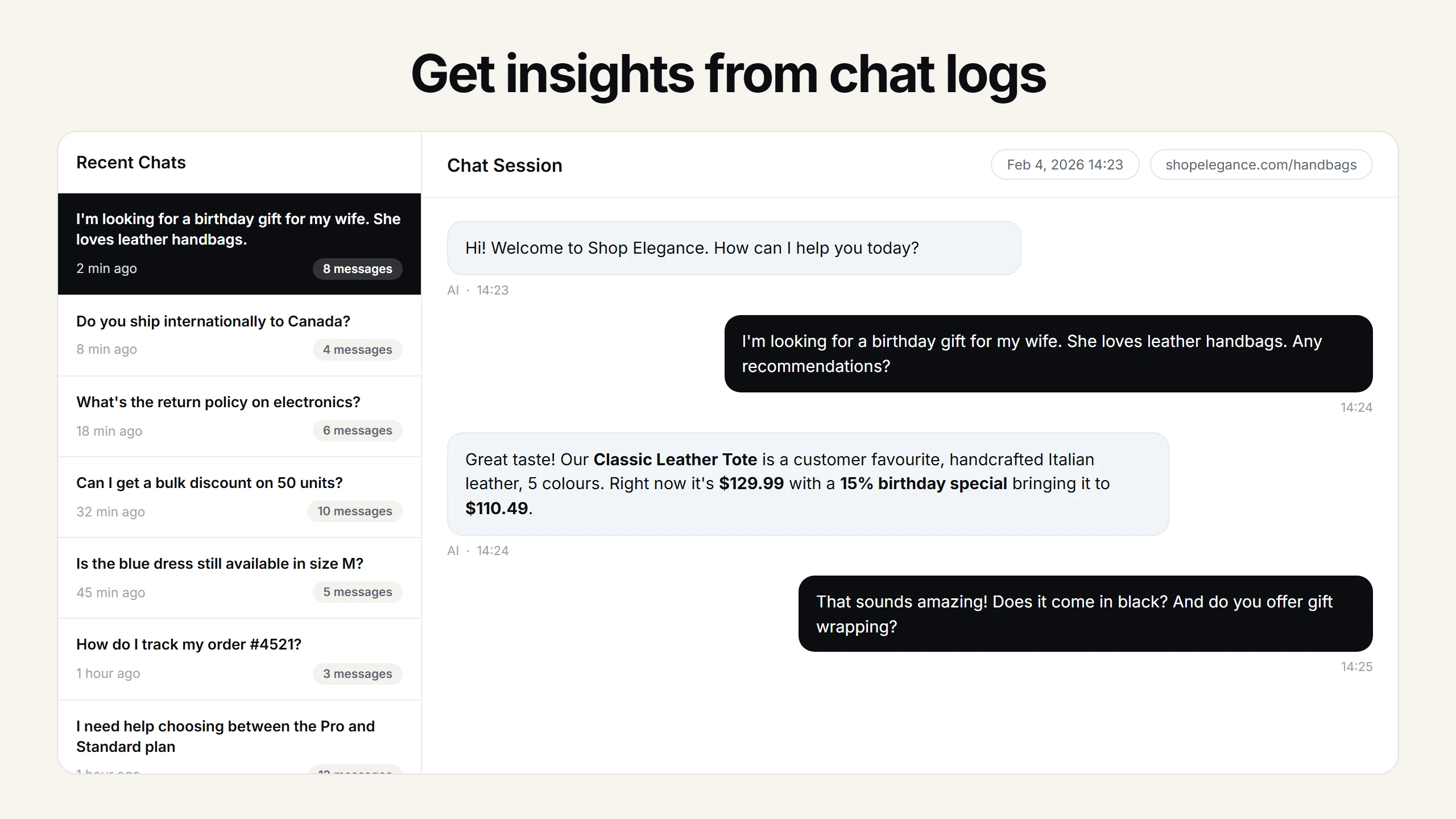
Journey orchestration only matters if it drives action. Asyntai connects the conversation to your business operations through Custom Tools, available on Standard ($139/month) and Pro ($449/month) plans. The chatbot can check inventory, look up order status, surface personalized recommendations, or trigger any endpoint your backend exposes — all within the same conversation a visitor started with a casual question. The journey doesn't pause while someone switches tabs to check a tracking page. The AI keeps the thread alive and the momentum moving forward, because every dropped conversation is a dropped opportunity.
- Awareness to interest in one replyWhen a new visitor asks what you sell, the AI doesn't dump a homepage summary — it asks what they're looking for and answers with the relevant product or service.
- Comparison shopping handled instantlyProspects weighing your plans against alternatives get honest, detailed answers pulled from your own feature pages. No sales rep needed for the initial evaluation.
- Post-purchase support closes the loopThe same chatbot that helped a visitor buy now helps them track, return, or troubleshoot — keeping the relationship warm without a handoff to a separate support tool.
- Escalation when the moment calls for itHigh-intent leads who need a human conversation get routed with full context — the transcript, the page they were on, the questions they asked — so your team picks up mid-stride.
Deploy journey orchestration in an afternoon
CDP platforms take quarters to implement. Asyntai takes a lunch break. No data pipelines, no segment definitions, no integration sprints — just a script tag and the content you already have.
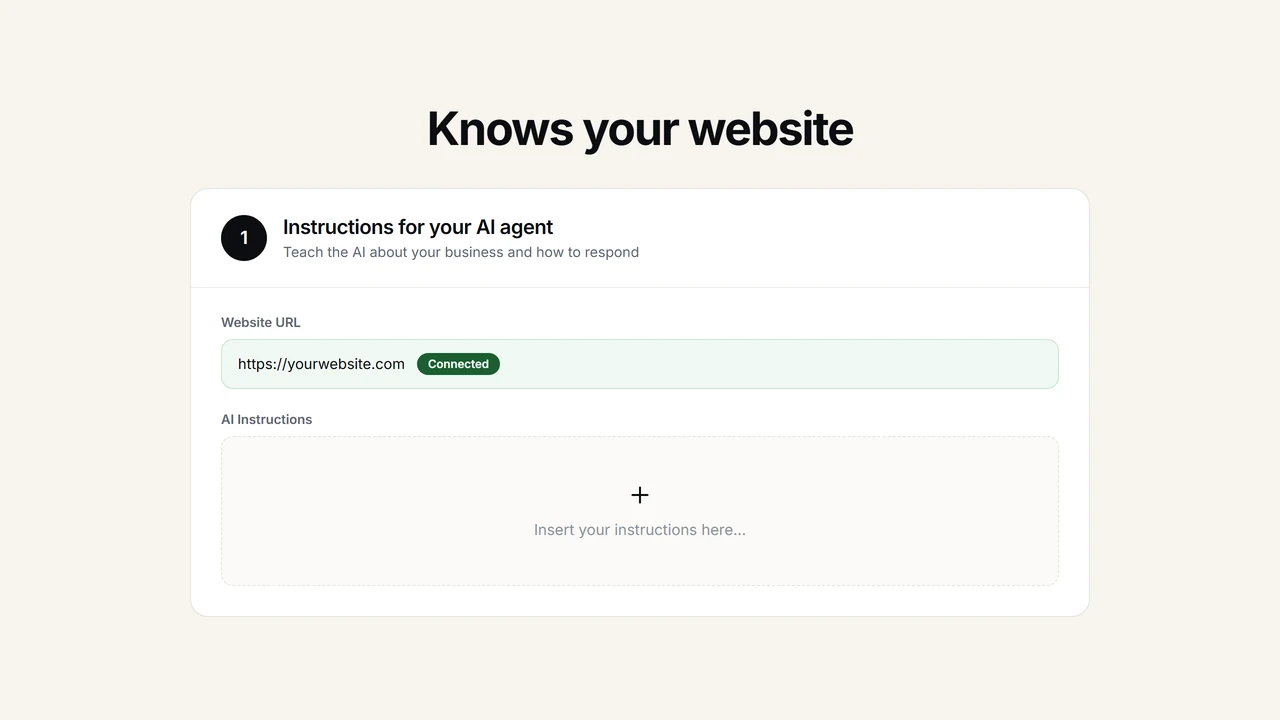
- Create a free account and paste your website URL
- The AI scans up to 50 pages and builds a knowledge base from your content
- Copy the one-line embed snippet into your site header
- The chatbot goes live — answering visitor questions in 36 languages
<script src="https://asyntai.com/widget.js"
data-id="your-site-id" async>
</script>
</head>
# One snippet. Every touchpoint. Every language.
Customer journey orchestration — FAQs
Common questions from marketing leaders and growth teams evaluating AI-driven journey orchestration.
How is this different from a traditional journey orchestration platform or CDP?
Traditional platforms require you to define segments, map stages, build triggers, and maintain complex workflows before anything happens. Asyntai skips all of that. The AI answers using your own content and adapts to each visitor's intent in real time. There are no flowcharts to draw, no segments to define, and no data pipelines to maintain. You get orchestrated conversations from day one — the AI figures out what stage a visitor is in based on what they ask, not based on a tag you assigned three sprints ago.
Can the chatbot take actions during the journey, or does it just answer questions?
On Standard ($139/month) and Pro ($449/month) plans, Custom Tools let the chatbot call your own backend endpoints within the conversation. That means it can check inventory, look up an order, surface personalized pricing, or trigger a booking — whatever your API supports. The visitor never leaves the chat to complete the action. The conversation is the journey, and the journey includes real transactions.
How does the AI know which stage of the journey a visitor is in?
It reads intent from the conversation itself. A visitor asking "what do you do?" is at the awareness stage. One asking "how does your pricing compare to alternatives?" is evaluating. One asking "can I get a demo for my team?" is ready to buy. The AI doesn't need you to tag visitors or build scoring models — it interprets the question and responds accordingly, using the knowledge base you've built from your own site content.
Do I need to write different scripts for different journey stages?
No. You write one set of custom instructions — your tone of voice, your escalation rules, anything the chatbot should or shouldn't say — and the AI applies them contextually. A visitor on a product page gets product-focused answers. A visitor on a pricing page gets plan comparisons. The adaptation happens automatically because the AI understands the content and the question, not because you scripted branches for each scenario.
What about visitors who speak different languages?
Asyntai detects the visitor's language automatically and replies in kind — 36 languages are supported out of the box. You don't need separate journey maps, separate content, or separate chatbots for each language. One knowledge base, one set of instructions, and the AI handles the rest. A Portuguese-speaking visitor in Brazil and a Japanese-speaking visitor in Tokyo both get the same quality of orchestrated experience.
How much does this cost compared to enterprise journey orchestration tools?
Enterprise CDPs and journey orchestration platforms typically run five to six figures annually, plus implementation costs that can match the software license. Asyntai starts free — 50 messages, one site, no credit card. The Starter plan is $39/month for 800 messages across 2 sites. Standard is $139/month for 15,000 messages across 3 sites. Pro is $449/month for 50,000 messages across 20 sites. You're paying for conversations that actually happen, not for a platform that sits waiting for your team to configure it.
Can I use this alongside my existing marketing stack?
Absolutely. Asyntai installs as a single script tag and doesn't interfere with your CRM, email platform, analytics, or any other tool. It's an additive layer — the AI handles real-time conversations on your site while your existing stack handles the rest of your marketing operations. There's no migration, no data sync to configure, and no vendor lock-in to worry about.
Why customer journey orchestration belongs in conversations, not in flowcharts
The customer journey was supposed to be simple. Someone discovers your brand, learns what you offer, considers whether it fits, and decides to buy. Four stages, drawn as four boxes connected by arrows, pinned to a whiteboard in every marketing team's war room since roughly 2011. The problem is that real customers have never read your whiteboard. They don't move through stages in order. They land on a pricing page from a Google search, bounce to a competitor, come back two weeks later through a retargeting ad, read half a blog post on their phone during lunch, and then ask a question at 11pm on a Tuesday. The journey is less a funnel and more a scribble — and the tools that promised to orchestrate it were built for the funnel version.
Traditional journey orchestration software makes you specify the journey before you can orchestrate it. You define audience segments, assign them to stages, build conditional logic for transitions, and wire up triggers that fire when a contact meets criteria you guessed at during a planning meeting. The whole system depends on accurate prediction of how people will behave. When the predictions are wrong — and they usually are, because humans are inventive — the orchestration either does nothing or does the wrong thing. A prospect who skipped three stages and went straight to the checkout page still gets the "awareness" nurture email because that's what the segment said. The result is a tool that costs six figures a year and produces experiences that feel generic to the very people it was supposed to impress.
Conversation is a fundamentally different orchestration mechanism. When a visitor types a question into a chat window, they are telling you exactly where they are in the journey — not through metadata, not through behavioral inference, but through their own words. "What does your product do?" is awareness. "How does your pricing compare?" is consideration. "Can I get a custom quote for my team?" is decision. The signal is unambiguous, it arrives in real time, and it doesn't require a data engineer to interpret. The AI chatbot reads the question, matches it against the knowledge base built from your site content, and responds with the answer that fits the moment. No segment tag, no trigger rule, no workflow step. The conversation is the orchestration.
This works because the underlying technology has changed in a way that makes the old approach unnecessary. Modern language models can understand intent from natural language, reason across a body of content, and compose answers that are contextually appropriate — all in the time it takes a visitor to glance at the page. When Asyntai crawls your website (up to 50 pages) and absorbs your product descriptions, pricing tables, policies, and documentation, it creates a knowledge base that the AI can draw from in any conversation. A visitor on a product page gets product-specific answers. A visitor on a case study page gets proof-point-heavy answers. A visitor on the pricing page gets plan comparisons. The adaptation isn't scripted. It emerges from the intersection of what the visitor asked and what your content says — which is exactly how a great salesperson operates, except the salesperson can't work 36 languages simultaneously at 2am.
The economics are worth sitting with. Enterprise journey orchestration platforms — the ones with the boxes-and-arrows editors and the implementation consultants — typically cost between $50,000 and $250,000 per year, and that's before the internal team hours spent configuring, maintaining, and debugging the workflows. Most of those platforms require a dedicated operator just to keep the segments clean. Asyntai costs $39 per month on the Starter plan, $139 on Standard, $449 on Pro. The gap isn't a rounding error; it's a structural difference. You're paying for outcomes (conversations that guide visitors) rather than for infrastructure (a platform that waits for you to program it). And because installation is a single script tag, there's no implementation project. No quarterly roadmap. No migration from the old tool. You paste the snippet, the AI reads your site, and the orchestration begins.
Custom Tools, available on Standard and Pro plans, extend the orchestration beyond information into action. When the chatbot can call your backend endpoints — checking stock levels, pulling up a prospect's account, triggering a booking, surfacing a personalized discount — the conversation becomes transactional. A visitor doesn't need to leave the chat to check whether an item is in stock. They don't need to open a new tab to start a trial. They don't need to email sales for a quote. The AI handles the action inside the same thread where the question was asked. This is what "orchestrating the journey" should have always meant: removing the friction between wanting something and getting it, in real time, in the visitor's language.
Multilingual support deserves special attention because it's where traditional journey tools collapse most visibly. Building a journey orchestration workflow in one language is hard enough. Building it in six is a full-time job. Building it in 36 is fiction — nobody does it, and so international visitors get a degraded experience by default. They see the English version, or they see a machine-translated email that reads like it was assembled by committee, or they get no orchestration at all. Asyntai handles 36 languages natively. The AI detects the visitor's language from their opening message and replies in kind, drawing from the same knowledge base. There's no per-locale configuration, no translation layer to maintain, no separate journey for each market. The orchestration quality is identical whether the visitor writes in English, Spanish, Japanese, Arabic, or any of the other supported languages.
Skeptics will point out that a chatbot is only one channel. What about email? What about retargeting? What about the dozen other touchpoints in a modern marketing stack? Fair — and the answer is that Asyntai is deliberately not trying to replace your email platform, your CRM, or your ad network. It occupies the one touchpoint that matters most and is served worst by existing tools: the real-time conversation on your website. When a visitor is actively browsing your site, they have questions, and the speed and quality of the answer determines whether they stay or leave. That moment is where journey orchestration earns its return. The email sequence that fires 48 hours later is a consolation prize by comparison. Doing one thing exceptionally — the live, on-site conversation — beats doing twelve things generically.
The practical reality of deploying this is anticlimactic in the best way. You sign up, point the AI at your website URL, wait while it crawls up to 50 pages, write your custom instructions (tone, boundaries, escalation rules), and paste the script tag into your site header. There's no data model to define, no customer segments to build, no journey canvas to populate. The AI reads your content and starts answering questions. The orchestration emerges from the quality of your content and the intelligence of the model — not from the complexity of your configuration. Teams that spend months debating journey stage definitions before launching anything will find this either liberating or unsettling, depending on their relationship with control. The visitors, meanwhile, get answers within seconds of asking.