PrestaShop chatbot built for the merchants who chose PrestaShop
Asyntai gives your PrestaShop store an AI chatbot that absorbs your product catalog, speaks 36 languages from day one, and handles buyer questions across every storefront you operate — from a single French boutique to a ten-country B2B wholesale operation.
See the chatbot on your PrestaShop store
Drop your PrestaShop URL and watch the chatbot field real buyer questions drawn from your catalog and policies
Reads your PrestaShop products, combinations, and CMS pages automatically
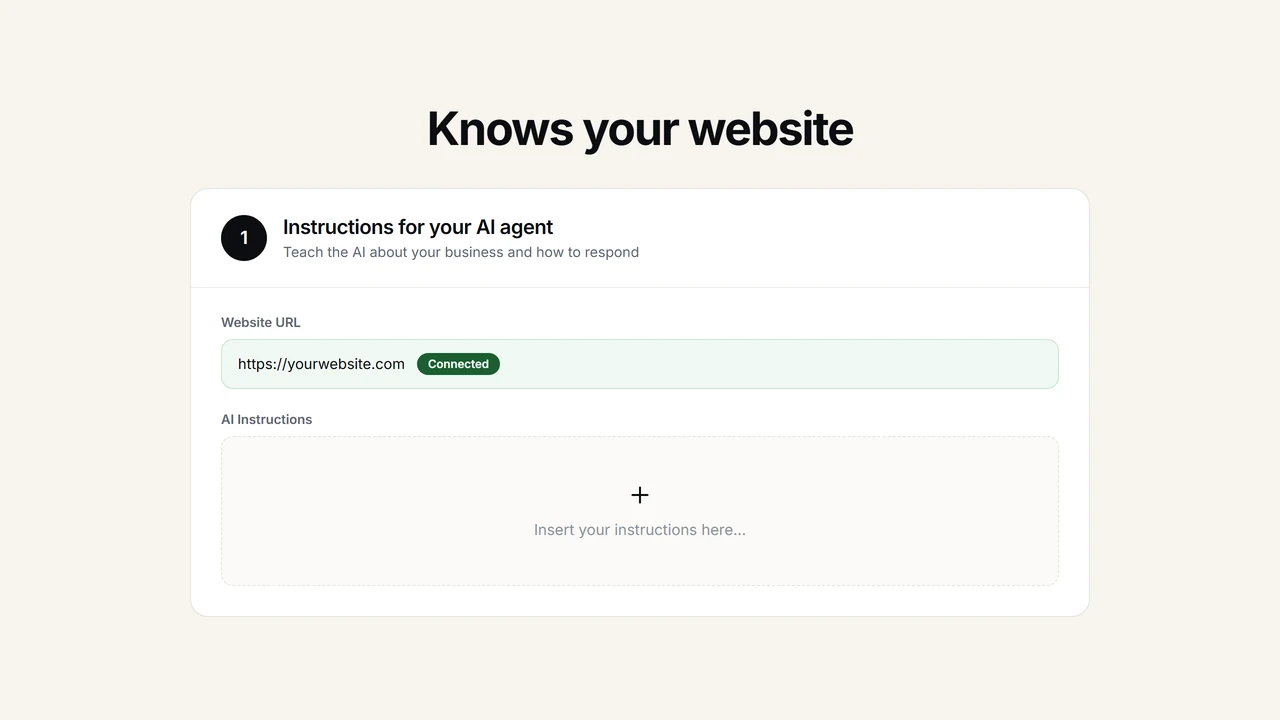
Once connected, Asyntai crawls every public-facing URL your PrestaShop store exposes — product sheets, category listings, CMS pages, manufacturer directories, price-drop specials, your terms of sale. The chatbot references all of it when a buyer asks a question, so answers stay grounded in your real catalog rather than generic guesses.
- Products and combinations indexedEvery product page, including colour/size/material combinations and their specific prices, feeds into the chatbot's working knowledge base.
- CMS and policy pages absorbedDelivery conditions, returns policy, legal notices, "About us" — the CMS content your PrestaShop back office manages gets read alongside your catalog.
- Upload what the storefront hidesWholesale price lists, B2B discount schedules, internal fulfillment procedures, supplier lead times — upload as PDFs or pasted text so the chatbot can reference them without publishing them on the storefront.
Speaks every language your PrestaShop multistore already targets, plus the ones it does not
PrestaShop merchants typically sell across multiple European language markets. Your storefront might be translated into French, German, Spanish, and Dutch, but buyers arrive in Polish, Czech, Romanian, and Swedish too. Asyntai detects each visitor's language from their opening message and replies in kind — 36 languages, no extra translation packs to install.
- Auto-detects buyer languageA Greek visitor to your German-language PrestaShop store gets Greek responses. A Lithuanian buyer browsing a French catalog gets Lithuanian. No language packs, no manual routing.
- Works alongside PrestaShop translation modulesYour existing PrestaShop language setup stays untouched. The chatbot adds conversational coverage in languages your storefront translations may not reach.
- EU-ready from the first conversationAll 24 official EU languages are covered, plus Arabic, Japanese, Korean, Chinese, Hindi, and more — matching the cross-border reach most PrestaShop merchants are building toward.
Add the chatbot to PrestaShop in four steps
No PrestaShop module to download. The chatbot loads via a lightweight JavaScript snippet you paste into your theme's header — the same approach you already use for analytics tags, consent banners, and tracking pixels.
- Create a free Asyntai account at asyntai.com and add your PrestaShop store URL. Copy the one-line snippet from your dashboard.
- In your PrestaShop back office, go to Design → Theme & Logo → Advanced, or open the file themes/your-theme/templates/_partials/head.tpl directly.
- Paste the snippet before the closing
</head>tag. Alternatively, use the Custom Code module in PrestaShop 8 to inject the snippet without editing theme files. - Save and clear the PrestaShop cache (Advanced Parameters → Performance → Clear cache). The chatbot appears on every storefront page immediately.
<script src="https://asyntai.com/widget.js"
data-id="your-site-id" async>
</script>
# Paste into head.tpl or inject via Custom Code module, then clear cache.
Chatbot PrestaShop — FAQs
What PrestaShop merchants and agencies typically ask before adding AI chat to their stores.
Does the chatbot work on both PrestaShop 1.7 and PrestaShop 8?
Yes. Because the chatbot loads via a JavaScript snippet in the theme header, it works on any PrestaShop version that renders HTML — including 1.6, 1.7, and 8.x. There is no dependency on a specific PrestaShop module API or hook version. If your store serves pages to a browser, the chatbot runs on them.
Will it slow down my PrestaShop store?
The snippet loads asynchronously, so your page content, images, and checkout continue rendering independently. The chatbot initializes after your storefront has finished loading, which means it does not block the page render or delay the interactive state of your store.
Can the chatbot handle PrestaShop multistore setups?
Yes. Each PrestaShop storefront gets its own Asyntai site with its own knowledge base, custom instructions, and branding. On paid plans, you can run multiple stores under one account: Starter supports 2 sites, Standard supports 3, and Pro supports up to 10. For agencies managing several PrestaShop multistores, one Asyntai account covers the entire portfolio.
How does the chatbot learn my product catalog?
Once you connect your store URL, Asyntai crawls all public pages — product listings, category pages, CMS content, manufacturer pages, and policies. Products with multiple combinations (size, colour, finish) are indexed per combination so the chatbot can answer variant-level questions. For content that is not publicly visible — wholesale pricing, internal SOPs, supplier agreements — you upload it through the dashboard.
Does it support B2B pricing and customer groups?
On Standard and Pro plans, the User Context feature lets your PrestaShop theme pass logged-in customer data — group name, negotiated discount tier, company, account manager — into a JavaScript object the chatbot can read. A wholesale customer asking about volume pricing gets a different answer than a retail visitor, because the chatbot sees the group context your PrestaShop frontend provides.
What happens when the chatbot cannot answer a question?
The chatbot collects the visitor's name and email, preserves the full conversation as a lead entry in your Asyntai dashboard, and optionally pushes it to your inbox via email notification. For PrestaShop stores with a dedicated sales team, the notification contains the buyer's exact question, the products discussed, and the language they wrote in — enough to follow up intelligently without re-asking anything.
Can I customize how the chatbot looks inside my PrestaShop theme?
Yes — colours, position, greeting message, launcher icon, and display name are all configurable from the Asyntai dashboard. The widget inherits a clean default style that sits well against most PrestaShop themes, but every visual element can be adjusted to match your storefront branding without editing CSS.
What does it cost?
There is a free plan with 50 messages per month and one connected store — enough to test the chatbot on a single PrestaShop site. Paid plans start at $39/month for 800 messages. Pricing scales with message volume and the number of connected stores, not with the size of your catalog or the number of products.
Chatbot PrestaShop — why AI chat fits the PrestaShop merchant profile
PrestaShop occupies a particular corner of the ecommerce landscape. It is open-source, self-hosted by default, and overwhelmingly European. The merchants who choose PrestaShop tend to be continental European SMBs — French fashion retailers, Spanish electronics distributors, Polish home goods stores, Italian food producers selling DTC — who need a platform that handles VAT rules, multi-currency checkout, and legal compliance across the EU without paying Shopify-tier SaaS fees. That profile creates a specific set of chatbot requirements that generic live-chat tools miss entirely, because those tools were built for English-first, single-market, subscription-SaaS storefronts.
The first requirement is language breadth. A typical PrestaShop merchant sells into three to eight European markets simultaneously. The storefront might be translated into French, German, and Spanish using PrestaShop's built-in localisation packs, but buyers also arrive from Belgium (Dutch and French), Switzerland (German, French, Italian), Scandinavia, the Baltics, and Eastern Europe. Hiring multilingual support agents for every market is financially impossible for a 5-to-50-person company. The alternative — answering everyone in English and hoping they cope — loses sales. Asyntai covers 36 languages at the conversational level: the chatbot identifies which language the visitor is writing in from their opening sentence and replies natively in that language, even when the storefront itself carries no translation for it. A Romanian visitor to a French PrestaShop catalog gets Romanian answers. A Hungarian browsing a German storefront gets Hungarian. The merchant's translation budget stays focused on the primary markets; the chatbot fills the conversational gaps everywhere else.
The second requirement is catalog awareness. PrestaShop stores are product-dense. A typical merchant has hundreds to thousands of product pages, each with multiple combinations — sizes, colours, finishes, materials — that carry their own prices, stock levels, and shipping weights. When a buyer types "is the navy version of this jacket available in XXL?" into a chat window, a chatbot that only read the product title is useless. Asyntai crawls every public URL the PrestaShop store serves: product sheets with their combination tables, category listings, CMS pages, manufacturer directories, on-sale sections, and policy pages. The chatbot references that full breadth when composing answers. Combination-level questions get combination-level responses because the indexed content includes the detail the storefront already publishes.
PrestaShop's CMS pages deserve separate mention. Most PrestaShop merchants maintain a set of CMS pages through the back office — delivery conditions, returns policy, legal notices, "About us," care instructions, sizing guides. These pages absorb a disproportionate share of support inquiries because buyers want confirmation before committing to a purchase: "do you ship to Croatia?", "can I return an opened product?", "what is the warranty period?" The chatbot absorbs these CMS pages during crawl and can quote or paraphrase the relevant policy in conversation, saving the buyer from hunting through footer links. For merchants who update these policies seasonally — holiday return extensions, summer shipping delays — a re-crawl picks up the changes without manual intervention.
The B2B angle matters more in PrestaShop than it does in most competing platforms. A significant share of PrestaShop merchants run B2B or mixed B2B/B2C operations — wholesale distributors, industrial suppliers, trade-only catalogues sitting behind customer group access controls. PrestaShop's native customer group system lets merchants show different prices, tax rules, and product visibility to different buyer tiers. On Standard and Pro plans, Asyntai's User Context feature bridges this into the chatbot: the PrestaShop theme passes the logged-in customer's group, company name, negotiated discount tier, or account manager into a JavaScript object the widget reads before rendering. A wholesale buyer asking about volume pricing gets an answer shaped by their group context; a retail visitor gets the public catalogue response. The chatbot does not pull data from PrestaShop's database directly — the merchant controls exactly which fields to expose via the theme template — so sensitive pricing and ERP data stays in PrestaShop unless deliberately surfaced.
Installation on PrestaShop follows the snippet approach rather than a module install. The Asyntai chatbot loads from a single JavaScript tag pasted into the theme's head template — typically themes/your-theme/templates/_partials/head.tpl — or injected through a custom code module on PrestaShop 8. This is the same method PrestaShop merchants already use for Google Tag Manager, Meta Pixel, cookie consent banners, and any third-party tracking. The snippet loads asynchronously, initialises after the page renders, and does not interfere with PrestaShop's Smarty template engine, module hooks, or page cache. For agencies managing multiple client stores, the snippet approach means no module compatibility testing across PrestaShop versions — the same tag works identically on 1.6, 1.7, and 8.x because it operates at the browser level, not the PHP level. Theme upgrades, PrestaShop core updates, and module installs do not touch the chatbot because it runs independently of the PHP stack. The only maintenance task is clearing PrestaShop's cache after pasting the snippet — the same step you already run after any theme or configuration change.
PrestaShop multistore is a feature most competing platforms charge extra for or do not support at all. A single PrestaShop installation can serve multiple storefronts — different domains, different languages, different product selections — from one back office. Asyntai mirrors this architecture: every storefront maps to a separate Asyntai site, each with a dedicated training set, dedicated behavior rules, and dedicated widget styling. The free plan covers one site; Starter two; Standard three; Pro up to ten. A PrestaShop multistore running a French domain, a German domain, and a Spanish domain from the same installation maps naturally to three Asyntai sites, each chatbot answering from the catalog and policies specific to that market — no bleed between languages, product ranges, or promotional rules.
Lead capture carries extra weight for PrestaShop B2B merchants where a single qualified inquiry can be worth thousands in recurring wholesale revenue. When the chatbot hits the boundary of what it can answer — a custom manufacturing spec, a volume request beyond standard stock, an OEM white-labeling question — it collects the buyer's name and email and preserves the entire conversation as a structured lead. That lead appears in the Asyntai dashboard tagged with the products discussed, the buyer's language, and the exact point where human follow-up became necessary. Turn on email forwarding and every captured lead also drops into whatever inbox your sales team monitors — useful for PrestaShop merchants who keep their pipeline in Dolibarr, Odoo, HubSpot, or a shared spreadsheet rather than inside PrestaShop itself.
Custom instructions shape how the chatbot behaves on each PrestaShop storefront. These are plain-English directives written in the Asyntai dashboard: "for orders above 500 units, ask the buyer to request a formal quote through the B2B contact form," "never confirm exact delivery dates — always refer to the delivery conditions page and say 3 to 7 working days within the EU," "when a buyer asks about a product that is out of stock, suggest the closest alternative in the same category," "if someone asks about private-label options, collect their email and forward to the wholesale team." The chatbot honors these directives on every reply. For PrestaShop merchants whose support voice differs by market — formal German, casual French, concise Dutch — you can write separate instruction sets for each multistore site so the tone matches the audience. Instructions also serve as guardrails: you can prevent the chatbot from promising things your fulfillment team cannot deliver, like same-day dispatch or cross-border express shipping to non-EU destinations.
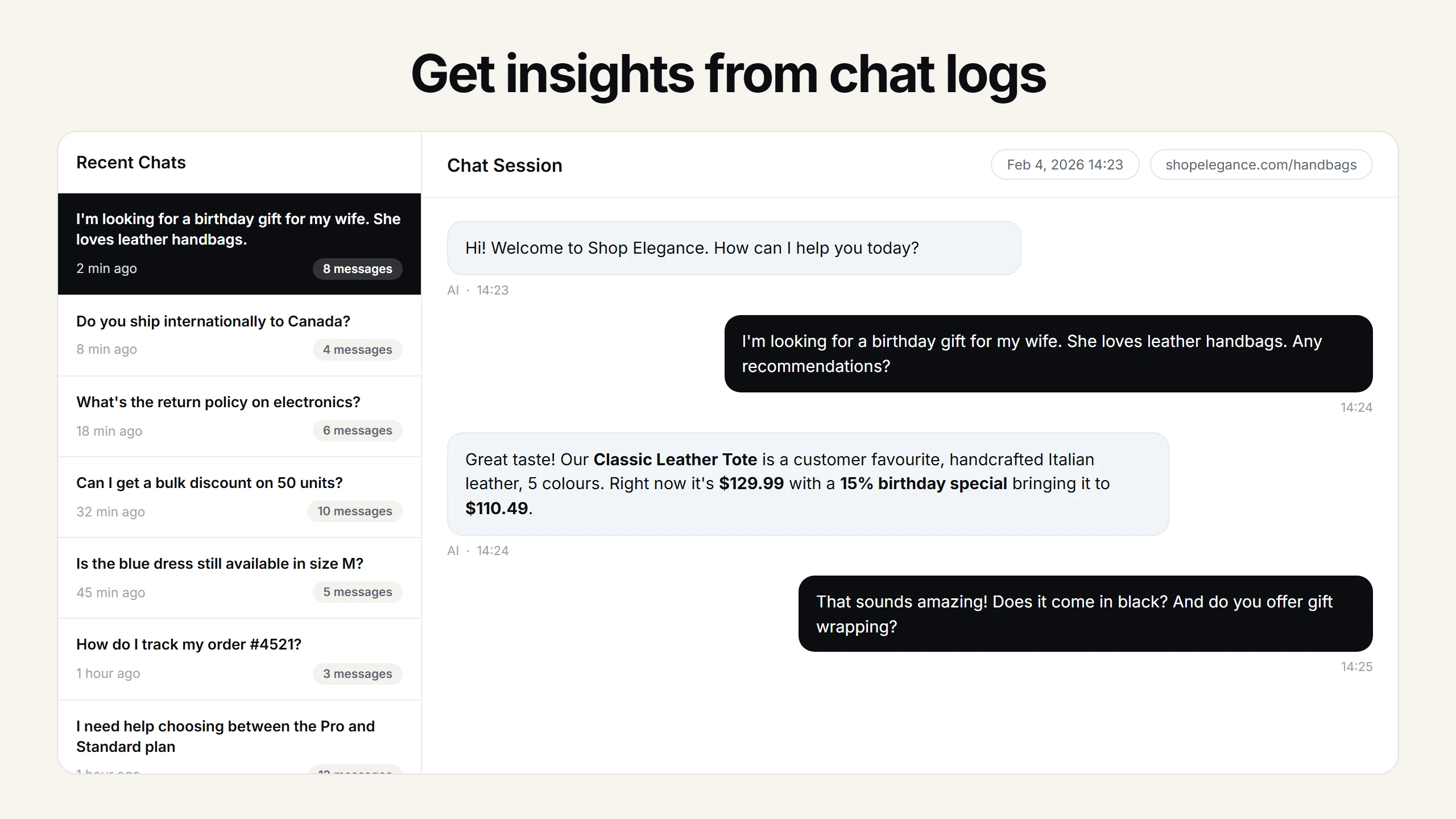
Analytics from the chatbot surface patterns that PrestaShop's native statistics module does not capture. Every conversation is logged, grouped by topic, language, and outcome. Over weeks, the dashboard shows which product categories generate the most pre-purchase questions, which policy pages are unclear enough to drive repeat inquiries, which language markets are growing fastest, and which questions the chatbot fails to answer — signaling gaps in your knowledge base or CMS content that you can address directly. For PrestaShop merchants used to relying on Google Analytics pageviews and PrestaShop's order conversion statistics, the conversational layer introduces a qualitative dimension: not just what visitors browsed, but what they specifically wanted to know and whether the answer they received satisfied them enough to continue toward checkout. A recurring question about allergen information on a food product page, for example, tells you the product description needs an ingredients section — something a bounce rate metric alone would never reveal.
The PrestaShop merchants who extract the most value from AI chat share a recognisable profile. Multi-country European sellers win on language coverage — 36 languages versus the 4 or 5 their storefront supports. B2B wholesalers win on pre-sale qualification and lead capture. Fashion and lifestyle retailers win on sizing, combination, and return-policy questions that block conversion. Food and beverage DTC brands win on allergen, ingredient, and shipping-restriction queries. PrestaShop agencies and integrators win by bundling AI chat deployment into their PrestaShop build-and-maintain contracts — one Asyntai account, up to ten client stores, each with its own bot and knowledge. Across all of these, the common thread is a European ecommerce business that needs multilingual, catalog-aware, always-on customer engagement at a cost far below hiring a multilingual support team.