Chatbot for IT service desk — resolve employee questions before they become tickets
Deploy an AI chatbot on your IT service desk portal that answers password resets, VPN setup, printer issues, and software access requests instantly. Uses your existing knowledge base articles instead of making employees wait for a technician.
See how AI handles IT service desk questions
Enter your IT portal or intranet URL and watch the AI answer common employee questions using your published knowledge base content
Reads your IT knowledge base and answers like a help desk technician
IT service desk portals accumulate years of knowledge base articles — password reset procedures, VPN configuration guides, printer driver downloads, software request workflows, onboarding checklists. The problem is not that the information does not exist. The problem is that employees do not search for it. They open a ticket instead, because searching feels slower than asking a person. Asyntai crawls up to 50 pages of your IT portal and turns that documentation into an AI that employees can simply ask. The answer comes from your own articles, not from a generic model guessing at your environment.
- Understands your specific IT environmentThe AI reads your documentation pages — your VPN client, your SSO provider, your printer models, your software catalog — and answers using those specifics. When an employee asks how to connect to the VPN, they get instructions for your actual VPN client with your actual server address, not a generic article about VPN technology.
- Handles multi-step troubleshooting through conversationAn employee types "my Outlook keeps crashing." The AI walks them through your documented troubleshooting steps one at a time — check for updates, clear the cache folder, repair the installation — and asks for the result after each step. If the issue persists, the AI suggests opening a ticket with the relevant details already gathered.
- Serves a multilingual workforceThe AI detects each employee's language and responds accordingly — 36 languages supported. A warehouse team member in Mexico City who prefers Spanish gets IT help in Spanish. A developer in Tokyo gets answers in Japanese. One service desk portal, every language your workforce speaks.
Deflects repetitive tickets so technicians handle the work that matters
Most IT service desks run on a depressing ratio: a large percentage of tickets could be resolved with information already published in the knowledge base. Password resets, Wi-Fi connection steps, how to install approved software, where to find the expense report template. Every one of those tickets consumes technician time — reading, responding, closing — for issues that have documented solutions. An AI chatbot intercepts these questions before they enter the queue.
- Resolves password and account access issues instantlyPassword resets, MFA setup, account lockouts, SSO login failures — these dominate most IT ticket queues. The AI walks employees through self-service reset procedures step by step, using the exact process documented in your knowledge base. If the self-service path fails, the AI collects the employee's details and escalates with context attached.
- Guides VPN and connectivity troubleshootingRemote employees struggling with VPN connections at 8 PM do not want to wait until morning for a ticket response. The AI delivers your documented VPN setup instructions immediately — which client to download, which server to connect to, how to handle certificate errors — and works through common failure scenarios in real time.
- Answers software access and provisioning requestsEmployees constantly ask how to get access to specific tools — Salesforce, Jira, Adobe Creative Cloud, internal dashboards. The AI explains the request process from your documentation: which form to fill out, who approves it, what the typical turnaround time is. The employee gets an answer in seconds instead of opening a ticket and waiting a day to learn they need to fill out a form.
- Handles hardware and peripheral questionsPrinter not working. Second monitor not detected. Laptop running slow. Headset not connecting to Teams. These are the daily background noise of IT support. The AI delivers your standard troubleshooting steps for each scenario, and most of the time, the employee resolves the issue without a technician ever being involved.
- Escalates intelligently when the AI reaches its limitNot every IT issue has a knowledge base article. When the AI cannot resolve a question, it collects the relevant details — device type, operating system, error messages, steps already attempted — and creates a structured escalation. The technician who picks up the ticket starts with context, not a blank "employee needs help" entry.
Add the AI chatbot to your IT service desk portal
One JavaScript snippet turns your IT portal into an interactive help desk that resolves questions before they become tickets. The AI reads your published documentation automatically — no manual training, no integration project.
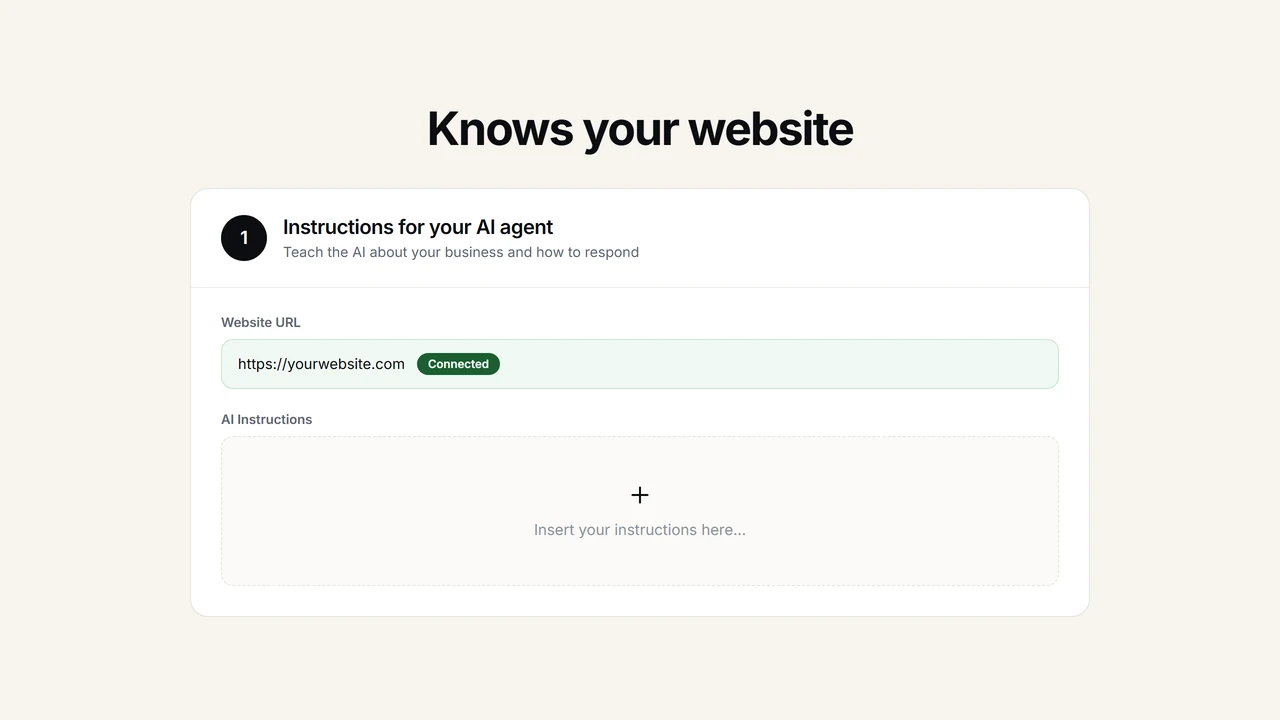
- Sign up at Asyntai and enter your IT service desk portal URL. The AI crawls your knowledge base articles, troubleshooting guides, FAQ pages, and documentation — up to 50 pages — and builds its knowledge base automatically.
- Copy the script tag from your Asyntai dashboard.
- Paste the snippet into the <head> section of your IT portal. Works with ServiceNow portals, Confluence-based help sites, SharePoint pages, Jira Service Management, or any web-based service desk.
- Write custom instructions to shape the AI's behavior — for example, "always ask the employee for their device type and operating system before troubleshooting" or "if a password reset fails, direct them to call the IT hotline at extension 4500."
<script src="https://asyntai.com/widget.js"
data-id="your-site-id" async>
</script>
</head>
# IT questions, answered instantly.
Chatbot for IT service desk — FAQs
Common questions from IT teams evaluating AI chatbots for their service desk portals.
Does the AI work with our existing IT service desk platform?
Asyntai works alongside any web-based service desk — ServiceNow, Jira Service Management, Zendesk, Freshservice, or a custom portal. You paste a single JavaScript snippet into your portal's HTML. The AI does not replace your ticketing system — it sits on top of it, answering employee questions from your published knowledge base before they submit a ticket. No API integration required for the basic setup.
Can the AI create tickets in our system when it cannot resolve an issue?
On the Standard plan ($139/month) and Pro plan ($449/month), you can use Custom Tools to connect the AI to any ticketing system with a REST API. The AI can call your ServiceNow or Jira endpoint to create a ticket mid-conversation, passing along the details it collected — device type, error description, steps already attempted. For simpler setups, the AI collects all relevant information and tells the employee to submit a ticket, with the troubleshooting context ready to paste in.
How does the AI handle sensitive IT information like passwords or credentials?
The AI never stores, generates, or displays passwords. It guides employees through your self-service password reset process — directing them to your SSO portal, walking them through MFA enrollment, or explaining how to use your password management tool. All conversations are encrypted in transit and at rest. The AI answers from your published knowledge base content only, so it never has access to employee credentials or internal system data unless you explicitly surface it on the pages you point it to.
We have hundreds of knowledge base articles. Can the AI handle that volume?
Asyntai crawls up to 50 pages during the initial setup. For IT portals with extensive documentation, you can prioritize the pages that cover your highest-volume ticket categories — password resets, VPN setup, software requests, printer issues. You can trigger re-crawls from the dashboard whenever you update articles. The AI searches across all crawled content to find the most relevant answer for each question.
What happens when the AI gives an employee the wrong troubleshooting step?
The AI answers strictly from your published knowledge base articles. If the troubleshooting steps in your documentation are accurate, the AI's answers will be accurate. It does not invent procedures or guess at solutions. If your documentation is outdated — say, a VPN guide that references an old client version — the AI will reflect that. Keeping your knowledge base current ensures the AI stays current. You can review all conversations in the Asyntai dashboard and update articles when you spot gaps.
How much does this cost for an IT department?
The Free plan gives you 50 messages per month on one site — enough to test the AI on a subset of your knowledge base. The Starter plan at $39/month covers 800 messages across 2 sites. Most mid-size IT departments fit on the Standard plan at $139/month with 15,000 messages and 3 sites — enough for a main service desk portal plus satellite help pages. Large enterprises with multiple portals use the Pro plan at $449/month for up to 20 sites and 50,000 messages.
Can we customize the AI to follow our IT policies?
Yes. Custom instructions let you write rules in plain English: "Never suggest employees restart production servers." "If someone asks about admin access, direct them to submit a formal access request through ServiceNow." "Always ask for the asset tag number before troubleshooting hardware issues." The AI follows these rules in every conversation, ensuring it stays aligned with your IT governance policies.
Does the AI work outside business hours?
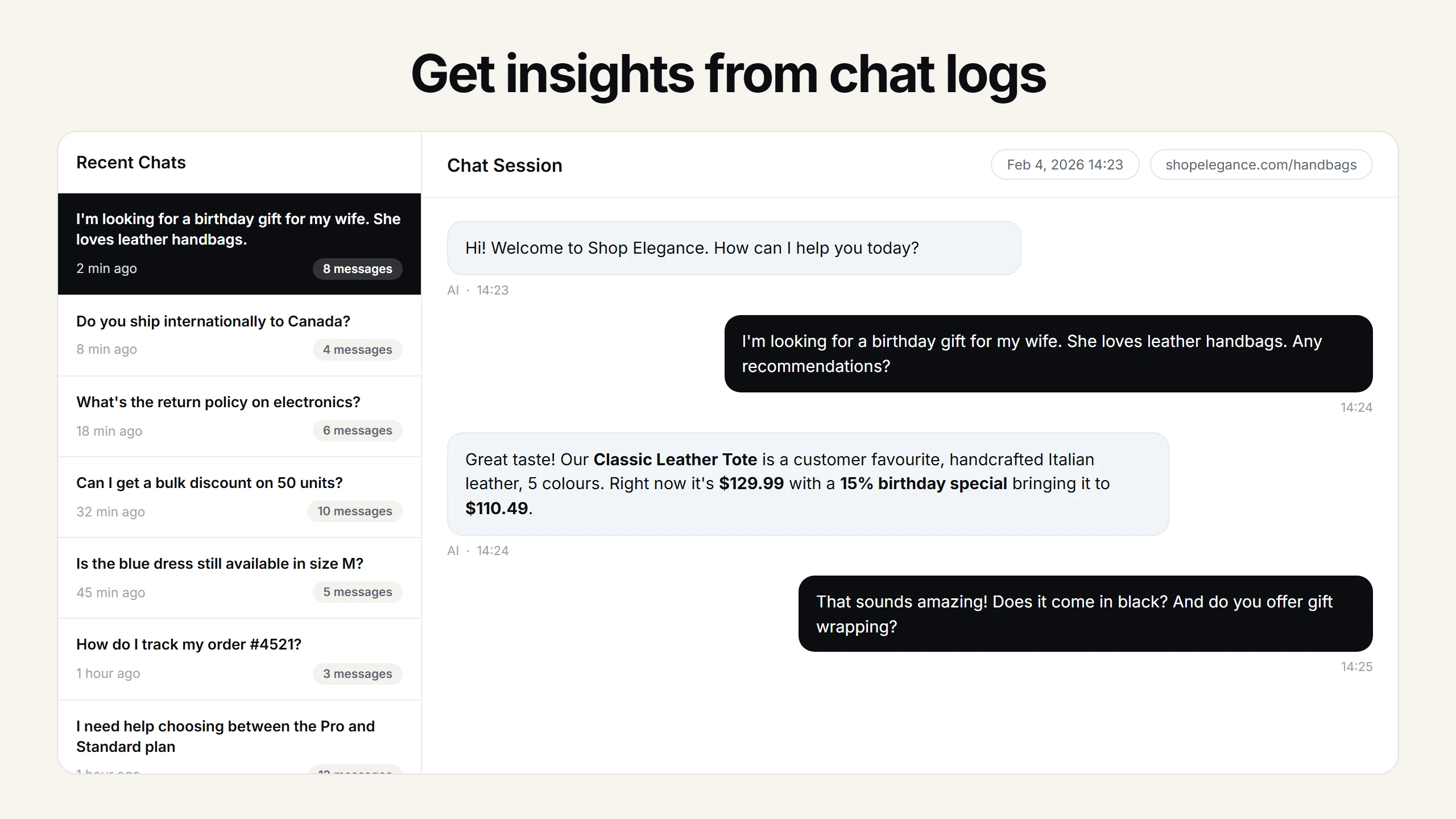
Yes — around the clock. Remote employees in different time zones, night-shift workers, and early-morning arrivals all get the same quality of IT support at 3 AM as they would at 10 AM. For many IT teams, after-hours tickets are the most painful because they sit unresolved until the next morning. The AI resolves the common ones immediately, so the technician's morning queue contains only the issues that genuinely need human attention.
Why IT service desks need AI — and what actually changes when you deploy it
Every IT service desk manager knows the number. Some version of "40 percent of our tickets could be resolved with information that already exists in the knowledge base." The exact percentage varies by organization, but the pattern is universal. Employees open tickets for questions that have documented answers because finding those answers requires navigating a knowledge base that was designed by IT people for IT people. The search is clunky. The articles are long. The titles are technical. So the employee does what any reasonable person does — they send a message to IT and let someone else find the answer for them.
An AI chatbot deployed on an IT service desk portal changes this dynamic by meeting employees where they already are — on the help page — and letting them ask their question in plain language. "How do I connect to the VPN from home?" The AI searches the knowledge base, finds the VPN setup article, and delivers the relevant steps in a conversational format. The employee does not need to know the article exists, does not need to guess the right search keywords, and does not need to read a 2,000-word document to find the three steps that apply to their situation. They ask, and they get an answer.
The password reset problem alone justifies the investment for most IT departments. Password-related tickets — resets, lockouts, MFA enrollment, SSO login failures — routinely account for a significant share of total ticket volume. Each one follows the same resolution path: verify the employee, walk them through the self-service portal, confirm access restored. A technician can resolve it in five minutes, but the ticket sat in the queue for two hours before they picked it up. The AI resolves it in seconds because there is no queue. The employee asks, the AI walks them through the self-service reset process, and the issue is closed before a ticket ever gets created.
VPN troubleshooting is the second-most-common category for many organizations, especially since the shift to remote and hybrid work. The questions are remarkably consistent: which VPN client should I use, what server do I connect to, my connection drops every 20 minutes, I am getting a certificate error. Every one of these has a documented answer in most IT knowledge bases. The difference between a ticket and a conversation is that the conversation happens right now, at 8 PM when the employee is trying to finish a report from home, not tomorrow morning when the technician reads the ticket over coffee.
Software access requests represent a different kind of waste. The employee does not have a technical problem — they need access to a tool. Salesforce. Jira. Adobe Creative Cloud. Tableau. The process is usually straightforward: submit a request form, get manager approval, wait for provisioning. But employees do not know the process exists, so they open a ticket saying "I need access to Salesforce." A technician reads the ticket, replies with a link to the request form, and closes the ticket. That entire interaction — open, read, reply, close — consumed technician time for a question the AI answers in one sentence: "To request Salesforce access, submit a request through the IT self-service portal at [link]. Your manager will receive an approval notification, and provisioning typically takes 1-2 business days."
Printer issues are the quintessential example of IT support work that everyone hates. The employee hates it because their document will not print and they need it for a meeting in 10 minutes. The technician hates it because the fix is almost always the same: check the connection, restart the print spooler, reinstall the driver. The AI handles this beautifully because printer troubleshooting is inherently procedural — step one, check this, step two, try that — and the AI can walk through the procedure interactively, asking "did that fix it?" after each step. Most printer issues get resolved before a technician is ever aware they happened.
The onboarding use case deserves its own paragraph because it is where ticket volume spikes are most predictable and most disruptive. A new cohort of employees starts on Monday. By Tuesday, the IT service desk is buried in tickets: how do I set up my email, where do I find the employee handbook, how do I connect to the office Wi-Fi, my laptop does not have the software I need, how do I access the shared drive. Every new hire asks the same 15 questions, and they all ask them in the same 48-hour window. An AI chatbot absorbs this surge without strain, delivering the same onboarding answers to 50 new hires simultaneously while technicians focus on the hardware provisioning and system access work that actually requires their hands on a keyboard.
The after-hours gap matters more than most IT managers admit. A developer working late hits a build environment issue. A sales rep preparing for a morning meeting cannot connect to the CRM from a hotel. A warehouse supervisor on the night shift cannot get the inventory scanner to sync. These are not emergencies, but they block work. Without AI, the employee either wastes time trying to solve it themselves, gives up and waits for morning, or calls the on-call technician for something that has a knowledge base article. With AI, they get an answer immediately. The developer fixes the environment. The sales rep connects to the CRM. The supervisor syncs the scanner. Work continues.
Custom instructions let you encode your IT policies directly into the AI's behavior. This is not a generic chatbot giving generic advice — it is a chatbot that knows your rules. "If an employee asks about admin access, explain that admin rights require a formal request with manager and security team approval." "Never suggest employees disable their antivirus software, even temporarily." "If someone reports a phishing email, tell them to forward it to [email protected] and delete it — do not click any links." These instructions ensure the AI operates within your security and governance framework, not outside it.
The measurement question — "how do we know the chatbot is actually deflecting tickets?" — has a straightforward answer. You compare ticket volume before and after deployment, broken down by category. If password reset tickets drop from 200 per month to 80, the AI is deflecting 120 conversations that would have become tickets. Every deflected ticket has a cost — the industry average ranges from $15 to $40 per ticket when you account for technician time, queue management overhead, and resolution tracking. At even the conservative end, deflecting 120 tickets per month saves $1,800 — more than ten times the cost of the Starter plan.
Multilingual support becomes critical for organizations with global operations or diverse workforces. An IT service desk in a multinational company receives questions in English, Spanish, German, Japanese, Mandarin, and a dozen other languages. Maintaining translated knowledge base articles for every language is prohibitively expensive. The AI sidesteps this entirely — it reads the English-language documentation and responds to employees in their preferred language. A factory worker in Guadalajara asks about printer setup in Spanish and gets a Spanish-language walkthrough derived from the English knowledge base article. 36 languages supported, automatic detection, no separate documentation needed.
The technician experience improves as much as the employee experience. IT support professionals did not get into the field to answer "how do I reset my password" 30 times a week. They entered IT because they enjoy solving complex problems — diagnosing network failures, deploying new systems, architecting infrastructure changes. When the AI handles the repetitive tier-one volume, technicians spend their days on work that uses their actual skills. Ticket queues shrink. Escalation rates improve because the tickets that do come through are genuine problems, not knowledge-base-solvable questions. Burnout decreases. Retention improves.
The escalation workflow deserves attention because it is where most chatbot deployments succeed or fail. A bad chatbot answers everything it can and abandons the employee when it cannot. A good chatbot — and this is what Asyntai does — recognizes when it has reached the limit of its knowledge base, tells the employee clearly, and gathers the information a technician will need: what the issue is, what device they are using, what they have already tried, and any error messages they have seen. The resulting escalation contains more context than 90 percent of tickets employees submit manually. Technicians start troubleshooting immediately instead of asking three follow-up questions first.
Cost structure is transparent and predictable. The Free plan at 50 messages per month lets you pilot the AI on one portal section. The Starter plan at $39 per month handles 800 messages across 2 sites — enough for a small IT department testing the concept. The Standard plan at $139 per month covers 15,000 messages and 3 sites, which fits most mid-size organizations. Large enterprises use the Pro plan at $449 per month for 50,000 messages and up to 20 sites — useful when you have separate portals for different regions, divisions, or acquired companies.
What the AI does not do matters as much as what it does. It does not replace your ticketing system. It does not have access to Active Directory or your CMDB unless you connect it via Custom Tools on the Standard or Pro plan. It does not diagnose hardware failures by running remote diagnostics. It does not push software updates to employee machines. What it does is answer the questions your knowledge base already answers — faster, in more languages, around the clock, without a queue. That alone changes the daily reality of an IT service desk from a ticket mill to a team that focuses on the problems only humans can solve.