Build an AI agency: the stack, the offers, and the first product to sell
Building an AI agency in 2026 means picking a service mix, assembling a stack of SaaS tools, finding the first paying clients, and converting one-off projects into recurring revenue. This guide covers the realistic path — the tools agencies actually use, the offers that sell, the pricing that works — and explains how Asyntai's reseller program lets you start selling AI chatbots under your brand from week one.
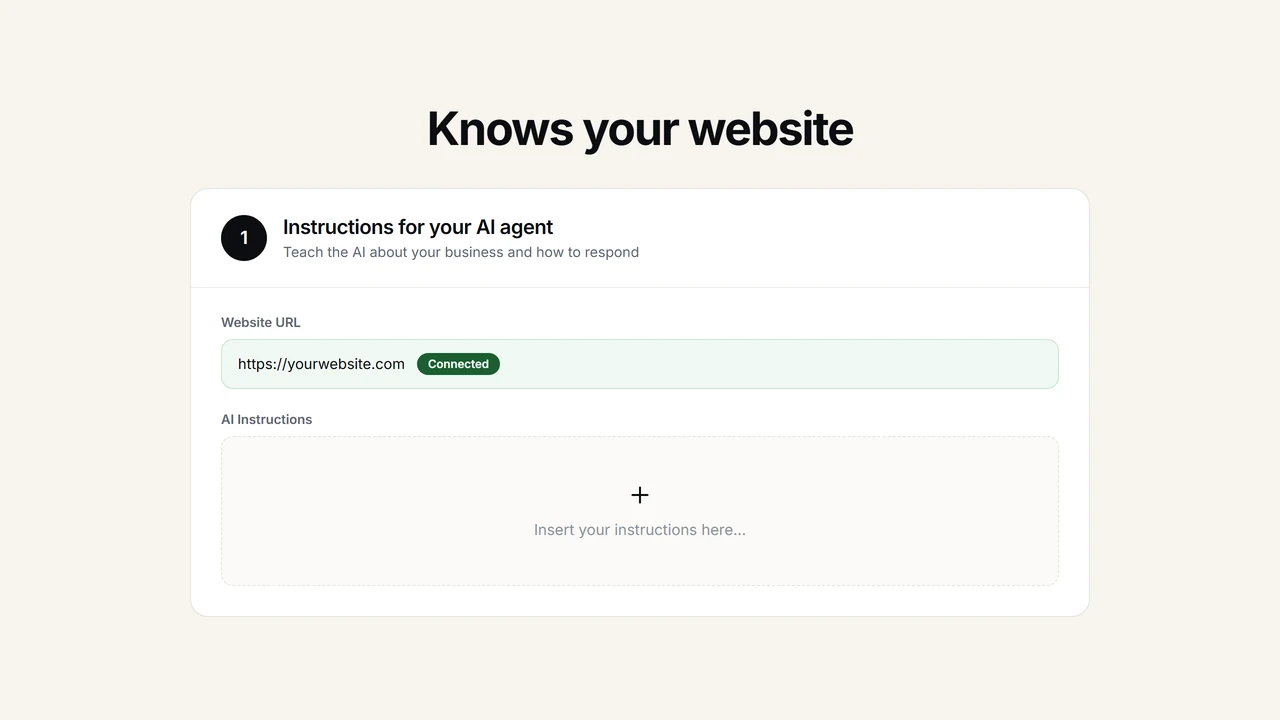
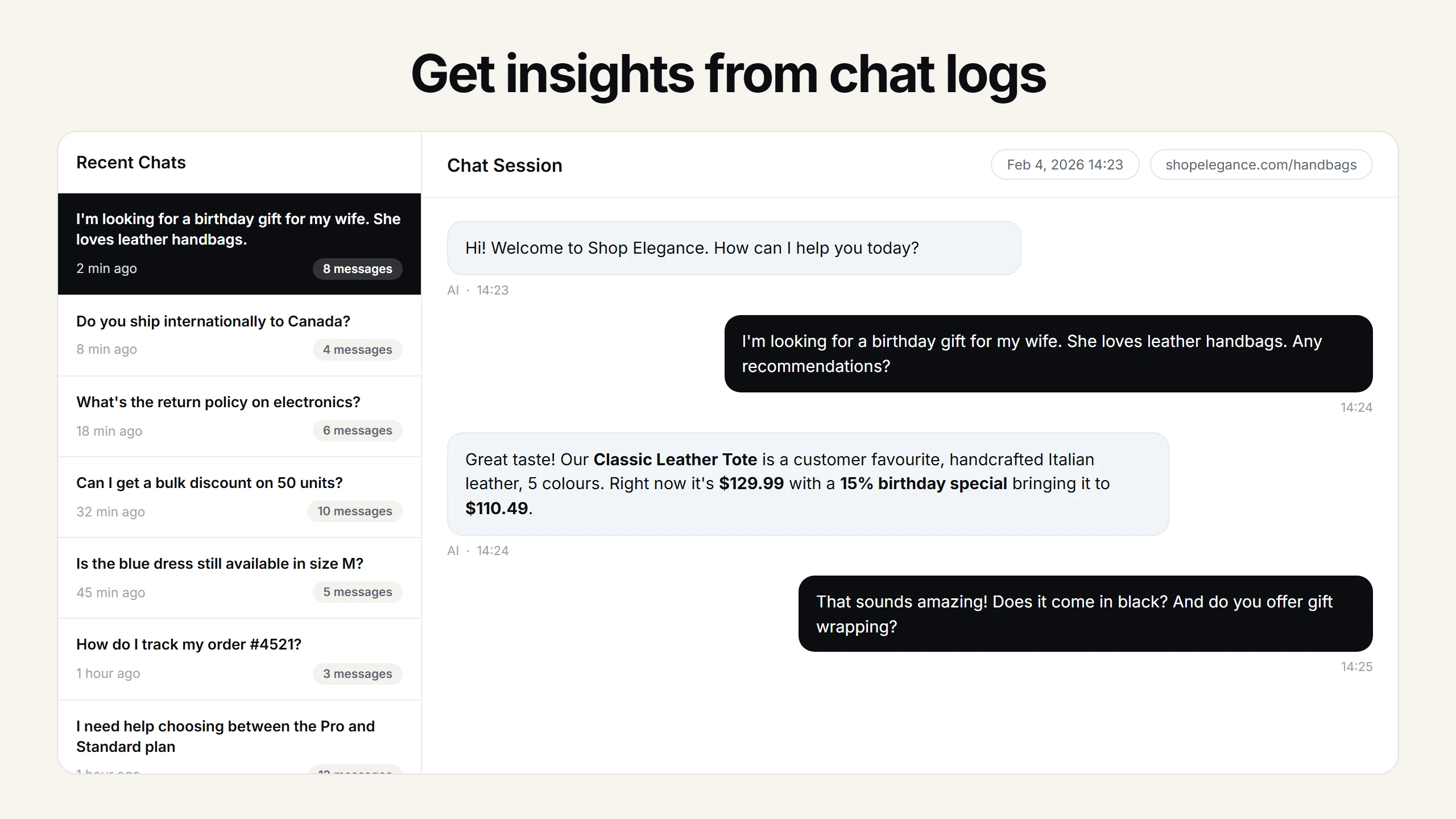
See the product you can resell — built and trained in real time
Paste a website URL and watch the AI absorb its content. This is the same chatbot your future clients will deploy on their sites
What it actually takes to build an AI agency in 2026
A working AI agency needs four things: a service mix that solves a recognized problem, a stack of SaaS tools that delivers it without forcing you to write infrastructure code, a repeatable client acquisition motion, and a billing structure that converts one-off projects into recurring revenue. None of these require deep technical expertise — they require choosing the right components and packaging them into offers clients understand.
- A productized core offeringThe agencies that grow fastest pick one service — AI chatbot deployment, AI-powered lead qualification, content automation — and productize it into a fixed-price package. Custom every-engagement work scales linearly with your time. Productized offerings scale with your client count.
- A reseller-friendly tool stackThe tools you build on need to support agency-style usage: separate client subaccounts, white-label branding, centralized billing, and the ability to provision new clients without contacting support each time. Asyntai is structured this way; many SaaS tools are not.
- Recurring revenue from day oneOne-off projects pay the bills this month but not next month. Building a reseller relationship where clients pay you monthly for an active service — and you pay the underlying SaaS provider monthly — creates the compounding revenue that turns an agency into a real business.
AI chatbots are the easiest first product for a new agency to sell
New AI agencies face a chicken-and-egg problem: clients want proof of capability before paying, but capability comes from doing paid work. The path most successful agencies take is starting with a high-perceived-value, low-complexity product they can deliver quickly and reliably. AI chatbots fit that profile better than most alternatives — clients understand the value immediately, deployment takes hours not weeks, and the same product fits businesses across industries with minimal customization.
- Universal demand across industriesAlmost every business with a website benefits from a chatbot that answers visitor questions. You are not pre-qualifying narrow verticals — your addressable market includes ecommerce, professional services, education, B2B SaaS, restaurants, and more.
- Fast time to first revenueAn agency-deployed chatbot through Asyntai goes from contract signature to live deployment in hours. That speed lets you take on multiple clients simultaneously, build a portfolio quickly, and use early clients as case studies for the next round of sales.
- Recurring billing that compoundsClients pay monthly for an active chatbot. As you add clients, your monthly recurring revenue compounds. The reseller economics — your client price minus the underlying platform cost — turns each chatbot into ongoing margin rather than one-shot project revenue.
Deploy your first reseller chatbot in minutes
Most agency-building guides stay in theory. Here is the practical version: register an Asyntai account, copy the widget snippet, and you have a working chatbot you can show prospects. The reseller program then lets you provision additional client accounts, white-label the widget, and bill clients monthly while paying the platform monthly underneath.
- Register a free Asyntai account and explore the dashboard, widget, and reseller flow.
- Place the widget snippet on a demo site and test it against realistic visitor questions.
- Activate the reseller program and provision your first client subaccount under your brand.
- Onboard the client by pointing the AI at their content, configuring escalation, and going live.
<script src="https://asyntai.com/widget.js"
data-id="client-account-id" async>
</script>
</head>
# Client chatbot live. Recurring agency revenue starts now.
Building an agency? Let's talk.
Whether you're already running an AI agency or planning to start one, we work directly with reseller partners on pricing, white-label arrangements, and onboarding support. Reach out and we'll get back to you within 24 hours.
[email protected]Build an AI agency — FAQs
Practical questions from founders evaluating AI agency as a business model.
What does it take to build an AI agency in 2026?
Three things in roughly this order: a productized service offering that solves a problem clients can articulate, a stack of SaaS tools that delivers the service without requiring you to build infrastructure, and a client acquisition motion that produces predictable inbound leads. The technical bar is meaningfully lower than it was even two years ago — foundation model APIs and reseller-friendly platforms have removed most of the build-from-scratch work. The remaining work is product packaging, sales, and operations, which are the same skills any service business needs regardless of industry.
What's the easiest AI service to start with as a new agency?
AI chatbots for client websites. The reasons: every business with a website is a potential customer, the value is obvious to non-technical buyers, deployment takes hours not weeks, the same product fits across industries with minimal per-client customization, and the recurring billing model compounds your monthly revenue as you add clients. Other AI services — workflow automation, custom agents, content pipelines — typically require more discovery, longer sales cycles, and more bespoke delivery work per client. Chatbots get you to first revenue fastest.
How much can I charge clients for AI chatbots?
Typical agency pricing for managed AI chatbot deployments runs $200 to $1,500 per month per client depending on industry, message volume, and the level of human review the agency provides. Higher tiers extend to $3,000+ for enterprises that need custom integration work. The platform cost underneath is a fraction of that — Asyntai's plans range from $39 to a few hundred dollars per month per account — so the gross margin per client is healthy. Many agencies also charge an upfront setup fee of $500 to $2,500 to fund the initial onboarding work.
Do I need to be technical to build an AI agency?
Not deeply. Configuring a chatbot through a SaaS dashboard, writing behavioral rules in plain English, and pointing the AI at a client's website are operations any reasonably comfortable computer user can perform. What you do need is the operational discipline to onboard clients consistently, the sales skill to convert prospects into recurring customers, and the patience to refine your service as you learn what clients actually want. Pure technical depth becomes relevant only if your offering extends into custom integrations or agent development beyond what off-the-shelf tools handle.
What tools do AI agencies actually use?
The typical stack includes a chatbot platform like Asyntai for the customer-facing conversation layer, an LLM API such as OpenAI or Anthropic when custom AI work is needed, a workflow automation tool like n8n or Make.com for behind-the-scenes integrations, a CRM such as HubSpot or GoHighLevel for managing the agency's own pipeline and the clients' lead data, and a billing platform like Stripe for handling recurring client payments. Most agencies do not use all of these — they pick the subset that matches their service offering and add tools as the offering expands.
How does Asyntai's reseller program work?
The reseller account gives you a separate billing relationship optimized for managing client subaccounts. You provision a new account for each client, configure the chatbot under their brand using white-label widget options, and bill the client monthly through your own invoicing while paying Asyntai for the underlying usage. The widget can carry your agency's branding rather than ours, the dashboard supports multi-client management, and the operational structure is designed for converting chatbot deployments into recurring agency revenue. Registration starts through the standard signup flow with the reseller path available from there.
How long until a new AI agency is profitable?
The timeline depends overwhelmingly on how quickly you find paying clients, not on the technical readiness of your service. Founders who already have a network of business contacts can often land their first paying client within weeks. Founders building from cold lead generation typically need three to six months of consistent outreach before reaching steady inbound flow. The cost structure is light — SaaS tools and your own time are the main expenses — so profitability arrives once monthly client revenue exceeds your tool subscriptions and any paid lead generation. With chatbot pricing in the $200-$1,500/month range and platform costs in the low hundreds, even five clients can produce meaningful monthly profit.
Should I focus on chatbots, agents, or full automation?
Start with chatbots, expand into automation as you build credibility, and consider custom agent work only after you have a stable client base producing recurring revenue. The reasons: chatbot delivery is repeatable and the sales conversation is short. Automation requires more discovery and the engagement risk per client is higher. Custom agent work approaches software engineering complexity and requires technical capacity many agencies do not have. The successful path most AI agencies take is starting narrow with a productized chatbot offering, expanding into adjacent automation services for existing clients, and only pursuing custom agent work for high-value enterprise relationships where the engineering effort is justified.
Build an AI agency — the realistic path from zero to recurring revenue
The phrase "build an AI agency" became one of the most-searched business model queries on Google starting in 2024. The motivation is clear: foundation model APIs commoditized access to AI capability that previously required machine learning teams to develop, and that commoditization opened a service-business opportunity. Anyone willing to learn the tools, package the offering, and find clients can build an agency that resells AI capability to businesses without the technical depth to deploy it themselves. The category attracted thousands of new entrants between 2024 and 2026, ranging from solo operators selling chatbot deployments at $300 per month to multi-person teams running enterprise automation rollouts at six-figure project values. The path from zero to recurring revenue is more legible than the marketing around "AI agency" usually implies — most of the work is operational rather than technical.
The first decision a founder faces is service scope. AI agencies cluster into three loose categories: chatbot agencies that focus on conversational interfaces deployed on client websites, automation agencies that focus on multi-system workflow orchestration augmented by AI, and agent agencies that focus on autonomous AI taking actions across business systems. The categories overlap heavily and most established agencies eventually offer some mix, but starting narrow with one productized offering is consistently more effective than launching as a "full-service AI consultancy" that tries to sell everything. The reason is sales math: a productized offering with a fixed price and a clear deliverable converts at a meaningfully higher rate than custom consulting because prospects can evaluate the proposition without a long discovery cycle. Pick one offering, productize it, sell it.
For most new founders, the right starting offering is AI chatbot deployment for client websites. Several factors make this the lowest-friction first product. The addressable market is virtually every business with a website — you are not pre-qualifying into narrow verticals. The value proposition is immediately understood — clients have either tried building a chatbot themselves and given up, or they have not tried but recognize they should. Delivery time is short — onboarding a new client takes hours when the underlying platform handles content training and widget deployment automatically. Per-client customization is minimal — the same product fits ecommerce, professional services, SaaS, and education with only configuration differences. Recurring billing is natural — clients pay monthly for an active chatbot, and the platform you build on bills you monthly underneath, producing a margin that compounds with client count.
The tool stack a chatbot-focused agency needs is light. The chatbot platform itself is the central component — Asyntai operates a reseller program designed specifically for this use case, with white-label widget options, separate client subaccount billing, and operational tooling for managing multiple clients from a single dashboard. A CRM for tracking your own sales pipeline matters less than founders often think; a spreadsheet covers it for the first dozen clients. A billing system like Stripe handles client invoicing. A simple website with a couple of case studies and a clear pricing page handles inbound conversion. That is the entire foundation. Founders who delay starting because they want to build elaborate internal infrastructure typically do not start at all.
Pricing the chatbot offering at the right level matters more than founders often appreciate. Typical agency pricing for managed AI chatbot deployments runs $200 to $1,500 per month per client. The variation reflects industry — ecommerce and professional services tolerate higher prices than restaurants or single-location small businesses — and the level of human review the agency commits to providing. Many agencies layer an upfront setup fee of $500 to $2,500 on top of monthly pricing to fund the initial onboarding work, which loads early cash flow when monthly revenue is still small. Underpricing is a common new-agency mistake; clients evaluating AI services have no internal benchmark and tend to interpret unusually low prices as signals of low capability rather than value. Price near the middle of the typical range and adjust based on client conversion data over time.
Client acquisition is the operational discipline that separates agencies that grow from agencies that stall. Founders coming from a background in SEO, paid advertising, or content marketing have a natural starting motion. Founders without that background typically need to develop one — cold outreach to specific verticals, partnerships with complementary service providers like web designers or marketing agencies, or content publishing that builds inbound interest over months. The choice of motion matters less than the consistency of executing it. Six months of disciplined outreach to a defined list produces predictable results regardless of which channel was chosen. Six months of switching between channels weekly produces nothing. Pick a motion, commit to it long enough to evaluate, and adjust only with real data.
The reseller economics turn AI chatbot deployment into a recurring-revenue business. The structure works as follows: you charge the client a monthly fee for an active chatbot service, you pay the underlying platform a monthly subscription for the account that powers their chatbot, and the difference is your gross margin per client. With Asyntai's reseller plans designed for agency use, the per-client platform cost is in the tens of dollars while typical agency client pricing is in the hundreds. The margin per client compounds as you add clients, which is what turns an agency from a freelance arrangement into a real business. Five active clients at $500 per month and $50 per month platform cost produces $2,250 in monthly gross margin. Twenty clients at the same economics produces $9,000. Fifty clients produces $22,500. The compounding is the entire point.
The expansion path most successful chatbot agencies follow is moving into adjacent automation services for existing clients before chasing new logos. A client paying $500 per month for an AI chatbot is a warm prospect for a $1,500 per month engagement that extends the chatbot with lead routing into their CRM, automated meeting booking, or content generation for their newsletter. The expansion sale is meaningfully easier than the initial sale because trust is already established and the agency knows the client's business. The economics improve dramatically when an agency can grow average revenue per client through expansion rather than constant new client acquisition. The chatbot becomes a foothold, and the broader automation services become the growth lever.
The mistake most founders make in the second year is over-investing in custom development work for a single high-paying client. Custom work scales linearly with your time and pulls capacity away from the productized offering that produced your client growth in the first place. Custom engagements often look more attractive than they are because the project value is higher than recurring monthly chatbot revenue. The math works against custom work over time — a six-month engagement at $50,000 produces $8,300 per month, which fifteen $500 per month chatbot clients also produces, except the chatbot clients renew indefinitely while the custom engagement ends. Stay productized as long as possible. Take custom engagements only when they materially advance your productized offering or open a new productized offering you can sell repeatedly.
Multilingual coverage is one of the differentiators that helps new agencies compete with established players. Asyntai handles 36 languages with automatic detection from the visitor's first message. The chatbot composes responses in the visitor's language drawn from your client's source documentation regardless of what language the documentation was originally written in. For agencies serving clients with international audiences — which includes most ecommerce, SaaS, and professional services in 2026 — multilingual capability without per-language configuration is a meaningful pitch differentiator. The capability is built into the platform and requires no agency labor to deliver, which means you can sell international audience coverage as a premium feature without it costing you operational time per client.
The honest assessment of how long building an AI agency takes to reach profitability is shorter than most founders fear and longer than aggressive marketing suggests. Founders with existing business networks who can land their first three to five clients through warm introductions can reach profitability within a quarter. Founders building from cold lead generation typically need three to six months of consistent outreach before reaching steady inbound flow. The cost structure is light — your time and SaaS tool subscriptions are the main expenses — so profitability arrives early once monthly client revenue covers tools and any paid customer acquisition. From there, growth is mostly a function of how disciplined you are about operating the same client acquisition motion month after month. The technical work is the easy part. The operational consistency is the part that determines whether the agency becomes a real business or fades within the first year.