Best chatbot plugin for WordPress — a comparison that skips the affiliate links
You searched for the best chatbot plugin for WordPress and got ten listicles that all rank whoever pays the highest commission. Here is an honest breakdown of what Tidio, LiveChat, Crisp, WP-Chatbot, HubSpot, and Asyntai each do well and where they fall short — so you can pick the one that fits your WordPress site, not someone else's referral check.
Test an AI chatbot on your WordPress site right now
Drop your URL below and preview how Asyntai would answer your visitors — no signup, no install, no commitment
The five things that actually differ between WordPress chatbot plugins
Most comparison articles fixate on feature grids that look identical across every vendor. In practice, the meaningful gaps between WordPress chatbot plugins come down to five dimensions: how the bot gets its knowledge, whether it generates or retrieves answers, what the install process requires of you, how pricing scales past the free tier, and whether it survives a theme change without breaking.
- Knowledge source matters mostRule-based plugins (WP-Chatbot, older Tidio flows) make you write every answer. AI plugins (Asyntai, newer Tidio AI add-on) learn from your published content automatically.
- Pricing that hides in per-seat costsLiveChat and HubSpot charge per agent seat, which balloons fast once a second team member logs in. Asyntai and Crisp price by message volume or flat tier instead.
- Plugin install vs. snippet pasteAsyntai ships a real WordPress plugin (upload ZIP, activate, OAuth connect). LiveChat also has a WP plugin. Crisp and HubSpot rely on pasting JavaScript into your theme or a header plugin.
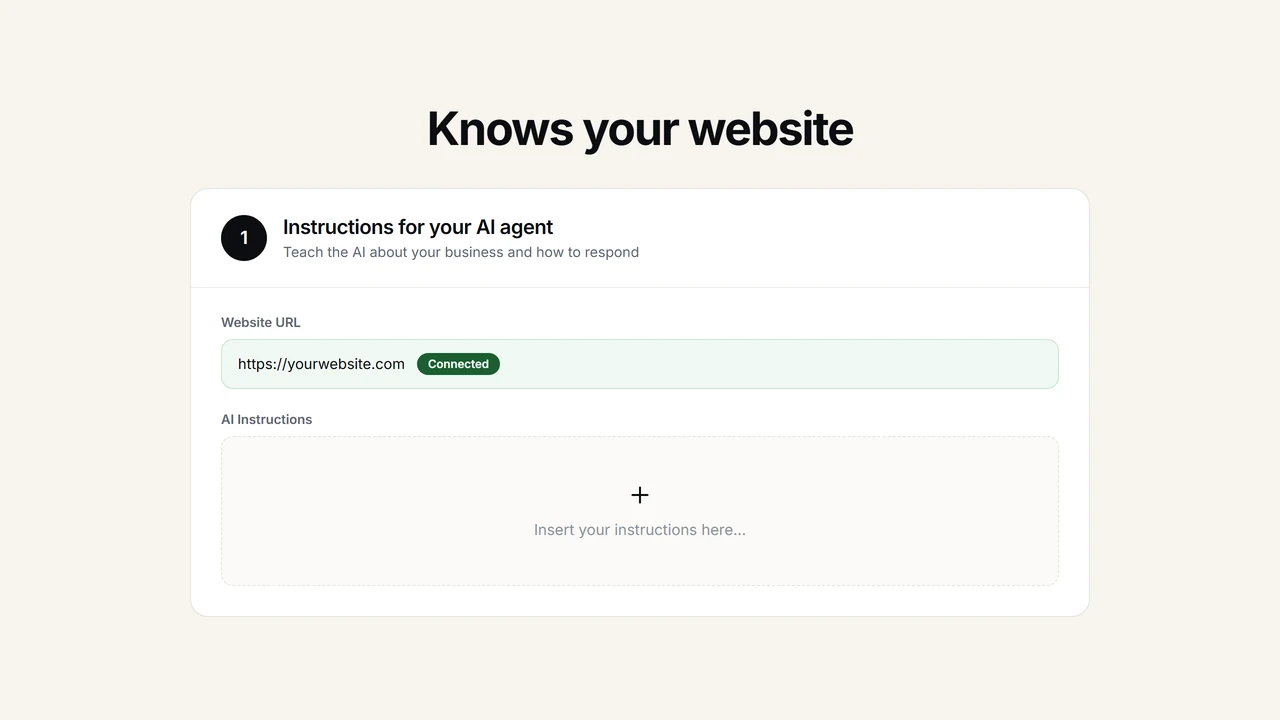
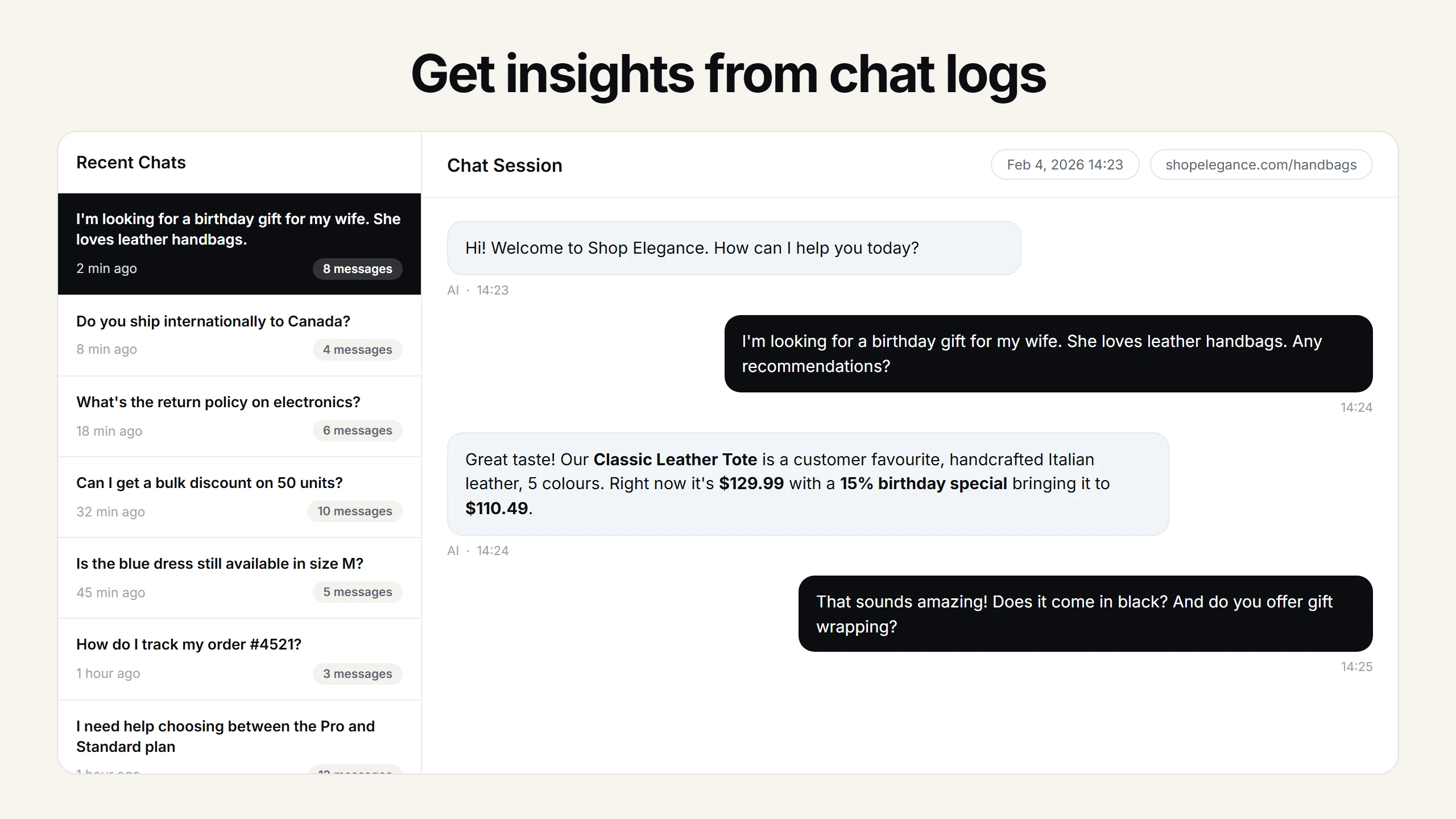
The gap that opens once the chatbot has to answer a question it was never scripted for
Every chatbot plugin handles scripted greetings fine. The separation happens when a visitor asks something the site owner never anticipated. Rule-based plugins dead-end into a fallback message. Asyntai reads your WordPress pages, posts, and WooCommerce products, then generates a grounded answer on the fly — no flow diagram, no intent training, no manual FAQ entry required.
- Answers from your actual WordPress contentAfter OAuth connect, Asyntai crawls every published URL and builds a retrieval index. New posts and page updates flow in automatically.
- Replies in 36 languages from one installThe widget UI is localized in 36 languages. The AI detects each visitor's language from their first message and replies in it — no translation plugin needed on your WordPress site.
- Lead capture with full conversation contextEach lead arrives in the dashboard (and optionally your email inbox) alongside the complete chat transcript, not just a name and email stripped of context.
Install the Asyntai WordPress plugin in under 3 minutes
Unlike snippet-based competitors, Asyntai distributes a native WordPress plugin. Download the ZIP from your Asyntai dashboard, upload through the standard WordPress admin flow, and connect via OAuth. Compatible with WordPress 5.0 through 6.9 on PHP 7.2+. No JavaScript pasting, no theme file editing, no developer required.
- Sign up at Asyntai and download
asyntai-chatbot.zipfrom the Install screen in your dashboard. - In WordPress admin, navigate to Plugins → Add New → Upload Plugin, select the ZIP, and click Install Now.
- Activate the plugin. A new Asyntai menu item appears in your WordPress admin sidebar.
- Click Connect to Asyntai. An OAuth popup stores the site ID automatically — no API key, no manual config.
→ asyntai-chatbot.zip (select & install)
→ Activate
→ Connect to Asyntai (OAuth popup)
# AI crawls your WordPress content.
# Chatbot is live on every page within minutes.
Best chatbot plugin for WordPress — FAQs
Straight answers for WordPress site owners comparing chatbot plugins.
Why isn't Asyntai listed on wordpress.org like Tidio or LiveChat?
Asyntai distributes the plugin directly from the Asyntai dashboard rather than the WordPress.org directory. You download the ZIP after signing up and upload it through the standard Plugins → Add New → Upload Plugin flow — the same process you'd use for any premium plugin not listed in the directory.
How does Asyntai compare to Tidio for WordPress?
Tidio combines live chat with a visual flow builder and, on higher plans, an AI add-on. Asyntai skips the flow builder entirely — the AI reads your site content and generates answers without you scripting them. If you want manual conversation flows, Tidio offers that. If you want AI that handles unexpected questions autonomously, Asyntai is built for it. Tidio's AI add-on costs extra on top of its base plans; Asyntai includes AI on every tier including free.
What about LiveChat — isn't it the standard for WordPress?
LiveChat is a mature live-chat platform with a solid WordPress plugin, but its core model is agent-operated: a human sits behind the dashboard and types replies. AI automation exists through their ChatBot add-on, sold separately and priced per seat. Asyntai is AI-first from the ground up — no agent seat required, no separate add-on purchase. For teams with dedicated support staff, LiveChat is strong. For site owners who need the chatbot to answer on its own, Asyntai closes that gap.
Is Crisp a better free option?
Crisp's free tier offers basic live chat with generous limits, and their widget is well-designed. Where it diverges from Asyntai: Crisp's free plan doesn't include AI responses drawn from your content, and their AI features sit on the higher-priced tiers. Asyntai's free plan includes 50 AI-generated messages a month, meaning even the free tier is autonomous rather than operator-dependent.
Where does HubSpot's chat fit in?
HubSpot's chatbot is tightly woven into the HubSpot CRM ecosystem. If your WordPress site already runs on HubSpot for marketing and sales, their chatbot integrates natively with contacts, deals, and workflows. If you aren't already a HubSpot customer, adding their chat means adopting a full CRM platform just to get a widget on your site. Asyntai is standalone — install, connect, done — with no CRM dependency.
What happened to WP-Chatbot by MobileMonkey?
WP-Chatbot was originally a Facebook Messenger bridge for WordPress, later folded into the Customers.ai (formerly MobileMonkey) platform. Its strength was connecting Messenger conversations to your site. The landscape has shifted toward on-site AI chat that doesn't require visitors to have a Facebook account. If Messenger integration is still your priority, that tool exists. For on-site AI that works for every visitor regardless of platform, Asyntai fills the role.
Can I run Asyntai on multiple WordPress sites?
Yes. Free plans cover 1 site, Starter covers 2, Standard covers 3, and Pro covers up to 10. Each site gets its own independent chatbot under a single Asyntai account — convenient for agencies or founders managing multiple brands.
What does Asyntai cost compared to the others?
Asyntai's free tier includes 50 AI messages per month. Paid plans start at $39/month for 800 messages. There are no per-seat charges — the price covers the site, not the number of team members who log in. LiveChat starts around $20/seat/month but requires a separate ChatBot subscription for automation. Tidio's AI add-on is priced on top of their base plans. HubSpot's advanced chatbot features require a paid Marketing Hub or Sales Hub tier. Crisp's AI sits on their $95/month tier.
Choosing the best chatbot plugin for WordPress when every review is a sponsored post
Search for the best chatbot plugin for WordPress and you will wade through a swamp of affiliate roundups. The format is familiar: ten plugins ranked in a numbered list, each with a referral link, each described in the same breathless paragraph that could apply to any tool in the category. The rankings track commission rates, not quality. Tidio appears first because its affiliate program is generous. LiveChat lands high because it's been around long enough to accumulate backlinks. HubSpot gets a mention because the brand lends credibility to the article. WP-Chatbot and Crisp fill the middle. Somewhere near the bottom, a newer tool — often the one the visitor would actually benefit from — gets a perfunctory sentence. This page exists to do the comparison properly, competitor by competitor, with the trade-offs stated plainly enough that you can decide without trusting anyone's affiliate disclosures.
The first axis that matters is how the chatbot acquires knowledge. Most WordPress chatbot plugins fall into one of two camps. In the first camp, you build the knowledge manually: you write questions and answers, wire up decision trees, and maintain those flows as your site changes. Tidio's flow builder, WP-Chatbot's original Messenger scripts, and HubSpot's visual bot builder all live here. The output is predictable but brittle — every question the visitor asks must have been anticipated in advance, and anything off-script triggers a fallback. In the second camp, the chatbot reads your WordPress content and generates answers from it. Asyntai sits squarely in this camp. After the plugin connects, it crawls every published page, post, and WooCommerce product listing and builds a retrieval index the AI consults at reply time. You don't script conversations; you maintain your website, and the chatbot's knowledge follows.
Tidio has been moving toward the second camp with its Lyro AI add-on, which can draw on knowledge base content. The catch is that Lyro is a premium layer on top of Tidio's already-tiered pricing, and its training requires you to feed it specific documents or FAQ content rather than automatically crawling your site. If you have a meticulously maintained help center, Lyro works well. If your WordPress site is a collection of pages, blog posts, and product listings without a dedicated help center — which describes most small-to-mid-size WordPress sites — the manual training step becomes a blocker. Asyntai's crawl-and-index approach removes that step entirely: connect the plugin, and everything published on the site is available to the AI within minutes.
LiveChat occupies a different position in the comparison because it's fundamentally an operator tool. A human agent sits behind the LiveChat dashboard, watches conversations come in, and types replies. That model works brilliantly for teams that staff a support desk during business hours. The WordPress plugin is mature, well-maintained, and available in the WordPress.org directory. Where it falls short for the "best chatbot plugin" search is the word chatbot: LiveChat's automation requires a separate product called ChatBot (same company, separate subscription, separate pricing), and even then, the bot leans on scripted flows rather than generative AI. For a WordPress site owner who needs the chat to answer on its own at midnight when nobody is logged in, LiveChat alone doesn't cover the job.
Crisp is the dark horse that comparison articles consistently underrate. The free tier is genuinely usable: a clean widget, a shared inbox, basic live chat. Crisp's design team clearly sweats the details, and the product feels polished in a way that some competitors don't. The limitation is that Crisp's AI features — the kind that would let the chatbot reason about your content — live on their Business plan at $95 per month per workspace. Below that tier, the chatbot is a simple rule-based responder or a live-chat relay. For a WordPress site owner comparing the free plans across the field, Crisp offers excellent live chat but not autonomous AI. Asyntai's free plan, by contrast, includes 100 AI-generated responses per month — enough to verify that the chatbot handles real visitor questions before you commit to a paid tier.
HubSpot's chatbot is best understood as a feature of the HubSpot ecosystem, not a standalone WordPress plugin. If your marketing stack already lives inside HubSpot — contacts, deals, email sequences, landing pages — then adding HubSpot's chat widget gives you native CRM integration that no standalone chatbot can match. Chat transcripts flow into contact records, trigger workflows, and feed lead scoring. The problem is that most WordPress site owners searching for a chatbot plugin aren't HubSpot customers yet. Adopting HubSpot chat means adopting the entire platform, with pricing tiers and complexity far beyond what a single-site WordPress owner needs. As a chatbot-first decision, it's unusual. As a CRM-first decision with chat attached, it makes complete sense.
WP-Chatbot by MobileMonkey (now part of Customers.ai) bridged Facebook Messenger with WordPress: a visitor started a conversation on your site and the thread continued in Messenger, giving the business a persistent re-engagement channel. By 2026 the landscape has rotated. Visitors expect on-site chat that works without a Facebook account, and Facebook's own API changes have made Messenger integrations less predictable. WP-Chatbot still serves Facebook-heavy audiences, but for general-purpose WordPress chatbot use, the Messenger dependency narrows its appeal.
Installation is the second axis where real differences surface. Asyntai distributes a native WordPress plugin — download the ZIP from the dashboard, upload through Plugins, activate, connect via OAuth. It sits in your plugins list, survives theme changes, and deactivates cleanly. LiveChat and Tidio also offer WordPress.org-listed plugins. Crisp and HubSpot rely primarily on JavaScript snippets pasted into your theme header or a header-injection plugin. For a solo site owner, the difference is minor. For an agency managing a dozen WordPress sites, having the chatbot visible in the plugins list matters more than it sounds.
The pricing comparison is where most "best chatbot plugin" articles fall apart, because they quote entry-level prices without explaining the structure behind them. LiveChat charges per agent seat — $20 to $59 per seat per month depending on tier — which means adding a second team member doubles the cost. HubSpot's chat features are gated by Marketing Hub or Sales Hub subscriptions that start free but scale into hundreds per month for automation features. Tidio offers a free tier with limited AI and charges $29 to $59 per month for expanded features, with the Lyro AI add-on priced additionally. Crisp is free for basic live chat, $25 per month for the Pro tier, and $95 per month for Business with AI. Asyntai prices by message volume: free for 50 messages per month, $39 per month for 2,500, with Standard and Pro tiers above that. No per-seat multiplier. The math depends on your traffic volume and whether you need a human operator in the loop. If you do, LiveChat's per-seat model makes sense. If you want the chatbot to operate autonomously, Asyntai's per-message model is simpler to forecast.
Multilingual support is the third comparison dimension that most roundups ignore. A WordPress site with decent SEO attracts visitors from every geography, and a chatbot that only replies in English leaves a majority of those visitors unserved. Asyntai's widget interface ships localized in 36 languages, and the AI detects the visitor's language from their first message — a French visitor gets French, a Japanese visitor gets Japanese, from the same single-language WordPress site and the same single plugin install. LiveChat supports multiple languages in its widget but the operator still needs to speak the language or use a translation integration. Tidio offers multilingual greetings but the AI add-on's language coverage varies. Crisp supports several widget languages. HubSpot's chatbot languages are tied to your content language. For a WordPress site that serves a global audience, language coverage is not a checkbox item — it determines whether half your visitors can use the chatbot at all.
Personalization for logged-in visitors is the fourth gap. Asyntai's User Context feature, available on Standard and Pro plans, lets your WordPress theme push logged-in user data — name, membership tier, order history, account status — into a JavaScript object before the widget loads. The AI incorporates that context into replies, so a WooCommerce customer asking about their last order gets a specific answer rather than a generic redirect. Tidio and LiveChat can display visitor information to a human operator, but their chatbots don't reason about user-specific data the same way. HubSpot's CRM integration does something similar if you're deep in their stack. For WordPress sites with logged-in users, this capability separates a chatbot from a genuinely useful assistant.
Lead capture is the fifth axis. Every chatbot plugin claims to capture leads, but the depth differs. A basic implementation is a name-and-email form hardcoded into a chat flow. Asyntai's AI decides, based on the conversation, when asking for contact details makes sense, and each captured lead arrives in the dashboard with the full chat transcript attached — not just a name and email, but the question the visitor was trying to answer. Leads can trigger real-time email notifications. LiveChat pipes leads into its own CRM or third-party tools. Tidio offers form-based capture in flows. HubSpot feeds directly into its CRM. The winner depends on where your leads need to land, but Asyntai's transcript-attached model is the most informative for teams that follow up manually.
After all the comparisons, the honest recommendation depends on what you need. If you want a human-operated live chat desk with optional automation, LiveChat is the established choice. If you want a visual flow builder with an AI layer you can add later, Tidio covers that space. If you are already deep in HubSpot's ecosystem, their chat widget is the path of least resistance. If you want a polished free live-chat widget and don't need AI yet, Crisp is hard to beat. And if you want the chatbot to read your WordPress content, answer visitor questions autonomously in 36 languages, capture leads with full transcripts, and install as a proper WordPress plugin — Asyntai is the one built for that job. The plugin lives at /plugins/wordpress/asyntai-chatbot/ in your dashboard after signup. Upload the ZIP, connect with one click, and the AI is live on your site within minutes.