AI front desk that never goes to lunch
Asyntai offers an AI front desk for websites — greets every visitor, answers booking, inquiry, and scheduling questions around the clock, and captures leads before they leave. In 36 languages, with zero phone tag.
Try the AI front desk on your site
Paste your website URL and see how the front desk would greet and help your visitors
Answers like a receptionist who's been there years
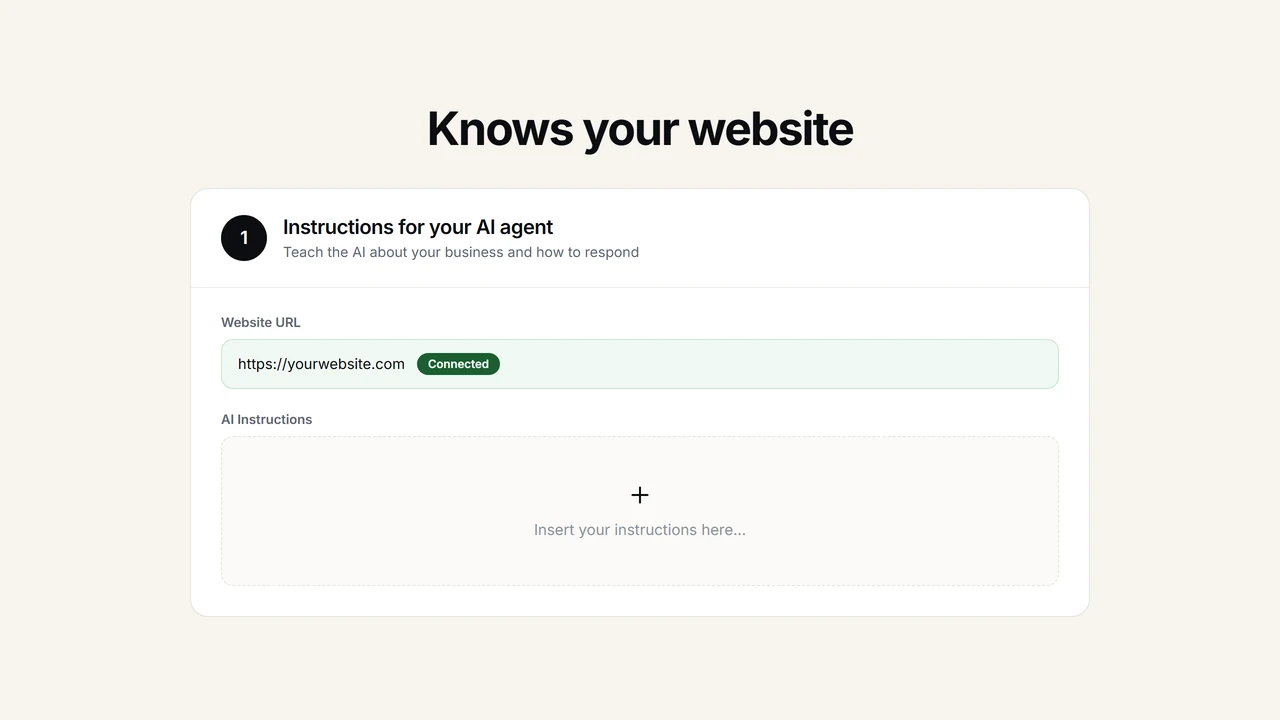
A real front desk knows the hours, the services, the prices, the directions, the staff, and the edge cases. The AI front desk has to reach that level of fluency instantly. Asyntai crawls your website content and absorbs anything private you upload — so every answer sounds informed, not improvised.
- Auto-reads your public contentHours, services, prices, team bios, location, FAQ, booking pages — absorbed in minutes with a single site URL.
- Upload the behind-the-desk binderAppointment policies, cancellation terms, intake forms, preferred vendor lists, staff availability rules — added as PDFs or pasted text.
- House voice in plain English"Always offer the 20-minute consultation when scheduling is asked." "Never confirm after-hours appointments without approval." The front desk follows your rules.
Catches every inquiry — no matter the hour
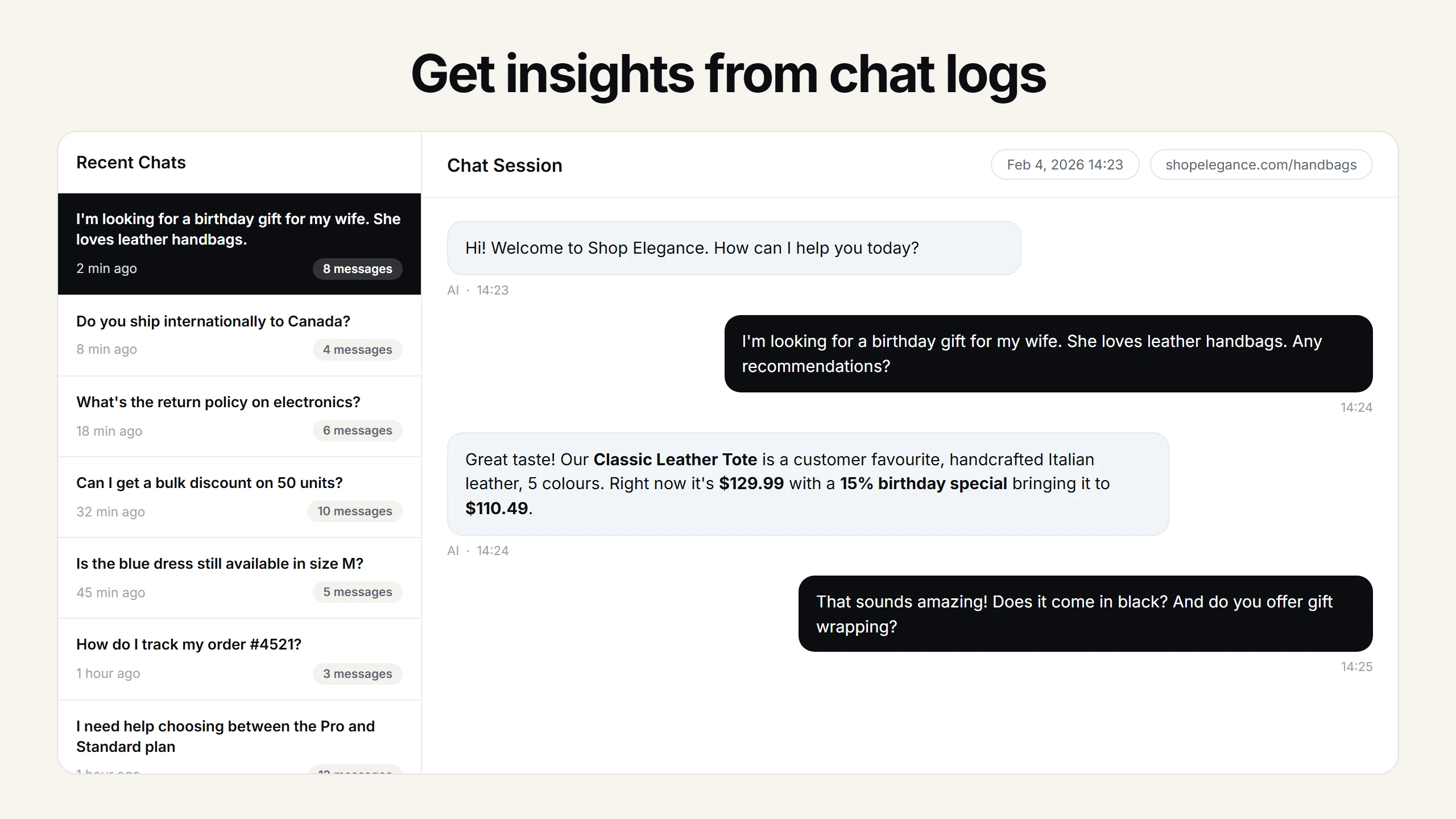
Most front desks lose half the after-hours inquiries to voicemail or unanswered email. The AI front desk doesn't. It greets, qualifies, collects contact details, and sends the full context to your team — so Monday morning starts with warm leads, not missed calls.
- Collects name, email, phoneThe AI asks for contact details at the right moment and logs them with the full conversation transcript in your dashboard.
- Personalized when you chooseWith User Context on Standard and Pro plans, the front desk greets returning clients by name, referencing their appointment or account status.
- Inbox notifications in real timeTurn on email alerts and every captured inquiry lands in your inbox the moment it happens — transcript included.
Set up the AI front desk in an afternoon
No phone system integration, no receptionist software, no IT ticket. The AI front desk installs as a single JavaScript snippet in your website's header — on WordPress, Squarespace, Webflow, a custom booking engine, or any CMS — and goes live immediately.
- Sign up for a free Asyntai account and copy your personal snippet.
- Paste it into your website's
<head>via your CMS header settings or a header plugin. - Point Asyntai at your site URL so the front desk learns your services and hours.
- Write a few custom instructions about how to handle bookings and escalations, then go live.
<script src="https://asyntai.com/widget.js"
data-id="your-site-id" async>
</script>
</head>
# On every page of your site — greeting visitors 24/7.
AI front desk — FAQs
What clinics, studios, salons, agencies, and service teams usually ask before setting up.
What kinds of businesses use the AI front desk?
Any business where visitors would normally talk to a receptionist: clinics, dental offices, wellness and fitness studios, salons and spas, law firms, accountants, consultants, agencies, real estate offices, private tutors, coworking spaces, veterinary practices, private schools. Anywhere the first question is usually "do you have availability this week" or "what do you charge for X."
Can the AI front desk actually book appointments?
It captures booking intent and the required details — preferred time, service requested, contact information — and hands them to your existing booking system or team via the dashboard and email notifications. It doesn't write directly into third-party calendars, which means you keep control over final confirmation. In practice, this means a visitor never leaves without getting help, and your team never has to chase cold leads.
Does it handle calls, or only website chat?
Website chat only. The AI front desk sits on your website as a chat widget, which is where most after-hours inquiries arrive anyway. For phone calls, you'd still need a phone answering service — but the majority of missed front-desk volume tends to come from the website, which is what this handles.
Does it personalize responses to known clients?
Yes, on Standard and Pro plans, via the User Context feature. Your site passes logged-in client data — name, upcoming appointment, account tier, past services — into a JavaScript object before the widget loads. The AI front desk uses that to greet returning clients by name and reference their current context naturally.
Does the front desk speak other languages?
Yes. The widget UI supports 36 languages and the AI detects the visitor's language from their first message. A French visitor gets French, a Japanese visitor gets Japanese, an Arabic visitor gets Arabic — without any translation plugin setup on your side.
What happens when a question is too complex for the AI?
It captures the visitor's name, email, and the full conversation, and routes the handoff to your Asyntai dashboard. If you enable email notifications, the transcript arrives in your inbox in real time. Your human team picks it up with full context — no "start over" cold tickets.
Does the AI front desk slow down our website?
The widget loads asynchronously after your site renders, so it doesn't block page load. It behaves like any typical third-party widget on your site.
Can we run it on multiple locations or brand sites?
Yes on paid plans. Free: 1 site, Starter: 2, Standard: 3, Pro: up to 10. Each site gets its own separate AI front desk with its own knowledge base and escalation rules — useful for multi-location practices, franchise groups, or brand portfolios.
The AI front desk, explained for real-world businesses
Reception work is one of those jobs that looks simple from the outside and is actually relentless from the inside. Someone calls at 9:04 to ask about availability. The website contact form pings at 9:07. A walk-in arrives at 9:12. Another call at 9:16 asking about pricing. An email at 9:18 confirming yesterday's appointment change. And all of this happens every morning — plus the after-hours inquiries that pile up in the inbox overnight, the weekend questions that come in over Instagram DMs, the voicemails left on Sunday that get answered Tuesday. An AI front desk exists to cover the shift no human front desk reasonably can, without turning your business into a call center. It greets the overnight website visitor, answers the Sunday-afternoon pricing question, books the 11 PM inquiry, and hands the Monday-morning list to your team with every detail already captured.
The distinction that matters most is between a generic chatbot and a trained receptionist. A generic chatbot pulls answers from the public internet and hopes nothing sensitive comes up. A front desk has to know your business specifically: your hours, your services, your staff, your availability rules, your cancellation policies, the way you handle late arrivals, the particular reason you don't book consultations before 10 AM on Fridays. Asyntai indexes exactly that material. The AI crawls your website — services pages, team bios, pricing, FAQs, policies, about — and absorbs anything else you upload, like an internal SOP for handling new-patient intake or a policy sheet on rescheduling rules. The result is a front desk that answers the way your best receptionist would, consistently, at any hour.
Voice is where most automated reception attempts fail. Front desks have a specific register — warm without being casual, helpful without being pushy, professional without being stiff. Asyntai handles this through custom instructions written in plain English. "Greet every visitor by name if their context includes one." "Offer a 20-minute consultation when scheduling is asked about." "Never confirm an after-hours appointment without flagging it for the manager." "For questions about specific staff availability, ask the visitor to specify which practitioner." These aren't branching scripts or decision trees. They're the same kind of instructions you'd give a new receptionist during their first week, and the AI front desk applies them to every conversation in every language it answers in.
The economics of a front desk shift the moment you add an always-available layer behind it. A physical receptionist covers business hours, which typically means 40 of the 168 hours in a week. That leaves 128 hours — most of them prime residential browsing time — during which your business is silent. After-hours inquiries on your website get a voicemail message or a contact form, and somewhere between 30% and 70% of those leads never follow up again because the friction is too high. An AI front desk covers all 168 hours with the same quality of response. A visitor checking your services at 11 PM on a Tuesday gets answered immediately, books if they're ready, or leaves an inquiry with full context if they need something only a human can handle.
Languages stop being an expense with the AI front desk. Serving international clients at a physical front desk is difficult — you either hire for specific languages, risk awkward handoffs, or direct non-native speakers to email. The Asyntai widget supports 36 languages in the UI and detects the visitor's language from their first message. A French visitor browsing your clinic's services gets a French response. A Japanese tourist looking at your spa's offerings gets Japanese. A German client researching your law firm gets German. This all happens from one installation, no translation plugin, no extra setup, no bilingual hiring required. For practices and services in cities with meaningful international traffic — London, New York, Paris, Dubai, any resort area — this single capability usually justifies the AI front desk by itself.
Personalized greetings for returning clients make the front desk feel properly staffed rather than automated. With User Context, available on Standard and Pro plans, your website passes logged-in client data — name, upcoming appointment, client tier, prior services, balance — into a JavaScript object before the widget loads. The AI uses that to open with something like: "Good evening, Ms. Reyes. I see you're coming in Thursday at 4 PM for the facial. Can I help you with anything before then?" You decide exactly what data the front desk sees, because you push it from your own site. Nothing is pulled from a backend system in a way that would require broad API access.
Booking intent is where the AI front desk most directly replaces phone tag. Instead of a voicemail loop ("leave your number, we'll call you back, leave your availability, we'll call you again to confirm"), the AI captures everything the booking needs in a single conversation. Preferred day and time range, service requested, any notes from the client, contact information. All of it lands in your Asyntai dashboard with the full transcript and — if you turn on email notifications — in your inbox in real time. Your team either confirms the appointment directly against whatever calendar system you already use, or responds to the client to propose the closest available slot. The client never got a voicemail. Your team never had to chase them.
Escalation is the remaining piece, and it matters because some interactions really do need a human. A client disputing a charge, someone upset about a service outcome, a sensitive medical question, a complicated multi-party scheduling coordination — none of these should be automated. The AI front desk knows where the line is, because you draw it in the custom instructions. "Escalate any billing disputes immediately." "Never discuss specific medical advice — offer the nurse line instead." "For legal matters involving current clients, escalate to the managing partner's assistant." The AI respects those rules, captures the handoff context, and hands the conversation off to your team. The client experiences one clean transition, not a chatbot that tried to handle something it shouldn't have.
The log of what visitors ask the front desk becomes, over time, a map of what your website is failing to communicate clearly. If twenty people this month asked whether you accept a specific insurance, your services page needs an insurance section. If most first-time visitors ask for directions from the nearest train station, your contact page needs that information. If new-client intake questions keep appearing on a specific service page, that page needs clearer information about what to expect. The conversation analytics in the Asyntai dashboard group these patterns by frequency and topic, so you can actually see what to fix rather than guessing from scattered emails. The AI front desk doesn't just answer — it points at the pages that deserve editing so fewer questions need answering.
Pricing works out to be a tiny fraction of reception cost. The free tier covers 100 conversations a month, which is enough to pilot the AI front desk on a small practice or single-location business. Paid plans start at $39 per month for 2,500 conversations — a number that covers most mid-sized clinics, studios, and service businesses with significant room. Higher tiers scale to multi-location groups and high-traffic operations. Site limits scale with the plan too: free 1, Starter 2, Standard 3, Pro up to 10, which fits multi-location practices, franchise operators, and agency-managed accounts cleanly. Before the front desk pauses for exceeding capacity, email warnings give the ops team runway to upgrade ahead of a busy season.
The categories of businesses that benefit most from an AI front desk are predictable by the shape of their visitor volume. Medical and dental practices win on the intake questions, appointment inquiries, and insurance questions that swamp typical reception. Wellness and fitness studios win on class availability, membership, and personal training inquiries. Salons and spas win on service, pricing, and booking-intent questions. Law firms, accountants, and consultants win on intake qualification before a paid call. Real estate agents win on specific listing and viewing inquiries that otherwise go cold overnight. Veterinary practices win on the "is this an emergency" triage questions that arrive at 2 AM. Private schools, tutors, and coaches win on admissions and enrollment inquiries. The common thread: these businesses live on conversion from inquiry to scheduled appointment, and the AI front desk removes the gap between inquiry and response that used to kill half of those conversions.
Setup is genuinely fast. Paste a snippet into your website's header. Point the AI at your URL so it learns your hours, services, and policies. Upload the handful of internal documents that should inform responses. Write two or three custom instructions about how to handle scheduling and escalations. Test a few real-world conversations to make sure the voice lands right. Go live. From there, the AI front desk quietly handles the shift your business couldn't realistically staff — greeting every visitor, capturing every inquiry, answering in every language, escalating the complex cases with full context. The phone stops ringing off the hook. The after-hours inbox stops piling up overnight. The front desk finally covers the hours your business actually operates in — which, for any business on the internet, is all of them.