AI for recruiting agencies — your website working the desk when you can't
Add an AI chatbot to your recruiting agency website that engages executive, technical, and healthcare candidates while answering client inquiries about your search capabilities and specializations.
Watch AI engage visitors on a recruiting agency website
Enter a recruiting agency URL and see the AI answer questions about specializations, open searches, and the recruiting process
Reads your website and speaks fluently about every practice area you cover
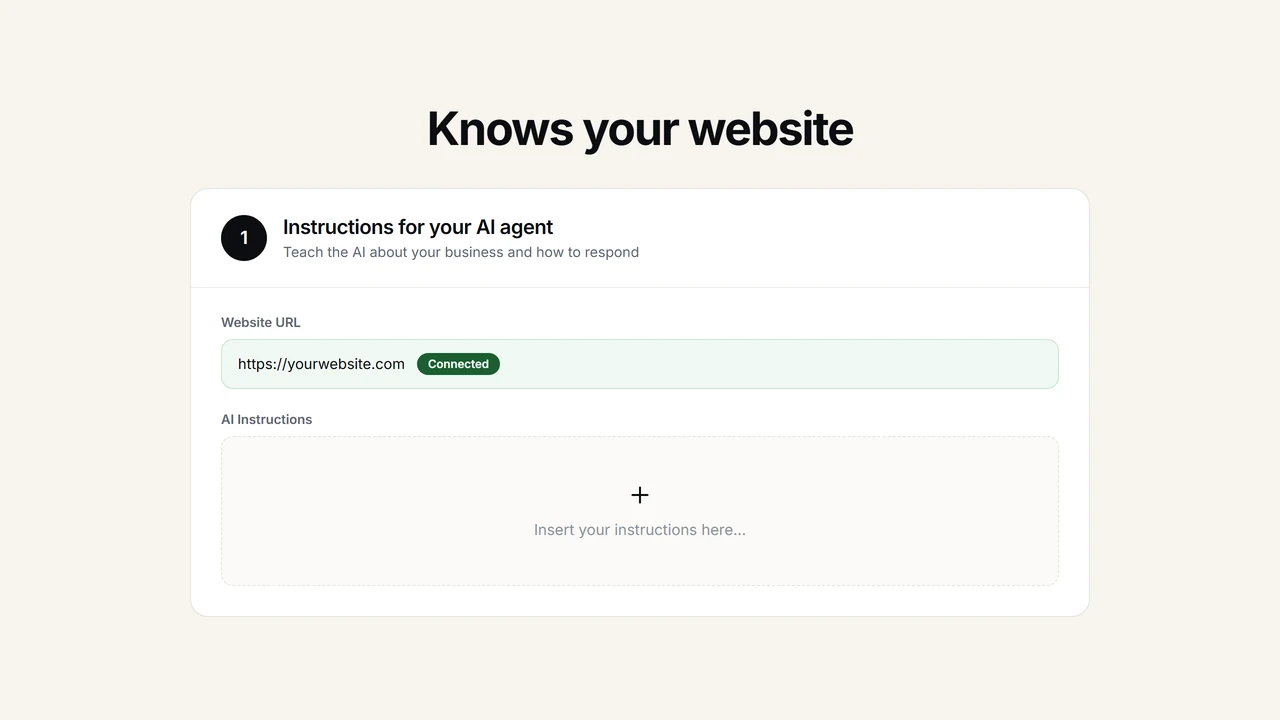
A boutique search firm's credibility starts with depth. Asyntai crawls your recruiting agency's website — practice area pages, team bios, placement highlights, industry focus descriptions, geographic coverage — and uses that content to answer visitor questions with the specificity they expect. When a CFO asks about your financial services search practice, the AI responds with the same authority your website conveys. No scripted answers. No generic chatbot filler.
- Absorbs every practice area on your siteExecutive search, technical recruiting, healthcare staffing, financial services, life sciences — the AI reads up to 50 pages of your website and builds a knowledge base from all of it. When a visitor asks about your cybersecurity recruiting practice, the AI pulls details from that specific page, not a generic answer.
- Handles the nuance between similar specializationsA visitor asking about your "interim CFO placement" practice gets a different answer than one asking about "permanent C-suite search." The AI understands the distinctions in your service descriptions and responds accordingly — the way a knowledgeable associate would, not a receptionist reading from a script.
- Responds in the visitor's language automaticallyExecutive search is global. A managing director browsing from Frankfurt gets answers in German. A hospital administrator in São Paulo gets answers in Portuguese. The AI detects the language and responds in kind — 36 languages, no configuration needed. Your English-language website serves every market.
One chatbot that speaks to candidates and clients with equal precision
Recruiting agency websites serve two audiences with fundamentally different motivations. Candidates want to know what opportunities exist and whether your firm is worth trusting with their career. Clients want to evaluate your capabilities, track record, and engagement terms. The AI handles both conversations — recognizing the difference from the first message and adjusting tone, depth, and direction accordingly.
- Candidate conversations: opportunity and trustA passive candidate referred by a colleague lands on your site at 10pm. They want to browse without commitment — what industries you cover, how confidential the process is, what kinds of roles you typically fill. The AI provides real answers from your content, keeping the conversation warm without pushing a form. If they're interested, it captures their details naturally.
- Client conversations: capability and credibilityA VP of HR evaluating search firms asks about your technology sector expertise, typical time-to-fill, and retained vs. contingency models. The AI answers from your service pages with specifics — not vague promises. The visitor gets the detail that separates your firm from the next search result.
- After-hours coverage for a business that never sleepsThe best candidates browse at midnight. The most decisive hiring managers fire off inquiries before their 7am meeting. Your recruiters are on calls during the day, sourcing in the evening, and offline by 10pm. The AI fills every gap — engaging visitors the moment they arrive, regardless of time zone or working hours.
- Lead capture without frictionInstead of a static "Submit your resume" form, the AI has a conversation. It learns what the visitor is looking for, shares relevant information about your firm, and collects their contact details in context. Candidates and clients both leave feeling heard rather than processed.
Add AI to your recruiting agency website
One script tag in your site's HTML header. The AI chatbot appears on every page — your homepage, practice area pages, team directory, job listings — ready to engage candidates and clients the moment they arrive.
- Sign up at Asyntai and enter your recruiting agency's website URL. The AI crawls your site and builds a knowledge base from your practice areas, team pages, and service descriptions.
- Write custom instructions to shape the AI's behavior — how to handle confidential search inquiries, when to escalate to a recruiter, what information to collect from candidates vs. clients.
- Copy the embed snippet from your Asyntai dashboard.
- Paste the snippet into your website's HTML header. The chatbot is live immediately on all pages.
<script src="https://asyntai.com/widget.js"
data-id="your-site-id" async>
</script>
</head>
# Candidates and clients. One widget.
AI for recruiting agencies — FAQs
Common questions from executive search and specialized recruiting firms evaluating AI chatbots for their websites.
Can the AI handle confidential search inquiries with discretion?
Yes. You control what the AI says through custom instructions. You can instruct it to never reveal client company names, to describe opportunities by industry and level without identifying the hiring organization, and to collect candidate information privately. The AI follows your rules precisely — if your instruction says "never name the client until the candidate has signed an NDA," the AI will describe the role in general terms and offer to connect them with a recruiter for details. Confidentiality is a configuration choice, not a technical limitation.
Does AI replace our recruiters?
No. The AI handles the first layer — answering questions about your firm, explaining your specializations, collecting candidate information, and qualifying initial interest. It does not conduct interviews, evaluate cultural fit, negotiate offers, or manage client relationships. Think of it as the front desk of your website: it greets visitors, provides accurate information about your firm, and routes serious inquiries to the right recruiter. Your team spends less time on repetitive introductions and more time on relationship building, sourcing, and closing.
How does the AI handle senior-level candidates who expect a white-glove experience?
The AI's tone and depth come directly from your website content and custom instructions. If your site positions your firm as a premium executive search practice, the AI reflects that positioning. You can instruct it to be formal and concise, to avoid casual language, and to offer a direct line to a managing partner rather than collecting a form. A C-suite candidate chatting with your AI gets the same caliber of response your senior team would deliver — because the AI is drawing from the exact language your team wrote for that audience.
Can the AI distinguish between a candidate and a prospective client?
The AI reads the visitor's message and responds in context. Someone asking "Do you have any VP of Engineering roles?" is clearly a candidate. Someone asking "What's your typical time-to-fill for senior technology hires?" is evaluating your services as a client. The AI doesn't need a dropdown menu to sort them — it understands intent from natural language and adjusts its responses accordingly, pulling from the relevant parts of your website content.
We recruit for very niche technical roles. Will the AI handle those accurately?
The AI answers using your website content. If your site has a detailed page about your DevOps and SRE recruiting practice — the technologies you recruit for, the seniority levels, the industries you serve — the AI uses that content to answer questions about DevOps recruiting with real specifics. If a visitor asks about Kubernetes experience requirements and your site mentions container orchestration hiring, the AI connects the dots. The depth of the AI's answers matches the depth of your website content.
What does this cost for a boutique search firm with one website?
You can start on the Free plan — 50 messages per month, one website, full AI chatbot with multilingual support. That's enough to test the experience on your site. For a firm with steady website traffic, the Starter plan at $39/month gives you 800 messages across 2 sites. The Standard plan at $139/month adds Custom Tools (API integrations) and supports 3 sites with 15,000 messages. Most boutique firms find the Starter or Standard plan fits their volume.
We recruit across multiple countries. How does multilingual support work?
The AI detects the visitor's language automatically and responds in that language — 36 languages supported. Your website can be in English, and a candidate browsing from Tokyo gets answers in Japanese. A client in Munich gets answers in German. No translated versions of your site needed. The AI reads your English content, understands it, and delivers the answer in whatever language the visitor writes in. This covers the global nature of executive search without requiring a multilingual website build.
Can the AI collect resumes or CVs from candidates?
The AI is a conversational interface, not a file upload tool. It can guide candidates to your existing resume submission page, collect their contact information and key details (role interest, experience level, availability) in the chat, and route that information to your team. For resume collection, point candidates to your ATS or submission portal — the AI handles the conversation that gets them there with context your team can use.
Why recruiting agencies need AI on the website — not just in the ATS
Recruiting agencies invest heavily in tools that manage candidates after first contact — applicant tracking systems, CRM platforms, sourcing databases, interview schedulers. The website, though, is where first contact happens for a growing share of candidates and clients. A referred candidate googles your firm name and lands on your homepage. A hiring manager clicks through from a LinkedIn post. A passive executive follows a link a colleague sent them. All of these visitors arrive at your website before they ever talk to a recruiter — and most of them leave without doing anything, because the website doesn't engage them.
The gap is structural. Recruiting agency websites are built as brochures — they describe your services, list your team, maybe show some testimonials. They inform. They do not interact. A visitor who has a specific question — "Do you recruit for fintech CFO roles?" or "How does your retained search process work?" — has to dig through pages to find the answer, or fill out a contact form and wait. Neither option matches the immediacy they experience on every other website with a chat function. The AI chatbot closes that gap by turning your brochure into a conversation.
Executive search is where this matters most acutely. A VP of Operations considering a move doesn't submit a resume through a web form. That's not how senior professionals engage. They browse. They read about your firm, check your team's backgrounds, and gauge whether this is an organization they'd trust with a sensitive career conversation. If your site answers their quiet questions — through an AI that understands your practice areas and responds with authority — they stay. They engage. They reach out. If your site is a silent pamphlet, they close the tab and go back to their day.
The midnight window matters disproportionately in recruiting. Senior candidates don't browse during business hours — they're running their current companies during the day. The career exploration happens at night, on weekends, during flights. A managing director opens your website at 11pm because a board member mentioned your firm over dinner. That person has a narrow window of curiosity. If your site greets them with an AI that can answer "What kinds of board-level searches do you handle?" with a substantive, specific response pulled from your own content, the curiosity converts into a conversation. If the site is dark and static, the window closes. That managing director doesn't come back — they had one moment of openness, and your website missed it.
Technical recruiting presents a different angle on the same problem. Software engineers, data scientists, and infrastructure architects evaluate everything — including the recruiting firms that approach them. They look at your website not just for open roles but for signals that your team actually understands their domain. "This firm's site talks about recruiting for Kubernetes and distributed systems" registers differently than "This firm recruits for technology companies." An AI chatbot that can discuss the specifics of your technical practice — because it reads your website's content about those specializations — demonstrates the depth that technical candidates use as a trust filter.
Healthcare recruiting operates under its own constraints. A hospital HR director visiting your site wants to know about your nurse recruiting pipeline, your understanding of state licensing requirements, your experience with travel nursing versus permanent placement, your compliance track record. These are detailed, compliance-adjacent questions that a generic FAQ page can't cover. An AI that reads your healthcare practice page and can discuss credentialing timelines, Joint Commission awareness, and multi-state compact licensing — in the visitor's own language — delivers the kind of informed response that converts a curious visitor into a client intake call.
The economics of missed engagement are brutal in recruiting. A single executive placement fee might be $40,000 to $100,000. A healthcare recruiting contract might represent $500,000 in annual billing. A technical recruiting engagement with a growth-stage startup might mean eight hires over six months. When a potential client or a high-value candidate visits your website and bounces because they couldn't get a quick answer, the revenue impact isn't theoretical — it's a specific placement fee or retainer that went to the firm whose website engaged them first. An AI chatbot costs a fraction of a single placement fee and runs every hour of every day.
Boutique and mid-size recruiting agencies face a particular competitive pressure here. The large firms — the global search brands with hundreds of consultants — have the marketing budgets and brand recognition to absorb a mediocre web experience. A candidate will still call Korn Ferry even if their website isn't interactive, because the brand precedes the experience. A ten-person search firm in Denver doesn't have that luxury. Their website IS their first impression, and it needs to punch above its weight. An AI chatbot that demonstrates deep specialization knowledge, engages visitors in real conversation, and captures leads around the clock is one of the few tools that lets a boutique firm deliver an enterprise-grade digital experience on a boutique budget.
The dual-audience challenge is unique to recruiting. Unlike a law firm (serving clients) or a job board (serving candidates), a recruiting agency needs its website to serve both simultaneously — and the AI needs to handle both with equal competence. A candidate chatting at 9am wants to hear about opportunities, your process, and your track record with professionals at their level. A client chatting at 2pm wants to hear about your search methodology, your fee structure, and your experience in their industry. The AI reads the intent from the message and draws from the relevant sections of your website. No mode switching. No separate chat widgets. One AI that understands the two sides of the recruiting business.
Custom instructions give you precise control over how the AI handles sensitive recruiting scenarios. You write the rules in plain English: "If a candidate asks about a specific client company, do not confirm or deny any engagement. Describe opportunities by industry, location, and level only." "If a visitor asks about fees, explain the retained search model without quoting specific percentages — invite them to schedule a call with a partner." "If someone identifies as a current client, offer to connect them directly with their assigned recruiter." These rules shape every conversation, ensuring the AI represents your firm the way your senior team would.
The qualification layer is where AI creates the most time savings for recruiters. Eighty percent of website inquiries from candidates involve the same questions: what industries you cover, how the process works, whether you have roles in their geography, what experience level you typically recruit for. Recruiters answer these questions dozens of times a week — in emails, on phone screens, through LinkedIn messages. The AI handles all of this on the website, instantly, accurately, in any language. Your recruiters wake up to qualified, informed leads instead of raw inquiries that need 15 minutes of basic Q&A before anything substantive happens.
Language coverage has operational significance for recruiting agencies with international search practices. An executive search firm placing C-suite talent across Europe needs its website to serve visitors from Stockholm to Milan. A healthcare recruiting agency staffing travel nurses across the US encounters candidates who speak Spanish, Vietnamese, and Thai natively. The AI's automatic language detection — 36 languages, no configuration per language — means every visitor gets a response in their preferred language, regardless of what language your website is written in. This removes a real barrier to engagement for multilingual talent pools.
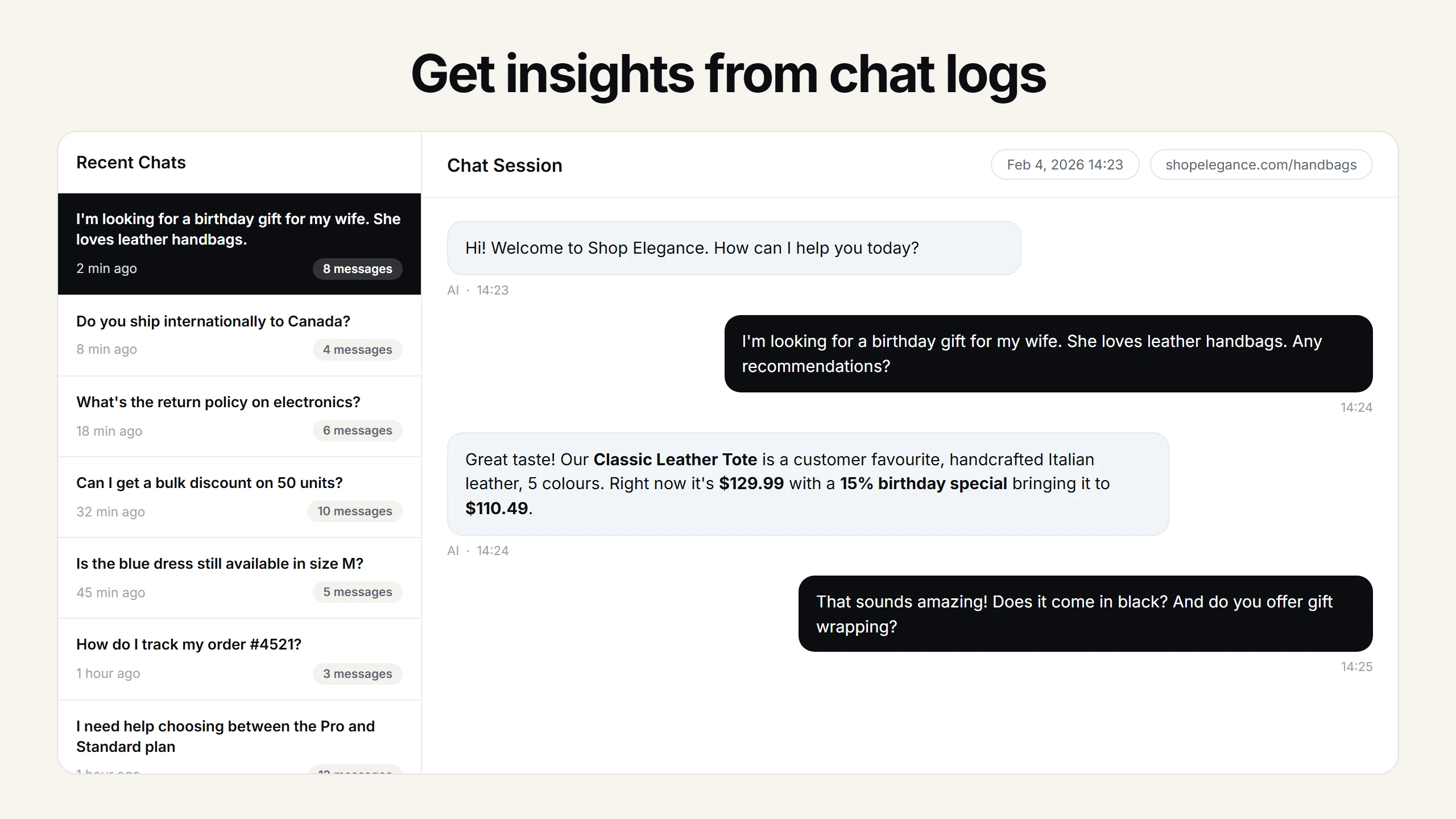
The data from AI conversations feeds back into your recruiting intelligence. Every chat reveals what visitors actually ask about — which specializations generate the most interest, what questions candidates have about your process, which industries your website isn't covering well enough. If twenty candidates in a month ask about your manufacturing recruiting practice and your site barely mentions it, that's a signal to build out that content. The AI's conversation logs are a window into demand you wouldn't see through form submissions alone, because most of those visitors would have left without submitting anything.
For recruiting agencies evaluating AI chatbots, the test is straightforward. Visit your own website as if you were a referred candidate hearing about your firm for the first time. Try to get answers to the three questions you'd naturally have: what does this firm specialize in, how does their process work, and should I reach out? If your website can't answer those in under sixty seconds, you're losing people. An AI chatbot answers them in ten seconds — using your own content, in the visitor's language, at any hour. That's the difference between a website that describes your firm and one that actually represents it.