AI for LMS: give every student instant answers about courses, assignments, and campus policies
An AI chatbot that lives on your learning management system, reads your course pages and institutional content, and answers student questions around the clock — in 36 languages, without adding work for instructors or staff.
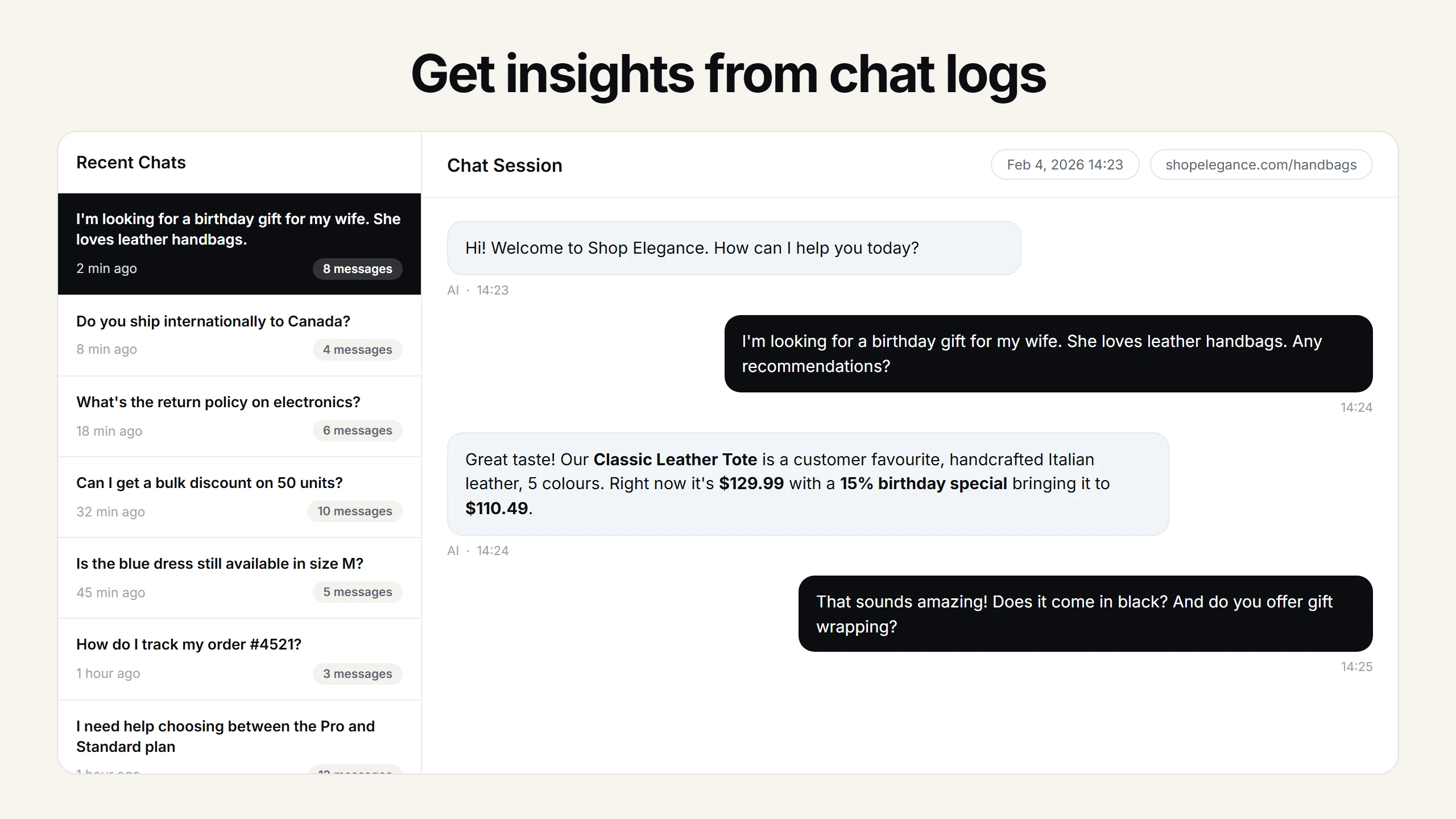
See how AI handles real student questions on an LMS
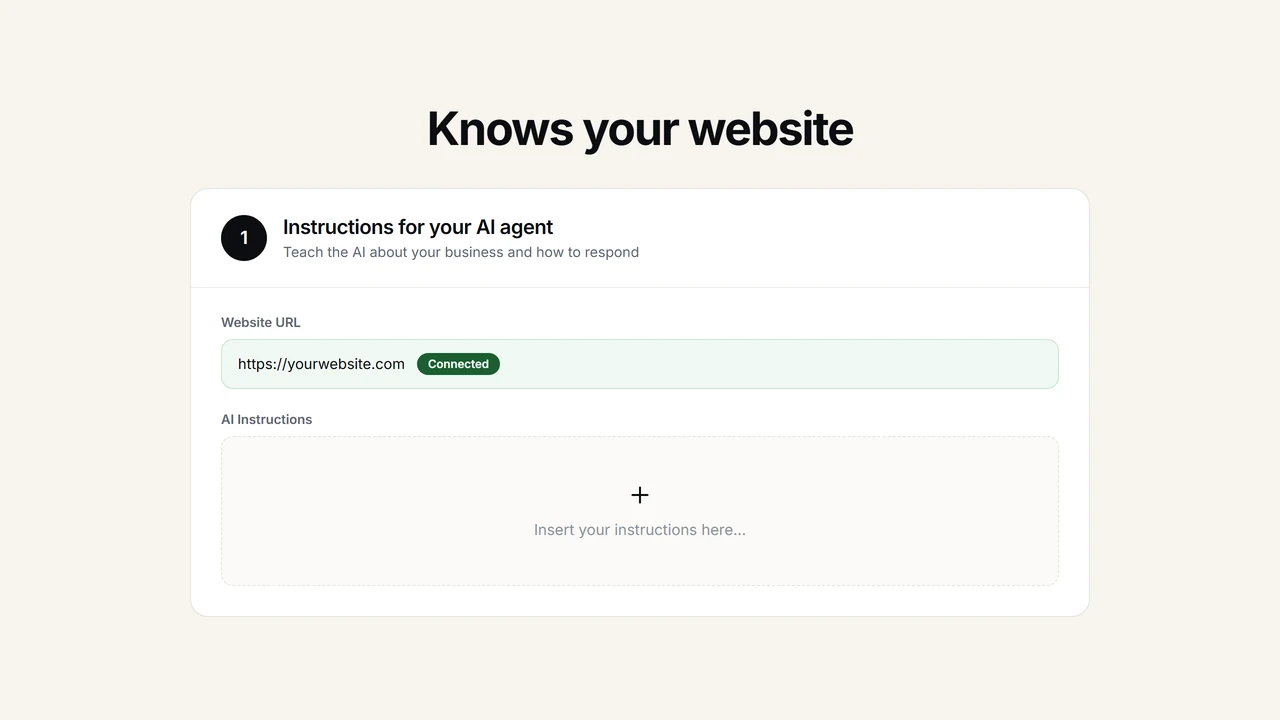
Paste your LMS or institution website URL below. The AI reads your course pages, syllabus content, and academic policies — then answers the way your student services desk would.
Hundreds of students asking the same questions — and nobody available to answer at midnight
Learning management systems are where students spend their academic lives. They log in to check assignment deadlines, find reading lists, review grading policies, and figure out how to submit their work. But the LMS itself is passive — it stores the information without helping anyone find it. A first-year student looking for the late submission policy has to click through syllabi, course documents, and policy pages until they locate the right paragraph, or they give up and email the instructor. Multiply that by 200 students in a single course, and every instructor is buried under the same five questions on repeat: "When is the midterm?" "Where do I upload my essay?" "Can I get an extension?" "What is the grading rubric for the final project?" "How do I access the recorded lectures?" An AI chatbot deployed on your LMS reads the course content, syllabi, institutional policies, and help pages that already exist — then answers these questions instantly, at any hour, in whatever language the student speaks. Instructors stop fielding repetitive inquiries. Student services stop drowning in emails. Students stop waiting days for answers to questions the system already contains.
- Students find course information without digging through menusA student at 11 PM wondering which chapters to study for the upcoming quiz asks the chatbot instead of scrolling through weeks of course modules. The AI reads the syllabus and course schedule on your LMS and responds with the specific topics, page numbers, and relevant lecture dates — the same answer a TA would give during office hours, available around the clock.
- Policy questions answered consistently across every courseLate submission penalties, academic integrity rules, withdrawal deadlines, grade appeal procedures — these policies exist in institutional documents but students rarely know where to look. The AI reads your policy pages and gives the same accurate answer whether a student asks at 8 AM or 3 AM, in English or Arabic, in their first semester or their last.
- Instructors reclaim hours lost to repetitive emailThe average instructor in a 150-student course answers dozens of logistical emails per week — the same questions, phrased slightly differently, from different students. The AI chatbot absorbs these inquiries before they reach the inbox. The emails that do arrive are substantive: clarification on course concepts, grade disputes that require judgment, personal circumstances that need human attention.
Connect your student information system and let the chatbot pull live enrollment data
The chatbot answers from your LMS content out of the box — course pages, syllabi, policy documents. But some student questions need live data: "Am I enrolled in the right section?" "What is my current grade?" "Has my financial aid been processed?" Custom Tools — available on Standard ($139/month) and Pro ($449/month) plans — let the AI chatbot query your student information system, enrollment database, or any REST API during a conversation.
- Enrollment verification in real timeConnect a Custom Tool to your student information system. When a student asks "am I registered for BIO 201 next semester?", the AI queries the enrollment database and confirms their registration status, section number, and meeting times — no visit to the registrar required.
- Grade and progress lookupsA student asking "what is my current grade in this course?" gets an answer pulled from your gradebook API: current percentage, letter grade equivalent, and assignments still outstanding. Instructors no longer field these questions manually during office hours.
- Financial aid and billing statusFor institutions that expose billing APIs, a Custom Tool lets the chatbot answer "has my scholarship been applied?" or "what is my balance for spring semester?" — questions that currently require a phone call to the financial aid office and a 20-minute hold time.
- Library and resource availabilityConnect the campus library system and the chatbot can tell students whether a textbook is available, how many copies are on reserve, and where to find it. Common questions like "does the library have the Norton Anthology?" get resolved in seconds instead of a separate trip to the library catalog.
- 36 languages with automatic detectionInternational students make up a significant share of enrollment at many institutions. The AI detects each student's language automatically and responds in kind — Arabic, Mandarin, Spanish, Hindi, Korean, and 31 more. Your LMS content does not need to be translated. The AI reads English-language course pages and delivers the answer in the student's language.
Get the AI chatbot running on your LMS
No IT project required. Sign up, point the AI at your LMS, and paste one line of code. Your instructors and IT staff do not need to change anything about how they work.
- Pick a plan at asyntai.com/pricing — the Free tier gives you 1 site and 50 messages to test with real student traffic. Starter ($39/month) handles 800 messages for a single course site or department.
- Add your LMS URL in the dashboard. The AI crawls up to 50 pages — course descriptions, syllabi, assignment instructions, institutional policies, help documentation — and builds its knowledge base automatically.
- Customize the chat widget to match your institution or department branding. Set your colors, logo, and greeting message. Add any supplementary content — student handbooks, orientation guides, FAQ documents — as uploaded files to fill gaps beyond what the LMS pages cover.
- Copy the single-line embed script and paste it into your LMS. Works on Moodle, Canvas, Blackboard, TalentLMS, and 30+ other platforms. The chatbot goes live immediately and starts answering student questions.
<script src="https://asyntai.com/widget.js"
data-id="your-site-id" async>
</script>
# One script. Answers student questions 24/7.
# Live on any LMS platform in under 5 minutes.
AI for LMS — FAQs
Common questions from educators and administrators evaluating AI chatbots for their learning management systems.
What kind of student questions can the AI answer?
Anything that is covered in the content on your LMS. If your course pages include assignment deadlines, the AI can tell a student when the midterm essay is due. If your syllabus describes the grading breakdown, the AI can explain how the final grade is calculated. If your institutional policy pages cover late submission penalties, academic integrity rules, or withdrawal procedures, the AI answers those questions too. It reads your existing content and uses it to respond — it does not generate information that is not there. You can also upload supplementary documents like student handbooks or orientation guides to expand what the chatbot knows.
Does it work with Moodle, Canvas, Blackboard, and other LMS platforms?
Yes. The chatbot installs via a JavaScript snippet that you paste into your LMS theme or page template. It works on Moodle, Canvas, Blackboard, TalentLMS, and any other platform that allows custom HTML or JavaScript. There is no LMS-specific plugin to install or maintain — the embed code is the same regardless of which LMS you use. If your LMS lets you add a script tag, the chatbot will work on it.
Can I control what the AI says about sensitive topics?
Yes. You write custom instructions in plain English that the AI follows in every conversation. Common examples for educational institutions: "If a student asks about mental health resources, provide the counseling center phone number and do not attempt to give advice." "If a student asks about grade changes, tell them to contact their instructor directly." "Always include the academic integrity policy link when discussing plagiarism." These rules apply consistently to every conversation, which is more reliable than depending on student workers at the help desk to remember every protocol.
How does it handle multiple courses with different content?
The AI crawls the pages you point it to — up to 50 pages per site. For a single department or course site, it reads that content and answers accordingly. For institutions with multiple departments, you can set up separate chatbot instances on different plans — the Starter plan covers 2 sites, Standard covers 3, and Pro covers up to 20. Each site gets its own knowledge base with its own content. Alternatively, you can point a single chatbot at a centralized help portal that covers cross-institutional topics like registration, financial aid, and campus services.
Our student body speaks many different languages. How does the AI handle that?
The AI supports 36 languages and detects the student's language automatically. A Mandarin-speaking international student browsing your English-language LMS gets answers in Mandarin. An Arabic-speaking student asking about the assignment deadline gets the response in Arabic. Your course content does not need to be translated — the AI reads the English pages and delivers the answer in the student's preferred language. This is included on every plan at no additional cost.
Can it connect to our student information system or registrar database?
If your student information system has a REST API, you can connect it through Custom Tools on Standard ($139/month) and Pro ($449/month) plans. You define the API endpoint, specify when the AI should use it and what parameters to extract from the conversation, and the AI handles the query. Common integrations include enrollment verification, grade lookups, course availability checks, and financial aid status. The chatbot answers from your LMS content immediately — Custom Tools add real-time data capabilities on top.
What does it cost, and can we try it before committing?
The Free tier gives you 1 site and 50 messages per month — enough to test with real students and see how the AI handles questions on your LMS. Starter is $39/month with 800 messages and 2 sites. Standard is $139/month with 15,000 messages, 3 sites, and Custom Tools for system integrations. Pro is $449/month with 50,000 messages, 20 sites, Custom Tools, and white-label branding. All plans are month-to-month with no contracts. You can upgrade, downgrade, or cancel at any time.
Will students become dependent on the chatbot instead of learning to find information themselves?
The chatbot directs students to the same information they would find by navigating the LMS — it does not replace the learning material or do academic work for them. When a student asks "where is the reading list for week 5?", the AI points them to the correct course module the same way a TA would. It reduces the friction of locating information inside a complex LMS interface, which is not a learning objective in any course. Students still read the materials, complete the assignments, and engage with the course content. The chatbot just eliminates the "where do I click to find it?" barrier that generates most help desk tickets.
How quickly can we get this running?
Most institutions have the chatbot live on their LMS within 20 minutes. You sign up, add your LMS URL (the AI crawls and reads the content automatically), customize the widget appearance, and paste the embed script into your LMS template. If your LMS administration requires IT approval for custom scripts, that approval process is the only variable — the technical setup itself is a single line of code. The chatbot starts answering student questions immediately after deployment.
AI for LMS: the student help desk that never closes
Every semester follows the same pattern. The first two weeks bring a flood of questions — "How do I access the course materials?" "Where do I submit Assignment 1?" "Is there a textbook, and where do I buy it?" "What happens if I miss a class?" Instructors and TAs field hundreds of emails, most of them identical. Student services lines stretch down the hallway. The help desk voicemail fills up. Then things settle briefly before the midterm wave hits — "When is the exam?" "What does it cover?" "Can I use notes?" "Where is the review session?" — and the cycle repeats before finals. Between these peaks, a steady stream of day-to-day questions keeps flowing: policy clarifications, navigation help, deadline confirmations, technology troubleshooting. The learning management system holds the answers to nearly all of these questions. The problem is that nobody can find them fast enough.
LMS platforms were designed to organize course content, not to help people retrieve it conversationally. A student who wants to know the late submission policy cannot ask the LMS — they have to know which course module, which document, which section of which page contains the answer, then navigate to it through a hierarchy of menus and folders. For students who are new to the institution, new to the platform, or simply overwhelmed by the volume of content across five simultaneous courses, this navigation challenge is a genuine barrier. They resort to the path of least resistance: emailing the instructor. The instructor, who has the same information posted on the LMS, types out the same answer they already typed for seven other students this week. It is a colossal waste of time on both sides — the information exists, but the interface between the student and the information is broken.
An AI chatbot deployed on the LMS fixes this by adding a conversational layer on top of the existing content. The AI reads your course pages, syllabi, assignment descriptions, institutional policies, and help documentation — up to 50 pages — and uses that content to answer student questions in natural language. A student types "when is the midterm for Professor Chen's biology class?" and the chatbot responds with the date, time, and location pulled from the syllabus. A student asks "what is the late penalty for assignments in this course?" and gets the specific policy from the course document. The chatbot does not invent answers. It reads what you have already published on the LMS and delivers it in conversational form, which is what students were going to ask a human being to do anyway.
The timing dimension is what makes this particularly valuable for education. Students do not operate on business hours. A significant portion of coursework happens between 8 PM and 2 AM — this is when students are reading, writing papers, working through problem sets, and encountering questions that need answers before they can continue. The campus help desk closed at 5 PM. The instructor will not see the email until tomorrow morning. The TA's office hours were yesterday. The student either spends 20 minutes hunting through the LMS for the answer, posts to a discussion forum hoping someone responds, or simply guesses and moves on. An AI chatbot available at midnight answers the question in seconds, using the same information the student would eventually find if they knew exactly where to look.
International students represent a particularly underserved population when it comes to LMS support. A student whose primary language is Mandarin, Arabic, Korean, or Portuguese is navigating an English-language platform with English-language course materials and English-language policies. They understand the academic content — they were admitted to the program because they demonstrated that ability — but the procedural and administrative language of an LMS can be opaque even for native speakers. "Consult the rubric posted under the Assessment tab in Module 4" is a perfectly clear instruction if you know what a rubric is, where the Assessment tab lives, and which Module 4 the instructor means. For a student processing this in their second or third language, every unclear instruction generates a support request. The AI chatbot detects the student's language automatically and responds in kind — 36 languages supported. The Arabic-speaking student asks about the assignment deadline in Arabic and gets the answer in Arabic, pulled from the English-language syllabus. No translation infrastructure required, no multilingual staff, no additional cost on any plan.
The economics of student support in higher education are under relentless pressure. Tuition revenue is flat or declining at many institutions while student expectations for service quality keep rising. Hiring additional help desk staff, extending office hours, and training student workers all cost money that most departments do not have. Instructors absorb the overflow, which pulls them away from teaching and research — the activities their positions actually require. An AI chatbot is not a replacement for a counseling appointment, a grade dispute meeting, or a one-on-one conversation with a student in crisis. But the vast majority of student inquiries are not those things. They are "where do I find the reading list?" and "when is the drop deadline?" and "how do I reset my LMS password?" — logistical questions with definitive answers that already exist somewhere in the system. Routing these to a chatbot frees up human time for the interactions that genuinely require a human.
For institutions running Moodle — and education is one of Asyntai's most active customer segments — the deployment is especially straightforward. Moodle allows custom HTML blocks in any course or site-wide, which means the embed script can go into a single block on the dashboard page and immediately serve every student who logs in. Canvas, Blackboard, and TalentLMS all support custom JavaScript through their theme editors or page templates. The chatbot does not require a platform-specific plugin, so there is nothing to install through your LMS's plugin marketplace, nothing to maintain when the LMS upgrades, and nothing to break when the vendor pushes a new version. It is a JavaScript snippet that works independently of the LMS software.
Course-specific deployment is one model; institution-wide deployment is another. A single department can deploy the chatbot on its own course pages, crawling the syllabi and policies specific to that department. An IT help desk can deploy it on the technology support portal, answering questions about passwords, VPN access, software downloads, and printing. A student affairs office can deploy it on the orientation and handbook pages, fielding questions about housing, dining, campus facilities, and student organizations. The Pro plan at $449/month covers 20 separate sites, which means a mid-sized institution can deploy chatbots across multiple departments and offices under a single subscription, each with its own knowledge base and branding.
Consistency is an underappreciated benefit of using an AI chatbot for policy-related questions. When ten different student workers at the help desk answer questions about the academic integrity policy, ten slightly different versions of the answer emerge. One is too lenient, one is too strict, one forgets to mention the appeal process. The AI chatbot gives the same answer every time, pulled directly from the policy document. You can add custom instructions to ensure specific language is always included — "When discussing plagiarism, always link to the full Academic Integrity Policy and mention that first offenses receive a written warning" — and the chatbot follows those rules in every conversation without variation. For compliance-sensitive topics like FERPA, accessibility accommodations, and Title IX, this consistency matters.
The chatbot's role during enrollment and registration periods deserves specific mention. These are the highest-volume inquiry periods for any institution — students asking about course availability, prerequisite requirements, registration holds, tuition deadlines, financial aid disbursement, and add/drop procedures. The registrar's office is overwhelmed. Phone hold times stretch past an hour. The FAQ page exists but nobody reads it because it is 30 pages long. The AI chatbot answers these questions from your published content — registration guides, academic catalogs, financial aid pages — without hold times and without the registrar hiring temporary staff for three weeks every semester. For institutions that expose their registration system through a REST API, Custom Tools on Standard and Pro plans let the chatbot check real-time course availability or enrollment status during the conversation.
Faculty adoption is typically smoother than administrators expect. The chatbot does not change how instructors use the LMS — they continue publishing content the same way they always have. The difference is that students ask the chatbot first instead of sending an email, which means the instructor's inbox gets lighter without any effort on their part. Some instructors add a line to their syllabus: "Before emailing me with logistical questions, try the AI assistant on this page — it has the answers to most common questions about deadlines, submissions, and course policies." This is not a technology adoption ask. It is a self-service redirect that benefits the instructor directly, and faculty who are skeptical about AI in education find it easy to support because the chatbot is answering procedural questions, not teaching the course material.
Accessibility is built in by default. The chatbot operates through text conversation, which is inherently accessible to students using screen readers and other assistive technologies. Students who find the visual interface of an LMS difficult to navigate — menus, tabs, dropdowns, nested folders — can type a question and get a direct answer without interacting with the complex UI. This does not replace institutional accessibility requirements, but it adds an alternative information channel that some students with disabilities find significantly easier to use than the LMS navigation itself.
Corporate training environments use LMS platforms just as heavily as universities, and the chatbot applies equally well. An organization running TalentLMS or a similar platform for employee training faces the same challenge: trainees cannot find the right module, forget submission deadlines for compliance courses, and generate tickets to the training department asking questions that the LMS already answers. An AI chatbot deployed on the corporate LMS answers "when is my safety certification due?" and "where do I find the harassment prevention training?" from the published course content, reducing the training team's administrative load the same way it reduces an instructor's email volume.
The cost structure makes this viable for departments and institutions of any size. A single instructor or department can start on the Free tier — one site, 50 messages per month — and test how the chatbot handles real student questions with zero budget commitment. If it proves useful, the Starter plan at $39/month covers 800 messages, which is adequate for a department-level deployment during a typical semester. Standard at $139/month adds Custom Tools for system integrations and 15,000 messages. Pro at $449/month is designed for institution-wide deployment: 20 sites, 50,000 messages, white-label branding, and full Custom Tools access. Every plan is month-to-month with no procurement cycle — you can start in January and cancel in May if it only makes sense during the academic year.
Ready to stop losing student time to unanswered LMS questions? Start with the Free plan and see how the AI handles your students' inquiries — or go straight to Standard for Custom Tools and student system integration.