AI chatbot agency: what they do, what they cost, and when you don't need one
An AI chatbot agency designs, trains, and deploys chatbots for businesses that prefer not to handle it themselves. This guide explains what the engagement actually delivers, what it costs, when it pays for itself, and when a self-serve platform like Asyntai gets you the same outcome in a single working session — without the agency markup.
See an AI chatbot built without an agency in real time
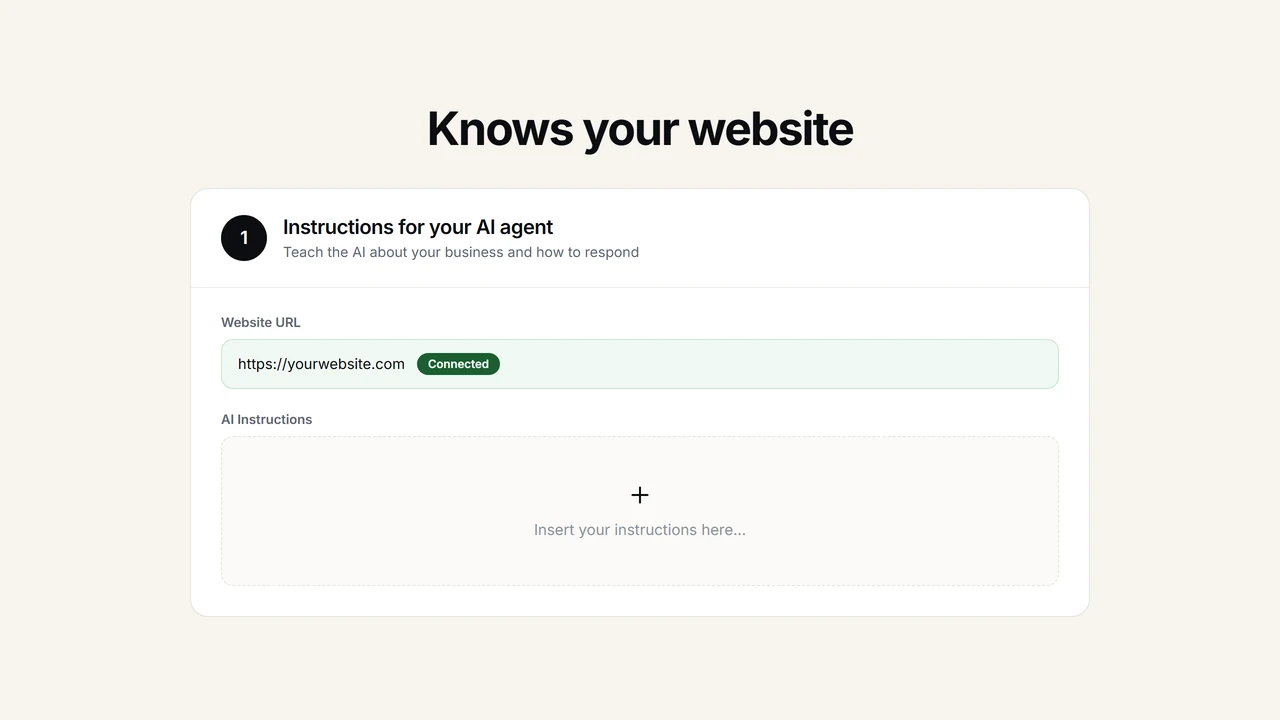
Paste your website URL and watch the AI absorb your content the way an agency would — minus the six-week timeline and the five-figure invoice
What an AI chatbot agency actually delivers — and what you pay for
AI chatbot agency engagements typically run between $5,000 and $50,000 depending on scope. The deliverable is a chatbot built on top of an underlying SaaS platform — agencies do not build the AI itself. They configure the platform, integrate it with your stack, write behavioral rules, and hand over the result. Knowing what is platform versus what is agency labor is the key to deciding whether you need both.
- Discovery and content auditAgencies start with a workshop to map your business, gather knowledge sources, and define the chatbot's scope. This phase typically runs 1-3 weeks and accounts for a meaningful share of the bill.
- Platform configuration on your behalfThe agency loads your content into an underlying chatbot platform — often a SaaS tool you could subscribe to directly — authors instructions, and tunes responses. This is the core technical labor.
- Integration and ongoing maintenanceLarger engagements include ticketing-system integration, custom analytics, and a monthly retainer for tuning. These items are most likely to justify agency cost on complex deployments where in-house expertise is missing.
When an AI chatbot agency makes sense — and when the platform alone is enough
Hiring an agency is the right call for organizations with custom integration requirements, regulated industries, or content too sensitive to handle through a self-serve workflow. For most businesses — particularly those whose chatbot needs to answer documentation-style questions in multiple languages — a direct subscription to an AI chatbot platform delivers an equivalent or better result without the multi-week implementation cycle and the agency markup.
- Hire an agency when integration is the bottleneckIf your chatbot needs custom connections to a proprietary CRM, legacy database, or non-standard ticketing system, the development time an agency provides pays for itself.
- Use a self-serve platform when content is the bottleneckIf your chatbot's job is to answer questions grounded in your existing documentation, Asyntai crawls and indexes your content automatically. The agency's discovery phase becomes a 2-minute paste of your URL.
- Consider the lock-in question honestlyAgency deliverables built on a third-party platform often live in the agency's account, not yours. When the contract ends, so does your access. A direct subscription keeps you in control of your own chatbot infrastructure.
Skip the agency timeline — deploy your chatbot in minutes
An AI chatbot agency engagement typically runs 4-12 weeks from kickoff to launch. Asyntai compresses that timeline into a single working session by automating the parts that consume most of an agency's billable hours: content ingestion, response training, and widget deployment.
- Register a free Asyntai account and copy your widget snippet from the dashboard.
- Place the snippet in the header of your website — works on WordPress, Shopify, Webflow, or any platform.
- Provide your knowledge base URL and the AI crawls and indexes it within minutes.
- Author behavioral rules in plain English, test against your most common questions, and activate.
<script src="https://asyntai.com/widget.js"
data-id="your-site-id" async>
</script>
</head>
# AI chatbot now active on your website. No agency, no waiting.
AI chatbot agency — FAQs
The questions teams ask before deciding between hiring an AI chatbot agency and subscribing to a platform directly.
What does an AI chatbot agency typically cost?
Pricing varies widely based on scope. A boutique agency building a single-language chatbot around existing documentation typically charges $5,000 to $15,000 for the initial build, plus $500 to $2,000 per month for ongoing maintenance. Larger engagements involving multiple languages, custom integrations with CRMs or ticketing platforms, and stakeholder workshops can run $30,000 to $50,000 or more. The cost reflects labor — discovery sessions, content auditing, platform configuration, integration work — rather than the underlying AI technology, which is licensed from a SaaS platform vendor.
Do AI chatbot agencies build the AI themselves?
Almost never. The AI itself comes from foundation model providers like OpenAI, Anthropic, or Google, and the chatbot infrastructure — content ingestion, conversation management, widget delivery, analytics — comes from a SaaS platform such as Asyntai, Intercom, or similar. The agency's value lies in implementation labor: choosing the right platform for your use case, loading your content into it, authoring the behavioral rules, integrating it with your existing systems, and providing ongoing tuning. Understanding this layered structure helps you decide whether to pay for the labor or perform it yourself with a direct platform subscription.
Is hiring an AI chatbot agency worth it?
It depends on the bottleneck. If your chatbot project is blocked by complex integrations, regulated content review processes, multi-stakeholder approval cycles, or the absence of in-house technical capacity, an agency removes those obstacles in exchange for fees. If your bottleneck is just "we need a chatbot and nobody has time to set one up," a self-serve platform like Asyntai gets you to launch in a single session at a fraction of the cost. Be honest about which bottleneck you actually face before committing to the agency timeline and budget.
How long does an AI chatbot agency engagement take versus DIY?
A typical agency engagement runs 4 to 12 weeks from kickoff to launch. The discovery phase alone often consumes 2 to 3 weeks. Implementation, internal review cycles, and stakeholder sign-offs fill the remaining timeline. By contrast, a direct subscription to Asyntai compresses content ingestion, indexing, and widget deployment into the same working session — most teams have a functioning chatbot live on their site within an hour of registering. The DIY timeline is dramatically shorter because the platform automates exactly the activities that consume most agency hours.
Can I run my own AI chatbot agency using Asyntai?
Yes. Asyntai operates a reseller program designed for agencies, freelancers, and consultancies that want to offer chatbots to their clients under their own brand. The reseller account provides a separate billing relationship, the ability to provision client subaccounts, and white-label options where the chatbot widget carries your brand instead of ours. This is how a number of marketing and automation agencies productize their chatbot offering — they handle the consultative work for clients while Asyntai provides the underlying platform and recurring billing infrastructure.
What languages can an AI chatbot agency deliver in?
Modern AI chatbot platforms — including the ones agencies build on top of — support multilingual responses natively. Asyntai handles 36 languages with automatic detection from the visitor's first message. The chatbot composes responses in the visitor's language drawn from your source documentation regardless of what language the docs were originally written in. An agency engagement does not change this capability; the multilingual support comes from the platform layer, not from the agency's labor. Hiring an agency to "add multilingual support" rarely justifies the cost when the platform handles it out of the box.
Will I be locked into the agency's platform after the project ends?
Often, yes — and this is one of the most under-discussed risks of agency engagements. If the chatbot lives in the agency's account on the underlying platform, your access depends on continued payment to the agency. When the relationship ends, so does the chatbot. The cleanest arrangement is to insist on a platform subscription in your own name, with the agency operating as an authorized user. That structure preserves your ownership of the chatbot, the conversation history, and the configuration. A direct subscription to Asyntai sidesteps this question entirely — the account belongs to you from day one.
Can the chatbot understand industry-specific terminology without an agency?
Yes, provided the terminology appears in the content you give it. Asyntai's AI absorbs your knowledge base, internal documents, and any glossaries you upload. Industry jargon, product names, internal acronyms, and procedural vocabulary all become part of the chatbot's working knowledge once present in the source material. The agency value-add for industry specificity is curating which documents to upload and writing instructions that prevent the AI from venturing outside your authorized terminology — both of which a competent operator inside your business can do directly through the Asyntai dashboard.
AI chatbot agency — the layered economics behind a fast-growing service category
The launch of ChatGPT in late 2022 created a new service category almost overnight. Marketing agencies, automation consultancies, and freelance technologists who had previously sold website builds and SEO retainers added "AI chatbot agency" to their service menus. The pitch was straightforward: most businesses want the productivity gains that conversational AI promises, but few have the in-house expertise to evaluate platforms, point the model at their content, write the behavioral guardrails, and integrate the result into their existing customer-facing surface. The AI chatbot agency exists to bridge that capability gap — providing the implementation labor that a SaaS platform alone does not include. The category has grown rapidly since 2023 and now spans solo operators charging a few thousand dollars per project to enterprise consultancies billing in the six figures for multi-stakeholder rollouts.
To make an informed decision about whether to hire one, it helps to decompose what an AI chatbot agency actually delivers. The first layer is discovery — meetings with your team to understand the business, identify the audience the chatbot will serve, gather the content the chatbot will reference, and define what counts as success. This phase typically consumes one to three weeks of calendar time and a substantial share of the project budget. The second layer is platform selection and configuration. Most agencies have one or two preferred SaaS platforms they build on, and they configure your chatbot inside that platform — uploading documents, writing instructions, tuning response patterns, and verifying behavior against test scenarios. The third layer is integration: connecting the chatbot to your CRM, your ticketing system, your analytics stack, your authentication layer if logged-in personalization is required. The fourth layer is the post-launch retainer for monitoring conversations, surfacing knowledge gaps, and refining behavior based on real visitor patterns.
The crucial insight is that the AI itself sits underneath all four layers, provided by the SaaS platform the agency selected. Agencies do not invent conversational AI; they license it from platforms like Asyntai, configure it for your specific use case, and resell the implementation labor at agency rates. This is not deceptive — it is the standard service-industry pattern. A web design agency does not invent HTML; they configure it for your site. A marketing agency does not invent Facebook Ads; they configure campaigns for your audience. The relevant question is whether the configuration labor justifies the agency markup over running the same configuration directly through a self-serve platform interface.
For some organizations, the answer is unambiguously yes. Companies in regulated industries — healthcare, financial services, legal — face content review processes that benefit from external implementation expertise familiar with compliance constraints. Enterprises with sprawling stakeholder maps benefit from an agency project manager translating between IT, legal, marketing, and customer service departments that would otherwise stall internal alignment for months. Organizations with custom integration requirements that go beyond standard CRM and ticketing connectors benefit from agency development capacity. In each case, the agency's value is unblocking organizational complexity rather than building AI from scratch.
For many other organizations, the agency's value collapses under scrutiny. A small e-commerce business that wants its chatbot to answer shipping, returns, and product questions does not need a discovery workshop to define those topics — they are obvious. A SaaS company that needs the chatbot to answer questions from its existing help center does not need a content audit — the help center is the content. A professional services firm that wants visitors to be able to ask about service offerings and book consultations does not need a multi-stakeholder approval process — the firm's principals already know what the chatbot should say. In these cases, the agency engagement adds calendar time, cost, and complexity without adding capability beyond what the underlying platform already provides.
The implementation timeline difference is the most visible cost most prospective buyers fail to factor in. An AI chatbot agency engagement typically runs four to twelve weeks from contract signature to live deployment. Calendar time gets consumed by stakeholder availability, internal review cycles, content gathering, platform configuration, integration work, and pre-launch quality assurance. Asyntai compresses that timeline into a single working session for the standard use cases that comprise most chatbot deployments. The compression is not a marketing exaggeration; it reflects the reality that most agency hours are spent on activities the platform already automates. Content crawling that took an agency two weeks of meetings completes in two minutes through the dashboard. Behavioral rule authoring that took a week of stakeholder workshops becomes an hour of plain-English instructions written by the operator who knows the business best. The faster timeline does not produce a worse result — it produces a result that is identical or better, because the operator who lives in the business is closer to the source material than any external consultant.
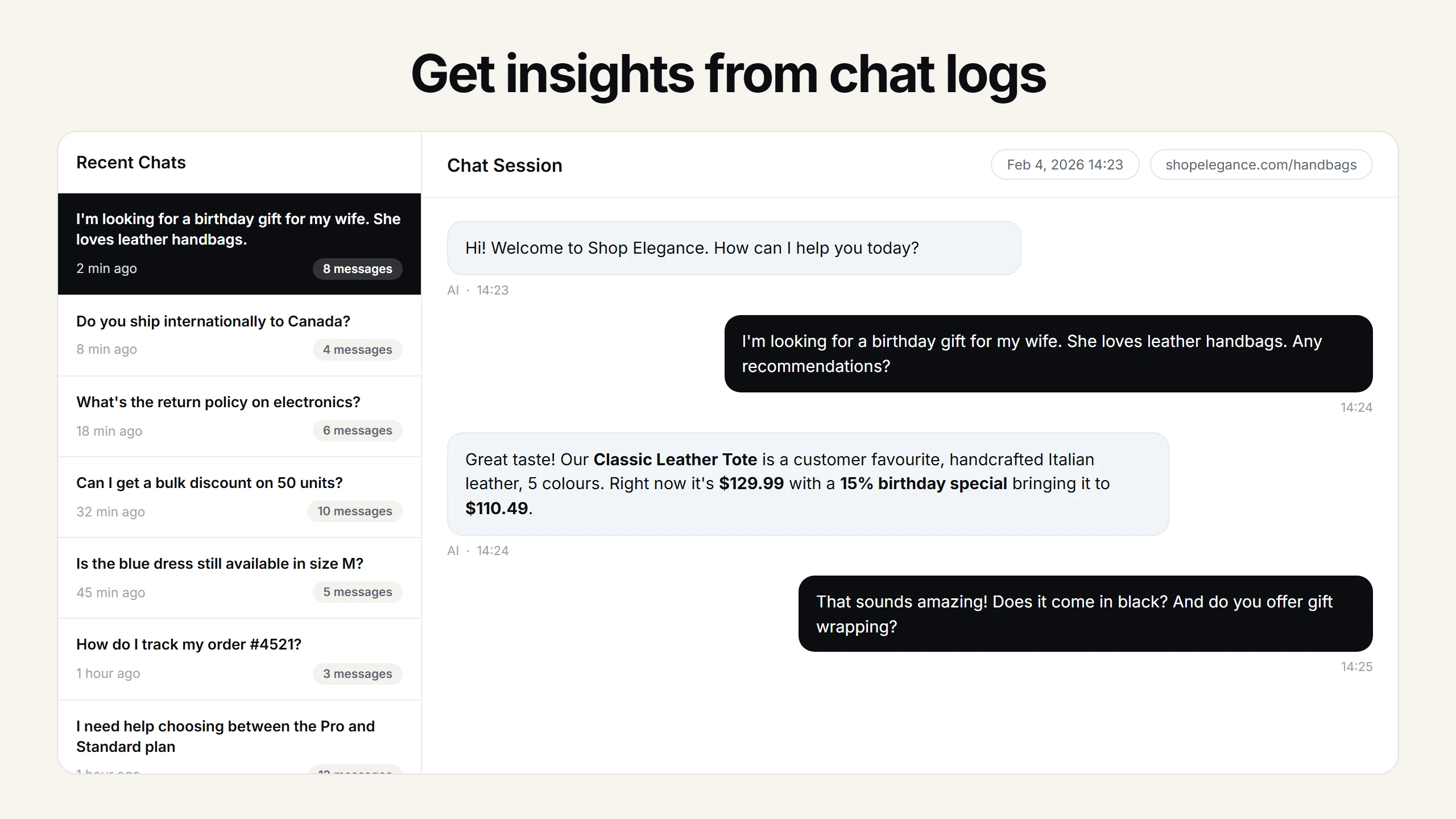
Lock-in is the second cost most agency buyers overlook until the relationship ends. When an AI chatbot agency builds on a platform, the chatbot lives somewhere — and "somewhere" matters. If the platform account belongs to the agency, the chatbot belongs to the agency. When the engagement ends or the relationship deteriorates, the chatbot disappears with the agency's billing access. The conversation history, the behavioral rules, the indexed content, and any analytics built up over months all evaporate. The structurally cleaner arrangement is to insist on a platform subscription in your own corporate name, with the agency operating as an authorized user inside your account rather than as the account owner. This preserves your ownership of the asset the agency built. It also opens the option of continuing to operate the chatbot internally after the agency engagement ends, which dramatically alters the long-term economics in your favor.
For organizations weighing the decision, the cleanest framework is to separate two questions: do you need a chatbot, and do you need an agency to deliver it? The first question is straightforward — most modern websites benefit from a chatbot capable of answering documentation-style questions in real time. The second question deserves harder thought. If your bottleneck is technical capacity, regulatory complexity, or organizational coordination, the agency earns its fee. If your bottleneck is just available time and someone in your organization can spend an afternoon configuring a chatbot through a SaaS dashboard, the agency markup goes to your bottom line instead.
For agencies reading this page from the other side of the engagement, Asyntai operates a reseller program designed specifically for the AI chatbot agency model. The reseller arrangement provides a separate billing relationship for managing client subaccounts, white-label widget options that carry your agency brand instead of ours, and the operational infrastructure to convert one-off project revenue into recurring SaaS-style monthly billing. Agencies running this model gain a productized offering they can sell to clients without rebuilding the chatbot platform from scratch each engagement. The economics work because the agency captures the discovery, configuration, integration, and ongoing tuning revenue while Asyntai handles the platform infrastructure underneath.
Multilingual coverage is one of the capabilities most often misattributed to agency value. Asyntai handles 36 languages with automatic detection from the visitor's first message. The chatbot composes responses in the visitor's language drawn from your source documentation regardless of what language the documentation was originally written in. A Spanish-speaking visitor on an English-only website receives Spanish responses synthesized from the English source material. A Japanese visitor gets Japanese responses. The translation quality is meaningfully better than mechanical word-substitution tools because the AI comprehends the source content and re-expresses it fluently in the target language. None of this requires agency labor. The capability is built into the platform layer and available to direct subscribers exactly as it is to agency clients.
Pricing for direct subscription reflects the absence of the agency markup. Asyntai's free tier includes 50 messages per month on a single site, sufficient for proof-of-concept validation. Paid plans begin at $39 per month for 800 messages across two sites, suitable for most small and mid-sized businesses. Higher tiers extend to 15,000 and 50,000 messages monthly with multi-site coverage scaling up to ten properties. Compared to a typical agency engagement of $10,000 upfront plus $1,000 per month in retainers, the direct subscription is one to two orders of magnitude less expensive. For organizations with the chatbot use case that fits the platform's strengths — content-grounded question answering with multilingual coverage and conversational guardrails — the math is unambiguous. The agency engagement makes sense when complexity demands it. The platform subscription makes sense when content is the asset and time is the constraint.