The WordPress virtual assistant that costs less than one hour of a human VA
Asyntai gives your WordPress site an always-on AI virtual assistant answering from your own pages and documents — fielding visitor questions, pulling leads into your dashboard, and covering 36 languages without another person on payroll.
See the WordPress virtual assistant run on your site
Paste your WordPress URL and watch how the AI would greet readers and handle the first few questions
Learns your posts, pages, and docs — not a generic FAQ someone wrote for another niche
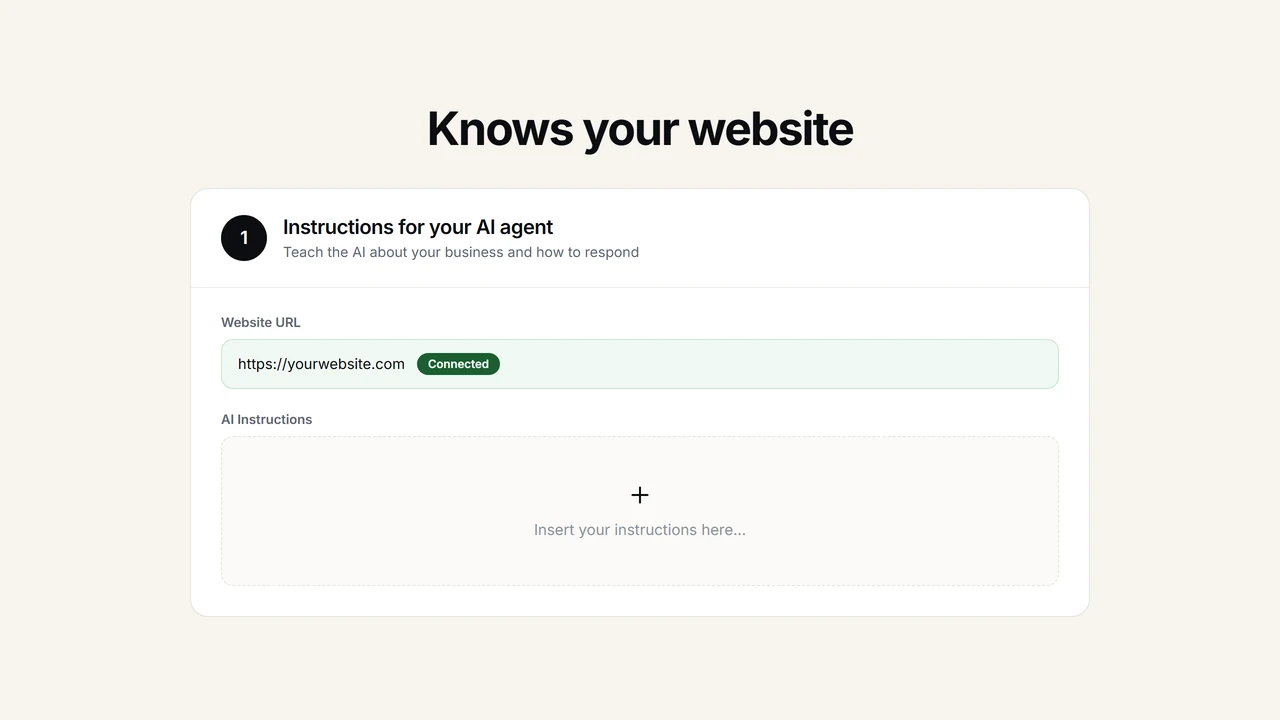
A WordPress virtual assistant only earns its keep if it actually knows the site it lives on. Asyntai indexes your posts, your pages, your service descriptions, your course pages, your documentation — whatever lives at your WordPress URL — and layers in anything private you upload. Every reply is rooted in your own words, not invented.
- Indexes your WordPress URL on its ownBlog posts, landing pages, policy pages, services, portfolio entries — pulled in from your sitemap in minutes, refreshable any time you publish.
- Add the files your public site never mentionsInternal FAQs your team emails to clients, onboarding PDFs for new students, membership rules, refund procedures, speaker packets — upload them as PDFs or paste raw text.
- House rules in plain English"Always suggest booking a discovery call if the visitor is asking about pricing." "Send course enrollers to the checkout page, not the sales page." Your instructions, followed on every conversation.
Answers at 3am the same way it answers at 3pm — no shift handovers, no missed inboxes
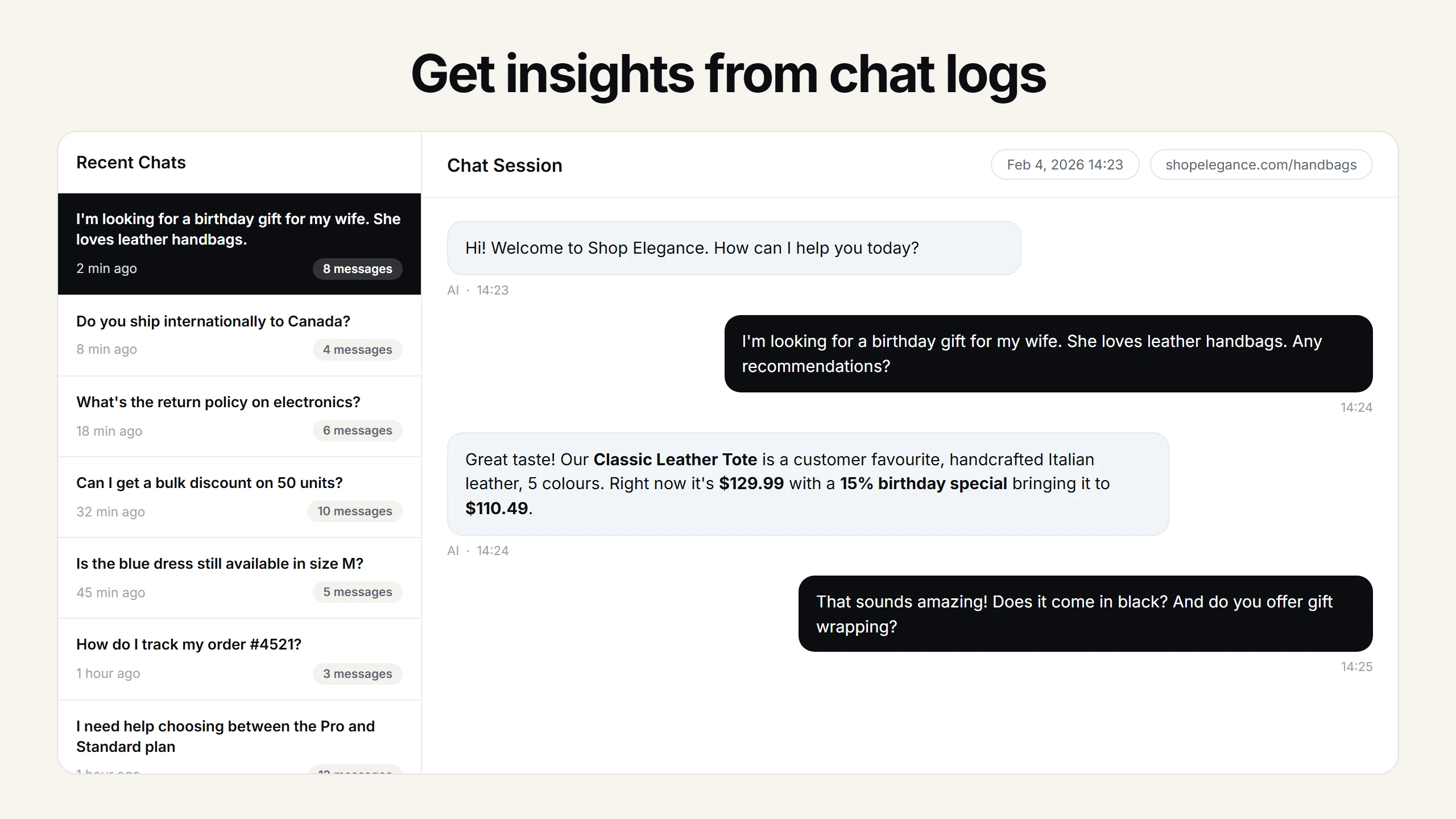
Human VAs clock off. Time zones get in the way. Messages sit in a pending queue until somebody with access logs in. A WordPress virtual assistant that runs on AI handles that overnight and weekend drift for you — visitors get an answer the moment they ask, and anything that genuinely needs you lands neatly in the dashboard for the morning.
- Instant replies on every pageFloating bubble sits on your blog, your sales pages, your contact page — available the moment a reader scrolls in, never waiting for somebody to log in.
- Captures the leads you would have slept throughWhen a visitor isn't ready to commit, the AI asks for email or phone — collected contacts arrive in your Asyntai dashboard with the full transcript, plus an optional email notification if you want.
- Personalized for logged-in membersOn Standard and Pro, WordPress can pass a logged-in member's data through window.Asyntai.userContext before the widget boots — the assistant greets members by name, references their plan, and adapts tone.
Live on your WordPress site before lunch
Asyntai ships a real WordPress plugin you download from your Asyntai dashboard — no WordPress.org search, no one-click connect that reshuffles your database. After you upload the zip, a single OAuth click links your site to your Asyntai account. If you'd rather skip plugins entirely, a plain JavaScript snippet in your header works just as well, including on headless WordPress setups or pages built with Elementor, Divi, Bricks, or Oxygen.
- Register a free Asyntai account and grab the plugin zip from your dashboard.
- In WordPress admin, open Plugins → Add New → Upload Plugin and upload the zip.
- Activate it, click
Connect to Asyntai, and approve the OAuth handshake. - Point the assistant at your URL, drop in any private documents, and it's helping visitors the next minute.
Plugins → Add New → Upload Plugin
file: "asyntai-chatbot.zip"
Activate → Connect to Asyntai (OAuth)
# Option B — plain script in your header
<script src="https://asyntai.com/widget.js"
data-id="your-site-id" async></script>
# WordPress virtual assistant: live.
WordPress virtual assistant — the honest FAQ
Questions the WordPress owners who've priced out a human VA tend to ask before flipping the switch.
Wait, is this a human VA service or software?
Software. Asyntai is an AI-powered WordPress virtual assistant — a widget that lives on your site and handles visitor-facing conversation in real time. You're not hiring someone on Upwork or Onlinejobs.ph; you're installing a plugin. If you need a human to do back-office admin like moderating WooCommerce orders, editing posts, or handling supplier emails, that's a separate role. What Asyntai replaces is the chat-and-email overflow that normally eats a chunk of your human VA's week.
What does it actually cost versus an offshore WordPress VA?
Offshore WordPress VAs tend to run $6–$15 an hour on Onlinejobs.ph or Upwork, which lands most part-time arrangements at $500–$1,200 a month. Asyntai's free plan covers 50 messages for zero dollars, and the paid tier that fits most small WordPress sites is $39 a month for 800 messages. If you're mainly trying to deflect the same repeat questions about pricing, hours, course access, or refunds, the AI does that cheaper and at 3am — so the human VA is freed up for the work that genuinely needs a pair of hands.
Do I need the plugin, or can I stick to a script?
Either one. The Asyntai WordPress plugin — downloaded from inside your Asyntai dashboard, not the WordPress plugin directory — gives you a one-click OAuth link between your site and your account. If you'd rather not install a plugin, or if you're running headless WordPress, the same widget ships as a JS snippet you paste into your header. Page builders like Elementor, Divi, Bricks, Oxygen, and Beaver Builder all play nicely with either approach.
How many languages will it actually hold a conversation in?
36. The widget chrome — buttons, greeting, placeholder — is localized in 36 languages, and the underlying AI detects the visitor's language straight from their opening message. A reader writing in Polish gets Polish back, a Vietnamese visitor gets Vietnamese, an Arabic speaker gets right-to-left Arabic. You don't add WPML, Polylang, or a translation workflow — the assistant handles it.
Can it pull order details for my WooCommerce shoppers?
Yes, through the User Context feature on Standard and Pro. Your theme or a small snippet pushes the logged-in customer's data — most recent order, status, tracking link, plan tier — into a window.Asyntai.userContext object before the widget loads. For deeper catalog and order sync, the plugin can use WooCommerce's REST API. The assistant reads only what you hand it, nothing more.
Does the plugin slow my site down?
The widget loads asynchronously after WordPress finishes rendering, so it isn't in the critical path. It's a single bubble rather than a heavy dashboard widget. We don't publish specific kilobyte or Core Web Vitals numbers — every theme and host combo is different — but the pattern of "async script, no render blocking, no database hooks on frontend" is what WordPress performance plugins are designed to like.
Where do the leads and transcripts end up?
Inside your Asyntai dashboard. Every conversation where the visitor shares an email or phone number shows up as a lead entry with the full transcript attached. If you turn on email notifications, the same lead + transcript lands in your inbox as it happens. There's no separate CRM to license and no custom endpoint to build before the feature works.
Can I run the assistant across more than one WordPress site?
Yes if you need it. Free covers 1 site, Starter covers 2, Standard covers 3, and Pro covers up to 10. Each site is trained independently on its own content, which is what agencies running several client WordPress sites or publishers operating a few niche blogs tend to use.
WordPress virtual assistant — the long version, if you want it
The phrase "WordPress virtual assistant" has historically meant one thing: a human, usually offshore, who you paid hourly to moderate comments, update plugins, triage contact-form submissions, chase refunds, reply to the same questions over and over, and occasionally push a blog post live. Most of the listings on Upwork, Onlinejobs.ph, Fiverr, and the Facebook VA groups still describe the job this way, and for parts of it the human remains the right tool — there's no algorithm that's going to investigate why a specific plugin broke the checkout after a PHP update, or phone your printer when the newsletter subs went haywire. What changed in the last couple of years is that the single largest line-item on a WordPress VA's hours — answering visitors and customers who send essentially the same question phrased five different ways — is now something software can do better, faster, and in thirty-six languages.
That's the niche a WordPress virtual assistant powered by AI actually fills. It isn't trying to be your social media manager or your plugin updater or your comment moderator. It's the always-on front desk for your WordPress site, sitting in the bottom-right bubble, available at the exact second a visitor lands, never losing track of the knowledge base, never sending a passive-aggressive out-of-office, never ghosting in the middle of a conversation because the shift ended. If you run a blog with a decent content library, a course site with students poking around at all hours, a service business with prospects looking before they book, a membership community with recurring support questions, or a WooCommerce store with pre-sales and post-sales questions in equal measure, this is the piece of the VA role where AI beats the human by a wide margin.
Training it on a WordPress site is almost embarrassingly low-effort given what you get out of it. You hand Asyntai your URL. It walks your sitemap — posts, pages, case studies, service descriptions, tutorial library, whatever you've published — and builds a private knowledge base from the text it finds. If you run a WordPress blog with four years of archive posts, those archive posts are now the assistant's reference material. If you run a course site, the syllabus pages and module descriptions become the answer source. For the content that doesn't live in public posts — a refund policy you only email to people who ask for it, a technical setup guide you send to paying students, a speaker rider you pass around privately — you upload the PDF or paste the raw text, and the assistant treats it as part of the same knowledge base. No conversation flow to draw, no Q&A pairs to type out.
The shape of the typical conversation varies by what kind of WordPress site you run, which is part of why a single generic chatbot never worked well for WordPress. On a personal finance blog, the assistant ends up fielding "do you have anything about Roth IRA conversions" and pointing the reader at the specific post. On a yoga studio site built on WordPress, it books people into the right drop-in class and answers whether mats are provided. On an agency site, it tells the prospect what the starting project range is and offers a link to the discovery call calendar. On a membership site, it tells a logged-in member that their renewal is on the fifth of next month and where to update the card on file. Same widget, same underlying AI, completely different conversations — because each one answers from its own WordPress content.
Hiring a human WordPress VA who could cover that range of use cases well is genuinely difficult. A good one exists, but they're expensive, they turn over, they take a month or two to onboard before their answers match your voice, and they still don't cover off-hours unless you hire two of them or pay a premium for overnight coverage. More realistically, what most WordPress owners get is a $6-an-hour VA who's fine at pasting canned replies but isn't going to read the blog archive deeply enough to answer from it, so the reader gets "let me check and get back to you" — which is the reply that converts the worst of any possible reply. An AI virtual assistant never says that. It either has the information indexed or it collects the visitor's email and sends you the question directly.
Language coverage is where the economics pull apart fastest. Hiring a human VA who speaks English is easy. Hiring a human VA who speaks English and Spanish is harder and more expensive. Hiring a VA who can answer in French, German, Portuguese, Polish, Turkish, Thai, and Japanese depending on who walks in is not a hiring decision — it's a department. A WordPress site that sells worldwide, or runs a blog with international readership, or hosts a course that students from thirty countries enroll in, cannot realistically staff this with people. The Asyntai widget supports 36 languages in the UI, and the AI detects the visitor's language from the first message they type. Nothing to configure, no translation plugin to integrate, no separate site for each locale.
Lead capture is the quiet conversion channel most WordPress sites are leaving on the floor. A visitor lands on a services page at 11pm in a timezone six hours ahead of wherever you are. They have a question. Your contact form asks for name, email, phone, company, budget, and a text box — and they close the tab. The same visitor, in a chat bubble, types a one-line question, gets an immediate relevant answer, and — if they're not quite ready to book — hands over an email when the assistant asks for a follow-up. That email, with the full transcript of what they asked, ends up in your Asyntai dashboard and optionally in your email inbox the second it happens. Over a month, those add up to a meaningful number of conversations a human VA would have missed entirely during off-hours.
For WooCommerce stores running on WordPress, the WooCommerce REST API opens up a second layer of usefulness. Product listings can be synced, order details can be pulled for logged-in customers through the User Context feature on Standard and Pro plans, and the AI chatbot for WooCommerce can answer "where's my order" without the customer having to log into a separate portal. This is the part human VAs traditionally spent the most time on — logging into the admin, looking up the order, typing the status back to the customer — and it's exactly the kind of repetitive lookup that the AI handles in a second by reading the context you hand it. You decide what data the assistant sees; nothing is pulled behind your back.
Installing the WordPress virtual assistant doesn't involve a staging site, a developer, or a weekend. You either upload the Asyntai plugin zip — downloaded from your Asyntai dashboard, not the WordPress.org directory — and click one OAuth button to link it, or you paste the JS snippet into your theme's header through your existing header-scripts plugin. Both paths take around five minutes. Page builder users — Elementor, Divi, Bricks, Oxygen, Beaver Builder — don't have any special integration headaches because the widget attaches at the DOM level after page render. Caching plugins, security plugins, CDN layers all coexist with it fine; the widget lives client-side after the page is already served.
Consistency is the advantage WordPress owners only notice six weeks in. A rotating cast of human VAs quoting your refund policy will always end up with drift — 14 days becomes "about two weeks" becomes "we try to be flexible" becomes a refund dispute you have to manage manually. An AI reading from one knowledge base gives the same answer every time. If your course refund window is 14 days, it stays 14 days across every reply, whatever language it's asked in and whatever time the message came in, no matter how the question was phrased. The number of email escalations that come from "but your VA told me three weeks" drops to zero because there is no VA and there is no variance.
Analytics is the bonus that most WordPress owners didn't hire a VA for but get anyway. The Asyntai dashboard groups incoming questions by topic and frequency, so over a month you end up with a clean ranked list of what visitors are asking about most often. If 60 visitors this month asked the same sizing question about a product, that's a product-page rewrite waiting to happen. If the course FAQ keeps getting "can I get a refund if I drop out at module three," your landing page needs a refund section. A human VA could, in theory, report this to you, but in practice rarely does. The AI logs it automatically and surfaces it as a pattern.
Who does this make the most sense for? WordPress bloggers with enough archive depth that visitors ask "do you have a post about X" frequently. Course creators on LearnDash, LifterLMS, Tutor LMS, or MemberPress whose students ask the same dozen operational questions. Service professionals — consultants, coaches, studios, clinics — whose prospects want pricing indications and calendar links at off-hours. Agencies managing a portfolio of client WordPress sites who want one operational layer across all of them. Membership site owners tired of writing the same password-reset instructions by hand. WooCommerce merchants with a steady trickle of pre- and post-purchase questions. In every case, the human VA isn't going away — they're just not spending their week on the part of the job a piece of software now does better.
The right mental model is that an AI WordPress virtual assistant is the layer between your visitors and your human team, not a replacement for the team itself. The AI handles the 80% of incoming conversations that are answerable from content you've already written. The 20% that need judgment — a refund edge case, a custom quote, a partnership inquiry — still route to you, but they arrive qualified, with the full chat transcript, through your Asyntai dashboard. For most WordPress sites, that rebalancing alone is the biggest operational upgrade since WP-Cron and a cache plugin, and it costs a small fraction of what adding another person to the rota would.