WordPress chatbot that reads your entire site
Asyntai is an AI WordPress chatbot that learns from your pages, posts, and docs in minutes — then answers every visitor 24/7. Works on any theme, every page builder, and WooCommerce too.
Try it on your WordPress site for free
Enter your WordPress URL and see how the chatbot would actually answer your visitors
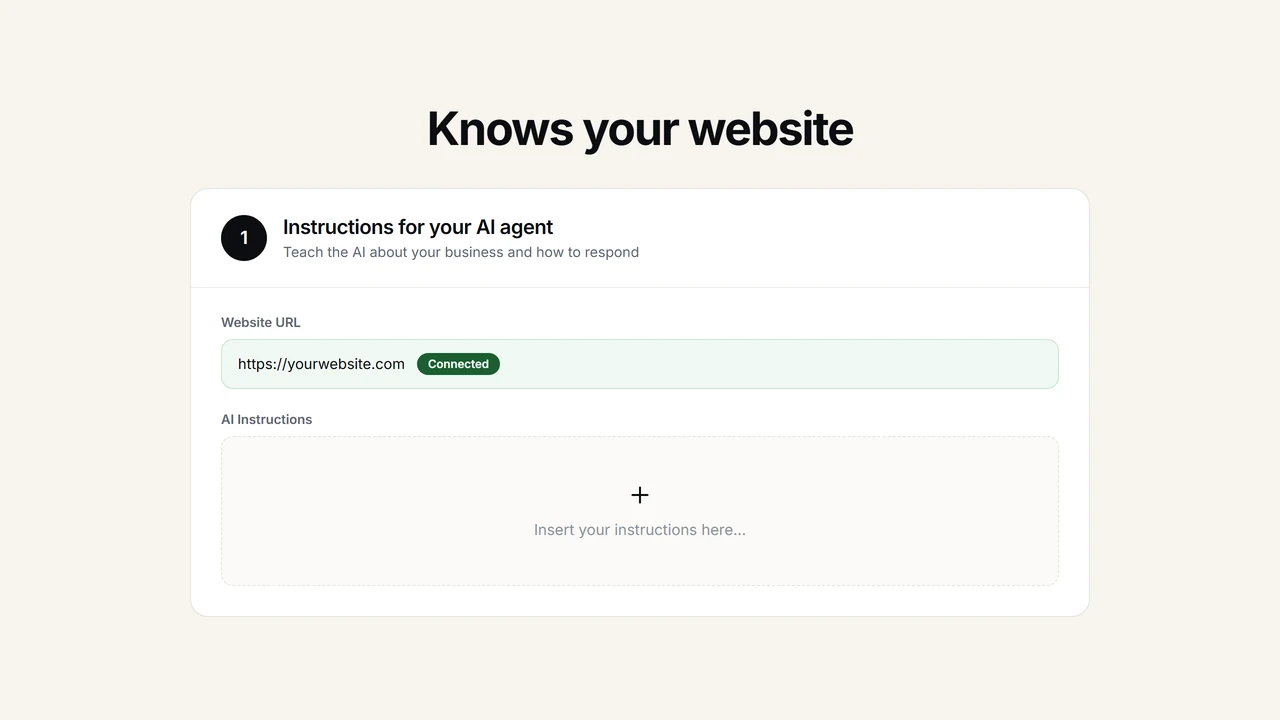
Paste your WordPress URL. The AI does the rest.
Asyntai crawls your WordPress pages, posts, and policy pages automatically. Anything the AI can't see from the public site — internal FAQs, product sheets, pricing docs — you upload as PDFs or paste as text. The WordPress chatbot blends it all into one knowledge base.
- Auto-crawls pages and postsEvery page, blog post, and policy URL becomes part of the chatbot's knowledge within minutes — no manual copy-paste.
- Upload PDFs or paste textAdd anything the AI can't read from the public site: service sheets, internal FAQs, pricing tables, onboarding guides.
- Custom behavior rules"Always offer a consultation when pricing is asked." "Link to the contact page for enterprise inquiries." You write the rules in plain English.
Designed to turn readers into leads, not just chat
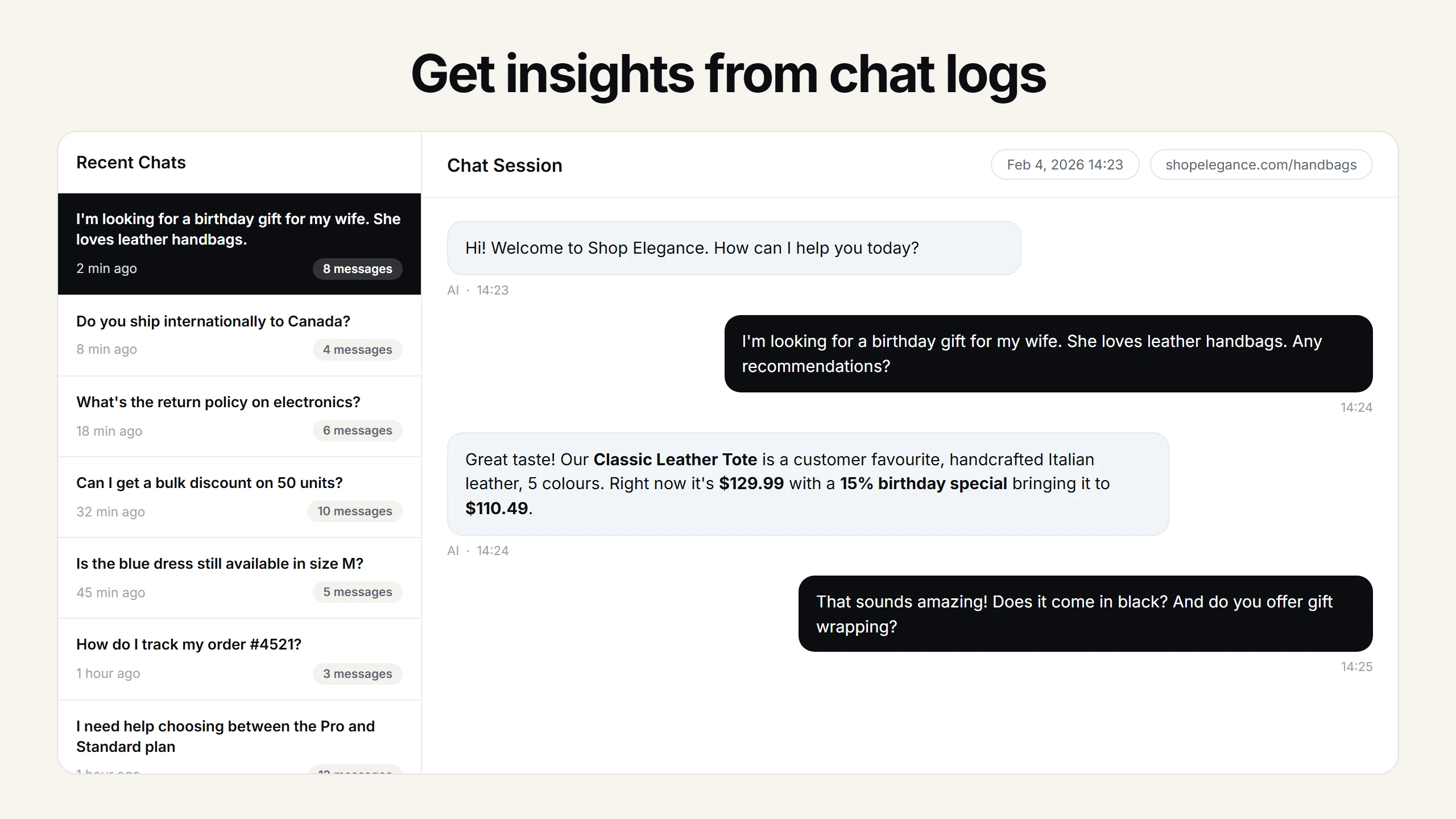
The WordPress chatbot is built for the moments visitors actually decide — reading your services page, comparing pricing, scanning a long blog post. It engages at the right time, captures leads when they hesitate, and tells you exactly what your content is missing.
- Proactive engagement on key pagesOpens the chat after a configurable delay on pricing, services, or blog posts where visitors linger.
- Smart lead capture in conversationsThe chatbot can ask for an email or phone number during a chat. Leads land in your Asyntai dashboard, and optionally in your inbox via email notifications.
- Full conversation analyticsSee what WordPress visitors actually ask, which pages need better answers, and which topics are quietly losing leads.
One snippet. No WordPress plugin install.
You don't need to install an Asyntai plugin on your WordPress site. Paste a single JavaScript snippet into your header — via Insert Headers and Footers, WPCode, or directly in your child theme's header.php — and the WordPress chatbot is live.
- Sign up for a free Asyntai account and copy your personal snippet.
- In your WordPress admin, open a header plugin like Insert Headers and Footers or WPCode. Or edit
header.phpin your child theme. - Paste the snippet before the closing
</head>tag. - Save. The WordPress chatbot is now live on every page and post of your site.
<script src="https://asyntai.com/widget.js"
data-id="your-site-id" async>
</script>
</head>
# That's the entire install.
WordPress chatbot — FAQs
The practical stuff WordPress site owners ask before installing.
Do I need a WordPress plugin to install Asyntai?
No. Asyntai is a JavaScript snippet you paste into your WordPress header. You can use a lightweight plugin like Insert Headers and Footers or WPCode to paste it, or add it directly to your child theme's header.php. There's no Asyntai plugin to install or maintain.
Does it work with all WordPress themes?
Yes. The WordPress chatbot loads as an overlay on top of your site, so it works with Astra, GeneratePress, OceanWP, Kadence, Blocksy, any premium theme, and fully custom themes. It doesn't touch your theme files or alter your layout.
Is it compatible with Elementor, Divi, and other page builders?
Yes. The WordPress chatbot is fully compatible with Elementor, Divi, WPBakery, Beaver Builder, Brizy, and Gutenberg. The widget loads independently of your page builder, so there are no conflicts regardless of which builder you use.
Does it integrate with WooCommerce?
Yes. Asyntai has a dedicated WooCommerce integration that syncs your product catalog, so the chatbot can answer questions about specific products, show product cards, and guide shoppers toward checkout. For WordPress sites without WooCommerce, the AI simply crawls your regular pages and posts.
How does the AI learn about my WordPress content?
Paste your WordPress URL and Asyntai crawls your pages, posts, and policy pages automatically. For anything not on the public site — internal FAQs, service sheets, consultation pricing — upload PDFs or paste text directly into the knowledge base.
Does it handle international visitors?
Yes. The widget UI is available in 36 languages and the AI detects the visitor's language from their message. A French visitor gets French answers, a German visitor gets German replies, without any translation plugin setup on your WordPress site.
What happens when I hit my message limit?
The WordPress chatbot pauses new replies until the next billing cycle or until you upgrade. Email warnings land in your inbox before you hit the cap, so a traffic spike from a viral blog post won't catch you off guard.
Can I use Asyntai on multiple WordPress sites?
Yes on paid plans. Free: 1 site, Starter: 2, Standard: 3, Pro: up to 10. Each WordPress site gets its own separate chatbot, which matters for agencies managing multiple client sites.
Everything you need to know about a WordPress chatbot
WordPress runs a huge share of the public web, which changes what a WordPress chatbot actually needs to do. On any given site, the visitor landing on your page could be a reader skimming a 2,500-word blog post, a prospect weighing your consulting services, a shopper checking a WooCommerce product, or a member logging into a course platform. A single site can contain all four. That diversity is exactly why static FAQs and contact forms fall short here: no flat list of questions can cover a catalog of posts, services, and products that grows every week. A WordPress chatbot handles the messy reality by reading the whole site and answering whatever the visitor actually came in wondering about.
WordPress is fundamentally a content platform. Even when it runs a store through WooCommerce or a course through LearnDash, the spine of the site is still pages and posts. Asyntai leans into that: you paste your WordPress URL and the AI crawls every public page, absorbing how you describe your services, what your pricing page actually says, which objections your blog posts address, and where the contact form lives. The training isn't a chore you schedule for later — it happens the first time you sign up, and the chatbot is useful from conversation one. As you publish more content, the WordPress chatbot can be re-crawled, so it doesn't go stale the way a rule-based flow does the moment you launch a new service or blog category.
Anyone who has maintained a WordPress site for more than a year knows the plugin tax. Every new capability means another entry in your plugins list, another set of updates to apply, another possible conflict when PHP upgrades or a theme changes. Chat tools are notorious for this — some add database tables, register cron jobs, push admin notices, and quietly drag down your site speed in ways you only notice when something breaks. Asyntai isn't a WordPress plugin at all. You paste a JavaScript snippet into your header (through a lightweight header plugin like WPCode or Insert Headers and Footers, or directly in a child theme) and the widget loads from an external domain. Nothing is written to your database. There is no admin page to update. Removing it is deleting one line.
One place the WordPress chatbot earns its keep that people underestimate: long-form content. A reader lands on a 2,500-word guide after clicking a search result, skims for the specific answer they need, doesn't quite find it, and leaves. They do not scroll back up. They do not search your site. They open a competing post and try their luck there. A WordPress chatbot closes that gap. The reader types "does this work for a team of three" or "how long does the actual implementation take" and gets an answer grounded in your post, your services page, and whatever docs you've uploaded. The visitor stays on your site long enough to subscribe, book, or buy. Every pillar post on a content-driven WordPress site becomes measurably more productive the moment this layer exists.
The theme and page-builder ecosystem is where most other chat tools trip. Astra, Kadence, Blocksy, GeneratePress, OceanWP, Divi, Elementor, Beaver Builder, WPBakery, Brizy, Gutenberg, custom child themes, layout overrides on layouts — even the best-tested widgets break on at least one combination. Asyntai sidesteps this entirely because the chatbot is a DOM overlay that appears after your page has already rendered. It doesn't care which builder produced the markup or which theme wraps it. If your page loads, the widget loads on top. That's a boring architectural detail for you, but a major reason the WordPress chatbot doesn't need a "compatibility mode" for the builder-of-the-month.
For WordPress sites that run WooCommerce, Asyntai ships a dedicated AI chatbot for WooCommerce with a product catalog integration — not just a URL crawl, but a real sync that pulls products, prices, images, and variants into the chatbot's knowledge base. That lets the bot display product cards mid-conversation, recommend related items when a shopper is undecided, and answer specific availability and pricing questions without relying on what the crawler happened to scrape that week. For WordPress sites without WooCommerce, the chatbot works from regular pages and posts the same way it does on a content site. The install is identical; what the AI knows expands based on what your site actually contains.
WordPress content reaches further than almost any other CMS. A single well-ranked post can draw readers from Germany, Brazil, Japan, France, and the US in the same afternoon, and most of them will type in their own language. The widget UI supports 36 languages and the AI detects the visitor's language directly from their message — so a French reader gets French, a Japanese reader gets Japanese, a German reader gets German — with zero translation setup on your side. If you already run Polylang or WPML for the WordPress content itself, that's fine; the chatbot operates independently of whatever multilingual plugin setup you have. You don't configure language routing twice.
A chat widget parked silently in the corner of a WordPress page gets ignored 95% of the time. A chatbot that actually moves metrics opens proactively at the moments that matter — on the pricing page where prospects hesitate, on the long services page where they pause halfway down, on a particularly engaged blog post where they've already scrolled past the fold. Asyntai's auto-trigger handles this with a configurable delay and separate behavior for desktop and mobile, so the thumb-scrolling phone visitor doesn't get hit with a full-screen takeover. Most of the measurable lift from having a WordPress chatbot in the first place comes from this one behavior: asking first instead of waiting forever to be asked.
The biggest quiet lever on a content-driven WordPress site is the cohort of visitors who had a question and left. They didn't fill in the contact form because it asked for a phone number they didn't want to share. They didn't email because they weren't sure yet. They didn't subscribe because the form was four scrolls down. The WordPress chatbot reaches those visitors mid-conversation. It can ask for an email or phone number — configurable per site — and each captured lead lands in your Asyntai dashboard. If you enable email notifications, the transcript arrives in your inbox in real time, so the lead is never just a name: it's a name with full context about what they were asking, what you answered, and which page they were on when they asked. That's materially more useful than an anonymous form submission.
What visitors ask the chatbot doubles as a free content audit. Every question is a signal about something your pages aren't explaining well. If forty readers asked about project timelines this week, your services page is missing a timeline table. If international visitors keep asking whether you work with their country, your about page needs geographic clarity. If the same three questions keep surfacing under a specific blog post, that post needs its own FAQ section or a sharper conclusion. Conversation analytics are accessible from the dashboard, so patterns surface without you having to dig through scattered contact-form submissions. The WordPress chatbot doesn't only answer what visitors ask — it tells you which pages to rewrite so fewer questions need answering at all.
Pricing is set up so the chatbot is viable for any size of WordPress site. The free tier includes 50 messages a month, enough to test on a new blog or a small services site. Paid plans begin at $39 per month for 800 messages and scale up for higher-volume sites — viral blogs, WooCommerce stores during seasonal peaks, agencies running it across a portfolio of client sites. Site limits step with the plan: free 1, Starter 2, Standard 3, Pro up to 10. The Pro tier matters specifically for agencies, since one account can run a separately trained WordPress chatbot on each client site under a single billing arrangement. When you approach your monthly message cap, email warnings arrive before the widget actually pauses, so a sudden traffic surge from a featured post doesn't silently cut off your chat.
Almost every commercial WordPress site benefits, but some categories get outsized return. Consulting and agency sites book more intro calls because the chatbot handles the "is this the right fit" objections that typically stall prospects on the services page. Course and membership platforms reduce "how does this actually work" bounces before the paywall scares people off. Bloggers monetizing through sponsorships, affiliates, or their own products convert more readers into subscribers by answering reader questions on the spot. WooCommerce stores recover carts that would have been abandoned over shipping and sizing questions. B2B SaaS sites that use WordPress for their marketing front-end qualify prospects faster. The small personal WordPress blog with no commercial intent is the only category where a chatbot doesn't obviously pay back — and even those sometimes convert reader questions into newsletter signups that didn't exist before.
A reasonable question: when does an AI WordPress chatbot stop being enough, and when do you actually need a human? The honest answer is at the same point any support workflow needs one — a custom quote that requires actual judgment, an account problem that requires real access, an emotionally charged situation where empathy matters more than information. Asyntai is designed to be narrow here. It handles the long tail of questions that are answerable from your site's content, and for the rest, it captures the visitor as a lead with full context and hands them to your existing workflow. The chatbot isn't replacing your team. It's absorbing the 70–90% of repetitive questions that would otherwise flood the inbox, so when a genuine escalation arrives, there's bandwidth to handle it properly.
Installing a WordPress chatbot used to be a small project — pick a plugin, test it against your theme, wrestle with the admin page, update quarterly. It isn't anymore. Paste a snippet into the header, let the AI crawl your site while you make coffee, tweak the welcome message, go live. From there the chatbot works quietly: catching questions that would have become closed tabs, capturing leads that would have slipped away, and telling you which pages on your WordPress site need more attention. For anyone staring at their analytics trying to figure out why well-ranked pages still bounce at 60%+, this is the most direct lever in the stack.